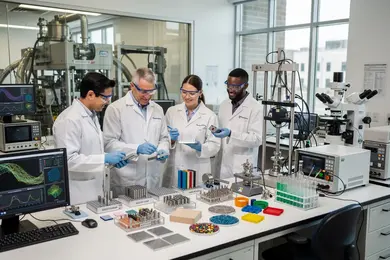
2026 Materials Science & Engineering Master's Programs With Bridge or Foundation Courses

Co-Founder and Chief Data Scientist
Potential graduate students often confront the challenge of entering materials science & engineering without a directly related undergraduate degree or sufficient prerequisite coursework. Programs offering bridge or foundation courses promise an integrated path, yet vary widely in structure, admission criteria, and financial implications.
With enrollment in STEM graduate programs rising by over 9% in 2024, according to the National Science Foundation, the availability of flexible admissions reflects shifting workforce demands and adult learner needs. Understanding how conditional admission status, prerequisite loads, and cost affect long-term career mobility is essential for prospective applicants balancing education with ongoing professional commitments.
Key Things to Know About Materials Science & Engineering Master's Programs With Bridge or Foundation Courses
- Bridge or foundation courses often require additional 12-18 prerequisite credits, which extends time to degree and increases total tuition costs-this tradeoff demands careful financial and scheduling planning by non-traditional students.
- Programs offering conditional admission without a prior materials science background allow entry while completing core requisites, but employers may prefer candidates with full admission status reflecting completed foundational mastery.
- A 2024 National Science Foundation report notes a 15% rise in online graduate engineering enrollments, indicating growing access but also necessitating scrutiny of program recognition and alignment with workplace competencies in materials science.
What Are Materials Science & Engineering Master's Programs With Bridge or Foundation Courses, and Who Are They Designed For?
Materials science & engineering master's programs with foundation courses address a critical barrier for career changers and graduates from adjacent fields who lack key undergraduate prerequisites but seek a direct graduate-level credential in materials science & engineering. Unlike traditional master's programs that expect applicants to have completed relevant foundational coursework, these integrated programs embed prerequisite learning in the graduate curriculum.
For example, a mechanical engineering graduate aiming to shift into materials science without a full background in solid-state physics or thermodynamics can enter such a program, where essential introductory courses run either before or alongside core graduate classes. This sequencing extends the program length, typically by one or two semesters, but provides a unified path to both foundational knowledge and advanced specialization.
- Purpose: These programs equip students with vital foundational knowledge in materials science & engineering to ensure preparedness for advanced graduate topics despite lacking traditional undergraduate preparation.
- Problem Addressed: They remove the admissions and academic performance obstacles faced by applicants from unrelated majors by embedding necessary prerequisite learning within the master's curriculum.
- Program Structure: Foundation courses either precede or run concurrently with core graduate classes, creating an integrated but often extended study plan to ensure mastery of fundamentals.
- Duration Impact: Added coursework typically lengthens total program time by one to two semesters compared to standard master's trajectories.
- Institutional Offering: Accredited online colleges that accept FAFSA that are focused on interdisciplinary access and flexibility commonly provide such pathways as an alternative to separate post-baccalaureate programs.
- Target Students: Ideal for career changers, recent graduates with adjacent STEM backgrounds lacking direct prerequisites, and working professionals needing a single-degree trajectory without pausing their careers.
Table of contents
Which Accredited U.S. Universities Offer Materials Science & Engineering Master's Programs With Built-In Bridge or Foundation Courses?
Choosing a master's program in materials science & engineering with integrated bridge or foundation courses can decisively impact career changers and professionals seeking a streamlined transition into the field without added delays or separate prerequisite burdens. The availability of these structured pathways, however, varies significantly by institution type and geographic region.
- Public Research Universities: The University of Florida, University of California, Davis, and Pennsylvania State University provide materials science & engineering master's programs with embedded bridge coursework. These institutions typically offer conditional admission for students lacking prerequisites, embedding foundational courses within research-intensive settings that demand rigorous technical preparation alongside advanced study.
- Private Nonprofit Universities: Northwestern University, Case Western Reserve University, and Lehigh University represent private institutions with compact, intensive bridge components designed to support applicants from adjacent undergraduate fields. Their programs combine practical skill-building with significant research and industry relevance, though often with higher tuition and more competitive admission criteria compared to public counterparts.
- Online-Focused Institutions: Georgia Institute of Technology and the University of Illinois Urbana-Champaign deliver flexible, modular bridge coursework through their online master's offerings. Such programs cater especially well to working professionals who require asynchronous scheduling and minimal interruption to ongoing employment, balancing accessibility with rigorous curriculum standards.
The presence of these integrated programs tends to cluster in states housing major research universities, such as California, Pennsylvania, and Georgia, rather than smaller teaching-focused colleges that rarely possess the resources to develop prerequisite pathways within graduate studies. Applicants should prioritize confirmed program details found through official university graduate program pages, accreditation databases like ABET and IPEDS, and direct communications with admissions offices.
Direct inquiry with admissions counselors is critical to verify conditional admission policies, prerequisite credit loads, financial aid eligibility related to extended curricula, and the total cost impact of integrated bridge courses. Such diligence prevents assuming streamlined pathways free of additional cost or time burdens, enabling candidates to align educational choices realistically with long-term employability and professional advancement in materials science & engineering.

What Specific Bridge or Foundation Courses Are Commonly Required Before Full Admission to a Materials Science & Engineering Master's Program?
Bridge or foundation courses required for materials science & engineering master's admission often reflect a practical gatekeeping function, ensuring candidates possess critical knowledge gaps filled before advancing to rigorous graduate work. For instance, a professional transitioning from mechanical engineering may face mandatory leveling in core materials disciplines, a step that directly shapes their time-to-degree and workload intensity.
These foundational prerequisites typically bifurcate into technical coursework and general graduate readiness modules, with institutional variations influencing both scope and depth.
- Discipline-Specific Leveling: Commonly mandated courses include introductory materials science, thermodynamics, crystallography, solid-state physics, and materials characterization, targeting knowledge deficits for applicants without an aligned undergraduate degree.
- Graduate Readiness: Many programs require or recommend classes emphasizing scientific writing, quantitative methods, and research methodologies to prepare students for graduate-level expectations beyond technical content.
- Institutional Variation: Course requirements fluctuate considerably based on accreditation standards, faculty expertise, and program orientation, with research-intensive schools often imposing more demanding technical prerequisites than broader engineering programs.
- Applicant Assessment: Admissions committees usually determine necessary bridge courses via transcript evaluation, placement exams, or interviews, making it vital for prospective students to clarify this process upfront to anticipate conditional versus full admission and related financial implications.
- Program Impact: The volume and type of foundation courses directly affect total cost and total time in the program, posing significant tradeoffs especially for career changers or working professionals seeking an integrated, flexible pathway.
Those navigating these prerequisites should weigh not only the content but also how extended foundational coursework intersects with their broader educational plans and professional timelines. Evaluating programs that explicitly accommodate comprehensive foundation coursework can help candidates avoid costly detours. Moreover, cost considerations tied to course load and duration argue for exploring financial aid options relevant to bridge courses alongside standard tuition.
For example, understanding how bridge requirements influence net investment is as critical as selecting a program's specialization focus. For aspirants balancing multiple priorities, programs advertising a cheapest online business management degree structure or integrated course pathways may serve as an operational benchmark when assessing program flexibility and affordability.
How Do Bridge or Foundation Courses in Materials Science & Engineering Master's Programs Differ From a Traditional Post-Baccalaureate or Second Bachelor's Degree?
The decision between pursuing a master's program with bridge or foundation courses, a post-baccalaureate certificate, or a second bachelor's degree in materials science & engineering profoundly affects time, cost, and credential value. Embedded bridge courses streamline progression by combining prerequisite and graduate coursework under a single admission, reducing overall time compared to separate certificate or second bachelor's routes that require sequential completion and multiple applications.
- Program Structure: Bridge or foundation courses within master's programs allow simultaneous enrollment in foundational and graduate classes, unlike post-baccalaureate certificates and second bachelor's degrees, which stand alone as pre-admissions credentials.
- Time to Credential: Integrated master's programs typically take two to three years, while post-baccalaureate pathways extend the timeline by a year or more, and second bachelor's degrees often require three to four years, delaying workforce entry.
- Cost and Financial Aid: Completing prerequisites within the master's program often proves more cost-effective and offers full graduate financial aid eligibility, in contrast to post-baccalaureate or second bachelor's options, which may limit funding and increase out-of-pocket expenses.
- Credential Recognition: Employers and licensure bodies generally prioritize the master's degree, whereas post-baccalaureate certificates lack degree status, and second bachelor's hold less professional weight.
- Admission Flexibility: Bridge programs frequently admit students conditionally, facilitating entry with varied academic backgrounds; however, highly competitive master's programs sometimes require post-baccalaureate completion for stronger preparation and candidacy.
- Flexibility for Working Adults: Integrated programs often support part-time or online study formats, accommodating career commitments better than the typically full-time demand of separate certificate or second undergraduate degrees.
- Strategic Tradeoffs: For applicants needing timely, cost-efficient access with financial aid, bridge-integrated master's programs usually dominate. Conversely, individuals aiming for top-tier master's programs may benefit from the prerequisite rigor of post-baccalaureate certificates despite extended timelines and added expenses.
One graduate recalled the challenge of navigating rolling admissions while deciding between these routes. With a non-engineering background, they initially considered a post-baccalaureate certificate to strengthen their skills but hesitated as acceptance timelines conflicted with job responsibilities.
When a bridge-integrated master's program offered conditional admission with synchronized coursework, relief came from avoiding delays and maintaining employment. This experience highlighted the importance of weighing program structure not only against academic readiness but also life constraints and timing uncertainties inherent to non-traditional pathways.
What Are the Admission Requirements for Materials Science & Engineering Master's Programs That Include a Bridge or Foundation Component?
Admission to materials science & engineering master's programs with bridge or foundation components reflects an intentional departure from conventional prerequisites, accommodating applicants from non-traditional or adjacent backgrounds. This often means a lower undergraduate GPA minimum, typically in the 2.5 to 3.0 range, contrasting with traditional master's programs that generally enforce stricter thresholds aligned with direct preparedness.
The documentation package required usually includes transcripts, recommendation letters, and a statement of purpose, with bridge programs sometimes demanding a narrative linking prior experience to anticipated challenges in graduate study. GRE expectations are less uniform than in standard admissions; many such programs waive or make GRE testing optional, prioritizing demonstrated ability to succeed in foundational coursework over standardized measures.
Work experience relevant to materials science and engineering can partly substitute for lack of formal prerequisites, offering a practical signal of capability that admissions committees increasingly value for non-traditional entrants. However, applicants should be prepared for rigorous academic pacing during the bridge phase, due to compressed timelines and simultaneous advanced content.
Differences in admission models are critical: conditional admission requires students to meet specific academic benchmarks in bridge-level courses before full entrance into the master's program, which can restrict eligibility for financial aid and credit transfers. In contrast, direct admission to the combined pathway typically demands stronger initial assessment but offers a more seamless academic trajectory without conditional status.
This framework is designed to serve career changers, adjacent-discipline graduates, and working professionals seeking timely, integrated pathways. Success heavily depends on prior quantitative skills, motivation, and time management, reinforcing the necessity of realistic self-evaluation before committing to this demanding but flexible route.

What Is the Minimum GPA Requirement for Materials Science & Engineering Master's Programs With Bridge or Foundation Courses, and How Does Prior Academic Background Affect Eligibility?
Admission thresholds for materials science & engineering master's programs with bridge or foundation courses typically accommodate a spectrum of academic backgrounds while maintaining standards linked to employability and graduate learning success. Candidates without a directly aligned undergraduate major but seeking entry via these integrated programs face a nuanced evaluation where minimum GPA requirements are balanced against prior academic preparation and professional experience.
Minimum GPA requirements for materials science & engineering master's with bridge courses usually range from about 2.75 to 3.0 on a 4.0 scale. This is modestly lower than the usual 3.0 to 3.5 cutoff for standard, non-bridge programs, reflecting the intent of bridge elements to address foundational knowledge gaps. However, applicants from unrelated fields such as mechanical engineering or chemistry often encounter greater scrutiny.
This difference implies that while bridge programs offer a flexible pathway, they expect rigorous academic performance within that initial phase to prepare students for graduate-level materials science & engineering coursework. Those with GPAs near or below these thresholds should consider conditional admissions or supplement their applications with targeted post-baccalaureate classes or relevant professional experience in lieu of traditional prerequisites.
Admissions committees also evaluate other factors like letters of recommendation and personal statements to gauge candidates' readiness comprehensively. Ultimately, evaluating minimum GPA requirements and prior academic background provides essential insights into program selectivity, academic expectations, and workforce implications for individuals pursuing a materials science & engineering foundation program as a strategic conduit into this specialized field.
- GPA Requirements: Most bridge-integrated programs set minimum GPA thresholds at about 2.8 to 3.0, slightly lower than the typical 3.0 to 3.5 required for direct admission into standard materials science & engineering master's degrees. This reflects the intent of bridge courses to address academic gaps.
- Prior Academic Background: Applicants with nonaligned undergraduate majors-such as mechanical engineering, chemistry, or physics-may face stricter scrutiny despite meeting GPA minima. Programs often require foundational coursework either completed before or during the bridge phase.
- Holistic Evaluation: Admissions committees weigh GPA alongside professional experience, letters of recommendation, and personal statements, especially for candidates lacking direct materials science academic preparation.
- Bridge Program Selectivity: Compared to regular master's programs, bridge pathways are generally more accommodating of lower GPAs but maintain rigorous expectations during the bridge coursework to ensure readiness for graduate-level study.
- Conditional Admissions & Alternatives: Candidates with GPAs near or below typical minimums may access conditional admission, requiring satisfactory performance in foundation courses before full acceptance; some may boost admissibility through targeted post-baccalaureate classes or relevant work experience.
For those balancing work with further education, integrated bridge programs offer pathways distinct from traditional post-baccalaureate options, and for career changers lacking a materials science undergraduate background or recent graduates in adjacent fields, assessing minimum GPA requirements alongside prior academic alignment is critical to making informed decisions.
Resources such as a sport management degree online illustrate the growing range of flexible programs designed for professional transitions, signaling broader trends in graduate education accommodating diverse academic trajectories.
How Many Additional Credit Hours Do Bridge or Foundation Courses Add to a Materials Science & Engineering Master's Program, and How Does This Affect Total Cost and Time-to-Degree?
Bridge or foundation courses in materials science & engineering master's programs typically extend program requirements by 9 to 24 additional credit hours, with this variation hinging on students' prior academic preparation and program policies. Programs assuming a closely aligned undergraduate background tend to require fewer leveling credits, while those admitting candidates from unrelated fields impose more extensive foundational coursework to build essential competencies.
Whether these courses are credited toward the master's degree or taken separately as prerequisites also influences total credit load and the timeline for completion. Each extra credit hour adds to tuition, often ranging between $500 and $1,500 depending on the institution. For instance, a student facing 12 bridge credits at $1,000 each incurs an additional $12,000 beyond core master's tuition, versus a leaner 3-credit requirement that reduces this financial burden.
Beyond direct tuition, these added credits prolong the time-to-degree, especially for part-time enrollees balancing employment, thereby intensifying indirect costs such as lost wages, ongoing living expenses, and deferred career transitions. Ignoring the full combined credit count risks underestimating total cost and commitment. Applicants should explicitly confirm whether bridge courses apply to degree credits or function as separate prerequisites to gauge financial aid eligibility and scheduling implications accurately.
- Delivery Formats: Primarily on-campus with some hybrid or online options tailored for working professionals.
- Admission Requirements: Dependent on prerequisite knowledge; bridge courses mainly required for those without engineering or closely related backgrounds.
- Credit Load Impact: Typically adds 9-24 credits, directly affecting tuition and program duration.
- Financial Considerations: Total cost encompasses tuition, living expenses, and opportunity costs tied to extended study time.
One materials science & engineering master's graduate recalled hesitating for weeks during a rolling admissions cycle while awaiting clarity on their foundation course requirements. Initially assuming a smaller bridge load, they later learned that missing key prerequisite courses necessitated enrolling in 18 credit hours of foundational classes.
This unexpectedly lengthened their timeline and budget, prompting last-minute financial adjustments. Their experience underscored the risks of committing before fully understanding program structure and the timing challenges of conditional admissions that hinge on bridge coursework completion.
What Types of Students Are Best Suited for Materials Science & Engineering Master's Programs With Bridge or Foundation Courses?
Materials Science & Engineering master's programs with bridge or foundation courses best serve students who must fill specific academic gaps while progressing toward graduate credentials within a unified structure. These programs are particularly practical for individuals whose undergraduate degrees are in adjacent fields but lack direct prerequisites for materials science graduate admission.
For example, a mechanical engineering graduate aiming to pivot into materials science benefits from structured foundational coursework that traditional programs expect candidates to have completed independently. This integrated pathway allows for continuous enrollment and credentialing without pausing professional activities for separate post-baccalaureate coursework, addressing a common barrier faced by working professionals.
National enrollment data from 2024 indicates increasing demand across healthcare and advanced manufacturing sectors for workers with interdisciplinary graduate skills, reinforcing the value of this flexible option for career changers. However, the bridge model requires extended study time and additional tuition, making financial and scheduling flexibility a crucial factor. Candidates lacking these resources or those with prior substantive materials science coursework may find this model inefficient or redundant.
- Academic Background: Students with a strong undergraduate GPA in closely related but non-materials disciplines-such as mechanical engineering, physics, or chemistry-benefit from bridging foundational gaps that traditional programs assume are already mastered.
- Graduate Aptitude: Ideal candidates demonstrate readiness for graduate-level rigor, shown through prior coursework or research experience, ensuring they can handle advanced materials science & engineering concepts after completing foundational courses.
- Professional Motivation: A clear career objective to transition into materials science & engineering is essential, as the bridge courses require significant commitment without immediate job entry benefits.
- Financial & Time Flexibility: Candidates must assess their ability to absorb added tuition and extend their study period, which may impact current employment or financial obligations.
- Less Suitable Candidates: Applicants with substantial previous materials science & engineering coursework may find the bridge model redundant and inefficient, while those targeting highly selective institutions without bridge options might need direct admission routes.
- Self-Assessment Recommendation: Prospective students should evaluate their academic foundation, career timeline, and financial readiness to decide if integrated bridge programs align with their goals versus alternative pathways like post-baccalaureate certification or direct master's admission.
For individuals prioritizing accelerated or cost-effective education routes within materials science, comparing programs against the quickest cheapest master's degree options may reveal more suitable alternatives that avoid the extended investment required by bridge programs.
Are Bridge or Foundation Courses in Materials Science & Engineering Master's Programs Offered Fully Online, On-Campus, or in a Hybrid Format?
Bridge or foundation courses in materials science & engineering master's programs are offered in varied formats that substantially affect student accessibility, program costs, and educational quality. For example, a working professional pursuing online bridge courses for materials science & engineering master's programs might choose fully asynchronous delivery to accommodate a demanding schedule, but this often sacrifices the immediate interaction necessary for mastering practical lab skills.
- Fully Online Asynchronous: Courses are delivered entirely online with recorded lectures and flexible deadlines, maximizing accessibility but limiting direct feedback and hands-on experience critical for materials science & engineering.
- Live-Online Synchronous: Scheduled virtual classes allow real-time engagement but can challenge students balancing work or unpredictable time zones.
- Hybrid Format: Combines online instruction with mandatory on-campus labs, offering experiential learning essential in this field, though it requires geographic flexibility.
- On-Campus Only: Emphasizes hands-on labs and mentoring but restricts access for non-local or full-time employed students and raises overall expense.
Crucially, on-campus and hybrid foundation courses materials science & engineering grad programs often demand residency even if the core master's curriculum is fully online, creating hidden scheduling and travel burdens. Discrepancies between bridge course delivery and the master's core format can undermine expectations of flexibility and escalate time and financial costs. Given the discipline's reliance on laboratory proficiency, an exclusively online bridge may insufficiently prepare students for graduate rigor.
Applicants should explicitly verify delivery formats at every program phase, not assuming uniform online availability. Such due diligence is vital to navigating admissions conditions, prerequisite credit loads, and financial aid eligibility. For those also considering advanced research pathways, a PhD in artificial intelligence USA illustrates parallel demands in balancing online and in-person components across STEM fields.
What Is the Average Cost of the Bridge or Foundation Component in Materials Science & Engineering Master's Programs, and How Does It Affect Total Program Investment?
Bridge or foundation components in materials science & engineering master's programs often represent a significant upfront financial commitment that can increase the overall cost of graduate study by nearly half in some cases. Programs vary in pricing strategy: many charge bridge credits at the same per-credit tuition rate as core master's courses, maintaining consistent cost units throughout, while others apply discounted rates or flat fees to ease the initial financial burden.
This pricing choice influences whether pursuing an integrated pathway is more cost-effective than completing prerequisite coursework separately before admission. For example, a career changer without a relevant bachelor's degree might face bridge tuition fees ranging from $5,000 to over $20,000, depending on credit load and institutional factors.
When combined with core graduate tuition, total program costs may exceed those of a traditional master's program by 15% to 40%, a premium reflecting both the additional instructional time and prerequisite coverage on an accelerated track. In contrast, completing prerequisites via a post-baccalaureate certificate or a second bachelor's degree may spread expenses over a longer timeline but could benefit from lower per-credit costs or financial aid eligibility differences.
Hidden expenses frequently raise the sticker price of the bridge phase-these include technology fees, lab materials, proctoring services, and occasionally practicum requirements. Ignoring these ancillary costs risks budget shortfalls and misinformed financial planning. Prospective students are advised to request comprehensive cost-of-attendance estimates that encompass all bridge and master's tuition, fees, and ancillary charges before committing.
Sound comparison of total investment between integrated bridge programs and alternate entrance routes is essential. Evaluating these options against one's educational background, career timeline, and financial capacity can identify the pathway offering the greatest practical value and minimize unexpected financial strain.
- Pricing Models: Bridge credits range from parity with master's core tuition to reduced rates or flat fees, impacting overall affordability.
- Cost Range: Bridge segments vary widely, commonly adding $5,000-$20,000+ to total program investment.
- Total Program Investment: Combined bridge and core tuition frequently exceeds standard master's costs by 15%-40%.
- Hidden Expenses: Additional fees for technology, labs, proctoring, and practicum elements often increase bridge phase costs beyond posted tuition.
- Financial Planning: Detailed, bundled cost estimates including all bridge and graduate components are critical to avoid unexpected expenses.
- Alternative Pathways: Comparing integrated bridge programs to post-baccalaureate certificates or second bachelor's options clarifies best investment based on individual circumstances.
What Graduates Say About Materials Science & Engineering Master's Programs With Bridge or Foundation Courses
- Orlando: "Balancing full-time work with the bridge courses in Materials Science & Engineering was a real challenge-I only had evenings and weekends free. I chose this path because I needed the foundational skills quickly to compete for internships in aerospace manufacturing. Ultimately, having a solid portfolio from those internships made a crucial difference in landing a position, even though I noticed some employers still valued prior licensure more when it came to leadership roles."
- Zion: "After switching careers from finance, I was cautious about investing too much upfront, so the master's with foundation courses seemed like a practical route. The workload was intense, but I decided it was worth it to build a technical skill set. While I didn't get a high-paying job immediately, the remote research opportunities I secured gave me flexibility and valuable experience, which I see as a necessary step before moving into more advanced roles."
- Wyatt: "The decision to enroll in Materials Science & Engineering with supplementary foundation classes came down to speeding up my entry into the workforce despite a limited budget. I found that employers emphasized hands-on experience and certifications over graduate degrees alone, so I focused on internships and building a portfolio. The trade-off is that without professional licensure, salary growth has been somewhat constrained, but the program definitely helped me pivot into a specialized materials testing technician role."
Other Things You Should Know About Materials Science & Engineering Degrees
Programs typically require students to maintain a minimum GPA-often around 3.0-in their bridge or foundation courses to qualify for full matriculation into the master's core. This threshold serves as a filtering mechanism to ensure that students can handle graduate-level rigor despite diverse academic backgrounds. Falling short frequently results in probation or dismissal, which means students should prioritize solid foundational mastery rather than merely passing to avoid derailing their overall progression.
Financial aid eligibility can vary significantly between the bridge phase and the graduate portion of materials science & engineering programs. Many institutions restrict federal aid and scholarships during the bridge coursework since it may be classified as prerequisite or non-degree study. Students reliant on financial assistance should verify these distinctions early, as employer tuition benefits or private scholarships might fill gaps more reliably than institutional aid, especially for those who require uninterrupted work while studying.
Graduates who complete these integrated pathways generally hold the same standing as peers from traditional programs, but recognition can hinge on accreditation and program reputation. Employers tend to focus on demonstrated competencies and relevant project experience rather than the presence of bridge courses. That said, graduates should be prepared to clearly communicate how their bridge coursework supplemented their qualifications to alleviate any employer concerns about academic background gaps.
Decision-makers should prioritize programs balancing manageable bridge coursework volume with robust career support and proven employer connections. Excessive prerequisite load can extend time-to-degree and increase total costs, undermining the value of integrated pathways. Candidates without strong materials science backgrounds should look for programs where bridge courses are tightly aligned with core curriculum requirements and include applied learning elements. Considering program outcomes such as graduate employment rates and industry partnerships provides a clearer picture of long-term returns on investment.
References
- Master of Science in Materials Science and Engineering (MS-MSE) https://engineering.catholic.edu/materials-science/masters/index.html
- Should I get a second BS or go for MS? https://talk.collegeconfidential.com/t/should-i-get-a-second-bs-or-go-for-ms/2040147
- Professional and Career Topics https://collaborate.asce.org/professionaltopics/discussion/career-change-second-bachelors-degree
- Material Science and Engineering https://ts.hust.edu.vn/en/program/material-science-and-engineering
- Bridge Programs https://igenetwork.org/bridge-programs/
- Foundation Courses in USA for International Students 2026 https://miepathways.com/blog/foundation-courses-in-usa-for-international-students
- M.S., M. ENGR in Material Science and Engineering 4+1 Programs https://udallas.edu/academics/programs/materials-science-and-engineering/index.php
- 2024 Best Materials Engineering Graduate Programs Ranking by U.S.News https://www.msesupplies.com/blogs/news/2024-best-materials-engineering-graduate-programs-ranking-by-u-s-news-2020-2024
- How Long Does It Take to Complete a Master’s Degree Program? https://www.calsouthern.edu/articles/how-long-is-a-masters-degree