2027 Master's in Data Science vs. Master's in Epidemiology: Choosing Your Graduate Path

Co-Founder and Chief Data Scientist
A master's in data science and a master's in epidemiology can both lead to work with health data, but they prepare you to ask different questions. Data science emphasizes building analytical tools that can work across industries; epidemiology emphasizes investigating patterns, causes, and prevention of disease.
If you are weighing these degrees, the most useful test is not which title sounds more versatile. It is whether the program gives you the methods, domain experience, and project work required for the job you actually want.
Key Things You Should Know
- Choose data science if you want broader industry options and substantial training in computing and predictive modeling; choose epidemiology if your goal is population-health research, surveillance, or disease prevention.
- The U.S. Bureau of Labor Statistics (BLS) projects 35% growth in data scientist employment from 2025 to 2035, but that figure does not predict an individual graduate's job prospects or establish that data science is the better path into public health.
- Compare actual courses, applied projects, total cost, and target employers - not degree titles alone. A health-focused data science degree and a quantitatively intensive epidemiology degree may overlap substantially.
What Is the Difference Between a Master's in Data Science and Epidemiology?
Data science is organized around extracting useful information from data, often through programming, statistical modeling, and computational systems.
Epidemiology is organized around studying health outcomes in populations: who is affected, what factors may contribute, and how findings can inform prevention or policy. Both require careful statistics, but they differ in the questions their curricula are designed to answer.
The table shows the typical emphasis of each degree, not a rule that applies to every school. Use it to identify which program's required work resembles the work you want to do:
| Comparison | Data science master's | Epidemiology master's |
| Central question | How can data be processed, modeled, and used to support decisions? | How do health conditions and exposures vary across populations, and what might explain those patterns? |
| Typical methodological emphasis | Programming, predictive modeling, data engineering, and model evaluation | Study design, biostatistics, surveillance, and interpretation of population-health evidence |
| Typical project | Build and assess a reproducible analytical pipeline or model | Analyze a health question using an appropriate study design and account for potential bias |
| Transferability | Methods may apply across many sectors, though domain expertise still matters | Training is more directly aligned with public health and health research |
If you want a broader quantitative business credential but are unsure about a computing-heavy data science curriculum, you can also compare data analytics master's degrees. Compare required courses rather than assuming the three degree titles have fixed meanings.
Which Degree Offers Better Career Opportunities: Data Science or Epidemiology?
Neither degree has a universal career advantage. Data science is the more direct choice for someone targeting data scientist or machine-learning-oriented roles across industries. Epidemiology is the more direct choice for someone targeting population-health investigation, disease surveillance, or research that depends on epidemiologic study design.
BLS projects data scientist employment to grow 35% from 2025 to 2035. That signals demand for the occupation nationally, not that every graduate program produces the same results or that an applicant without strong coding experience will immediately qualify for a data scientist role.
The distinction narrows in healthcare. A hospital analytics team may value a data scientist who can build reliable models; a public health agency may prioritize an epidemiologist who can assess whether an observed association is credible.
Before enrolling, read several job postings for your intended role and note whether they emphasize software development, study design, subject-matter knowledge, or a combination. Do not treat a broad job-growth figure as a substitute for that role-level check.
How Do Data Science and Epidemiology Salaries Compare?
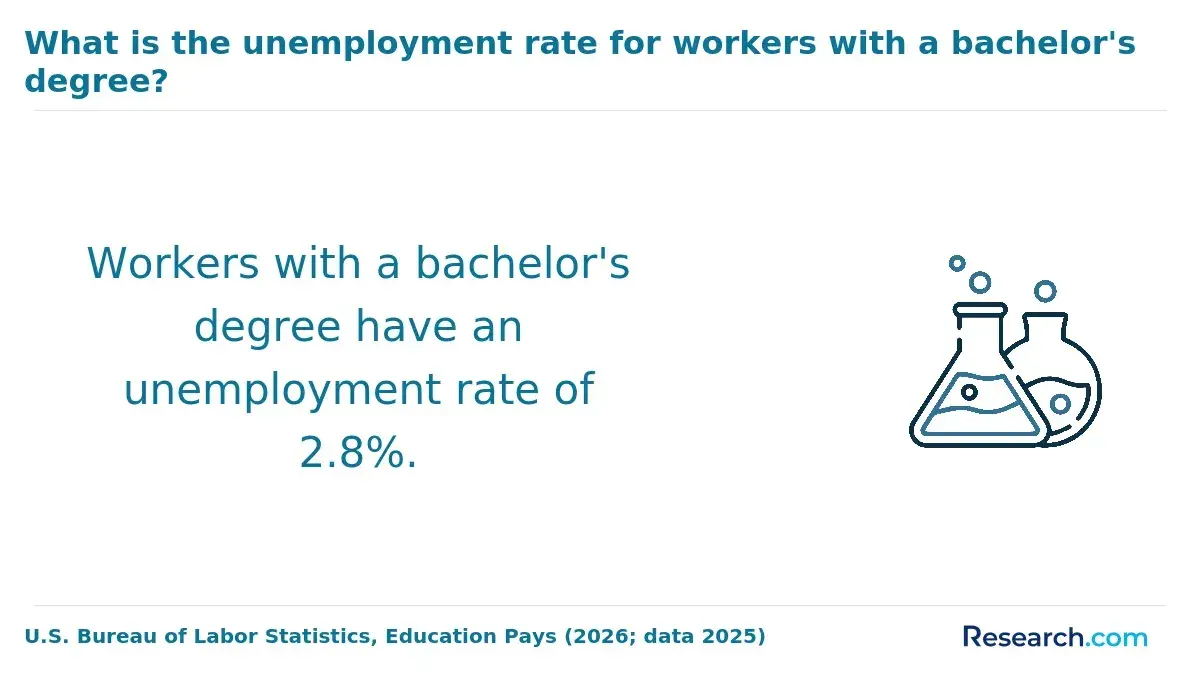
BLS reports a $120,230 median annual wage for data scientists in May 2025. This is an occupation-wide figure, not an expected starting salary or a measure of what a master's degree adds to someone's pay.
A defensible salary comparison needs the epidemiologist wage for the same period, along with attention to location and employer type. A verified, same-period epidemiologist figure is not available here, so a numerical pay gap would be misleading.
For your decision, compare current BLS occupational wage pages and local postings for the roles you would realistically seek. An applicant moving into public service, for example, should not use the national data scientist median as a forecast of their own offer or as a guaranteed return on tuition.
What Do You Study in Data Science and Epidemiology Master's Programs?
In data science, look for the sequence connecting programming and data management to statistical learning, model assessment, and an applied project.
In epidemiology, look for biostatistics, study design, measures of disease and association, bias and confounding, and analysis of population-health data. The exact requirements depend on the program; a course title alone does not establish how deeply a subject is taught.
For health-focused careers, examine the work students actually produce. A predictive model may need careful validation across patient groups, while an epidemiologic analysis may need a defensible comparison group and a clear account of missing data.
These are complementary skills, but a single elective seldom substitutes for sustained training in the other field.
If your interest is specifically in governing health-related AI rather than conducting epidemiologic research, AI master's degrees with ethics and governance tracks offer another curriculum to compare. Check whether any program makes privacy, bias, and evaluation substantial parts of assessed coursework rather than brief topics in a survey class.
What Are the Admission Requirements for Each Master's Degree?
Requirements vary by institution. Data science applicants may need to demonstrate preparation in programming, calculus, linear algebra, or statistics; epidemiology applicants may need quantitative readiness and a clear rationale for working with health questions.
Neither your bachelor's degree title nor a short online course automatically establishes that you meet a particular program's prerequisites.
Compare the published admissions requirements with your transcript and experience, then ask admissions staff whether a missing course must be completed for credit before entry. Separately, ask what preparation would help you succeed even if it is not formally required.
A prospective epidemiology student with strong health experience but limited coding, for instance, may benefit from programming practice; a prospective data science student interested in health research may need exposure to study design.
How Long Do These Master's Programs Take and What Do They Cost?
Completion time and price depend more on the specific school, credit load, enrollment pace, and residency rules than on the degree label. No single duration or tuition figure can reliably represent either category. Compare the full published curriculum and tuition schedule for the term in which you expect to enroll.
To make an apples-to-apples comparison, calculate required credits at the applicable tuition rate, then add mandatory fees and any required travel or placement expenses. Consider the income you might forgo if one option requires reduced work hours. Ask whether part-time enrollment changes fees, access to courses, or the time allowed to finish.
If cost is pushing you toward a more technical alternative, machine learning graduate programs on a $20,000 budget provide a useful comparison point. Verify current tuition and required fees directly before treating any advertised price as your total cost. A less expensive program is not a bargain if it omits the health-methods training your target job requires.
Are Online or Campus-Based Programs Better for Data Science or Epidemiology?
Choose the format that supports the work you need to practice. Online study can suit employed students if courses offer suitable scheduling, accessible instructors, and substantial projects.
Campus-based study may be more valuable when you want local research relationships, in-person collaboration, or access to a particular lab or public health partner. Format alone does not establish academic quality.
For epidemiology, verify how an online student obtains data, mentorship, and any required applied experience. For data science, examine access to computing resources, team projects, and feedback on code. In either field, ask whether classes meet live, whether projects require fixed meeting times, and whether any campus visits are mandatory.
If speed is your overriding priority and your interests are primarily technical, shorter pathways to an artificial intelligence master's may be worth comparing. Check the actual course sequence and weekly workload: an accelerated alternative is useful only if its curriculum still fits your intended role.
What Accreditation Should You Look for in Each Graduate Program?
First, confirm that the university holds recognized institutional accreditation. If the epidemiology degree sits within a school or program of public health, check whether that public health unit is accredited by the Council on Education for Public Health (CEPH), especially if a prospective employer, fellowship, or doctoral program specifies it.
Do not assume institutional accreditation and public-health program accreditation mean the same thing.
For either degree, verify the accreditation status on the institution's and relevant accreditor's current records. Then check the requirement that matters to your next step. An accreditation label cannot tell you whether a data science curriculum has enough computing depth or an epidemiology curriculum offers the applied research experience you need.
Do Data Scientists or Epidemiologists Need Licenses or Certifications?
These degree titles do not, by themselves, establish a universal U.S. professional license. Employers may instead specify a degree, technical skills, research experience, or a particular certification for a role.
Requirements can change with the job: clinical duties, regulated health work, and certain specialized positions may have rules beyond those for an analyst or researcher.
Before paying for an optional certificate, check postings from your target employers and ask whether the credential is required, preferred, or simply one way to demonstrate a skill. Treat claims that a master's automatically makes you licensed, certified, or eligible for every health-data job as a red flag.
How Do You Choose the Right Master's Program for Your Goals?
Start with the role, not the degree name. Choose data science when you want to build computational tools and preserve options beyond healthcare. Choose epidemiology when you want population-health questions and research design to be central to your work. If you want both, look for a program with substantial training in each area or a credible route to take courses across departments.
Use the following checks to turn that preference into a program shortlist:
- Collect target job postings and identify which methods and domain knowledge appear repeatedly.
- Map those requirements to compulsory courses and substantial projects, not just elective descriptions.
- Confirm admissions prerequisites, applied-work access, delivery requirements, accreditation relevant to your goal, and total expected cost.
- Ask programs for outcomes relevant to your intended role, including how they define graduates included in any employment or salary report.
If you are considering an AI-focused degree instead, choosing an AI master's for alumni access adds another question: whether its professional network reaches the employers and research communities you hope to join. Do not let rankings, an impressive degree title, or an unqualified salary claim outweigh evidence of curriculum fit.
Other Things You Should Know About Data Science
Yes. Teams may need both computational modeling and epidemiologic interpretation. The responsibilities will depend on the employer and the project; collaboration does not mean the two forms of training are interchangeable.
Possibly, particularly with strong programming, modeling, and project evidence. The candidate still needs to meet the technical expectations of the specific data scientist role.
No. Both can include epidemiologic methods, but their required coursework and applied or research emphasis may differ by school. Compare the actual degree plans rather than relying on the initials.
Try a small project in each style: build and evaluate a model, then frame a population-health question and assess its study design. The work you find more compelling can help you choose a curriculum before committing to a degree.
References
- Understanding College Costs | studentaid.gov https://studentaid.gov/resources/prepare-for-college/students/choosing-schools/consider-costs
- Academia, industry, and federal: What are the different STEM career paths? - ORISE https://orise.orau.gov/internships-fellowships/blog/what-are-the-different-stem-career-paths.html
- Price of Attending an Undergraduate Institution - COE https://nces.ed.gov/programs/coe/indicator/cua/price-of-attending-an-undergraduate-institution
- On the Convergence of Epidemiology, Biostatistics, and Data Science - PMC https://pmc.ncbi.nlm.nih.gov/articles/PMC8734556/
- Curriculum - MU Institute for Data Science and Informatics https://muidsi.missouri.edu/academic-programs/m-s-data-science-and-analytics-program/masters/curriculum/
- Prerequisite Courses | harvard.edu https://hms.harvard.edu/education-admissions/md-program/admissions/preparing-apply/prerequisite-courses
- Adapting to an Evolving Job Market - Tufts School of Medicine https://medicine.tufts.edu/news-events/news/navigating-future-public-health-adapting-evolving-job-market
- MS in Biostatistics and Data Science | cornell.edu https://phs.weill.cornell.edu/graduate-education-clinical-training/masters-track/biostatistics-data-science
- Application Requirements | Vagelos College of Physicians and Surgeons https://www.vagelos.columbia.edu/education/academic-programs/md-program/admissions/apply/application-requirements
- Tuition & Fees | State University System of Florida https://www.flbog.edu/universities/parents-students/tuition-fees/