2027 Low-Cost Online Healthcare Management Associate Degree Programs with Financial Aid: FAFSA, Grants, and Scholarships

Co-Founder and Chief Data Scientist
Choosing an online healthcare management associate degree is really a cost-and-value decision: the cheapest tuition is not always the lowest final price. Federal Student Aid lists the maximum Pell Grant at $7,395 for the 2024-25 award year, which can substantially change what eligible students pay.
This guide is for students comparing affordable online programs, especially working adults, first-generation students, and career changers. You will learn how FAFSA, grants, scholarships, employer benefits, accreditation, enrollment status, and transfer options affect the real net cost of the degree.
Key Things You Should Know
- FAFSA-eligible online associate programs must be offered by accredited institutions that participate in federal student aid; online format alone does not make a program eligible.
- The maximum Pell Grant is $7,395 for the 2024-25 award year, but awards depend on financial need, enrollment intensity, cost of attendance, and remaining lifetime eligibility.
- The best low-cost choice is usually the program with the lowest net price after grants and scholarships, not necessarily the lowest advertised tuition or the largest loan offer.
Which Low-Cost Online Healthcare Management Associate Degree Programs Offer Financial Aid?
Low-cost online healthcare management associate degree programs that offer financial aid are typically offered by regionally accredited community colleges, public colleges, and some nonprofit or private institutions that participate in Title IV federal student aid. The degree may be called healthcare management, healthcare administration, health services administration, medical office administration, health information management, or healthcare business administration, so students should compare curriculum and aid eligibility rather than relying on the title alone.
A useful starting point is to compare accredited online healthcare administration options by total cost, online availability, and transfer value. Students who want a broader affordability benchmark can review the cheapest online healthcare administration degree list, then confirm each school's current FAFSA participation and associate-level program details directly with the institution.
The table below summarizes the main types of low-cost online associate programs and how financial aid usually fits. Use it to narrow your search before requesting official net price estimates from schools.
| Program type | Common degree format | Financial aid potential | Best fit | Key affordability check |
| Public community college online program | AA, AS, or AAS in healthcare administration, healthcare management, or medical office administration | Often FAFSA-eligible if the college participates in federal aid | Students seeking the lowest tuition and strong transfer options | Confirm in-district, out-of-district, and online tuition rates |
| Public four-year college offering an online associate pathway | AS or AAS with bachelor's transfer options | Often FAFSA-eligible | Students planning to continue into a bachelor's program at the same institution | Ask whether associate credits apply cleanly to the bachelor's degree |
| Nonprofit online college | AAS or AS in healthcare management or health services administration | May be FAFSA-eligible if Title IV approved | Working adults who need flexible start dates and online support | Compare tuition, required fees, and institutional grants |
| Career-focused private college | AAS in healthcare administration or medical office management | Varies by accreditation and federal aid participation | Students prioritizing job-ready coursework over transfer | Verify accreditation, transferability, and total program cost |
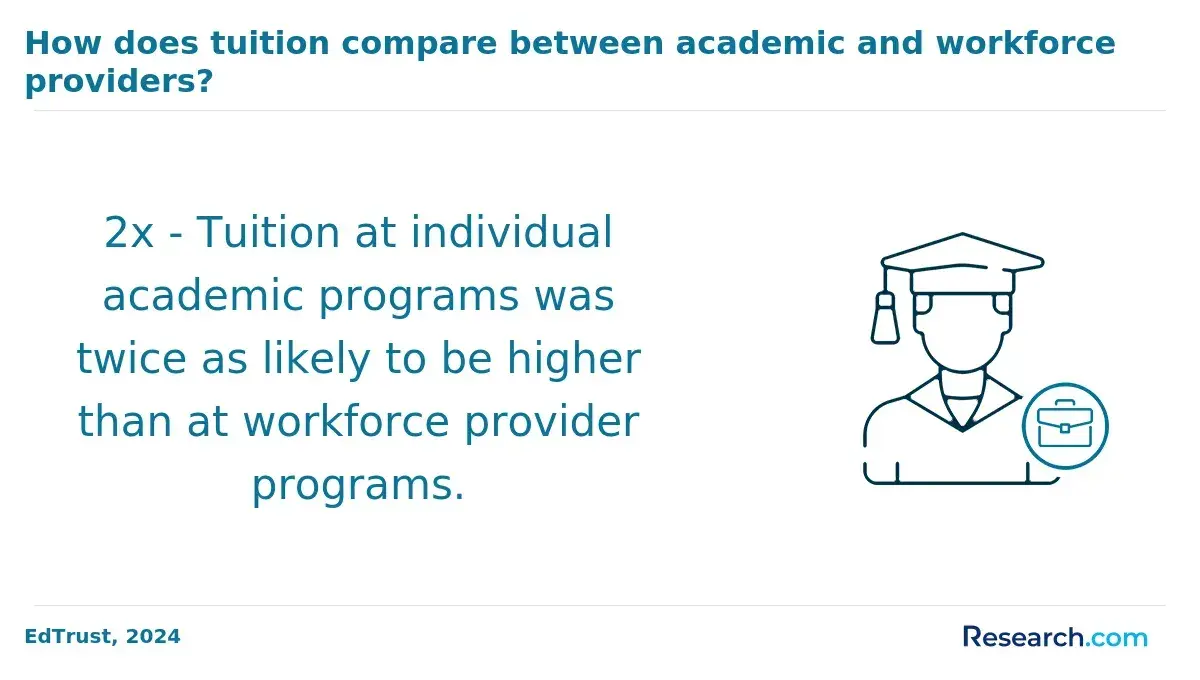
| Non-credit certificate or workforce program | Certificate, diploma, or continuing education credential | Usually not FAFSA-eligible unless part of an eligible program | Students needing a short skills credential rather than a degree | Do not assume certificate tuition qualifies for federal aid |
A healthcare management associate degree usually takes about 60 credits and can be completed in roughly two years full time, though part-time online students often take longer. Admissions requirements are usually accessible: a high school diploma or GED, placement information, transcripts, and sometimes a basic technology readiness step.
The main degree-type decision is whether the program is transfer-oriented or career-focused. AA and AS programs often include more general education and transfer courses, while AAS programs are usually designed for faster entry into healthcare office, billing, records, scheduling, or supervisory support roles. Students planning a bachelor's degree should ask for a written transfer evaluation before enrolling.
How Does FAFSA Work for Online Healthcare Management Associate Degree Programs?
FAFSA is the Free Application for Federal Student Aid. It determines eligibility for federal grants, federal loans, and work-study, and many states and colleges also use FAFSA data to award their own grants or scholarships. For an online healthcare management associate degree, FAFSA works the same way it does for an on-campus program, but only if the school and the specific program are eligible for federal student aid.
The FAFSA does not automatically make a program affordable. It produces aid eligibility, and the school then builds a financial aid offer based on the program's cost of attendance, your enrollment status, dependency status, Student Aid Index, and available institutional or state funding.
Follow these steps before you commit to a program, because they help separate genuine FAFSA eligibility from vague "financial aid available" language:
- Confirm that the institution is accredited by an agency recognized for federal student aid purposes and participates in Title IV aid.
- Ask whether the specific online healthcare management associate degree is an eligible program, not just whether the school offers aid in general.
- Submit the FAFSA using the school's correct federal school code and list every school you are seriously considering.
- Review the school's official cost of attendance, including tuition, required fees, books, technology costs, and distance-learning charges.
- Compare aid offers by separating grants and scholarships from loans, because loans reduce the bill now but must usually be repaid.
- Ask how your award changes if you enroll full time, three-quarter time, half time, or less than half time.
One common mistake is assuming that an online program is FAFSA-eligible because it is offered by a familiar institution. Some schools have both eligible degree programs and non-eligible certificate or continuing education programs, so students should verify the exact credential, delivery format, and program code with the financial aid office.
What Grants Can Help Pay for an Online Healthcare Management Associate Degree?
Grants are usually the most valuable type of aid because they generally do not need to be repaid if the student meets program, enrollment, and academic requirements. For low-income students, adult learners, and students attending public community colleges, grants can make an online healthcare management associate degree significantly more affordable than advertised tuition suggests.
The most important grant categories are listed below. Students should apply early because some state and institutional grants have limited funding or priority deadlines.
- Federal Pell Grant: Need-based federal grant aid for eligible undergraduate students who have not already earned a bachelor's degree and have remaining lifetime eligibility.
- Federal Supplemental Educational Opportunity Grant: Campus-based federal grant aid for students with high financial need, available only at participating schools with limited annual funding.
- State need-based grants: Grants funded by state agencies, often restricted to residents attending eligible in-state institutions or meeting state-specific deadlines.
- Workforce or healthcare training grants: State, local, or workforce-board funding that may support healthcare administration, medical office, billing, coding, or health information pathways.
- Institutional grants: School-funded grants for students who meet academic, financial need, residency, or enrollment criteria.
The practical advantage of grants is that they lower the net price before borrowing. The limitation is that grant amounts can change when your enrollment level, income information, satisfactory academic progress, or school choice changes.
Students should also watch for grant-related red flags. If a school advertises "grant aid available" but will not provide a written aid offer, cost of attendance, renewal criteria, and satisfactory academic progress rules, the student does not yet have enough information to judge affordability.
Scholarships can come from colleges, hospital systems, professional associations, community foundations, employers, and local civic organizations. Unlike grants, scholarships may focus on merit, career goals, community service, healthcare interest, first-generation status, adult learner status, or residence in a specific county or state.
The strongest scholarship search strategy is to combine broad institutional awards with smaller healthcare-specific and local awards. These categories are especially relevant for online healthcare management associate degree students:
- Institutional scholarships: Awards from the college for new students, returning adults, online learners, or students in health sciences or business-related programs.
- Healthcare workforce scholarships: Awards from hospitals, clinics, long-term care organizations, or health systems that want to build administrative talent pipelines.
- Community foundation scholarships: Local scholarships that may be less competitive than national awards and may support associate degree students.
- Professional-interest scholarships: Awards tied to healthcare administration, health information, medical office management, billing, coding, or public health administration.
- Adult learner and re-entry scholarships: Awards for students returning to college after time in the workforce, caregiving, military service, or a career change.
Scholarships are most useful when they are renewable or stackable with grants. Before accepting an award, ask whether it reduces loans, reduces unmet need, or reduces other grant aid, because schools package outside scholarships differently.
A frequent mistake is counting a one-time scholarship as if it will cover both years of the associate degree. Students should check renewal GPA, credit-load requirements, application deadlines, and whether the award applies to summer courses, online fees, or books.
Financial aid can reduce the cost substantially, but the reduction depends on the mix of grants, scholarships, loans, tuition rates, required fees, and enrollment intensity. The most reliable number is the net price: total cost of attendance minus grants and scholarships. Loans should not be treated as a discount because they shift cost into repayment.
The table below shows how different types of aid affect cost. It is designed to help students read aid offers accurately rather than focusing only on the total award amount.
| Aid type | How it affects the bill | Repayment impact | Best-value use | Cost comparison warning |
| Pell Grant and other need-based grants | Directly lowers out-of-pocket cost | Usually no repayment if requirements are met | Highest priority funding source for eligible students | May be prorated if enrollment intensity changes |
| State or institutional scholarships | Directly lowers cost if applied to tuition, fees, or education expenses | Usually no repayment if terms are met | Useful for reducing or avoiding loans | May require GPA, residency, major, or credit minimums |
| Employer tuition assistance | May reimburse or prepay eligible coursework | Usually no student loan repayment, but job-service rules may apply | Strong option for working healthcare employees | May pay only after grades are posted |
| Federal Direct Loans | Covers remaining costs after grants and scholarships | Must usually be repaid with interest | Use cautiously for gaps that cannot be covered otherwise | A large aid package may still be loan-heavy |
| Payment plans | Spreads remaining balance across installments | Not a loan if no interest is charged, but fees may apply | Useful for small balances after grant aid | Missed payments can block registration |
For the 2024-25 award year, the maximum Pell Grant is $7,395. For a student in a low-tuition public online associate program, that can cover a meaningful portion of tuition and required fees; for a higher-cost program, the same grant may leave a much larger balance.
To estimate your likely out-of-pocket cost, use this sequence before comparing schools. It keeps you from mistaking loans for savings.
- Start with the full cost of attendance for the exact online program and enrollment plan.
- Subtract only grants, scholarships, waivers, and employer funds that do not need to be repaid.
- Separate federal loans from gift aid and decide whether you are comfortable borrowing the remaining amount.
- Add expenses that may not appear in tuition, such as books, proctoring, software, background checks, and graduation fees.
- Compare the remaining annual and total program balance across schools.
Financial aid packages can look similar at first glance but differ sharply in value. A school with higher tuition can sometimes become competitive after grants and scholarships, while a low-tuition program can become more expensive if it has limited aid, high online fees, or poor transfer-credit acceptance.
The best comparison is not "Which school gave me the biggest package?" but "Which school leaves me with the lowest realistic cost for the credential I need?" The table below shows the comparison fields students should request from every school.
| Comparison factor | Why it matters | What to ask the school |
| Net price after grants and scholarships | Shows the real cost before borrowing | What is my estimated annual and total net price for this online associate degree? |
| Loan share of the aid package | Large loan offers can make aid appear more generous than it is | How much of this package is gift aid and how much is loan eligibility? |
| Online and program-specific fees | Technology, platform, lab, proctoring, or course fees can raise total cost | Which required fees are not included in advertised tuition? |
| Enrollment assumptions | Aid can change when a student switches from full time to part time | What happens to my aid if I take 6, 9, or 12 credits? |
| Transfer-credit policy | Accepted credits can shorten the degree and lower cost | How many prior credits will apply to this exact program? |
| Scholarship renewal rules | One-year awards may not reduce the full program cost | Is this award renewable, and what GPA or credit load is required? |
A common red flag is an aid offer that highlights the total amount available but does not clearly separate scholarships, grants, loans, and work-study. Students should ask for a revised estimate that shows gift aid first, then remaining balance, then optional borrowing.
Another mistake is comparing one school's annual aid package to another school's per-term estimate. Always compare the same time period, same credit load, and same credential level.
Yes, employer tuition assistance can help pay for an online healthcare management associate degree, especially for students already working in hospitals, clinics, long-term care, insurance, revenue cycle, medical records, patient access, or administrative support. Under current federal tax rules, employer-provided educational assistance of up to $5,250 may be excluded from taxable income when the benefit meets requirements, making it a powerful supplement to grants and scholarships.
Employer benefits are especially useful when a student's FAFSA aid does not cover the full remaining balance. They can also support a longer education path, such as moving from an associate degree to an affordable online MBA healthcare management program later, if the employer supports graduate education.
Before relying on employer aid, review the rules carefully. These questions help prevent cash-flow problems and unexpected repayment obligations:
- Does the employer pay the school directly, or do you pay first and request reimbursement after completing the course?
- Are online associate degree courses eligible, or does the benefit apply only to bachelor's or graduate programs?
- Is there a minimum grade, employment status, or work-hour requirement?
- Does the employer require you to stay for a set period after receiving tuition benefits?
- Can employer aid be combined with Pell Grants, scholarships, state grants, and payment plans?
- Will the benefit cover fees, books, software, and certification exams, or tuition only?
Other benefits may include union education funds, military tuition assistance, GI Bill benefits, workforce development funding, vocational rehabilitation support, and hospital foundation scholarships. Each has separate eligibility rules, so students should coordinate with both the school's financial aid office and the benefit administrator before enrolling.
Accreditation and enrollment status are two of the biggest financial-aid gatekeepers. A program may be online, affordable, and career-relevant, but students generally cannot use federal student aid unless the institution participates in eligible federal aid programs and the credential itself qualifies.
Institutional accreditation matters for more than aid. It can affect credit transfer, employer recognition, bachelor's admission, and whether future schools will accept the associate degree as part of a longer healthcare management pathway. Programmatic accreditation may matter more in fields such as health information management or coding, depending on the curriculum and career goal.
Enrollment status affects both aid amount and eligibility. Pell Grant amounts are now tied to enrollment intensity, while federal Direct Loans generally require at least half-time enrollment. This matters for working adults who plan to take one or two courses at a time.
Students should verify these items in writing before making a deposit or registering for classes:
- The institution's current accreditation status and federal student aid participation.
- Whether the specific online associate degree is Title IV eligible.
- The minimum credit load required for grants, loans, scholarships, and employer benefits.
- The school's satisfactory academic progress policy, including GPA, completion rate, and maximum timeframe.
- Whether remedial, prerequisite, repeated, or transfer courses count toward financial-aid enrollment.
- Whether changing from full time to part time changes grants, scholarships, tuition discounts, or payment deadlines.
A major red flag is a school that avoids direct answers about accreditation, federal aid eligibility, graduation requirements, or transferability. Students should pause enrollment until they can verify the information through official school documents and financial aid staff.
The students who benefit most are those whose career goal fits an associate-level credential, whose aid package includes meaningful grant or scholarship support, and whose program credits can either lead directly to employment or transfer efficiently into a bachelor's degree. The degree is often a strong fit for working adults who need a flexible online schedule and want healthcare business knowledge without committing immediately to a four-year program.
The career value depends on the target role. An associate degree may support entry-level or advancement-oriented roles in medical office administration, patient services, billing support, scheduling, records coordination, front-office supervision, and healthcare customer operations. The U.S. Bureau of Labor Statistics reported a May 2024 median annual wage of $50,250 for medical records specialists, which gives students a practical salary benchmark for some associate-accessible healthcare administration pathways.
Students planning to move into department leadership, operations management, or senior healthcare administration may eventually need a bachelor's or graduate degree. For that path, an associate program with strong transfer agreements can reduce the cost of later education, including an online master's healthcare management program after completing a bachelor's degree.
This degree is most likely to be a good fit for these students:
- Students who qualify for Pell Grants, state grants, institutional grants, or employer tuition assistance.
- Working adults already in healthcare who want administrative credentials for internal mobility.
- Students who need a lower-cost first step before transferring into a bachelor's degree.
- Students seeking online coursework in healthcare systems, medical terminology, billing, records, supervision, ethics, and healthcare finance basics.
- Students who can maintain the credit load and academic progress required to keep aid.
Students may want a different route if they already know they need a bachelor's degree for their target jobs, if the associate credits will not transfer, or if the program's net price depends heavily on loans. In those cases, a direct bachelor's pathway, certificate, apprenticeship, or employer-funded training option may be more efficient.
How Should Students Minimize the Total Cost of an Online Healthcare Management Associate Degree?
Minimizing total cost means controlling more than tuition. Students should reduce required credits, maximize gift aid, avoid unnecessary loans, choose transferable courses, and prevent aid loss from missed deadlines or academic progress problems.
The most effective cost-control plan is a step-by-step comparison process. Use the checklist below before enrolling, not after the first bill arrives.
- Choose only accredited institutions that clearly confirm federal student aid eligibility for the exact online associate degree.
- File the FAFSA early and list every school you are considering so you can compare official aid offers.
- Ask each school for total program cost, not just per-credit tuition.
- Request a transfer-credit evaluation before registration if you have prior college, military, AP, dual-enrollment, or industry training credits.
- Prioritize grants, scholarships, employer aid, waivers, and payment plans before borrowing.
- Compare net price after gift aid across schools using the same credit load and time period.
- Check whether online fees, proctoring fees, books, software, background checks, or graduation fees change the lowest-cost option.
- Confirm scholarship renewal rules and satisfactory academic progress requirements.
- Choose a schedule you can complete successfully, because failed or withdrawn courses can increase both cost and time.
- Keep long-term transfer plans in mind if your goal may eventually include a bachelor's, master's, or doctorate in healthcare administration.
The biggest affordability mistake is choosing the lowest advertised tuition without calculating total net cost. A program with slightly higher tuition but better grant aid, accepted transfer credits, lower fees, and stronger transfer pathways can be the less expensive option over the full education plan.
Students should also avoid borrowing the full amount offered simply because it appears in the aid package. Borrow only after estimating the total program balance, likely monthly repayment, and whether the credential realistically supports the career move you are pursuing.
Other Things You Should Know About Healthcare Management
Students commonly study healthcare systems, medical terminology, health records, billing basics, office procedures, supervision, healthcare ethics, communication, and introductory business topics. Some programs include coding, reimbursement, or health information courses, depending on the school's focus.
The terms often overlap at the associate level. Healthcare administration may focus more on office operations and administrative systems, while healthcare management may include supervision, planning, and organizational topics. Students should compare course lists rather than relying only on the program title.
It may help prepare for some administrative, billing, coding, or health information credentials, but certification eligibility varies by organization and exam. Students should check the credentialing body's requirements before assuming a degree program qualifies them.
Employers are generally more concerned with accreditation, relevant coursework, healthcare experience, technical skills, and communication ability than whether classes were online. Students should choose an accredited school and look for programs with career services, applied assignments, or healthcare employer connections.
- Online Healthcare Management Associate Degrees: School Review https://www.edumed.org/online-schools/healthcare-management-degrees/associate/
- How does a college degree improve graduates’ employment and earnings potential? - APLU https://www.aplu.org/our-work/4-policy-and-advocacy/publicuvalues/employment-earnings/
- 9 Online Schools That Accept FAFSA (and How to Get Financial Aid) https://www.studentloanplanner.com/financial-aid-online-colleges/
- Healthcare Management, Administration & Policy Degree Programs https://www.healthcaremanagement.org/degree/
- College Scholarship Opportunities - Health Career Collaborative https://healthcareercollaborative.com/college-scholarship-opportunities/
- Online Associate Degree in Medical Administration https://www.monroeu.edu/student-life/online-experience/online-associate-degree-medical-administration
- Quality & Accreditation Services - Health Management Associates https://www.healthmanagement.com/services/quality-accreditation-services/
- Scholarships and Grants | PublicHealthOnline.org https://www.publichealthonline.org/scholarships-and-grants/
- 25 Great Scholarships for Healthcare Management Students - Healthcare Management Degree Guide https://www.healthcare-management-degree.net/great-scholarships-for-healthcare-management-students/
- 2025 Best Health Care Management Degrees Online https://www.onlineu.com/degrees/healthcare-management