2027 Low-Cost Online Aviation Management Associate Degree Programs with Financial Aid: FAFSA, Grants, and Scholarships

Co-Founder and Chief Data Scientist
Choosing an online aviation management associate degree is really a cost-and-career decision: the cheapest tuition is not always the lowest final bill. The College Board reported average published tuition and fees of $4,050 for public two-year in-district students in 2024-25, while the maximum federal Pell Grant was $7,395 for eligible students.
That gap matters because need-based aid can make some accredited online associate programs much more affordable. This guide is for students comparing aviation, airport operations, airline, logistics, or transfer pathways and explains how to estimate the real price before enrolling.
Key Things You Should Know
- FAFSA-eligible online associate programs can be less expensive than advertised tuition suggests, but aid depends on accreditation, Title IV participation, enrollment status, financial need, and satisfactory academic progress.
- The 2024-25 maximum Pell Grant was $7,395, which can cover a large share of tuition at many public two-year colleges but may cover less at private or specialized aviation institutions.
- The best-value program is usually the one with the lowest net price, transferable credits, limited extra fees, and aid that does not rely heavily on loans.
Which Low-Cost Online Aviation Management Associate Degree Programs Offer Financial Aid?
Low-cost online aviation management associate degree programs are usually offered by public community colleges, state colleges, and some aviation-focused universities. The most affordable options tend to be transfer-oriented Associate of Arts or Associate of Science programs, while career-focused Associate of Applied Science programs may include more airport operations, safety, airline, or logistics coursework.
The table below shows examples of program types students commonly compare. Always confirm current online availability, residency pricing, fees, and FAFSA eligibility directly with the school before applying, because colleges can change delivery formats and aid participation rules.
| Program example | Typical degree type | Why it may be affordable | Financial aid angle | Best fit |
| Florida public state college aviation administration programs | AS or AAS | Often lower in-state tuition and community-college-style pricing | Usually FAFSA-eligible if the student enrolls in an eligible degree program at a Title IV institution | Florida residents, working adults, and students seeking airport or airline operations roles |
| Public community college aviation management or airport operations programs | AA, AS, or AAS | Lower tuition base, transfer-credit opportunities, and local scholarships | May combine Pell Grants, state grants, institutional aid, and federal loans | Students who want the lowest possible out-of-pocket cost and may later transfer |
| Embry-Riddle Aeronautical University Worldwide associate-level aviation business programs | AS | Higher tuition than many public colleges but aviation-specific curriculum and online infrastructure | FAFSA-eligible for qualifying students in eligible programs; institutional and military-related aid may apply | Students who value a specialized aviation brand, employer recognition, and flexible online delivery |
| State university aviation science or aviation management associate pathways | AA, AS, or AAS | Can be cost-effective for in-state students, especially when credits apply to a bachelor's degree | Federal, state, and institutional aid may be available depending on program eligibility | Students planning to continue into aviation management, airport administration, or logistics bachelor's programs |
When comparing aviation management with broader business pathways, consider whether the aviation label is essential for your goal. Some students who want airline supervision, airport administration, or aviation logistics may also compare an online business degree if it offers stronger transfer options or lower net cost.
Aviation management associate programs typically cover airport operations, aviation safety, transportation systems, management principles, business communication, regulations, and sometimes logistics or unmanned aircraft systems. Admissions commonly require a high school diploma or GED, transcripts, placement requirements, and proof of residency for in-state tuition. Most associate degrees require about 60 credits and can take two years full time, while part-time students often need longer.
How Does FAFSA Work for Online Aviation Management Associate Degree Programs?
FAFSA is the application students use to access federal student aid, and many states and colleges also use FAFSA data to award their own grants or need-based aid. Completing the FAFSA does not guarantee free money, but it is usually the first step if you want Pell Grants, federal loans, work-study, state grants, or institutional aid.
For an online aviation management associate degree, FAFSA eligibility depends on both the student and the school. The student generally must meet federal eligibility rules, and the college must participate in federal student aid programs with the specific degree classified as an eligible program.
Use this sequence to avoid the most common FAFSA mistakes before you enroll:
- Confirm that the college participates in federal student aid and has an active federal school code.
- Ask whether the specific online aviation management associate degree is Title IV-eligible, not just whether the institution is FAFSA-eligible.
- Complete the FAFSA using the correct school code and list every school you are seriously considering.
- Review each financial aid offer separately, because grants, loans, work-study, and institutional scholarships are not the same thing.
- Ask the financial aid office how your award changes if you enroll part time, drop a course, repeat a class, or switch programs.
- Calculate your net price by subtracting grants and scholarships from tuition, required fees, books, technology costs, and other required expenses.
The 2024-25 federal Direct Loan annual limit for a dependent first-year undergraduate was $5,500, but borrowing the maximum is not the same as affordability. Loans can help close a gap, but students should compare repayment obligations with realistic entry-level wages in airport operations, airline services, dispatch support, logistics, or transfer-to-bachelor's pathways.
What Grants Can Help Pay for an Online Aviation Management Associate Degree?
Grants are usually the best form of financial aid because they generally do not need to be repaid if you meet enrollment and academic requirements. For online aviation management associate degree students, the most important grant sources are federal, state, and institutional programs.
The table below compares common grant categories and how they affect the real cost of an online associate degree. This is useful because two schools with the same tuition can have very different net prices after grants.
| Grant type | Who may qualify | How it helps | Key caution |
| Federal Pell Grant | Undergraduates with financial need who have not already earned a bachelor's degree | Can significantly reduce tuition and required fees at low-cost public colleges | Award size depends on federal rules, Student Aid Index, cost of attendance, and enrollment intensity |
| Federal Supplemental Educational Opportunity Grant | Students with exceptional financial need at participating schools | Adds extra grant funding when available | Funds are limited and not every college participates |
| State need-based grants | Residents who meet state-specific rules | Can make in-state online programs especially affordable | Deadlines may be earlier than federal FAFSA deadlines |
| Institutional grants | Students selected by the college based on need, merit, residency, or program priorities | Can lower net price at both public and private nonprofit institutions | Renewal rules may require specific GPA, credit load, or continuous enrollment |
A common mistake is assuming a grant will automatically cover the full program. Instead, ask each school for a full cost-of-attendance estimate that includes tuition, online course fees, books, software, proctoring fees, graduation fees, and any aviation-specific materials.
Students who are comparing aviation management with broader operations, logistics, or business management careers may also look at a project management degree online later if they plan to move into scheduling, airport projects, transportation systems, or operations coordination.
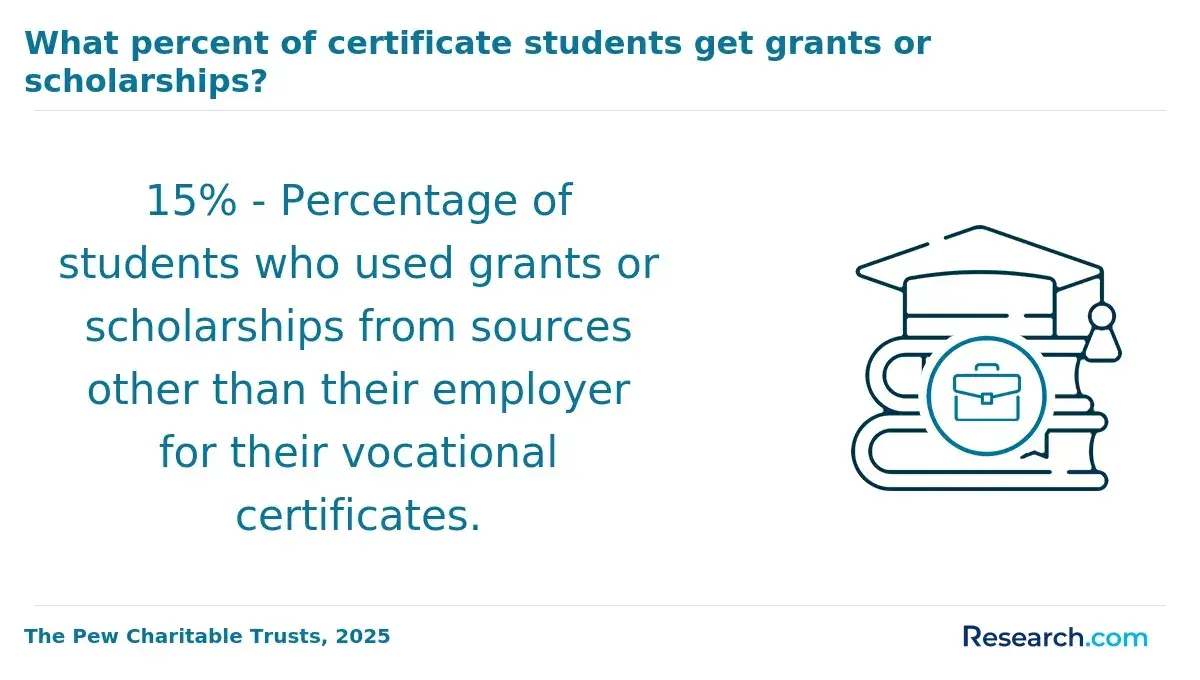
Scholarships can come from colleges, aviation associations, airport authorities, airlines, employers, foundations, veterans' organizations, and local civic groups. Unlike grants, scholarships are often based on merit, career interest, membership, essays, recommendations, military affiliation, or local residency rather than financial need alone.
For aviation management associate degree students, scholarship searches should be targeted rather than broad. Aviation is a specialized field, so smaller awards from industry or local airport organizations can be less competitive than national general scholarships.
Use these categories when building a scholarship list:
- Institutional scholarships: awards from the college for aviation, business, transportation, leadership, first-generation students, adult learners, or transfer-intending students.
- Aviation industry scholarships: awards connected to airport management, aviation maintenance, aerospace, airline operations, women in aviation, minority aviation organizations, or pilot-adjacent career groups.
- Local airport and community awards: scholarships from airport authorities, chambers of commerce, Rotary clubs, workforce boards, or local foundations that support transportation careers.
- Military and veteran scholarships: awards for active-duty service members, veterans, spouses, and dependents, especially at schools with strong military-student services.
- Employer-linked scholarships: tuition support from airlines, fixed-base operators, logistics firms, cargo carriers, airports, or aviation service companies.
The main red flag is a scholarship that sounds generous but cannot be renewed or applies only to the first term. Ask whether the award is one-time or renewable, whether it stacks with Pell Grants, whether it reduces institutional aid, and whether it requires full-time enrollment.
Financial aid can reduce the cost of an online aviation management associate degree substantially, especially at public two-year colleges. The practical question is not "How much aid can I get?" but "How much will I still pay after grants and scholarships, and how much would I need to borrow?"
The table below uses simplified scenarios to show how aid changes out-of-pocket cost. These are examples for comparison only; your actual offer depends on your FAFSA results, state residency, school cost, enrollment intensity, and scholarship eligibility.
| Cost scenario | Estimated annual billed cost | Grant and scholarship aid | Estimated annual net billed cost | What it means |
| Low-cost public two-year option | $4,050 | Up to the Pell Grant amount for a highly eligible student | Could be very low before books and fees if aid covers tuition | Often the strongest affordability case for high-need students |
| Public online program with higher nonresident pricing | Varies by residency | Pell, state aid if eligible, and possible institutional aid | Can rise quickly if charged out-of-state tuition | Residency classification can matter as much as tuition rate |
| Specialized aviation university option | Often higher than public two-year tuition | Pell, federal loans, military benefits, employer aid, and institutional scholarships where available | May still be higher after aid | Best evaluated by career fit, transfer value, flexibility, and employer recognition |
The maximum Pell Grant of $7,395 in 2024-25 was higher than the average published tuition and fees at public two-year colleges, but that does not mean every student pays nothing. Pell eligibility varies, and students still need to consider books, supplies, online fees, transportation for any in-person requirement, and lost work hours.
A higher-cost program can become cheaper after aid if it offers strong institutional scholarships or employer tuition benefits. However, a large aid package that includes mostly loans may leave you with a higher long-term cost than a smaller grant package at a lower-tuition college.
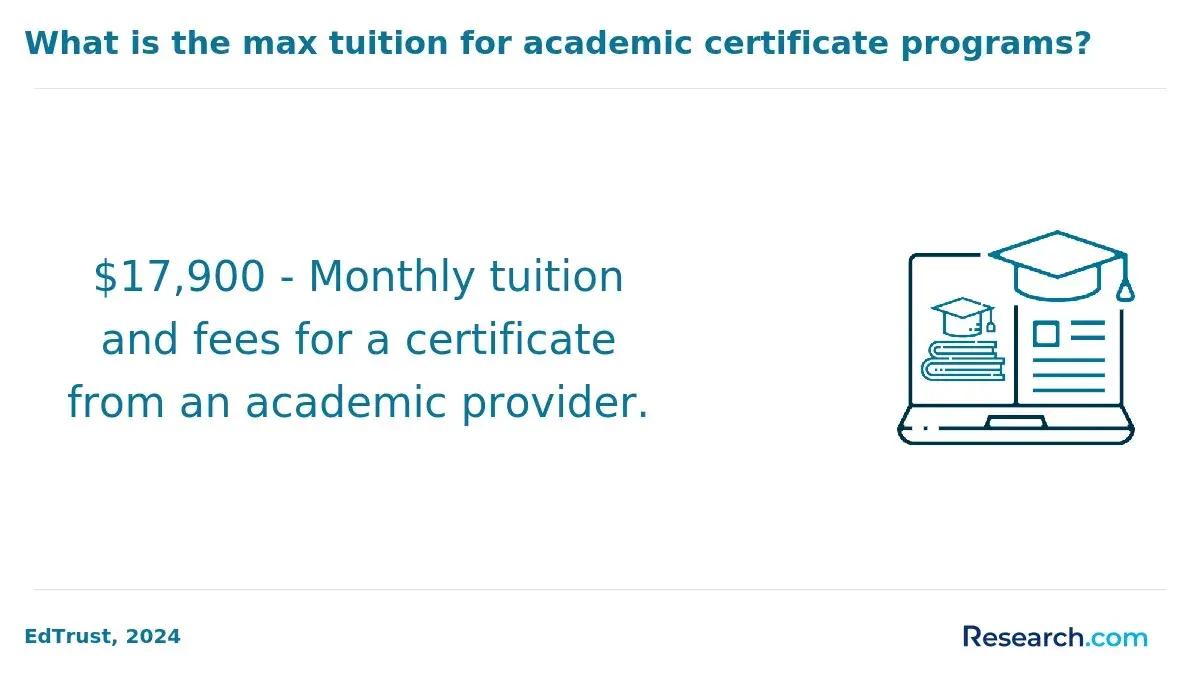
Financial aid packages can look similar on the surface but produce very different outcomes. The most important distinction is between gift aid, which usually does not need to be repaid, and loans, which do.
Use this comparison framework when reviewing offers from multiple online aviation management associate degree programs. It helps separate genuine affordability from aid packages that only appear generous.
| Comparison factor | Why it matters | Question to ask |
| Total cost of attendance | Includes tuition, required fees, books, equipment, technology, and living or transportation allowances | What expenses are included and which ones will I pay separately? |
| Net price after gift aid | Shows the cost after grants and scholarships, before loans | What is my cost if I decline all loans? |
| Loan share of the offer | High loan dependence can make a cheap-looking program expensive later | How much of this package must be repaid? |
| Enrollment requirement | Some awards shrink below full-time enrollment | What happens if I take 6, 9, or 12 credits? |
| Renewal conditions | A first-year award may not continue automatically | What GPA, credit completion, or deadline is required to keep this aid? |
| Transfer value | Credits that apply to a bachelor's degree can reduce future education costs | Which bachelor's programs accept these credits toward the major? |
Students interested in supervisory or operations roles should also think about long-term education planning. If you expect to complete a bachelor's later, compare articulation agreements, accepted transfer credits, and whether a project manager bachelor degree or aviation/business bachelor's pathway would build on your associate credits without forcing you to retake courses.
The most useful side-by-side comparison is a simple net-price worksheet: total cost minus grants and scholarships, plus any required borrowing. If one college has lower tuition but poor transferability, and another costs slightly more but moves you cleanly into a bachelor's degree, the second may have better long-term value.
Employer tuition assistance can be a major advantage for students already working in aviation, transportation, hospitality, cargo, logistics, customer service, or the military. Airlines, airports, fixed-base operators, aircraft service companies, and logistics employers may support education that improves supervisory, safety, compliance, scheduling, or operations skills.
Before relying on employer aid, read the policy carefully. Some benefits reimburse after the course is completed, which means you may need to pay upfront and wait for repayment.
Ask your employer these questions before enrolling:
- Does the benefit cover associate degree courses, online courses, and aviation management programs?
- Is payment made upfront to the school or reimbursed after grades are posted?
- What grade is required to receive reimbursement?
- Is there an annual maximum benefit or lifetime cap?
- Do I need manager approval before registering?
- Must I stay with the employer for a certain period after receiving tuition assistance?
- Can employer benefits be combined with Pell Grants, scholarships, veterans benefits, or institutional aid?
Military students should also compare Tuition Assistance, GI Bill benefits, institutional military discounts, and credit for prior learning. The best result is often a layered funding plan that uses grants and employer or military benefits before borrowing.
Students planning to move from aviation operations into higher-level supply chain, airline planning, airport administration, or operational leadership may eventually compare an MBA operations management online, but the associate degree can be a lower-cost first credential if it transfers well.
Accreditation and enrollment status are two of the biggest factors affecting financial aid. A college generally must be institutionally accredited by an agency recognized for federal aid purposes and must participate in Title IV programs for students to use FAFSA-based aid.
Programmatic aviation accreditation can add value in some aviation disciplines, but it is not the same as federal financial-aid eligibility. For an aviation management associate degree, institutional accreditation and the specific program's Title IV eligibility are the first financial-aid checkpoints.
Enrollment status also matters because aid may be prorated. Full-time students usually receive the largest term-based aid amounts, while half-time or less-than-half-time students may receive reduced grants or lose access to certain aid types. Federal student loans generally require at least half-time enrollment.
Watch for these red flags before committing:
- The school says it is "approved" or "licensed" but will not clearly identify institutional accreditation and federal aid participation.
- The program is online but not listed as an eligible degree for federal student aid.
- The advertised tuition excludes mandatory online, technology, course, assessment, or graduation fees.
- The aid offer includes loans in the "award" total without separating them from grants and scholarships.
- The program requires full-time enrollment to keep institutional scholarships, but your work schedule makes full-time study unrealistic.
- The school cannot explain how credits transfer into aviation, business, logistics, or management bachelor's programs.
Satisfactory academic progress is another important requirement. Students generally must maintain a minimum GPA, complete a required share of attempted credits, and finish within a maximum timeframe. Dropping or failing courses can reduce future aid and increase the total cost of the degree.
A low-cost online aviation management associate degree with financial aid is most valuable for students who need an affordable credential, want flexibility, and have a clear reason to study aviation operations or aviation business. It can also be a practical first step for students who are not ready to commit to a four-year degree financially.
The degree may be a strong fit for several student profiles:
- Working aviation employees: ramp agents, customer service agents, dispatch support staff, cargo workers, or airport employees who want a management-oriented credential.
- Budget-conscious students: learners who can qualify for Pell Grants, state aid, institutional scholarships, or employer tuition benefits and want to avoid large debt.
- Transfer-intending students: students who want to complete lower-division credits online before moving into a bachelor's degree in aviation, business, logistics, or management.
- Adult learners: students who need asynchronous courses, part-time pacing, and a program that works around shifts or family responsibilities.
- Career changers: students moving from retail, hospitality, transportation, military service, or logistics into aviation-related operations roles.
The degree may be less useful for students whose primary goal is to become a pilot, aircraft mechanic, air traffic controller, or licensed dispatcher unless the program specifically supports that pathway. Aviation management is usually about operations, administration, safety, supervision, and business processes, not flight training by itself.
Career value depends on the role and employer. The U.S. Bureau of Labor Statistics reported a May 2024 median annual wage of $80,880 for logisticians, a related field for students interested in transportation and supply chain operations. An associate degree may not be enough for every logistics or management job, but it can help students build a foundation for entry-level operations roles and future bachelor's study.
How Should Students Minimize the Total Cost of an Online Aviation Management Associate Degree?
The lowest-cost strategy is to compare programs by total net price, not just tuition. A program with low advertised tuition can become expensive if it has high fees, weak transfer policies, or limited aid, while a higher-tuition school can be competitive if grants, scholarships, and employer benefits reduce the amount you pay or borrow.
Follow this practical process before choosing an online aviation management associate degree:
- Shortlist only institutionally accredited colleges with eligible online associate programs.
- Use each school's net price calculator, then ask the financial aid office for a program-specific estimate.
- Separate gift aid from loans in every offer.
- Calculate annual and total program cost using tuition, required fees, books, software, technology, graduation fees, and any in-person requirements.
- Check whether your state residency changes tuition or grant eligibility.
- Ask how aid changes at full-time, three-quarter-time, half-time, and less-than-half-time enrollment.
- Apply for aviation, transportation, business, adult learner, military, and local scholarships before the priority deadline.
- Request a transfer-credit evaluation if you have prior college, military, industry training, or certifications.
- Confirm which bachelor's programs accept the associate degree credits if further education is part of your plan.
- Choose the program with the best combination of low net cost, manageable schedule, transferable credits, and career relevance.
The most common mistake is treating financial aid as a discount without reading the conditions. Grants can change with enrollment level, scholarships can expire, loans must be repaid, and transfer credits may not apply the way students expect. If your goal is airport operations, aviation administration, airline supervision, logistics, or business operations, compare curriculum outcomes as carefully as cost.
Students who are not fully committed to aviation should compare nearby options in business, logistics, transportation, and operations management before enrolling. The right low-cost associate degree is the one that keeps your debt low while preserving the most future choices.
Other Things You Should Know About Aviation Management
No. Aviation management focuses on airport operations, airline business, safety, supervision, logistics, and administration. Flight training is separate unless the program explicitly includes pilot coursework or partnerships, and flight fees are often billed differently from regular tuition.
An associate degree may support entry-level or advancement opportunities in airport operations, airline services, cargo, dispatch support, customer service supervision, or transportation coordination. Some management roles may prefer or require a bachelor's degree plus experience.
Some are fully online, while others may require internships, local field experiences, exams, campus visits, or aviation-site activities. Ask the program whether any in-person component is required before assuming the degree can be completed entirely at a distance.
Choose an AA or AS if your main goal is transfer to a bachelor's degree. Choose an AAS if you want a more career-focused program with applied aviation operations coursework. Transfer rules vary, so confirm credit acceptance before enrolling.
- Scholarships for Aviation Students https://www.alpa.org/advancing-aviation/future-of-the-profession/become-a-pilot/aspiring-aviators/scholarships
- How to Get Flight School Financing | J.A. Flight https://www.jaflight.com/can-you-get-a-student-loan-for-flight-training
- Online studies in Aviation Management at Germany's largest university https://www.privathochschulen.net/en/courses/economics/tourism-and-event/15909
- Civil Aviation Management https://akademiata.pl/en/offer/bachelor/civil-aviation-management/
- Financial Aid & Scholarships - SMAT https://smat.edu/financial-aid-scholarships/
- Flight Training Cost in the U.S. - Tuition, Financing & ROI Guide - US Aviation Academy https://www.usaviationacademy.com/resource-center/flight-training-cost/
- Financial Aid for Flight School [2024 - Complete Guide] https://flypureflight.com/blog/financial-aid-flight-school-guide/
- Financial Aid For Online Colleges https://www.affordablecollegesonline.org/financial-aid/financial-aid-for-online-colleges/
- Pilot Training Scholarships: A Resource Guide https://flyaxiom.com/pilot-training-scholarships/
- Private Pilot License Cost in 2026: PPL to ATP Cost Reference https://flightschoolcost.com/aviation-degree-cost/