2027 Is an Online BS in Business Administration the Right Next Step for Call Center Supervisors?
Audited and Verified:
Our Editorial and Data Verification Process
Research.com uses government datasets, official education statistics and primary institutional information to support its career and degree guides. Our review process checks factual accuracy, occupational definitions, source dates and the requirements associated with the credentials discussed.
How This Article Was Fact-Checked
Our editorial team verifies salary estimates, employment projections, education requirements and program information against original data providers and official organizations. Salary figures are checked against the relevant occupational definitions and reporting periods. Information about licensure, accreditation and required in-person training is reviewed separately.
Fact-checked and verified on:

Co-Founder and Chief Data Scientist
Call center supervisors already manage people, service targets, and daily operational problems. An online BS in Business Administration may help turn that experience into broader business opportunities - but only if its coursework fills a real qualification or skill gap.
This guide is for supervisors considering a move into contact center management, workforce planning, training, or another business function. It explains how to judge career value against study time, total cost, and alternatives, so you can choose a next step that fits your actual goal.
Key Things You Should Know
- An online BS is most useful when a target role calls for a bachelor's degree or broader financial, analytical, and organizational skills - not simply because you already supervise a team.
- Compare the degree with employer training or a focused credential before enrolling; the best route depends on the job requirements and experience you can document.
- The U.S. Bureau of Labor Statistics projects 11% employment growth for training and development specialists from 2025 to 2035, but that occupation-wide projection is not a promise of advancement for graduates.
Is an Online BS in Business Administration Right for Call Center Supervisors?
Yes, potentially - if you need a bachelor's degree for a specific next role or want business knowledge that your supervisory work has not provided. A BS in Business Administration is an undergraduate degree covering several business functions. Your experience with coaching, escalations, schedules, and performance measures gives those subjects practical context, but the degree does not replace evidence that you can manage larger budgets, cross-functional projects, or multiple teams.
The choice changes with your goal. This comparison separates a broad degree from more direct routes to common contact center objectives.
| Goal | Route worth considering | Key limitation |
| Meet a bachelor's requirement for broader operations roles | BS in Business Administration, alongside documented operational results | A degree does not guarantee promotion |
| Improve coaching and quality assurance in your current role | Employer training, mentorship, or targeted coursework | May not satisfy a bachelor's requirement |
| Move into workforce analytics or systems work | Relevant analytics coursework plus supervised projects and tool experience | A general business core may offer limited technical depth |
| Advance primarily in people leadership | Compare the BS with three-year-or-less leadership degree pathways | Check curriculum and credit applicability, not advertised speed alone |
Before applying, collect several target job postings and your employer's promotion criteria. If they accept equivalent experience and your main gap is a particular tool or process, a full bachelor's may be more education than you need.
What Career Opportunities Can a Business Administration Degree Unlock?
A supervisor's most direct next steps may include contact center operations management, quality assurance leadership, training coordination, or workforce management. Those roles build on service delivery and team oversight. A degree can strengthen a candidacy, but employers may place greater weight on experience with staffing forecasts, vendor relationships, budgets, or managing other supervisors.
Transitions into project coordination, HR, customer experience, or supply chain work are possible but less automatic. For example, training and development specialists design or administer employee learning programs; a supervisor who has built coaching materials has relevant evidence, while formal training evaluation may remain a gap. Supply chain roles involve different systems and operating measures. If that is your target, shorter online supply chain bachelor's pathways are worth comparing with a general business degree.
Use job descriptions to identify the missing qualification, then look for a way to demonstrate it through approved work projects, an internal assignment, or relevant coursework. Graduation alone rarely establishes readiness for an experience-dependent management role.
How Does an Online Business Degree Compare With Campus-Based Programs?
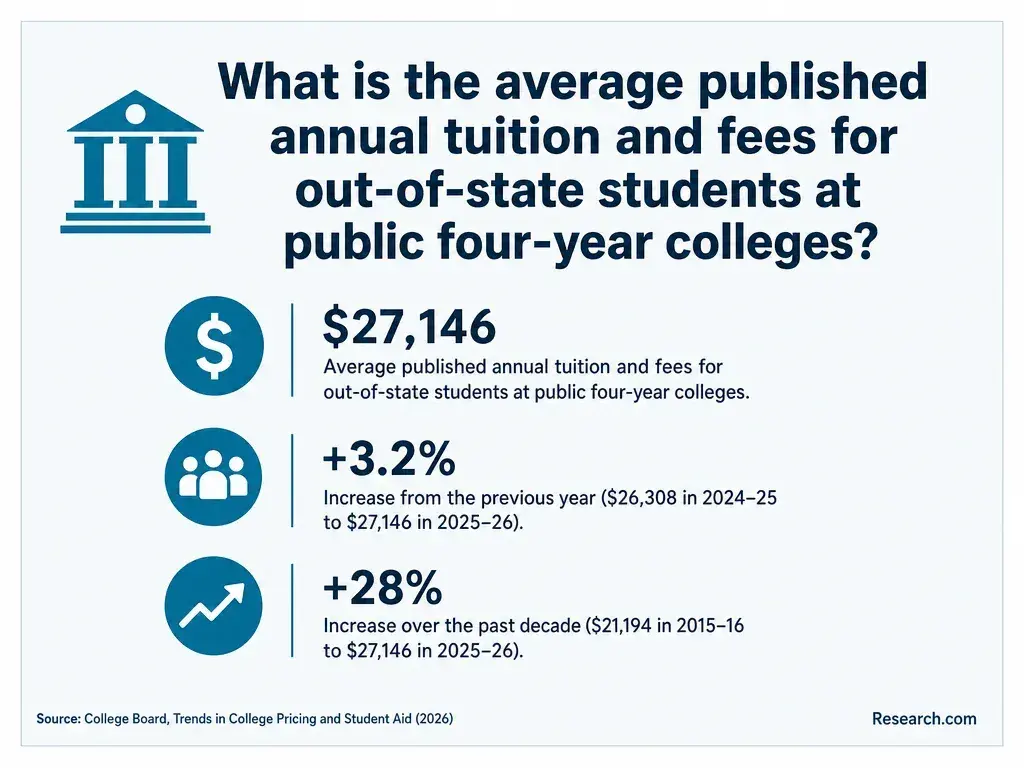
An online program can remove commuting, which matters when shifts change or coverage runs into evenings. It does not necessarily let you study whenever you want: classes may have live meetings, timed exams, group presentations, or fixed weekly deadlines. Campus-based study offers scheduled in-person contact but can be harder to reconcile with rotating shifts.
Ask for recent course schedules and sample syllabi before treating "online" as "self-paced." If a shorter calendar is important, quick online bachelor's pathways provide a comparison point; compressed terms can require more intensive weekly work. Choose the format in which you can reliably participate during peak call volumes, not the one with the most appealing advertised finish date.
Programs commonly combine general education with accounting, finance, economics, marketing, management, operations, and quantitative business coursework. For a call center supervisor, accounting can improve cost discussions, operations can sharpen capacity planning, and statistics can help distinguish a meaningful service pattern from a short-term fluctuation. Check the actual catalog: degree titles do not guarantee identical course depth.
Electives or a formally designated concentration may add HR, analytics, or project management study. An elective is not automatically a concentration, and an introductory course is not proof of specialist competence. If project management is your main interest, compare the required courses and total expense with a specialized degree; project management undergraduate scholarship comparisons can help inform that alternative's funding search.
Requirements depend on whether you apply as a first-time student, transfer student, or returning student. Schools may request prior transcripts and may set separate standards for admission to the business major. Mathematics or introductory business courses can be prerequisites at some institutions; years of supervisory experience do not automatically waive them.
If you have previous college credit, request an official evaluation showing what applies to general education, the business core, electives, and any residency requirement. Accepted credit is not necessarily credit toward a required business course. Application charges also vary, so online college application fee savings may be useful while you compare eligible schools; confirm each school's current policy directly.
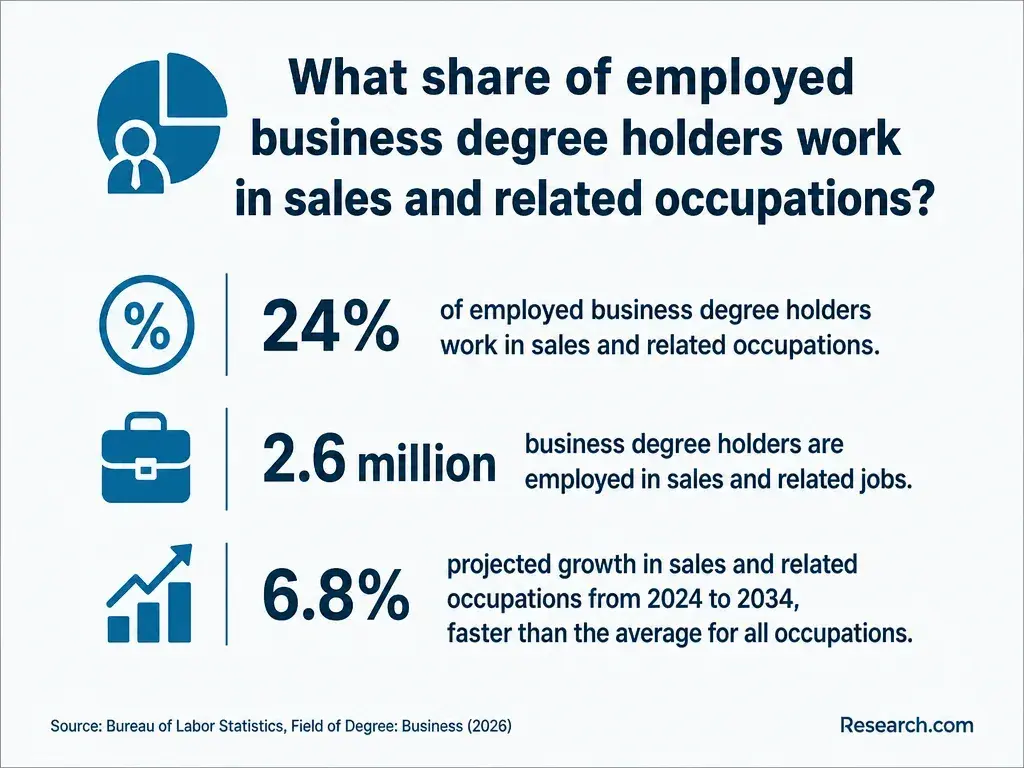
There is no reliable completion-time or price estimate without a school-specific degree audit. Prior credits, required course sequences, part-time enrollment, and term availability all affect the finish date. A supervisor working unpredictable hours may progress more steadily at a lighter course load, even if the calendar path is longer.
Compare the cost of remaining required courses, not just advertised tuition. Include mandatory fees, books or software, any proctoring or travel costs, and interest if you borrow. Ask when employer reimbursement is paid and whether grades, continued employment, or annual limits apply. You can explore cheaper business administration college programs, then obtain a personalized cost estimate after your credits are evaluated. A low price per credit may not be the lowest total cost if fewer credits apply.
First, verify the institution's recognized accreditation and the exact degree it awards. Business-school accreditation through AACSB, ACBSP, or IACBE is a separate question: check whether the relevant accreditor covers the school or program you would enter. Neither form of accreditation, by itself, demonstrates that graduates receive promotions.
Then inspect the requirements most likely to disrupt your schedule: live attendance, group work, exam windows, course rotation, leave policies, and access to advising outside your shift. Ask whether a capstone can use an employer-approved contact center problem without disclosing customer or employee information. If speed is a selection criterion, accelerated business college program options can help you identify programs to investigate, but confirm their actual workload and your evaluated remaining credits before committing.
The strongest gain may be learning to explain operational decisions beyond the contact center. Coursework can help you connect staffing and service levels to costs, interpret financial reports, present a process proposal, and assess trade-offs for customers, employees, and the organization. That is different from simply reporting handle time or adherence.
Make the learning demonstrable. With employer and faculty permission, a project might compare scheduling approaches using approved, appropriately protected data and clearly stated assumptions. Without that permission, use a simulation or public dataset instead; do not upload call recordings, customer records, or proprietary dashboards to a class platform. If the skill you need is primarily project planning, compare the scope and expense of specialized study using resources such as project management program fees explained before choosing a broad degree.
A BS in Business Administration has no single expected salary. Pay reflects the occupation, location, employer, and responsibilities you obtain - not the degree title alone. As one relevant benchmark, the U.S. Bureau of Labor Statistics reports a $69,280 median annual wage for training and development specialists in May 2025. That is an occupation-wide median, not a starting salary for supervisors who complete a business degree.
For a financial decision, compare realistic job opportunities with your current compensation, remaining education cost, borrowing, and time commitment. Do not count on a raise that your employer has not offered. To frame the expense side, compare business administration tuition and completion time using your own credit evaluation rather than assuming the shortest advertised route will produce the best return.
Are Certifications or Licenses Required for Call Center Management?
There is no general occupational license for supervising or managing a call center in the United States. Employers may prefer training in workforce management software, quality assurance, HR practices, or project management, but those preferences vary by role. A business degree does not award a separate professional certification, and a certification does not automatically satisfy an employer's bachelor's requirement.
Check the exact wording of target postings and internal promotion policies. If the missing requirement is a bachelor's degree, US fast-track undergraduate business degree options may merit review after a transfer evaluation. If the gap is a specific system or management practice, targeted training and a documented workplace assignment may be the more direct next step.
Other Things You Should Know About Business Administration
Both are undergraduate business degrees. Their labels alone do not establish a meaningful difference; compare required courses, quantitative work, electives, and transfer policies at the specific schools.
An MBA is a graduate degree and generally requires a prior bachelor's degree. If you already have one, compare graduate study with targeted training against the requirements of your intended role.
Yes. Ask what information you may use and whether approval is needed before sharing even anonymized material. Follow both employer confidentiality rules and your school's project requirements.
Often, but feasibility depends on shift predictability and each course's deadlines and live obligations. Test a proposed term schedule against your actual work and recovery time before choosing a course load.
- Education Requirements | texas.gov https://www.tsbpa.texas.gov/applicants/education/
- The Role of Continuing Professional Training or Development in Maintaining Current Employment: A Systematic Review https://pmc.ncbi.nlm.nih.gov/articles/PMC10647344/
- Accreditation in the U.S. | ed.gov http://www.ed.gov/laws-and-policy/higher-education-laws-and-policy/college-accreditation/accreditation-in-the-us
- General Schedule Qualification Policies | U.S. Office of Personnel Management https://www.opm.gov/policy-data-oversight/classification-qualifications/general-schedule-qualification-policies/
- Undergraduate and Graduate Tuition and Fees | Purdue Global https://www.purdueglobal.edu/tuition-financial-aid/undergraduate-graduate-tuition-and-fees/
- What Can You Do With a Business Administration Degree? | LSU Online https://online.lsu.edu/newsroom/articles/what-can-you-do-business-administration-degree/
- How to Become a Business Operations Manager | GMercyU https://www.gmercyu.edu/academics/learn/become-operations-manager
- Regional vs. National Accreditation: Which is Better? | Drexel University Online https://www.online.drexel.edu/news/national-vs-regional-accreditation.aspx
- Transferable Skills for a Changing Workforce | University of South Florida https://www.usf.edu/continuing-education/lifelong-learning/news/2026/transferable-skills.aspx
- What Can You Do With a Business Administration Degree? | American Military University https://www.amu.apus.edu/area-of-study/business-administration-and-management/resources/what-can-you-do-with-a-business-administration-degree-exploring-options/