2027 Interventional Radiology vs Cardiac Catheterization Lab Nursing: Daily Work, Schedules, and Career Fit
Audited and Verified:
Our Editorial and Data Verification Process
Research.com uses government datasets, official education statistics and primary institutional information to support its career and degree guides. Our review process checks factual accuracy, occupational definitions, source dates and the requirements associated with the credentials discussed.
How This Article Was Fact-Checked
Our editorial team verifies salary estimates, employment projections, education requirements and program information against original data providers and official organizations. Salary figures are checked against the relevant occupational definitions and reporting periods. Information about licensure, accreditation and required in-person training is reviewed separately.
Fact-checked and verified on:

Co-Founder and Chief Data Scientist
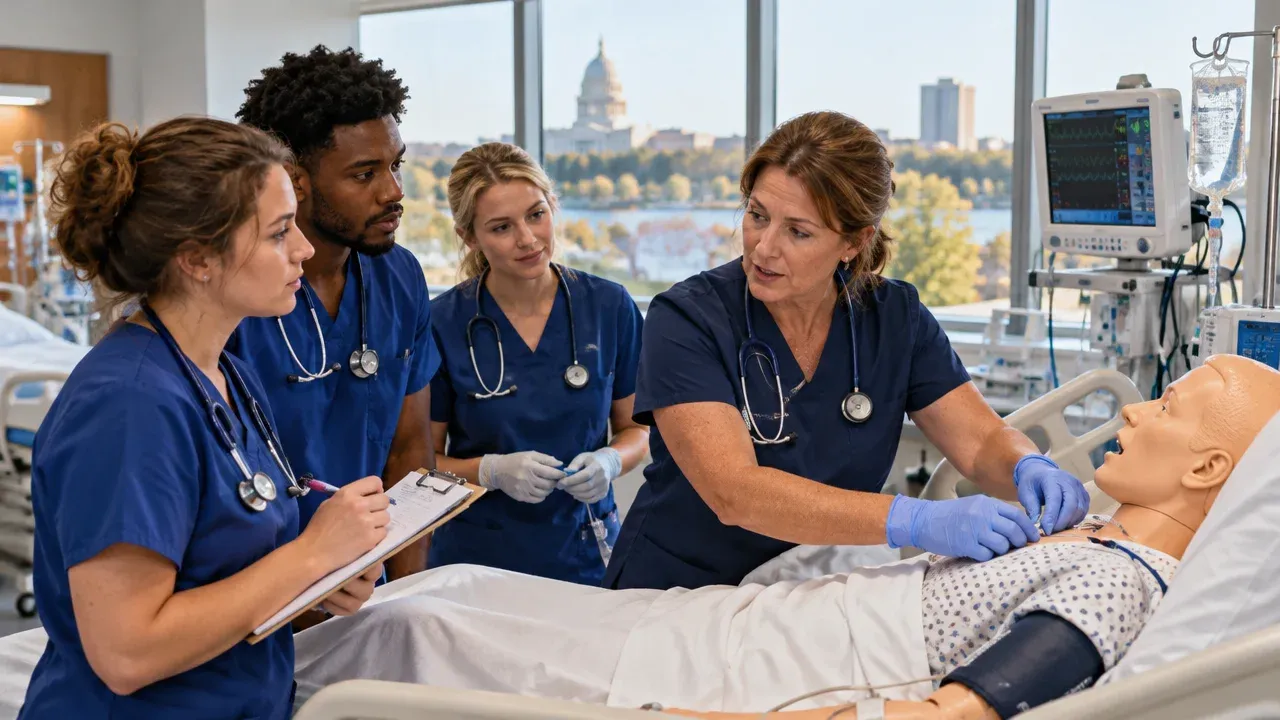
If you are an RN considering a procedural specialty, interventional radiology (IR) and the cardiac catheterization lab can look similar from outside the procedure room. Both involve imaging-guided care, sedation, close monitoring, and emergencies - but the case mix and demands on call can differ substantially.
This comparison is for nursing students, newer nurses, and experienced RNs weighing a move. It explains the daily work, realistic entry routes, schedules, costs, and questions to ask an employer so you can judge the specific job, not just its title.
Key Things You Should Know
- IR offers a broader procedure mix; cath labs concentrate on cardiovascular cases. In either setting, nurses assess, monitor, coordinate, and recover patients rather than perform every technical role in the room.
- Call can matter more than the posted shift. A hospital may require overnight, weekend, or holiday response for urgent cases; an outpatient service may have little or no call.
- Both are RN pathways, not separate nursing licenses. Specialty orientation and demonstrated competencies are essential; U.S. federal RN wage and growth figures do not separately measure IR or cath lab nurses.
What do interventional radiology and cardiac catheterization lab nurses do daily?
Interventional radiology uses imaging to guide minimally invasive diagnostic and therapeutic procedures. Depending on the service, cases may include vascular access, biopsies, drain placement, embolization, or thrombectomy. Cardiac catheterization labs focus on invasive cardiovascular assessment and treatment, such as coronary angiography and percutaneous coronary intervention; some also handle structural-heart or peripheral vascular cases. Nurses interested in expanding their qualifications may also explore associate-to-master's nursing pathways when considering future educational opportunities and career advancement.
In both settings, an RN may review the preprocedure assessment and orders, check allergies and relevant risks, prepare the patient, administer medications within policy and scope, monitor physiology and sedation, document events, communicate changes, and give a recovery handoff. Afterward, nursing care may include access-site checks, bleeding surveillance, monitoring, and discharge teaching. The exact assignment varies: a nurse may circulate, monitor, provide sedation care, or work primarily in pre- and postprocedure areas.
The clearest daily difference is what arrives on the schedule. An IR nurse may shift between oncology, vascular, neurologic, and other services. A cath lab nurse usually develops deeper familiarity with cardiac symptoms, rhythms, hemodynamics, and time-sensitive coronary care. Neither job title alone tells you whether nurses scrub, who monitors sedation, or whether recovery is staffed separately; ask for the actual role description.
How do interventional radiology and cardiac cath lab nursing careers compare?
The better fit depends less on which specialty sounds more advanced and more on the cases you want to manage, the emergencies you can tolerate, and the support available while you learn. Nurses interested in expanding their knowledge beyond procedural care may also consider short online psychiatric nursing certificates as an option for developing additional competencies.
This comparison describes common hospital roles, not guarantees about every department.
| Career factor | Interventional radiology | Cardiac cath lab |
| Clinical focus | Wide-ranging image-guided procedures across body systems | Concentrated cardiovascular assessment and intervention |
| Useful prior experience | Critical care, emergency, PACU, or procedural sedation experience | Cardiac critical care, emergency, telemetry, or hemodynamic monitoring experience |
| Acute pressures | Unstable patients and urgent interventions vary by service | Rapid response to acute coronary events may be central to the job |
| Likely appeal | Variety, imaging-guided procedures, and multidisciplinary case mix | Cardiovascular depth, rhythm interpretation, and time-sensitive teamwork |
For an experienced RN, transferable skills include assessment, escalation, medication safety, sterile practice, and concise handoffs. The gaps are specialty-specific: an ICU background does not automatically establish competence with procedural sedation, radiation precautions, or a lab's equipment. If you are early in your career, compare formal transition programs and preceptor coverage before assuming either unit hires and trains new graduates.

What schedules and on-call requirements do these nursing specialties have?
Both departments may schedule cases mainly during daytime hours, but a hospital-based service can still require nurses to return for emergencies. Cath lab call often supports urgent cardiac intervention; IR call depends heavily on which emergency procedures the hospital offers. Elective-focused outpatient facilities may offer more predictable hours, although early starts, late cases, and variable volumes remain possible. Nurses planning long-term career advancement may also explore accessible nursing practice doctorate pathways when considering future leadership, education, or advanced practice opportunities.
Compare the call agreement, not just the advertised shift. Ask how often each nurse takes weekday, weekend, and holiday call; the required response time; how frequently staff are actually called in; and whether post-call rest is protected. Also ask how standby, call-back, overtime, and canceled shifts are paid. A role that looks compatible with caregiving or a second job on paper may not be workable if its response-time rule requires you to remain close to the hospital.
An IR nursing position generally requires an active RN license and the qualifications specified by the employer. Initial RN preparation may be through an approved associate-degree, diploma, or bachelor's nursing program, followed by meeting the relevant state board's licensure requirements, including the NCLEX-RN. Some employers prefer a BSN or prior acute-care experience; neither preference is a universal IR licensing rule.
If you are not yet an RN, first verify that a prelicensure program meets the requirements of the state where you intend to seek licensure. Admissions tests also differ by school; TEAS and HESI requirement comparisons can help you identify a question to check with each program, not establish your eligibility. Once licensed, look for IR postings that specify experience expectations and offer supervised training in the department's actual case mix.
Cath lab nursing likewise starts with an active RN license, not a distinct cath lab license. Employers may seek experience in cardiac care, critical care, emergency nursing, or telemetry because patients can deteriorate quickly and nurses may need to recognize rhythm and hemodynamic changes. Requirements for advanced cardiac life support and other training depend on the employer and assignment.
A nurse coming from another specialty should ask whether the unit teaches invasive hemodynamics, equipment workflows, sedation responsibilities, and emergency response during paid orientation. A non-nurse comparing entry routes can review comparing online MSN entry options for non-nurses, but should confirm that any chosen program actually prepares graduates for initial RN licensure in the intended state. A graduate degree alone does not authorize cath lab practice or replace specialty onboarding.
Foundational nursing study in anatomy, physiology, pharmacology, pathophysiology, assessment, and clinical judgment supports both roles. After licensure, the most useful targeted learning is often tied to the cases you will actually see: vascular access and bleeding risks, contrast-related considerations, infection prevention, rhythm recognition, and monitoring before, during, and after procedures. Nurses considering advanced education may also research shortest online nursing practice doctorates when comparing long-term academic options and leadership career goals.
For cath lab work, deeper study of coronary anatomy, electrocardiography, and hemodynamics is particularly relevant. For IR, preparation may span several organ systems and procedure types. Sedation assessment, medication administration, radiation safety, and emergency response require employer-approved training and observed competency under applicable policy - not just completion of an online course. Ask a hiring manager which competencies are checked during orientation and who evaluates them.
Online study can support entry; it cannot make either specialty entirely online. A prelicensure nursing program may deliver some theory remotely, but it still requires approved hands-on learning and clinical preparation. Licensed RNs can study specialty concepts online or pursue an RN-to-BSN program without assuming that a new degree is necessary for a procedural job. Those considering further education can also explore budget-conscious graduate nursing options for BSN nurses when evaluating affordable ways to advance their qualifications.
The decisive transition happens in person: observing cases, practicing the assigned workflow, responding with the team, and having competencies assessed. Before paying for an online certificate or degree, compare its content with local job postings and ask employers whether they offer paid orientation. If they do, targeted continuing education plus that orientation may be a more direct route than another degree.
There is no standard number of months or fixed tuition price for becoming an IR or cath lab nurse. A prospective RN must first complete a qualifying prelicensure pathway and obtain licensure; an already-licensed RN may be able to change specialties through an employer's orientation. The length of that orientation depends on prior experience, case exposure, staffing, and demonstrated competence - not merely time served.
For a working RN, the most relevant cost comparison is often paid transition versus self-funded education. Ask whether the employer pays for orientation, required life-support courses, certification exams, and continuing education, and whether call training carries additional pay. If you are considering graduate school for a separate long-term goal, lower-cost master's nursing pathways after a BSN may be worth comparing; an MSN is not generally the prerequisite for either procedural RN role.
Employers commonly specify life-support credentials and validate setting-specific skills, but a course certificate is not the same as RN licensure or specialty board certification. Relevant professional certifications can include the Radiologic Nursing Certification Board's Certified Radiology Nurse (CRN) and the American Association of Critical-Care Nurses' Cardiac Medicine Certification (CMC), when a nurse meets the awarding organization's applicable eligibility rules and the credential matches the job. Nurses planning further academic advancement can also explore graduate nursing routes for associate-degree nurses to identify educational pathways that support their long-term career goals.
Do not choose a credential by its name alone. Check the certifying body's current practice requirements, exam content, fees, and renewal rules, then ask whether your employer recognizes or reimburses it. In cath labs, employers may also value experience or credentials related to critical care, but no specialty exam substitutes for supervised training on that lab's cases and equipment.
What are the salaries and job outlook for procedural nurses?
The U.S. Bureau of Labor Statistics reports pay and employment projections for registered nurses as an occupation, not separately for IR and cath lab nurses. Its May 2024 RN median annual wage was $93,600, and it projected 5% RN employment growth from 2024 to 2034. These are occupation-wide benchmarks, not current offers or forecasts for either procedural specialty. Nurses interested in advancing their qualifications can also explore affordable nursing master's study for BSN graduates when planning their long-term education and career development.
When comparing offers, calculate compensation using the posted base rate and the employer's actual rules for standby, call-back, overtime, weekends, and holidays. Then weigh those earnings against commute distance, response-time requirements, recovery time after call, and orientation quality. A higher apparent annual total may depend on more nights away from home or more unpredictable hours.
The practical next step is to request each unit's case mix, role assignments, orientation plan, and call schedule. Those local facts will tell you more about career fit than a national RN median or the specialty name alone.
Other Things You Should Know About Nursing
Both work in multidisciplinary teams, but the mix differs by case. IR teams commonly include interventional radiologists and imaging technologists; cath lab teams commonly include interventional cardiologists and cardiovascular technologists. Anesthesia and other specialists may participate when needed.
No. Cath labs primarily use catheter-based procedures and imaging. Cardiac operating rooms perform surgical procedures, although hybrid rooms can combine capabilities and team members.
Potentially, yes. Both may use fluoroscopy. Employers should provide role-appropriate radiation-safety training, protective equipment, monitoring, and procedures for minimizing exposure.
Ask whether you can observe a typical case day, meet a potential preceptor, and review the written orientation and call expectations. Protect patient privacy and follow the facility's rules during any observation.
- Ionizing Radiation - Hazard Recognition | Occupational Safety and Health Administration http://www.osha.gov/ionizing-radiation/hazards
- Success factors in adaptation of newly graduated nurses - PMC https://pmc.ncbi.nlm.nih.gov/articles/PMC10111715/
- Exposure to radiation | who.int https://www.who.int/tools/occupational-hazards-in-health-sector/exposure-to-radiation
- Risk Factors for Healthcare Workers | cdc.gov https://www.cdc.gov/niosh/healthcare/risk-factors/index.html
- Radiation Safety in Medical Imaging - StatPearls - NCBI - NIH https://www.ncbi.nlm.nih.gov/books/NBK557499/
- Registered Nurse (Cardiac Catheterization Laboratory) | USAJOBS https://www.usajobs.gov/job/889546900
- Duty Hours and Patient Safety | PSNet https://psnet.ahrq.gov/primer/duty-hours-and-patient-safety
- Nurse handoff and cardiac care | American Nurse https://www.myamericannurse.com/nurse-handoff-and-cardiac-care/
- Interventional Radiology | hopkinsmedicine.org https://www.hopkinsmedicine.org/health/treatment-tests-and-therapies/interventional-radiology
- Considerations When Staffing the Cath Lab | hmpgloballearningnetwork.com https://www.hmpgloballearningnetwork.com/site/cathlab/articles/considerations-when-staffing-cath-lab