2027 How to Validate a Data Science Career Change Through Informational Interviews

Co-Founder and Chief Data Scientist
A data science career change can look appealing from a job description and feel quite different in practice. If you work in another field, informational interviews let you test the work, hiring expectations, and value of your existing experience before committing to training. This guide shows you whom to interview, what to ask, how to interpret conflicting answers, and how to use what you learn to choose a target role and education pathway.
Key Things You Should Know
- Interview people doing several kinds of data work - not just people with "data scientist" titles - and ask for examples of their actual tasks and hiring evidence.
- Compare interview findings with job postings and a small hands-on project before paying for training; one employer's preference is not an industry-wide requirement.
- The U.S. Bureau of Labor Statistics projects 35% growth in data scientist employment from 2025 to 2035, but that occupation-wide forecast does not establish your chances of securing an entry-level role.
What is a data science career change, and how can informational interviews validate it?
A data science career change means moving from your current occupation into work that uses data to answer questions, support decisions, or build analytical products. It need not mean immediately becoming a data scientist. A marketer might move toward marketing analytics; a nurse might explore healthcare analytics; a software developer might target data engineering. Your domain knowledge can remain valuable even when your technical work changes.
An informational interview is a conversation about someone's work, not a request for a job. It validates a transition when it helps you answer three questions: Would I want to do this work regularly? What evidence would make me a credible candidate? What is the least costly way to close my gaps? Seek perspectives from people in your target role, a closely related entry role, and, if possible, someone involved in hiring. Include professionals in industries where your existing experience could matter.
Before each conversation, write down your tentative target role and assumptions about its work. Afterward, record concrete examples, distinguish the person's own experience from their employer's policy, and note what to check elsewhere. A useful validation test is whether you can find a role whose tasks appeal to you, identify a plausible route from your current skills, and complete a small sample of the work. If those pieces do not fit, refine the target before selecting a program.
How do informational interviews reveal data science roles, skills, and workplace expectations?
Titles conceal important differences. One data scientist may spend much of the week defining metrics and explaining results; another may develop models or production code. Ask for recent, nonconfidential examples rather than a generic description of "a typical day." These questions make conversations comparable:
- "What decision was your team trying to make in a recent project, and what did you personally deliver?"
- "How much of your work involved obtaining and checking data, analysis or modeling, coding, and explaining results?"
- "Which skills did you need on your first day, and which did you learn on the job?"
- "What would demonstrate readiness from someone changing careers from my field?"
- "Which neighboring job title would you suggest I investigate, and why?"
- "What do new hires find surprising or difficult about the team's workflow?"
Listen for workplace constraints as well as tools: access to usable data, review of analytical claims, collaboration with subject-matter experts, and responsibility for maintaining work after it is delivered. Ask how the team evaluates AI-generated code or analysis if that is part of its workflow; a tool's availability does not remove the need to verify results.
Do not turn one answer into a universal rule. If interviewees disagree about degrees, programming depth, or remote work, separate differences by role, employer, and seniority. Then check current postings for the specific roles and locations you would pursue. A warning sign is an appealing title whose recurring tasks you consistently find uninteresting.
What education and technical skills are required to transition into data science?
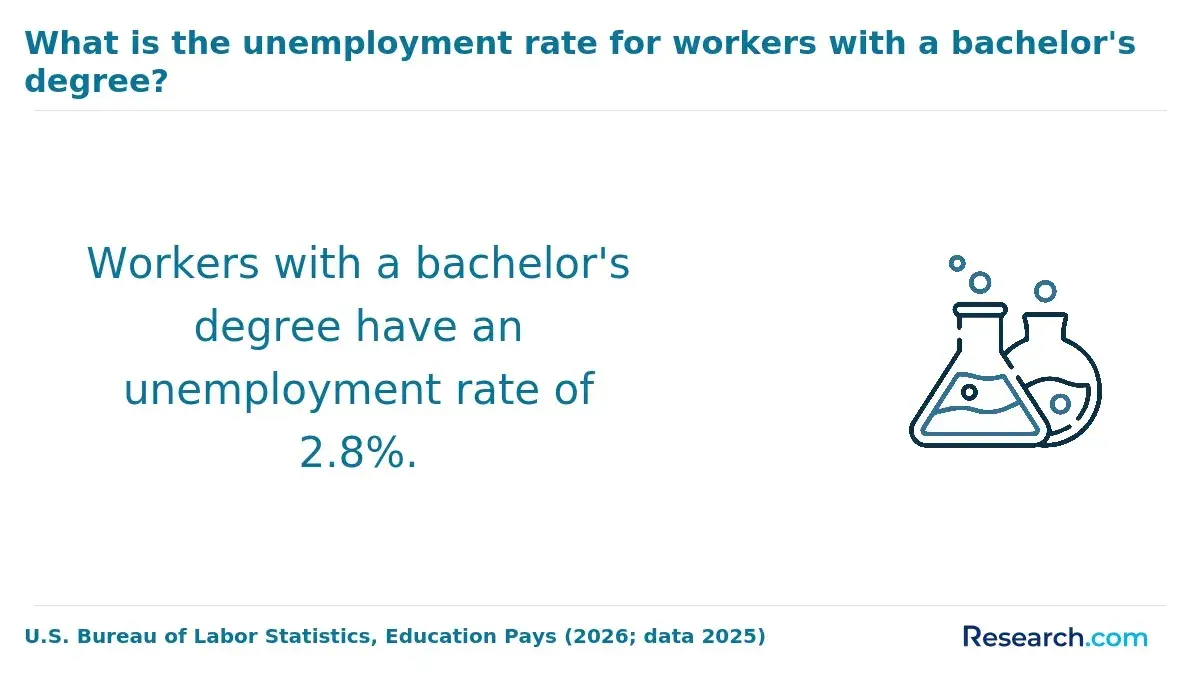
There is no single preparation rule for every data role. The Bureau of Labor Statistics identifies a bachelor's degree as the typical entry-level education for data scientists and notes that some employers prefer or require advanced degrees. Employers set their own requirements, so interviews and relevant postings should determine whether a master's degree would materially improve your candidacy.
Start with the work you already know. A finance professional may understand forecasting and decision constraints but need stronger programming and data-pipeline skills. A researcher may bring study design and statistical reasoning but need experience with messy operational data. A developer may write strong code yet need more statistics and practice explaining analytical uncertainty. Test the suspected gap with a project tied to your domain, rather than assuming you must relearn every subject.
For many target roles, useful foundations include SQL, a programming language such as Python or R, statistics, data cleaning, visualization, and communication. More specialized roles may require experimentation, machine learning, software engineering, or data infrastructure. If AI-focused work is your goal and you lack a computing degree, explore AI graduate programs for non-computer-science backgrounds while checking each program's actual prerequisites. Self-study can prepare you to succeed without necessarily satisfying a formal admissions requirement.
Which data science degree or training pathway fits your career-change goals?
Choose training only after your interviews point to a role and a specific gap. An analyst transition may call for targeted SQL, statistics, and portfolio work rather than a graduate degree. A technically demanding data scientist role may justify deeper formal study, particularly if relevant employers consistently expect it. A certificate can help structure learning, but its value depends on the skills and work you can demonstrate.
The comparison below is a decision aid, not a claim that every employer treats credentials alike. Match the pathway to what interviewees and job postings say you need to prove.
| Pathway | Potential fit | Main limitation to test |
| Targeted courses and projects | You have relevant experience and a narrow, identifiable technical gap. | Self-directed work may not provide the feedback or credential some employers expect. |
| Structured certificate or bootcamp | You need a schedule, feedback, and applied practice. | Depth, admissions standards, and outcome reporting vary; verify the actual curriculum. |
| Relevant master's degree | Your target requires substantial statistical or computing depth, or employers value graduate preparation. | Greater financial and time commitment does not itself establish a hiring advantage. |
Ask interviewees what evidence would change their assessment of a career changer: a degree, a rigorous project, prior domain results, or production experience. If a master's remains plausible, compare online data science master's tuition options without treating the lowest advertised tuition as the lowest total cost.
How do online and campus data science programs compare for career changers?
Format matters when it affects whether you can gain the experience your interviews identified. Online study may let you keep working and build projects in your current industry. Campus study may offer more convenient access to in-person collaboration or local recruiting. Neither format, by itself, establishes instructional quality or employment outcomes.
Ask programs whether classes are live or asynchronous, how group work is scheduled, what feedback students receive on projects, and whether career services serve career changers and online students. Check for required campus visits, internship conditions, and the maximum time allowed to finish. Advertised speed is less useful than a schedule you can sustain alongside work; use online data science master's completion options to examine pace as one factor, not as a proxy for learning or job readiness.
What do data science programs teach, and which courses matter most to employers?
Judge a curriculum against the tasks interviewees described. If your target role centers on business decisions, look for substantive work in statistics, SQL, data preparation, visualization, and communicating recommendations. If it centers on model development, examine the mathematical prerequisites, machine learning courses, evaluation methods, and coding expectations. If teams struggle to get reliable data, data engineering may matter more than another modeling elective.
Course titles alone are weak evidence. Read descriptions and project requirements: Does a student handle imperfect data, justify a method, evaluate limitations, and explain a decision? Ask to see an appropriately shared example of a capstone brief or project rubric. For AI-oriented pathways, compare AI master's degrees with data engineering content if interviewees say building dependable data flows is central to the job. Avoid choosing a program solely because it mentions a popular tool; tools change, while the ability to test assumptions and explain results remains useful.
How can you evaluate accreditation, admissions, costs, and program quality?
Use interviews to define the outcome you need, then verify whether a program can plausibly support it. Confirm the institution's accreditation through an official accreditor or U.S. Department of Education resource; do not assume that institutional accreditation means a particular data science program has specialized accreditation. Ask admissions staff to distinguish required prerequisites from recommended preparation and to explain how your prior coursework or experience will be assessed.
Compare the full expected cost: tuition, mandatory fees, materials or technology, any travel, financing costs, and income you might forgo. Ask for a current, program-specific cost estimate and confirm your eligibility for aid or employer support. Ways to pay for a data science master's program can help you investigate financing, but aid availability and terms must be verified for your circumstances.
For quality, request evidence relevant to your target role: recent course descriptions, opportunities for substantive projects, instructor feedback, and career support available to students in your format. Treat placement claims cautiously unless the school explains who was counted, when outcomes were measured, and how many graduates responded. A red flag is a program that promises a career result while providing little detail about the work students actually complete.
Which entry-level data science jobs can career changers pursue?
"Entry-level" describes a posting, not an assurance that applicants need no relevant experience. Interviewees may point you toward data analyst, business intelligence analyst, product analyst, analytics engineer, junior data scientist, or another role shaped by your domain. These titles overlap across employers; assess the tasks and requirements in each posting.
A credible first move often uses your previous occupation as an advantage. A supply-chain professional might analyze inventory operations; a teacher might evaluate education-program data; an operations manager might build and explain performance measures. For each target, assemble a project that shows a question, data-quality checks, an appropriate analysis, limitations, and a recommendation a stakeholder could use. If interviews reveal that your desired data scientist jobs require experience you do not yet have, an adjacent analytical role may be a more realistic first step than another credential.
What salary and job outlook can career changers expect in data science?
The U.S. Bureau of Labor Statistics reports a $120,230 median annual wage for data scientists in May 2025. That is an occupation-wide midpoint, not a starting salary or a prediction for someone changing careers. Pay for a particular offer depends on the role, employer, location, and experience the candidate brings.
BLS also projects substantial employment growth for the occupation through 2035. Growth indicates demand across the field, but it does not tell you how competitive your preferred entry-level openings will be. Ask interviewees how their teams fill junior positions and which nearby roles provide a route in. Compare current postings in your intended market before using a salary assumption to justify tuition or lost income; a future salary is not proof that a degree caused the change.
Are data science certifications required, and which professional standards matter?
There is no single certification or professional license required for data scientist jobs across the United States. Individual employers may prefer particular credentials or skills, so ask interviewees whether a certification affects screening or merely signals familiarity with a tool. Choose one only when it addresses an identified hiring or knowledge gap; it should not replace evidence that you can do the work.
Professional standards are more consequential than collecting badges. Ask how a team checks data provenance, protects sensitive information, tests models for errors or unfair effects, documents assumptions, and communicates uncertainty. These practices may also be governed by employer policies and industry-specific rules. If you can discuss those decisions in a domain-relevant project, you will have stronger evidence of career fit than a credential alone provides.
Other Things You Should Know About Data Science
Search professional associations, alumni directories, and public event speaker lists for people doing the work you are considering. Send a brief, specific request about their role, and make it easy to decline.
Yes, if it is relevant. Be clear that you are seeking perspective rather than expecting a referral, and follow the employer's normal application process.
Ask for explicit permission first and respect a refusal. Written notes are usually sufficient; avoid recording or sharing sensitive workplace details.
Use public talks, role-specific discussions, and current job postings to form a provisional view, then test it with a small project. Treat the decision as less certain until you can speak with people who know the work firsthand.
References
- HHS Office of Human Resources Guidance, Hiring Assessment Strategies | HHS.gov https://www.hhs.gov/about/agencies/asa/ohr/hr-library/hiring-assessment-strategies.html
- Screening/Evaluating Applications - Staff Human Resources https://shr.ucsc.edu/talent-acquisition/fair_hiring/screening/
- 25 Transferable Skills Employers Look For | Business Career Center https://careerconnections.smeal.psu.edu/blog/2022/10/28/25-transferable-skills-employers-look-for/
- Data Scientist vs. Data Analyst: Which Role Fits You Best? | Syracuse University https://ischool.syracuse.edu/data-scientist-vs-data-analyst/
- What skills do employers want? | Prospects.ac.uk https://www.prospects.ac.uk/careers-advice/applying-for-jobs/what-skills-do-employers-want/
- What Can I Do With a Degree in Data Science? Career Paths & Skills | Harvard SEAS https://seas.harvard.edu/news/what-can-i-do-degree-data-science-career-paths-skills
- How to Make a Career Change to Data Science in 2026 | UC Berkeley School of Information's Online Master's Programs https://ischoolonline.berkeley.edu/blog/career-change-to-data-scientist/
- Ace the data science technical interview | MIT https://capd.mit.edu/resources/ace-the-data-science-technical-interview/
- Data Science Roles - A Definitive Guide | Data Science PM https://www.datascience-pm.com/data-science-roles/
- The Current State of Entry-Level Data Roles | Dataversity https://www.dataversity.net/articles/the-current-state-of-entry-level-data-roles/