2027 How to Evaluate Accessibility Support for an Online Data Science Master's

Co-Founder and Chief Data Scientist
An online data science master's is only a workable choice if you can access its courses, coding tools, assessments, and support services. For applicants with disabilities, a university-wide accessibility statement is a starting point - not proof that a particular program will work well.
This guide shows you how to test a program's practices before committing, identify accommodations you may need, and compare accessibility alongside academic fit and cost.
Key Things You Should Know
- Evaluate the actual learning workflow: the course platform, statistical software, notebooks, videos, group projects, and remote exams - not just the university's accessibility webpage.
- Ask disability services and the program separately how an approved accommodation reaches instructors, teaching assistants, and any outside testing or software providers.
- The U.S. Department of Justice's 2024 rule sets WCAG 2.1 AA as a technical standard for covered state and local government websites and mobile apps. It is a useful benchmark to ask about, but a claimed standard does not replace a hands-on test of your required tools.
How can you evaluate accessibility support in an online data science master's program?
Evaluate three things together: whether course content is usable, whether accommodations can be implemented across the full program, and whether problems are resolved quickly enough to keep you on schedule. A strong general policy cannot compensate for an inaccessible required coding environment or an exam accommodation that arrives after the exam.
Start with a course-level conversation. Ask for a sample syllabus, the names of required platforms and software, a demonstration of a typical assignment, and the assessment formats used in core courses. Then describe the tasks you need to complete - not just your diagnosis - and ask who would address each barrier.
A student balancing treatment or fluctuating symptoms with employment should also check deadlines, live sessions, and group-work schedules; guidance on choosing a data science master's alongside a full-time job can help frame that separate scheduling decision. Favor programs that can explain a workable process for their required courses and tools. Treat "we handle accommodations case by case" as an invitation to ask for specifics, not as confirmation that a particular barrier has been solved.
What accessibility services should online data science master's programs provide?
Look for a disability services office that works with remote graduate students, a way to request and renew accommodations, accessible course materials, and a clear route for reporting technology barriers. Academic departments, instructors, IT staff, libraries, and testing providers may all have a role; the important question is whether someone coordinates them.
Service details matter when specialized tools are involved. Ask who arranges captioning or alternative formats, who checks whether a required software package works with assistive technology, and what happens if a fix cannot be ready before a deadline. Do not assume that a university supplies every device or software license you personally use; ask what it provides, what is included in course fees, and what you would need to obtain yourself. If those expenses affect affordability, understanding aid for data science graduate programs can help you prepare questions for the financial aid office about your options.
How do ADA and Section 504 protect online graduate students with disabilities?
In the United States, the Americans with Disabilities Act (ADA) applies to covered public and private universities, while Section 504 of the Rehabilitation Act prohibits disability discrimination by institutions receiving federal financial assistance. These protections can apply to online graduate education. Schools must address access and reasonable modifications or accommodations as applicable, but the law does not mean every requested change must be granted exactly as proposed; individual circumstances and essential academic requirements matter.
The Department of Justice's 2024 web accessibility rule adds specific requirements for covered state and local government web content and mobile apps, using WCAG 2.1 AA, with compliance timing dependent on the covered entity. Do not assume that rule applies to every private university in the same way.
Instead, ask any school what accessibility standard it uses for its online courses and how it handles barriers in third-party tools. For a dispute about a specific request, consult the institution's published grievance process or a qualified disability-rights adviser rather than relying on a general description of the law.
How accessible are online data science courses, platforms, and learning materials?
Accessibility can vary from one course or task to another. A learning management system may support keyboard navigation while an embedded chart, scanned reading, code notebook, or remote-proctoring tool does not. Data science adds distinctive challenges: mathematical notation, interactive visualizations, dense tables, and graphical interfaces can all be central to learning rather than optional extras.
Ask to test a representative workflow using the assistive technology and setup you expect to use. Can you find instructions, read equations and data tables, run code, interpret model output, submit work, and receive feedback? For visualizations, ask how instructors convey the analytical finding in a nonvisual format.
For recorded teaching, check whether captions and transcripts make technical terms and code examples understandable. The aim is access to substantive practice, not merely access to a course webpage. That matters when comparing online data science degrees and labor market alignment: students need usable access to the tools and projects through which they build skills.
What accommodations should online data science students expect?
Accommodations are individualized. Depending on the barrier and the course, possibilities may include accessible or alternative-format readings, captioned media, adjustments to timed assessments, an accessible testing method, or a workable alternative when required software is inaccessible. An accommodation should provide meaningful access while preserving essential learning outcomes; for example, changing the way a student demonstrates statistical reasoning may be feasible when changing the statistical reasoning requirement is not.
Ask how accommodations apply to live coding, participation, collaborative projects, presentations, and exams - not only lectures. Extended exam time may solve a timing barrier but not an inaccessible question interface. If symptoms fluctuate, ask in advance about the process for requesting deadline flexibility and about any limits for team-based or sequential assignments. Avoid assuming that an accommodation used in a previous degree will automatically carry over unchanged.
How does disability services support work in an online master's program?
Typically, the student contacts disability services, provides information requested under the school's process, discusses barriers, and receives an accommodation determination. Implementation may then involve instructors, the program, IT, or an outside provider. The exact documentation rules, timelines, renewal process, and information shared with faculty vary by institution, so request the school's current written procedure.
Timing is a practical consideration. Start the conversation before classes or assessments begin, especially if materials must be converted or software tested. Ask whom to contact when an approved measure is missing, how urgent issues are escalated, and whether support is available during evening or weekend class activity. A clearly named contact and a documented escalation path are more useful than a promise that instructors will "work something out."
How can applicants verify accessibility before enrolling in an online program?
Request evidence you can compare across schools. You do not need to disclose more personal information than you are comfortable sharing to ask how a required tool or course format works. For an individualized accommodation determination, however, the school may need information through its disability services process.
Use the same questions with each program, and keep the answers in writing where possible:
- Which platforms, coding environments, statistical tools, and proctoring services are required in the core curriculum?
- Can I review a representative syllabus, assignment, video, visualization, and assessment format?
- Who tests required tools with assistive technology, and what happens if a tool is inaccessible?
- How are approved accommodations communicated to instructors and outside providers, and how are urgent failures resolved?
- Which live attendance, group-work, exam, and capstone requirements have limited flexibility?
A red flag is not simply that an adviser cannot answer a technical question immediately; it is an inability to identify who can answer it or to arrange a meaningful follow-up. Compare the answers against your nonnegotiable access needs before paying a deposit.
What technical and assistive technology supports should programs offer?
Look beyond a help desk that resets passwords. For required coursework, the program should be able to identify who supports compatibility among its learning platform, code editors or notebooks, statistical software, authentication system, and any assistive technology you use. Ask whether browser-based tools have a usable keyboard workflow, whether remote lab environments work with your setup, and whether an accessible alternative is available when compatibility fails.
Clarify the boundary between university support and your own equipment. A school may support its course platform without configuring a student's personal device or licensing a preferred assistive application. Get the software list and technical requirements early enough to test them, including any changes planned for advanced electives. If your goal is specifically AI and a program's required tools or prerequisites do not fit, compare the accessibility of alternative curricula rather than choosing by degree label alone; non-CS background options for an AI master's offer another program-fit lens.
How do accessibility needs affect online data science coursework and assessments?
Check the tasks that carry the most academic weight. A student may be able to watch lectures comfortably but encounter barriers when interpreting a visual dashboard, manipulating a large dataset, taking a timed coding exam, or coordinating a capstone team. Ask how each core course assesses its learning outcomes and whether the assessment format permits an accessible way to demonstrate them.
Trade-offs deserve an explicit discussion. An asynchronous course may reduce travel and allow more control over when to study, yet frequent short deadlines or remote-proctored exams may still create barriers. A live seminar may offer immediate clarification but require a reliable participation method. For a capstone, confirm access to project tools, teammates' materials, and presentations before assuming that an approved exam accommodation covers those settings. Choose the format whose required tasks are workable for you, not merely the one advertised as flexible.
How should accessibility compare with accreditation, cost, and career outcomes?
Accessibility is a threshold issue: if required coursework is not usable and the school cannot explain a workable remedy, a lower price or attractive curriculum may not make the program viable. Once programs meet your access needs, compare institutional accreditation, total expected cost, curriculum, and evidence of student outcomes using consistent definitions. Check any published outcome measure for whom it includes; do not treat a general employment claim as evidence about disabled students' experience.
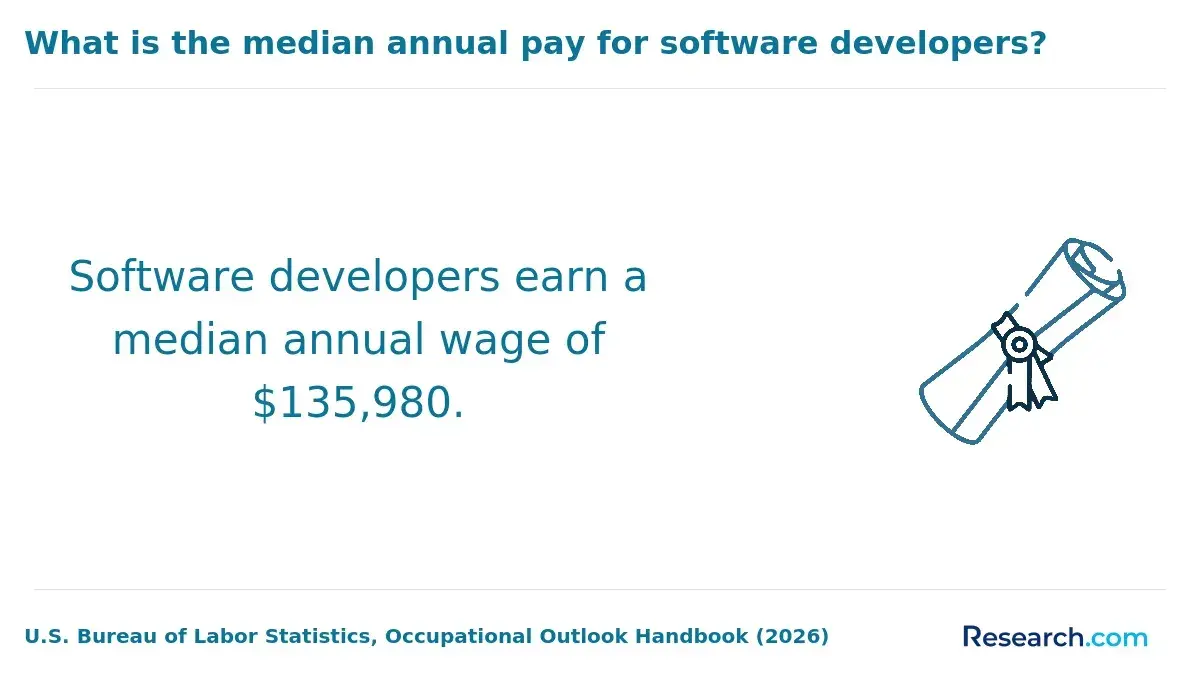
For career context, the U.S. Bureau of Labor Statistics reports a median annual wage of $120,230 for data scientists in May 2025. That occupation-wide figure does not predict a graduate's salary or the return on a particular degree. Program fit - including accessible opportunities to complete relevant projects - matters more than using that wage to justify a school's price. If an adjacent curriculum might suit your goals, a data analytics master's program comparison can broaden your shortlist; apply the same accessibility checks to every option.
Other Things You Should Know About Data Science
Generally, you can focus an application essay on your preparation and goals unless you choose to share disability-related experience. Ask the admissions office and disability services separately about their processes; an essay is not a substitute for an accommodation request.
No. A graduate institution has its own review process. Prior documentation may be useful, but ask what the new school requires and begin early enough to address any gaps.
Possibly. Leave, reentry, course sequencing, and financial aid rules vary. Request the program's written policies before enrolling if an interruption is a realistic possibility.
Ask the registrar about diploma and transcript practices and disability services about record handling. Do not assume that academic records and confidential accommodation records contain the same information.
References
- Disability Discrimination: Technology Accessibility | ed.gov http://www.ed.gov/laws-and-policy/civil-rights-laws/disability-discrimination/disability-discrimination-key-issues/disability-discrimination-technology-accessibility
- ADA Requirements: Testing Accommodations https://www.ada.gov/resources/testing-accommodations/
- Procedures and Guidelines - Disability Services https://disabilityservices.studenthealth.virginia.edu/about-sdac/procedures-and-guidelines
- Digital accessibility and the Americans with Disabilities Act (ADA) - Accessibility @ UW-Madison - UW-Madison https://accessible.wisc.edu/digital/ada-rule/
- Professors Administering Exams with Accommodations | rutgers.edu https://ods.rutgers.edu/professor-administering-exam
- Accessibility and Disability Services | UCLA Extension https://www.uclaextension.edu/accessibility-and-disability-services
- Creating Accessible Course Materials (Faculty) | upenn.edu https://support.wharton.upenn.edu/help/creating-accessible-course-materials-faculty
- Accessibility Testing - UCI Accessibility - UC Irvine https://accessibility.uci.edu/it-accessibility/accessibility-testing.php
- Digital Accessibility Policy: Frequently Asked Questions | University Risk and Compliance Services https://compliance.utexas.edu/programs/iaa/digital-accessibility/digital-accessibility-policy-frequently-asked-questions
- Providing Accommodations in Online Courses | fsu.edu https://odl.fsu.edu/providing-accommodations-online-courses