2027 Highest-Paying Jobs with a Population Health Doctorate: Salaries, Career Paths, and Growth Outlook

Co-Founder and Chief Data Scientist
A Population Health doctorate can lead to senior roles in health systems, analytics, policy, academia, consulting, and life sciences-but the payoff depends heavily on specialization and experience. The Bureau of Labor Statistics reports that medical and health services managers had a median annual wage of $117,960 in May 2024, with much higher pay in executive roles. This guide is for prospective doctoral students, clinicians, public health professionals, and analysts comparing career paths. You will learn which jobs pay the most, what employers value, and how to judge whether the degree aligns with your salary and leadership goals.
Key Things to Know About High-Paying Jobs in Population Health
- The highest-paying Population Health doctorate paths usually combine doctoral research training with leadership, analytics, informatics, health economics, or life sciences expertise; executive health services roles and chief-level positions can exceed standard public health salary bands.
- Federal labor data does not track "Population Health doctorate holder" as a single occupation, so the best salary benchmarks come from related 2024 BLS categories such as medical and health services managers, data scientists, statisticians, medical scientists, epidemiologists, and postsecondary health specialties teachers.
- The degree is most likely to improve earnings when it helps you move from technical or program roles into enterprise-level decision-making, grant leadership, population health strategy, value-based care, health analytics, or executive management.
Is there high demand for Population Health doctorate graduates?
Yes, but demand is strongest for doctorate holders who can turn population-level evidence into operational, financial, clinical, or policy decisions. Population health focuses on improving outcomes across groups of people by analyzing disease patterns, social determinants of health, care delivery, prevention, cost, access, and quality. That makes the credential relevant to hospitals, insurers, government agencies, universities, consulting firms, pharmaceutical companies, and health technology employers.
The clearest demand signal is in management and analytics-adjacent roles. The BLS projects employment for medical and health services managers to grow 29% from 2023 to 2033, much faster than the average for all occupations. For readers, this means a doctorate can be valuable when it positions you for leadership in care transformation, quality improvement, population health strategy, or value-based payment-not simply because it adds another credential to your resume.
Demand is also being reshaped by artificial intelligence, predictive analytics, and value-based care. Employers increasingly want leaders who can evaluate algorithms, interpret large health datasets, identify inequities, measure interventions, and explain findings to executives or policymakers. A Population Health doctorate can fit that need if the program includes rigorous quantitative methods, health systems strategy, implementation science, informatics, or economics.
If you are deciding whether to pursue an online Population Health doctorate, start with your target labor market rather than the degree title alone. Review job postings for roles you want, note whether they request a doctorate, and compare required skills with the curriculum. If most roles in your region or sector ask for a master's plus experience, a doctorate may still help-but usually only if it accelerates you into leadership, research authority, or specialized analytics work.
Which Population Health doctorate specializations lead to high-paying roles?
The strongest salary potential usually comes from specializations that connect population outcomes to money, technology, organizational performance, or regulated decision-making. A broad population health track can be useful for leadership, but niche expertise often makes candidates more competitive for the highest-paying roles.
The table below compares common doctoral focus areas with the high-paying roles they most often support. Use it to assess whether a specialization maps to a job market, not just to an academic interest.
| Specialization | Best-fit high-paying roles | Why employers pay for it |
| Health analytics and biostatistics | Director of population health analytics, biostatistics lead, data science manager | Supports risk modeling, outcomes measurement, predictive analytics, and evidence-based strategy |
| Health informatics | Clinical informatics director, population health technology strategist, data governance leader | Connects electronic health records, quality metrics, interoperability, and analytics infrastructure |
| Health economics and outcomes research | HEOR director, market access strategist, value evidence lead | Links treatments, interventions, reimbursement, cost-effectiveness, and real-world evidence |
| Healthcare leadership and policy | Population health executive, policy director, quality and strategy leader | Prepares candidates to influence organizational priorities, payment models, and system-level change |
| Epidemiology and prevention science | Senior epidemiologist, public health scientist, surveillance program director | Builds expertise in disease patterns, prevention, surveillance, and outbreak or chronic disease strategy |
| Environmental and occupational health | Environmental health director, safety and population risk leader, regulatory health consultant | Applies risk assessment and prevention science to workplace, community, and environmental exposures |
For candidates interested in nutrition, prevention, or chronic disease management, a population health doctorate can build on earlier nutrition training and move the career toward program leadership, research, or policy. Those still comparing pre-doctoral options may want to review the cheapest online master's in nutrition before committing to the time and cost of a doctorate.
A practical rule: choose a general population health doctorate if your goal is broad leadership across health systems or public agencies. Choose a specialized track if your target role requires technical credibility, such as biostatistics, informatics, HEOR, epidemiology, environmental health, or advanced program evaluation.
How competitive are the applications for high-paying Population Health jobs?
Applications for high-paying Population Health roles are competitive because the best jobs sit at the intersection of research, leadership, data, and organizational strategy. A doctorate can help you stand out, but employers rarely hire on the credential alone. They usually want evidence that you can lead people, manage budgets, publish or present findings, influence stakeholders, and deliver measurable outcomes.
One useful labor-market signal is the BLS projection for data scientists: employment is projected to grow 36% from 2023 to 2033. That growth creates opportunities for doctorate holders with health data expertise, but it also attracts candidates from statistics, computer science, health informatics, economics, and business analytics. In other words, the market is expanding, but top roles still reward candidates with a clear portfolio.
High-paying applications tend to become more competitive when the role includes executive scope, remote eligibility, federal visibility, consulting compensation, or pharmaceutical/life sciences budgets. Candidates who only describe coursework may lose out to applicants who can show completed analytics projects, peer-reviewed research, grant experience, health system improvement outcomes, or managed teams.
Before applying, use a targeted strategy rather than sending the same academic CV everywhere. The steps below can help you convert doctoral training into a stronger compensation case.
- Translate your dissertation or capstone into employer language, such as cost reduction, risk stratification, quality improvement, equity measurement, or policy impact.
- Build a portfolio with dashboards, statistical code, publications, evaluation reports, grant products, or executive summaries that show how you solve population-level problems.
- Match your resume to the sector: health systems value operations and outcomes, insurers value risk and utilization, life sciences employers value real-world evidence, and government agencies value policy and surveillance.
- Prepare salary negotiation evidence using comparable BLS occupation data, job postings, leadership scope, and measurable results rather than relying only on the doctoral title.
A common mistake is assuming that a doctorate automatically moves you into the top salary band. In practice, the highest-paying employers look for doctoral-level judgment plus proof of execution.
There is no single national salary average for "Population Health doctorate holders" because graduates enter different occupations. The most accurate approach is to compare the degree against relevant job families: healthcare management, epidemiology, statistics, data science, medical science, academia, consulting, and executive leadership.
As a broad benchmark, the BLS reported median weekly earnings of $2,109 for doctoral degree holders in 2024 across all fields. This does not isolate population health, but it shows that doctoral-level workers generally occupy a higher-earning labor segment than workers with lower levels of education. The reader should use this as a background benchmark, not as a predicted salary.
The table below summarizes relevant 2024 BLS salary benchmarks for occupations that commonly overlap with Population Health doctoral training. These figures are not graduate outcomes from a single program, but they are useful for setting realistic salary expectations by career direction.
| Related occupation | 2024 median annual wage | How it connects to Population Health doctorate training |
| Medical and health services managers | $117,960 | Population health strategy, quality improvement, care delivery transformation, value-based care |
| Data scientists | $112,590 | Predictive modeling, population risk analysis, health equity analytics, dashboarding |
| Statisticians | $103,300 | Biostatistics, study design, outcomes evaluation, clinical or public health research |
| Medical scientists | $100,590 | Population health research, translational science, clinical trials, prevention studies |
| Epidemiologists | $83,980 | Disease surveillance, outbreak analysis, chronic disease prevention, public health program evaluation |
| Health specialties teachers, postsecondary | $105,650 | Teaching, research, academic leadership, grant-funded population health scholarship |
Salary outcomes are heavily affected by prior experience. A clinician, healthcare administrator, or senior analyst entering a doctorate may use the degree to move into executive or director-level pay faster than a student who enters directly after a master's degree with limited work history.
The highest-paying jobs generally fall into five clusters: executive healthcare leadership, analytics leadership, life sciences and outcomes research, academic or research leadership, and specialized consulting. A Population Health doctorate is especially powerful when it signals that you can manage complex evidence and use it to guide high-stakes decisions.
The table below lists high-paying roles that may fit doctorate holders, along with relevant salary benchmarks. Actual pay varies by location, employer type, budget authority, publication record, clinical background, and years of leadership experience.
| High-paying job title | Relevant 2024 salary benchmark | Best-fit doctorate preparation |
| Chief Population Health Officer | Chief executives had a 2024 median annual wage of $206,680 | Healthcare leadership, value-based care, policy, analytics, quality improvement |
| Vice President of Population Health Strategy | Medical and health services managers had a 2024 median annual wage of $117,960 | Health systems leadership, finance, outcomes measurement, operations |
| Director of Population Health Analytics | Data scientists had a 2024 median annual wage of $112,590 | Biostatistics, informatics, machine learning, risk modeling |
| Health Economics and Outcomes Research Director | Medical scientists had a 2024 median annual wage of $100,590 | HEOR, epidemiology, real-world evidence, economic evaluation |
| Senior Biostatistician or Biostatistics Director | Statisticians had a 2024 median annual wage of $103,300 | Advanced statistics, clinical research methods, causal inference |
| Professor or Academic Research Center Director | Health specialties teachers had a 2024 median annual wage of $105,650 | Research methods, publication record, grants, teaching experience |
| Public Health Policy Director | Comparable pay often aligns with senior management and policy leadership roles | Policy analysis, program evaluation, health equity, government relations |
| Population Health Consultant | Pay varies widely by firm, specialization, and client base | Strategy, analytics, implementation science, communication, sector expertise |
The best route depends on your starting point. Clinicians often move toward chief population health, quality, or value-based care roles. Analysts often move toward data science, informatics, or biostatistics leadership. Public health practitioners often move toward policy, program evaluation, or research leadership. Faculty-oriented candidates should prioritize publishing, grants, and teaching experience early.
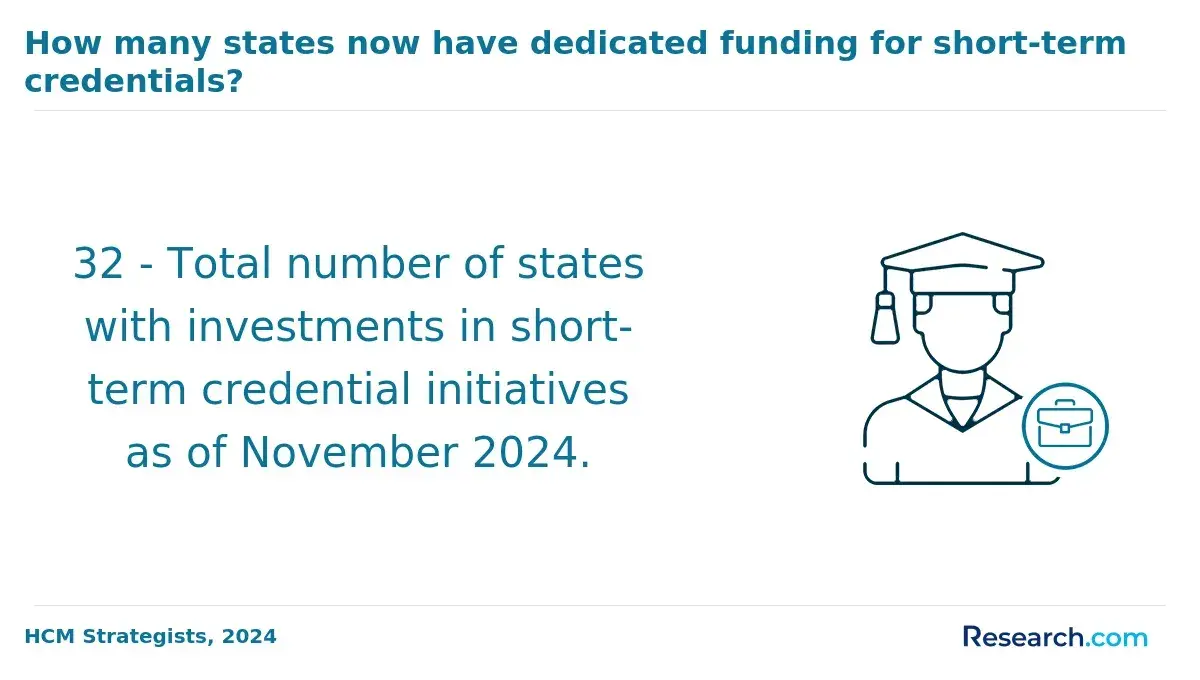
Earnings can range from solid professional salaries to executive-level compensation, but the degree's return on investment depends on cost, opportunity cost, experience, and the type of role you pursue. The Education Data Initiative's 2024 analysis estimates the average total cost of a PhD at $133,340. That figure is not specific to Population Health programs, but it is a useful caution: the degree should be evaluated against realistic salary movement, not just personal interest.
The table below shows a practical earnings progression framework. It is not a guarantee; instead, it helps you estimate whether the roles you are targeting can reasonably offset tuition, time, and forgone income.
| Career stage after or during doctorate | Common roles | Salary interpretation |
| Early doctoral-career transition | Epidemiologist, research scientist, program evaluator, analyst | May align with BLS medians for epidemiologists, medical scientists, statisticians, or data scientists depending on technical depth |
| Mid-career specialist | Senior epidemiologist, biostatistician, informatics lead, outcomes researcher | Often improves when the candidate owns advanced methods, publications, regulatory knowledge, or high-impact datasets |
| Director-level leadership | Director of population health, analytics director, quality improvement director | Can align more closely with medical and health services management benchmarks when budget and team leadership are included |
| Executive or enterprise-level leadership | Chief population health officer, vice president, center director, consulting principal | Highest earning potential usually requires leadership history, measurable outcomes, and strategic influence beyond research expertise |
To estimate your own payoff, compare your current salary with realistic post-degree roles in your target sector. Then calculate how many years of incremental earnings it would take to offset tuition, fees, travel, reduced work hours, and dissertation time.
Use the following checks before deciding that a doctorate is the best salary move.
- If your target roles commonly accept a master's degree plus experience, a doctorate may be most valuable only if it gives you specialized expertise or leadership credibility that you do not already have.
- If your current employer has a clear promotion ladder, ask whether a doctorate changes eligibility for director, executive, faculty, or principal scientist roles before enrolling.
- If you need a faster credential to change direction, compare certificates or master's-level options first, especially if your salary goal is in analytics, informatics, nutrition, or healthcare administration rather than doctoral research leadership.
Students with a prevention or nutrition background who are not ready for doctoral study might first consider an accelerated nutrition degree online if they need a quicker path into health promotion, wellness, or diet-related population health work.
The highest-paying industries are usually those that connect population health evidence to revenue, risk, regulation, product strategy, or enterprise operations. Public agencies and universities can offer strong mission fit and stability, but private health systems, consulting, insurance, biotechnology, pharmaceuticals, and health technology may offer higher compensation for specialized expertise.
The table below compares major hiring industries by salary potential and fit. It can help you decide where to aim your specialization, dissertation, internships, and professional network.
| Industry or sector | Salary potential for doctorate holders | Why Population Health expertise is valued |
| Hospitals and integrated health systems | High for director, vice president, and chief-level roles | Population health supports quality improvement, readmission reduction, risk contracts, and care coordination |
| Health insurance and managed care | High for analytics, utilization, quality, and value-based care leadership | Employers need risk adjustment, outcomes measurement, prevention strategy, and cost-of-care analysis |
| Pharmaceuticals and biotechnology | High for HEOR, real-world evidence, market access, and epidemiology roles | Population data supports product value, safety, comparative effectiveness, and reimbursement decisions |
| Consulting firms | High but variable | Clients pay for strategy, analytics, implementation, and policy expertise across health systems and payers |
| Government and public health agencies | Moderate to strong, with high mission and stability value | Doctorate holders lead surveillance, evaluation, policy, emergency preparedness, and population interventions |
| Universities and academic medical centers | Moderate to high depending on rank, grants, clinical affiliation, and leadership | Research, teaching, grants, centers, and interdisciplinary population health initiatives depend on doctoral expertise |
| Health technology and digital health | High for candidates with informatics and analytics strength | Companies need evidence, data governance, outcomes validation, and product impact measurement |
Environmental health, occupational safety, and exposure science can also support strong population health careers, especially in regulated industries and government. Candidates drawn to this path may find useful pre-doctoral comparisons among the best online environmental health and safety programs.
Industry choice affects more than salary. It also changes the type of evidence you must produce: academic employers value publications and grants, health systems value measurable operational outcomes, life sciences employers value regulatory-grade evidence, and consulting firms value client-ready strategy.
The most valuable skills are those that help employers make better decisions at scale. A Population Health doctorate is more likely to produce salary growth when it strengthens both technical expertise and executive communication.
The table below connects high-value competencies with the roles that typically pay for them. Use it to identify gaps before choosing electives, dissertation methods, internships, or professional development.
| Skill | Why it matters for high-paying roles | Roles that value it most |
| Advanced statistics and causal inference | Helps employers distinguish correlation from impact when evaluating interventions | Biostatistician, HEOR director, research scientist |
| Data science and predictive modeling | Supports risk stratification, forecasting, population segmentation, and AI evaluation | Analytics director, data science manager, informatics leader |
| Health economics | Connects outcomes to cost, reimbursement, and value-based care decisions | HEOR director, payer strategist, consulting lead |
| Implementation science | Shows whether interventions work in real clinical or community settings | Program director, quality leader, health system strategist |
| Health informatics and data governance | Improves data quality, interoperability, privacy-aware analytics, and reporting | Clinical informatics director, population health technology leader |
| Executive communication | Turns complex evidence into decisions that boards, agencies, or clients can act on | Chief population health officer, consultant, policy director |
| Grant writing and publication | Builds credibility and funding capacity in academic and research settings | Professor, center director, principal investigator |
Health information systems are now central to population health work because many interventions depend on electronic health records, registries, claims data, and quality reporting. If informatics is your weakest area, reviewing a health information management degree online can help you understand the data infrastructure that supports many high-paying roles.
One red flag is focusing only on theory while neglecting tools. Employers may expect familiarity with statistical programming, data visualization, database logic, research design, regulatory constraints, and stakeholder communication. You do not need to be a software engineer for every role, but you should be able to supervise analytic work and challenge weak evidence.
The most stable sectors are those with durable demand for population-level measurement, public accountability, regulatory compliance, and healthcare cost control. Stability does not always mean the highest pay, but it can matter more if you want long-term advancement, benefits, research continuity, or mission-driven work.
Government public health, academic medical centers, hospitals, insurers, and large nonprofit health organizations often offer steadier career paths than early-stage startups or short-term consulting contracts. The trade-off is that compensation may rise more slowly unless you move into leadership, grants, enterprise analytics, or specialized policy work.
BLS projections show strong growth for epidemiologists, with employment expected to grow 19% from 2023 to 2033. This is useful for Population Health doctorate holders because epidemiology skills remain relevant across infectious disease, chronic disease, environmental exposures, emergency preparedness, and health equity work.
When weighing stability, consider the following sector-by-sector fit.
- Choose government or public agencies if you want policy impact, surveillance, emergency preparedness, and long-term public service stability.
- Choose hospitals or integrated delivery systems if you want operational influence in quality, cost, readmissions, prevention, and value-based care.
- Choose academic medicine if you want research, teaching, grants, and interdisciplinary collaboration, while accepting a longer promotion ladder.
- Choose insurers or managed care if you want stronger alignment with risk modeling, utilization management, prevention, and population-level cost strategy.
- Choose consulting or health technology if you want faster compensation upside, but be prepared for client pressure, changing priorities, and less predictable stability.
Stability also depends on whether your skills remain portable. Doctorate holders with strong analytics, policy, informatics, and evaluation skills can move across sectors more easily than those whose expertise is tied to a single grant, disease area, or employer system.
What do employers of high-paying jobs look for when hiring Population Health doctorate holders?
Employers hiring for high-paying roles look for evidence that a doctorate holder can solve expensive, complex, population-level problems. They want more than academic ability; they want judgment, leadership, credibility, and measurable outcomes.
A strong candidate usually shows a mix of doctoral expertise and practical achievements. The following qualities matter most because they reduce hiring risk for employers.
- Clear sector fit, such as health system operations, payer analytics, life sciences evidence, public agency leadership, or academic research.
- Proof of impact, including reduced disparities, improved quality metrics, stronger surveillance, better risk models, successful grants, publications, or implemented programs.
- Technical fluency in methods relevant to the role, such as biostatistics, causal inference, machine learning, health economics, informatics, or implementation science.
- Leadership experience, including supervision, budget responsibility, cross-functional collaboration, stakeholder management, or executive presentations.
- Communication skill, especially the ability to translate complex findings into decisions for nontechnical leaders.
- Ethical and regulatory awareness, including privacy, data governance, human subjects research, equity, and responsible AI use.
The most common mistakes are targeting roles that are too broad, overestimating the value of the doctorate alone, ignoring industry-specific skills, and waiting until graduation to build a network. High-paying employers often hire through professional relationships, conference visibility, publications, consulting projects, fellowships, and referrals.
If salary advancement is your main goal, shortlist doctorate programs based on outcomes rather than prestige alone. Ask programs where graduates work, what roles they obtain, whether students publish, whether part-time students receive career support, how the curriculum covers analytics and leadership, and whether faculty have active connections to health systems, payers, government agencies, or life sciences employers.
Other Things You Should Know About Population Health
A DrPH is often better for applied leadership, public health practice, health system management, and policy roles. A PhD is often better for research-intensive academic, scientific, biostatistics, and principal investigator paths. For salary, the better option is the one that matches your target role and gives you credible evidence of impact.
Many employers will consider an online doctorate if it is from an accredited institution and the program includes rigorous methods, faculty support, applied projects, and strong outcomes. Reputation matters, but employers usually care more about your experience, skills, dissertation relevance, and ability to deliver results.
Most population health roles do not require a clinical license unless the job includes clinical practice or a regulated healthcare function. Requirements vary by employer and state, so clinicians should verify whether maintaining licensure is necessary for leadership, faculty, consulting, or patient-facing roles.
Identify three to five target job titles, review current postings, compare required skills with each program's curriculum, estimate total cost, and speak with alumni in roles you want. If the program cannot show a clear path to your target sector, keep researching before enrolling.
- Job Outlook and Salaries for Population Health Management | CUNE https://www.cune.edu/news/population-health-jobs
- Public Health Career Salaries: What to Expect Across Roles https://www.scuhs.edu/bshs-article/public-health-career-salaries-what-to-expect-across-roles/
- Highest Paid Public Health Careers https://www.publichealthdegrees.org/careers/highest-paid-public-health-jobs/
- Highest Paying Jobs in Public Health and their Salaries - MPH Online https://www.mphonline.org/highest-paying-jobs-public-health/
- Daniel E Dawes, JD , https://meharryglobal.org/course/phd-in-global-health-equity/
- Jobs In 2029: Health Care Booms, Employers Want More - SIMPLY PHYSICIANS https://simplyphysicians.com/jobs-in-2029-health-care-booms-employers-want-more/
- Doctor of Health Science (DHSc) Salary Guide | University of Bridgeport News https://www.bridgeport.edu/news/doctor-of-health-science-dhsc-salary-guide/
- 20 Highest Paid Non-Physician Jobs in Healthcare | Medical Field Jobs https://www.healthcare-management-degree.net/highest-paid-non-physician-jobs-in-healthcare/