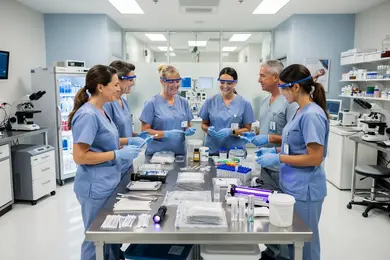
2027 Forensic Nursing Degree Master's Programs You Can Start Without Meeting All Requirements
Audited and Verified:
Our Editorial and Data Verification Process
Research.com uses government datasets, official education statistics and primary institutional information to support its career and degree guides. Our review process checks factual accuracy, occupational definitions, source dates and the requirements associated with the credentials discussed.
How This Article Was Fact-Checked
Our editorial team verifies salary estimates, employment projections, education requirements and program information against original data providers and official organizations. Salary figures are checked against the relevant occupational definitions and reporting periods. Information about licensure, accreditation and required in-person training is reviewed separately.
Fact-checked and verified on:

Co-Founder and Chief Data Scientist
Nursing professionals aiming to advance into forensic nursing master's programs often face rigid admission thresholds, including specific clinical hours or prior certifications. Nearly 40% of applicants to these programs report challenges meeting all academic or experiential prerequisites, delaying career progression. This bottleneck can stall entry into a field critical for bridging health care and criminal justice. The growing demand for specialized forensic nurses, driven by expanding forensic evidence needs, necessitates alternative pathways.
This article explores forensic nursing master's programs that allow enrollment without complete fulfillment of traditional requirements, offering practical options for advancing education and career goals.
Key Benefits of Forensic Nursing Degree Master's Programs You Can Start Without Meeting All Requirements
- Flexible or conditional admission pathways allow students to begin studies while addressing deficiencies, increasing access for those lacking some prerequisites.
- Many programs enable concurrent completion of missing prerequisites, supporting continuous enrollment without delay.
- Such options offer faster entry into graduate-level training, benefiting motivated candidates who do not meet traditional criteria but seek timely career advancement.
What Forensic Nursing Degree Master's Programs You Can Start Without Meeting All Requirements?
Some graduate programs offer flexible or alternative entry pathways that enable admitted students to begin coursework before fully meeting all traditional admission criteria. Nearly 27% of graduate programs across various fields have adopted such conditional or alternative admissions, highlighting a significant shift toward accommodating diverse student needs. Below are common program types and specializations where students may start without completing every requirement upfront.
- Bridge or Conditional Admission Tracks: These tracks allow students missing certain prerequisites or certifications to enroll in foundational courses while simultaneously completing remaining requirements. This approach is common in forensic nursing master's programs with flexible admission criteria designed to support working professionals.
- Sexual Assault Nurse Examiner (SANE) Specializations: Some forensic nursing programs focused on SANE training permit earlier enrollment, requiring clinical training components to be completed as students progress in the curriculum.
- Forensic Nurse Practitioner Pathways: Nurse practitioner-focused forensic tracks sometimes offer provisional admission to nurses who have relevant experience but have yet to earn their advanced practice certifications at entry.
- Forensic Psychiatric Nursing Specializations: Programs in this area may accept candidates who are in the process of obtaining licensure or accruing clinical hours, allowing students to start coursework beforehand.
- Online and Hybrid Forensic Nursing Programs: Distance-learning formats often provide more adaptable entry options, enabling students to balance ongoing careers while working toward degree completion. These programs are an excellent option for those interested in a 1 year msn to dnp program online.
Such flexible pathways are particularly valuable for applicants starting a forensic nursing master's without traditional prerequisites, offering a practical route to advance their education while addressing outstanding admissions criteria.
What Are the Typical Admission Requirements for a Forensic Nursing Master's Degree?
Graduate admissions standards for forensic nursing degrees typically combine academic performance and qualitative assessments to evaluate candidates. Research shows that over 70% of programs now use a multi-faceted approach, considering both quantitative and qualitative factors rather than relying solely on rigid cutoffs. Below are some of the most common requirements prospective students are expected to meet.
- Undergraduate Degree: Applicants usually need a bachelor's degree in nursing or a closely related health field. This ensures they have the clinical foundation necessary for advanced forensic nursing studies.
- Minimum GPA: Many programs ask for a minimum GPA around 3.0 on a 4.0 scale to demonstrate academic readiness. However, some forensic nursing master's program admission criteria allow for flexibility if other parts of the application are strong.
- Standardized Test Scores: The GRE or other test scores may be required but are increasingly optional or less emphasized as part of graduate admissions standards for forensic nursing degrees.
- Letters of Recommendation: Typically, two to three letters are requested to provide insights into an applicant's professional skills and character. These letters are important for assessing potential success in graduate studies.
- Personal Statement: A well-written statement of purpose lets applicants convey their motivation and relevant experiences. This document helps demonstrate alignment with the program's goals and values.
Some students who do not initially meet every requirement may still find pathways to enrollment, such as conditional admission or bridge courses that address skill gaps. For those exploring healthcare-related graduate programs with flexible prerequisites, options include related fields like a healthcare administration degree online accredited, which can complement forensic nursing studies.

Can You Get Into a Forensic Nursing Master's Program Without the GRE or GMAT?
Many graduate programs now assess applicants through multiple factors and increasingly accept candidates without requiring standardized test scores. More than 60% of graduate schools across disciplines have adopted test-optional or test-waiver policies in recent years, broadening access for a diverse array of students. Below are common scenarios where applicants may gain entry to forensic nursing master's programs without submitting GRE or GMAT scores.
- Test-Optional Policies: Some programs give applicants the choice to include test scores but weigh other application elements more heavily, allowing students to highlight their unique strengths instead.
- Professional Experience: Extensive work experience in nursing or related fields can substitute for exam results by demonstrating readiness and practical skills relevant to graduate study.
- GPA-Based Waivers: High undergraduate GPAs, often 3.5 or above, may qualify candidates for test waivers, recognizing academic achievement without standardized testing.
- Holistic Review: Admissions committees may evaluate essays, letters of recommendation, clinical backgrounds, and leadership roles alongside or in place of test scores, offering a more comprehensive view of applicants.
- Practice-Focused Programs: Some forensic nursing degrees, especially online or applied formats, prioritize real-world skills and experience over traditional standardized testing requirements.
A graduate student who recently enrolled shared that navigating admissions without submitting GRE or GMAT scores felt initially intimidating. "I worried whether my application would be considered complete or competitive," he recalled. However, the program's focus on clinical experience and recommendations allowed him to emphasize his background instead of test results. He noted, "It was reassuring to see the holistic approach in action-it opened doors I wasn't sure were possible." His experience highlights how evolving admissions policies can support diverse pathways into forensic nursing master's education.
GPA plays a crucial role in graduate admissions, yet some forensic nursing master's programs offer flexibility for applicants with lower academic scores. Approximately 40% of graduate nursing programs either review candidates holistically or provide conditional admission for those with a low GPA. Below are common ways applicants with a low GPA can still gain entry.
- Conditional Admission: Students may be accepted on the condition that they complete prerequisite courses or maintain a minimum grade in initial classes, giving them a chance to prove academic readiness despite earlier setbacks.
- Professional Experience: Relevant work history in forensic nursing or healthcare can compensate for a lower GPA by demonstrating practical skills and commitment to the field.
- Strong Prerequisite Performance: Excelling in foundational courses related to forensic nursing signals preparedness, which admissions committees often value alongside overall GPA.
- Recommendation Letters: Endorsements from supervisors or educators can highlight critical thinking, ethical judgment, and communication skills, helping offset weaker academic records.
- Holistic Application Review: Many programs evaluate the entire applicant profile-including essays, interviews, and extracurricular activities-offering opportunities beyond just GPA metrics.
Prospective students exploring forensic nursing master's programs accepting students with low GPA may also benefit from researching accessible options like np programs online to broaden their educational pathways.
Many forensic nursing master's programs recognize the diverse backgrounds of applicants by offering options to begin graduate coursework while completing prerequisite requirements. Around 40% of these programs provide flexible pathways, including provisional admission or preparatory courses, enabling students to progress without having finished all prerequisites. Below are typical scenarios where students may start their studies before meeting every prerequisite.
- Provisional Admission: Some programs allow enrollment in core forensic nursing courses with the condition that missing prerequisites are completed within a defined timeframe, giving students a chance to prove their capability while progressing academically.
- Bridge or Preparatory Courses: These targeted classes help students quickly cover essential foundational knowledge, minimizing delays in entering full graduate-level coursework and maintaining steady program momentum.
- Concurrent Enrollment: Candidates may take required prerequisite classes simultaneously with graduate-level courses, integrating essential theory with advanced content and easing the transition into the master's curriculum.
- Professional Experience Waiver: Relevant nursing or related field experience can sometimes substitute for academic prerequisites through formal evaluations, allowing admissions committees to acknowledge practical skills in lieu of certain courses.
- Competency-Based Evaluation: Some institutions assess an applicant's knowledge and skills directly, offering a pathway to waive specific prerequisites if proficiency is demonstrated, thus broadening access for non-traditional students.
When discussing whether it's possible to start a forensic nursing master's program without completing all prerequisites, a professional who went through such a program shared her experience. She recalled feeling uncertain but motivated when granted provisional admission, which required her to finish outstanding courses while fully engaging in advanced classes. Balancing the dual demands was challenging but kept her on track toward graduation. She noted the value of preparatory courses in strengthening her foundation and appreciated how her prior nursing experience was considered during admission. This flexible approach made her transition smoother and affirmed that programs accommodating varied backgrounds can empower students to succeed despite initial gaps in prerequisites.
Bridge programs provide a vital starting point for students who don't fully satisfy the standard admission criteria for forensic nursing master's degrees, helping them develop the essential knowledge and skills needed for success. These programs offer targeted instruction and support to prepare students for graduate-level coursework. Below are some key features and advantages of these programs.
- Preparatory Coursework: These courses fill gaps by covering fundamental topics like advanced anatomy, forensic science basics, and research techniques, ensuring students build a solid foundation before entering the main master's curriculum.
- Skill Development: Focused activities enhance practical abilities such as forensic evaluations and proper handling of evidence, enabling students to gain relevant clinical expertise early on.
- Conditional Admission: Students often begin under provisional status, completing prerequisite studies that qualify them for full program admission upon successful completion, which promotes academic continuity and confidence.
- Curriculum Integration: Bridge programs are designed to smoothly transition learners into the core master's coursework, reducing the risk of difficulty or delay once advanced classes commence.
- Accelerated Readiness: Some offerings streamline this preparatory phase, helping students advance more quickly into graduate-level forensic nursing studies without extended delay.
Flexible entry forensic nursing master's programs have grown in popularity as more students seek graduate education while managing work, family, or incomplete traditional prerequisites. This adaptability leads some to question whether such programs maintain academic quality and legitimacy. Several key factors help prospective students evaluate these programs confidently.
- Accreditation: Legitimate programs possess accreditation from recognized agencies in nursing and higher education, ensuring their curriculum and outcomes meet established standards.
- Institutional Reputation: Universities with a strong background in health sciences or nursing typically sustain academic rigor and uphold quality even when offering flexible admissions.
- Curriculum Quality: A credible program provides an evidence-based curriculum aligned with current forensic nursing competencies and professional standards to prepare graduates adequately.
- Faculty Qualifications: Experienced educators with advanced degrees and practical forensic nursing expertise play a vital role in maintaining instructional excellence and supporting student development.
- Student Support Services: Comprehensive advising, technical help, and career resources demonstrate a program's dedication to student success beyond simply easing entry barriers.
Focusing on these aspects allows students exploring forensic nursing master's programs they can start without meeting all requirements to discern reputable options that support long-term educational and career goals.
Conditional admission enables students to begin a forensic nursing master's program before fulfilling all traditional prerequisites, offering flexibility for those pursuing advanced education. Financial aid eligibility is a crucial consideration, especially since about 57% of graduate students receive some form of financial aid. Several key factors influence whether students with conditional status can access these resources.
- Enrollment Status: Students must typically be enrolled at least half-time in an accredited program to qualify for federal financial aid. Conditional admission students who are mostly enrolled maintain eligibility, but limited or remedial course loads might restrict access.
- Accreditation: Only programs accredited by recognized agencies are eligible for federal financial aid programs. This ensures that financial support goes to students in quality forensic nursing master's programs.
- FAFSA Timing: Timely filing of the Free Application for Federal Student Aid (FAFSA) is essential. Conditional admission status can delay documentation, possibly causing temporary loss of aid until requirements are met.
- Institutional Policies: Some schools provide financial aid to conditionally admitted students contingent on meeting specific performance benchmarks; others require full admission before disbursement.
- Documentation Requirements: Conditional admission students often need to submit proof they have satisfied certain conditions to continue receiving aid, ensuring compliance with federal and institutional standards.
Students exploring financial aid options for forensic nursing master's students with conditional status should communicate closely with their program's financial aid office. For those considering alternative pathways or accelerated training, programs like a fast track lpn option may also be relevant within the broader context of education planning.
Applicants to a forensic nursing master's program may not meet every traditional admission requirement due to limited academic background, missing prerequisite courses, or lack of direct forensic experience. Despite these challenges, about 15% of students are admitted via flexible or conditional pathways, reflecting how programs increasingly accept diverse candidate profiles. Improving your chances of admission requires strategic preparation using proven approaches.
- Highlight Professional Experience: Emphasize roles in nursing, law enforcement, or victim advocacy that showcase practical skills relevant to forensic nursing. This approach is key in securing conditional admission in forensic nursing master's programs as it illustrates applied knowledge beyond academics.
- Complete Prerequisite Courses: Enroll in prerequisite classes online or at community colleges to demonstrate a commitment to meeting academic demands. For some, this step addresses tips for admission without prerequisite courses in forensic nursing graduate programs effectively.
- Strong Recommendation Letters: Obtain letters from supervisors or colleagues familiar with your critical thinking and interdisciplinary collaboration skills. Such endorsements strengthen your application by highlighting your adaptability and professional potential.
- Compelling Personal Statement: Articulate your motivation, understanding of forensic nursing's challenges, and career goals clearly. A well-crafted statement helps admissions committees see your potential beyond test scores and transcripts.
- Relevant Certifications: Showcase certifications in trauma assessment, evidence collection, or victim counseling. These credentials demonstrate preparedness and specialized skills valued in forensic nursing.
By using these strategies, applicants can enhance their eligibility for forensic nursing master's programs that offer conditional acceptance, creating pathways into this specialized field. Additionally, exploring options like the best online medical billing and coding schools can complement career development in forensic nursing through administrative and technical skill enhancement.
Conditional admission offers a pathway for students to begin a forensic nursing master's program while fulfilling remaining prerequisites. Completing these conditions within the set timeframe is essential to keep enrollment active and ensure smooth academic progress. Missing deadlines or failing to meet requirements carries several significant consequences.
- Probationary Status: Students who do not satisfy conditions on time may be put on probation, indicating that their enrollment is at risk and that immediate action is needed to avoid dismissal.
- Loss of Enrollment Privileges: Failure to meet requirements can result in losing the ability to register for courses or continuing in the program until all outstanding items are addressed.
- Delayed Graduation: Missing deadlines often extends the overall time to finish the degree, as students may need to pause their studies to complete unmet obligations.
- Additional Coursework: Some programs require students to retake classes or perform extra assignments if conditional admission requirements lapse beyond the allowed period.
- Financial Aid Impact: Financial assistance such as grants and scholarships typically depends on consistent enrollment; interruptions caused by unmet conditions can jeopardize aid eligibility.
What Graduates Say About Forensic Nursing Degree Master's Programs You Can Start Without Meeting All Requirements
- Leslie: "When I applied, I hadn't completed all the prerequisite courses required for the forensic nursing master's program, so I was initially worried about my chances. The conditional admission offered me a lifeline, and despite the hefty tuition fees, the investment was worth every penny as it opened doors to specialized roles I hadn't imagined before. Pursuing this degree has truly transformed my professional confidence and allowed me to advocate more effectively for victims."
- Lisa: "Reflecting on my journey, not having direct clinical experience in forensic settings made me a borderline candidate, but the program's flexibility through conditional admittance made it possible. The program was expensive, which made me cautious, but scholarships and payment plans alleviated some of the burden. Now, I'm better equipped to contribute in interdisciplinary teams, and the degree has advanced my career in ways I didn't foresee."
- Violet: "I hadn't met all of the forensic nursing degree requirements due to work commitments that delayed some necessary certifications. Although the cost of the master's program was a challenge, I viewed it as an essential step for long-term career growth. Since completing the program, I've gained access to positions with greater responsibility and an enhanced ability to influence policy within my organization."
Other Things You Should Know About Forensic Nursing Degrees
Most programs require a BSN, an active RN license, and prerequisite courses such as statistics, research methods, and pathophysiology before full admission. Students who enter conditionally usually finish missing courses within 1 to 2 terms while maintaining the program’s minimum GPA, often 3.0.
For students conditionally admitted to 2026 forensic nursing master's programs, typical support services include academic advising, tutoring, and mentoring. These resources help students meet program requirements, develop a tailored study plan, and ensure they succeed despite starting without meeting all prerequisites.
- Five tips for a successful nursing application https://www.umassmed.edu/gsn/admissions/admission-criteria/nursing-blog2/blog-posts/2024/04/successful-application/
- Forensic Nursing https://onlinelearning.csuohio.edu/programs/msn-forensic-nursing-online
- Online RN to MSN - Forensic Nursing | Aspen University https://www.aspen.edu/nursing/rn-msn-forensic-nursing/
- MSN/MS - Criminal Justice (Dual Degree) https://www.xavier.edu/msn-ms-criminal-justice/
- Admissions Requirements https://www.aic.edu/admissions/graduate-admissions/graduate-admissions-requirements/
- The Best Online Forensic Nursing MSN Degree Programs https://www.edumed.org/online-schools/nursing-rn-programs/masters-msn/forensic-nursing/
- Online MSN Programs No GRE Required (Master of Science in Nursing) https://www.onlineeducation.com/nursing/faqs/online-msn-programs-no-gre-required
- Resale Articles https://resale-articles.rky.pl/a/Business/Careers/5646.html
- Forensic Nursing https://www.duq.edu/academics/colleges-and-schools/nursing/graduate-programs/masters-of-science-in-nursing/msn-forensic-nursing.php
- Master’s in Forensic Nursing Guide https://nurse.org/education/masters-forensic-nursing/