2027 Flexible Online Small Business Management Associate Degree Programs: Part-Time, Hybrid, Evening, and Self-Paced Options

Co-Founder and Chief Data Scientist
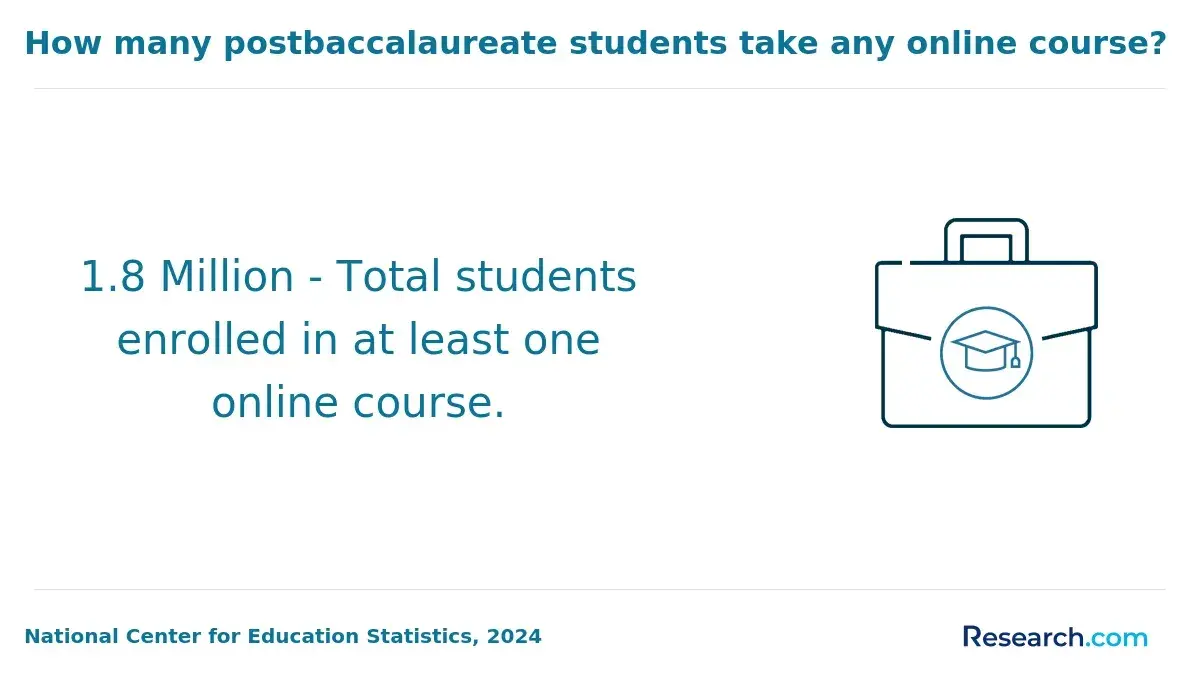
Choosing an online small business management associate degree often comes down to schedule, not just curriculum. NCES distance education data published in 2024 shows that more than half of U. S. undergraduates took at least one online course, making flexible formats a mainstream option for working adults, parents, and career changers.
This guide explains how part-time, hybrid, evening, and self-paced programs differ, what each format requires, and how those choices affect workload, campus visits, transfer options, cost, and time to completion.
Key Things You Should Know
- Most small business management associate degrees require about 60 credits; full-time students often finish in about two years, while part-time students commonly need three years or longer depending on course load and term availability.
- Part-time and evening programs offer predictable structure, self-paced programs offer the most control over weekly timing, and hybrid programs may require scheduled campus visits even when most coursework is online.
- College Board's 2024 pricing data lists average published tuition and fees for public two-year in-district students at $4,050 for the 2024-25 academic year, but online fees, books, technology costs, and extra terms can change the real total.
What Flexible Online Small Business Management Associate Degree Formats Are Available?
A flexible online small business management associate degree is usually an Associate of Applied Science, Associate of Science, or Associate of Arts program focused on entrepreneurship, accounting basics, marketing, business law, customer service, operations, and management. The "flexible" part refers to how courses are delivered and scheduled, not to lower academic expectations.
Many students compare these programs with a broader online business degree because small business management often overlaps with accounting, supervision, sales, and general business administration. The right choice depends on whether you want immediate workplace skills, transfer preparation, or support for launching or managing a business.
The table below compares the main flexible formats by attendance expectations, pacing, and student fit. Use it to narrow your search before reviewing individual school policies.
| Format | How scheduling usually works | Campus attendance | Typical fit | Main trade-off |
| Part-time online | Students take fewer courses per term, often one or two at a time. | Usually none if fully online, but some schools require exams, orientations, or local proctoring. | Working adults, caregivers, and students who need a lighter weekly workload. | Lower weekly pressure, but longer time to graduation. |
| Self-paced or competency-based | Students move through modules as they master outcomes, often within fixed subscription or term windows. | Usually none, though assessments and identity verification may be required. | Independent learners with prior work experience or strong time-management skills. | High flexibility, but less weekly instructor structure. |
| Evening online | Live classes meet after typical work hours, often once or twice weekly. | Usually none for fully online evening programs. | Students who want real-time instruction without daytime classes. | Predictable schedule, but less freedom than asynchronous study. |
| Hybrid | Online coursework is combined with required in-person sessions, labs, advising, exams, or presentations. | Yes, frequency varies by program. | Students near campus who want online convenience with face-to-face support. | More personal interaction, but commuting can reduce flexibility. |
Admissions requirements are usually accessible: a high school diploma or GED, placement information, official transcripts, and sometimes an application for financial aid. Selective admissions are uncommon at community colleges, but course placement can affect whether you start directly in college-level math, writing, or accounting.
How Do Part-Time Online Small Business Management Associate Degree Programs Work?
Part-time online programs let you earn the same associate degree while taking a reduced credit load. Instead of enrolling in 12 to 15 credits per term, a part-time student may take three to nine credits, depending on work hours, family responsibilities, financial aid rules, and course availability.
This format works best when you need predictable progress without overloading your week. A three-credit online course often requires several hours of reading, assignments, discussion posts, quizzes, and projects each week, so two courses can still feel substantial for someone working full time.
Before choosing part-time enrollment, compare how the lighter term load affects the full degree timeline. These factors often matter more than the word "part-time" in the catalog:
- Term length: Eight-week courses may move quickly even if you take only one class at a time, while 15-week courses usually spread the workload out.
- Course rotation: Some required courses may be offered only once or twice per year, which can delay graduation if you skip a term.
- Financial aid enrollment status: Pell Grants, loans, and scholarships may change when you enroll below full time.
- Prerequisites: Accounting, business math, or capstone courses may need to be completed in sequence.
- Transfer goals: If you plan to pursue a bachelor's degree, taking too few transferable general education courses early can slow your next step.
Part-time study is usually a good fit if you want to stay employed while building skills in bookkeeping, customer relations, marketing, supervision, and business planning. It may not be ideal if you need a credential quickly for a promotion, a military benefit timeline, employer reimbursement deadline, or transfer application cycle.
How Do Self-Paced and Competency-Based Small Business Management Associate Degree Programs Work?
Self-paced and competency-based programs are designed around progress through learning outcomes rather than traditional weekly lectures alone. In a small business management program, that might mean completing modules in accounting, entrepreneurship, management communication, business software, and marketing analytics once you demonstrate mastery.
These formats are not the same as simply "easy online classes." Most still have term limits, assessment deadlines, faculty evaluation, academic integrity checks, and minimum completion rules. Students who are researching an accelerated business degree online should also know that self-paced does not automatically mean faster; it is faster only when the student can consistently complete high-quality work ahead of standard deadlines.
The main advantage is control over when you study. The main risk is falling behind because there are fewer scheduled class meetings to keep you moving. Students with prior retail, office, sales, bookkeeping, or entrepreneurial experience may find this format especially useful because they can connect coursework to familiar workplace situations.
Use the following checklist before enrolling in a self-paced or competency-based associate degree program:
- Ask whether tuition is charged by credit, term, subscription period, or completed competency.
- Confirm the maximum time allowed to finish each course or competency set.
- Ask how often instructors provide feedback and whether tutoring is available outside business hours.
- Review whether credits transfer as standard semester credits or in another format.
- Check whether the program has required live presentations, proctored exams, or group projects.
This format can be a strong choice for disciplined students who can set weekly goals without live class pressure. It is usually a weaker fit for students who need frequent reminders, fixed meetings, peer discussion, or step-by-step instructor pacing.
Yes, some colleges offer online evening classes for business and small business management students. These courses typically meet live through video conferencing after standard work hours, while assignments, readings, quizzes, and discussion boards are completed through a learning management system.
Evening online classes are useful when you want real-time teaching but cannot attend daytime courses. They can also help students who prefer accountability because a scheduled class meeting creates a weekly routine.
The schedule details matter. A program that advertises evening classes may still include occasional daytime requirements, exams, advising appointments, or group meetings. Before enrolling, ask the school to clarify these points:
- Whether every required course for the degree is available in the evening, not just some electives.
- Whether evening courses meet at the same time each week or change by term.
- Whether attendance is mandatory for live sessions or recordings can be viewed later.
- Whether exams must be taken at specific times.
- Whether group projects require meetings outside the listed class time.
Evening study may be better than self-paced learning if you want instructor interaction and a stable routine. It may be less convenient if your job has rotating shifts, unpredictable overtime, childcare changes, or travel requirements.
Synchronous online programs require students and instructors to be online at the same time. Asynchronous online programs let students complete most learning activities on their own schedule within assignment deadlines. Both can be rigorous, accredited, and career-relevant, but they feel very different week to week.
The comparison below shows how the two delivery models affect flexibility, accountability, and interaction. This distinction is especially important if you are balancing school with work shifts or caregiving responsibilities.
| Feature | Synchronous online | Asynchronous online |
| Class meetings | Live virtual sessions at scheduled times. | No regular live meeting required in many courses. |
| Flexibility | Moderate; you avoid commuting but must be available at set times. | High; you choose when to watch lectures, read, and complete work. |
| Instructor interaction | Immediate during live sessions. | Usually through messages, discussion boards, feedback, and office hours. |
| Best for | Students who want structure, conversation, and real-time explanations. | Students with unpredictable schedules who can manage deadlines independently. |
| Potential drawback | Work or family conflicts can cause missed classes. | Procrastination can build quickly without a fixed meeting time. |
For small business management students, synchronous courses can be helpful in subjects that benefit from discussion, such as negotiation, leadership, and business presentations. Asynchronous courses can work well for content that can be practiced independently, such as spreadsheet assignments, business plan drafts, and accounting exercises.
Hybrid programs combine online coursework with some in-person participation. In a small business management associate degree, campus visits might be required for orientation, advising, exams, presentations, networking events, computer labs, or capstone activities. The frequency can range from a few visits per term to weekly class meetings.
Hybrid study can be a good compromise if you live near campus and want access to faculty, business labs, tutoring, student services, or local employer connections. It can also be useful if you learn better through face-to-face discussion but still want to complete readings and assignments online.
The risk is assuming that "hybrid" means "mostly online." Schools use the term differently, so you should verify the exact in-person schedule before you apply or register. Pay special attention to these red flags:
- The program page says hybrid but does not list how often students must come to campus.
- Required courses have different meeting patterns each term.
- Campus sessions are scheduled during business hours even though the program markets itself to working adults.
- Exams require in-person proctoring that conflicts with your work location or travel schedule.
- The school cannot confirm whether future required courses will remain available online.
Hybrid programs may be less flexible than fully online programs, but they can provide stronger local support. The best choice depends on whether the benefits of campus access outweigh commuting time, transportation costs, and scheduling constraints.
Most associate degrees require about 60 semester credits. A full-time student who completes around 15 credits in both fall and spring can often finish in about two academic years. Flexible students may take longer or shorter depending on transfer credits, summer enrollment, accelerated terms, course sequencing, and whether they stop out for work or family reasons.
The table below summarizes common completion patterns. These are planning ranges, not guarantees, because each college controls degree requirements and course schedules.
| Enrollment pattern | Common course load | Approximate completion pace | Best suited for |
| Full-time online | 12 to 15 credits per term | About two years | Students who can treat school as a major weekly commitment. |
| Part-time online | 3 to 9 credits per term | About three to five years | Students balancing full-time work, caregiving, or financial constraints. |
| Year-round online | Fall, spring, and summer courses | Potentially shorter than standard pacing | Students who can maintain momentum without long breaks. |
| Self-paced or competency-based | Varies by completed modules or competencies | Can be faster or slower depending on student progress and school limits | Independent learners with consistent weekly study time. |
| Hybrid part-time | Often 3 to 9 credits plus campus meetings | Often three years or longer | Students near campus who want flexibility plus in-person support. |
Completion time matters because it affects total cost, career timing, transfer plans, and motivation. A slower schedule can make school manageable, but it may increase the number of terms in which you pay fees or risk a required course changing before you finish.
Accreditation is one of the most important checks before choosing any online associate degree. In the U.S., students should generally look for institutional accreditation from an agency recognized by the U.S. Department of Education or the Council for Higher Education Accreditation. Programmatic business accreditation may be a plus, but institutional accreditation is the baseline for federal financial aid and transfer evaluation.
Transfer friendliness matters if you may continue into an online business administration degree later. A career-focused associate degree can be valuable, but some applied courses may not transfer as cleanly as general education or lower-division business courses.
To evaluate accreditation and transfer options, follow a practical verification process rather than relying only on marketing language:
- Confirm the institution's accreditation status through the school's official accreditation page and recognized accreditor listings.
- Ask whether the small business management degree is designed for workforce entry, bachelor's transfer, or both.
- Request a degree map showing which courses satisfy general education, business core, and elective requirements.
- Ask about articulation agreements with public universities or online bachelor's programs.
- Check whether previously earned credits, military training, industry certifications, or prior learning assessments can reduce your remaining requirements.
- Get transfer answers in writing before enrolling if a bachelor's degree is part of your plan.
A common mistake is choosing the most flexible program without checking whether credits will transfer. If your long-term goal is a bachelor's degree, a slightly less flexible but more transfer-aligned associate program may be the better investment.
Cost varies by school type, residency status, fees, course load, and how long you remain enrolled. College Board's 2024 Trends in College Pricing reports average published tuition and fees for public two-year in-district students at $4,050 for the 2024-25 academic year. That figure is a useful benchmark, but it does not include every online fee, book, software, transportation, or living expense.
Flexible formats can change total cost in different ways. Part-time study may lower what you pay in a single term but extend the number of terms in which you pay fees. Self-paced programs may be cost-effective for students who complete work quickly, but expensive for students who need extra subscription periods or repeated attempts. Hybrid programs may add commuting, parking, childcare, or schedule-related costs.
When comparing programs, look beyond tuition per credit and estimate the full cost of attendance. Common cost categories include:
- Tuition per credit or per term.
- Online learning, technology, student service, or proctoring fees.
- Textbooks, access codes, accounting software, spreadsheet tools, and business simulation platforms.
- Transportation and parking for hybrid requirements.
- Childcare or reduced work hours during live evening or campus sessions.
- Graduation, transcript, placement testing, or prior learning assessment fees.
Financial aid may be available if the institution and program are eligible. For the 2024-25 award year, the maximum Federal Pell Grant is $7,395, but individual eligibility depends on financial need, enrollment intensity, program eligibility, and federal rules. Students may also consider state grants, employer tuition assistance, scholarships, payment plans, veterans benefits, and transfer scholarships.
From an outcomes perspective, a small business management associate degree may support entry-level or advancement paths in retail supervision, office coordination, sales support, bookkeeping support, customer service management, entrepreneurship, and operations. BLS May 2024 wage data lists the median annual wage for first-line supervisors of retail sales workers at $47,220, but actual pay varies widely by industry, location, experience, and employer size.
How Should You Choose the Best Flexible Online Small Business Management Associate Degree Program for Your Schedule?
The best program is the one you can realistically complete, afford, and use toward your next goal. A highly flexible format is not automatically the best choice if it lacks transfer pathways, instructor support, predictable course rotation, or clear attendance rules.
Start by matching the format to your real weekly schedule. If you have stable evenings free, live evening classes may create helpful structure. If your work schedule changes often, asynchronous or self-paced courses may fit better. If you live near campus and want personal support, hybrid study may be worth the commute.
Use this decision process to compare programs before applying:
- Write down your weekly nonnegotiable commitments, including work hours, commuting, caregiving, and sleep.
- Choose a realistic course load before choosing a school; one course per term may be smarter than repeatedly withdrawing from two.
- Ask admissions or advising for a term-by-term degree plan showing when each required course is offered.
- Compare total cost, not just tuition, including fees, books, software, and extra terms.
- Verify accreditation, financial aid eligibility, and transfer agreements.
- Ask how online students access tutoring, advising, career services, library help, and technical support outside regular business hours.
- Review whether business courses include practical projects such as a business plan, budget, marketing campaign, operations workflow, or customer service improvement plan.
You should also think about your longer-term career direction. Students interested in operations, scheduling, team coordination, or process improvement may later compare business management coursework with a project management degree, while aspiring entrepreneurs may prioritize accounting, marketing, sales, and business planning electives.
Avoid common mistakes such as choosing the cheapest program without checking transfer value, assuming hybrid means rare campus visits, assuming self-paced means unlimited time, or taking evening classes without confirming every required course is offered after work hours. Ask detailed questions early; the answers often reveal whether the program is truly flexible or only partially online.
Other Things You Should Know About Small Business Management
No. The degree can also fit students who want roles in retail supervision, office administration, sales coordination, customer service leadership, bookkeeping support, or operations support. Entrepreneurship is often part of the curriculum, but many courses teach general business skills that apply in existing organizations.
Some do, but many online programs use capstone projects, simulations, or business plans instead. If an internship is required, ask whether it can be completed locally, whether evening or weekend placements are allowed, and whether your current job can satisfy the requirement.
Asynchronous or self-paced courses are usually better for rotating shifts because they do not require weekly live attendance. However, you still need fixed personal study blocks and clear deadlines, so confirm whether exams, presentations, or group projects must happen at specific times.
Part-time study does not weaken the degree itself, but it can delay graduation, transfer, or promotion timing. If you plan to continue to a bachelor's program, work with an advisor to make sure your part-time course sequence includes the right transferable classes in the right order.
- Business Administration and Management AS https://www.hcfl.edu/academics/subjects/accounting-and-business/business-administration-and-management
- Best Online BBA and BCom Programs in Canada of 2026 | CourseCompare.ca https://www.coursecompare.ca/best-online-bba-bcom-programs-canada/
- Bentley Part-Time Vs. Full-Time MBA Programs: An In-Depth Comparison https://www.bentley.edu/news/part-time-vs-full-time-mba-programs-depth-comparison
- Inside Online Master’s Programs in Entrepreneurship: Find the Right School https://www.onlinemastersdegrees.org/best-programs/business/entrepreneurship/
- Associate Degree In Business Administration | Online Program | UA Grantham https://www.uagrantham.edu/online-degrees/business-administration-management-associate-arts/
- 2025 Most Affordable Online Business Degrees https://www.onlineu.com/most-affordable-colleges/business-degrees
- Is an Online Business Degree Program Right for You? https://www.allbusinessschools.com/blog/getting-a-business-degree-online/
- Boost Income with Flexible Online Degrees https://www.marian.edu/blog/2026/02/how-flexible-online-degrees-help-you-boost-income-on-a-budget.php
- Business Management Degree at NECC https://necc.edu/academics/credit-programs/business/business-management-associate-degree-2/
- Business Management Associate Degree | Madison College https://madisoncollege.edu/academics/programs/business-management