2027 Fastest Accredited Online Marriage & Family Counseling Programs: Accelerated Degrees and Completion Times

Co-Founder and Chief Data Scientist
Growing awareness of mental health and relationship well-being has increased demand for licensed professionals who specialize in helping individuals, couples, and families navigate life's challenges. Employment for marriage and family therapists is projected to grow 16% through 2033, encouraging more accredited universities to offer flexible online marriage and family counseling programs.
Accelerated pathways allow students to complete academic requirements more efficiently while preparing for supervised clinical training and state licensure. This guide compares the fastest accredited online marriage and family counseling programs, covering completion times, tuition costs, and licensure requirements to help you begin a rewarding career in behavioral health.
Key Things You Should Know
- The fastest realistic online path is usually a bachelor's completion program in 12 to 24 months if you transfer substantial credits, while licensure-track online master's programs in marriage and family therapy commonly take about 18 to 36 months before post-graduate supervised hours.
- Accelerated programs typically use 5-week, 6-week, 7-week, or 8-week courses, year-round enrollment, or heavier full-time loads; shorter terms compress the same academic expectations rather than reducing the amount of work.
- Many bachelor's programs may accept up to 75% or about 90 transfer credits toward a 120-credit degree, but master's counseling and MFT programs usually accept far fewer transfer credits because accreditation, clinical skills, and state licensure rules are stricter.
Which Colleges Offer the Fastest Accredited Online Marriage & Family Counseling Programs?
The fastest accredited online marriage and family counseling programs are not all the same kind of degree. Some are undergraduate psychology, human services, or family studies programs that can help students move toward graduate counseling study, while others are master's programs designed to meet marriage and family therapist licensure requirements.
The table below compares examples of accredited online or mostly online programs that are commonly considered by students seeking a faster path. Use the advertised timeline as a starting point, not a promise, because transfer credit, state licensure requirements, internship availability, and course sequencing can change the actual completion date.
| College or university | Online program type | Common accelerated feature | Advertised or typical completion range | Best fit |
| Touro University Worldwide | Online MA in Marriage and Family Therapy | Fully online coursework with accelerated sessions | About 18 months for some full-time students | Students seeking a fast master's option who will verify state licensure alignment before enrolling |
| Capella University | Online MS in Marriage and Family Therapy | Quarter-based online format and clinical training sequence | Often around 21 to 33 months, depending on pace and fieldwork | Students who want a programmatic-accreditation-focused MFT pathway |
| Pepperdine University | Online MA in Clinical Psychology with an MFT preparation pathway | Multiple start dates and online live classes | Commonly about 27 months for full-time students | Students seeking a structured online cohort with California-oriented clinical preparation |
| Abilene Christian University | Online Master of Marriage and Family Therapy | Online coursework with clinical placement requirements | Often about 33 months | Students who want a faith-informed university setting and can plan ahead for clinical hours |
| Liberty University | Online bachelor's programs in psychology, counseling-related, or human services fields | 8-week courses and generous undergraduate transfer-credit policy | As little as 1 to 2 years for high-transfer students; about 3.5 to 4 years from scratch | Students who need a bachelor's degree before applying to a counseling or MFT master's program |
For licensure-track work, "fastest" should mean the shortest accredited route that still meets your state's educational requirements. A school can be institutionally accredited and still require careful review for MFT licensure, especially if you plan to practice outside the state where the program is based.
Students who are still deciding between counseling, psychology, health administration, and other helping professions may also compare broader accelerated degrees to understand how fast-track formats differ across fields.
How Long Does It Take to Complete an Accredited Online Marriage & Family Counseling Degree?
Completion time depends first on the degree level. A bachelor's degree can be accelerated mainly through transfer credits, while a master's degree in marriage and family therapy or counseling is limited by clinical-course sequencing, practicum, internship, and state licensure requirements.
The table below shows realistic timeline ranges by starting point. It is useful because many "fastest program" claims are based on ideal full-time enrollment and do not include delays caused by transfer evaluation, prerequisites, clinical placement, or state-specific coursework.
| Starting point | Program type | Fast realistic timeline | More typical timeline | Main factor that changes speed |
| No prior college credits | Online bachelor's in psychology, human services, or family studies | About 3 to 3.5 years with year-round accelerated terms | About 4 years | Course load and whether the school offers every required course year-round |
| Associate degree or 60 transfer credits | Online bachelor's completion program | About 18 to 24 months | About 2 to 3 years | How many credits apply to major, general education, and elective requirements |
| 90 transferable credits | Upper-division bachelor's completion program | About 12 to 18 months | About 18 to 24 months | Residency requirements and availability of capstone or practicum courses |
| Bachelor's degree completed | Online master's in MFT or counseling with MFT preparation | About 18 to 24 months for some full-time students | About 2.5 to 3 years | Clinical placement timing, practicum sequence, and state-required coursework |
| Working adult with limited weekly study time | Part-time online master's | About 3 years | About 3 to 4 years | Maximum course load, internship schedule, and work-life constraints |
How Do Accelerated and Competency-Based Online Marriage & Family Counseling Programs Work?
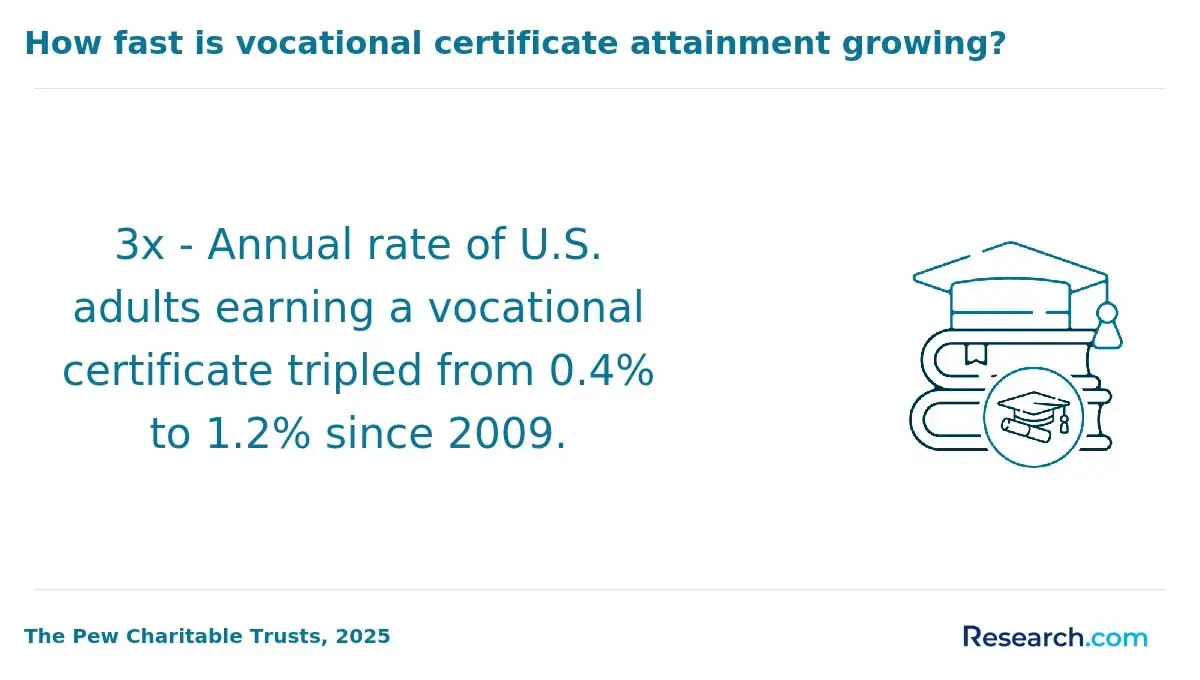
Accelerated online programs shorten the calendar, not the learning outcomes. Instead of taking two 15- or 16-week semesters per year, students may take one or two courses at a time in shorter sessions and continue through the summer.
These formats can reduce time to graduation, but they require strong time management because assignments, exams, readings, and discussion requirements arrive quickly. The main accelerated formats include:
- Short-term courses: 5-week to 8-week classes let students complete more terms per year, but each course usually moves at double the pace of a traditional semester course.
- Year-round enrollment: Programs with fall, spring, and summer starts can reduce waiting time between required courses.
- Stacked course loads: Some students take two accelerated courses at once, which may be faster but can be difficult during clinical, practicum, or internship terms.
- Cohort lockstep models: Students move through a fixed schedule together, which can be efficient but less flexible if you need to pause.
- Competency-based education: Students progress by demonstrating mastery, but this is more common in undergraduate general education or health-related programs than in licensure-track MFT master's programs.
Competency-based programs are more common in general education, business, healthcare administration, and bachelor's-completion fields than in school counseling. If self-paced study is a priority, comparing models such as the cheapest self paced online college options can help you understand how competency-based calendars work, even though school counseling licensure programs may have stricter pacing limits.
What Accreditation Should an Online Marriage & Family Counseling Program Have?
Accreditation is the main safeguard when choosing a fast online program. At minimum, the college or university should hold institutional accreditation recognized by the U.S. Department of Education or the Council for Higher Education Accreditation.
For students pursuing marriage and family therapist licensure, programmatic accreditation can matter even more. The most relevant MFT accreditor is the Commission on Accreditation for Marriage and Family Therapy Education, often called COAMFTE. Some counseling programs may instead hold CACREP accreditation, which is more closely associated with counseling licensure pathways than MFT-specific licensure.
The table below summarizes what each accreditation category usually tells you. This distinction matters because a program can be legitimate for one career path but still fail to meet another state's MFT licensure rules.
| Accreditation type | What it evaluates | Why it matters for speed | What to verify |
| Institutional accreditation | The overall college or university | Required for federal financial aid and often for transfer credit | Whether the institution appears in federal accreditation records |
| COAMFTE accreditation | Marriage and family therapy curriculum, clinical training, and outcomes | Can make licensure review more straightforward in some states | Whether the specific online program and location/modality are covered |
| CACREP accreditation | Counseling programs such as clinical mental health counseling | May support counseling licensure, but not always MFT licensure | Whether your intended license is LPC, LMHC, LMFT, or another credential |
| State board approval or alignment | Whether coursework meets state licensing expectations | Prevents delays after graduation caused by missing courses or hours | Written confirmation from the school and the state licensing board |
A common mistake is assuming that "accredited" means "approved for MFT licensure everywhere." It does not. Before enrolling, compare the curriculum against the state where you plan to seek licensure, including diagnosis, ethics, family systems, assessment, practicum, and supervised clinical hour requirements.
How Can Transfer Credits and Prior Learning Shorten an Online Marriage & Family Counseling Degree?
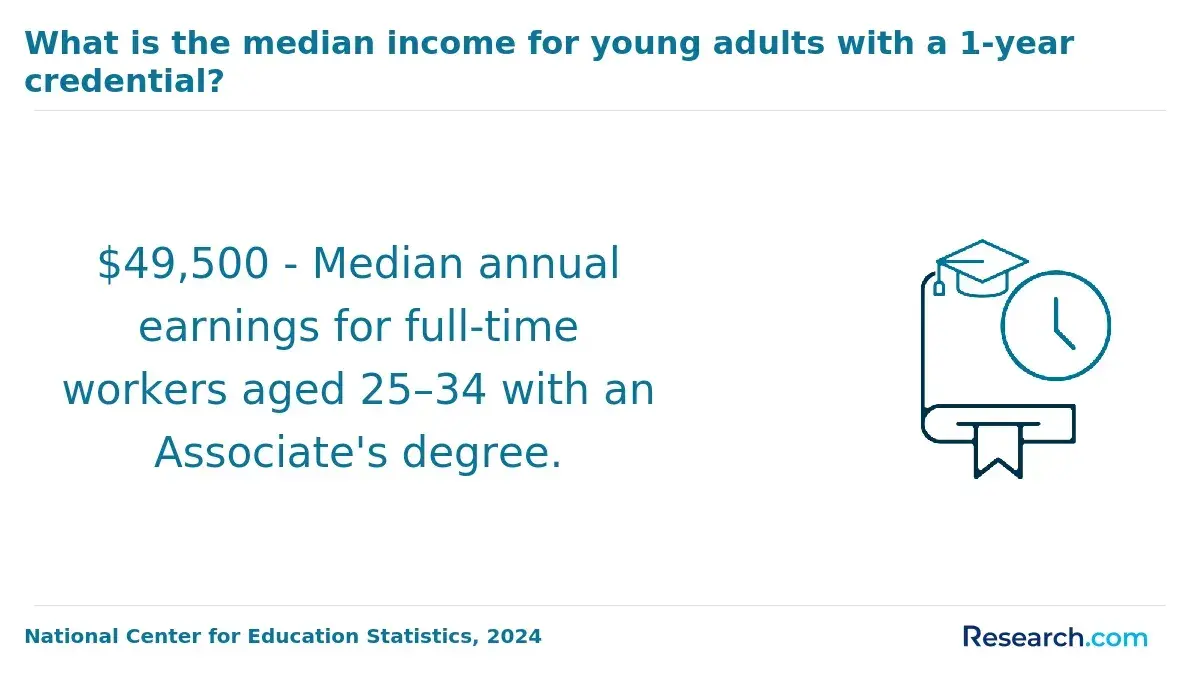
Transfer credit is usually the biggest time-saver at the undergraduate level. A student who brings in an associate degree or substantial general education credits may be able to finish a bachelor's completion program far faster than a first-time college student.
The examples below show how credits can affect speed. They are not guarantees, because schools decide whether each course applies to general education, major, elective, upper-division, or residency requirements.
| Credit source | Where it helps most | Potential time savings | Common limitation |
| Community college transfer credits | Bachelor's completion programs | Can remove 1 to 2 years of coursework | Not all credits apply to the major |
| Associate degree transfer | General education and lower-division requirements | Can allow entry as a junior | School may still require specific prerequisites |
| Prior learning assessment | Undergraduate electives | Can reduce elective-credit load | Usually limited and documentation-heavy |
| Military or professional training | Undergraduate electives or related requirements | Can reduce total credits needed | Acceptance varies by institution |
| Graduate transfer credits | Master's programs | Often limited to a small number of courses | Clinical and accreditation rules may require completion at the degree-granting school |
To shorten your degree responsibly, request an official transfer-credit evaluation before committing. Then ask the school to show which credits satisfy graduation requirements rather than only how many credits were accepted.
If you are still choosing an undergraduate major before graduate school, related online pathways can build useful foundations. For example, an online nutritionist degree may appeal to students interested in student wellness, though school counseling licensure will still require a qualifying graduate counseling program.
What Are the Admission Requirements and Start Dates for Accelerated Online Marriage & Family Counseling Programs?
Admission requirements differ sharply between undergraduate and graduate programs. Bachelor's programs often focus on transcripts and transfer standing, while master's programs evaluate academic readiness, professional fit, writing ability, recommendations, and sometimes counseling-related experience.
Start dates can also affect speed. A program with six or more start dates per year may let you begin quickly, while a cohort-based MFT program may require you to wait for the next clinical sequence.
Before applying, review the requirements that most often affect when you can start and how quickly you can progress:
- Official transcripts: Missing transcripts are one of the easiest ways to delay admission and transfer-credit evaluation.
- Minimum GPA: Graduate counseling programs may require a minimum undergraduate GPA or additional review for applicants below the threshold.
- Prerequisite coursework: Some programs expect prior study in psychology, statistics, human development, or social science research.
- Personal statement or interview: Licensure-track programs may assess your readiness for clinical training, ethics, and work with diverse families.
- Background check: Some clinical sites require background checks before practicum or internship placement.
- Technology requirements: Online counseling programs may require live class participation, webcam access, secure testing tools, and privacy-compliant spaces for skills practice.
- State authorization: The school must be authorized to enroll students in your state, and clinical placements must be permitted where you live.
The fastest applicants are usually those who gather documents early, confirm state eligibility before applying, and choose a start date that aligns with the first required course in the sequence. If you miss the first course in a lockstep cohort, you may wait months even after being admitted.
Career changers should also compare the time commitment of counseling degrees with shorter allied-health or support credentials. For instance, someone researching how to become a certified medical assistant is looking at a very different credential timeline than school counseling, where graduate education and supervised school-based experience are central to the profession.
How Much Does a Fast Online Marriage & Family Counseling Degree Cost, and Is Financial Aid Available?
Fast does not always mean cheaper. Accelerated programs can reduce living costs or time away from the workforce, but tuition is usually charged by credit, term, or program rather than by how quickly you finish.
For a national cost benchmark, College Board's 2024 Trends in College Pricing reported average published tuition and fees of $11,610 for in-state public four-year students and $43,350 for private nonprofit four-year students in 2024-25. Online students may pay different rates, but the benchmark is useful because it shows why transfer credits and total required credits matter more than advertised speed alone.
When comparing program costs, focus on the full degree price and the fees that can affect online and clinical students. Common cost categories include:
- Per-credit tuition for undergraduate or graduate coursework
- Technology, online learning, or distance education fees
- Clinical placement, practicum, or internship fees
- Books, assessment materials, and testing platforms
- Residency, intensive, or campus visit costs if required
- Graduation, transcript, and background-check fees
- Licensure exam preparation and state application fees after graduation
Financial aid may be available if the school is accredited and participates in federal student aid programs. Eligible students may use federal grants for some undergraduate study, federal loans, institutional scholarships, employer tuition assistance, military benefits, or payment plans.
Can You Work Full Time While Completing an Accelerated Online Marriage & Family Counseling Degree?
Some students can work full time while completing an accelerated online marriage and family counseling degree, but the answer depends on degree level and clinical requirements. Undergraduate accelerated courses may be manageable with careful scheduling, while master's-level clinical placements can be harder to fit around a standard workweek.
The table below compares workload expectations so you can decide whether a fast track is realistic. The key issue is not whether classes are online, but whether you can consistently reserve enough time for reading, writing, synchronous sessions, group work, and supervised practice.
| Enrollment pace | Typical weekly experience | Best for | Risk |
| One accelerated course at a time | Focused but steady workload | Full-time workers and caregivers | Longer time to graduation |
| Two accelerated courses at a time | Heavy reading, writing, and discussion load | Students with flexible jobs or strong academic preparation | Burnout or lower performance |
| Full-time master's clinical sequence | Coursework plus practicum or internship planning | Students who can adjust work hours | Placement schedules may conflict with employment |
| Part-time master's plan | Slower but more sustainable pace | Working adults who need predictable weeks | Higher total time before licensure eligibility |
A practical rule is to avoid pairing your heaviest clinical term with your heaviest work season. Students who must keep full-time jobs should ask whether evening or weekend placements are available, but they should not assume clinical sites can accommodate every schedule.
Are Accelerated Online Marriage & Family Counseling Degrees Respected by Employers and Graduate Schools?
Employers and graduate schools generally care less about whether a degree was completed online or accelerated and more about whether the institution is accredited, the curriculum is relevant, the student completed required clinical training, and the degree meets licensure or admission requirements.
For counseling and therapy careers, the most important credibility signals are clear. Review these before assuming a faster program will be treated the same as a traditional one:
- Institutional accreditation from a recognized accreditor
- Programmatic accreditation or documented alignment with state licensure standards
- Supervised practicum and internship experiences appropriate to the target role
- Faculty with relevant clinical, counseling, or family therapy expertise
- Transparent student outcomes, licensure disclosures, and state authorization information
- Clear policies for online learning, identity verification, academic integrity, and clinical placement support
The BLS 2024 median pay figure for marriage and family therapists reflects the labor market for workers in the occupation, not a guaranteed outcome for any degree program. Your actual career path may depend on licensure, state rules, local demand, supervised experience, employer setting, and whether you pursue private practice, community mental health, healthcare, school-related services, or nonprofit work.
How Should You Compare the Fastest Accredited Online Marriage & Family Counseling Programs?
The best fast program is the one that gets you to the correct credential without creating avoidable delays. A shorter advertised timeline is useful only if you can meet the course load, transfer-credit rules, clinical schedule, and licensing requirements.
Use the following steps to compare programs in a practical order. This sequence helps you avoid choosing a fast-looking program that later becomes slower because of accreditation, transfer, or fieldwork problems.
- Identify your target credential first, such as bachelor's preparation, LMFT, LPC, LMHC, or another state-specific license.
- Verify institutional accreditation and, for MFT licensure, check whether COAMFTE accreditation or state-board alignment is required or preferred.
- Ask for a written degree plan showing your transfer credits, remaining courses, and projected graduation term.
- Compare the fastest full-time plan with a sustainable part-time plan so you understand the trade-off between speed and workload.
- Confirm whether required courses are offered every term or only once per year.
- Ask how practicum and internship placements work for online students in your state.
- Calculate total cost using remaining credits, fees, books, clinical expenses, and likely time in school.
- Review withdrawal, leave-of-absence, and course-repeat policies because accelerated calendars can be unforgiving if life interrupts your schedule.
- Request licensure disclosures in writing for the state where you plan to practice.
- Compare student support, advising, faculty access, and career services, not only tuition and speed.
Common red flags include vague accreditation language, no state licensure disclosure, no clear clinical placement process, unrealistic promises about completion time, and transfer-credit estimates that are not tied to a formal degree audit. If a school cannot explain how your exact timeline works, keep comparing.
Students who already work in healthcare and are comparing clinical and nonclinical advanced pathways may find it useful to study how tightly sequenced programs work in other fields, such as a 1 year MSN to DNP program online, where prior credentials and practicum requirements also heavily shape the true completion time.
Other Things You Should Know About Marriage & Family Counseling
Not always. Many people use the terms casually, but licensure boards usually regulate marriage and family therapy, often under the LMFT credential. A "counseling" degree may prepare students for a different license, so always match the program to your intended credential.
No. A bachelor's degree can prepare you for graduate study or entry-level human services roles, but LMFT licensure generally requires a relevant master's degree, supervised clinical experience, and a state licensing exam.
Usually yes. Coursework may be online, but practicum and internship experiences are commonly completed with approved local sites or telehealth-related arrangements that meet program and state rules.
The most common delays include missing prerequisites, transfer credits that do not apply, limited clinical placement availability, failing to meet GPA or skills requirements, taking fewer courses than planned, and state-specific licensure coursework gaps.
References
- Best Online Marriage and Family Therapy Master’s Programs for 2025 https://www.onlinemastersdegrees.org/best-programs/counseling/marriage-and-family-therapy-mft/
- Best Online Master's In Marriage & Family Counseling 2025 https://www.psychology.org/rankings/best-masters-programs-in-family-counseling/
- Apply for Scholarships and Grant https://www.camft.org/scholarships
- 2026 Best Online MFT Degree Programs Ranked https://www.counselingpsychology.org/counseling/degrees/mft/
- Inside MFT Programs Online with Financial Aid Options https://www.edumed.org/online-schools/marriage-and-family-therapy-mft-programs/financial-aid/
- Online MFT Programs - Master’s in Marriage and Family Therapy Programs https://www.onlineeducation.com/counseling/mft-programs
- 15 Best Online MFT Programs in California: No GRE Required (2025 Guide) - California MFT https://californiamft.org/online-mft-programs/no-gre/
- Marriage and Family Therapy vs. Clinical Mental Health Counseling | Lebanon Valley College https://www.lvc.edu/news/marriage-and-family-therapy-vs-clinical-mental-health-counseling/
- Accelerated MFT programs | edX https://www.edx.org/masters/psychology/online-mft-programs/accelerated
- Scholarships - Finaid https://finaid.org/scholarships/