
2027 Accredited Online Marriage & Family Counseling Degree Programs That Accept the Most Transfer Credits

Co-Founder and Chief Data Scientist
Choosing an online marriage and family counseling degree is harder when you already have college credits and need to know what will actually count. The Bureau of Labor Statistics reports a May 2024 median annual wage of $63,780 for marriage and family therapists, with projected 2024-2034 job growth much faster than average.
That demand makes degree planning more urgent for transfer students, career changers, and adults returning to school. This guide explains which accredited online programs tend to be most transfer-friendly, how evaluations work, and how to estimate your real time, tuition, and licensure value before applying.
Key Things You Should Know
- Licensure-oriented online marriage and family therapy master's programs usually accept far fewer transfer credits than bachelor's degree-completion programs; many graduate caps fall around 6 to 12 credits, while a few institutional policies may allow substantially more if courses match exactly.
- The most useful transfer policy is not the highest advertised maximum; it is the number of credits that apply to required courses, reduce residency hours, and still meet state licensure and accreditation expectations.
- Using May 2024 BLS wage data, the median salary for marriage and family therapists was $63,780, so transfer savings should be compared against total program cost, licensure readiness, supervised clinical requirements, and long-term career fit.
Which Accredited Online Marriage & Family Counseling Degree Programs Accept the Most Transfer Credits?
Accredited online marriage and family counseling degrees fall into two broad groups: bachelor's programs that prepare students for graduate study or human services roles, and master's programs that may support marriage and family therapist licensure. Transfer-credit generosity is much greater at the bachelor's level, but students seeking MFT licensure usually need a master's degree that satisfies state board requirements.
The table below compares transfer-friendly online options and related degree pathways by the maximum transfer credit a student may be able to request. Published limits are not guarantees; an official evaluation determines whether your credits apply to general education, electives, major requirements, or clinical coursework.
| Program or pathway | Degree level and format | Accreditation context | Published or typical transfer-credit ceiling | Best fit |
| Liberty University, MA in Marriage and Family Therapy | Online master's | Institutionally accredited; students should verify state licensure alignment | May allow up to 50% of the degree under graduate transfer policy when courses are eligible | Students with recent, closely matched graduate counseling or MFT coursework |
| Capella University, MS in Marriage and Family Therapy | Online master's | Institutionally accredited; programmatic and state requirements should be verified before enrollment | Graduate transfer is generally limited and course-match dependent | Students who need a structured online clinical degree and have a small number of prior graduate credits |
| National University, MA in Marriage and Family Therapy | Online or hybrid-supported master's, depending on location and requirements | Institutionally accredited; students should confirm COAMFTE status and state eligibility for their catalog year | Typically limited to a portion of graduate coursework, often requiring equivalent content and recency | Students prioritizing licensure-oriented curriculum over maximum transfer volume |
| Regent University, MA in Marriage, Couple and Family Counseling | Online master's with counseling orientation | Institutionally accredited; counseling accreditation and state licensure rules should be reviewed | Often limited to a small number of graduate credits, commonly around several courses | Students seeking a counseling-based pathway with family systems training |
| Touro University Worldwide, MA in Marriage and Family Therapy | Online master's | Institutionally accredited; students should verify programmatic status and state rules | Usually limited to approved graduate credits that closely match required courses | Students with modest prior graduate coursework who need online flexibility |
| Online bachelor's in family studies, psychology, human services, or related degree-completion pathways | Online bachelor's | Institutional accreditation is essential; programmatic counseling accreditation is usually not applicable at this level | Many bachelor's completion programs may accept up to 75 to 90 transfer credits | Students who do not yet have a bachelor's degree and plan to apply later to an MFT master's program |
The practical takeaway is that students with an associate degree or 60+ undergraduate credits may benefit most from a transfer-friendly bachelor's completion route, while students who already hold a bachelor's degree should focus on whether previous graduate coursework can replace specific master's requirements. A program with a lower transfer cap may still be the better investment if it has clearer licensure alignment, stronger field placement support, or fewer nontransferable prerequisites.
How Do Online Marriage & Family Counseling Degree Programs Evaluate Transfer Credits?
Online marriage and family counseling programs evaluate transfer credits by comparing your previous coursework with the receiving school's curriculum, credit-hour system, grade rules, accreditation standards, and licensure requirements. For master's programs, the review is usually stricter because clinical theory, ethics, diagnosis, assessment, practicum, and internship courses must satisfy state board expectations.
Most schools use a sequence like the one below. Following it helps you avoid enrolling based on an informal estimate that later changes.
- Submit official transcripts from every college or university attended, including institutions where you earned only a few credits.
- Provide course descriptions, syllabi, learning outcomes, and catalog pages for counseling, psychology, human development, research, and clinical courses.
- Ask whether the review is unofficial, preliminary, or binding after admission because schools use those terms differently.
- Confirm whether accepted credits apply to required courses, electives, prerequisites, or only total credit count.
- Request a written degree plan showing remaining credits, field experience requirements, residency credits, estimated tuition, and projected completion date.
Common red flags include being told that "most credits transfer" without seeing how they apply, assuming a grade of C will count toward a graduate program, or overlooking course-age rules for clinical content. In counseling and MFT programs, an older undergraduate abnormal psychology course may help with prerequisites, but it rarely replaces graduate diagnosis or treatment-planning requirements.
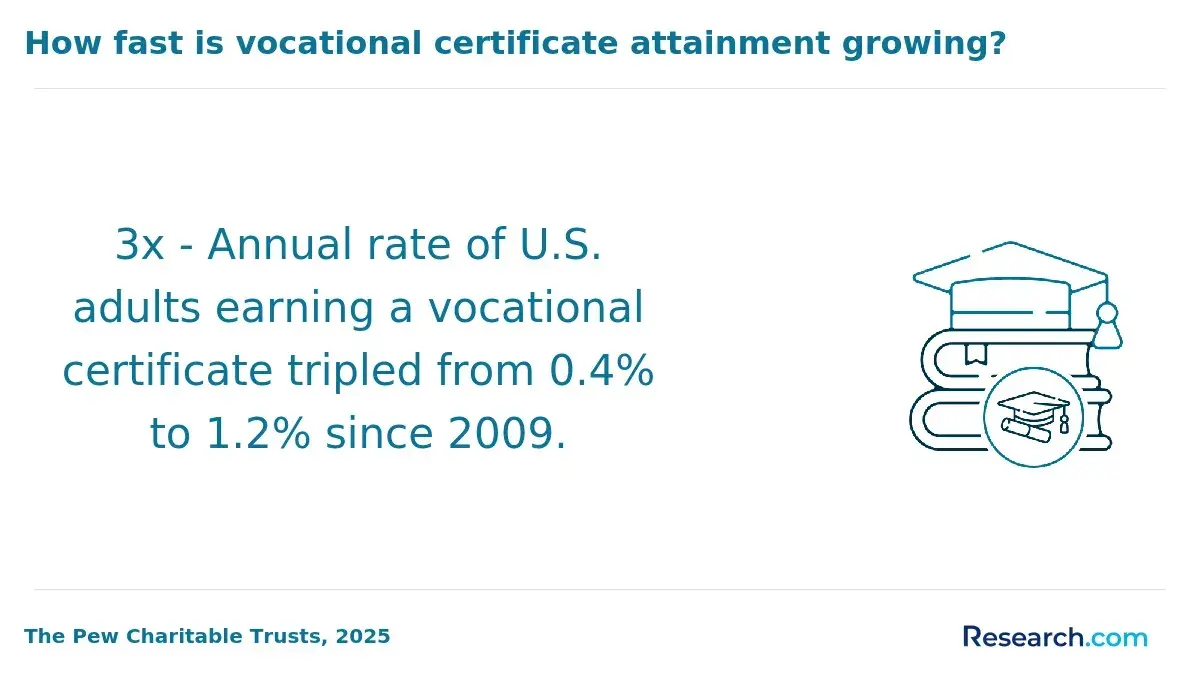
How Can Transfer Credits Shorten an Online Marriage & Family Counseling Degree?
Transfer credits shorten an online marriage and family counseling degree only when they reduce required coursework. A 60-credit master's program that accepts 9 credits may remove about three courses, but it will not usually reduce practicum, internship, supervision, or residency requirements if those experiences must be completed through the enrolling institution.
The table below shows how transfer credits can change completion time in a typical online program. Actual timelines vary by course load, term length, clinical placement availability, and whether the school allows students to take multiple courses at once.
| Student profile | Typical starting point | Credits that may transfer effectively | Likely effect on timeline | Main limitation |
| No bachelor's degree yet | 60-credit associate degree or mixed undergraduate credits | General education and lower-division electives may transfer well | Can shorten a bachelor's completion path by one to two academic years | Still needs a master's degree for MFT licensure in most states |
| Bachelor's degree in psychology, family studies, or human services | Entering a 60-credit master's program | Undergraduate credits usually do not replace graduate MFT courses | May help admissions but rarely shortens the master's substantially | Graduate-level equivalency is usually required |
| Previous graduate counseling or MFT coursework | Entering another clinical master's program | Ethics, research, human development, or theory courses may transfer if equivalent | Could reduce several courses if credits are recent and matched | Clinical sequence and internship credits are often restricted |
| Changing from a related healthcare or human services program | Some graduate credits in administration, social work, psychology, or counseling | Limited elective or foundational credits may transfer | Small reduction is possible | Family systems and clinical practice requirements may not match |
Students comparing online options should treat transfer credits as one part of a broader acceleration strategy. If speed is a major priority, it may also be useful to understand how accelerated degrees use shorter terms, heavier course loads, and year-round scheduling, although clinical counseling degrees still have supervised practice requirements that cannot simply be compressed.
How Much Can Transfer Credits Reduce the Cost of an Online Marriage & Family Counseling Degree?
Transfer credits can reduce tuition, fees, books, and opportunity cost, but the savings depend on the school's per-credit price and whether transferred courses replace required credits. The National Center for Education Statistics reported for the 2023-2024 academic year that average published undergraduate tuition and fees were much lower at public two-year colleges than at many four-year institutions, which helps explain why community-college-to-online-degree pathways can be cost-effective when credits transfer cleanly.
The table below illustrates how to think about tuition impact without assuming every school charges the same rate. Use your target program's actual per-credit tuition and fees before making a decision.
| Degree scenario | Credits required by program | Credits accepted toward requirements | Credits remaining | What the savings depends on |
| Bachelor's completion before applying to MFT master's | 120 | 60 | 60 | Whether associate-degree credits satisfy general education and prerequisites |
| Highly transfer-friendly bachelor's completion path | 120 | 90 | 30 | Residency minimum, upper-division major requirements, and tuition per remaining credit |
| Typical MFT master's with limited transfer | 60 | 6 | 54 | Whether transferred graduate credits replace required courses or only electives |
| Generous graduate transfer policy with exact course matches | 60 | 18 to 30 | 30 to 42 | Program approval, accreditation rules, course recency, and state licensure requirements |
A simple way to estimate savings is to multiply the number of required credits removed by the program's tuition per credit, then subtract any transfer-evaluation, transcript, technology, or repeated-course fees. Students comparing counseling with adjacent fields may also want to benchmark tuition models against another online professional pathway, such as an online healthcare administration degree, because nonclinical programs may have fewer practicum constraints and more flexible transfer structures.
Can Military, Professional, or Prior Learning Credits Transfer to an Online Marriage & Family Counseling Degree?
Military, professional, exam-based, and prior learning credits may transfer into some online degree programs, but they are far more useful at the undergraduate level than in licensure-track MFT master's programs. Schools may review ACE-recommended military training, CLEP or DSST exams, AP credit, professional certifications, portfolio assessments, and employer training, but clinical counseling programs usually require graduate academic coursework for core requirements.
Before relying on nontraditional credits, ask the school to separate credits that count toward total hours from credits that satisfy specific degree requirements. These questions are especially important for veterans, first responders, healthcare workers, and human services professionals.
- Does the program accept ACE-recommended military or professional training, and does it apply to general education, electives, or the major?
- Are CLEP, DSST, AP, or portfolio credits accepted after enrollment, or must they be completed before admission?
- Will prior learning credits appear as pass/fail, and could that affect graduate admissions or minimum GPA calculations?
- Can professional experience reduce practicum or internship requirements, or are supervised clinical hours always required through the program?
- Does the state licensing board accept the type of credit the school is awarding?
One trend affecting adult learners is the growth of skills-based credit evaluation, especially in healthcare and technology-adjacent programs. For example, students exploring a clinical pivot may compare MFT transfer rules with pathways such as online BSN programs for non nurses, where prior science coursework may matter but clinical hours still remain tightly regulated.
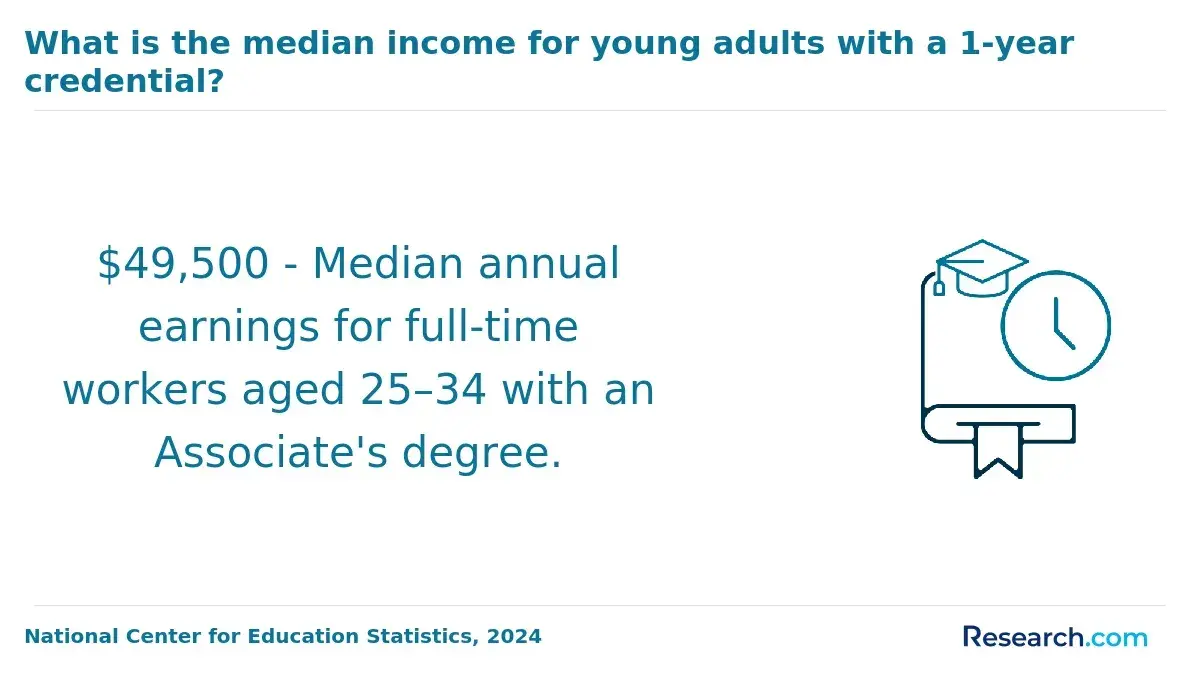
Which Types of Previous College Credits Transfer Best to Online Marriage & Family Counseling Degrees?
The credits that transfer best are recent, graded, regionally or institutionally accredited college credits that clearly match required courses in the new degree plan. For marriage and family counseling, the strongest undergraduate transfer credits usually include general education, statistics, lifespan development, abnormal psychology, sociology, family studies, and research methods.
Graduate transfer is more selective. Courses most likely to receive serious review include ethics, counseling theories, human development, research, diversity, assessment, diagnosis, and family systems theory, but only if they were completed at the graduate level and align closely with the target program's learning outcomes.
The table below summarizes how different credit types tend to perform during transfer review.
| Previous credit type | Transfer strength | Why it may transfer well or poorly | Best use in degree planning |
| Completed associate degree from an accredited college | Strong for bachelor's completion | Often satisfies lower-division general education, depending on articulation rules | Reducing the time needed to finish a bachelor's before graduate study |
| Undergraduate psychology or family studies courses | Moderate to strong for undergraduate requirements | Content often overlaps with prerequisites or major foundations | Preparing for MFT master's admission |
| Old clinical or science coursework | Variable | Programs may impose recency rules when knowledge changes over time | Requesting prerequisite review rather than assuming course replacement |
| Graduate counseling coursework | Potentially strong but limited | May match required content, but schools protect clinical sequence integrity | Replacing a small number of master's courses |
| Professional training, certificates, or portfolio credit | Usually limited for MFT master's programs | Experience may not equal graduate academic credit for licensure purposes | Electives or undergraduate credit, if accepted |
A frequent mistake is confusing "accepted by the university" with "accepted by the program." A university may award elective credit for a prior course, while the counseling department may still require you to complete its own ethics, diagnosis, or practicum sequence.
How Do Transfer Agreements Affect Online Marriage & Family Counseling Degree Completion?
Transfer agreements can make online degree completion much more predictable because they define how credits move from one institution to another. These agreements are most common between community colleges and bachelor's completion programs, but they may also exist between universities in the same system or through statewide articulation policies.
The strongest agreements do more than accept a block of credits. They show which courses satisfy specific requirements, which grades are needed, and how many credits must still be completed at the receiving institution.
- Course-to-course agreements identify exact equivalents, such as statistics replacing the receiving school's statistics requirement.
- Block-transfer agreements may accept an associate degree as satisfying lower-division general education.
- Program maps show the recommended sequence from community college through bachelor's completion and graduate prerequisites.
- Guaranteed-admission agreements may help qualified students enter a bachelor's program, but they do not guarantee admission to a licensure-track MFT master's program.
Transfer agreements are especially valuable if you still need a bachelor's degree before applying to an MFT master's program. They are also worth comparing with structured pathways in adjacent online fields, such as a health information management online degree, where articulation maps may be more standardized because the degree is not usually tied to counseling licensure.
What Transfer Policies Should Students Compare Before Choosing an Online Marriage & Family Counseling Degree?
Students should compare transfer policies before applying because the most generous-looking program may not be the cheapest, fastest, or best aligned with licensure. A 30-credit transfer maximum is only valuable if those credits replace required courses and do not create gaps in state board eligibility.
Use the checklist below when comparing online marriage and family counseling degree programs. It focuses on policies that directly affect time, cost, and professional usefulness.
- Maximum transferable credits: Ask for the cap by degree level, not just the university-wide policy.
- Residency requirement: Confirm the minimum number of credits you must complete at the school after transfer.
- Grade minimum: Many graduate programs require a B or higher for transfer consideration.
- Course age limits: Clinical, diagnosis, ethics, and research courses may expire for transfer purposes.
- Accreditation rules: Verify whether the program has the institutional and programmatic accreditation expected by your state board.
- Licensure mapping: Ask whether transferred courses have been reviewed against your intended state's MFT or counseling requirements.
- Clinical placement policy: Confirm whether practicum and internship credits can transfer, because many programs require them in residence.
- Elective versus requirement status: Make sure credits reduce required coursework, not just total credits.
- Financial aid impact: Ask whether transfer credits affect enrollment status, satisfactory academic progress, or aid eligibility.
- Written evaluation: Do not rely on verbal estimates when calculating remaining tuition or completion time.
A strong transfer policy is transparent, course-specific, and documented. A weak policy advertises a high maximum but delays the real evaluation until after you commit money, complete orientation, or start classes.
Which Students Benefit Most From Transfer-Friendly Online Marriage & Family Counseling Degree Programs?
Transfer-friendly online marriage and family counseling degree programs are most valuable for students whose previous credits are recent, accredited, and aligned with the new curriculum. They are less useful for students whose credits are unrelated, very old, ungraded, or unlikely to satisfy licensure-focused requirements.
The students below usually have the strongest case for prioritizing transfer efficiency. Each group should still request an official evaluation before choosing a program.
- Associate-degree graduates who need an online bachelor's degree before applying to an MFT master's program.
- Adults with 60 to 90 undergraduate credits who left college before finishing and now need a degree-completion route.
- Students with prior graduate counseling coursework from an accredited institution who are changing schools because of relocation, cost, or schedule fit.
- Military learners whose lower-division training may help complete general education or elective requirements.
- Career changers from psychology, social services, human services, or healthcare who have relevant academic prerequisites.
Students should avoid choosing a program primarily because it accepts many transfer credits if the degree does not match their licensing state, lacks appropriate clinical support, has high remaining tuition, or leaves them needing extra coursework after graduation. For licensure-oriented careers, a slightly slower program with clearer state approval may offer better practical value than a faster program with uncertain eligibility.
How Should Students Choose an Online Marriage & Family Counseling Degree Based on Transfer Efficiency?
The best choice is the program that accepts the most useful credits, not necessarily the most credits. Transfer efficiency means your prior learning reduces required coursework, preserves licensure eligibility, lowers net cost, and supports your career goal without forcing you to repeat unnecessary classes.
A practical selection process should compare both academic fit and financial return. Follow these steps before enrolling.
- Clarify your target outcome: bachelor's completion, MFT master's admission, MFT licensure, counseling licensure, or a nonclinical family services role.
- Identify your intended licensing state and review whether the program's curriculum aligns with that state's education and supervised experience rules.
- Shortlist only institutionally accredited schools, then check whether programmatic accreditation is important or required for your pathway.
- Request official or written preliminary transfer evaluations from at least two schools using the same transcripts and syllabi.
- Compare remaining required credits, not accepted credits in isolation.
- Calculate remaining tuition, fees, books, travel for residencies, and any unpaid clinical placement time.
- Ask whether practicum, internship, residency, or capstone requirements must be completed through the enrolling institution.
- Compare student support, field placement assistance, faculty access, licensure exam preparation, and graduation requirements.
- Choose the program with the best combination of accepted required credits, licensure clarity, manageable cost, and realistic completion timeline.
This same logic applies to other advanced online healthcare pathways, including a 1 year MSN to DNP program online, where speed only has value when accreditation, clinical requirements, and professional outcomes remain intact. For marriage and family counseling students, the right transfer-friendly program should help you graduate efficiently without weakening your eligibility for supervised practice or future licensure.
Other Things You Should Know About Marriage & Family Counseling
No. In most states, MFT licensure requires a qualifying master's degree, supervised clinical experience, and passing a licensing exam. An online bachelor's degree can be a useful step toward graduate admission, but it is not usually sufficient for independent therapy licensure.
Some fully online programs do not require regular campus attendance, while others include residencies, intensives, skills labs, or in-person clinical experiences. Always ask whether any travel is required before estimating total cost and completion time.
Not automatically. The risk comes from losing required coursework, transferring into a program that does not meet your state's rules, or assuming prior clinical hours will count. A written licensure review from the school and your state board is the safest approach.
Many schools require an application before issuing an official evaluation, but you can often request an informal review first. Do not make a final enrollment decision until you receive a written plan showing accepted credits, remaining courses, clinical requirements, and estimated cost.
References
- What is an LCSW and LMFT? | LMFT vs. LMFT Jobs | Pacific Oaks College https://www.pacificoaks.edu/voices/psychology/what-is-the-difference-between-an-lcsw-and-an-lmft/
- What Degree Do I Need to Become a Counselor or Therapist? https://paloaltou.edu/resources/blog/what-degree-do-i-need-become-counselor-or-therapist
- Benefits of Earning an Online MFT Degree | TUW https://www.tuw.edu/school-news/online-mft-degree-benefits/
- Full-Time? Part-Time? Online? Or...? — MFT California https://www.mftcalifornia.com/blog/full-time-part-time-online-or
- Frequently Asked Questions - Students https://www.coamfte.org/COAMFTE/COAMFTE/Resources/Frequently_Asked_Questions.aspx
- Best Online Master's In Marriage & Family Counseling 2025 https://www.psychology.org/rankings/best-masters-programs-in-family-counseling/
- MA in Marriage/Family Therapy (Marriage/Family Therapy) https://www.umassglobal.edu/academic-programs/ma-in-marriage-and-family-therapy
- How to Become a Marriage and Family Therapist https://onlinecounselingprograms.com/mental-health-careers/how-to-become-marriage-and-family-therapist/
- Best Online Marriage and Family Therapy Master’s Programs for 2025 https://www.onlinemastersdegrees.org/best-programs/counseling/marriage-and-family-therapy-mft/
- Online MFT Programs - Master’s in Marriage and Family Therapy Programs https://www.onlineeducation.com/counseling/mft-programs


