2027 Fastest Accredited Online Marketing Programs: Accelerated Degrees and Completion Times

Co-Founder and Chief Data Scientist
Choosing the fastest online marketing degree is really a trade-off between speed, accreditation, workload, and transfer credit. The U.S. Bureau of Labor Statistics projects employment for market research analysts to grow 8% from 2023 to 2033, making marketing skills relevant for digital commerce, analytics, and brand strategy roles.
This guide is for students who want an accredited online marketing program they can finish quickly without overlooking prerequisites, residency rules, internships, course loads, or credit-transfer limits. You will learn which formats are genuinely accelerated and how to estimate your real completion time.
Key Things You Should Know
- The fastest accredited online marketing bachelor's options are usually degree-completion programs, competency-based programs, or 7- to 8-week term programs; students entering with about 60 to 90 transferable credits may finish in roughly 12 to 24 months, while first-time students often need closer to 3 to 4 years.
- Many online bachelor's programs in marketing require about 120 semester credits, and transfer-friendly schools commonly accept up to 75% of the degree, often around 90 semester credits, but residency requirements and upper-division marketing courses can limit how much time you actually save.
- Seven- or eight-week courses compress the same learning outcomes into shorter terms, and competency-based programs move fastest for students who already understand business, sales, analytics, digital advertising, or customer research.
Which Colleges Offer the Fastest Accredited Online Marketing Programs?
The fastest accredited online marketing programs are not always the programs with the shortest marketing-course length. The real leaders are schools that combine recognized institutional accreditation, frequent start dates, short terms, generous transfer policies, and a curriculum that can be completed fully online.
The table below compares well-known U.S. institutions that publish online marketing or marketing-focused business degrees with accelerated-friendly features. Use it as a starting point, then verify the current catalog, tuition, transfer evaluation, and accreditation status before applying.
| College or University | Online Marketing Degree Type | Acceleration Features | Typical Fastest Path | Best Fit |
| Western Governors University | B.S. Business Administration, Marketing | Competency-based, six-month terms, progress by demonstrating mastery | Fastest for students with prior credits and strong business experience | Self-directed learners who can study consistently without weekly class meetings |
| Southern New Hampshire University | B.S. in Marketing | Eight-week undergraduate terms, multiple starts, transfer-friendly policies | Fastest for transfer students who can enroll year-round | Students who want structured asynchronous courses and predictable term pacing |
| University of Maryland Global Campus | B.S. in Marketing | Multiple online sessions, transfer-friendly adult-student model | Fastest for students bringing community college, military, or prior university credit | Working adults who want a public university option with flexible scheduling |
| Purdue Global | B.S. in Business Administration with marketing-focused coursework or related emphasis options | Online terms, transfer credit, credit for eligible prior learning | Fastest for students who can apply prior learning and transfer credit strategically | Students seeking a business administration base with marketing coursework |
| Colorado State University Global | B.S. in Marketing or business-related online pathways depending on catalog availability | Eight-week courses, monthly starts, online adult-focused format | Fastest for organized students who can take consecutive accelerated terms | Students who want frequent starts and a predictable online course rhythm |
| Louisiana State University Online | Online marketing or business programs depending on current campus offering | Accelerated online course sessions and transfer evaluation options | Fastest for transfer students who meet major and general education requirements early | Students looking for a recognizable public university brand |
A "fastest" list should not be treated as a universal ranking because each student starts with a different transcript. If your goal is long-term career durability as well as speed, compare marketing with other business and technology-aligned options in guides such as the best college degrees for the future.
When reviewing schools, pay close attention to whether the marketing major is a true marketing degree, a business administration degree with a marketing concentration, or a digital marketing certificate stacked into a bachelor's plan. All three can be useful, but they may differ in analytics depth, strategy coursework, elective flexibility, and graduate-school preparation.
How Long Does It Take to Complete an Accredited Online Marketing Degree?
An accredited online marketing bachelor's degree usually requires about 120 semester credits. "Completion time" means the time from your first enrolled term at that institution to the date all degree requirements are satisfied, not simply the length of the marketing major courses.
The table below shows realistic timelines based on common enrollment patterns. It helps separate advertised speed from what students can usually manage when credits, work schedules, and course sequencing are included.
| Student Starting Point | Typical Credits Remaining | Common Online Format | Realistic Completion Window | Main Speed Limiter |
| First-time bachelor's student | About 120 credits | Full-time online, year-round terms | About 3 to 4 years | Total credit volume and general education requirements |
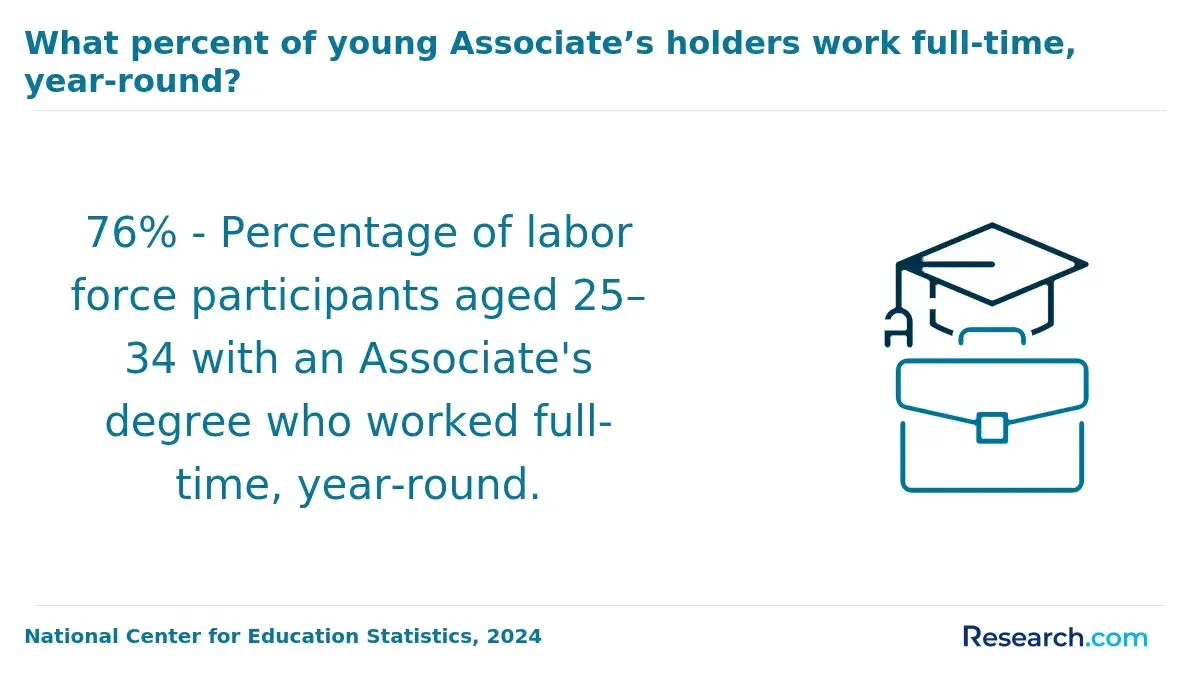
| Associate degree holder | About 60 credits | Degree-completion pathway with 7- or 8-week terms | About 18 to 24 months | Upper-division major requirements and residency credits |
| Student with 75 to 90 transferable credits | About 30 to 45 credits | Accelerated transfer pathway | About 12 to 18 months | Whether transferred courses match degree requirements |
| Experienced student in competency-based program | Varies by evaluated credits and demonstrated mastery | Self-paced, competency-based terms | Potentially under 2 years for highly prepared students | Ability to complete assessments quickly and independently |
| Part-time working adult starting with few credits | About 90 to 120 credits | One or two courses per term | About 4 to 6 years | Course load, work obligations, and stop-outs |
For most students, the biggest difference is not whether courses last eight weeks or sixteen weeks; it is how many credits remain after transfer evaluation. A student taking two accelerated courses every term may finish faster than a student in a traditional semester format, but the workload can feel intense because deadlines arrive twice as quickly.
Marketing also overlaps with management, analytics, communication, sales, and workforce strategy. Students planning to move into people analytics, employer branding, or recruiting strategy may later compare graduate business options such as masters in human resources online, but the bachelor's timeline should still be planned around current credits and career goals.
How Do Accelerated and Competency-Based Online Marketing Programs Work?
Accelerated online marketing programs shorten calendar time by changing the format, not by removing academic expectations. You may cover consumer behavior, marketing analytics, digital strategy, branding, research methods, finance, management, and capstone projects on a compressed schedule.
The most common accelerated formats affect time to graduation in different ways. The list below explains what each format changes and what kind of student benefits most:
- Short-term courses: Seven- or eight-week courses let students complete more sessions per year, but each course usually requires more weekly reading, assignments, discussion, and project work than a traditional sixteen-week course.
- Year-round enrollment: Programs with fall, spring, and summer starts can reduce idle time between terms, especially for students who want continuous enrollment.
- Degree-completion structure: These programs are designed for students who already have substantial college credit, so they can focus on upper-division business and marketing requirements.
- Competency-based education: Students move by proving mastery through assessments, projects, or exams; this can be fast for experienced learners but frustrating for students who need frequent instructor pacing.
- Stackable certificates: Some schools allow digital marketing, analytics, or business certificates to count toward degree electives, which may help students earn career-relevant credentials while finishing the bachelor's.
Competency-based programs are especially different from term-based programs. Instead of waiting for a course to end, students may advance after completing required competencies, but they still need discipline, writing ability, quantitative readiness, and enough weekly study time.
Students interested in long-range management, executive, or academic leadership roles may eventually explore graduate pathways such as leadership doctoral programs. For the bachelor's stage, however, the best accelerated format is the one you can sustain without sacrificing grades, learning, or financial stability.
What Accreditation Should an Online Marketing Program Have?
Accreditation is the quality-control checkpoint that should come before speed. For an online marketing degree, the most important requirement is institutional accreditation from an accreditor recognized by the U.S. Department of Education or the Council for Higher Education Accreditation.
Programmatic business accreditation can add another layer of assurance, although it is not always mandatory for marketing employment. Common business accreditors include AACSB, ACBSP, and IACBE, and each evaluates business programs using its own standards.
The table below clarifies the main accreditation types so you can judge whether a fast program is also credible. This matters because transfer credit, employer recognition, graduate admission, and federal financial aid eligibility can depend on accreditation status.
| Accreditation Type | What It Reviews | Why It Matters for Speed and Value | What to Verify |
| Institutional accreditation | The whole college or university | Often required for federal financial aid, credit transfer, and graduate-school recognition | School name, accreditor, active status, and any sanctions |
| Business programmatic accreditation | Business school or business programs | May strengthen employer and graduate-school confidence, especially for business-focused careers | Whether the specific online marketing or business program is included |
| State authorization | Whether the school can enroll online students in your state | Affects whether you can legally enroll from your location | State eligibility, complaint process, and any restricted states |
| Professional certification alignment | Whether courses prepare students for optional marketing credentials | May help with skills signaling but usually does not replace a degree | Whether certification fees, exams, or external requirements are included |
Be cautious if a school promotes "accreditation" but does not name the accrediting body. You can verify institutional status through the U.S. Department of Education's Database of Accredited Postsecondary Institutions and Programs, and you can check business accreditation directly with the relevant business accreditor.
Programmatic accreditation is more critical in some fields than in marketing. For example, licensure-focused counseling students often need to compare accreditation differently, as shown in resources on the best online CACREP counseling programs.
How Can Transfer Credits and Prior Learning Shorten an Online Marketing Degree?
Transfer credit is usually the single biggest factor in finishing an online marketing degree quickly. A program advertised as "accelerated" may still take years if you start with no credits, while a standard online program may be fast if it accepts most of your prior coursework.
The list below shows the main credit sources that may reduce your remaining degree requirements. Each school sets its own limits, so ask for a written transfer evaluation before assuming a timeline.
- Community college coursework: General education and lower-division business courses often transfer well, especially from regionally accredited institutions with articulation agreements.
- Associate degrees: An A.A., A.S., or A.A.S. may satisfy blocks of general education, but applied credits may not always meet business-core requirements.
- Prior university credits: Previously completed credits can shorten the path, but grades, age of credits, course equivalency, and institutional accreditation matter.
- Military training: Schools may evaluate Joint Services Transcript recommendations, but accepted credits must still fit the degree plan.
- Professional certifications: Some institutions grant credit for eligible business, technology, or industry credentials after faculty review.
- Credit by exam: CLEP, DSST, and similar exams may help satisfy certain general education or elective requirements when the school accepts them.
- Portfolio or prior learning assessment: Experienced professionals may document college-level learning from work, entrepreneurship, sales, analytics, or management experience.
The practical question is not "How many credits will the school accept?" but "How many accepted credits will apply to my marketing degree?" A school might accept 90 credits overall but still require you to complete a set number of upper-division marketing, business, writing, quantitative, or capstone credits in residence.
Ask admissions for a degree map that shows remaining courses by term. If the school cannot show whether consumer behavior, business statistics, accounting, economics, marketing research, and capstone requirements are already satisfied, the advertised completion timeline is only an estimate.
What Are the Admission Requirements and Start Dates for Accelerated Online Marketing Programs?
Admission requirements for accelerated online marketing programs are usually straightforward, but small details can affect your start date and graduation date. Most bachelor's programs require a high school diploma or equivalent for first-year admission, while degree-completion applicants may need previous college transcripts and a minimum transferable credit amount.
Before applying, gather the documents and timing details that influence how soon you can begin. The following checklist focuses on requirements that commonly delay enrollment or change the number of credits you still need:
- Request official transcripts from every college previously attended, even if you completed only one course.
- Ask whether unofficial transcript reviews are available before you submit a full application.
- Confirm the minimum GPA for admission and whether a separate business-school requirement applies.
- Check whether math, writing, accounting, economics, or statistics prerequisites must be completed before upper-division marketing courses.
- Verify the next available start date and the deadline for transcript receipt, financial aid processing, and course registration.
- Ask whether courses are asynchronous, synchronous, or hybrid because scheduled meetings can affect working students.
- Confirm whether the program has a capstone, internship, portfolio, practicum, or final project that must be completed in a specific term.
Many accelerated online programs offer several start dates each year, and some use monthly or rolling starts. Frequent starts can help you begin sooner, but they do not remove the need for a careful transfer review and financial aid planning.
Students who want the quickest start should apply with transcript requests already in progress. Waiting for transcripts is one of the most common avoidable delays, especially for students who attended multiple colleges or have older credits stored under a previous name.
How Much Does a Fast Online Marketing Degree Cost, and Is Financial Aid Available?
The cost of a fast online marketing degree depends on tuition per credit or per term, number of credits remaining, fees, books, technology costs, and whether you can avoid repeating courses. Faster completion can reduce time away from full earnings, but it does not automatically mean the degree is cheaper.
Federal aid can help eligible students at accredited institutions. For the 2024-25 award year, the maximum Federal Pell Grant is $7,395, which can reduce out-of-pocket costs for qualifying undergraduates but may not cover the full cost of attendance.
The following cost factors are the ones most likely to change your total price. Review them before choosing a program based only on advertised tuition:
- Per-credit tuition: This model is predictable, but students with many remaining credits may pay substantially more than transfer students.
- Flat-rate or term tuition: Competency-based programs may charge by term, making speed financially valuable if you can complete many requirements within each term.
- Transfer credit: Accepted credits can lower total tuition by reducing the number of courses you must take at the new school.
- Fees and materials: Technology fees, graduation fees, digital textbooks, proctoring fees, and assessment fees can affect the total cost.
- Residency requirements: Some schools require a minimum number of credits to be completed through the institution, even if you transfer many credits.
- Repeat or prerequisite courses: If prior courses do not match degree requirements, you may need additional terms and additional tuition.
Federal Direct Loan limits also matter because they can cap how much you can borrow each year. Dependent undergraduates generally have lower annual borrowing limits than independent students, so an accelerated schedule may require careful cash-flow planning if tuition is due before aid fully covers charges.
If you are comparing affordability across online disciplines, resources such as affordable online masters in history can help illustrate how tuition models vary by field and level. For a marketing bachelor's degree, the best value is usually the accredited program that accepts the most applicable credit while still matching your career goals.
Can You Work Full Time While Completing an Accelerated Online Marketing Degree?
Many students can work full time while earning an online marketing degree, but accelerated pacing requires realistic planning. A single eight-week course can feel like two courses compressed into one half-semester if you are used to traditional pacing.
The table below compares common enrollment loads for working adults. It is useful because the fastest schedule is not always the schedule with the highest completion probability.
| Enrollment Pattern | Common Course Load | Likely Pace | Work-Life Fit | Risk to Watch |
| Light part time | One course per accelerated term | Slow but steady | Best for demanding jobs, caregiving, or returning students | Longer total timeline and possible motivation loss |
| Moderate part time | Two courses per accelerated term | Faster, often manageable with planning | Good for organized working adults | Heavy writing and project weeks can overlap |
| Full time | Three or more courses per term or equivalent | Fastest term-based pace | Best for students with flexible jobs or reduced outside obligations | Burnout, lower grades, and missed deadlines |
| Competency-based intensive | As many assessments as the student can complete in a term | Potentially very fast | Best for experienced, self-directed learners | Requires strong independent study habits and rapid writing output |
A good rule is to test your capacity before overloading. Start with a course load you can sustain, then increase after you understand weekly expectations in marketing analytics, campaign planning, business writing, and group projects.
Accelerated marketing students should also consider portfolio-building time. If you rush through every course without saving campaign plans, analytics dashboards, research reports, or branding projects, you may graduate quickly but have fewer work samples for internships or entry-level roles.
Are Accelerated Online Marketing Degrees Respected by Employers and Graduate Schools?
Employers and graduate schools generally care more about accreditation, institution reputation, relevant skills, grades, experience, and work samples than whether the degree was completed online or on an accelerated schedule. The key is that the credential should come from a properly accredited institution and appear as a legitimate degree on the transcript.
For marketing roles, outcomes are often influenced by practical skills as much as by the degree title. Employers may look for evidence that you can analyze customers, interpret campaign metrics, write clearly, use marketing technology, understand search and social channels, and connect strategy to business goals.
The U.S. Bureau of Labor Statistics reported a May 2024 median annual wage of $76,950 for market research analysts and marketing specialists. That figure is not a guarantee for new graduates, but it gives useful labor-market context for students weighing tuition, debt, experience, and local job opportunities.
Graduate schools may accept accelerated online degrees when the institution is accredited and prerequisites are satisfied. However, competitive M.B.A., analytics, communication, or management programs may still review GPA, quantitative coursework, recommendations, professional experience, and writing ability.
The best way to make an accelerated degree more respected is to pair it with evidence of competence. Build a portfolio, complete analytics or advertising platform training where relevant, pursue internships or freelance projects if possible, and document measurable results from class or work projects.
How Should You Compare the Fastest Accredited Online Marketing Programs?
The right fast online marketing program is the one that minimizes unnecessary time without creating unnecessary risk. A program that is slightly slower but better accredited, better aligned with your transfer credits, or more manageable with full-time work may be the smarter choice.
Use the following steps before enrolling. They are designed to turn advertised completion claims into a realistic personal graduation plan.
- Verify institutional accreditation through an official accreditation database, not only the school's marketing page.
- Request a written transfer-credit evaluation showing exactly which credits apply to general education, business core, marketing major, electives, and residency requirements.
- Ask for a term-by-term degree plan based on your intended course load, not a generic fastest-case scenario.
- Confirm whether courses are seven, eight, ten, or sixteen weeks and how many courses students commonly take while working full time.
- Check whether any courses must be taken in sequence, such as accounting before finance or statistics before marketing research.
- Ask whether internships, capstones, group projects, proctored exams, or live presentations are required and when they are offered.
- Compare total estimated cost after transfer credit, fees, books, financial aid, and possible repeat courses.
- Review career services, portfolio support, employer partnerships, and alumni outcomes where available.
- Ask what happens if you need to slow down, stop out, or retake a course during an accelerated schedule.
Common mistakes include assuming every "accelerated" program can be finished in the advertised time, ignoring residency requirements, choosing a school before seeing a transfer evaluation, and confusing shorter terms with lighter workloads. Another red flag is a school that emphasizes speed but is vague about accreditation, faculty support, course sequencing, or total cost.
Your final comparison should answer three questions: How many credits do I really have left, how many courses can I realistically complete each term, and will this degree support the marketing role I want? If the answer is clear and documented, you can choose a fast program with much more confidence.
Other Things You Should Know About Marketing Programs
Not always. Digital marketing courses may be offered in short certificate-style formats, but a full bachelor's degree still requires general education, business core, electives, and upper-division requirements. It may feel faster if digital marketing electives are available every term and do not have many prerequisites.
Yes, summer enrollment can shorten the calendar timeline if the school offers required courses during summer terms and your financial aid supports year-round attendance. The main trade-off is workload because summer and accelerated sessions often move quickly.
Some programs require an internship, practicum, capstone, or applied project, while others make internships optional. Required field experiences can strengthen your resume but may extend the timeline if they are offered only in certain terms or require employer approval.
The quickest realistic path is usually a full-time, year-round online program with short terms, strong advising, and a clear course sequence. Even then, most first-time students should plan for several years because a bachelor's degree commonly requires about 120 credits.
References
- Digital Marketing Career Path: Skills, Salary, Jobs & AI Growth Opportunities https://amquesteducation.com/blog/digital-marketing-career-path/
- Programmatic Accrediting Organizations https://www.chea.org/programmatic-accrediting-organizations
- Earn an Online Marketing Degree https://www.oedb.org/rankings/online-marketing-programs/
- 2025 Most Affordable Online Marketing Degrees https://www.onlineu.com/most-affordable-colleges/marketing-degrees
- The 10 Fastest Online Bachelor's in Marketing Degree Programs - Best Marketing Degrees https://www.bestmarketingdegrees.org/the-fastest-online-bachelors-in-marketing-degree-programs/
- Accredited Online Courses: How to Pick Programs That Actually Count https://www.upskillist.com/blog/accredited-online-courses-how-to-pick-programs-that-actually-count/