2027 Fastest Accredited Online Logistics Programs: Accelerated Degrees and Completion Times

Co-Founder and Chief Data Scientist
Choosing the fastest online logistics degree is really a timeline decision: How quickly can you graduate without choosing a weak or unsuitable program? The need is timely because the U.S. Bureau of Labor Statistics projects logisticians to grow 19% from 2023 to 2033, much faster than average.
This guide is for working adults, transfer students, military learners, and career changers comparing accredited online logistics programs. You'll learn what "accelerated" actually means, how transfer credits and course loads change completion time, and why prerequisites, residency rules, internships, and pacing can make the advertised timeline different from your real one.
Key Things You Should Know
- The fastest realistic online logistics degree path is usually a bachelor's completion program. Students entering with 60 to 90 approved transfer credits may finish in about 12 to 24 months, while first-time bachelor's students typically need closer to three to four years.
- Accelerated logistics programs most often use 4-week, 7.5-week, 8-week, or 9-week courses, but shorter terms compress the same credit requirements into less time rather than reducing the amount of work.
- Many accredited online bachelor's programs accept up to 75% of the degree, commonly around 90 of 120 semester credits, through transfer credit, military training, exams, or prior learning assessment.
Which Colleges Offer the Fastest Accredited Online Logistics Programs?
The fastest accredited online logistics programs are usually not "shorter" degrees in the legal sense; they are standard-credit degrees delivered through accelerated terms, generous transfer-credit policies, year-round enrollment, or competency-based pacing. For most students, the fastest option is the one that accepts the most previous credit and offers logistics or supply chain courses frequently enough to avoid waiting for a required class.
The table below compares accredited U.S. colleges with online logistics, supply chain, or closely related operations programs that are commonly attractive to students looking for faster completion. Use the "speed factor" column to understand what may shorten the timeline, not as a guaranteed graduation date.
| College | Online logistics-related program | Accreditation to verify | Speed factor | Best fit |
| National University | BBA in Logistics and Supply Chain Management | WSCUC institutional accreditation; business accreditation may apply by school | 4-week course format and frequent starts | Adults who want one-course-at-a-time intensity and monthly pacing |
| Arizona State University Online | BS in Supply Chain Management | Higher Learning Commission institutional accreditation; AACSB business school accreditation | 7.5-week online classes | Students seeking a well-known business school with accelerated online terms |
| Liberty University | BSBA in Supply Chain Management and Logistics | SACSCOC institutional accreditation; ACBSP business accreditation for many business programs | 8-week courses and transfer of up to 75% of the degree | Transfer students, military students, and students wanting frequent start dates |
| Southern New Hampshire University | BS in Operations Management with logistics or transportation coursework options | NECHE institutional accreditation | 8-week undergraduate terms and up to 90 transfer credits | Students who want a broad operations degree with logistics applications |
| Embry-Riddle Aeronautical University Worldwide | BS in Logistics and Supply Chain Management | SACSCOC institutional accreditation; business accreditation may apply by school | Online worldwide delivery with multiple terms per year | Students interested in aviation, defense, global transportation, or technical supply chains |
| American Public University | BA in Supply Chain Management | Higher Learning Commission institutional accreditation; ACBSP business accreditation | Monthly starts, 8- and 16-week course options, and transfer-friendly policies | Working adults, military-affiliated students, and students needing flexible pacing |
No school should be considered "fastest" until you receive a written credit evaluation. A program with 4-week courses can still take longer than an 8-week program if it accepts fewer transfer credits, offers fewer logistics electives, or requires sequential prerequisites that cannot be taken out of order.
If you are still comparing accelerated undergraduate formats across majors, a broader guide to an accelerated bachelor's degree online can help you understand how compressed terms, transfer policies, and adult-completion models work beyond logistics.
How Long Does It Take to Complete an Accredited Online Logistics Degree?
"Completion time" means the time from your first enrolled course to graduation after all transfer credits, prerequisites, residency requirements, and required major courses are applied. "Fastest" means the shortest realistic path for an accredited credential, not the most aggressive advertisement on a program page.
The table below shows common online logistics degree timelines by starting point. It matters because a student with an associate degree and approved business prerequisites may finish much faster than a student beginning with no college credit.
| Credential or starting point | Typical required credits | Fastest realistic online timeline | More common working-adult timeline | What affects speed most |
| Certificate in logistics or supply chain | About 12 to 30 credits | 3 to 9 months | 6 to 12 months | Course availability and whether credits apply to a later degree |
| Associate degree in logistics | About 60 credits | 12 to 18 months with heavy enrollment or transfer credit | 2 years | Placement tests, general education, and term length |
| Bachelor's degree from zero credits | About 120 semester credits | About 3 years with year-round full-time study | 4 years or more | Course load, math readiness, and summer enrollment |
| Bachelor's completion with 60 credits | About 60 remaining credits | 18 to 24 months | 2 to 3 years | How well prior credits match major and general education requirements |
| Bachelor's completion with 90 credits | About 30 remaining credits | 12 to 18 months | 18 to 24 months | Residency rules and upper-division logistics course sequencing |
| Master's in supply chain or logistics | About 30 to 36 credits | 10 to 18 months | 18 to 30 months | Prerequisites, capstone timing, and course load |
A shorter term does not automatically create a shorter degree. For example, two 8-week courses may cover the same credit load as two 16-week courses, but students complete assignments, exams, and projects at twice the pace. Students who work full time often finish faster by taking one or two courses every accelerated term year-round instead of overloading in one semester and stopping out later.
Recent labor-market data also makes timing relevant. The BLS reported a May 2024 median annual wage of $80,880 for logisticians, but this figure represents the occupation as a whole, not a guaranteed outcome for new graduates. The practical takeaway is that finishing earlier may help you enter or advance in a growing field sooner, but only if the credential aligns with the roles you want.
How Do Accelerated and Competency-Based Online Logistics Programs Work?
Accelerated logistics programs compress the academic calendar, while competency-based programs let students move faster after proving mastery.
Both can shorten time to graduation, but they reward different types of students: accelerated formats favor consistent weekly effort, while competency-based formats favor students who already know business, operations, procurement, inventory, or transportation concepts.
These are the main formats you will see when comparing fast online logistics programs. Each format can speed up graduation, but only if the student can handle the pace and the school offers required courses often enough.
- Accelerated terms: Courses run in 4-week, 7.5-week, 8-week, or 9-week sessions, allowing more start points per year and faster progress through required classes.
- Year-round enrollment: Students take courses in fall, spring, and summer instead of pausing for a traditional academic break.
- One-course-at-a-time models: Students focus on a single compressed course, which can be manageable for workers but intense when assignments are due every week.
- Competency-based pacing: Students advance by demonstrating mastery through assessments, projects, or exams rather than waiting for a fixed semester to end.
- Prior learning assessment: Schools may award credit for military training, professional certifications, employer training, portfolios, or standardized exams.
Competency-based formats can be especially useful for logistics professionals who already manage inventory, shipping schedules, purchasing systems, warehouse operations, or vendor relationships. However, they can be difficult for students who need instructor-led structure, predictable weekly deadlines, or more time with quantitative subjects such as statistics, analytics, and operations modeling.
Students considering graduate business paths after a logistics bachelor's may also compare speed at the next level. For example, some of the top accelerated MBA programs use condensed terms that resemble accelerated undergraduate formats.
What Accreditation Should an Online Logistics Program Have?
Accreditation is the first filter when choosing a fast online logistics degree because it affects federal financial aid eligibility, credit transfer, graduate school review, and employer confidence. The fastest program is not a good option if it lacks recognized accreditation or if its credits are unlikely to transfer.
The table below summarizes the accreditation types you are most likely to encounter. This distinction matters because institutional accreditation is usually essential, while programmatic business accreditation is a quality signal that may be valuable but is not always mandatory for logistics employment.
| Accreditation type | What it covers | Why it matters for speed and value | Examples to look for |
| Institutional accreditation | The college or university as a whole | Supports federal aid eligibility and transferability; should be non-negotiable | HLC, SACSCOC, NECHE, WSCUC, MSCHE, NWCCU |
| Business program accreditation | Business school or business programs | May strengthen employer and graduate-school perception, especially for management tracks | AACSB, ACBSP, IACBE |
| Industry alignment | Curriculum relevance to logistics practice | Can improve career fit but is not the same as accreditation | Coursework in procurement, transportation, ERP systems, analytics, warehousing, and global supply chains |
To verify accreditation, check the college's accreditation page and confirm the accreditor through the U.S. Department of Education or the Council for Higher Education Accreditation database. Be cautious with schools that only describe themselves as "licensed," "approved," or "internationally recognized" without naming a recognized accreditor.
Logistics increasingly overlaps with analytics, forecasting, and optimization. Students who want a more quantitative path may also compare an online math degree or analytics-focused business program against a logistics major before committing.
How Can Transfer Credits and Prior Learning Shorten an Online Logistics Degree?
Transfer credit is often the biggest factor in graduating quickly. A student who brings in approved general education, business core, military training, or associate-degree credits may cut years from a bachelor's timeline, while a student starting from zero must still complete the full credit requirement.
Use the following steps before enrolling to estimate your real timeline. These actions matter because an admissions estimate is less useful than an official degree audit showing exactly which credits apply to your logistics major.
- Request official transcripts from every college, community college, military education record, and exam provider you have used.
- Ask for a written transfer evaluation before committing to the program, not after the first term begins.
- Confirm the maximum transfer limit, such as whether the school accepts up to 90 credits toward a 120-credit bachelor's degree.
- Ask which credits apply to general education, business core, logistics major requirements, and free electives.
- Check the residency requirement, which is the minimum number of credits you must complete at the school awarding the degree.
- Ask whether professional certifications, employer training, military logistics experience, CLEP, DSST, or portfolio assessment can reduce remaining credits.
The table below shows how transfer credit can change a bachelor's completion timeline. It is a planning tool, not a promise, because schools decide how credits apply course by course.
| Approved transfer credits | Approximate credits remaining in a 120-credit bachelor's | Possible accelerated completion range | Main risk |
| 0 credits | 120 credits | 3 to 4 years with full-time year-round study | Heavy workload and no prior general education completed |
| 30 credits | 90 credits | 2.5 to 3 years | Some credits may count only as electives |
| 60 credits | 60 credits | 18 to 24 months | Missing business prerequisites can slow upper-division progress |
| 90 credits | 30 credits | 12 to 18 months | Residency and major-course requirements may prevent a one-year finish |
A common mistake is assuming that "up to 90 credits accepted" means all 90 credits will count toward graduation. In practice, a school may accept the credits as college-level work but apply only some of them to the logistics degree plan.
What Are the Admission Requirements and Start Dates for Accelerated Online Logistics Programs?
Most online logistics bachelor's programs are designed for broad access, but accelerated formats still require academic readiness. Typical admission requirements include a high school diploma or GED for first-year applicants, official transcripts for transfer students, and sometimes minimum GPA rules for direct admission into the business school or upper-division major.
Start dates matter because frequent starts reduce waiting time. A program with monthly or six-to-eight annual start dates may help a motivated student begin quickly, while a program that offers key logistics courses only once or twice per year can extend the timeline even if the courses themselves are accelerated.
Before applying, ask admissions and academic advising these timeline-specific questions. They help reveal whether the advertised schedule fits your actual record, availability, and career goals.
- How many start dates are available each year for online logistics students?
- Are all required logistics courses offered every term, or only in certain sessions?
- Can transfer students begin upper-division logistics courses immediately, or must they complete prerequisites first?
- Is there a maximum number of courses or credits an online student can take per term?
- Are placement tests required for math, statistics, accounting, or business analytics?
- Does the program require an internship, practicum, capstone, or proctored exam that could affect scheduling?
Graduate logistics and supply chain programs may ask for a bachelor's degree, resume, statement of purpose, recommendations, and sometimes GMAT or GRE scores. Test-optional admissions are now common in many online professional degrees; students comparing accessible graduate routes can see a similar pattern in online MSW programs no GRE required, though logistics admission rules vary by school.
How Much Does a Fast Online Logistics Degree Cost, and Is Financial Aid Available?
A fast logistics degree can cost less if it reduces the number of terms you pay fees, but speed does not automatically mean lower tuition. The largest cost drivers are per-credit tuition, transfer credits accepted, technology fees, textbooks or digital course materials, prior learning assessment fees, and whether you qualify for in-state, military, employer, or institutional discounts.
Recent national pricing helps put school quotes in context. Common cost figures to compare include the following. These figures are useful because the cheapest per-credit rate may not produce the lowest total cost if fewer credits transfer.
- $11,610 average published in-state tuition and fees at public four-year institutions for 2024-25
- $43,350 average published tuition and fees at private nonprofit four-year institutions for 2024-25
- Up to 90 transfer credits may substantially reduce total tuition in a 120-credit bachelor's program when the school applies those credits to degree requirements
The table below highlights cost factors that are especially important in accelerated online logistics programs. Use it to compare total program cost rather than looking only at tuition per credit.
| Cost factor | How it affects total cost | What to ask |
| Per-credit tuition | Sets the base cost for remaining credits | Is tuition the same for online, out-of-state, and part-time students? |
| Transfer credit | Can reduce the number of paid credits required | How many prior credits apply directly to my degree plan? |
| Term fees | Can add up if the degree takes more sessions than expected | Are technology, graduation, proctoring, or course fees charged every term? |
| Prior learning assessment | May cost money upfront but reduce tuition later | What is the fee, and how many credits can it award? |
| Course repeats or withdrawals | Can erase the financial benefit of acceleration | What happens to tuition and aid if I drop an accelerated course? |
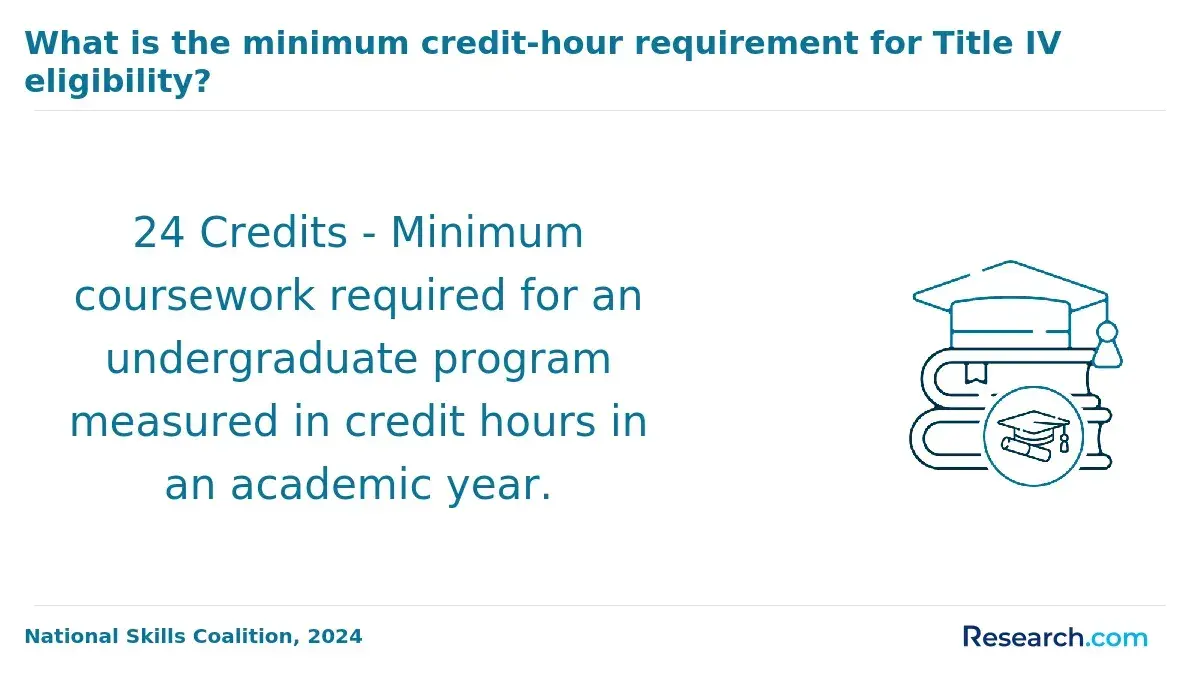
Accredited online logistics students may qualify for federal financial aid if the school participates in Title IV aid programs and the student meets eligibility rules. Complete the FAFSA, ask about employer tuition reimbursement, and confirm whether scholarships apply to accelerated, part-time, or competency-based enrollment models.
Can You Work Full Time While Completing an Accelerated Online Logistics Degree?
Yes, many students work full time while completing an accelerated online logistics degree, but the right course load matters. Logistics programs often include quantitative and process-heavy courses such as accounting, statistics, procurement, transportation management, inventory control, operations analytics, and supply chain systems; these can be difficult to rush if you have limited study time.
The table below compares common enrollment patterns for working adults. It helps you decide whether faster graduation is worth the weekly workload.
| Enrollment pattern | Typical pace | Best for | Main trade-off |
| One accelerated course at a time | Often 3 credits every 4 to 8 weeks | Full-time workers, parents, and students returning after a long break | Graduation may be slower than a heavier load |
| Two accelerated courses per term | Often 6 credits every 7.5 to 8 weeks | Students with strong time management and stable schedules | Weekly workload can feel like a full-time academic commitment |
| Full-time year-round | 12 or more credits across short terms | Students prioritizing speed and able to reduce other obligations | Higher burnout risk and less flexibility during busy work periods |
| Part-time continuous enrollment | One course most terms with few breaks | Students who need sustainability more than maximum speed | Longer time to graduation |
A practical strategy is to start with one accelerated course, especially if it is math-heavy or writing-heavy, then increase your load after you understand the weekly rhythm. In logistics, the fastest successful students often treat each term like a project plan: they map due dates, protect study blocks, and avoid scheduling the hardest courses during peak work seasons.
Students who should be cautious about acceleration include those working unpredictable shifts, caring for dependents without backup support, returning after many years away from school, or needing extra time in quantitative courses. A slower pace can be the better choice if it helps you finish rather than withdraw.
Are Accelerated Online Logistics Degrees Respected by Employers and Graduate Schools?
Accelerated online logistics degrees can be respected when they come from accredited institutions and have the same academic standards as campus-based or traditional-term programs. Employers usually care less about whether a course lasted 8 weeks or 16 weeks and more about the school's credibility, the degree level, relevant coursework, experience, and your ability to solve logistics problems.
In hiring, logistics education is often evaluated alongside practical skills. Common responsibilities include coordinating transportation, managing inventory, analyzing supplier performance, improving warehouse processes, tracking costs, using enterprise systems, and responding to supply chain disruptions.
The table below connects logistics degree preparation to common career directions. Salary varies by employer, location, experience, and industry, so the roles should be used as planning categories rather than guaranteed outcomes.
| Career direction | Typical responsibilities | How an online logistics degree helps |
| Logistics coordinator | Schedules shipments, tracks orders, works with carriers, and resolves delivery issues | Builds knowledge of transportation, documentation, and supply chain communication |
| Inventory analyst | Monitors stock levels, forecasts demand, and reduces shortages or excess inventory | Supports skills in analytics, operations, and inventory control |
| Procurement or purchasing specialist | Evaluates suppliers, reviews contracts, and supports sourcing decisions | Connects business coursework with supplier management and cost analysis |
| Warehouse or distribution supervisor | Oversees staff, safety, workflows, and fulfillment performance | Strengthens leadership, process improvement, and distribution knowledge |
| Supply chain analyst | Uses data to improve performance, reduce delays, and identify cost drivers | Applies analytics, systems thinking, and operations strategy |
Graduate schools generally review accreditation, GPA, prerequisites, recommendations, and fit with the advanced program. If you expect to pursue a master's, MBA, or even later online doctorate programs, choose an accredited bachelor's program with transcripted credits and enough quantitative preparation for future admissions requirements.
How Should You Compare the Fastest Accredited Online Logistics Programs?
The best fast online logistics program is the one that lets you graduate quickly while preserving accreditation, affordability, course availability, and career relevance. Do not choose solely by the shortest advertised timeline; choose by the shortest verified timeline for your transcript and schedule.
Use this checklist when narrowing programs. Each item is designed to prevent a common mistake that can delay graduation or reduce the value of the credential:
- Verify institutional accreditation through an official accreditation database before reviewing speed claims.
- Request a written transfer-credit evaluation showing remaining credits, not just the maximum credits the school may accept.
- Ask whether required logistics courses are available every term and whether any must be taken in sequence.
- Compare term length with workload, especially for statistics, accounting, analytics, and operations courses.
- Calculate total cost using remaining credits, fees, books, transfer credits, and likely time enrolled.
- Confirm whether the program includes internship, capstone, proctored exam, or residency requirements.
- Review faculty experience, employer partnerships, career services, and curriculum alignment with transportation, procurement, warehousing, and analytics roles.
- Ask what happens if you need to slow down, pause, or retake a course in an accelerated calendar.
The table below summarizes common red flags and better alternatives. It can help you avoid choosing a program that looks fast online but becomes slow, expensive, or poorly matched after enrollment.
| Red flag | Why it can be a problem | Better alternative |
| "Finish fast" claim without a credit evaluation | Your transfer credits may not apply to the major | Get an official degree audit before enrolling |
| No recognized institutional accreditation | May affect aid, transfer, and employer acceptance | Choose a school accredited by a recognized institutional accreditor |
| Short terms marketed as easier | Accelerated courses usually compress the workload | Ask for weekly workload estimates and sample syllabi |
| Few logistics courses offered each year | You may wait for required classes despite fast terms | Confirm the annual course rotation in writing |
| Ignoring career fit | A fast degree may not support the roles you want | Match electives to procurement, transportation, analytics, or operations goals |
A strong final step is to compare two or three written degree plans side by side. The fastest accredited choice is the program with the fewest unnecessary remaining credits, the clearest course schedule, manageable workload, recognized accreditation, and a curriculum that supports your target logistics career.
Other Things You Should Know About Logistics
Not exactly. Logistics focuses on the movement, storage, and flow of goods, while supply chain management covers the broader network of sourcing, production, inventory, distribution, and supplier relationships. Many online degrees combine both areas because employers often expect overlap.
Yes. A certificate can often be completed in months and may help with a specific skill, such as transportation, procurement, or inventory control. However, a bachelor's degree may be preferred for analyst, supervisor, or management-track roles.
Most online logistics and supply chain programs do not require campus visits, but requirements vary. Always ask about proctored exams, internships, capstones, residencies, or live online sessions before enrolling.
Focus on spreadsheet analysis, ERP or supply chain software, forecasting, inventory control, transportation planning, vendor communication, process improvement, and data-based decision-making. These skills can make the degree more useful for real logistics roles.
References
- Online Short Courses | Supply Chain | Logistics Learning Alliance https://logisticslearningalliance.com/online-short-courses/
- Study Logistics and Supply Chain Management Abroad https://www.aeccglobal.com/study-abroad/courses/logistics-and-supply-chain-management
- How Colleges Award Credits For Work Experience https://www.affordablecollegesonline.org/college-resource-center/college-credit-for-work-experience/
- 2025 Most Affordable Online Supply Chain Management Degrees https://www.onlineu.com/most-affordable-colleges/supply-chain-management-degrees
- 21 Best Online Logistics Bachelor's Degrees of 2025 https://www.supplychainguide.org/degrees/online-bachelors-in-logistics/