
2027 Fastest Accredited Online Healthcare Innovation Master's Programs With No Thesis Requirement

Co-Founder and Chief Data Scientist
Choosing a fast online Healthcare Innovation master's means balancing speed, academic credibility, and career relevance. Many accredited programs replace a traditional thesis with an applied capstone, practicum, or comprehensive assessment designed for working professionals.
Demand is tied to healthcare's expanding leadership needs: the U.S. Bureau of Labor Statistics projects employment of medical and health services managers to grow 29% from 2023 to 2033. This guide helps prospective students identify legitimate no-thesis options, compare pacing and outcomes, and decide whether an accelerated applied degree fits their goals.
Key Things to Know About the Fastest Accredited Online Healthcare Innovation Master's Programs
- Accredited online programs branded specifically as "Healthcare Innovation" are limited, comparable applied master's degrees may appear under healthcare administration, health informatics, population health, healthcare quality, or innovation and entrepreneurship.
- A no-thesis pathway is not necessarily less rigorous: it commonly substitutes a faculty-supervised capstone, organizational improvement project, practicum, or comprehensive exam for an independent research thesis.
- The fastest credible options generally depend on transfer credit, full-time enrollment, and short academic terms, the U.S. Bureau of Labor Statistics projects 29% growth in medical and health services manager employment from 2023 to 2033, supporting demand for operational and innovation-focused healthcare leadership skills.
Are there accredited Healthcare Innovation master's programs that don't require a thesis?
Yes, accredited master's programs can have no thesis requirement. In healthcare innovation-related fields, schools often offer an applied or professional master's track rather than a research track. The degree may be titled Master of Science, Master of Health Administration, Master of Public Health, Master of Professional Studies, or a similarly named credential.
The important distinction is not simply whether a thesis is absent. Prospective students should confirm what academic work replaces it, whether the institution holds recognized institutional accreditation, and whether the curriculum matches the role they want after graduation. A professional program may be a strong fit for healthcare administrators, clinical operations professionals, digital-health project managers, quality-improvement specialists, and entrepreneurs who need applied skills more than publication-oriented research training.
Healthcare innovation is often embedded within broader management and systems curricula. Students seeking operational leadership preparation may also compare masters in healthcare administration, particularly when their target role involves finance, policy, operations, quality, or organizational change rather than product development.
The following comparison shows why the completion format matters more than the "no-thesis" label alone.
| Feature | Thesis-oriented master's | Applied no-thesis master's |
| Primary purpose | Develop original research and scholarly writing | Apply evidence, management tools, and implementation methods to practice |
| Typical final requirement | Research proposal, data analysis, written thesis, and defense or review | Capstone, practicum, consulting project, portfolio, or comprehensive exam |
| Best fit | Students considering doctoral study or research-intensive careers | Working professionals pursuing advancement or career transition |
| Potential limitation | Usually requires more time for research design and faculty supervision | May provide less independent research preparation for PhD applications |
Do not assume that every online program with an innovation-related title leads to the same outcome. Some focus on clinical quality improvement, others on health technology, entrepreneurship, policy, or organizational leadership. Review course descriptions and final-project requirements before treating programs as equivalent.
What replaces thesis requirements in fast-track Healthcare Innovation master's programs?
Fast-track no-thesis programs usually assess graduate-level learning through an applied culminating experience. These alternatives can be demanding because students must integrate strategy, evidence, ethics, finance, data, and implementation planning within a real or simulated healthcare setting.
Before applying, ask the program to identify the exact final requirement, expected time commitment, evaluation rubric, and whether students work independently or with an employer-sponsored organization. Common substitutes include:
- Applied capstone: A structured project that identifies a healthcare problem, reviews evidence, proposes an intervention, and measures expected or actual results.
- Practicum or field experience: Supervised work in a health system, public-health organization, payer, startup, or community provider.
- Quality-improvement project: An initiative using methods such as process mapping, root-cause analysis, dashboard design, or Plan-Do-Study-Act cycles.
- Business or implementation plan: A proposal for launching, scaling, funding, or evaluating a healthcare service, technology, or workflow.
- Comprehensive examination: A timed or take-home assessment demonstrating mastery across the curriculum.
- Professional portfolio: A curated collection of analyses, presentations, policy briefs, project artifacts, and reflective work.
A capstone is not automatically easier than a thesis. It usually has a narrower purpose and a practical audience, while a thesis generally requires a more formal research question, literature review, methodology, and original analysis. Students should choose based on career direction, not on an assumption that one option requires less effort.
How rigorous are Healthcare Innovation master's programs without thesis requirements?
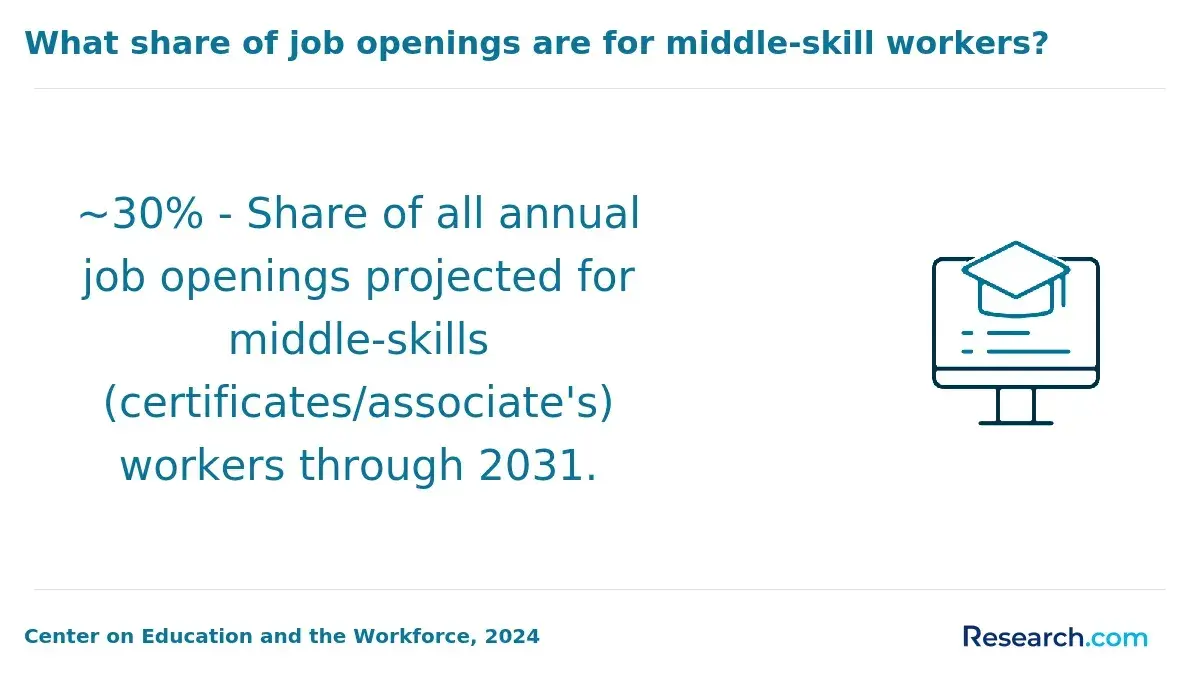
A credible no-thesis program remains rigorous when its learning outcomes, credit requirements, faculty oversight, assessments, and admissions standards align with graduate education expectations. Acceleration changes the calendar, not the intellectual level of the work. Seven-week or eight-week terms can require students to complete the equivalent of a traditional semester's reading, analysis, discussion, and project work in less elapsed time.
The workload can be particularly intense for students who work full time. As a useful labor-market context, the Bureau of Labor Statistics' 2024 employment-projections release identifies healthcare as a major source of job growth through 2033. That demand does not reduce academic expectations; it increases the value of programs that can demonstrate practical competency in leadership, analytics, implementation, and compliance.
Students interested in innovation within direct clinical practice should distinguish administrative innovation degrees from advanced-practice nursing education. For example, accelerated FNP programs online are designed around nurse practitioner preparation and may involve clinical-placement and licensure requirements that a healthcare innovation master's does not provide.
Use these indicators to judge whether a compressed online program is academically substantial.
| Rigor signal | Why it matters | Question to ask |
| Clearly stated graduate credits and outcomes | Shows the program has defined academic scope beyond short-course training | How many graduate credits are required, and which outcomes are assessed in the final project? |
| Faculty with relevant academic and industry expertise | Supports sound instruction and useful feedback on applied work | Who supervises capstones, and how available are they to online students? |
| Evidence-based curriculum | Connects innovation decisions to data, ethics, regulation, and patient impact | Which courses address evaluation, implementation, finance, and healthcare law? |
| Structured culminating assessment | Prevents the program from treating completion as attendance alone | Is there a formal rubric, presentation, panel review, or external stakeholder evaluation? |
| Transparent student-support model | Compressed terms make advising, library access, and technical support especially important | What academic support is available outside regular business hours? |
A red flag is a school that promises an unusually fast degree without publishing credit totals, course sequencing, faculty information, or the nature of the final assessment. Speed is valuable only when the program retains transparent expectations and adequate support.
What are the fastest accredited online Healthcare Innovation master's programs?
There is no single national directory of master's degrees called Healthcare Innovation, and schools use different titles for closely related programs. As a result, the fastest legitimate option may be an online program in health innovation, healthcare leadership, health informatics, healthcare quality, population health, or healthcare administration with innovation coursework and a no-thesis capstone.
Rather than relying on marketing claims such as "accelerated," compare the published curriculum, credit total, term length, enrollment options, and culminating experience. The table below provides a practical way to compare program formats without assuming that similarly named degrees have the same pace or content.
| Program format to look for | Common completion model | Likely thesis alternative | Best for |
| Healthcare innovation or entrepreneurship master's | Full-time, cohort-based online or hybrid study | Venture plan, innovation project, or commercialization proposal | Professionals building services, products, or care-delivery models |
| Healthcare administration master's with innovation electives | Accelerated terms or transfer-credit pathways | Strategic-management capstone or organizational analysis | Operations, leadership, quality, and administrative roles |
| Health informatics or digital health master's | Online technical and managerial coursework | System-design project, analytics portfolio, or practicum | Health IT, implementation, data governance, and digital transformation roles |
| Quality improvement or patient-safety master's | Part-time or full-time online study with workplace application | Improvement initiative or performance-measurement project | Clinical operations and quality leaders |
| Public health or population health master's | Online applied curriculum, sometimes with accelerated terms | Applied practice experience and integrative learning experience | Community health, policy, prevention, and equity-focused work |
To find the fastest fit, start with your desired job function, then identify the degree format that teaches the necessary tools. A student seeking innovation in nutrition services, for instance, may find that masters in dietetics offer more relevant clinical and nutrition specialization than a general healthcare innovation curriculum.
When comparing individual schools, request a written degree plan showing the earliest realistic completion date for a student with your transfer-credit status. Confirm whether classes are asynchronous, whether attendance is required at set times, and whether the capstone can be completed at your current workplace. "Online" does not always mean self-paced, and a required practicum can lengthen the calendar.
What accreditation should you verify for no-thesis Healthcare Innovation master's programs?
For a no-thesis online master's, institutional accreditation is the first credential to verify. In the United States, recognized institutional accreditors are reviewed by the U.S. Department of Education and the Council for Higher Education Accreditation. Institutional accreditation affects transfer-credit evaluation, federal aid eligibility where applicable, employer confidence, and future doctoral admissions.
Programmatic accreditation can also matter, but it depends on the degree. Healthcare innovation itself does not have one universal specialized accreditor. An MHA-type program may seek accreditation through the Commission on Accreditation of Healthcare Management Education, while public-health programs may hold Council on Education for Public Health accreditation. Health informatics programs may have accreditation through the Commission on Accreditation for Health Informatics and Information Management Education. These credentials are valuable when they apply, but their absence does not automatically make a program invalid if the degree falls outside that accreditor's scope.
Verify legitimacy before paying an application fee. The following steps separate meaningful evidence from marketing language:
- Confirm the institution's accreditor through the school's official accreditation disclosure and the accreditor's current directory.
- Check whether the exact degree, campus, and online modality are covered by any claimed programmatic accreditation.
- Review the published catalog for graduate-credit requirements, curriculum, grading, faculty credentials, and graduation standards.
- Ask whether the degree is designed for licensure, professional certification, or general leadership preparation; do not infer licensure eligibility from a healthcare-focused title.
- Request clarification in writing if a school uses phrases such as "internationally recognized" without naming a recognized accrediting organization.
A common mistake is confusing approval to operate with academic accreditation. State authorization, business registration, and participation in online-learning agreements may be important, but they are not substitutes for recognized institutional accreditation.
What skills might you miss without Healthcare Innovation thesis requirements?
A thesis develops skills in formulating original research questions, designing a study, managing data, interpreting limitations, and producing a long scholarly argument. A well-designed capstone may develop some of these abilities, but usually with more emphasis on implementation and less emphasis on independent research methods.
This does not mean no-thesis graduates lack analytical ability. The outcome depends on the curriculum and the final project. A capstone involving needs assessment, evidence review, cost analysis, implementation planning, and outcome measurement can be highly relevant to healthcare innovation work. Still, students should recognize the trade-off before selecting the shortest route.
The table compares skills that are commonly emphasized in each completion model.
| Skill area | Often stronger in a thesis track | Often stronger in an applied no-thesis track |
| Original research design | Study design, methodology selection, and research ethics preparation | May be covered, but often at a less intensive level |
| Scholarly writing | Extended literature synthesis and formal academic argument | Executive communication, proposals, presentations, and implementation documents |
| Data use | Independent analysis focused on answering a research question | Operational analytics, dashboards, performance measures, and decision support |
| Project execution | Research planning and dissemination | Stakeholder engagement, workflow redesign, budgeting, and change management |
| Professional portfolio | Thesis manuscript and possible conference or publication preparation | Work products that can be shown to employers, subject to confidentiality rules |
If you want both practical speed and research exposure, look for electives in biostatistics, program evaluation, qualitative methods, implementation science, or health-services research. You can also ask to complete a capstone using a formal research framework, provided the school permits it and necessary approvals are in place.
How do employers view Healthcare Innovation master's programs without thesis requirements?
Employers generally evaluate a healthcare innovation master's in context: the institution's credibility, the applicant's prior experience, the relevance of coursework, demonstrated results, and the requirements of the role. Most job descriptions do not require a master's thesis. They are more likely to emphasize leadership, project management, data literacy, healthcare operations, change management, and communication.
The BLS projection of 29% growth for medical and health services managers from 2023 to 2033 describes a broad occupation, not a guarantee that a specific degree will secure a management role. It does, however, indicate why employers may value candidates who can improve care processes and lead cross-functional implementation projects. For job seekers, a concrete capstone can be more useful in interviews than simply stating that a thesis was waived.
Employers are most likely to value a no-thesis degree when you can explain what you produced and what competencies it demonstrates. Prepare a concise portfolio narrative that covers:
- The healthcare problem or opportunity your capstone addressed.
- The data, evidence, and stakeholder input used to frame the recommendation.
- The intervention, workflow, technology, or policy solution you proposed.
- The measures used to evaluate feasibility, quality, cost, access, equity, or patient experience.
- Your individual responsibilities and the ethical or regulatory constraints considered.
For behavioral-health innovation careers, direct preparation may matter more than a broad leadership degree. An addiction counseling degree online counseling pathway may be more appropriate for candidates whose intended work involves counseling education, supervised clinical requirements, or state-specific credentialing.
Do not claim a capstone produced measurable employer outcomes unless you can document the result and disclose it appropriately. In healthcare, privacy rules, organizational confidentiality, and team ownership may limit what you can share publicly. A de-identified project summary is often sufficient.
Will skipping thesis requirements limit PhD options in Healthcare Innovation?
Skipping a thesis can make PhD admission more challenging, but it does not automatically close the door. Doctoral programs commonly evaluate research experience, academic preparation, fit with faculty interests, recommendation letters, quantitative or methodological readiness, and evidence that the applicant understands research-intensive study. Requirements vary widely by discipline and university.
A thesis provides a clear writing sample and sustained research evidence, so it can strengthen an application to PhD programs in health services research, biomedical informatics, public health, implementation science, or related fields. An applied capstone can still help if it includes a rigorous literature review, data analysis, evaluation design, and a faculty member able to describe your analytical ability.
If doctoral study is even a possible future goal, protect that option before enrollment. Consider these steps:
- Choose a program with research-methods and statistics coursework rather than a curriculum limited to leadership surveys and discussion courses.
- Ask whether you may complete a research-oriented capstone, independent study, or faculty-supervised evaluation project.
- Build relationships with faculty who can write detailed letters about your research, writing, and analytical capabilities.
- Save strong papers, project reports, and de-identified analytic work that could become part of a doctoral writing sample.
- Review target PhD programs early to identify prerequisite courses, research expectations, and faculty-fit requirements.
A standard-paced thesis track is usually the safer choice for a student already committed to doctoral research. A fast no-thesis pathway can work for an undecided student only when it includes enough methodological depth to build a credible research record after graduation.
What advantages come with finishing Healthcare Innovation master's programs faster?
Finishing faster can reduce the time between enrollment and applying new skills at work, and it may limit indirect costs such as delayed promotion plans or prolonged schedule disruption. For experienced professionals, an accelerated sequence can also keep courses tightly connected: a finance, analytics, and implementation assignment may feed directly into a capstone project.
Speed is most beneficial when it matches your capacity. A compressed degree can become costly if overload leads to course withdrawals, reduced learning, or a weak final project. Compare tuition by total required credits and fees, not by the number of months advertised, and ask whether tuition is locked for continuous enrollment.
Acceleration may be especially useful for workers who need a credential quickly to move into adjacent healthcare roles. People exploring entry-level clinical support rather than graduate leadership may instead review fast medical assistant programs, which serve a distinctly different career and education level.
Before choosing the fastest timetable, evaluate these practical trade-offs:
- Workload: Short terms can require consistent weekly study time with little room to recover from missed assignments.
- Networking: Cohort-based acceleration may create strong connections quickly, while asynchronous formats may require more intentional participation.
- Capstone access: A workplace-based project can save time, but approval delays, data access, and stakeholder availability can slow completion.
- Transfer credit: Approved prior graduate coursework may shorten a degree, but schools differ on age limits, grade requirements, and applicability.
- Financial planning: Faster completion can concentrate tuition payments into fewer billing periods even when the total program cost is unchanged.
The best return on investment comes from aligning the degree with a defined role or problem you intend to solve. A fast program is not inherently better than a longer one; it is better only when its pace allows you to master and demonstrate the competencies your next role requires.
Are Healthcare Innovation master's programs without thesis requirements right for you?
A no-thesis online Healthcare Innovation master's is usually a strong fit for professionals who want to lead service redesign, digital-health implementation, quality improvement, patient-experience initiatives, operational change, or healthcare entrepreneurship. It is particularly practical for applicants with workplace access to a project site and a clear interest in applying learning immediately.
A thesis-oriented or standard-paced program is usually a better fit for applicants who want doctoral study, research analyst roles, academic careers, publication experience, or intensive training in research design. Students who need professional licensure should also verify that their target credential requires this type of master's; a healthcare innovation degree generally does not substitute for clinical education, supervised practice, or state licensing requirements.
Use this decision checklist before submitting applications:
- Write down the specific job title, advancement goal, or healthcare problem you expect the degree to support.
- Match that goal to the curriculum, not just to an appealing program name or accelerated timeline.
- Verify institutional accreditation and any relevant programmatic accreditation for your intended field.
- Read the capstone, practicum, or examination requirements and confirm they are feasible with your work and personal schedule.
- Calculate total tuition, mandatory fees, travel or residency costs, and the financial effect of an accelerated payment schedule.
- Ask admissions whether prior coursework can transfer, whether terms run continuously, and what conditions could delay graduation.
- If PhD study is possible, confirm access to research methods, statistics, faculty mentoring, and a substantial writing sample opportunity.
The most suitable program is one that is accredited, transparent about its final assessment, realistic for your schedule, and directly connected to your intended healthcare role. Treat "no thesis" as a program-design choice rather than a shortcut, and evaluate the evidence of learning that will replace it.
Other Things You Should Know About Healthcare Innovation
Some accelerated or full-time programs may be structured for approximately one year, but completion depends on required credits, transfer-credit approval, course availability, practicum expectations, and continuous enrollment. Obtain a written plan for your specific entry term rather than relying on an advertised minimum timeline.
Many institutions issue the same diploma for online and campus-based versions of the same degree, but practices vary. Ask the registrar or admissions office how the degree title and delivery format appear on the diploma and transcript.
Requirements vary. Some programs welcome applicants from technology, business, public health, clinical practice, or related fields, while executive-oriented programs may prefer professional experience. Review prerequisites and ask whether relevant non-healthcare experience can satisfy admissions expectations.
Possibly. Employer policies often set annual reimbursement limits, grade requirements, preapproval rules, and eligible institution standards. Confirm the policy before enrolling because an accelerated schedule may place several tuition payments within the same benefit year.
References
- Healthcare Leadership & Innovation (MS Degree) https://www.iona.edu/academics/explore-majors-programs/healthcare-leadership-innovation-ms-degree
- 2025's Best Online MHA Programs: No GRE Required https://www.onlinemastersdegrees.org/best-programs/healthcare-administration-mha/no-gre/
- Healthcare Management Careers Beyond Traditional Healthcare https://www.michiganstateuniversityonline.com/resources/healthcare-management/career-opportunities-outside-healthcare-you-can-pursue-with-an-online-m-s-in-healthcare-management/
- Choosing a Thesis vs. Non-Thesis Program: What Every Graduate Student Needs to Know https://presenti.ai/blog/choosing-a-thesis-vs-non-thesis-program/
- Industries and Top Careers for Master's in Public Health Graduates https://www.gograd.org/resources/masters-in-public-health-careers/
- Online MHA Programs Ranked by Affordability (2025) https://www.mhaonline.com/blog/affordable-online-mha-programs-ranked
- 2025 Most Affordable Online Master's Programs https://www.onlineu.com/most-affordable-colleges/masters-degrees
- Thesis vs. Non-Thesis Master's Programs: Which One Is Right for You? | UT Permian Basin Online https://online.utpb.edu/about-us/articles/humanities/thesis-or-no-thesis-which-one-is-right-for-you
- Master in Technological Innovation in Health | EIT Health https://eithealth.eu/programmes/master-innovation-health/
- Online Health Science Degrees with Financial Aid https://www.edumed.org/online-schools/health-science-degrees/financial-aid/


