2027 Fastest Accredited Online English as a Second Language Degree Programs That Accept Transfer Credits

Co-Founder and Chief Data Scientist
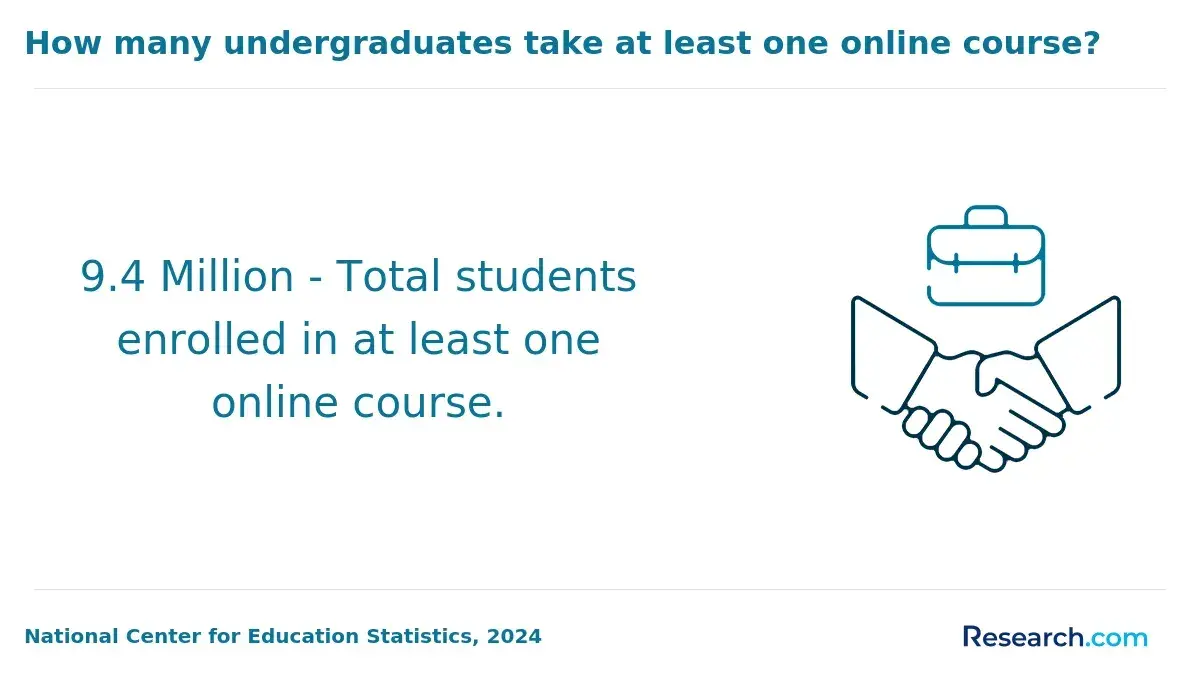
If you already have college credits, the fastest route to an accredited online English as a Second Language degree is not the school with the flashiest "accelerated" label; it is the program that applies the most credits to the right requirements. NCES reported in its latest distance education data that more than half of U. S. postsecondary students took at least one online course, making online degree completion mainstream.
This guide helps transfer students, adult learners, and degree completers compare legitimate ESL, TESOL, and ELL pathways by speed, accreditation, transfer policy, cost, and realistic graduation timeline.
Key Things You Should Know
- The fastest legitimate online ESL-related bachelor's pathways are usually TESOL, ESL teaching, ELL, or education degrees that accept up to about 90 transfer credits toward a 120-credit degree, leaving roughly 30 credits of residency and major coursework.
- A student with 60 applicable transfer credits may often need about 18 to 30 months; a student with 90 applicable credits may finish in about 8 to 16 months, depending on course availability, student-teaching requirements, and whether credits satisfy major requirements.
- Regional or institutional accreditation is essential, but teacher licensure students must also verify state approval, field placement rules, and whether the online ESL degree or endorsement meets the requirements in the state where they plan to work.
What Are the Fastest Accredited Online English as a Second Language Degree Programs That Accept Transfer Credits?
The fastest accredited online English as a Second Language degree programs are typically transfer-friendly bachelor's completion programs in TESOL, ESL education, English language learning, bilingual education, applied linguistics, or education with an ELL concentration. A "fast" program is not just short on paper; it must accept prior credits, apply them efficiently, offer frequent start dates, and avoid bottlenecks in required courses or field placements.
For students comparing options, the most important distinction is between institutional transfer acceptance and degree applicability. A school may accept many credits overall, but only credits that meet general education, elective, major, and residency rules actually reduce the time to graduation.
Students considering language-development careers may also compare adjacent online education and communication pathways, such as SLP programs online, when deciding whether they want to teach language learners, support speech-language development, or pursue graduate clinical training later.
The table below summarizes the main online ESL-related degree models and which students are most likely to finish quickly in each one.
| Program type | Fastest-fit student | Typical transfer advantage | Main speed risk |
| Online BA or BS in TESOL or ESL | Students with prior general education credits who want a language-teaching-focused degree | Many credits can apply to general education and electives | Upper-division TESOL courses may need to be completed at the degree-granting school |
| Online education degree with ESL, ELL, or bilingual education concentration | Students seeking teaching roles or future licensure eligibility | Prior education and community college coursework may apply well | Student teaching, practicum, or state licensure requirements may extend the timeline |
| Online interdisciplinary studies or liberal studies degree with TESOL coursework | Adult learners with varied credits who need maximum credit flexibility | Elective-heavy degree plans may absorb more prior credits | May not qualify for teacher licensure without additional coursework |
| Competency-based education degree with ELL-related coursework | Self-directed students with strong writing, teaching, or language experience | Progress may be faster when prior knowledge helps students complete assessments quickly | Not every course can be accelerated equally, especially clinical or fieldwork components |
The fastest option for a transfer student is usually a bachelor's completion program that accepts up to three-fourths of the degree, offers year-round online terms, and confirms in writing that transferred credits satisfy specific degree requirements. Students who need teacher licensure should prioritize licensure alignment over raw speed because a non-licensure TESOL degree may be faster but may not qualify them for public school ESL teaching roles.
How Fast Can You Complete an Online English as a Second Language Degree With Transfer Credits?
With transfer credits, an online ESL degree can sometimes be completed in under a year, but only when the student enters with many credits that apply directly to the degree plan and the remaining courses are available in accelerated terms. For most transfer students, the realistic timeline is closer to one to three years.
The table below shows how remaining credits usually translate into completion time. These are planning ranges, not guarantees, because online term length, course sequencing, and fieldwork rules vary by school.
| Applicable transfer credits | Credits still needed in a 120-credit degree | Possible full-time timeline | Best-case conditions |
| 90 credits | 30 credits | 8 to 16 months | Remaining courses are offered year-round and no student teaching is required |
| 75 credits | 45 credits | 12 to 20 months | Major courses are available in short online terms |
| 60 credits | 60 credits | 18 to 30 months | Associate degree transfers cleanly into general education and electives |
| 30 credits | 90 credits | 30 to 48 months | Student studies full time and avoids repeated or nonapplicable coursework |
Before enrolling, ask the school to run an official or preliminary transfer evaluation. To compare programs fairly, use the same sequence with every admissions office:
- Send unofficial transcripts from every college attended and ask for a degree-specific evaluation, not a general estimate.
- Ask how many credits apply to general education, electives, major requirements, and upper-division requirements.
- Confirm the minimum credits that must be completed through the new school.
- Ask whether any remaining ESL, TESOL, ELL, practicum, or capstone courses are offered every term.
- Request a term-by-term completion plan showing the earliest possible graduation date.
The biggest mistake is assuming that "90 credits accepted" means "one year to finish." If 20 of those credits only count as excess electives, they may not shorten the program as much as expected.
How Many Transfer Credits Can You Apply Toward an Online English as a Second Language Degree?
Many accredited online bachelor's programs allow transfer students to bring in up to about 75% of a 120-credit degree, which is commonly 90 credits. However, the exact number depends on the institution, the degree level, course grades, accreditation of the prior school, age of coursework, and whether the credits match the ESL degree requirements.
The table below explains the difference between maximum transfer credits and credits that actually shorten your ESL degree.
| Credit category | How it may help | Common limitation |
| General education credits | Can satisfy writing, math, humanities, science, and social science requirements | Some schools require specific composition, diversity, or education foundations courses |
| Elective credits | Can fill open credit slots and reduce total credits needed | Once elective space is full, extra credits may not help |
| Major credits | Can replace lower-division education, linguistics, or language-acquisition courses | Upper-division TESOL or ESL methods courses often must be taken at the new school |
| Associate degree block transfer | May satisfy a large part of general education in one evaluation | Block transfer does not automatically waive major, residency, or licensure requirements |
| Prior learning credit | May award credit for documented professional, military, or training experience | Usually capped and often applies to electives rather than core ESL teaching courses |
Students with many old credits should pay close attention to course age policies. English composition and general humanities credits often remain usable for years, but technology, education standards, and licensure-related coursework may be subject to stricter review.
How Can You Verify Accreditation for Fast Online English as a Second Language Degree Programs?
Accreditation is the first legitimacy check for any fast online ESL degree. In the United States, students should look for institutional accreditation recognized by the U.S. Department of Education or the Council for Higher Education Accreditation. For teacher-preparation programs, students should also check state approval and, where relevant, educator preparation accreditation or recognition.
Accreditation matters because it affects federal financial aid eligibility, transferability of future credits, employer recognition, and admission to graduate programs. The same principle applies across professional online degrees, including fields such as counseling and family therapy, where students often compare accredited options like the best MFT programs before committing to a licensure-oriented path.
Use this verification process before applying to any fast online ESL program:
- Search the school in the U.S. Department of Education's recognized accreditation database and confirm that the institution is currently accredited.
- Check the accreditor name on the school website against the official database entry.
- If the program leads to teacher licensure, confirm state educator-preparation approval with the state education agency.
- Ask whether the online format has the same accreditation and degree designation as the campus format.
- Request written confirmation that the program meets or does not meet licensure requirements in your state.
Red flags include vague phrases such as "internationally approved," no recognized institutional accreditor, pressure to enroll before a transcript review, or promises that a degree will automatically qualify you for a public school ESL teaching license in every state.
Which Types of Transfer Credits Can Count Toward an Online English as a Second Language Degree?
Transfer credits toward an online English as a Second Language degree can come from several sources, but each source is evaluated differently. Traditional college coursework is usually the easiest to transfer, while exams, training, and work-based learning often require extra documentation.
The most common credit sources include the following, and each can affect your completion timeline in a different way:
- Regionally or institutionally accredited college coursework, especially English composition, humanities, psychology, education foundations, linguistics, and foreign language courses.
- Community college associate degree credits that may satisfy lower-division requirements or general education blocks.
- Advanced Placement, International Baccalaureate, CLEP, or DSST exam credits accepted under the school's published exam-credit policy.
- Military training evaluated through American Council on Education credit recommendations, subject to school approval.
- Professional training, workplace learning, or teaching-related certifications submitted through a prior learning assessment process.
- Previously completed education, ESL, TESOL, child development, literacy, or curriculum courses that align with the new program's learning outcomes.
Students coming from non-education majors should not assume their credits are wasted. A large number of humanities, social science, writing, language, and communication credits may still help complete general education and elective portions of an ESL-related degree.
How Do Residency and Major Requirements Affect Transfer Credits for an Online English as a Second Language Degree?
Residency requirements determine how many credits you must complete through the school awarding the degree. Major requirements determine which specific courses you must complete for the ESL, TESOL, ELL, or education concentration. Together, these rules explain why two students with the same number of transfer credits can have very different graduation timelines.
For example, one student with 90 credits may need only 30 upper-division credits to finish. Another student with 90 credits may still need 45 or more credits because key ESL methods, linguistics, assessment, classroom management, or practicum requirements were not covered by prior coursework.
When comparing programs, ask these questions before choosing the fastest-looking option:
- What is the minimum number of credits I must complete at this institution?
- How many upper-division major credits must be completed through the school?
- Will my associate degree waive general education requirements, or will courses be evaluated one by one?
- Are any TESOL, ESL, bilingual education, or ELL courses offered only once per year?
- Does the program require a capstone, practicum, student teaching placement, or supervised field experience?
- If I change from a non-licensure to a licensure track, how many additional credits will be required?
A common mistake is choosing the school with the highest transfer-credit limit while ignoring residency. A program that accepts 90 credits but requires a long sequence of major courses may be slower than a program that accepts fewer credits but has a cleaner degree-completion plan.
Can Prior Learning, CLEP, Military Training, or Certifications Help You Finish an Online English as a Second Language Degree Faster?
Prior learning credit can sometimes help adult learners finish an online ESL degree faster, especially when they have teaching, tutoring, training, military, translation, childcare, or community education experience. It is most useful when it fills elective requirements or lower-division education requirements, but it rarely replaces advanced ESL methods, assessment, or licensure fieldwork.
Credit for prior learning is part of a broader trend in online education: schools are trying to serve adults who already have work experience and partial college credit. Similar flexibility appears in other completion-focused graduate and professional pathways, including MSW online options that evaluate applicants with varied academic and professional backgrounds.
Students who want to use nontraditional credit should prepare documentation carefully. The following steps can improve the odds that eligible learning is reviewed correctly:
- Collect official score reports for CLEP, DSST, AP, or IB exams before requesting a degree plan.
- Request military transcripts if you served in the Army, Navy, Marine Corps, Coast Guard, Air Force, or Space Force.
- Ask whether the school awards credit based on American Council on Education recommendations.
- Prepare a portfolio only if the school confirms that portfolio assessment is available for your degree.
- Ask whether prior learning credits count toward electives, general education, major requirements, or only total credits.
- Confirm whether prior learning credits are included in the school's maximum transfer-credit cap.
The trade-off is time. Portfolio assessment can reduce coursework, but it may also require essays, evidence, faculty review, and fees. If you need only a few remaining courses, taking the course directly may be faster than building a portfolio.
How Much Does a Fast Online English as a Second Language Degree Cost After Transfer Credits and Financial Aid?
The cost of a fast online ESL degree depends on the number of credits left after transfer, tuition per credit, fees, books, technology charges, field placement costs, and financial aid eligibility. Transfer credits can reduce cost substantially because every accepted and applicable credit is one less credit you need to pay for at the new school.
College Board's 2024 Trends in College Pricing and Student Aid reported an average published tuition and fee price of $11,610 for in-state students at public four-year institutions and $43,350 at private nonprofit four-year institutions for the 2024-25 academic year. Those figures are sticker prices, not net prices, but they show why transfer efficiency matters: reducing even one full year of coursework can change the total cost picture.
The table below shows how remaining credits affect tuition exposure before grants, scholarships, employer aid, or military benefits are applied.
| Remaining credits | What it usually means | Cost implication |
| 30 credits | Student is near degree completion | Lowest tuition exposure, but upper-division courses may cost more per credit |
| 45 credits | Student has many transferable credits but still needs major coursework | Moderate cost, often manageable across one to two academic years |
| 60 credits | Student may be entering after an associate degree | Cost depends heavily on whether general education is fully satisfied |
| 90 credits | Student is closer to a traditional four-year path | Highest remaining tuition exposure among common transfer scenarios |
Students should compare total completion cost rather than tuition per credit alone. This is the same decision logic used in other online degree searches, including comparisons of online business degree programs accredited, where the cheapest per-credit option is not always the lowest-cost path after transfer credits are evaluated.
To estimate your real cost, request a written degree audit and financial aid estimate before enrolling. Include tuition, mandatory fees, textbooks, assessment fees, background checks, testing fees, travel for fieldwork if required, and the cost of any courses that must be repeated because prior credits do not apply.
How Do Accelerated, Competency-Based, and Self-Paced Online English as a Second Language Degree Programs Compare?
Accelerated, competency-based, and self-paced online ESL degree programs can all shorten time to graduation, but they do so in different ways. The best format depends on how much credit you transfer, how independently you learn, whether you need licensure, and how predictable your weekly schedule is.
The table below compares the three models from a transfer student's perspective.
| Format | How it works | Who may finish fastest | Potential drawback |
| Accelerated terms | Courses run in shorter sessions, often with multiple start dates per year | Students who can handle intensive weekly deadlines | Heavy reading and writing loads can be difficult while working full time |
| Competency-based education | Students progress by demonstrating mastery through assessments | Experienced educators, tutors, trainers, or language professionals | Requires strong self-direction and may not accelerate fieldwork |
| Self-paced online courses | Students move through course material with more flexible pacing | Students with irregular schedules and strong time management | Too much flexibility can lead to slow progress without firm deadlines |
Fast formats are becoming more common across online professional education, from ESL degree completion to fast track mental health counseling programs. The shared lesson is that acceleration works best when program structure, accreditation, field requirements, and student readiness all align.
If you are choosing between these formats, focus on fit rather than speed claims. Accelerated terms may be fastest for students who like deadlines, competency-based programs may be fastest for students with deep prior knowledge, and self-paced programs may be best for students whose work or family responsibilities make fixed weekly schedules unrealistic.
Are Fast Accredited Online English as a Second Language Degrees Respected by Employers and Graduate Schools?
Fast accredited online ESL degrees can be respected by employers and graduate schools when they come from properly accredited institutions and align with the role the student wants. Employers typically care about the degree's legitimacy, the candidate's communication skills, teaching experience, cultural competence, and, for public school roles, state licensure or endorsement.
For salary context, the U.S. Bureau of Labor Statistics reported a May 2024 median pay of $60,560 for adult basic and secondary education and ESL teachers. This figure is useful as a labor-market benchmark, but it should not be read as a promised outcome because pay varies by state, school type, union contract, credential level, and experience.
Students planning graduate study should check whether the bachelor's degree includes enough coursework in education, linguistics, English, language acquisition, assessment, or research methods. Those considering counseling, education support, or family services may also compare related graduate pathways to decide whether ESL teaching is the right long-term professional direction.
Current trends also affect how ESL degrees are evaluated. AI translation tools are changing language support work, but they have not replaced the need for teachers who understand language acquisition, literacy, assessment, classroom interaction, and culturally responsive instruction. In many settings, technology increases the need for educators who can choose appropriate tools and help learners use them critically.
A fast online ESL degree is most likely to be respected when the student can show the following:
- The institution is recognized by an approved accreditor.
- The degree plan matches the student's intended career path, such as adult ESL, K-12 teaching, tutoring, curriculum support, or graduate study.
- Any required licensure, endorsement, practicum, or field experience is completed for the target state or employer.
- The transcript shows relevant coursework in language acquisition, linguistics, literacy, assessment, pedagogy, and multicultural education.
- The student can document applied experience through tutoring, classroom support, volunteer teaching, paraprofessional work, or supervised fieldwork.
Other Things You Should Know About English as a Second Language
Not always. TESOL usually refers to teaching English to speakers of other languages and may apply to adult, international, or community settings. ESL often refers to English language instruction in U.S. schools or adult education. Some schools use TESOL, ESL, ELL, and bilingual education differently, so always compare the curriculum and career outcomes.
Only if the program meets the educator licensure or endorsement rules in your state. A non-licensure online TESOL degree may be useful for tutoring, adult education, private programs, or international teaching, but public K-12 schools usually require state teacher certification.
Usually, no. Many schools require a minimum grade, often a C or higher, for transfer credit. Some programs may accept a course as elective credit but not allow it to satisfy a major or licensure requirement if the grade or course content does not meet program standards.
It can help if the receiving school has a strong transfer pathway or block-transfer policy. However, if you are close to transferring already, ask the bachelor's program to evaluate your credits first. Taking extra associate-level courses that do not apply to the ESL degree could add time instead of saving it.
References
- World TESOL Academy - TESOL/TEFL Certificate https://www.worldtesolacademy.com/
- ESL Pathways – Stanton University https://stanton.edu/admission/programs/esl-pathways/
- Best Online Degree Programs for Working Adults https://www.scholaro.com/db/News/best-online-degree-programs-256
- Annex 1. CEU Credit Transfer Regulations https://documents.ceu.edu/file/13316/download
- M.Ed. in Teaching English Learners | ACE https://ace.edu/degree-programs/masters-degrees/masters-education/master-of-education-in-teaching-english-learners/
- Education master’s degree or endorsement for teaching ESL https://www.trevecca.edu/academics/program/english-as-a-second-language
- Number of Credits for a Master's Degree in Education https://creditsforteachers.com/the-necessary-number-of-credits-for-a-masters-degree-in-education/
- The 12 Best Online TEFL Courses in 2026 | Go Overseas https://www.gooverseas.com/blog/best-online-tefl-courses
- Types of Financial Aid for Online Colleges https://www.umassglobal.edu/blog-news/types-financial-aid-online-colleges
- Best Student Loans for Certificate Programs - Credible https://www.credible.com/student-loans/student-loans-for-certificate-programs