2027 ETL and ELT in an Online Data Science Master's: Courses, Projects, and Program Selection

Co-Founder and Chief Data Scientist
ETL and ELT can appear in a program description without becoming skills you actually practice. For prospective online data science master's students, the decision is whether a curriculum teaches enough data engineering to support reliable analysis - and enough hands-on work to prove it. This guide explains what to look for in courses and projects, how to weigh cost and career fit, and which questions to ask before enrolling.
Key Things You Should Know
- Look beyond course titles: Strong ETL and ELT coverage includes SQL, data modeling, orchestration, testing, and a project that runs a reproducible pipeline.
- Match the curriculum to your goal: Analytics-focused students may need warehouse-based ELT; aspiring data engineers should also seek pipeline design, reliability, and cloud infrastructure depth.
- Use salary data carefully: The U.S. Bureau of Labor Statistics reports a $120,230 median annual wage for data scientists in May 2025, not an expected salary for new master's graduates.
What are ETL and ELT in an online data science master's program?
ETL means extract, transform, load: data is cleaned or reshaped before it enters a destination such as a warehouse. ELT means extract, load, transform: raw or lightly processed data is loaded first, then transformed within the destination. Neither is universally better. The right approach depends on data sensitivity, destination capabilities, cost, latency, and how much raw data an organization needs to retain.
In a master's program, these concepts matter because a model or dashboard is only as dependable as the data feeding it. Students should learn how source records become documented, testable datasets - not merely how to import a prepared CSV file.
This comparison identifies the central design trade-off a course should teach students to explain.
| Approach | Where transformation happens | Educational value |
| ETL | Before loading into the destination | Practice source-side validation, controlled transformations, and decisions about what data may be stored. |
| ELT | After loading into the destination | Practice warehouse SQL, transformation models, lineage, and managing compute and storage costs. |
If your main goal is designing production data infrastructure for AI systems, an AI degree may also be worth comparing. Start by clarifying the role you want before using a guide on how to select the right artificial intelligence degree.
Which ETL and ELT courses should an online data science master's include?
ETL and ELT rarely need to appear in a course title to be taught well. Look for a sequence that connects database foundations to implementation: SQL and relational design; data integration or engineering; cloud databases or warehouses; and analytics or machine learning courses that use data produced by those pipelines. Programming and basic statistics help students understand both transformations and downstream consequences.
Judge depth by assessed work, not catalog keywords. A passing mention defines ETL; a course unit might have students build one pipeline. A dedicated course should address schema design, incremental loads, orchestration, testing, and failure handling. Advanced electives or substantial projects might add distributed processing, streaming, access controls, and cost or performance optimization. Ask for recent syllabi and assignment descriptions to determine which level the program actually reaches.
A data science program can be a good fit if it connects pipelines to analysis. Students who want infrastructure design to be their primary specialization should compare its required courses with AI master's options for building data infrastructure skills and other data-engineering-focused curricula; the degree label alone does not establish technical depth.
How do ETL and ELT projects prepare students for data careers?
A useful project does more than move records between systems. It shows that the student can make a dataset trustworthy, explain design choices, and recover when an input changes. That evidence is relevant to teams building dashboards, experiments, forecasts, or machine learning systems.
When reviewing a project brief or proposed capstone, look for these connected components:
- A defined question and source: Identify the intended user, source data, refresh frequency, and permission to use the data.
- An implemented pipeline: Ingest data, handle missing or changed fields, and build documented transformations rather than relying on manual spreadsheet cleanup.
- Reliability evidence: Include quality tests, repeatable runs, failure alerts or logs, and an explanation of how duplicate records are prevented.
- A usable output: Deliver an analysis-ready table, dashboard, or model input, with a diagram and instructions another person could follow.
For example, a student might combine permitted public transit and weather datasets to produce a regularly refreshed delay-analysis table. The strongest portfolio account would show why particular transformations were chosen and what happens when source data arrives late. Avoid publishing employer, patient, or customer data without explicit permission; a synthetic or public dataset can demonstrate the same engineering decisions.
What skills do students learn from ETL and ELT coursework?
Substantive coursework builds a connected skill set: querying and joining data with SQL; writing transformations in SQL or a programming language; modeling tables for analysis; scheduling jobs; testing freshness and accuracy; documenting lineage; and applying access controls. Students should also be able to explain why a pipeline is designed a particular way, including its trade-offs in latency, maintenance, and compute cost.
Tool names are less important than transferable decisions. A student who can explain incremental loading, investigate a failed run, and validate a metric can adapt to a different warehouse or orchestration tool. Conversely, familiarity with a platform's interface is weak evidence of proficiency if the course never requires students to diagnose bad data.
Are online data science master's programs accredited?
Accreditation applies to an institution or, where applicable, a specific program; an online format does not automatically establish or rule out accredited status. Before enrolling, verify the institution's current accreditation through the accreditor and confirm that the online degree is awarded by that institution. If a school claims specialized program accreditation, verify that claim separately rather than assuming institutional accreditation covers it.
This check matters for students who may seek federal financial aid, employer tuition support, or future study, although each organization sets its own eligibility rules. Also confirm that the university can enroll students residing in your state. Accreditation and state authorization answer different questions.
What are the admission requirements for an online data science master's?
Requirements vary by university. Programs may review an accredited bachelor's degree, transcripts, programming and quantitative preparation, recommendations, and a statement of purpose; some specify prerequisite courses or professional experience. Check the current admissions page for the program you intend to apply to rather than treating a typical requirement as universal.
For ETL and ELT study, the most useful preparation is basic SQL, programming, and comfort working with imperfect datasets. A self-directed pipeline project can demonstrate readiness, but it does not automatically fulfill a formal course prerequisite. Applicants with gaps should ask admissions whether foundation courses count toward the degree and whether they must be completed before enrollment. If you are comparing an AI route, artificial intelligence graduate bridge programs offer a related way to investigate structured preparation.
How long does an online data science master's take and cost?
There is no dependable single duration or price for online data science master's programs. Credit requirements, part-time pacing, course availability, residency-based tuition, and fees differ by school. A required capstone or sequenced database courses may also determine how quickly a student can reach advanced ETL or ELT work.
Compare the cost to finish the curriculum you want, not the advertised per-credit price alone. Add required tuition and fees, then check potential software or cloud charges, materials, travel requirements, and the cost of any prerequisites. Ask whether the ETL- or ELT-relevant courses are included in the quoted degree cost and offered often enough for your planned schedule. Students weighing a less expensive AI alternative can use affordable online study in artificial intelligence as a comparison, while confirming that its actual coursework meets their pipeline goals.
What careers use ETL and ELT skills after graduation?
ETL and ELT skills are useful across data engineering, analytics engineering, business intelligence, and some data scientist roles. The emphasis differs: a data engineer may own ingestion and operational reliability; an analytics engineer may develop tested warehouse transformations; a data scientist may need to assess whether upstream data supports a valid analysis. Job titles and responsibilities vary by employer.
Choose projects to match your target role. For an infrastructure-focused application, show repeatable deployment, monitoring, and recovery from failures. For analytics roles, emphasize data modeling, tested definitions, and a clear path from source to decision. A master's can strengthen those capabilities, but an applicant may also need relevant work experience; the degree is not a substitute for evidence that they can build and explain a pipeline.
What salaries and job outlook can ETL and ELT graduates expect?
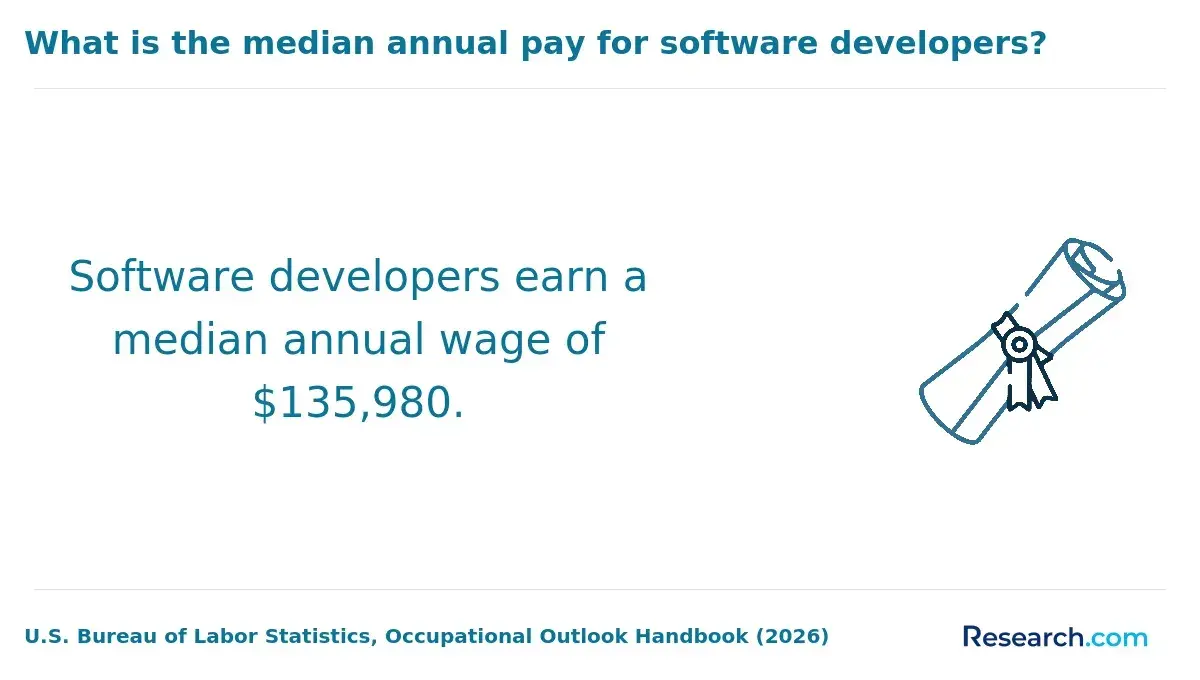
The U.S. Bureau of Labor Statistics reports that data scientists had a $120,230 median annual wage in May 2025. That is a wage for workers in the occupation, not a starting salary or an outcome attributable to a master's degree. An ETL-focused graduate entering analytics engineering or data engineering should not treat the data scientist median as a role-specific offer.
BLS projects 35% growth in data scientist employment from 2025 to 2035. The projection signals demand for that occupation, but it does not forecast hiring for every pipeline-focused job title or guarantee an opening for a particular graduate. When evaluating a program's career claims, ask which roles its graduates held before and after the degree, where they worked, and how many people responded to any outcomes survey.
How should students choose a reputable online data science master's?
Shortlist programs against the role you want, then request evidence that their coursework reaches beyond introductory data cleaning. An attractive course title or cloud-tool logo is not enough. The following checks turn program descriptions into questions an advisor or instructor can answer:
- Map required courses: Locate database, data integration, modeling, and orchestration work; determine whether advanced pipeline study is required or elective.
- Inspect project expectations: Ask whether students build and test a repeatable pipeline and whether they can choose a pipeline-centered capstone.
- Confirm practical fit: Check course rotation, synchronous sessions, group-work expectations, software access, and the time available to complete prerequisite sequences.
- Verify claims and total cost: Check accreditation and state enrollment eligibility, obtain a program-specific cost estimate, and request the methodology behind any reported career outcomes.
Choose an analytics-oriented program if you primarily want to prepare dependable datasets for models and decisions. Prefer deeper engineering requirements if you want to design and maintain the pipelines themselves. Speed is a separate trade-off: an accelerated schedule is useful only if it still leaves room for substantial implementation and debugging. Students considering that route can compare accelerated artificial intelligence master's degrees without assuming a shorter timeline provides equivalent ETL or ELT practice.
Other Things You Should Know About Data Science
No. Reverse ETL generally moves prepared data from a warehouse into operational tools, such as systems used by sales or support teams. It raises related questions about data definitions, access, and synchronization, but its destination and purpose differ.
No. Pipelines may process data in batches or respond to events as data arrives. The appropriate design depends on how quickly users need updated information and the operational complexity they can support.
Not universally. Employers set their own requirements. A certification may help document familiarity with a particular platform, while a working, well-explained project offers different evidence of design and troubleshooting ability.
Only if you have permission to disclose the relevant code, architecture, and data. If not, describe your contribution at an approved level of detail and build a separate demonstration with public or synthetic data.
References
- Student Experience - UVA School of Data Science https://datascience.virginia.edu/data-science-capstone/student-experience
- Online Program - UChicago Data Science Institute https://datascience.uchicago.edu/education/masters-programs/online-program/
- MS in Data Science Curriculum & Course Descriptions | Eastern University https://www.eastern.edu/academics/colleges-seminary/college-health-and-sciences/departments/department-mathematical-5
- Master of Science in Data Science | CUNY SPS https://sps.cuny.edu/academics/graduate/master-science-data-science-ms
- Master of Science in Data Science - National University https://www.nu.edu/degrees/engineering-data-and-computer-sciences/programs/master-of-science-in-data-science/
- What is ELT (extract, load, and transform)? | Google Cloud https://cloud.google.com/discover/what-is-elt
- ETL vs ELT - Difference Between Data-Processing Approaches - AWS | Amazon Web Services, Inc. https://aws.amazon.com/compare/the-difference-between-etl-and-elt/
- What is Extract, Load, Transform (ELT)? | Databricks https://www.databricks.com/blog/what-is-elt