2027 Easiest Online Criminal Justice Administration Doctorate Programs to Get Into: Admission Requirements, GPA, and Workarounds

Co-Founder and Chief Data Scientist
Online Criminal Justice Administration doctorates are becoming a practical route for working justice, public safety, corrections, and policy professionals who need advanced credentials without leaving their jobs. The timing matters: the U.S. Bureau of Labor Statistics projects postsecondary teacher employment to grow 8% from 2023 to 2033, supporting demand for doctoral-level expertise in teaching and leadership roles.
This guide is for applicants worried about low GPAs, competitive admissions, or testing rules. You'll learn how to identify lower-barrier programs, compare trade-offs, and use legitimate admission workarounds.
Key Things About the Easiest Online Criminal Justice Administration Doctorate Programs
- "Easiest" usually means flexible admissions rather than low academic rigor: look for online doctoral programs with rolling admission, no GRE or GMAT requirement, conditional admission, transfer-credit options, and applied capstone tracks.
- A 3.0 graduate GPA is the common screening benchmark, but applicants below that level may still qualify through GPA addendums, recent graduate coursework, professional achievements, or provisional admission review.
- National datasets such as IPEDS do not publish program-level acceptance rates for specific Criminal Justice Administration doctorates, so applicants should compare published admission rules, cohort capacity, waiver policies, and dissertation versus capstone requirements instead.
Are online Criminal Justice Administration doctorate programs competitive?
Yes, but they are usually competitive in a different way than highly selective residential PhD programs. Traditional campus-based PhD programs often admit small research cohorts because they must match students with faculty supervisors, assistantship funding, and dissertation research capacity.
Online Criminal Justice Administration doctorates, especially professional doctorates such as a Doctor of Criminal Justice or applied leadership doctorate, often use rolling or term-based admissions and may be designed for working professionals rather than full-time researchers.
The most important point is that acceptance rates are not consistently available. Federal IPEDS admissions reporting does not give applicants a clean program-level acceptance rate for "online doctoral program in Criminal Justice Administration," and many universities publish only general graduate admission policies.
That means the best way to judge accessibility is to compare concrete admissions barriers, not rely on a missing or unofficial acceptance-rate number.
The table below shows how competitiveness typically differs by program design. Use it to identify whether a program is likely to be accessible for your background:
| Program format | Typical competitiveness signal | Why it matters for applicants |
| Online professional doctorate | Rolling starts, no standardized test, applied experience valued | Often the most accessible option for working professionals with leadership experience |
| Online PhD in Criminal Justice | Research fit, writing sample, faculty alignment, dissertation expectation | Usually more selective if the program emphasizes original research and publication |
| Campus-based PhD | Small cohorts, faculty mentorship capacity, possible funding competition | Can be harder to enter, especially if assistantships or funded seats are limited |
| Interdisciplinary public safety doctorate | Broader accepted backgrounds, leadership focus, flexible prerequisites | Can be a good workaround for applicants from policing, corrections, emergency management, or compliance |
Online programs are not automatically "easy." They still require doctoral writing, research methods, ethics, policy analysis, and sustained independent work. The easier part is usually the admissions pathway: more start dates, broader professional backgrounds, and fewer gatekeeping tests.
What are the easiest online Criminal Justice Administration doctorate programs to get into?
The easiest programs to get into are typically accredited online professional doctorates that evaluate applicants holistically. They may accept a broader range of master's degrees, waive GRE or GMAT scores, allow conditional admission, and give credit for relevant graduate coursework.
If you still need foundational preparation before doctoral study, an online criminal justice degree can help build academic background before applying at the graduate level.
The table below compares lower-barrier doctoral pathways. It does not rank schools; instead, it shows the types of programs most likely to fit applicants seeking accessible admissions:
| Lower-barrier doctorate option | Admissions features to look for | Best fit | Main trade-off |
| Doctor of Criminal Justice or applied justice leadership doctorate | No GRE, master's degree accepted from related fields, professional resume emphasized | Justice leaders, corrections managers, police administrators, policy practitioners | May be less ideal for applicants seeking a research-intensive academic career |
| Online PhD with practitioner-friendly admission | Writing sample, statement of purpose, possible GRE waiver, online dissertation support | Applicants who want research credentials but need online flexibility | Dissertation expectations can extend completion time |
| Public safety, homeland security, or emergency management doctorate | Accepts criminal justice-adjacent experience, interdisciplinary curriculum | Applicants whose work crosses justice, security, emergency response, or public administration | Degree title may not match "Criminal Justice Administration" exactly |
| Doctorate in public administration with justice concentration | Policy and administration focus, accepts government and nonprofit leadership experience | Applicants aiming for executive administration, policy, or agency leadership | Less specialized in criminology theory or criminal justice research |
A lower-barrier program makes sense if your goal is promotion, executive leadership, teaching at some institutions, consulting, policy work, or applied research. A more selective PhD may be a better fit if you want a tenure-track research career, a funded doctoral assistantship, or deep specialization in criminological theory.
Before calling a program "easy," verify these quality markers:
- Regional accreditation from an institutional accreditor recognized by the U.S. Department of Education or CHEA.
- Clear doctoral faculty credentials in criminal justice, public safety, law, policy, criminology, or administration.
- Transparent dissertation, capstone, or doctoral project requirements.
- Published transfer-credit limits and time-to-completion policies.
- Student support for online doctoral writing, research methods, library access, and committee formation.

What is the minimum GPA requirement for online Criminal Justice Administration doctorate programs?
The common minimum GPA for online Criminal Justice Administration doctoral admission is around 3.0 on a 4.0 scale, usually based on graduate-level coursework. Some programs review applicants below 3.0 if they have strong professional experience, a recent master's degree, excellent recommendations, or a persuasive GPA explanation. A smaller number may set higher standards, especially research-focused PhD programs.
GPA rules matter because they affect both admission and cost. If you need prerequisite or post-baccalaureate coursework to strengthen your record, compare tuition carefully; this broader guide to criminal justice degree price considerations can help you think through fees, online costs, and affordability before adding credits.
The table below summarizes GPA thresholds applicants are likely to encounter and what each one usually means:
| GPA level | How admissions committees may read it | Likely admission path |
| 3.5 or higher | Strong academic readiness signal | Competitive for most online professional doctorates and many online PhD programs |
| 3.0 to 3.49 | Meets the standard doctoral screening benchmark | Usually eligible for regular review if other materials are complete |
| 2.75 to 2.99 | Borderline but often explainable | May need conditional admission, a GPA addendum, or evidence of recent academic improvement |
| Below 2.75 | High-risk academic profile | May need additional graduate coursework, a certificate, or a bridge pathway before doctoral admission |
Applicants should also ask whether the school calculates cumulative GPA, graduate GPA, last 60 credits, upper-division GPA, or GPA in the completed master's program. A low undergraduate GPA may matter less if your master's GPA is strong and recent.
Can you get accepted into an online Criminal Justice Administration doctorate program with a low GPA?
Yes, it is possible, but a low GPA usually requires a stronger application strategy. Admissions committees need evidence that the old GPA does not predict your current doctoral performance. The best workarounds show recent academic discipline, professional maturity, writing ability, and readiness for independent research or applied doctoral work.
The table below summarizes common low-GPA workarounds and the situation each one is best suited for:
| Low-GPA workaround | Best use case | What it demonstrates |
| GPA addendum | Past grades were affected by documented personal, medical, military, family, or work circumstances | Context, accountability, and evidence of improvement |
| Recent graduate certificate | Applicant needs fresh academic proof before doctoral admission | Current ability to handle graduate-level reading, writing, and deadlines |
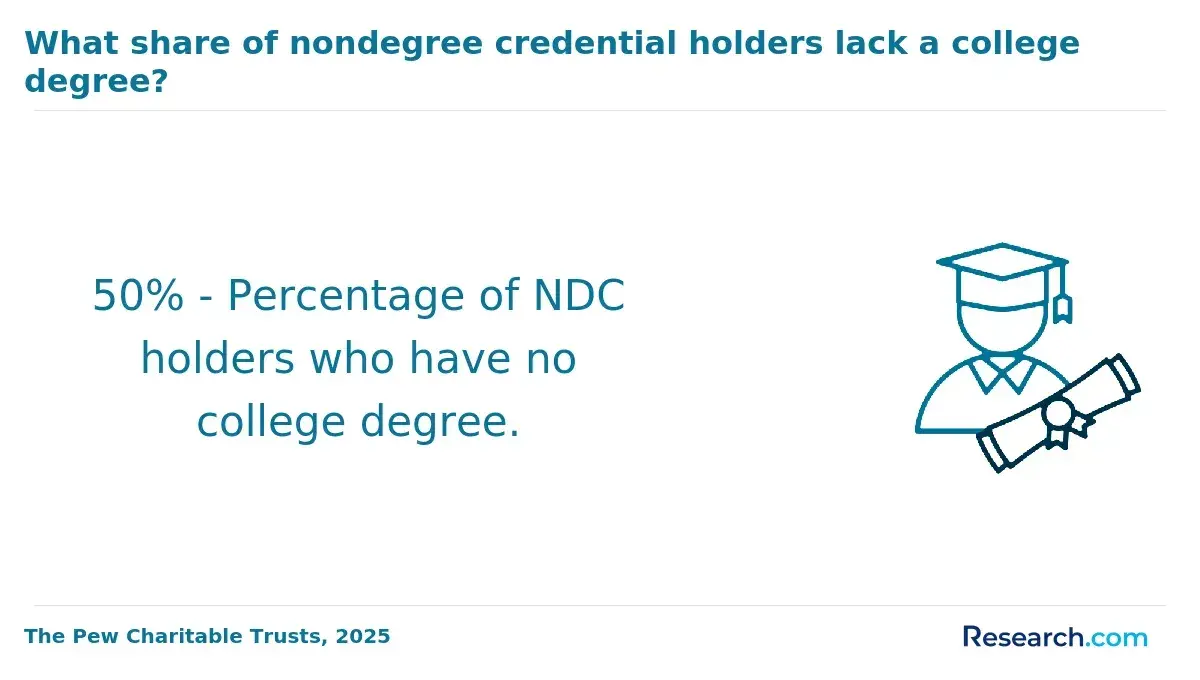
| Post-baccalaureate or nondegree coursework | Applicant lacks recent coursework or has weak grades in relevant subjects | Academic recovery and subject readiness |
| Upper-division or graduate GPA recalculation | Early undergraduate grades were weak but later performance improved | Positive academic trajectory |
| Conditional admission | Applicant is promising but below a published GPA benchmark | Willingness to prove performance through initial doctoral courses |
A strong low-GPA application should be direct and evidence-based. Do not apologize vaguely or blame instructors. Instead, explain what happened, what changed, and why your recent record is a better predictor of doctoral success.
Use this sequence if your GPA is below the posted requirement:
- Ask admissions whether the GPA cutoff is firm, preferred, or eligible for committee review.
- Request the exact GPA calculation method, including whether graduate GPA can outweigh undergraduate GPA.
- Complete one or two relevant graduate courses if the school recommends academic repair before applying.
- Write a concise GPA addendum that includes context, corrective action, and evidence of current readiness.
- Choose recommenders who can speak to your writing, leadership, ethics, and ability to finish long-term projects.
Low-barrier does not mean no standards. If a program admits you conditionally, treat the first term as a probationary proof period and avoid overloading your schedule.
Do online Criminal Justice Administration doctorate programs require GRE or GMAT scores?
Many online Criminal Justice Administration doctorates do not require GRE or GMAT scores, especially professional doctorates designed for working adults. Research-focused PhD programs are more likely to request standardized tests, but even some of those programs offer waivers.
There is no reliable national dataset that counts GRE or GMAT waiver adoption specifically for Criminal Justice Administration doctorates, so applicants should verify each school's policy directly.
GRE and GMAT waivers usually depend on evidence that substitutes for test scores. The table below shows common waiver signals and why schools may accept them:
| Waiver signal | How it may help | Common documentation |
| Completed master's degree | Shows graduate-level academic ability | Official transcript and degree conferral |
| Strong graduate GPA | Reduces concern about quantitative or writing readiness | Transcript with cumulative graduate GPA |
| Professional license or certification | Shows field competence and professional accountability | License record, certification documentation, or agency verification |
| Substantial leadership experience | Supports applied doctoral readiness | Resume, supervisor letter, performance history, command or management record |
| Prior graduate research or publication | Supports readiness for doctoral writing and methods | Writing sample, thesis, capstone, report, publication, or policy analysis |
If a program lists the GRE or GMAT as optional, submit scores only when they strengthen your application. If your scores are average or old, a stronger writing sample, leadership resume, and graduate transcript may be more persuasive.
To bypass testing without weakening your file, take these steps:
- Find the school's written waiver policy before starting the application.
- Email admissions with your GPA, degree history, years of experience, and certifications to confirm waiver eligibility.
- Ask whether a waiver affects scholarship, assistantship, or merit-aid consideration.
- Replace the test score with a polished writing sample or professional policy paper when allowed.
Is prior professional experience required for Criminal Justice Administration doctorate programs?
Prior experience is not always formally required, but it can be a major advantage in online Criminal Justice Administration doctoral admissions. Professional doctorates often look for applicants who can connect coursework to real agency problems, leadership decisions, ethics issues, public safety operations, correctional administration, or policy implementation.
Applicants from adjacent fields can also be competitive. For example, compliance, risk management, emergency response, occupational safety, and environmental enforcement experience can overlap with justice administration.
Students exploring adjacent public-safety pathways may also compare the best online environmental health and safety programs to understand how safety, regulation, and organizational leadership credentials differ from criminal justice credentials.
Professional experience is most useful when it is translated into doctoral readiness. Admissions committees are not just counting years; they are looking for judgment, leadership, ethical responsibility, and ability to analyze systems.
Strong experience examples include:
- Supervising staff in law enforcement, corrections, courts, probation, parole, juvenile justice, or public safety agencies.
- Managing budgets, training programs, compliance reviews, accreditation processes, or policy implementation.
- Writing reports, grant proposals, agency evaluations, incident analyses, or public safety policy documents.
- Leading interagency projects involving courts, community organizations, schools, emergency management, or social services.
- Holding relevant credentials, such as law enforcement certification, corrections leadership training, emergency management credentials, or public administration certificates.
If you have limited professional experience, target programs that emphasize academic preparation and research potential rather than executive leadership. You may also strengthen your file through internships, policy research, volunteer justice work, or graduate assistant-style projects.
Can non-Criminal Justice Administration majors qualify for a doctorate in the discipline?
Yes. Many online Criminal Justice Administration doctorate programs accept applicants with master's degrees in related fields such as public administration, sociology, psychology, social work, homeland security, emergency management, political science, legal studies, education, public policy, or organizational leadership. The key is proving that your background connects to justice systems, administration, policy, research, or public safety leadership.
If you are still building an academic foundation much earlier in your education path, reviewing the best online associate degree programs in criminal justice can clarify the core subjects that later doctoral programs expect applicants to understand, such as courts, policing, corrections, ethics, and criminal law.
Degree-mismatch applicants should pay attention to prerequisite rules. Some programs admit students directly, while others require leveling courses or a bridge plan before doctoral coursework begins.
The table below compares common paths for non-Criminal Justice Administration majors:
| Background | Likely fit for doctoral admission | Possible requirement |
| Public administration or public policy | Strong fit for justice administration and agency leadership | May need criminal justice foundations |
| Sociology, psychology, or social work | Strong fit for criminology, victim services, corrections, or community intervention | May need administration or policy coursework |
| Homeland security or emergency management | Strong fit for public safety leadership | May need courts, policing, or corrections coursework |
| Business or organizational leadership | Moderate fit for management-focused programs | May need criminal justice systems and ethics prerequisites |
| Unrelated humanities or science field | Possible, but requires stronger justification | Likely bridge coursework or substantial professional experience |
Non-majors can strengthen their eligibility through these steps:
- Map your work history to criminal justice administration functions, such as compliance, investigation, leadership, risk, policy, training, or public accountability.
- Ask whether the school allows bridge courses, leveling modules, or prerequisite completion after conditional admission.
- Prepare a writing sample on a justice-related administrative problem to show intellectual fit.
- Ask whether Prior Learning Assessment, transfer credit, or portfolio review can reduce redundant coursework.
Prior Learning Assessment can help in some programs, but it rarely replaces doctoral-level research requirements. Use it to document professional learning, not to avoid the intellectual work of the doctorate.
Are online Criminal Justice Administration doctorate programs less competitive than on-campus programs?
Often, yes, online Criminal Justice Administration doctorates can be less difficult to enter than on-campus research doctorates, but the difference comes from structure rather than lower academic expectations.
Online programs may serve larger geographic applicant pools, offer multiple start dates, and evaluate professionals who are not seeking funded research assistantships. On-campus PhD programs may be more limited by faculty supervision, research lab capacity, and funding.
The table below summarizes the admissions trade-offs between online and campus pathways:
| Factor | Online doctorate | On-campus doctorate |
| Admissions timing | Often rolling, term-based, or multiple annual starts | Often annual cohort admission |
| Applicant evaluation | May emphasize professional experience and leadership fit | May emphasize research agenda and faculty match |
| Testing policy | More likely to be test-optional or test-waived | More likely to request GRE scores in research-heavy programs, though policies vary |
| Funding competition | Less likely to involve assistantship competition | May be more competitive if funded seats are limited |
| Academic rigor | Can be rigorous, especially in writing, research, and applied projects | Can be rigorous, especially in research production and dissertation expectations |
The trade-off is important. A high-acceptance online program may be the right investment if you need flexibility and career-aligned doctoral training. A selective campus PhD may be worth the difficulty if you need intensive faculty mentorship, funded study, research apprenticeships, or a stronger path toward tenure-track research roles.
Before choosing the easier admission route, ask yourself whether the format supports your end goal. Convenience is valuable only if the program's curriculum, accreditation, faculty, and doctoral project match the career outcome you want.
Are there online Criminal Justice Administration doctorate programs that do not require a traditional dissertation?
Yes. Some online Criminal Justice Administration and public safety doctorates use an applied doctoral project, capstone, portfolio, policy analysis, or practice-based research project instead of a traditional five-chapter dissertation.
These programs are often easier to align with professional goals because the final project can address a real administrative problem, such as recidivism reduction, staff retention, body-worn camera policy, correctional programming, emergency response coordination, or community violence prevention.
A capstone pathway can reduce dissertation anxiety, but it is not a shortcut. Students still need to review research, analyze evidence, write at a doctoral level, and defend the value of their recommendations.
The table below compares common doctoral completion models:
| Completion model | Typical focus | Best fit |
| Traditional dissertation | Original research contribution | Applicants aiming for research, publication, or academic careers |
| Applied dissertation | Research applied to a practical justice problem | Practitioners who want both research depth and field relevance |
| Doctoral capstone | Evidence-based solution, policy proposal, or implementation plan | Working professionals seeking agency leadership or consulting roles |
| Portfolio or practice project | Demonstrated mastery through connected applied products | Experienced professionals with substantial leadership documentation |
If dissertation avoidance is your main reason for choosing a program, be careful. The better question is not "Which option is easiest?" but "Which final project format fits my career?" A capstone may be more useful for agency leadership, while a dissertation may carry more weight for research-intensive academic roles.
How can students increase their chances of getting into a Criminal Justice Administration doctorate program?
The strongest applicants do not simply search for the easiest program and submit the same materials everywhere. They match their background to the right doctoral model, fix weak points before applying, and ask admissions teams specific questions about waivers, prerequisites, and conditional review.
Use this application strategy if you want to maximize your chances without choosing a poor-quality program:
- Build a shortlist of accredited programs that match your goal, such as executive leadership, teaching, policy analysis, consulting, or research.
- Confirm whether the program is a professional doctorate, PhD, public administration doctorate, public safety doctorate, or interdisciplinary leadership doctorate.
- Ask admissions whether your GPA qualifies for regular, conditional, or committee review.
- Request written confirmation of GRE or GMAT waiver criteria before paying application fees.
- Prepare a focused statement of purpose that names the justice problem you want to study and explains why the program's format fits your work schedule.
- Choose recommenders who can provide specific examples of leadership, writing, ethics, analysis, and persistence.
- Submit a writing sample that shows evidence-based reasoning, not just opinion or personal experience.
- Compare total cost, transfer-credit rules, residency requirements, and doctoral project structure before enrolling.
Common mistakes can make an otherwise accessible program risky. Avoid these errors before you commit:
- Applying without verifying regional accreditation and institutional recognition.
- Assuming an easy-admission doctorate will automatically meet employer, faculty hiring, promotion, or state licensing expectations.
- Ignoring GPA addendum options when your academic record clearly needs explanation.
- Choosing a program based only on "no GRE" without reviewing curriculum depth and faculty qualifications.
- Overlooking transfer-credit, Prior Learning Assessment, residency, and doctoral project policies.
- Picking a Criminal Justice Administration doctorate when your actual goal would be better served by public administration, emergency management, law, social work, or education leadership.
Finally, ask admissions advisors direct questions. For example: "Can I be reviewed with a 2.9 graduate GPA?" "Can my command experience support a test waiver?" "Do you offer a capstone instead of a dissertation?" "How many credits can I transfer?" "What happens if I do not pass the first doctoral research course?" Clear answers help you separate a genuinely accessible program from one that is simply marketed as flexible.
Other Things You Should Know About Criminal Justice Administration
Many online doctorates take about three to five years, depending on transfer credit, enrollment pace, dissertation or capstone structure, and how quickly the student completes research milestones. Part-time students should ask about maximum time limits before enrolling.
They can be respected if the institution is properly accredited, the curriculum is rigorous, and the degree matches the employer's expectations. Employers may weigh the degree differently for agency leadership, teaching, consulting, or research roles, so applicants should verify requirements in their target career path.
It may help, especially for adjunct, practitioner faculty, training, or applied criminal justice education roles. Research universities may prefer or require a research PhD, publications, and a strong dissertation record, so applicants should compare faculty job postings before choosing a capstone-based doctorate.
No. The easiest admission path is best only when the program is accredited, affordable, career-aligned, and academically credible. A more selective program may be better if you need research mentorship, funding, stronger academic placement, or a degree title that closely matches your long-term goal.
References
- Online Master's Degree Programs in Criminal Justice (MSCJ) - No GRE https://www.forensicscolleges.com/blog/resources/no-gre-online-masters-in-criminal-justice
- Admissions Requirements Criminal Justice Administration https://www.ccsu.edu/programs/criminal-justice-administration-ma/admissions-requirements-criminal-justice-administration
- 2025 Most Affordable Online Criminal Justice Degrees https://www.onlineu.com/most-affordable-colleges/criminal-justice-degrees
- Doctor of Criminal Justice | Online with Limited Residency | Tiffin University https://go.tiffin.edu/doctorate-programs/doctor-of-criminal-justice/
- Colleges That Accept Low GPA Scores | Find Options https://www.educationconnection.com/resources/colleges-that-accept-low-gpa/
- Online Criminal Justice Degrees (Types, Benefits & FAQ) https://www.allcriminaljusticeschools.com/criminal-justice/criminal-justice-online-degree/
- Top Online Criminal Justice Degrees https://www.criminaljusticeprograms.com/online-criminal-justice-degrees/