2027 Cost per Credit for Online Health Psychology Master's Programs: Tuition Comparison Guide

Co-Founder and Chief Data Scientist
Deciding between online master's programs in health psychology often hinges on more than just tuition stickers. The challenge lies in parsing how per-credit costs vary by institution type, while factoring in mandatory fees, residency requirements, and accreditation status that impact professional recognition.
As online enrollment among adult learners surged 7% in 2024 according to the National Center for Education Statistics, accessibility and flexibility drive demand, but affordability remains paramount. This guide moves beyond surface pricing to reveal the full financial landscape, helping students weigh hidden costs and financial aid options alongside licensure implications-providing a precise framework to identify truly cost-effective pathways into health psychology careers.
Key Things to Know About the Cost per Credit for Online Health Psychology Master's Programs
- Per-credit costs vary significantly between public and private institutions; hidden fees such as technology and activity charges often inflate total expenses, complicating straightforward tuition comparisons and requiring careful budget forecasting.
- Programs with regional accreditation and recognized licensure pathways command greater employer trust, impacting career mobility and credential acceptance more than nominal cost differences across online versus campus formats.
- Residency requirements can limit access despite online delivery, with some schools imposing in-state tuition or on-site intensives, reflecting a tradeoff between lower per-credit cost and geographic flexibility crucial for working adults.
What Is the Average Cost per Credit Hour for Online Health Psychology Master's Programs, and How Does It Compare Across Institution Types?
Prioritizing the average cost per credit hour over total tuition reveals a clearer, actionable measure for candidates assessing online health psychology master's programs-particularly for self-funded working professionals balancing budget constraints with program length and intensity.
For example, a public university charging $400 per credit for in-state students but requiring 45 credits can represent a more economical path than a private nonprofit institution at $900 per credit for a 30-credit accelerated track despite the lower total credit count.
This cost-per-credit metric exposes hidden tradeoffs between pace, credit load, and residency status that raw total tuition obscures, significantly impacting lifetime earnings potential by influencing time-to-completion and debt burden.
According to the most recent IPEDS data and tuition surveys, average cost per credit hour varies markedly by institution type:
- Public Universities: Typically provide the lowest rates for in-state enrollees, ranging roughly from $300 to $600 per credit, though out-of-state tuition often doubles these figures, introducing substantial geographic cost disparities.
- Private Nonprofit Institutions: Generally charge between $700 and $1,200 per credit, reflecting higher operational costs, reputation premiums, and often more specialized faculty or accelerated delivery formats designed to compress program duration.
- Private For-Profit Schools: Exhibit the highest average costs, frequently $800 to $1,500 per credit, catering to nontraditional students through flexible scheduling or targeted career support but potentially inflating overall educational expenses without guaranteed labor market advantages.
Variations in sticker price versus actual student expenditure arise from several factors that must be considered alongside base per-credit rates for a realistic investment appraisal:
- Residency Status: Out-of-state learners face steep premiums at public institutions, often doubling per-credit costs, which crucially affects the affordability calculus for those unwilling or unable to relocate.
- Program-Level Fees: Mandatory charges for technology, practicum coordination, or lab access can considerably augment total cost but may not be visible when comparing just per-credit tuition, potentially skewing budget estimates.
- Institutional Pricing Models: Tiered or cohort-based pricing sometimes creates fluctuating per-credit charges depending on course type or enrollment sequences, complicating straightforward cost predictions.
This analysis progresses by systematically dissecting variables in this order-institution type, residency status, credit requirements, additional mandatory fees, financial aid options, and accreditation-related considerations that influence degree legitimacy and employment viability.
Evaluating per-credit costs alongside total tuition and hidden expenses empowers prospective students-especially those exploring easy DNP programs or flexible graduate pathways-to forge an accurate, comprehensive all-in cost estimate, enabling informed enrollment decisions grounded in both financial reality and career strategy.
How Many Credit Hours Are Typically Required to Complete an Online Health Psychology Master's Program, and How Does That Affect Total Tuition?
The total number of credit hours required in an online health psychology master's program often serves as a critical determinant of the degree's overall cost and time investment, affecting both personal finances and career trajectory. Choosing a program solely on a low per-credit tuition basis can be misleading without considering the cumulative credit requirement and associated fees.
Most online master's programs in health psychology span a range from approximately 30 to 60 credit hours. Typically, programs on the lower end offer accelerated or non-thesis tracks that reduce time to completion but may limit research experience. Conversely, programs emphasizing thesis work or substantial practicum obligations usually require more credits, reflecting deeper hands-on training valued by some employers, especially in clinical and applied settings.
- Credit Hour Range: The variation in required credits often hinges on program design, accreditation standards, and whether internships or fieldwork form an integral component.
- Practicum and Internship Credits: These mandatory experiential credits frequently come with additional costs, either as per-credit surcharges or flat supervision fees, which can raise total expenses beyond base tuition estimates.
- Total Tuition Calculation: Since total cost equals per-credit rate times the total required credits plus any extra practicum fees, a program with a lower tuition rate but higher credit demands can surpass a program with fewer credits but higher per-credit pricing.
- Hidden Costs Consideration: Beyond tuition, mandatory technology, supervision, or capstone fees must be factored into any comprehensive tuition comparison to avoid underestimating true financial obligations.
- Comparison Strategy: Prospective students should apply a basic formula: (Per-Credit Tuition × Total Credit Hours) + Additional Fees = Estimated Total Tuition. Using this calculation facilitates realistic cost comparison across diverse programs.
For working professionals or first-generation students weighing these tradeoffs, understanding the full credit-hour requirement alongside practical fees ensures a transparent assessment of return on investment. This approach helps prevent choices that prioritize sticker price over the genuine workforce value and credential recognition among employers and licensing bodies.
Which Online Health Psychology Master's Programs Offer the Lowest Cost per Credit Hour Among Accredited Institutions?
Choosing an online health psychology master's program with the lowest cost per credit hour requires balancing tuition rates against practical enrollment conditions and additional fees that impact the total investment. Some programs, while offering competitive per-credit tuition, impose cohort-based enrollment or minimum credit requirements that limit flexibility and affect affordability over time.
- Fort Hays State University: At roughly $235 per credit for a 36-credit curriculum, it offers one of the lowest flat tuition rates regardless of residency, though enrollment service fees can increase the total cost.
- Adams State University: Charges about $270 per credit across a 36-credit program, keeping costs predictable with identical rates for in- and out-of-state students; however, students should inquire about potential course material or lab fees.
- University of North Dakota: With a per-credit cost near $390 for 36 credits, this program features flat online tuition for all students, but mandatory technology fees, though minimal, add to overall expenses.
- South Dakota State University: Approximately $396 per credit for 36 credits, similar rates for residents and non-residents, but additional administrative and tech fees can raise the final tuition bill.
- Western Governors University: Uses a competency-based model with a flat rate of around $3,920 per six-month term, equating to about $560 per credit; acceleration can reduce costs but demands significant self-paced time commitment.
Understanding these nuances is critical, especially for working professionals and first-generation students seeking flexible, affordable pathways. Since tuition and fees fluctuate annually, candidates should verify current costs and institutional policies beforehand to calculate a realistic all-in tuition figure. Some programs' structure or fee schedules may offset apparent per-credit savings, affecting their suitability depending on personal and professional constraints.
Given the variability, assessing how the credential aligns with licensing requirements and employer expectations remains essential. For cost-conscious students evaluating online health psychology master's programs with affordable per-credit tuition, integrating tuition comparisons with hidden fees and program formats ensures an accurate investment projection. This approach aligns with practical workforce realities, avoiding surprises after enrollment.
For those considering related career trajectories, information on 20 careers in biology salary offers additional context on how educational investment might translate into market outcomes.
How Do In-State vs. Out-of-State Tuition Rates Apply to Online Health Psychology Master's Programs, and Which Schools Offer Flat Tuition Regardless of Residency?
In-state versus out-of-state tuition distinctions have long created financial complexity for online health psychology master's candidates at public universities. While many programs historically charged substantially higher rates to out-of-state learners-reflecting traditional campus residency policies-there is a growing shift toward uniform, flat per-credit tuition models that eliminate geographic cost barriers.
This evolution is especially critical for prospective students evaluating the total cost of degree completion, as differential tuition can add thousands of dollars to the final investment, affecting both return on educational spending and workforce entry timelines.
Some public universities have recognized that rigid residency-based pricing for online programs undermines accessibility and have moved to consistent tuition structures that do not penalize nonresidents. Examples include:
- University of Florida: Implements a flat per-credit rate across its fully online health psychology master's program, ensuring equal financial terms for all enrollees.
- University of Utah: Offers a uniform tuition schedule for online students, removing the traditional surcharge on out-of-state participants.
- Oregon State University: Charges identical tuition for all online psychology graduate students focused on health psychology, facilitating expanded regional reach.
- University of North Carolina at Greensboro: Applies flat tuition fees regardless of geography for its online master's students.
- University of Missouri: Maintains consistent per-credit costs for online psychology specializations, supporting broader enrollment diversity.
Conversely, many public programs still apply out-of-state premiums, underscoring the importance of thorough cost verification. Residency determination varies widely, sometimes influenced by reciprocity agreements such as WICHE or SREB, which can reduce fees but require clear eligibility confirmation. Tuition disparities persist as a critical consideration for budget-conscious students, especially those self-funding or balancing family and work commitments.
Since tuition policies may change annually and are not always transparently updated online, direct communication with bursar or financial aid offices is essential. Reliable cost estimates support realistic financial planning and help prevent unexpected debt accumulation that can delay career progress in a field where licensure and credential recognition also factor heavily into employability and income potential.
One graduate recalled how the uncertainty of his residency classification and fluctuating tuition rates complicated his application timeline. He hesitated to commit early, awaiting clarity on out-of-state fees amid rolling admissions. This delay nearly cost him access to a preferred program's supportive financial aid resources.
Ultimately, proactive outreach to the financial office provided detailed residency guidelines, enabling him to finalize enrollment on terms that made the degree affordable and aligned with his career goals.
What Mandatory Fees Are Added to Per-Credit Tuition for Online Health Psychology Master's Programs, and How Much Do They Increase the Real Cost?
Additional mandatory fees frequently push the actual cost of online health psychology master's programs well beyond advertised per-credit tuition. For many prospective students, especially those self-funding their education, failing to account for these charges can lead to underestimating total expenses by 10% or more-affecting long-term financial planning and employment decisions.
Common mandatory fees include:
- Technology Fees: Covering essential online tools and resources, these typically range from $50 to $200 per term, supporting the digital infrastructure necessary for remote learning.
- Program Fees: Charged either per credit or per semester, these fees help maintain health psychology-specific administrative and instructional resources, sometimes adding hundreds of dollars over the full program.
- Student Services Fees: Funding career counseling, academic support, and registration services, these fees generally fall between $100 and $300 each term.
- Graduation Fees: One-time costs of $100 to $150 required for degree conferral and administrative processing.
- Clinical or Practicum Charges: Due to the experiential nature of health psychology training, many programs apply substantial surcharges to cover clinical placements and supervision, which can total thousands over program duration.
These fees vary considerably by institution type and program structure: state schools often impose minimal surcharges, while private or practicum-intensive programs add heavier costs. Transparency also differs; many programs obscure fee details in fine print or separate bills, complicating straightforward tuition comparisons.
To avoid underestimating financial commitments, applicants should request comprehensive fee schedules and incorporate all mandatory charges when calculating an all-in per-credit cost. This approach yields a more accurate basis for comparing program affordability than relying solely on advertised tuition rates and better reflects the true economic tradeoffs tied to different online health psychology master's pathways.
How Do Online Health Psychology Master's Program Costs Compare Between Public and Private Universities?
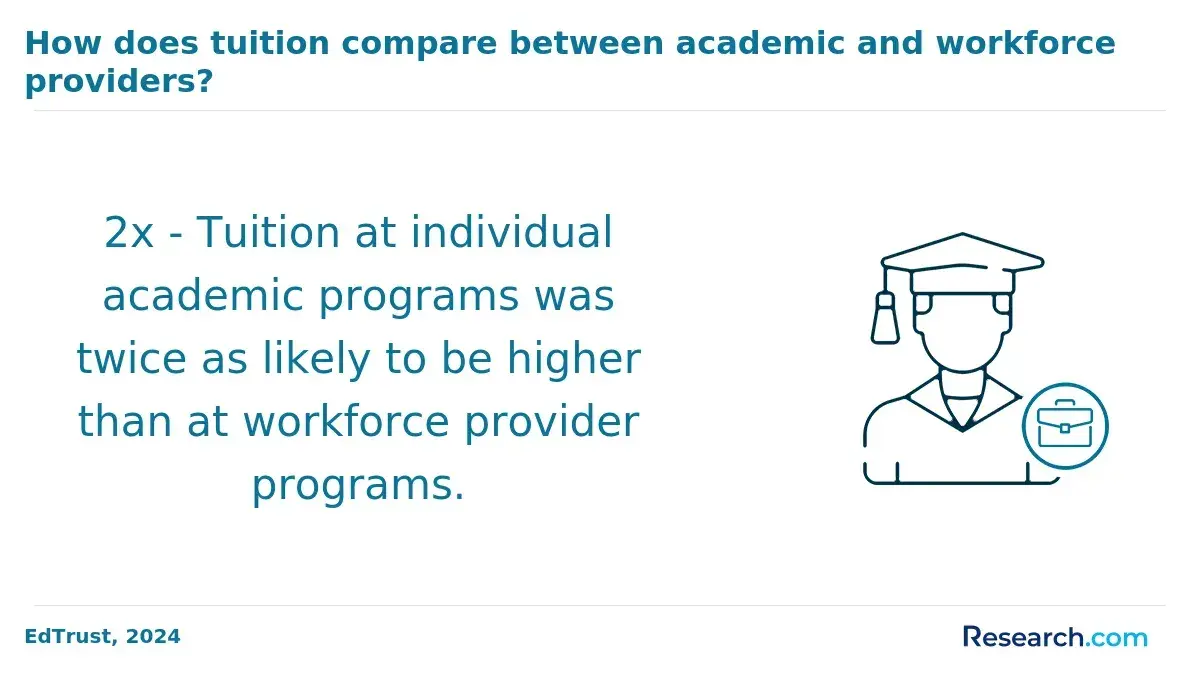
Public universities generally provide lower per-credit tuition rates for online health psychology master's programs, driven by structural advantages such as state subsidization where taxpayer funding offsets operational costs. This allows public institutions to offer more affordable pricing compared to private counterparts, particularly benefiting in-state residents protected by legislative caps on tuition hikes.
Additionally, economies of scale achieved through larger enrollment help public schools spread fixed costs, further lowering per-credit expenses. For a working professional funding their education independently, these factors can significantly reduce out-of-pocket burden when comparing public versus private options.
Private nonprofit universities, while typically charging higher per-credit rates than public schools, increasingly offer competitively priced online health psychology master's programs to attract diverse distance learners. The tradeoff here involves smaller cohort sizes, potentially improving student-faculty interaction and personalized academic support.
These programs may carry stronger employer brand recognition in certain regions and fields, which can translate into enhanced graduate marketability and targeted career services-important considerations weighing cost against long-term employability and professional networking. Prospective students evaluating tuition comparison for online health psychology master's degrees at public and private institutions should factor these qualitative benefits alongside pure cost differentials.
Private for-profit schools often represent the highest tuition per credit, a premium partly justified by more flexible pacing options, streamlined admissions, and intensive career resources tailored for professionals balancing education with personal obligations. However, the elevated cost demands a careful assessment of value, especially regarding accreditation reliability and licensure eligibility critical to practice.
- Accreditation: Ensuring regional or national accreditation and licensure eligibility outweighs price alone in determining program viability for health psychology careers.
- Total Cost Considerations: Beyond per-credit tuition, mandatory fees, textbooks, technology, and possible travel for residencies must inform total cost estimates.
- Financial Aid and Residency Policies: Public universities often differentiate tuition by residency, whereas private schools may charge flat rates, making financial aid offers crucial in net cost evaluation.
- Program Quality and Outcomes: Evaluating faculty expertise, practicum access, cohort diversity, and graduate employment rates provides critical context on cost versus long-term returns.
For prospective students balancing career transition goals with educational investment, a thorough cost-benefit review across institution types and program attributes is essential. Those uncertain about equivalency between online and traditional credentials can turn to resources like the online exercise science degree guides for comparative insights into online program quality and employer perceptions.
Ultimately, aligning tuition data with accreditation, delivery format, and career outcomes facilitates smarter enrollment decisions in health psychology fields.
Are There Online Health Psychology Master's Programs With Tuition Locked In at Enrollment, and How Does Tuition Lock Affect Long-Term Cost Planning?
Locking in tuition rates at enrollment is uncommon but strategically significant for online health psychology master's students, particularly those balancing part-time study and extended program timelines. Without a tuition guarantee, annual rate hikes can cumulatively inflate total costs, undermining budgeting efforts and extending financial strain over years. Tuition lock policies vary widely:
- Application Scope: Some programs secure a fixed tuition rate for an entire incoming cohort, ensuring all students starting together pay the same per-credit fee regardless of when they finish. Others limit the lock to a single academic year or a set number of consecutive semesters.
- Continuity Requirement: Staying continuously enrolled is often mandatory; any break or withdrawal typically voids the locked rate, subjecting returning students to current, possibly higher, tuition.
- Duration Limits: Guarantees frequently cover only the standard program length, which may disadvantage part-time learners whose extended enrollment risks encountering higher fees if they exceed that timeframe.
For working professionals spreading coursework over multiple years, locking tuition can be a critical safeguard against unpredictable expense increases. However, prospective students must confirm policies directly with programs, secure written documentation of any tuition lock, and scrutinize terms that might void it.
This diligence avoids hidden costs disrupting long-term financial plans and enables more accurate total cost comparisons when evaluating programs.
One graduate recalled hesitating to accept an admission offer until clarifying the tuition lock terms amid rolling admissions. Their delay in submitting paperwork and transcripts reflected a careful attempt to ensure stable pricing before committing financially. Ultimately, securing the tuition lock gave them confidence in their budgeting despite a last-minute rush to finalize enrollment documentation.
What Financial Aid, Scholarships, and Employer Tuition Benefits Are Available to Reduce the Net Cost of an Online Health Psychology Master's Degree?
Reducing the net cost of an online health psychology master's degree requires strategic navigation of financial aid options, as the sticker price rarely reflects what graduate students actually pay. Federal unsubsidized loans offer accessible liquidity but increase total repayment due to immediate interest accrual, forcing students to weigh short-term affordability against long-term debt.
Graduate assistantships provide substantial tuition relief but are frequently restricted to on-campus cohorts, limiting availability for online learners and impacting the feasibility of this aid for many mid-career professionals seeking flexibility.
- Federal Unsubsidized Loans: Available widely to graduate students but accrue interest from disbursement, affecting the overall debt burden despite enabling tuition payment over time.
- Graduate Assistantships: Can offset costs through stipends or tuition waivers, yet typically prioritize in-person students, reducing their value for online health psychology candidates.
- Institutional Scholarships: Generally more limited at the master's level than for undergraduates, with additional eligibility restrictions for online participants; careful inquiry with financial aid offices is essential to gauge realistic availability.
- Professional Association Awards: Competitive grants and scholarships from psychology-related organizations can directly lower per-credit costs but require demonstrated academic or professional dedication.
- Employer Tuition Reimbursement: A critical aid source for many healthcare workers, with the IRS excluding up to $5,250 annually from taxable income; negotiating higher benefits can transform educational expenses into largely cost-neutral investments amid strong employer demand for health psychology expertise.
Acknowledging that many top online health psychology programs see application surges in late summer and fall, prospective students should proactively secure aid estimates early. Direct engagement with financial aid offices to obtain comprehensive net cost breakdowns prevents reliance on misleading sticker prices and enables accurate cost-benefit comparisons across institutions and program formats.
This detailed approach is vital for those focused on cost reduction strategies for online health psychology master's programs to ensure their education investment aligns with expected workforce outcomes.
This nuanced analysis complements broader considerations like accreditation and licensure pathways, empowering candidates to avoid programs that artificially appear affordable but fail to support licensure or employer acceptance. Similarly, placing a program's net cost in context with financial aid and employer benefits reframes the investment as a calculated step in a career transition rather than a sunk cost.
Many working professionals and recent graduates aiming for practical, cost-conscious options may also benefit by reviewing related fields with clearer financial aid pathways, as observed in the structured tuition reimbursement models of healthcare graduate degrees such as the accelerated nurse practitioner program. These programs can provide useful models for integrating employer tuition support into program affordability analyses.
How Does the Cost per Credit for Online Health Psychology Master's Programs Differ by Delivery Format-Synchronous, Asynchronous, or Hybrid?
Differences in cost per credit for online health psychology master's programs often reflect the distinct operational demands of synchronous, asynchronous, and hybrid delivery formats rather than purely institutional pricing strategy.
Synchronous online programs frequently entail greater infrastructure investment, including advanced live-session platforms, technical support teams, and the complexity of coordinating diverse student schedules. These factors tend to push per-credit tuition upward compared to asynchronous programs, which leverage scalability through pre-recorded lectures and automated assessments that reduce faculty labor costs.
Students choosing synchronous programs should weigh the indirect costs imposed by rigid class schedules. Working professionals, for example, might face delayed degree completion due to inflexible timing, increasing their overall educational expense despite the ostensibly lower per-credit cost model.
Hybrid formats can blur these distinctions; while their base tuition often matches synchronous offerings, the necessity of travel, lodging, or childcare for in-person components introduces additional, frequently underestimated financial burdens.
- Infrastructure Investment: Critical for synchronous delivery, ongoing costs support real-time interaction but constrain scalability and raise tuition per credit.
- Scalability: Asynchronous programs benefit from automated content delivery, enabling lower tuition and potentially faster degree completion, which suits those prioritizing affordability.
- Hybrid Complexity: Although per-credit pricing may align with synchronous models, hidden ancillary costs increase total expenses, influencing the true cost-benefit calculus.
- Scheduling Constraints: Delivery format affects progression speed; asynchronous learning offers flexibility that can minimize total time and cost, vital for working adults balancing family and career.
- Decision Factors: Students should evaluate how delivery mode aligns with personal and professional circumstances, as the format supporting consistent, timely advancement frequently proves the most cost-effective overall.
Moreover, careful comparison of tuition differences for hybrid delivery format in online health psychology master's degrees is essential to anticipate these additional financial commitments accurately. Prospective enrollees must consider accreditation, licensure restrictions, and support services alongside cost to ensure professional viability of the credential.
Those seeking cost-effective yet flexible routes may also benefit from exploring the easiest online nurse practitioner programs for insight into scalable, low-cost program structures relevant across health-related fields.
What Is the Minimum GPA Requirement for Health Psychology Master's Program Admission, and How Does Selectivity Relate to Per-Credit Cost?
Minimum GPA requirements in online health psychology master's programs serve primarily as admission thresholds rather than definitive indicators of acceptance likelihood. Most programs establish a baseline undergraduate GPA around 3.0, but selectivity varies widely: some programs admit students with GPAs as low as 2.75, particularly when applicants bring relevant professional experience or complementary strengths.
On the other end, highly competitive or prestigious programs may require minimum GPAs closer to 3.5, reflecting both stringent academic standards and an applicant pool typically exceeding these floor values. For working professionals navigating career transitions, these distinctions influence not only admission chances but also financial planning, since per-credit costs do not consistently rise with greater selectivity.
- Threshold vs. Profile: Minimum GPA signals eligibility but not the average admitted profile, which in selective programs can be significantly higher, affecting admission risk for candidates near the cutoff.
- Selectivity and Tuition: While conventional wisdom suggests more selective programs command premium per-credit rates, health psychology programs often show exceptions where mid-tier institutions charge comparable or even higher tuition despite lower selectivity.
- Program Fit and Cost Tradeoffs: Applicants near minimum GPA levels might secure better admission odds and manageable costs by targeting moderately selective programs instead of risking denial at elite schools with no cost advantage.
- Strategic Applications: Identifying one or two programs where an applicant's GPA comfortably exceeds minimums provides realistic budgeting and reduces financial uncertainty in enrollment decisions.
- Broader Considerations: Tuition per credit should be assessed alongside factors like accreditation, program delivery, and hidden fees to determine the actual cost and professional value of the credential.
Given the increasing demand for health psychology practitioners in diverse healthcare settings, understanding these nuances is critical. Notably, salary differentials between graduates of varying program tiers reflect not just credential prestige but also regional labor market conditions and employer recognition of program rigor, underscoring the complex return on investment calculus prospective students must undertake.
What Graduates Say About the Cost per Credit for Online Health Psychology Master's Programs
- Iker: "Balancing a full-time job with family commitments left me limited time to pursue further education, so I chose an online health psychology master's program for its flexibility. Although I initially aimed for a clinical role, after graduation I realized most employers valued internships and certifications over licensure alone. Completing a virtual internship proved critical in landing a position focused on wellness coaching rather than therapy."
- Hayden: "Switching careers into health psychology mid-30s felt risky, especially given the program's workload and costs. I committed to the online master's because it allowed me to keep my current job and save money. Post-graduation, I found that while the degree opened doors to research assistant roles, the lack of a licensed status meant slower salary growth and competitive hiring processes for clinical positions."
- Caleb: "When deciding between traditional and online formats, I prioritized the ability to immediately enter the workforce without pausing my professional life. The online health psychology program delivered that, but I quickly learned that building a portfolio through multiple internships was essential to stand out. Despite not pursuing licensing, the program helped me secure a health educator role with remote options, though advancement typically requires further credentials."
Other Things You Should Know About Health Psychology Degrees
Regionally accredited programs generally have higher per-credit costs but offer stronger recognition from employers and licensing boards, which matters for career advancement in health psychology.
National accreditation often corresponds with lower tuition, but degrees from these schools can face skepticism in clinical or research settings, limiting employability. Prospective students should weigh initial savings against potential challenges in licensure and job market acceptance, prioritizing regional accreditation if professional credentialing and employer recognition are key goals.
Online programs typically have a lower or comparable cost per credit than their on-campus equivalents, but the savings can be offset by technology fees, required software, or proctoring services unique to online delivery.
Additionally, online learners might miss networking and experiential opportunities that enhance employment prospects, an implicit cost not reflected in tuition. When budgeting, students should consider both the direct tuition differential and the value of in-person access to faculty and peers for their long-term career goals.
Beyond tuition, students encounter mandatory fees such as technology, library access, graduation, and internship supervision fees, which vary widely and can add hundreds or thousands of dollars to total expenses.
Students should also account for costs related to credentialing exams, application fees for licensure, and additional training modules not covered by the program. Ignoring these hidden expenses risks underestimating the true financial investment and may delay graduation or licensure if funds are insufficient.
References
- Benefits of Pursuing a Psychology Degree https://shooliniuniversity.com/blog/benefits-of-pursuing-a-psychology-degree/
- Graduate Tuition Rates | Program Costs | Adler University https://www.adler.edu/admissions/tuition/
- Private vs Public Universities in Malaysia: Which is Better? https://studyfans.com/en/blogs/The-difference-between-private-and-public-universities-in-malaysia
- Best Universities for Psychology in Malaysia (2026) – Compare Courses & Fees https://www.easyuni.my/malaysia-psychology/
- Scholarships For Psychology Majors (2025) https://www.psychology.org/scholarships/
- 2025 Most Affordable Online MPH Programs https://www.onlineu.com/most-affordable-colleges/public-health-masters-degrees
- Masters in Psychology | Online Masters in Psychology | University of Phoenix https://www.phoenix.edu/online-psychology-degrees/psych-masters-degree.html
- Most Affordable Online Master's in Psychology: Find Low-Cost Programs https://www.degreesforgood.org/online-degrees/psychology-programs/masters/most-affordable/
- 50+ Scholarships & Resources for Counseling Master's Students https://www.onlinemastersdegrees.org/student-resources/counseling/
- Top Masters in Psychology Programs in Texas Schools - Online Psychology Programs https://onlinepsychologyprograms.org/masters/texas/