2027 Choosing an Online Data Science Master's for a Career in Smart Buildings

Co-Founder and Chief Data Scientist
An online data science master's can prepare you to analyze building energy use, equipment performance, and occupant comfort - but a general analytics degree will not automatically teach you how buildings work.
If you want to move into smart building analytics, the useful question is whether a program gives you both rigorous data science training and a way to apply it to building systems. This guide helps you compare curricula, projects, practical constraints, and career paths before committing to a program.
Key Things You Should Know
- Prioritize programs that combine statistics, machine learning, and data engineering with a substantial opportunity to work on time-series or building-related data; a course title alone does not establish that depth.
- Look for a feasible building-focused project using energy, equipment, or sensor data, and check data access before enrolling. That evidence may matter more to a smart building employer than the degree's specialization label.
- The U.S. Bureau of Labor Statistics reports a $120,230 median annual wage for data scientists in May 2025, but that occupation-wide figure is not a smart building salary or a predicted return on a master's degree.
What is a data science master's degree for smart building careers?
It is usually a data science master's applied to problems in commercial buildings, campuses, or building technology - not necessarily a degree titled "smart buildings." The work can involve forecasting energy demand, detecting equipment faults, evaluating control changes, or explaining patterns in indoor conditions. Relevant data may come from utility meters, building automation systems, maintenance records, weather observations, and occupancy-related sensors.
The distinction matters because a model that predicts a fault is useful only if someone can connect its output to an identifiable system, check for false alarms, and act on it safely. Choose a data science degree when you need stronger analytical and computational skills. If your intended job is chiefly designing mechanical systems or commissioning controls, compare engineering or building-systems education as well; data science training alone does not replace that domain preparation.
Which online data science master's programs prepare students for smart buildings?
There is no universally best program for this goal, and a general online degree can be a strong choice if it permits relevant electives and an appropriate project. Compare actual course descriptions, project rules, and online delivery requirements rather than relying on a program's marketing language.
The following program profiles are comparison tools, not claims about particular universities. They show what each emphasis can contribute - and what you may need to learn elsewhere.
| Program emphasis | Potential value for smart buildings | Gap to check |
| Statistics and machine learning | Forecasting, anomaly detection, and evaluation of uncertain results | Whether students also build usable data pipelines |
| Data engineering and computing | Handling sensor streams, databases, and repeatable workflows | Whether statistical modeling and experimental evaluation receive enough depth |
| Applied or project-centered data science | Producing work that a facilities or technology team can assess | Whether students may use building data and retain a shareable portfolio artifact |
Ask each program for recent syllabi and examples of permitted capstones. Confirm whether you can select your own dataset, work with an employer, or take courses relevant to energy or physical systems. For an employed applicant, an online master's in data science for busy professionals is worth assessing against meeting times, group-work expectations, and the time available for a substantial project.
Is an online data science master's respected by smart building employers?
An online format does not by itself establish or diminish a degree's value. Assess whether the institution is appropriately accredited, the curriculum is rigorous, and graduates can demonstrate relevant work. Verify the institution's accreditation through official institutional or accreditor information, and confirm that the program is available to students in your state.
For a smart building role, a convincing project can make the degree's relevance easier to judge. For example, a fault-detection project should explain the equipment and data, compare the model with a sensible baseline, estimate the cost of false alarms, and show how an operator would investigate a flagged event. Avoid assuming that a degree label - or an impressive accuracy figure without operational context - will answer those questions for an employer.
What courses should a smart building data science master's include?
Look for graduate-level probability and statistics, machine learning, programming, databases or data engineering, and opportunities for applied work. Time-series analysis is particularly relevant because building readings change with weather, schedules, seasons, and equipment operation. Courses in optimization or causal inference can add value when the goal is to assess interventions rather than merely predict the next reading.
Depth matters more than a passing reference to an industry. A syllabus that briefly mentions sensor data is different from a dedicated time-series course; both are different from a project requiring students to clean irregular readings, prevent data leakage, validate predictions across seasons, and communicate limits to decision-makers. Review assignments and prerequisites, not just course titles.
Building-specific knowledge may come from an elective, a project partner, professional experience, or separate study. Useful subjects include HVAC fundamentals, controls, metering, equipment maintenance, and the privacy implications of occupancy data. Before choosing a program, establish whether its project structure will let you combine that knowledge with meaningful analytical work.
What admission requirements apply to online data science master's programs?
Requirements vary by institution. Programs may ask for a bachelor's degree, transcripts, evidence of quantitative preparation, programming experience, recommendations, or a statement of purpose; do not assume any one item is universal. Check the current admissions page for required prerequisites, whether they must be completed before applying, and whether professional experience can be considered.
Applicants from facilities, architecture, energy, or engineering backgrounds may already understand building operations but need to strengthen Python, statistics, or linear algebra. Applicants from computing backgrounds may face the opposite domain-knowledge gap. Introductory study can improve readiness without necessarily satisfying a formal prerequisite. If your background is outside computing, guidance on AI graduate programs for non-computer-science backgrounds can help frame preparation questions, but confirm requirements with each data science program directly.
How long do online data science master's programs take and cost?
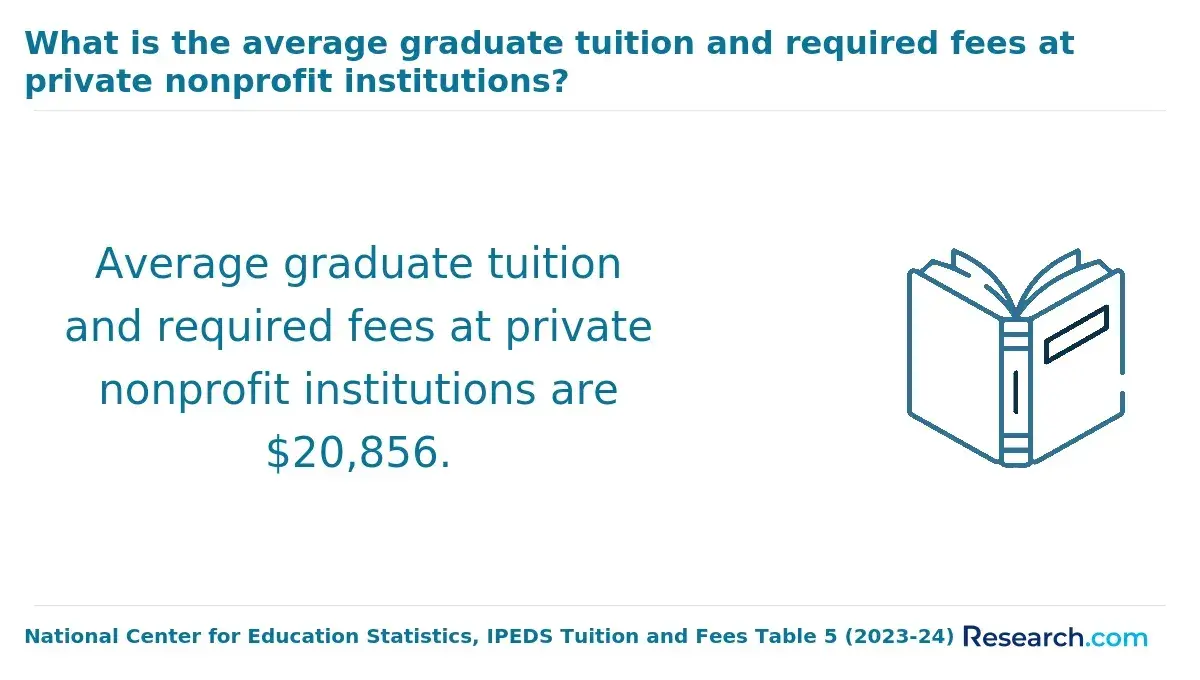
Completion time depends on required credits, course availability, and whether you study full- or part-time. Cost depends on the current tuition schedule and may also include mandatory fees, software or equipment, and any travel requirement. Without a verified, current school-specific quote, a single price or timeline would be misleading.
Request a degree plan showing when required courses run and how long you may remain enrolled. Then calculate your expected total using the school's current tuition and fee schedule, including any difference tied to residency or course load. To compare tuition for data science master's degrees, use the same assumptions for every school and check whether your employer offers tuition assistance. A lower sticker price may not be the better value if scheduling delays completion or the program cannot support your intended project.
What smart building careers can data science master's graduates pursue?
Potential roles include building energy analyst, facilities data analyst, building technology data scientist, equipment-performance analyst, and analytics roles with controls or energy-service providers. Titles and duties vary by employer. Some positions emphasize dashboards and reporting; others require production data pipelines, model development, or close work with facilities engineers.
Choose a target role before selecting electives. An energy analyst benefits from forecasting and measurement skills, while someone building fault-detection products needs stronger data engineering and model-evaluation experience. If you already work in facilities or controls, your knowledge of equipment and operator workflows can be an advantage - but you still need demonstrable analytical skills. A master's is one route, not a universal hiring requirement.
Keep the industry choice deliberate. Someone drawn mainly to clinical applications should investigate graduate AI training for healthcare innovation careers rather than treating a building-focused portfolio as equally relevant to a different domain.
How much do smart building data science professionals earn?
The U.S. Bureau of Labor Statistics reports that the median annual wage for data scientists was $120,230 in May 2025. This is a national figure for the occupation, not a salary estimate for smart building specialists. A facilities analyst and a data scientist developing commercial building software may fall under different occupational categories and pay structures.
When evaluating a prospective role, compare its actual duties, location, seniority, and employer with relevant job postings rather than applying the national median to every title. Data science salaries by industry provide additional context, but a salary after graduation cannot by itself show how much of any increase was caused by the degree.
What is the job outlook for smart building data science careers?
The Bureau of Labor Statistics projects 35% employment growth for U.S. data scientists from 2025 to 2035. That is an occupation-wide projection, not a forecast for smart building jobs specifically. It supports the case for developing transferable data science skills, but it does not tell you how many local employers need building specialists or whether a particular graduate will be hired.
Test the market you actually want to enter: review postings from building technology firms, utilities, energy-service providers, and large facilities teams. Note whether they seek analytics, controls experience, energy knowledge, or all three. If the roles you want consistently center on system installation and commissioning, a data science master's may be less direct than building-systems training.
Which certifications complement a data science master's in smart buildings?
Certifications can help fill a specific domain gap, but they are not substitutes for statistical and programming competence. An energy-management credential may be useful for energy-focused work; a building automation or controls credential may fit a role that requires working closely with control systems. Check the issuing organization's current eligibility rules, costs, and renewal requirements before committing.
Choose a certification only after reviewing target job descriptions. If employers repeatedly ask for knowledge of a particular system or practice, a relevant credential may strengthen your case. If they mainly ask for production analytics experience, invest first in a well-documented building-data project. Do not assume a voluntary credential grants an engineering license or authority to perform regulated work; those requirements depend on the role and jurisdiction.
Other Things You Should Know About Data Science
Yes. Public or simulated building datasets can support a credible project if you explain their limitations and avoid claiming that results have been validated in a live building.
Only if your employer permits it. Ask about data ownership, confidentiality, security, and whether you may publish an anonymized or synthetic version before starting the project.
Not necessarily. Data analysis and regulated engineering work are different activities. Check the duties of the specific position and the rules in the state where the work is performed.
Some analytical tasks can be performed remotely, but roles involving site investigations, sensor installation, or controls commissioning may require on-site work. Check the job description rather than assuming the degree's online format predicts the job's location.
References
- Cybersecurity Considerations and Research Pathways for Grid-Interactive Efficient Buildings | Department of Energy https://www.energy.gov/cmei/femp/articles/cybersecurity-considerations-and-research-pathways-grid-interactive-efficient
- A two-step machine learning approach for predictive... - PMC https://pmc.ncbi.nlm.nih.gov/articles/PMC11840521/
- Smart Buildings and Cybersecurity | asu.edu https://eec.asu.edu/2024/03/28/smart-buildings-and-cybersecurity/
- Impact of occupancy behavior on building energy efficiency | sciencedirect.com https://www.sciencedirect.com/science/article/pii/S2949821X25001139
- What Is Privacy-by-Design and Why It's Important? | IEEE Digital Privacy https://digitalprivacy.ieee.org/publications/topics/what-is-privacy-by-design-and-why-it-s-important/
- Online MS Data Science | Mercer University https://professionaladvancement.mercer.edu/academic-programs/graduate-and-professional/data-science/
- Master of Science in Sustainable Building Design and Operation - Purdue Online https://www.purdue.edu/online/program/master-of-science-in-sustainable-building-design-and-operation/
- Machine Learning in Smart Buildings: A Review of Methods, Challenges, and Future Trends | mdpi.com https://www.mdpi.com/2076-3417/15/14/7682