2027 Choosing an Online BA in Psychology - General Psychology for a Future Clinical Psychology Doctoral Application: Prerequisites to Compare
Audited and Verified:
Our Editorial and Data Verification Process
Research.com uses government datasets, official education statistics and primary institutional information to support its career and degree guides. Our review process checks factual accuracy, occupational definitions, source dates and the requirements associated with the credentials discussed.
How This Article Was Fact-Checked
Our editorial team verifies salary estimates, employment projections, education requirements and program information against original data providers and official organizations. Salary figures are checked against the relevant occupational definitions and reporting periods. Information about licensure, accreditation and required in-person training is reviewed separately.
Fact-checked and verified on:

Co-Founder and Chief Data Scientist
An online general psychology BA can prepare you to apply to a clinical psychology doctorate, but the degree title alone will not tell you whether you will have the right courses, research experience, or recommendation letters. That distinction matters before you commit tuition and time to a program.
This guide is for prospective and returning undergraduates who want to compare online options against their likely doctoral targets. You will learn which prerequisites to check, where online study can create practical gaps, and how to choose a program that supports a credible application rather than merely awarding the right-sounding degree.
Key Things You Should Know
- Compare each BA against your target doctorates' published prerequisites; statistics and research methods are particularly important, but required psychology courses vary by program.
- Check two different forms of recognition: institutional accreditation for the bachelor's institution and, where relevant to your professional goal, APA accreditation for the eventual clinical psychology doctorate - not the general psychology BA.
- An online BA is academic preparation, not clinical training. Prioritize supervised research access and strong faculty references alongside coursework; the bachelor's degree alone does not qualify you to practice psychology.
What Is a General Psychology Bachelor's Degree for Doctoral Preparation?
A general psychology BA studies behavior and mental processes across the discipline rather than training students for a single clinical role. Its value for a future doctoral applicant lies in the combination of psychology foundations, quantitative coursework, scientific writing, and opportunities to investigate research questions with faculty.
"General" can be an advantage if electives let you fill prerequisites and explore potential research interests. It is a disadvantage if the program's flexibility makes statistics, laboratory methods, or advanced psychology courses easy to miss. A BA rather than a BS is not inherently a barrier: compare the actual transcript and experiences, not the letters on the diploma.
A themed undergraduate program may be a better fit for a different goal. For example, addiction psychology bachelor's degree planning may help someone seeking that subject emphasis, but its title does not establish that it offers the research sequence a clinical doctorate expects.
What Prerequisites Do Clinical Psychology Doctoral Programs Require?
There is no universal clinical psychology doctoral prerequisite list. PhD and PsyD programs set their own rules for prior degrees, coursework, grades, tests, and application materials. A psychology major may satisfy broad eligibility requirements while still leaving a missing course - or too little evidence of research readiness - for a particular program.
The comparison below separates requirements you must verify from evidence that may make an eligible applicant more competitive. Check each target program's admissions page for your intended application cycle, including whether it accepts equivalent courses.
| Area to compare | What to verify with each doctorate | What a strong BA plan can provide |
| Prior study | Accepted bachelor's degrees, minimum coursework, and any grade rules | A transcript that clearly documents relevant psychology preparation |
| Quantitative and research preparation | Statistics, research methods, experimental coursework, and any recency or grade conditions | Coursework plus supervised work applying research methods |
| Psychology breadth | Named requirements such as developmental, abnormal, biological, or social psychology | Electives selected against actual target-program lists |
| Application evidence | Letters, statements, tests if required, and research-interest or faculty-fit expectations | Faculty relationships and specific examples of scholarly work |
Clinical psychology doctorates are a route toward psychologist licensure only after the additional training and jurisdiction-specific requirements are met. If your actual goal is to become a licensed counselor rather than a psychologist, compare qualifying counseling degrees separately; clinical counseling master's fees and graduation timelines address a different professional pathway.
Is an Online Psychology Bachelor's Degree Accredited and Recognized?
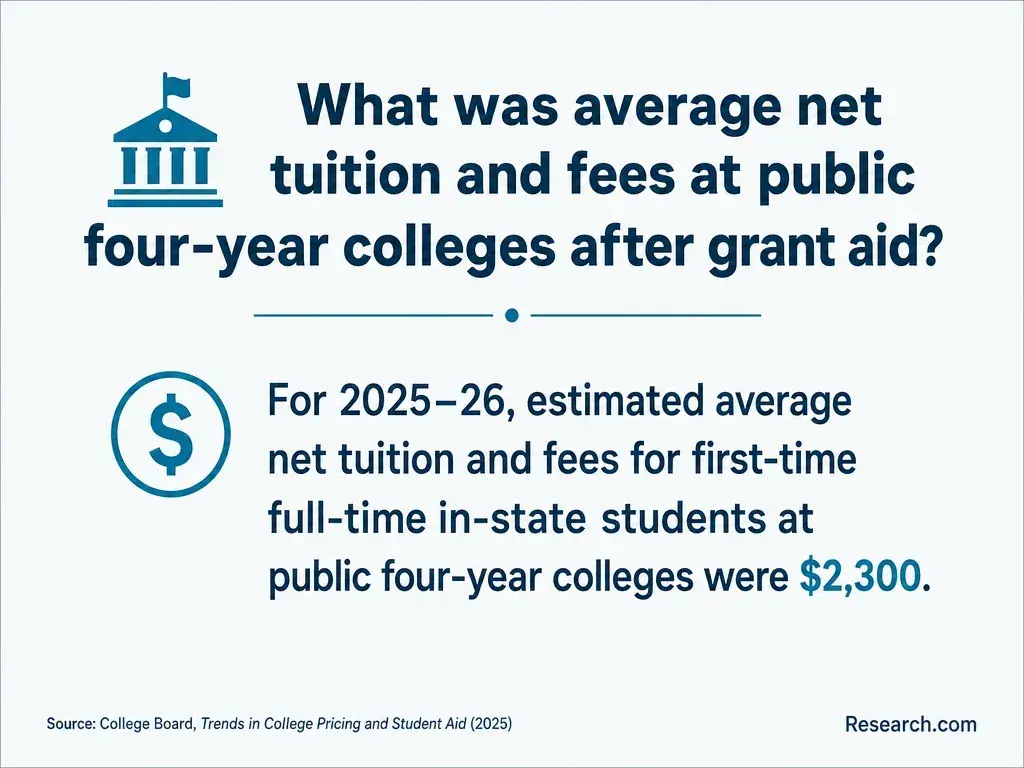
Online delivery does not, by itself, make a bachelor's degree unrecognized. Verify that the degree-granting institution holds accreditation recognized by the US Department of Education and that the accreditation covers the institution awarding your degree. Then ask prospective doctoral programs whether they impose any additional rules affecting your planned coursework or degree.
Do not look for "APA-accredited BA" as a quality test: APA accreditation applies to covered professional psychology graduate programs and training, not general psychology bachelor's majors. Institutional accreditation also does not promise doctoral admission or eventual licensure. Professional accreditation is credential-specific; lower-cost accredited counseling degree pathways, for example, require a different accreditation and licensure analysis from a psychology BA.
The most consequential difference for a doctoral applicant is often access, not where lectures happen. An online student may be able to complete the same academic subjects while having fewer convenient opportunities to join a faculty lab, attend research meetings, or develop a sustained mentoring relationship. Campus study can make those opportunities easier to find, but it does not guarantee them.
Ask online programs how students actually participate in research: remotely, through approved local arrangements, or during required campus visits. Also check whether "asynchronous" courses still involve scheduled exams, group meetings, or presentations. If speed is a selling point, treat comparing faster forensic psychology undergraduate options as a reminder to examine the trade-off: a shorter schedule is useful only if it leaves room for the courses and mentoring your doctoral application needs.
Start with introductory psychology, statistics, and research methods, then map remaining courses to your prospective doctorates. Depending on their requirements and your interests, useful advanced study may include abnormal psychology, lifespan development, biological psychology, cognition, social psychology, personality, and psychological measurement. Course names are not proof of equivalence; save syllabi when a target program might need to assess a substitution.
Sequence matters. Completing statistics before advanced methods or a research project can help you contribute more than routine administrative work. A course about psychological assessment can teach measurement principles without qualifying you to administer or interpret restricted clinical tests. Likewise, a substance-use counseling curriculum may emphasize different preparation from a research-focused general psychology major; comparing undergraduate substance use counseling costs and outcomes makes more sense when that specific workforce pathway is the goal.
Undergraduate admission requirements differ from doctoral prerequisites. A school may admit first-year applicants using secondary-school records and transfer applicants using prior college transcripts, while separately applying rules for entry into the psychology major. Confirm both decisions before assuming you can take a required upper-level course on schedule.
Returning students should request a written degree audit showing not just which credits transfer, but whether statistics, methods, and other courses satisfy major requirements. Ask about course sequencing, residency credits, and how unresolved transfer evaluations affect enrollment. Admission and financial-aid eligibility are also separate determinations. If you are considering a different undergraduate specialization, guidance on aid eligibility for online substance use counseling study may be useful, but confirm the rules and award terms for the actual school and program you choose.
Completion time depends on accepted transfer work, the credits still required for the major, course availability, and your enrollment pace. An accelerated calendar can shorten time to graduation without shortening the work needed to build a doctoral application. Compare accelerated BA and BS psychology pathways against the time you can realistically devote to research and faculty collaboration.
For cost, request a term-by-term estimate using your evaluated transfer credits and intended course load. Include tuition, mandatory fees, books or software, any campus travel, and the possibility that a useful research opportunity is unpaid. Compare that estimate with the aid you actually qualify for, not an advertised starting price. If a lower-cost BA lacks accessible research supervision, calculate what additional time or coursework you might need after graduation rather than treating its tuition as the full cost of doctoral preparation.
For many research-oriented clinical psychology PhD applications, sustained, supervised research is more informative than a collection of loosely related activities. Useful responsibilities can include reading literature, helping prepare approved study materials, organizing data under supervision, learning analysis, and explaining a project's limitations. A thesis, poster, or publication may help, but none is a universal admission requirement.
Ask who mentors online students, how they join projects, and whether remote participation involves substantive work. If you arrange a local experience, obtain the required faculty and site approvals before treating it as academic credit. Participant contact, identifiable records, data sharing, and public presentation can raise consent, privacy, and research-oversight questions; permission to volunteer does not grant permission to use client data.
Nonclinical service work can demonstrate reliability and familiarity with service settings, but it does not replace research where a target doctorate emphasizes scientific fit. Nor is a fast graduate credential necessarily the missing step: forensic psychology master's study with faster pacing serves a different purpose unless its coursework, supervision, and research opportunities address a specific gap in your application.
A psychology BA can support applications for nonclinical research-support, human-services, program-support, and related entry-level jobs, depending on the employer and your experience. Research assistants may help recruit participants under approved procedures or manage study records; service-support staff may coordinate resources or referrals. Neither role permits independent diagnosis, psychotherapy, or psychological assessment simply because the employee studied psychology.
There is no single reliable "psychology BA salary": pay depends on the occupation, location, employer, and required credentials. Use the US Bureau of Labor Statistics Occupational Outlook Handbook for the specific job you are considering, and read its occupation-wide median as context - not a forecast of your earnings or a particular program's graduate outcomes. A general psychology master's may develop research skills or support some career moves, but it is not automatically a clinical qualification. Compare affordable graduate psychology programs only after identifying a concrete role or doctoral-preparation gap that further study would address.
How Do You Choose an Online Psychology Program for Clinical Psychology?
Choose backward from a small set of clinical psychology doctorates you could plausibly apply to. Their current prerequisite and research expectations should determine what you ask undergraduate programs - not a general claim that a BA is "pre-clinical."
Use this sequence to make comparable inquiries and avoid enrolling on the strength of a course catalog alone:
- Record each target doctorate's required courses, accepted equivalents, application materials, and research or faculty-fit guidance.
- Ask each BA program for a degree plan showing when you can take statistics, methods, and the relevant advanced electives.
- Request concrete examples of how online students obtain supervised research work and faculty recommendation letters.
- Verify institutional accreditation, any in-person obligations, a written transfer evaluation if applicable, and an individualized cost estimate.
- Favor the option that closes your documented gaps at a sustainable cost and pace; reconsider a full second degree if targeted courses and research experience would do the job.
For the financial comparison, cost-focused comparisons of psychology degrees can help identify options to investigate. The deciding evidence, however, is your own degree audit, course plan, and confirmed access to mentoring - not a published price or program label.
Other Things You Should Know About Psychology
Policies vary by program and application cycle. Check each target's current instructions before scheduling a test; do not assume that another program's policy applies.
Often, but the doctorate decides which courses and completion dates it accepts. Get written confirmation before paying for a post-baccalaureate course.
Follow each program's instructions. Faculty who have supervised your research or substantial academic work can usually provide more specific evidence than someone who knows you only from a large class.
Compare each program's research expectations, clinical training, accreditation status, funding, and outcomes against your goals. The degree label alone does not establish training quality, affordability, or licensure eligibility.
- DAPIP | Homepage - Office of Postsecondary Education (OPE) https://ope.ed.gov/dapip/
- Accreditation in the U.S. | ed.gov http://www.ed.gov/laws-and-policy/higher-education-laws-and-policy/college-accreditation/accreditation-in-the-us
- What are the steps to a Clinical Psychology PhD? | harvard.edu https://undergrad.psychology.fas.harvard.edu/file_url/1675
- APA-Accredited Programs https://accreditation.apa.org/accredited-programs
- What you should know about online education | apa.org https://www.apa.org/monitor/2012/06/online-education
- Program: Clinical Psychology, PhD - University of Houston https://publications.uh.edu/preview_program.php
- Letters of Recommendation Guide | uoregon.edu https://urds.uoregon.edu/letters-recommendation-guide
- Doctor of Psychology (PsyD) in Clinical Psychology | Touro University https://shs.touro.edu/programs/doctor-of-psychology/
- Masters vs. PsyD vs. PhD in Clinical or Counseling Psychology | pitt.edu https://www.psychology.pitt.edu/undergraduate/careers-and-graduate-school/masters-vs-psyd-vs-phd-clinical-or-counseling-psychology
- School Psychology, Psy.D. | St. John's University https://www.stjohns.edu/academics/programs/school-psychology-doctor-psychology