2027 Choosing a BS in Business Administration for Business Roles in Long-Term Care Organizations
Audited and Verified:
Our Editorial and Data Verification Process
Research.com uses government datasets, official education statistics and primary institutional information to support its career and degree guides. Our review process checks factual accuracy, occupational definitions, source dates and the requirements associated with the credentials discussed.
How This Article Was Fact-Checked
Our editorial team verifies salary estimates, employment projections, education requirements and program information against original data providers and official organizations. Salary figures are checked against the relevant occupational definitions and reporting periods. Information about licensure, accreditation and required in-person training is reviewed separately.
Fact-checked and verified on:

Co-Founder and Chief Data Scientist
A long-term care organization needs people who can manage budgets, staffing processes, purchasing, and daily operations - but a business degree does not qualify you for every job in a nursing home or assisted living community. If you are choosing a BS in Business Administration for this sector, the key is to match the program to the responsibilities you want and the rules that govern them.
This guide compares realistic entry routes, administrator requirements, coursework, delivery formats, costs, and career evidence so you can choose a degree - or a more direct alternative - with a clear purpose.
Key Things You Should Know
- A BS in Business Administration can prepare you for nonclinical operations, HR, purchasing, and finance support; a new graduate should not assume immediate eligibility for facility leadership.
- Becoming a nursing home administrator generally requires a state license in addition to relevant education and experience. Check the state board's degree, training, and examination rules before choosing a program.
- Many bachelor's programs are designed around roughly 120 credits, but your remaining time and cost depend on the school's degree audit - not simply the number of transfer credits it accepts.
What is a BS in Business Administration for Long-Term Care Careers?
A BS in Business Administration is a broad undergraduate degree covering organizational decisions such as budgeting, staffing, operations, and performance measurement. In long-term care, those skills support nursing homes, assisted living communities, continuing care organizations, and companies that serve them. The degree is not a clinical credential or, by itself, an administrator license.
The best fit depends on the job you want. General business study offers flexibility across employers and functions. A healthcare administration degree may devote more required coursework to care delivery, regulation, and healthcare finance. A BS in Management or BBA may overlap substantially with a BS in Business Administration; compare actual courses and applied opportunities rather than relying on degree titles. If speed matters, accelerated online pathways for business students are worth examining, but confirm that their schedules leave room for relevant work experience.
What Jobs Can You Get in Long-Term Care With a Business Degree?
Your prior experience matters as much as your degree title. Someone who already schedules staff or handles accounts may be able to move into a broader operations role; a graduate new to the sector may need to start in coordination or support work. The table separates plausible entry routes from jobs that normally require additional responsibility or qualifications.
| Role or pathway | Typical business work | What strengthens candidacy |
| Operations or administrative coordinator | Track schedules, vendors, invoices, or workflow issues | Spreadsheet skills, careful documentation, and facility experience |
| HR or recruiting assistant | Support hiring records, onboarding, and staffing administration | HR coursework and knowledge of confidentiality and employment practices |
| Purchasing or finance support | Monitor orders, expenses, billing processes, or reports | Accounting fundamentals and experience with the employer's systems |
| Department or facility manager | Own budgets, supervise employees, or oversee regulated operations | Relevant results, supervisory experience, and any required state credential |
For an early-career applicant, a supervised internship, relevant job, or approved project can demonstrate more than a list of courses. Show what you actually did - for example, documented a purchasing process or built an anonymized staffing dashboard - without claiming authority you did not have. If project coordination is your target function, credit mapping for online project management programs can help you compare a specialized degree-completion route with general business study.
Is a Business Administration Degree Enough to Become a Long-Term Care Administrator?
Usually not on its own. Nursing home administrators are licensed under state requirements, and a business bachelor's degree is only one possible component of eligibility. States set their own rules for qualifying education, administrator-in-training experience, examinations, and applications. Requirements for assisted living leadership can differ from nursing home rules and also vary by state.
Before enrolling, identify the state and facility type where you intend to work. Ask its licensing board whether the specific degree and courses qualify, what supervised training is required, and whether a prospective training site meets its rules. Then ask potential employers how people advance into administrator roles. Do not assume that an internship arranged by a college substitutes for state-approved training.
If your goal is organizational leadership rather than a licensed administrator position, online leadership bachelor's programs with compressed schedules provide another curriculum comparison. Their pace and leadership focus do not replace facility-specific experience or licensing requirements.
Look for a business core you can apply to the organization's actual decisions: managerial accounting for expense control, HR for recruiting and retention processes, operations for scheduling and purchasing, and statistics or spreadsheets for interpreting performance measures. Business law and ethics are useful foundations, but a general course should not be mistaken for training in every long-term care regulation.
Useful applied work might involve a proposed staffing-process map or purchasing analysis built from approved, appropriately anonymized information. Before using workplace records, confirm employer permission, privacy rules, and the college's project requirements. An elective in healthcare management is valuable if it fills a knowledge gap; it is not an official concentration unless the institution awards one.
If your interests center on vendor coordination and supplies across multiple facilities, compare the business curriculum's operations depth with online colleges with accelerated supply chain bachelor's study. A specialized pathway may be more useful than a broad business degree when that function - not general administration - is your goal.
Online study can make a degree feasible alongside shifts or caregiving, but it does not necessarily mean self-paced study. Ask whether courses require live meetings, proctored exams, group presentations, fixed deadlines, campus visits, or an internship at an approved site. Campus-based study may offer easier face-to-face access to classmates and local employers, provided the timetable works with your obligations.
For either format, request a sample course schedule and map it against your work hours. Check whether required courses run every term and whether career services can connect you with long-term care employers. Comparisons of business administration colleges for working professionals can help you build a shortlist; the school's current course and internship policies should decide whether a program is workable for you.
A typical full-time bachelor's pathway is planned around four academic years, but a transfer or returning student's timeline depends on which credits satisfy general education, the business core, electives, and the school's residency requirement. Part-time enrollment, prerequisite sequencing, and infrequently offered courses can extend completion. An accelerated calendar may shorten elapsed time without reducing the work required.
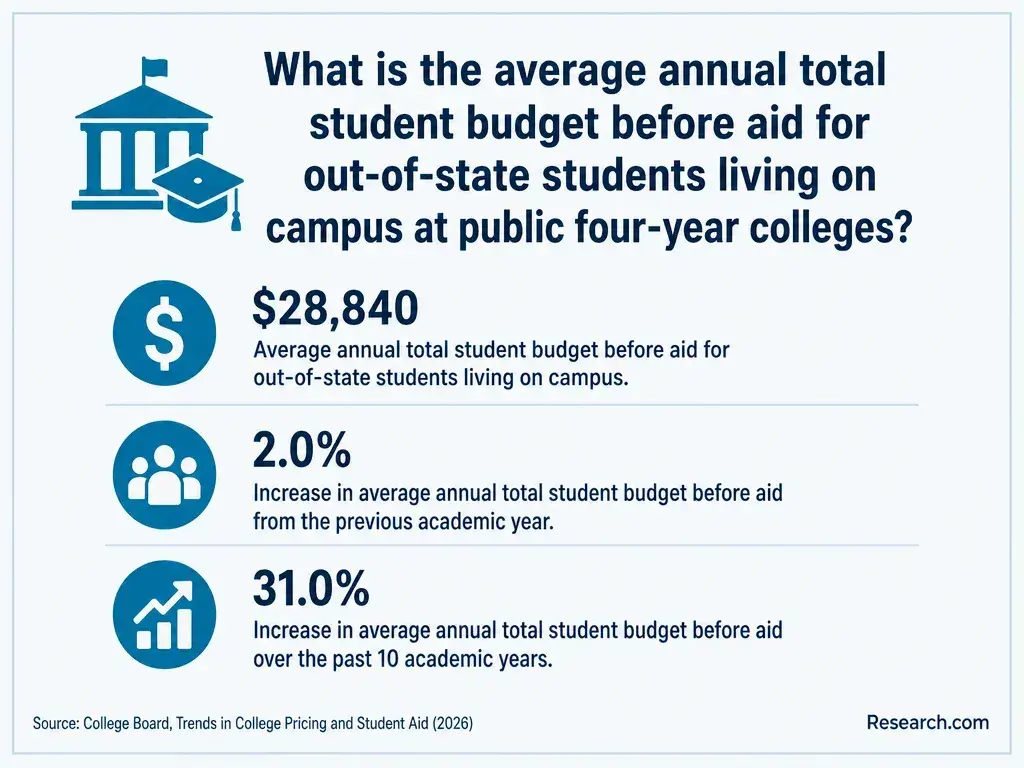
Compare a written, school-specific estimate of remaining credits and total completion cost, not just the advertised tuition rate. Include mandatory fees, books or software, possible travel or proctoring, and income you might forgo. Ask the financial-aid office how your enrollment level and remaining credits affect eligibility; employer reimbursement may also require you to pay upfront. Resources on federal aid for undergraduate project management study can frame questions if that is your alternative degree, but confirm aid for each specific school and program.
Requirements depend on whether you apply as a first-year, transfer, returning, or second-degree student. Schools commonly request prior transcripts and may set academic-standing or prerequisite rules; admission to the university does not always mean admission to its business major. Prior healthcare work can strengthen your application without automatically awarding academic credit.
Send transcripts for an official evaluation and ask which courses apply to each degree requirement. If you have studied another subject, check whether your mathematics, statistics, accounting, or economics coursework meets the program's rules rather than assuming you must start over. Application costs also vary; colleges with no upfront application payment may reduce the cost of building a shortlist, though you should verify current fees and admission policies directly.
First verify the institution's recognized accreditation and confirm that it covers the school awarding your degree. Separately, check whether any advertised AACSB, ACBSP, or IACBE business accreditation covers the relevant school or program; these are not substitutes for institutional accreditation or state administrator licensure.
For long-term care goals, quality also means usable courses and access to the sector. Request the current catalog, required-course rotation, internship rules, faculty support, and evidence of employer connections. If a school reports career outcomes, check which graduates were counted and whether results identify long-term care roles. Lists of leading US colleges for online business study can identify candidates, but a ranking cannot establish whether a particular program fits your licensing state, schedule, or target job.
There is no single reliable salary for "a business graduate in long-term care." Pay depends on the occupation, location, employer, and experience. For one relevant comparison, the U.S. Bureau of Labor Statistics reports a May 2025 median annual wage of $75,940 for human resources specialists across industries. That occupation-wide median is not a starting salary or a long-term care-specific figure.
BLS projects 6% employment growth for human resources specialists from 2025 to 2035. This describes the national occupation, not hiring at an individual facility. Review local job postings for required experience and pay before estimating your return on a degree. If staffing and employee support appeal to you more than general operations, compare human resources college study options with the HR depth available in a business program.
Which Certifications Strengthen a Long-Term Care Business Career?
Choose a credential for a specific responsibility rather than collecting certificates without a target role. HR credentials may help someone developing an HR career; project-management or process-improvement training may support operations work. Each provider sets its own eligibility and assessment rules, and an academic course alone does not award a professional certification.
Keep voluntary certifications separate from a state-required nursing home administrator license. If licensure is your goal, start with the state board's rules rather than a certificate advertisement. If your goal is a narrower skill gap, compare the credential's full cost and requirements with a degree; guidance to evaluate price duration and outcomes of business administration degrees can help you make that comparison without assuming the longer route is automatically better.
Other Things You Should Know About Business Administration
It can demonstrate familiarity with residents' and families' needs, but employers and licensing boards may distinguish personal caregiving from supervised professional experience. Describe it accurately and ask how the organization evaluates it.
It can be, particularly for budgeting, HR, or purchasing. Explain which tasks transfer, while recognizing that a hospital internship may not teach the operating rules of a nursing home or assisted living community.
Only with the permissions required by your employer and school. Use public or synthetic information when approval is unavailable, and remove resident, employee, and confidential business details from any shareable work.
Apply where the work matches your goal. A facility role may provide closer exposure to daily operations; a corporate role may offer deeper experience in a function such as payroll or procurement across sites. Check the actual duties rather than the office location alone.
- Choosing a School | Federal Student Aid https://studentaid.gov/resources/prepare-for-college/students/choosing-schools
- Qualifications - Nursing Home Administrator Licensure Program https://www.health.ny.gov/professionals/nursing_home_administrator/licensure_program/qualifications.htm
- Accreditation in the U.S. | ed.gov http://www.ed.gov/laws-and-policy/higher-education-laws-and-policy/college-accreditation/accreditation-in-the-us
- Is a Bachelor's Degree in Healthcare Administration Worth It? | Colorado State University Global https://csuglobal.edu/blog/is-a-bachelors-degree-in-healthcare-administration-really-worth-it
- BBA in Healthcare Management | Tiffin University https://go.tiffin.edu/bachelors-programs/bachelor-of-business-administration/healthcare-management/
- Nursing Home Administration 120-Hour Online Program | PCOM https://www.pcom.edu/academics/continuing-education/nha/
- Qualifications and Responsibilities of Administrators | psu.edu https://www.abington.psu.edu/continuing-education/healthcare-certificates-programs/assisted-living-administrator-training/qualifications-and-responsibilities-administrators
- What Can You Do With a Business Administration Degree? | LSU Online https://online.lsu.edu/newsroom/articles/what-can-you-do-business-administration-degree/
- Business Administration - Health Care Administration concentration - Central Penn College https://www.centralpenn.edu/academics/health-care-administration-business-admin-concentration/
- Human Resources Manager in Health Care: Salary, Skills and Career Path - App State https://onlineprograms.appstate.edu/blog/human-resources-manager/