
2027 Cheapest Online Liberal Arts Associate Degree Programs That Pay Well: Tuition, Duration, and Career Outcomes

Co-Founder and Chief Data Scientist
Choosing the cheapest online liberal arts associate degree is really a cost-to-opportunity decision. College Board reported that average tuition and fees at public two-year colleges were $4,050 for the 2024-25 academic year, making community colleges one of the lowest-cost entry points into higher education.
This guide is for students who want a flexible degree that can support entry-level work, transfer to a bachelor's program, or career change. You'll learn how to compare tuition, completion time, aid, accreditation, and realistic salary outcomes before enrolling.
Key Things You Should Know
- The lowest-cost online liberal arts associate degrees are usually public community college AA or AS transfer programs; in-state or in-district tuition can be far lower than national online private options, but fees and residency rules can change the real total.
- Well-paying outcomes usually come from pairing the liberal arts core with applied electives, certificates, transfer pathways, or experience; BLS May 2024 wage data shows higher associate-accessible roles in areas such as paralegal work, computer support, sales, and office management.
- A cheap program has strong ROI only if it is accredited, finishable within about 60 credits, eligible for aid, transferable toward a bachelor's degree, and aligned with jobs that are actually available in the student's region.
Which Are the Cheapest Online Liberal Arts Associate Degree Programs That Lead to Well-Paying Careers?
The cheapest online liberal arts associate degree programs are usually Associate of Arts programs designed for transfer, Associate of Science programs with more math or science emphasis, or broad associate degrees in general studies, humanities, social sciences, or liberal arts.
The best options for career value are not always the absolute lowest advertised tuition; they are the programs that keep total cost low while helping students build transferable credits, writing and communication skills, digital literacy, and a pathway into a bachelor's degree or applied credential.
The table below compares low-cost online liberal arts pathways commonly available through public community colleges and a few widely accessible online colleges. Tuition figures are best used as a starting point because residency, fees, books, course materials, placement requirements, and transfer-credit acceptance can change the final price.
| Program or system example | Online liberal arts pathway | Published tuition starting point | Estimated 60-credit tuition before fees | Best fit |
| California Community Colleges | Online AA transfer pathways in liberal arts, humanities, social sciences, or general education, depending on college | $46 per unit for California residents | $2,760 | California residents planning low-cost transfer to CSU, UC, or another bachelor's program |
| North Carolina Community College System | Online Associate in Arts or Associate in Science pathways at colleges such as Wake Tech or Fayetteville Technical Community College | $76 per credit for North Carolina residents | $4,560 | Students who want a structured transfer degree with statewide articulation options |
| Florida College System, including Florida State College at Jacksonville | Online Associate in Arts transfer degree | About $104.88 per credit for Florida residents at FSCJ | About $6,293 | Florida students who want an online AA that can transfer into public university bachelor's programs |
| Rio Salado College | Online Associate in Arts and general education transfer pathways | $97 per credit for Maricopa County residents | $5,820 | Students seeking frequent online start dates and flexible scheduling |
| Barton Community College | Online Associate in Liberal Studies | $155 per credit for online courses | $9,300 | Students outside a low-cost residency district who need a fully online, broadly accessible option |
| Georgia Military College Global Online College | Online AA or AS in liberal arts-related transfer pathways | Online tuition varies by term and credit system | Usually higher than the lowest public in-district options | Students who want multiple start dates and a private nonprofit online format, if transfer and total cost check out |
For students focused on well-paying careers, the strongest liberal arts associate degree is often one that allows career-focused electives. A student interested in legal support might choose political science, writing, business, or paralegal-related electives; a student interested in technology support might add computer applications, data tools, or information systems courses; and a student interested in business operations might prioritize communication, accounting, spreadsheet, and project management coursework.
A common mistake is choosing a school only because the per-credit tuition is low. Before ranking programs, compare the full cost and career value using the same assumptions for every school:
- Confirm whether the quoted tuition applies to online students in your residency category.
- Multiply the per-credit price by the exact number of credits required for the degree.
- Add online course fees, student fees, proctoring fees, books, supplies, and graduation fees.
- Check whether developmental courses, placement testing, or repeated courses could add credits.
- Ask whether the credits transfer as general education, electives, or major requirements at your target bachelor's school.
How Much Does an Online Liberal Arts Associate Degree Cost?
An online liberal arts associate degree usually requires about 60 semester credits. At a low-cost public community college, the tuition-only price can be only a few thousand dollars for in-district or in-state students, while out-of-state online tuition can be several times higher. College Board's 2024 data showing $4,050 in average published tuition and fees at public two-year colleges gives students a useful benchmark: if an online program costs far above that, it should offer a clear reason, such as stronger transfer support, accelerated scheduling, unusual flexibility, or career services.
Students should compare the total cost of attendance, not just tuition. The following cost categories are the ones most likely to affect the real price of an affordable online associate degree:
- Tuition: Commonly charged per credit, with different rates for in-district, in-state, out-of-state, and fully online students.
- Mandatory fees: May include technology, student services, online learning, transcripts, assessments, proctoring, and graduation fees.
- Books and materials: Often lower when programs use open educational resources, but some courses still require paid access codes or software.
- Placement and prerequisite costs: Developmental reading, writing, or math courses may not count toward the degree but can still cost money.
- Transfer-related costs: Transcript fees, application fees, and additional bachelor's prerequisites can affect the long-term price.
Here is a simple way to estimate the cost before applying. Use the school's official tuition page and catalog, then build the estimate from credits rather than marketing claims.
| Cost scenario | Per-credit tuition | Credits | Tuition estimate before fees | What it means |
| Very low-cost resident community college | $46 | 60 | $2,760 | Often the best value for students who qualify for local or state resident rates |
| Typical low-cost in-state public option | $76 | 60 | $4,560 | Strong value if the program is accredited and has transfer agreements |
| Moderate public online option | $105 | 60 | $6,300 | Still affordable if fees are modest and the timeline is predictable |
| Broad-access online option | $155 | 60 | $9,300 | Can be reasonable for nonresidents, but transfer and aid should be checked carefully |
| Higher-priced online option | $300 | 60 | $18,000 | Needs a strong justification because many public alternatives cost less |
The cheapest program is not always the least expensive degree to finish. If a school accepts more transfer credits, offers courses every term, uses no-cost textbooks, and helps students avoid excess credits, it may cost less in practice than a lower-tuition program with limited course availability.
How Long Does It Take to Complete an Online Liberal Arts Associate Degree?
Most online liberal arts associate degrees take two years of full-time study because they require about 60 credits. Part-time students commonly take longer, especially if they balance work, caregiving, military service, or irregular schedules. The key financial issue is not just speed; it is whether the pace helps the student finish without stopping out, repeating classes, or taking unnecessary credits.
The table below shows common completion timelines. Use it to compare how course load affects both cost and career timing.
| Enrollment pace | Typical credits per term | Estimated completion time | Financial value | Best for |
| Full-time | 12 to 15 | About 2 years | Faster entry into a transfer or full-time job search, but requires more weekly study time | Students with stable schedules and enough aid or savings |
| Part-time | 6 to 9 | About 3 to 4 years | Lower term-by-term cost, but slower access to degree-based opportunities | Working adults and caregivers |
| Accelerated | Variable, often short sessions | About 12 to 18 months if credits are completed continuously | Can improve ROI if the student can sustain the pace and avoid withdrawals | Highly organized students with transfer credits or prior college experience |
| Transfer-heavy completion | Depends on accepted credits | Sometimes under 1 year | High value if prior credits apply directly to the degree | Returning students with previous accredited coursework |
Accelerated formats can be attractive, but they are not automatically better. A five- or eight-week online course can require the same amount of work as a traditional semester course, just compressed into a shorter window. Students who work full time should ask advisors how many accelerated courses are realistic at once.
To choose the best pace, students should evaluate completion risk as carefully as tuition. These questions can prevent a low-cost program from becoming expensive over time:
- Are required courses offered online every term or only once a year?
- Can part-time students follow a published degree map without delaying graduation?
- Does the school offer evening, asynchronous, or weekend-friendly coursework?
- What happens if a student withdraws from an accelerated course after the refund deadline?
- Will financial aid still apply if the student enrolls below full-time?
A liberal arts associate degree is broad, so its salary value depends heavily on the student's electives, work history, location, and next credential. It can support entry-level roles in administration, sales, legal support, human services, customer operations, and technology-adjacent support, but higher-paying outcomes often require specialized skills, a certificate, licensing, or transfer to a bachelor's degree.
The table below uses BLS May 2024 median wage data for U.S. occupations where an associate degree, some college, or related postsecondary preparation can be useful. These are not guaranteed outcomes for liberal arts graduates; they are labor-market reference points to help students compare realistic career directions.
| Career direction | Typical role connection | May 2024 median wage | How a liberal arts associate degree can help | Important limitation |
| Paralegal or legal assistant | Legal research, document preparation, case support | $61,010 | Writing, reading, research, logic, and communication coursework can be useful | Many employers prefer paralegal coursework, certification, or legal office experience |
| Computer support specialist | User support, troubleshooting, help desk documentation | $61,550 | Communication skills help with client-facing support and technical documentation | Students usually need IT electives, certifications, or hands-on technical experience |
| Insurance sales agent | Client advising, policy explanation, relationship building | $60,370 | Public speaking, writing, psychology, and business electives can support sales work | State licensing and commission-based compensation may apply |
| Advertising sales agent | Media sales, client outreach, account support | $61,270 | Communication, persuasion, and digital media electives can strengthen readiness | Income can vary widely by market, employer, and performance |
| Human resources assistant | Employee records, onboarding support, scheduling, HR coordination | $48,570 | Writing, interpersonal communication, and social science courses are relevant | Advancement often favors bachelor's degrees and HR credentials |
| Bookkeeping, accounting, or auditing clerk | Records, invoices, basic financial tracking | $49,210 | General education plus business math and accounting electives can help | Accounting software skills and accuracy matter as much as the degree title |
Students interested in counseling, behavioral health, or helping professions should be especially careful. An associate degree can help with support roles, but licensed counseling careers typically require graduate education. If that is the intended path, comparing a transfer-friendly associate degree with the cheapest online counseling degree options can clarify whether the liberal arts route is the right first step.
The most practical way to connect a liberal arts associate degree to better-paying work is to choose a career cluster early and add evidence of applied skill. Examples include a paralegal certificate, IT support certification, bookkeeping software experience, a sales internship, a bilingual credential, or a portfolio of writing and digital communication samples.
The best return on investment usually comes from programs that combine low tuition, high credit transferability, low fees, strong advising, and a realistic career or bachelor's pathway. ROI is weaker when students complete excess credits, choose courses that do not transfer, or expect a broad associate degree alone to qualify them for jobs that normally require a bachelor's degree.
For a basic tuition-to-earnings comparison, divide the tuition estimate by the median wage of a target occupation. This does not predict individual income, but it shows how large the education cost is relative to a labor-market reference point.
| Example pathway | Estimated tuition before fees | Target career reference point | BLS May 2024 median wage | ROI interpretation |
| Resident community college AA plus paralegal-focused electives or certificate | $2,760 to $6,300 | Paralegal or legal assistant | $61,010 | Potentially strong if local employers accept the preparation and credits transfer |
| Low-cost AA plus IT support electives and certification preparation | $4,560 to $9,300 | Computer support specialist | $61,550 | Strongest when the student also earns technical credentials or experience |
| AA in liberal arts designed for bachelor's transfer | $2,760 to $9,300 | Long-term bachelor's pathway | Varies by major | Value depends on whether credits apply to the bachelor's degree without loss |
| Higher-priced online associate degree with limited transfer clarity | $18,000 or more | General office or service roles | Varies by occupation | Riskier unless the school provides strong completion, transfer, or employer value |
A low-cost online liberal arts degree may offer strong ROI for students who need a flexible first credential, want to complete general education cheaply, or are not yet ready to commit to a bachelor's major. It may offer weaker ROI for students who already know they need a specialized credential, such as nursing, cybersecurity, engineering technology, accounting, or teacher licensure.
Students planning a long-term human services or social work path should map the entire sequence before enrolling. For example, comparing associate-to-bachelor's transfer options with later graduate pathways such as the best online MSW programs can help determine whether a cheap associate degree will reduce total education cost or simply add extra credits.
The strongest ROI signals are practical, not promotional. Look for a published transfer agreement, low excess-credit risk, affordable part-time pacing, career-relevant electives, access to tutoring, and transparent graduation requirements.
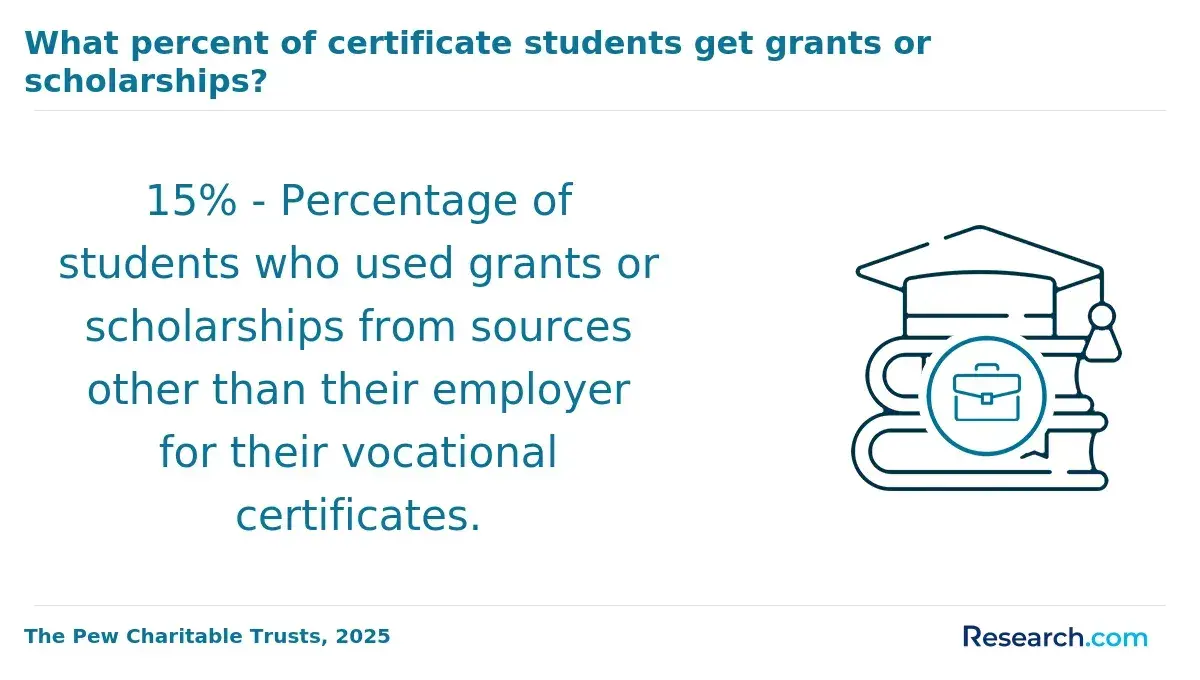
Financial aid can make an already affordable online associate degree much cheaper. For the 2024-25 award year, the maximum Federal Pell Grant was $7,395, which means eligible low-income students at many public two-year colleges may cover a large share of tuition and fees without borrowing. The exact award depends on FAFSA results, enrollment intensity, school cost of attendance, and remaining eligibility.
Students should check aid in this order because grants and tuition assistance are usually preferable to loans:
- Submit the FAFSA and list every school under serious consideration.
- Ask each college for a net price estimate based on online enrollment and residency status.
- Prioritize Pell Grants, state grants, institutional grants, promise programs, and need-based scholarships.
- Check employer tuition assistance, union benefits, military education benefits, or workforce-development funding if applicable.
- Use federal student loans cautiously and only after confirming the degree plan, transfer value, and monthly repayment implications.
Students should also ask whether aid covers part-time enrollment, summer courses, short accelerated sessions, and repeated classes. A program that looks affordable can become difficult to finance if the student takes too few credits to qualify for aid or must pay out of pocket for noncredit prerequisites.
For students who eventually want advanced helping-profession roles, long-term financing matters as much as the associate degree price. Looking ahead to graduate options, including DSW programs, can help students avoid overborrowing early in the pathway.
Accreditation is one of the most important value checks for any cheap online associate degree. Students should look for institutional accreditation from an agency recognized by the U.S. Department of Education or the Council for Higher Education Accreditation. Without recognized accreditation, students may have trouble receiving federal aid, transferring credits, qualifying for employer tuition benefits, or using the degree for further education.
Program quality also matters because liberal arts degrees rely on broad academic skills. A strong online program should teach college writing, quantitative reasoning, information literacy, oral communication, critical thinking, humanities, social sciences, natural sciences, and electives that match transfer or career goals.
Before enrolling, students should verify these quality indicators directly with the school:
- Institutional accreditation status and any recent warnings, probation, or show-cause actions.
- Clear degree map showing required general education, electives, and minimum grades.
- Transfer agreements with public universities or common bachelor's completion partners.
- Online student support, including tutoring, library access, advising, disability services, and technical help.
- Transparent information about tuition, fees, refund deadlines, withdrawal policies, and satisfactory academic progress rules.
A red flag is any school that emphasizes speed and low tuition but does not clearly explain accreditation, credit transfer, or total program requirements. Another warning sign is a vague promise that the degree will lead to high-paying jobs without identifying the additional skills, experience, certifications, or degrees those jobs may require.
The most flexible online liberal arts associate programs offer asynchronous courses, multiple start dates, part-time degree maps, summer enrollment, transfer-credit review, and academic advising that works for online students. Flexibility matters because many associate degree students work while studying, and an affordable program loses value if course scheduling makes completion unrealistic.
Students comparing flexible and accelerated options should look beyond the phrase "fully online." The following features affect whether the degree can actually be completed on time:
- Asynchronous coursework that does not require live attendance at fixed times.
- Eight-week or shorter sessions for students who can handle compressed assignments.
- Multiple annual start dates rather than fall-only admission.
- Online placement testing, orientation, advising, tutoring, and library access.
- Generous transfer-credit policies for prior accredited college coursework.
- Credit for prior learning, military training, CLEP, DSST, AP, or industry credentials where accepted.
Accelerated completion can improve financial value when it helps students graduate sooner and move into work or transfer. However, it can hurt ROI if the student withdraws, repeats courses, or loses financial aid eligibility because the pace is too intense.
The best candidates for accelerated online study are students with strong reading and writing skills, reliable internet access, predictable weekly study time, and previous success in college-level coursework. Students returning after a long academic break may be better served by a standard part-time schedule at first, then accelerating after the first successful term.
Yes, an online liberal arts associate degree can support career advancement or bachelor's transfer, but the pathway must be planned. For career advancement, the degree can help workers qualify for roles that require some college, demonstrate communication and problem-solving ability, or meet internal promotion requirements. For transfer, the degree can satisfy lower-division general education requirements, reducing the number of credits needed later.
The strongest transfer-oriented degrees are usually AA or AS programs aligned with statewide articulation agreements. AAS programs can be valuable for employment, but their technical credits may not transfer as cleanly into bachelor's programs. Students who want both employment value and transfer value should ask whether an AAS has a bachelor's completion pathway before enrolling.
Students should choose an associate degree instead of going directly into a bachelor's program when it lowers total cost, allows academic exploration, provides a manageable reentry point, or offers local transfer guarantees. They should consider going directly into a bachelor's program when they already know their major, have strong aid at a four-year school, or need prerequisites that are not available in the associate program.
For students considering advanced clinical, counseling, leadership, or academic careers, the associate degree should be viewed as the first step in a longer ladder. Someone mapping a counseling pathway, for example, may eventually compare bachelor's, master's, and doctoral options, such as the cheapest online PhD in counseling, to understand how early transfer choices affect future cost.
The main transfer mistake is assuming that "transferable" means "applies to my major." A course may transfer as elective credit but fail to satisfy a bachelor's requirement, forcing the student to pay for extra credits later.
How Should Students Choose the Cheapest Online Liberal Arts Associate Degree for Their Career Goals?
Students should choose the cheapest online liberal arts associate degree by matching cost, timeline, transfer value, and career purpose. The right program is the one that helps the student finish with the fewest unnecessary credits and the clearest next step, not simply the one with the lowest tuition line.
Use this decision sequence to compare programs in a practical way:
- Define the primary goal: immediate employment, promotion, career change, bachelor's transfer, or academic exploration.
- Choose the degree type: AA for broad transfer, AS for math or science-heavy transfer, or AAS only when the applied career pathway is clear.
- Calculate total program cost using required credits, online tuition, mandatory fees, books, and expected transfer credits.
- Verify accreditation and federal aid eligibility before submitting deposits or enrolling.
- Check transfer agreements with the exact bachelor's institutions and majors under consideration.
- Compare local job postings to see whether target roles accept an associate degree or require additional credentials.
- Ask whether career services, tutoring, advising, and technology support are available fully online.
- Review course availability to make sure required classes fit the intended graduation timeline.
Students should avoid choosing a cheap online liberal arts associate degree based mainly on rankings, advertisements, or claims about high salaries. A better approach is to request a degree plan, a written transfer-credit review, a net price estimate, and examples of career-relevant electives before committing.
The final choice should reflect the student's next credential. If the goal is a helping profession, mental health, or social service leadership role, a low-cost associate degree may be a smart first step only if it transfers efficiently into the bachelor's and graduate programs required for the role. Students comparing long-term counseling routes can also review related graduate options after confirming the associate pathway.
Other Things You Should Know About Liberal Arts
No, but it needs a purpose. Liberal arts is strongest when students use it for transfer, promotion, or a flexible foundation while adding electives in business, technology, legal studies, communication, or social sciences.
Employers are more likely to value the degree when it comes from an accredited college and the student can show relevant skills. The online format is usually less important than accreditation, coursework, experience, and fit for the job.
Many are fully online, but some courses may require proctored exams, placement testing, internships, labs, or in-person services depending on the college. Students should confirm requirements before enrolling.
The most useful skills are writing, research, communication, spreadsheet use, digital collaboration, basic data literacy, presentation, problem-solving, and professional documentation. These skills help the degree translate into work or transfer value.
- What Can You Do With a Liberal Arts Degree? | University of Phoenix https://www.phoenix.edu/articles/liberal-arts/what-can-you-do-with-a-liberal-arts-degree.html
- Liberal Arts Grads Are Supposedly Well-Rounded, But How's Their Pay? https://www.reveliolabs.com/news/social/liberal-arts-grads-are-supposedly-well-rounded-but-how-is-their-pay
- What the Numbers Tell Us: Re-Engineering the Liberal Arts Degree – A Baseline for the New Economy | UNBOUND https://unbound.upcea.edu/research-and-policy/re-engineering-the-liberal-arts-degree-a-baseline-for-the-new-economy/
- Career earnings by college major - The Hamilton Project https://www.hamiltonproject.org/data/career-earnings-by-college-major/
- The promising career prospects of (some) liberal arts graduates https://fordhaminstitute.org/national/commentary/promising-career-prospects-some-liberal-arts-graduates
- College Graduation Rates and How ACE Compares | ACE Blog https://ace.edu/blog/college-graduation-rates-and-how-ace-compares/
- Watch a 1-Minute Overview https://www.eastern.edu/undergraduate-lifeflex
- Affordable Accredited Online Colleges https://www.onlineu.com/online-schools/low-tuition
- Don’t knock the economic value of majoring in the liberal arts | Brookings https://www.brookings.edu/articles/dont-knock-the-economic-value-of-majoring-in-the-liberal-arts/
- Measuring the Economic Value of a Liberal Education - Ithaka S+R https://sr.ithaka.org/publications/measuring-the-economic-value-of-a-liberal-education/


