2027 Cheapest Online Early Childhood Development Associate Degree Programs That Pay Well: Tuition, Duration, and Career Outcomes

Co-Founder and Chief Data Scientist
Choosing an online early childhood development associate degree is really a cost-versus-career decision. Public two-year colleges charged an average in-district tuition and fee price of about $4,050 for the 2024-25 academic year, according to College Board data, making associate programs one of the lowest-cost college pathways.
This guide is for future preschool teachers, childcare workers, paraprofessionals, and transfer students who want affordable training without limiting future options. You will learn how tuition, completion time, accreditation, transferability, and salary potential work together so you can choose a program with practical value.
Key Things You Should Know
- The cheapest online early childhood development associate degrees are usually public community or technical college programs, with low in-state tuition often producing the best short-term ROI when credits transfer cleanly.
- According to BLS May 2024 wage data, higher-paying related roles include preschool and childcare center directors at a median salary of $56,220, while preschool teachers had a median salary of $37,120.
- A low advertised tuition price is not enough; students should compare total credits, fees, fieldwork requirements, accreditation, state credential rules, and whether the degree is AAS career-focused or AA/AS transfer-focused.
Which Are the Cheapest Online Early Childhood Development Associate Degree Programs That Lead to Well-Paying Careers?
The cheapest online early childhood development associate degree programs that can lead to well-paying careers are usually regionally accredited public colleges with low per-credit tuition, strong field-experience support, and transfer agreements. In this field, "well-paying" is relative: an associate degree may qualify graduates for preschool, childcare, Head Start, teacher assistant, and family services roles, while the highest earnings often require experience, state credentials, director qualifications, or a bachelor's degree.
The table below highlights affordable online or substantially online associate programs commonly designed for early childhood education, early childhood development, or early childhood care and education. Tuition estimates are based on published tuition structures and typical 60- to 67-credit associate requirements; students should verify current tuition, fees, residency rules, and online-course charges before enrolling.
| School | Online Associate Program | Typical Credits | Estimated Tuition Basis | Best Fit | Career Value Notes |
| Fayetteville Technical Community College | AAS in Early Childhood Education | About 66 | Low North Carolina community college resident tuition | Students seeking a very low-cost career-focused degree | Useful for childcare, preschool, and assistant teacher roles; check transfer agreements if a bachelor's degree is planned |
| Stanly Community College | AAS in Early Childhood Education | About 65 | Low North Carolina community college resident tuition | Online learners who want affordability and transfer options | Can support work in licensed childcare and preschool settings; local credential rules matter |
| Haywood Community College | AAS in Early Childhood Education | About 65 | Low North Carolina community college resident tuition | Students balancing online coursework with field experiences | Good value if placements can be completed near the student's home |
| Albany Technical College | AAS in Early Childhood Care and Education | About 60 | Georgia technical college per-credit tuition | Students who want a workforce-oriented technical college pathway | Often aligns with childcare and preschool employment preparation; confirm practicum expectations |
| Central Georgia Technical College | AAS in Early Childhood Care and Education | About 60 | Georgia technical college per-credit tuition | Budget-focused learners in or near Georgia | Practical option for early care settings, assistant teaching, and credential stacking |
| Southern Regional Technical College | AAS in Early Childhood Care and Education | About 60 | Georgia technical college per-credit tuition | Students seeking an applied degree with online flexibility | Career-focused curriculum may be stronger for immediate employment than transfer unless agreements are confirmed |
| Northcentral Technical College | Associate Degree in Early Childhood Education | About 61 | Wisconsin technical college tuition structure | Students who want an online technical college model | May appeal to working childcare employees seeking formal credentials and advancement |
| Casper College | Early Childhood Education Associate Pathway | About 60 | Wyoming community college tuition structure | Students comparing low public-college tuition and transfer pathways | Potentially useful for students planning to continue into teacher preparation |
The strongest low-cost programs are not always the absolute cheapest. A slightly higher-tuition program can be a better deal if it accepts prior credits, has fewer hidden fees, includes required fieldwork support, and transfers more smoothly into a bachelor's degree.
Students should also compare degree types carefully. An AAS is usually designed for immediate employment, while an AA or AS is often better for transfer. If your goal is to become a licensed public school teacher, a transfer-oriented associate degree may offer more long-term value than the lowest-cost applied option.
How Much Does an Online Early Childhood Development Associate Degree Cost?
An online early childhood development associate degree typically costs the least at a public community college where the student qualifies for in-district or in-state tuition. The College Board's 2024-25 tuition data shows that public two-year colleges remain much less expensive than four-year institutions, but online students still need to calculate the full degree cost rather than only the posted tuition rate.
The table below shows the main cost categories students should compare. This matters because two programs with similar tuition can have very different total prices after fees, books, background checks, fieldwork costs, and graduation charges are included.
| Cost Category | What It Usually Includes | Why It Affects Affordability |
| Tuition | Per-credit cost multiplied by required credits | This is the largest direct cost and should be calculated for the full degree, not one semester |
| Online or technology fees | Distance-learning, platform, or course-delivery charges | Online programs are not automatically cheaper if fees are high |
| Books and supplies | Textbooks, digital materials, classroom supplies, and observation tools | Some education courses require specialized materials beyond standard books |
| Fieldwork expenses | Transportation, background checks, health screenings, and placement documentation | Even online programs may require in-person observation or practicum hours |
| Credential or exam costs | State childcare credentials, CPR/first aid, or related assessments | These may be necessary for employment even if they are not part of tuition |
| Graduation and transcript fees | Application, graduation, records, or transfer transcript charges | Small fees can add up, especially for students transferring credits |
To estimate your real cost, multiply the required credits by the tuition rate that applies to your residency status, then add mandatory fees and expected out-of-pocket expenses. If a program charges $100 per credit for 60 credits, tuition alone would be $6,000, but that figure still excludes books, technology charges, and fieldwork-related costs.
A common mistake is assuming the lowest per-credit tuition is automatically the lowest total cost. A 67-credit program with added online fees can cost more than a 60-credit program with a slightly higher tuition rate, especially if it does not accept your previous college credits or CDA-related credit.
How Long Does It Take to Complete an Online Early Childhood Development Associate Degree?
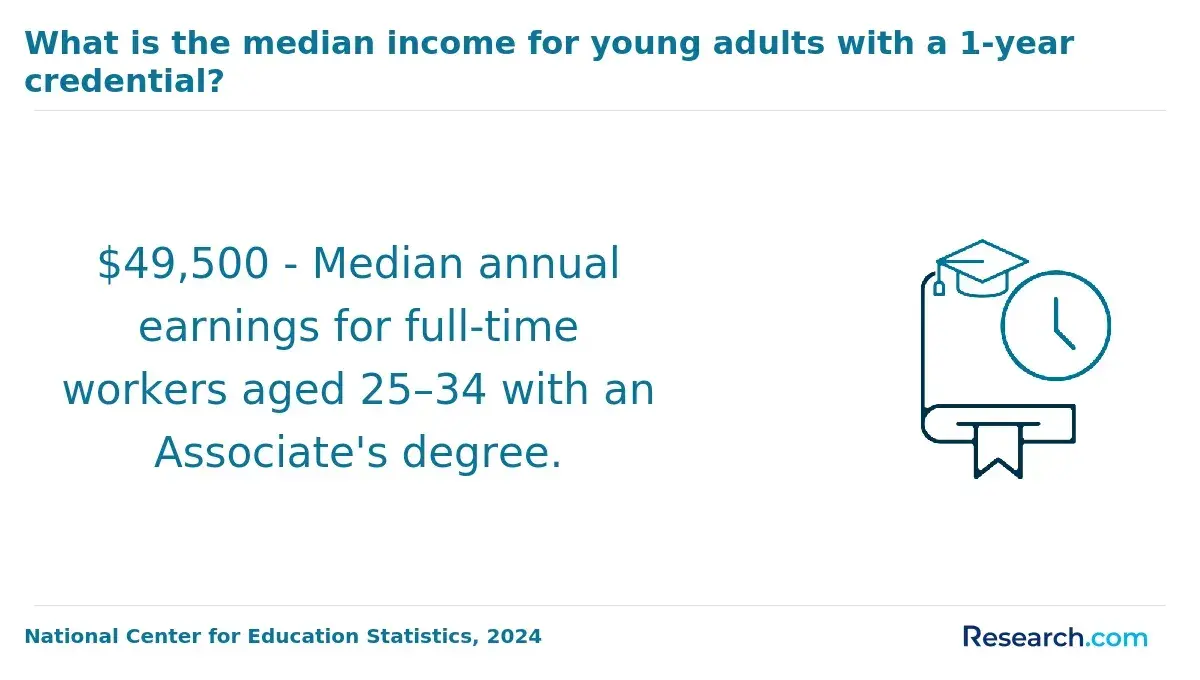
Most online early childhood development associate degrees require about 60 to 67 credits and are designed to take two academic years of full-time study. Part-time students often take three years or longer, especially if they are working in childcare while completing courses and fieldwork.
The table below compares common completion timelines. Duration affects ROI because a shorter program may allow faster entry into paid roles, while a slower part-time schedule may reduce borrowing and make it easier to keep working.
| Enrollment Pace | Typical Course Load | Common Completion Time | Best For | ROI Consideration |
| Full-time | About 12 to 15 credits per term | About two years | Students who can manage a heavier academic schedule | May lead to faster workforce entry or transfer but can be harder for working adults |
| Part-time | About 6 to 9 credits per term | About three to four years | Working childcare employees, parents, and adult learners | May reduce financial pressure but delays completion and potential advancement |
| Accelerated or year-round | Courses in fall, spring, and summer | Potentially under two years if credits are accepted | Students with transfer credit, CDA credit, or strong time availability | Can improve ROI if total tuition and fees do not increase |
Some programs offer eight-week online courses, summer terms, or credit for prior learning. These formats can shorten the timeline, but students should avoid overloading themselves if they also need to complete supervised field experiences in childcare or preschool settings.
Before choosing a fast option, ask whether courses are offered every term. A program can look accelerated on paper but still take longer if required early childhood courses are only available once a year.
The highest-paying careers connected to an online early childhood development associate degree usually involve supervision, specialized services, or roles that become more valuable after experience and additional credentials. BLS May 2024 data places the median salary for preschool and childcare center directors at $56,220, making it one of the stronger earnings targets in this education segment, though many director roles require experience and may require state-specific administrator qualifications.
The table below summarizes realistic career options associated with early childhood development training. It separates roles that may be accessible with an associate degree from those that commonly require additional education, certification, or experience.
| Career Path | Median Salary Context | Associate Degree Fit | Additional Requirements to Check |
| Preschool and childcare center director | BLS May 2024 median salary: $56,220 | Possible long-term path after experience | State director credential, experience, licensing rules, and sometimes a bachelor's degree |
| Preschool teacher | BLS May 2024 median salary: $37,120 | Common associate-level target in many private childcare and preschool settings | State rules, employer requirements, CDA, or bachelor's degree for some public programs |
| Teacher assistant or paraprofessional | BLS May 2024 median salary: $35,240 for teacher assistants | Often accessible with postsecondary coursework or an associate degree | Public school requirements, background checks, and local district standards |
| Childcare worker | BLS May 2024 median salary: $30,370 | Accessible, but wages vary widely by setting and region | State childcare training, CPR/first aid, background check, and experience |
| Family support or early intervention assistant | Pay varies by employer and service model | Possible with an associate degree, especially in community agencies | Employer-specific training, documentation skills, and supervised experience |
Students aiming for stronger long-term earnings should think beyond the first job title. An associate degree can be a practical first step, but leadership, public school teaching, child development specialist roles, and clinical-adjacent positions often require continued education, such as bachelor's programs or child psychology master's programs.
The safest salary comparison is local, not national. Early childhood wages vary significantly by state, employer type, public funding, union presence, and whether the job is in a private childcare center, Head Start program, school district, nonprofit, or government-funded service.
The best ROI usually comes from programs that combine low total cost, fast completion, recognized accreditation, transfer value, and access to local jobs. The cheapest program by tuition alone may not produce the best return if it delays graduation, lacks transfer agreements, or does not meet state childcare credential expectations.
A practical ROI comparison should include both immediate employment value and long-term education value. Use the table below to compare degree types before deciding whether to prioritize low cost, transfer, or direct workforce entry.
| Degree Type | Primary Purpose | Best ROI Scenario | Possible Limitation |
| Associate of Applied Science | Direct employment in childcare, preschool, and early learning settings | Best for students who want a job-focused credential at the lowest practical cost | May not transfer as smoothly into a bachelor's program unless agreements are in place |
| Associate of Arts | Transfer into a bachelor's degree, often with more general education | Best for future licensed teachers or students planning graduate study later | May include less applied childcare training than an AAS |
| Associate of Science | Transfer pathway with more science, development, or research-oriented coursework | Best for students interested in child development, psychology, or education research pathways | Immediate job preparation depends on practicum and state credential alignment |
For a simple tuition-to-earnings check, compare total program cost with the median salary range for the roles you can realistically enter in your state. A low-cost associate degree may be worth it if it helps you qualify for preschool teacher, paraprofessional, or center advancement roles without taking on large debt.
Students who already know they want education leadership, curriculum design, or policy roles should view the associate degree as the first step in a longer academic ladder. If that ladder eventually includes doctoral work, comparing future options such as cheapest online EdD programs can help students understand how early transfer choices may affect long-term cost.
A strong ROI program usually has three characteristics: the tuition is low enough to avoid excessive debt, the credits apply toward a higher credential, and the curriculum matches the jobs available in the student's local labor market.
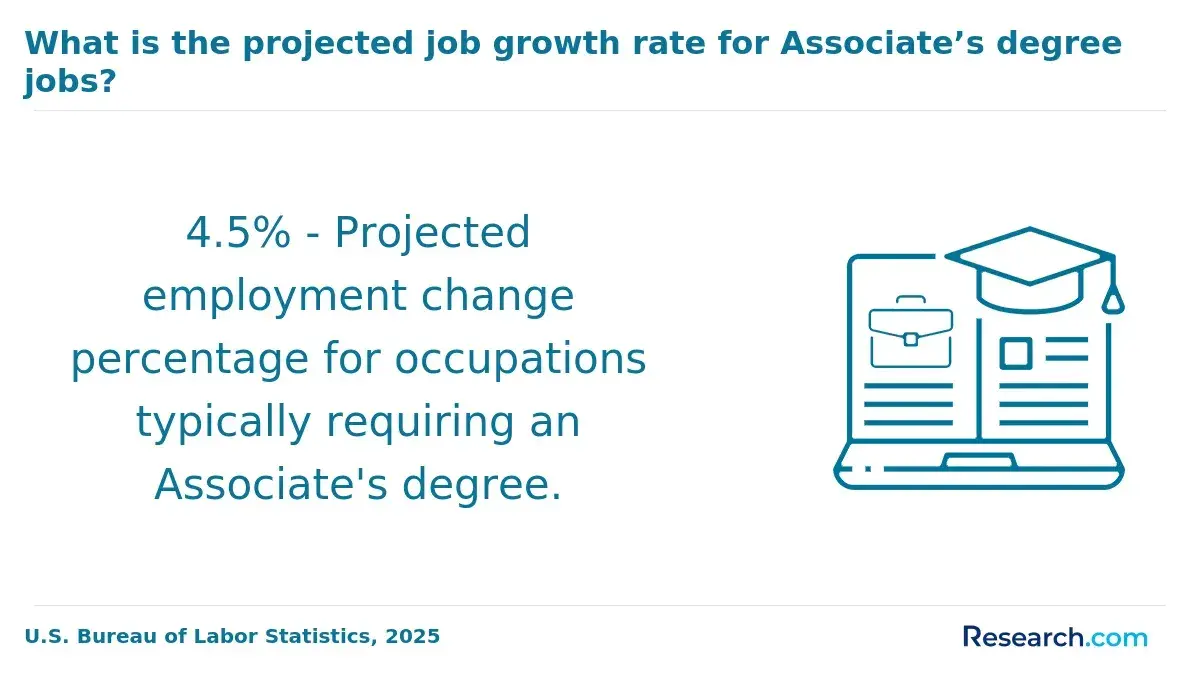
Financial aid can make an already affordable online associate degree much cheaper, especially at public community colleges. The maximum Federal Pell Grant for the 2024-25 award year is $7,395, which means eligible low-income students may be able to cover a large share of tuition at many two-year colleges.
Students should look beyond loans first. The most useful funding sources for early childhood development students often come from federal aid, state workforce programs, childcare employer support, and scholarships tied to teacher preparation or early learning.
- File the FAFSA as early as possible to determine eligibility for Pell Grants, state grants, work-study, and federal loans.
- Ask the college whether early childhood education students qualify for state-funded childcare workforce scholarships, TEACH-style scholarship programs, or local education grants.
- Check whether your employer reimburses tuition, pays for CDA-related coursework, or offers raises for completing an associate degree.
- Ask whether prior learning, CDA credentials, military training, or previous college credits can reduce the number of credits you must pay for.
- Compare payment plans before borrowing, especially if tuition is low enough to pay term by term.
Borrowing is not automatically bad, but it should be limited and intentional. Because many entry-level early childhood roles have modest wages, students should be cautious about using loans for a program that does not clearly improve their employment, transfer, or advancement prospects.
Accreditation affects whether your degree is recognized by employers, accepted by transfer colleges, and eligible for federal financial aid. For most students, the first requirement is institutional accreditation from an agency recognized by the U.S. Department of Education or CHEA; without it, credits may not transfer and federal aid may not be available.
Program quality also matters because early childhood development is a hands-on field. A strong online program should teach child development, observation and assessment, family engagement, inclusive classrooms, health and safety, curriculum planning, and ethical practice while also helping students complete supervised field experiences.
Before applying, students should verify quality signals that directly affect career value. These checks help avoid programs that look inexpensive but create problems later.
- Confirm institutional accreditation on the college's website and through recognized accreditation directories.
- Ask whether the program aligns with state childcare licensing, preschool teacher, or director credential requirements.
- Review fieldwork expectations, including whether placements can be completed near your home.
- Check whether credits transfer into public universities or bachelor's programs in early childhood education, elementary education, child development, or related fields.
- Ask for graduation, transfer, licensure-related, or employment outcome information if the school publishes it.
A red flag is a school that markets fast completion and low tuition but is vague about accreditation, practicum requirements, or transfer. In early childhood education, a credential is valuable only if employers, licensing agencies, and transfer institutions recognize it.
Flexible and accelerated online associate degree programs are best for students who already work in childcare, have prior college credit, or need to study around family responsibilities. Current online education trends favor shorter course blocks, asynchronous learning, and credit for prior learning, but flexibility should not come at the expense of practicum quality or transfer value.
Programs with the strongest flexibility usually combine online coursework with local field placements. That structure lets students complete academic work remotely while still gaining supervised experience with children, which is important for employment and state credentialing.
When comparing flexible options, focus on features that actually shorten time or reduce cost. Marketing terms such as "online" or "accelerated" are less useful than specific policies.
- Eight-week or compressed courses that are offered regularly, not only once a year.
- Summer enrollment that allows students to keep progressing between academic years.
- Acceptance of transfer credits from accredited colleges.
- Credit for CDA credentials, documented work experience, military training, or prior learning when available.
- Local practicum placement options for students outside the college's immediate service area.
- Part-time sequencing that does not delay required courses for multiple semesters.
Students considering long-term education leadership may eventually compare accelerated graduate or doctoral pathways, including 1 year EdD programs online. At the associate level, however, the priority should be completing a recognized, transferable, affordable credential without rushing through essential classroom experience.
An online early childhood development associate degree can lead to career advancement, but its long-term value is strongest when it connects to a bachelor's degree. Many public school teaching roles require a bachelor's degree and state licensure, while associate-level credentials are more common in private childcare, preschool, Head Start support roles, teacher assistant positions, and childcare center advancement.
Students should ask colleges for written transfer information before enrolling. A cheap AAS may be excellent for immediate employment but less efficient for transfer if too many technical credits do not count toward a bachelor's degree.
The table below shows common next-step pathways. This helps students decide whether they should choose a workforce-oriented associate degree or a transfer-oriented degree from the start.
| Goal After Associate Degree | Best Associate Pathway | Why It Matters |
| Work in childcare or preschool quickly | AAS in Early Childhood Education or Early Childhood Care and Education | Applied coursework and field experiences may align well with immediate employment |
| Become a licensed public school teacher | AA or AS transfer pathway tied to a bachelor's teacher-preparation program | Licensure usually requires a bachelor's degree and state-approved preparation |
| Move into center leadership | AAS plus state director credential, experience, or later bachelor's degree | Director roles often require both education and documented experience |
| Enter curriculum, training, or education technology later | Transfer-focused associate followed by bachelor's and graduate study | Advanced roles may require broader education, design, and leadership preparation |
Some early childhood professionals later move into curriculum development, teacher training, or learning design. Students interested in that direction may eventually compare programs such as the best online instructional design master's programs, but they should first protect transfer credits at the associate stage.
Students should avoid assuming an associate degree qualifies them for every early childhood job. Requirements vary by state, public versus private employer, age group served, funding source, and whether the role includes lead teaching, supervision, or special education responsibilities.
How Should Students Choose the Cheapest Online Early Childhood Development Associate Degree for Their Career Goals?
Students should choose the cheapest online early childhood development associate degree by matching price to career goal, not by ranking tuition alone. The right program is the one that helps you qualify for realistic jobs, keeps debt low, supports required fieldwork, and preserves the option to transfer if your goals change.
A practical selection process can prevent costly mistakes. Use these steps before committing to a program.
- Identify your target role first, such as childcare worker, preschool teacher, paraprofessional, center director, or transfer student preparing for licensure.
- Check your state's requirements for that role, including education level, background checks, experience, credentials, and training hours.
- Calculate total program cost by adding tuition, mandatory fees, books, online charges, fieldwork expenses, and graduation costs.
- Compare completion time based on your realistic course load, not the fastest advertised timeline.
- Verify institutional accreditation and ask whether the program has state approval, articulation agreements, or transfer pathways.
- Ask how fieldwork is arranged for online students and whether you can complete placements near your home.
- Compare local wages for your target job so you understand whether the degree cost is reasonable for your market.
- Request written information about transfer credits if you may pursue a bachelor's degree later.
The most common red flags are low tuition with high fees, unclear accreditation, limited transferability, no support for field placements, and marketing that implies high-paying outcomes without explaining additional credentials. Students should also be careful not to confuse national median wages with entry-level pay in their own area.
A cheap online associate degree is worth it when it is accredited, affordable after aid, realistically completable, recognized by local employers, and connected to your next step. It is less likely to be worth it if it leaves you with credits that do not transfer, debt that is high relative to expected wages, or a credential that does not meet state or employer requirements.
Other Things You Should Know About Early Childhood Development
They overlap, but they are not always identical. Early childhood development focuses more on how young children grow physically, socially, emotionally, and cognitively, while early childhood education usually emphasizes teaching methods, curriculum, and classroom practice.
Many do. Even when coursework is online, programs often require observation, practicum, or field experience in an approved childcare, preschool, or early learning setting.
Yes, many students do, especially because online programs often offer asynchronous courses. Working in childcare while studying can also make assignments and field experiences more relevant, but students should confirm whether their workplace can count as a practicum site.
Patience, communication, reliability, cultural awareness, observation skills, and comfort working with families are important. Students also need professionalism because early childhood roles often involve safety, mandated reporting, documentation, and close collaboration with caregivers.
- Early Childhood Scholarships https://www.nmececd.org/scholarships/
- The Highest Paying Early Childhood Education Jobs | Arizona Early Childhood https://azearlychildhood.org/resources/articles/the-highest-paying-early-childhood-education-jobs/
- Child Development Scholarships in Missouri - Child Care Aware https://mochildcareaware.org/blog/uncategorized/child-development-scholarships-missouri/
- Best programs to become a childcare worker https://clema.ai/occupations/childcare-workers
- AAS — Early Childhood Education Careers https://www.ntcmn.edu/career-paths/child-care/early-childhood-education/degrees-credentials/aas-early-childhood-education-careers/
- Online Associate's Degree in Early Childhood Studies | Aspen University https://www.aspen.edu/education/associates-early-childhood-studies/
- How Long is School for Early Childhood Education https://benjaminprep.com/our-blog/how-long-is-school-for-early-childhood-education
- Texas Early Childhood Scholarships https://public.tecpds.org/texas-early-childhood-scholarships/
- Everything You Need to Know About Earning a Degree in Early Childhood Education https://mybrightwheel.com/blog/degree-in-early-childhood-education
- Explore Online Early Childhood Education (ECE) Associate Degree Programs https://www.onlinecolleges.me/education-degrees/associate/early-childhood-education/