2027 Cheapest Online Aviation Management Associate Degree Programs That Pay Well: Tuition, Duration, and Career Outcomes

Co-Founder and Chief Data Scientist
Choosing an aviation management associate degree is a cost-versus-career decision, not just a search for the lowest tuition. The U. S. Bureau of Labor Statistics reported a $102,010 median wage for transportation, storage, and distribution managers in 2024, but many airport and airline roles require experience beyond the degree.
This guide is for students who want an affordable online path into aviation operations, airport administration, logistics, or transfer-ready business programs. You will learn how to compare tuition, completion time, accreditation, financial aid, and realistic career outcomes before enrolling.
Key Things You Should Know
- The lowest-cost online aviation management associate options are usually public colleges with resident tuition near $105 to $120 per credit, while national private aviation universities may exceed $485 per credit before fees.
- A 60-credit associate degree can often be finished in two years full time, but part-time students may take three to four years; longer timelines can reduce ROI even when tuition is low.
- The associate degree is strongest for entry-level airport operations, airline support, logistics, and transfer pathways; higher-paying management roles commonly require experience, a bachelor's degree, or industry credentials.
Which Are the Cheapest Online Aviation Management Associate Degree Programs That Lead to Well-Paying Careers?
The cheapest online aviation management associate degree programs are typically offered by public colleges that charge low lower-division tuition and allow students to complete general education and aviation administration courses online. The best value is not always the lowest sticker price, because aviation programs vary in transferability, advising, internship access, industry partnerships, and whether the curriculum is designed for airport operations, airline administration, logistics, or transfer to a bachelor's degree.
The table below summarizes affordable U.S. programs that are commonly considered by online or distance learners interested in aviation administration, aviation business, airport operations, or aviation management. Tuition changes frequently, and online students should verify whether resident, nonresident, distance-learning, technology, and course-specific fees apply.
| School | Online aviation-related associate option | Approximate tuition basis | Estimated tuition for 60 credits | Best fit |
| Florida State College at Jacksonville | Associate in Science in Aviation Administration | Public lower-division tuition, with lower resident rates | About $6,300 for Florida residents before fees | Students seeking a low-cost aviation administration foundation with transfer or workforce options |
| Polk State College | Associate in Science in Aerospace Administration | Public college tuition, with lower resident rates | About $6,700 for Florida residents before fees | Students interested in airport, aerospace, and aviation operations support roles |
| Broward College | Associate in Science in Aviation Operations Management | Public lower-division tuition, with lower resident rates | About $7,100 for Florida residents before fees | Students targeting airline, airport, dispatch support, or aviation operations environments |
| Miami Dade College | Associate in Science in Aviation Administration | Public college tuition, with lower resident rates | About $7,100 for Florida residents before fees | Students in large aviation markets who want an affordable credential with local employer relevance |
| Embry-Riddle Aeronautical University Worldwide | Associate of Science in Aviation Business Administration | National private aviation university online tuition | About $29,100 before fees at $485 per credit | Students who value a specialized aviation brand, fully online delivery, and bachelor's continuation pathways |
These examples show why students should compare both resident and nonresident tuition. A public program can be very inexpensive for in-state students but much less affordable for out-of-state online learners. A higher-priced private or national aviation university may still be worth considering if it offers stronger scheduling flexibility, military benefits, transfer alignment, or a clear path into a bachelor's program.
For career value, look for courses in airport operations, aviation safety, aviation law, logistics, management, accounting, and business communication. Employers in aviation increasingly use digital operations platforms, safety management systems, scheduling tools, and data dashboards, so a cheap program that includes applied technology and operations coursework may have stronger practical value than one focused only on general survey classes.
How Much Does an Online Aviation Management Associate Degree Cost?
An online aviation management associate degree usually requires about 60 credits. At a low-cost public college, tuition alone may fall near $6,000 to $8,000 for in-state students, while nonresident or private online tuition can push the tuition-only total above $25,000. The College Board reported average published tuition and fees of $4,050 for public two-year in-district students in 2024-25, but aviation programs can cost more because of technology fees, specialized courses, and program fees.
The table below helps translate per-credit tuition into a realistic tuition-only estimate. It does not include books, technology fees, exam fees, graduation fees, transportation for any in-person requirements, or optional industry certifications.
| Per-credit tuition | 60-credit tuition estimate | What it usually means |
| $105 | $6,300 | Very low-cost public resident rate |
| $120 | $7,200 | Common affordable public college resident range |
| $300 | $18,000 | Moderate online or nonresident rate |
| $485 | $29,100 | Specialized private or national aviation university online rate |
To compare programs accurately, ask each school for the full cost of attendance for online students, not just tuition. The cheapest advertised tuition can become less competitive if the program adds high online-course fees, requires more credits than expected, or accepts few transfer credits.
Students should review these cost items before applying, because they directly affect affordability and borrowing needs:
- Total credits required for the degree, including any aviation-specific prerequisites or required electives.
- Online learning, technology, lab, testing, transcript, and graduation fees.
- Textbooks, digital access codes, proctoring fees, and required software.
- Residency rules that determine whether online students qualify for in-state tuition.
- Transfer-credit limits, because repeating courses increases both cost and time.
How Long Does It Take to Complete an Online Aviation Management Associate Degree?
Most online aviation management associate degrees take two years of full-time study because they are built around 60 credits. Part-time students often finish in three to four years, especially if they work full time or take only one to two courses per term. Duration matters for ROI because a lower-tuition program can become less valuable if slow course availability delays graduation or transfer.
The table below shows how enrollment intensity changes the likely completion timeline. Use it to estimate not only time in school, but also how quickly the credential may help you qualify for advancement, transfer, or entry-level aviation roles.
| Enrollment pattern | Typical credits per term | Estimated completion time | Best for |
| Full time | 12 to 15 credits | About 2 years | Students who can prioritize school and want the fastest path to work or transfer |
| Three-quarter time | 9 credits | About 2.5 to 3 years | Working students who still want steady progress |
| Half time | 6 credits | About 4 years | Students balancing full-time work, caregiving, or military obligations |
| Accelerated terms | Varies by session length | Potentially under 2 years with year-round study | Motivated students with transfer credits or prior college coursework |
Before choosing a program, confirm whether aviation courses are available every term. Some colleges offer general education courses frequently but rotate specialized aviation classes once per year, which can delay completion if you miss a required course.
An associate degree in aviation management can support entry into airport operations, airline administration, air cargo, dispatch support, aviation customer operations, and logistics. However, the highest salaries in aviation management usually come after experience, supervisory responsibility, a bachelor's degree, or specialized credentials. Students should treat national wage data as career context, not as a promise of starting pay.
The table below compares aviation-related career paths that may connect to an associate degree, either directly at the entry level or as part of a longer advancement pathway. BLS 2024 wage data reflects national medians, so local airport size, union rules, shift schedules, and employer type can significantly change actual pay.
| Career path | How the associate degree may help | 2024 median wage context | Important limitation |
| Transportation, storage, and distribution manager | Provides business, logistics, and operations fundamentals for a long-term management pathway | $102,010 | Management jobs usually require experience and often a bachelor's degree |
| Airfield operations specialist | Builds knowledge of airport operations, safety, regulations, and communication | Commonly above many entry-level support roles, with wages varying by airport authority and region | Employers may prefer airport experience, security clearance eligibility, or shift availability |
| Cargo and freight agent | Supports entry into air cargo documentation, routing, customer coordination, and logistics | $50,890 | Advancement often depends on systems skills, reliability, and experience |
| First-line supervisor of transportation workers | Can support promotion after frontline aviation or logistics experience | Higher than many non-supervisory transportation roles | Usually not an immediate first job after graduation |
| Aircraft dispatcher or flight operations support | Provides aviation operations background | Pay varies widely by airline, region, and certification | FAA aircraft dispatcher certification may be required for dispatcher roles |
Students aiming for higher-paying operations leadership roles should view the associate degree as the first step in a stackable plan. Later, a bachelor's degree, supervisory experience, or a graduate option such as an MBA operations management online may be more relevant for senior operations, logistics, or airline management positions.
A common mistake is confusing median wages for experienced workers with entry-level earnings. When estimating ROI, compare tuition with realistic first jobs in your region, then consider how the degree may help you qualify for promotions over time.
The best ROI usually comes from a program that combines low tuition, fast completion, recognized accreditation, strong transfer options, and coursework aligned with real aviation or logistics jobs. The cheapest program is not automatically the best investment if it slows graduation, lacks transfer agreements, or does not match the student's career target.
A simple way to compare ROI is to divide estimated tuition by the median wage context for a realistic target role. This is not a guarantee of earnings, but it helps show whether the education cost is proportionate to the career path.
| Program cost scenario | Target early career direction | ROI interpretation |
| $6,000 to $8,000 tuition-only public resident program | Airport operations support, airline customer operations, cargo, logistics support, transfer to bachelor's | Often strong value if the student finishes on time and uses transfer or local employer connections |
| $15,000 to $20,000 tuition-only online or nonresident program | Broader aviation business or logistics pathway | Can be reasonable if flexibility prevents stop-outs or if transfer credits apply cleanly |
| $25,000 or more tuition-only specialized aviation university | Aviation business pathway with brand recognition or bachelor's continuation | May be worthwhile for some students, but requires closer comparison against expected transfer and career benefits |
For many students, a low-cost aviation associate degree is most valuable when paired with a transfer-friendly business or operations pathway. If you discover that your preferred jobs are broader management, logistics, or administration roles rather than aviation-specific roles, an online business degree may offer more flexible long-term value.
Use the following ROI checklist before enrolling. It helps separate genuine affordability from programs that only appear inexpensive at first glance:
- Calculate tuition for all required credits, then add fees, books, software, and any in-person costs.
- Ask whether aviation courses are offered often enough to finish in your planned timeline.
- Compare the program's curriculum with actual job postings at airports, airlines, cargo firms, and logistics employers in your area.
- Confirm whether credits transfer into a related bachelor's degree without excess electives.
- Check whether the school reports graduation, transfer, placement, or licensure outcomes for the program.
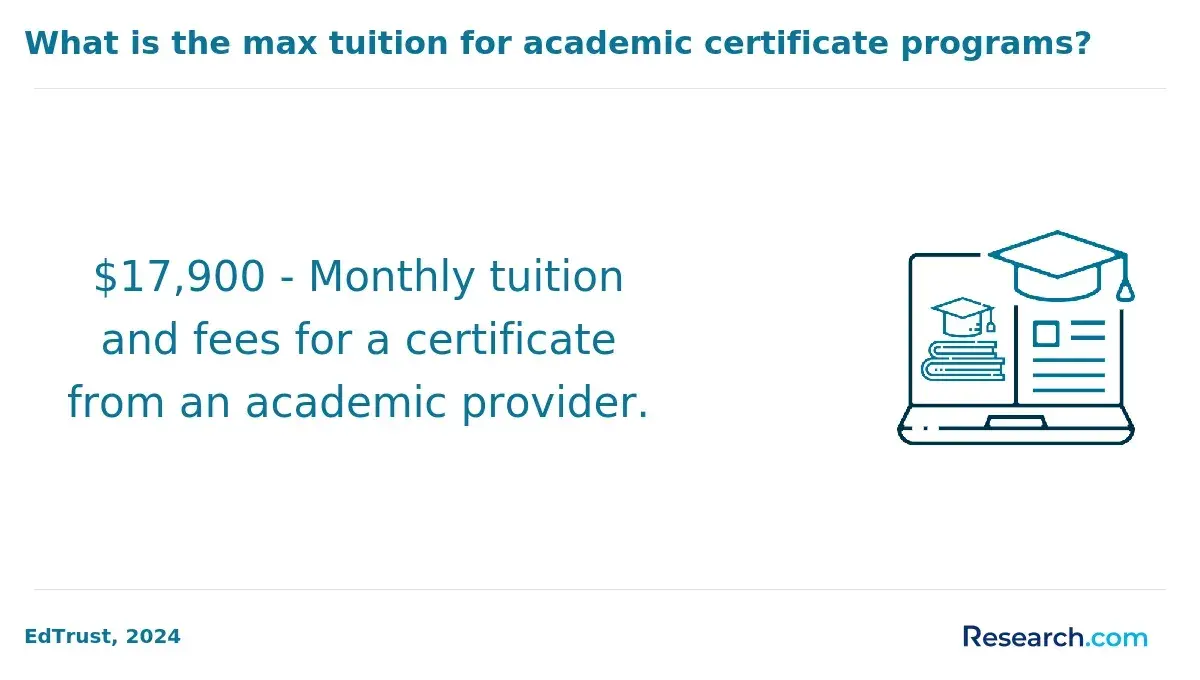
Financial aid can make a low-cost aviation management associate degree substantially more affordable, especially at public colleges. For the 2024-25 award year, the maximum Federal Pell Grant was $7,395, which means some eligible students at low-tuition public colleges may cover a large share of tuition without borrowing. Actual eligibility depends on FAFSA results, enrollment intensity, cost of attendance, and school participation.
Students should look beyond federal loans and compare aid sources that do not need to be repaid first. Aviation students may also find local airport authority scholarships, transportation association awards, workforce grants, and employer tuition assistance.
Prioritize aid in this order to reduce debt:
- Submit the FAFSA early and list every school you are seriously considering.
- Ask each college for a program-level cost estimate and aid package for online aviation management students.
- Search for state grants, community college scholarships, aviation association awards, and airport workforce scholarships.
- Ask your employer about tuition reimbursement, especially if you already work in aviation, logistics, hospitality, transportation, or customer operations.
- Use federal student loans only after grants, scholarships, and payment plans have been considered.
A red flag is any school that pushes borrowing before explaining total cost, transfer credits, completion timelines, and non-loan aid. Affordable programs should be transparent about tuition and fees before you commit.
Accreditation affects whether credits transfer, whether students can access federal financial aid, and whether employers recognize the institution. At minimum, students should choose a school with recognized institutional accreditation. Program-level aviation accreditation or industry alignment can add value, but it is not always required for every airport administration or aviation business role.
Program quality matters because aviation is safety-sensitive and operations-driven. A strong associate degree should teach students how airports, airlines, regulators, safety systems, cargo networks, and customer operations work together. It should also build communication, scheduling, problem-solving, data literacy, and basic management skills.
Use this quality checklist when comparing affordable programs:
- Verify institutional accreditation through the school and recognized accreditation databases.
- Review whether aviation courses cover airport operations, aviation safety, aviation law, transportation systems, logistics, and management.
- Ask whether faculty have aviation, airport, airline, military, logistics, or safety management experience.
- Confirm whether the program includes career advising, internship guidance, transfer advising, or employer connections.
- Check whether the degree is an AA, AS, or AAS, because transfer and workforce goals differ by degree type.
Students should avoid choosing a program only because it is cheap or because the word "aviation" appears in the title. A low-cost degree with weak advising, limited aviation coursework, or poor transfer fit may cost more in the long run if you need extra credits later.
The most flexible online aviation management associate degrees offer asynchronous courses, multiple start dates, year-round terms, transfer-credit evaluation, and advising for working adults. Flexibility has financial value because students who can continue working while studying may reduce borrowing and avoid delaying career progress.
The table below compares common online formats. The best option depends on your work schedule, prior credits, family responsibilities, and whether you plan to transfer.
| Format | How it works | Potential advantage | Potential drawback |
| Asynchronous online | Students complete weekly coursework without fixed class meetings | Strong fit for shift workers and military students | Requires self-discipline and consistent time management |
| Synchronous online | Students attend live virtual class sessions | More interaction with instructors and classmates | Less convenient for aviation or transportation workers with variable schedules |
| Accelerated terms | Courses run in shorter sessions, often 7 to 8 weeks | Can speed completion for focused students | Workload can be intense, especially with full-time employment |
| Hybrid or limited-residency | Most coursework is online, with some campus or site-based requirements | May provide hands-on exposure or local networking | Can add travel, scheduling, and transportation costs |
Before assuming an online program is fully remote, ask whether any exams, orientations, internships, labs, or aviation-specific experiences require travel. Online delivery can be financially attractive, but only if the program's schedule and hidden requirements fit your life.
Yes, an online aviation management associate degree can lead to career advancement or a bachelor's degree, but the pathway depends heavily on the degree type. An Associate of Arts or Associate of Science is often more transfer-oriented, while an Associate of Applied Science is often more workforce-oriented. Some AAS degrees transfer well through formal articulation agreements, but others may leave students with credits that count mostly as electives.
The table below explains how common associate degree types typically function. Students should confirm policies with both the associate-granting college and the intended bachelor's institution.
| Degree type | Typical purpose | Best for | Transfer caution |
| Associate of Arts | Broad general education and transfer preparation | Students planning a bachelor's in business, management, or aviation administration | May include fewer technical aviation courses |
| Associate of Science | Transfer preparation with more technical or applied coursework | Students wanting both aviation context and bachelor's flexibility | Transfer depends on course equivalencies |
| Associate of Applied Science | Career-focused preparation for technical or applied roles | Students seeking entry-level aviation operations or workforce roles quickly | Some credits may not apply fully to a bachelor's degree |
If your long-term goal is operations leadership, airport management, logistics management, or cross-industry project leadership, plan the bachelor's route early. Students comparing aviation management with broader management options may also want to evaluate a project manager bachelor degree if their interests include scheduling, budgets, teams, and operational execution across industries.
Ask transfer questions before your first term, not after graduation. The most important questions are whether the school has articulation agreements, how many credits transfer, which courses satisfy major requirements, and whether a bachelor's program accepts aviation courses as more than electives.
How Should Students Choose the Cheapest Online Aviation Management Associate Degree for Their Career Goals?
Students should choose the cheapest online aviation management associate degree by matching cost, timeline, accreditation, curriculum, transferability, and local career opportunity. The right program for a future airport operations specialist may not be the right program for a student who ultimately wants a bachelor's in business, logistics, or operations management.
Use this step-by-step process to make a practical decision:
- Define your target outcome: immediate aviation employment, promotion, military-to-civilian transition, transfer to a bachelor's degree, or exploration of the aviation field.
- List only accredited schools and remove any program that will not provide a clear total cost estimate.
- Calculate tuition for required credits and add fees, books, technology, travel, and graduation costs.
- Check whether the program's aviation courses match real job postings in your region.
- Ask how many credits will transfer into your preferred bachelor's program and whether an articulation agreement exists.
- Compare completion timelines, including course rotation and accelerated options.
- Choose the lowest-cost program only if it also supports your target career or transfer pathway.
Students should avoid an aviation management associate degree if their target job clearly requires a bachelor's degree from the start, if they are not interested in aviation operations or transportation environments, or if a broader business credential would provide more flexibility. For example, someone focused on budgets, timelines, procurement, and cross-functional teams may find a project management degree online more directly aligned with long-term goals.
The strongest choice is usually the affordable program that helps you finish on time, transfer cleanly if needed, and qualify for realistic aviation or transportation roles in your labor market. Low tuition matters, but it should be weighed alongside career fit, schedule fit, and long-term educational mobility.
Other Things You Should Know About Aviation Management
No. Aviation management is usually focused on airport operations, airline administration, aviation safety, logistics, business, and regulatory topics. Flight experience can be helpful, but it is not required for many aviation administration programs.
No. Pilot training focuses on flight hours, FAA certificates, aircraft systems, and flight operations. Aviation management focuses more on running aviation organizations, coordinating operations, supporting safety systems, managing people, and understanding the business side of aviation.
Sometimes. Internship availability depends on the school, location, employer partnerships, and student schedule. Online students should ask whether internships are optional or required and whether the college helps distance learners find local aviation sites.
Useful skills include communication, scheduling, customer service, safety awareness, regulatory awareness, data literacy, problem-solving, teamwork, and calm decision-making under time pressure. Aviation employers often value reliability and professionalism because operations are time-sensitive and safety-focused.
- College Mentor https://www.collegementor.com/blogs/top-career-options-in-the-aviation-industry
- Little-Known, High-Paying Careers in Aviation Management | Vaughn College https://www.vaughn.edu/blog/little-known-high-paying-careers-in-aviation-management/
- 2025 Most Affordable Online Aviation Degrees https://www.onlineu.com/most-affordable-colleges/aviation-degrees
- Top 10 Career Paths in Aviation Beyond Pilots (And How to Get Started) https://mhcaviation.com/blog/top-10-career-paths-in-aviation-beyond-pilots-and-how-to-get-started
- Private Pilot License Cost in 2026: PPL to ATP Cost Reference https://flightschoolcost.com/aviation-degree-cost/
- What Can You Do With an Aviation Degree? https://calaero.edu/aviation/what-can-you-with-aviation-degree/
- Aviation Management Degree | 5 Top Career Paths & Salaries https://wayman.edu/what-can-you-do-with-an-aviation-management-degree/
- Career Opportunities For Aviation Management 2025 https://yocket.com/blog/career-opportunities-for-aviation-management
- How much does it cost to become a pilot? https://acronaviationacademy.com/usa/pilot-training-cost/
- Pilot Training vs. Aviation Management: Which Career Path Is Better https://skyreachaviation.org/pilot-training-vs-aviation-management-which-career-path-is-better/