2027 Cheapest Accredited Online Retail Management Degree Programs: Tuition, Fees, and Financial Aid

Co-Founder and Chief Data Scientist
The cheapest online retail management degree is not always the one with the lowest advertised tuition. Students also need to compare accreditation, mandatory fees, transfer rules, FAFSA eligibility, and net price after aid. The 2024-25 maximum Federal Pell Grant is $7,395, which can materially reduce costs for eligible undergraduates. This guide is for students comparing accredited online retail management associate and bachelor's programs and wanting a clearer estimate of what they may actually pay. You will learn how to spot genuinely affordable options, avoid hidden costs, and judge value beyond tuition alone.
Key Things You Should Know
- Community and technical college associate programs are often the lowest-cost accredited entry point; some public online retail management associate degrees use resident tuition near $146.20 per credit before course-specific fees.
- Among online bachelor's options with retail management coursework, lower advertised tuition benchmarks include Columbia Southern University at $270 per credit and American Public University at $350 per credit before mandatory school fees and aid adjustments.
- Net price matters more than sticker price: grants, employer tuition benefits, military pricing, scholarships, transfer credits, and prior learning can make a higher-tuition accredited program cheaper than a lower-tuition program with fewer aid options.
What Are the Cheapest Accredited Online Retail Management Degree Programs?
Retail management degrees are less common than general business administration degrees, so the most affordable choices often fall into two groups: online associate degrees in retail management and online bachelor's degrees in business with a retail management major, concentration, or specialization. The table below compares low-cost accredited options using published tuition benchmarks available from recent school catalogs and tuition pages; students should confirm current tuition, fees, and online availability directly with each institution before applying.
| School | Online retail management credential | Accreditation type to verify | Published tuition benchmark | Estimated tuition before aid | Cost note |
| Madison Area Technical College | Retail Management associate degree | Institutional accreditation through the Higher Learning Commission | Wisconsin technical college resident tuition near $146.20 per credit | About $8,772 for 60 credits before fees | Often cheapest for Wisconsin residents; out-of-state tuition and course fees can raise the total. |
| Northcentral Technical College | Retail Management associate degree | Institutional accreditation through the Higher Learning Commission | Wisconsin technical college resident tuition near $146.20 per credit | About $8,772 for 60 credits before fees | Useful for students seeking a lower-cost credential before transferring into a bachelor's program. |
| Lakeshore College | Retail Management associate degree | Institutional accreditation through the Higher Learning Commission | Wisconsin technical college resident tuition near $146.20 per credit | About $8,772 for 60 credits before fees | Confirm whether all required retail courses are online in the term you plan to enroll. |
| Columbia Southern University | B.S. Business Administration with retail management concentration | Institutional accreditation through the Distance Education Accrediting Commission | $270 per undergraduate credit | $32,400 for 120 credits before fees and transfer credits | Strong advertised bachelor's tuition benchmark; verify textbook, technology, and graduation fees. |
| American Public University | B.A. Retail Management | Institutional accreditation through the Higher Learning Commission | $350 per undergraduate credit, with lower military-affiliated pricing available | $42,000 for 120 credits at standard tuition before fees and aid | May be more affordable for military-connected students because tuition grants can lower the per-credit rate. |
For most students, the cheapest path is not simply "associate or bachelor's." It is the path that matches the student's transfer credits, state residency, employer benefits, and career goal. An associate degree may be the lowest-cost starting point for store supervisors or assistant managers, while a bachelor's degree may be more useful for corporate retail operations, merchandising, district management, ecommerce operations, or supply chain roles.
Students should also compare the retail-specific curriculum. A lower-cost program is more valuable when it includes coursework in inventory control, consumer behavior, sales analytics, merchandising, store operations, leadership, business communication, and ecommerce technology. Retail employers increasingly expect managers to understand digital point-of-sale systems, omnichannel fulfillment, data dashboards, and AI-supported inventory tools, so a very cheap program with outdated coursework may not be the best value.
How Were the Cheapest Online Retail Management Degree Programs Ranked?
The programs above are best understood as affordability benchmarks, not a promise that every student will pay the same amount. A fair ranking of online retail management degrees should start with accreditation and then move from advertised tuition to total estimated cost.
A practical ranking method should weigh the factors below because each one can change the real price of the degree:
- Accreditation status, including whether the institution is recognized by a U.S. Department of Education-recognized accreditor and whether the school participates in federal student aid.
- Published per-credit tuition for online students, separated by associate and bachelor's degree level.
- Mandatory fees, including technology, distance learning, course materials, graduation, transcript, and payment-plan fees.
- Total credits required for the credential, because a $270-per-credit bachelor's program can still cost more than a $150-per-credit associate program if the bachelor's requires twice as many credits.
- Availability of grants, scholarships, military pricing, employer reimbursement, payment plans, and transfer-credit policies that affect net price.
- Value indicators such as curriculum relevance, student support, career services, completion expectations, and whether credits are likely to transfer.
The biggest limitation in ranking retail management programs is that schools do not always publish fees in the same way. Some bundle course materials into tuition, while others charge separate course, textbook, proctoring, or platform fees. That is why students should request a written cost estimate showing tuition, mandatory fees, expected books and supplies, transfer-credit assumptions, and aid before comparing programs side by side.
How Can You Verify the Accreditation of an Online Retail Management Degree Program?
Accreditation is the first affordability filter because an unaccredited or poorly recognized program can make students ineligible for federal aid, block transfer credits, and reduce employer confidence in the credential. For retail management, institutional accreditation is usually more important than programmatic business accreditation, although business accreditors such as AACSB, ACBSP, or IACBE can add quality signals for some programs.
Use this sequence before you apply or submit a deposit:
- Search the school in the U.S. Department of Education's Database of Accredited Postsecondary Institutions and Programs or the Council for Higher Education Accreditation directory.
- Confirm that the exact institution offering the online retail management degree is accredited, not just a similarly named campus or parent organization.
- Ask whether the school is approved for Title IV federal financial aid if you plan to use FAFSA-based grants or loans.
- Check whether the retail management program is fully online, mostly online, or online with required campus, internship, or proctored testing components.
- Ask receiving institutions whether credits will transfer if you plan to move from an associate degree into a bachelor's degree.
Common red flags include vague claims such as "internationally accredited," no listing in recognized U.S. accreditation databases, pressure to enroll immediately, unclear tuition pages, and refusal to provide a written program cost estimate. Accreditation does not guarantee a program is inexpensive or high quality, but it is a necessary baseline for aid eligibility, transfer value, and long-term credibility.
How Much Does an Accredited Online Retail Management Degree Really Cost?
The real cost of an online retail management degree is the total amount you must pay to complete the credential, not the per-credit tuition shown in advertising. Tuition is the instructional charge, mandatory fees are required charges added by the school, total program cost is tuition plus required fees and materials, and net price is what remains after grants, scholarships, tuition benefits, and other gift aid.
The table below shows how the same advertised tuition can produce different real costs depending on credits, fees, and transfer savings. These examples are cost models, not quotes from a specific school.
| Cost scenario | Tuition basis | Credits needed | Tuition before fees | Why the real cost may differ |
| Low-cost associate degree | $146.20 per credit | 60 | $8,772 | Course, materials, online, and out-of-state fees can increase the bill. |
| Low-cost bachelor's degree with no transfer credits | $270 per credit | 120 | $32,400 | Fees and books may apply, but transfer credits could reduce the number of credits paid. |
| Standard online bachelor's tuition benchmark | $350 per credit | 120 | $42,000 | Military grants, employer benefits, or institutional aid may reduce net price. |
| Bachelor's completion path after 60 transfer credits | $350 per credit | 60 | $21,000 | Completion cost depends on accepted transfer credits and residency requirements. |
A student who wants the lowest-risk starting point may consider an associates degree online before transferring, especially if the associate program is accredited, low-cost, and covered by state or employer funding. The main caution is transfer loss: if the bachelor's school accepts only part of the associate coursework, the cheaper first step can become less efficient.
A simple cost formula helps prevent surprises: multiply tuition per credit by remaining credits, add required fees and estimated materials, subtract confirmed gift aid, and then compare the remaining balance across schools. Do not subtract loans when calculating affordability; loans change cash flow, but they still have to be repaid.
Which Tuition Models Make Online Retail Management Degree Programs More Affordable?
Online retail management programs use several pricing models. The best model depends on how fast you study, how many credits you transfer, and whether you qualify for special tuition rates.
These tuition models are worth comparing because they affect both pace and total cost:
- Per-credit tuition: You pay for each credit attempted, which is predictable and works well for part-time students, but repeating or withdrawing from courses can raise the final cost.
- Flat-rate tuition: You pay one rate for a credit range in a term, which can lower the cost per credit for full-time students who can handle heavier course loads.
- Subscription or competency-based tuition: You pay for a term and complete as many competencies as allowed, which can be cheaper for experienced students but risky if you cannot progress quickly.
- Military or employer-discounted tuition: Eligible students may receive a lower rate, but they should confirm whether the discount applies to every course and whether fees remain separate.
- In-state online tuition: Public colleges may offer lower resident rates, but online students should verify residency rules, distance education fees, and out-of-state surcharges.
Flat-rate and completion-focused pricing can be powerful, but only for students with enough time, preparation, and support. The same comparison logic applies to graduate business study, where students often evaluate total program caps such as an MBA under 30k instead of looking only at per-credit tuition.
For retail management students, the safest choice is usually the pricing model that matches your weekly schedule. A low flat rate can become expensive if you withdraw, fail courses, or need extra terms, while a higher per-credit rate can be manageable if you transfer many credits and study part time without interruption.
What Fees and Hidden Costs Should Online Retail Management Degree Students Expect?
Mandatory fees can change which program is truly cheapest. Some online colleges advertise low tuition but add technology, platform, assessment, course material, proctoring, graduation, or payment-plan charges.
Before comparing final costs, ask each school to identify whether the following charges are required, optional, refundable, or covered by aid:
- Technology or online learning fees charged per course, credit, term, or program.
- Course material fees for textbooks, access codes, simulations, retail analytics tools, or digital platforms.
- Proctoring fees for online exams, especially if live remote proctoring or testing-center appointments are required.
- Prior learning assessment fees for portfolio review, industry certifications, or credit-by-exam processing.
- Graduation, diploma, transcript, application, readmission, and payment-plan fees.
- Residency-related costs if the "online" program still requires in-person orientation, internship placement, or campus attendance.
Retail management students should also budget for technology. A reliable laptop, webcam, headset, spreadsheet software, and stable internet connection may be necessary for online coursework involving inventory analysis, business presentations, collaborative projects, and remote exams. These are not always listed as tuition or fees, but they are real education costs.
A common mistake is comparing two programs only by tuition per credit. A better approach is to ask for a full cost-of-attendance estimate and a degree audit showing exactly how many credits you still need. That combination tells you whether the "cheap" program is actually cheaper for your situation.
How Does FAFSA and Federal Financial Aid Work for Online Retail Management Degree Programs?
FAFSA-based aid can apply to online retail management programs when the institution participates in federal student aid and the student meets eligibility rules. Online delivery alone does not disqualify a program, but accreditation, Title IV participation, enrollment intensity, satisfactory academic progress, and degree-seeking status all matter.
The 2024-25 maximum Federal Pell Grant is $7,395 for eligible undergraduate students. That figure is important because Pell Grants do not need to be repaid, so they reduce net price more directly than loans.
Students should follow these steps to avoid financial aid surprises:
- Confirm the school's Title IV eligibility and federal school code before submitting the FAFSA.
- Submit the FAFSA as early as possible and list every school you are seriously considering.
- Compare financial aid offers by separating grants and scholarships from loans and work-study.
- Ask whether aid covers online fees, course materials, summer enrollment, and part-time study.
- Check satisfactory academic progress rules, because dropping or failing courses can affect future aid eligibility.
- Calculate remaining out-of-pocket cost after gift aid before deciding whether to borrow.
Federal loans can help cover remaining costs, but they should be treated carefully because repayment obligations continue after graduation or withdrawal. Students who plan to continue beyond a bachelor's degree should also remember that aid rules change at the graduate level; accelerated options such as 1 year master's programs online may have different loan limits, grant availability, and employer reimbursement policies.
Which Scholarships, Grants, and Tuition Benefits Can Help Pay for an Online Retail Management Degree?
Gift aid is the best form of affordability because it reduces the bill without adding repayment. For retail management students, funding may come from federal grants, state grants, school scholarships, employer tuition assistance, military education benefits, workforce development funds, or retail industry scholarships.
Compare aid sources by how they affect net price and whether they are renewable:
- Federal Pell Grants: Need-based undergraduate grants that may apply to eligible online degree students at participating schools.
- State grants: Often tied to residency, enrollment level, school type, and FAFSA completion, so online students should verify state-specific rules.
- Institutional scholarships: School-funded awards that may depend on GPA, transfer status, financial need, military affiliation, or program enrollment.
- Employer tuition assistance: Retailers and logistics companies may reimburse approved coursework, pay partner schools directly, or cap annual benefits.
- Military and veteran education benefits: Eligible students may combine military tuition rates, GI Bill benefits, Tuition Assistance, or institutional military grants depending on rules.
- Industry and local scholarships: Retail associations, chambers of commerce, workforce boards, and community foundations may support business or management students.
The most important scholarship question is not just "How much is the award?" It is "Will I receive it every term until I finish?" A one-time award can lower the first bill, while a renewable grant or employer benefit can change the total degree cost.
Students should ask financial aid offices for a net-price comparison using conservative assumptions. If a scholarship requires full-time enrollment but you expect to study part time, it may not reduce your cost as much as advertised.
Can Transfer Credits, Prior Learning, and Competency-Based Study Lower the Cost of an Online Retail Management Degree?
Transfer credit is one of the fastest ways to reduce the cost of an online retail management degree because it lowers the number of credits you must buy from the new school. Prior learning and competency-based options can also help experienced retail workers convert workplace learning into academic progress, but rules vary widely.
These options can reduce cost when they are accepted before enrollment and documented in writing:
- Community college transfer credits from business, accounting, marketing, communication, economics, and general education courses.
- Credit for prior learning through portfolio assessment, standardized exams, military training, corporate training, or industry certifications.
- Articulation agreements between associate and bachelor's programs that protect transfer credits.
- Competency-based courses that allow experienced students to move faster after proving mastery.
- Residency requirement reviews to determine how many credits must be completed at the degree-granting institution.
The main risk is paying for credits that do not apply to your degree. Before enrolling, request an official or pre-official transfer evaluation showing which credits satisfy major, general education, elective, and residency requirements.
Credit efficiency matters across all degree levels. Students comparing advanced online options, including the cheapest online doctorate, face the same principle: the affordable program is often the one that accepts the right credits and minimizes repeated coursework, not simply the one with the lowest advertised rate.
How Should Students Compare the Net Price, Quality, and Return on Investment of Online Retail Management Degree Programs?
Return on investment for a retail management degree depends on cost, completion likelihood, career fit, and whether the credential supports the roles you want. The U.S. retail labor market includes store leadership, merchandising, ecommerce operations, customer experience, inventory planning, purchasing support, and district operations, but salaries vary by employer, location, experience, and responsibility level.
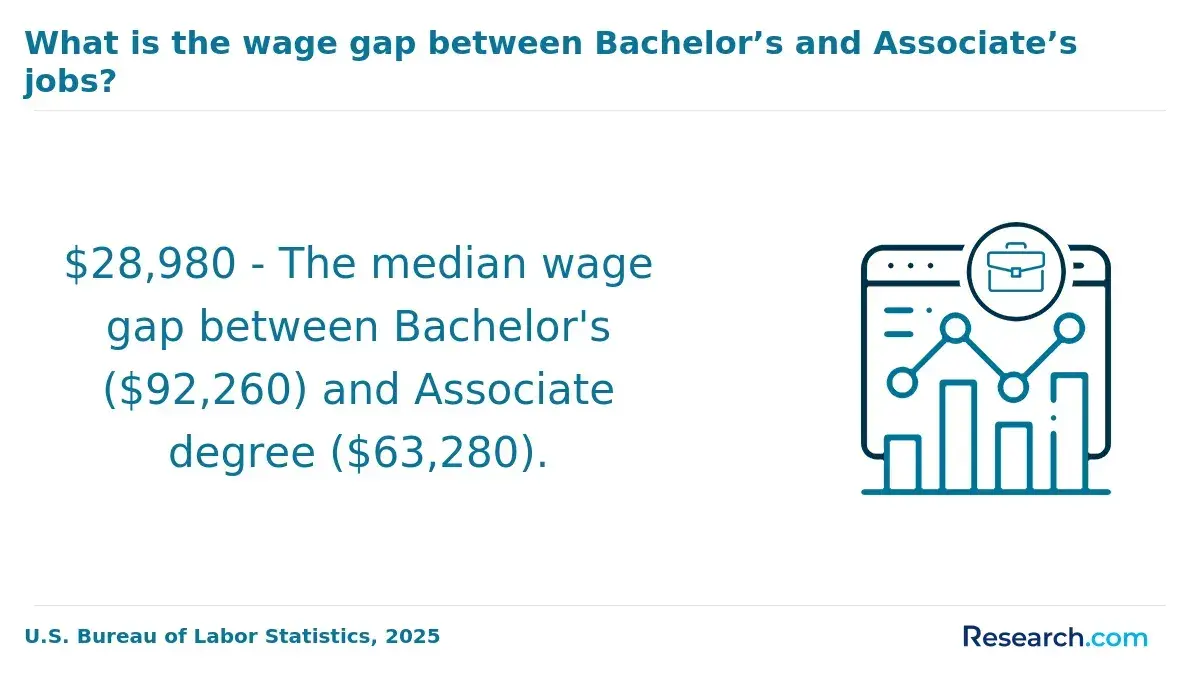
BLS wage data released in 2024 places many first-line retail supervisor roles in the mid-to-high five-figure range rather than the high-income range associated with some corporate management jobs. That means students should be cautious about borrowing heavily for a retail management credential unless the program clearly supports advancement, transfer, or a broader business career path.
The table below summarizes how to compare value signals that go beyond sticker price.
| Factor | What to compare | Why it matters |
| Net price | Tuition and fees minus grants, scholarships, and confirmed tuition benefits | Shows the estimated amount you actually pay or borrow. |
| Completion path | Remaining credits, transfer acceptance, course availability, and term schedule | A cheap program can become expensive if courses are unavailable or credits do not transfer. |
| Curriculum relevance | Retail operations, analytics, ecommerce, supply chain, leadership, accounting, and marketing | Retail management increasingly blends people management with data and technology. |
| Student support | Advising, tutoring, career services, online library access, and technical support | Support can affect persistence, especially for working adults. |
| Employer alignment | Internships, applied projects, employer partnerships, and tuition assistance eligibility | Programs tied to workplace needs may offer stronger practical value. |
Students comparing affordable degrees in any field should use the same net-price logic, whether they are choosing retail management, business, education, or a library degree. The best value is usually the accredited program that offers the lowest realistic net cost while still supporting the student's career target.
Before enrolling, ask admissions and financial aid staff for a written answer to four questions: How many credits will I need, what is my estimated total cost, what gift aid is guaranteed or renewable, and what happens if I study part time or stop out for a term? Those answers are more useful than any advertised tuition rate by itself.
Other Things You Should Know About Retail Management
A retail management degree is more specialized and may fit students aiming for store leadership, merchandising, customer experience, or retail operations. A general business degree may offer more flexibility if you want to move into finance, HR, operations, entrepreneurship, or non-retail management roles.
An associate degree commonly requires about 60 credits, while a bachelor's degree commonly requires about 120 credits. Actual time depends on transfer credits, course load, term length, and whether the student enrolls full time or part time.
Retail managers generally do not need a state license. However, some roles may require employer-specific training, food safety certification, alcohol sales compliance training, loss-prevention training, or industry credentials depending on the product category and state rules.
Useful programs should build skills in leadership, scheduling, sales analysis, inventory control, merchandising, customer service, business communication, accounting basics, ecommerce operations, and data-informed decision-making. These skills are especially important as retailers use more automation, analytics, and omnichannel fulfillment systems.
References
- Types of accreditation in higher education | January 2026 https://accreditationxpert.com/types-of-accreditation-higher-education/
- Retail Management https://icieducation.com/courses/management/retail-management/
- 2025 Most Affordable Online Master's Programs https://www.onlineu.com/most-affordable-colleges/masters-degrees
- Career Switch ROI: Best Online Degrees in 2026 https://courseconnect.in/blogs/real-roi-career-switch-after-graduation
- Regionally Accredited Online Colleges: What You Need to Know | Tiffin University https://go.tiffin.edu/blog/regionally-accredited-online-colleges-what-you-need-to-know/
- Bachelor of Business in Retail Management Practice (Honours Degree) - Retail Ireland Skillnet https://retailirelandskillnet.com/bachelor-of-business-in-retail-management-practice-honours-degree
- Types of Financial Aid for Online Colleges https://www.umassglobal.edu/blog-news/types-financial-aid-online-colleges
- Federal Grants: Explore Your Online Education Aid Options https://www.oedb.org/federal-grant/
- Bachelor in Management https://www.kozminski.edu.pl/en/programs/undergraduate-programs-bachelor/bachelor-management
- Which Degrees Have the Best Return on Investment Internationally? https://uninewsletter.com/blogs/which-degrees-have-the-best-return-on-investment-internationally/en