2027 Cheapest Accredited Online Energy Policy Degree Programs That Accept FAFSA

Co-Founder and Chief Data Scientist
Finding a low-cost online energy policy degree is harder than searching for "cheap tuition" because FAFSA eligibility, accreditation, transfer rules, and career fit all affect the real price. The need is timely: BLS May 2024 wage data places environmental scientists and specialists at a median annual wage of $80,060, making cost control important for students entering policy, sustainability, and climate-related roles.
This guide is for undergraduates and career changers comparing accredited online programs, federal aid, and long-term value so they can choose a program that is affordable in practice, not just inexpensive on paper.
Key Things You Should Know
- The cheapest FAFSA-eligible online energy policy pathways are often public online programs in environmental studies, environmental management, sustainability, or public policy rather than degrees formally titled "energy policy."
- For the 2024-25 award year, the maximum Federal Pell Grant is $7,395, but FAFSA submission does not guarantee a grant or full tuition coverage.
- A program with a higher per-credit rate can cost less overall if it accepts more transfer credits, applies employer tuition assistance, or lets students finish faster with fewer repeated courses.
Which Are the Cheapest Accredited Online Energy Policy Degree Programs That Accept FAFSA?
Dedicated online degrees with "energy policy" in the title are relatively rare, so the most practical search strategy is to compare accredited online programs that prepare students for energy regulation, climate policy, sustainability planning, environmental compliance, and public-sector analysis.
The table below focuses on FAFSA-participating institutions with online programs that are closely aligned with energy policy work and publishes estimated tuition before institutional aid, fees, books, and living costs.
| Institution | Online degree or pathway | Policy relevance | Estimated published tuition before aid | Accreditation and FAFSA status |
| SUNY Empire State University | Online environmental studies-related bachelor's pathway | Strong fit for students interested in environmental policy, sustainability planning, and public systems | About $295 per credit for New York residents and about $353 per credit for out-of-state online undergraduates; about $35,400 to $42,360 for 120 credits before aid | Regionally accredited; participates in federal student aid |
| University of Maryland Global Campus | Online BS in Environmental Management | Good fit for energy compliance, environmental regulation, sustainability operations, and government or contractor roles | About $324 per credit for Maryland residents and about $499 per credit for out-of-state students; about $38,880 to $59,880 for 120 credits before aid | Regionally accredited; participates in federal student aid |
| American Public University System | Online environmental science, sustainability, or policy-adjacent bachelor's options | Useful for working adults seeking environmental policy literacy, energy-sector compliance knowledge, or public administration preparation | About $350 per credit for standard undergraduate tuition; about $42,000 for 120 credits before aid | Institutionally accredited by a recognized accreditor; participates in federal student aid |
| Oregon State University Ecampus | Online BS in Environmental Sciences with policy-relevant coursework | Strong fit for students who want a science-plus-policy foundation for energy, climate, and land-use decisions | About $366 per quarter credit; about $65,880 for 180 quarter credits before aid | Regionally accredited; participates in federal student aid |
| Penn State World Campus | Online BA in Energy and Sustainability Policy | One of the clearest online matches for energy policy, sustainability policy, and energy systems decision-making | About $632 per credit for lower-division courses and about $678 per credit for upper-division courses; roughly $78,600 for 120 credits before aid if split evenly | Regionally accredited; participates in federal student aid |
These estimates show why the "cheapest" depends on your situation. SUNY Empire, UMGC, and APUS may be less expensive on published tuition, while Penn State may offer the most direct energy policy title; the better choice depends on your transfer credits, residency, aid package, and desired career path.
How Does FAFSA Eligibility Work for Online Energy Policy Degree Programs?
Before enrolling, students should verify aid eligibility at three levels: the school, the program, and the student's own enrollment plan. This matters because an online bachelor's program may be aid-eligible while a standalone nondegree certificate at the same university may not be.
- Confirm that the institution is listed as eligible for federal student aid and has a federal school code.
- Ask whether the specific online energy policy, environmental policy, sustainability, or environmental management degree is Title IV-eligible.
- Check whether your planned enrollment status, such as half-time or full-time, meets aid requirements.
- Ask whether summer courses, accelerated terms, internships, or capstones are eligible for aid.
- Request a written cost-of-attendance estimate that separates tuition, fees, books, technology charges, and living expenses.
A common mistake is assuming that "accepts FAFSA" means the program will be fully paid for. FAFSA is the application gateway; your final package may combine grants, subsidized or unsubsidized loans, work-study, scholarships, and out-of-pocket payments.
How Much Does an Online Energy Policy Degree Cost After Financial Aid?
The real cost of an online energy policy degree is the net price after grants, scholarships, transfer credits, employer benefits, and required fees. Published tuition is useful for screening schools, but the financial aid award letter is what shows how much you may need to pay or borrow.
For the 2024-25 award year, the maximum Federal Pell Grant is $7,395. For a low-tuition public online program, that amount can substantially reduce annual tuition; for a higher-cost program, it may cover only part of the bill, making scholarships and transfer credits more important.
| Cost factor | Why it changes affordability | What to ask before enrolling |
| Tuition rate | Per-credit pricing affects the baseline cost, especially for students entering with few credits | Is the online rate the same for in-state and out-of-state students? |
| Program fees | Technology, distance learning, lab, graduation, and course fees can raise the final bill | Which fees are mandatory every term? |
| Transfer credits | Accepted credits can remove entire courses from the degree plan | How many credits can be transferred, and which major requirements must be completed in residence? |
| Federal grants | Need-based grants reduce out-of-pocket costs and do not have to be repaid if eligibility rules are met | What grant aid appeared in similar students' aid packages? |
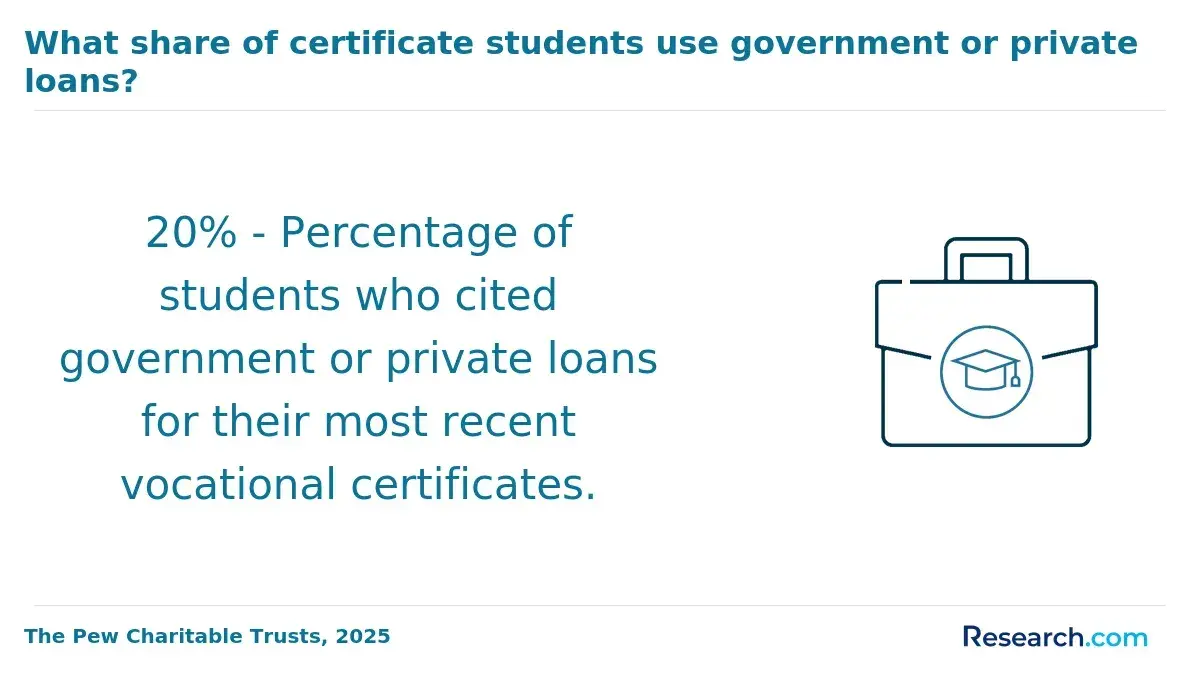
| Loans | Loans make enrollment possible but increase total cost through repayment and interest | How much would I borrow over the full degree, not just the first year? |
Students comparing accelerated options should also look at time-to-completion, not just tuition. A compact program can reduce opportunity cost, but it should still be accredited and realistic for your schedule; the same cost logic applies when researching formats such as a one year online master's in communication.
Which Affordable Online Energy Policy Degree Programs Offer the Best Value?
The best value is usually not the program with the lowest sticker price. A strong-value online energy policy degree combines acceptable tuition, recognized accreditation, federal aid access, flexible scheduling, transfer generosity, and coursework that maps to realistic career goals.
Use the following comparison to decide when a cheaper program is genuinely better and when a higher-cost program may be worth considering:
| Student priority | Best-value program characteristic | When a higher-cost option may make sense |
| Lowest out-of-pocket cost | Low tuition, strong Pell or scholarship eligibility, and minimal fees | If the cheaper school accepts fewer transfer credits and extends your time in school |
| Direct energy policy preparation | Courses in energy systems, policy analysis, sustainability, economics, and environmental regulation | If the more expensive degree has a clearer energy policy curriculum and stronger advising |
| Working adult flexibility | Asynchronous courses, multiple start dates, part-time pacing, and predictable course rotation | If a pricier program helps you stay enrolled while working full time |
| Graduate school preparation | Research methods, statistics, policy writing, and capstone work | If the program builds a stronger academic record for future public policy or environmental graduate study |
| Career mobility | Transferable skills in analysis, communication, compliance, and data interpretation | If the program has stronger employer recognition in energy, government, or consulting networks |
Students focused on earnings should compare this degree against adjacent programs in environmental science, public administration, economics, and data analytics. Broader rankings of degrees that pay well can provide context, but energy policy decisions should also weigh mission fit, sector demand, and the amount of debt required to graduate.
Are the Cheapest Online Energy Policy Degree Programs Properly Accredited?
Accreditation is essential because it affects federal aid eligibility, credit transfer, graduate admissions, and employer trust. For most energy policy-related bachelor's degrees, the key credential is institutional accreditation from an agency recognized by the U.S. Department of Education or the Council for Higher Education Accreditation.
Energy policy is not typically licensed like nursing, teaching, or engineering, so students should not expect a single specialized programmatic accreditor to define quality. Instead, verify institutional accreditation and then evaluate curriculum depth, faculty expertise, assessment methods, and whether the degree title matches your career target.
Use this quick accreditation check before submitting deposits or borrowing loans:
- Search the school in the U.S. Department of Education's recognized accreditation database.
- Confirm that the accreditor listed for the school is current and not merely historical.
- Ask whether the online division is covered under the same institutional accreditation.
- Verify that transfer credits from the program are commonly accepted by other accredited institutions.
- Be cautious with schools that emphasize speed, discounts, or "life experience" credit while avoiding clear accreditation details.
A major red flag is a program that uses vague language such as "nationally recognized" without naming a recognized accreditor. Another is a school that promises employment, salary outcomes, or automatic government jobs based only on completing the degree.
What FAFSA Grants and Federal Aid Can Pay for an Online Energy Policy Degree?
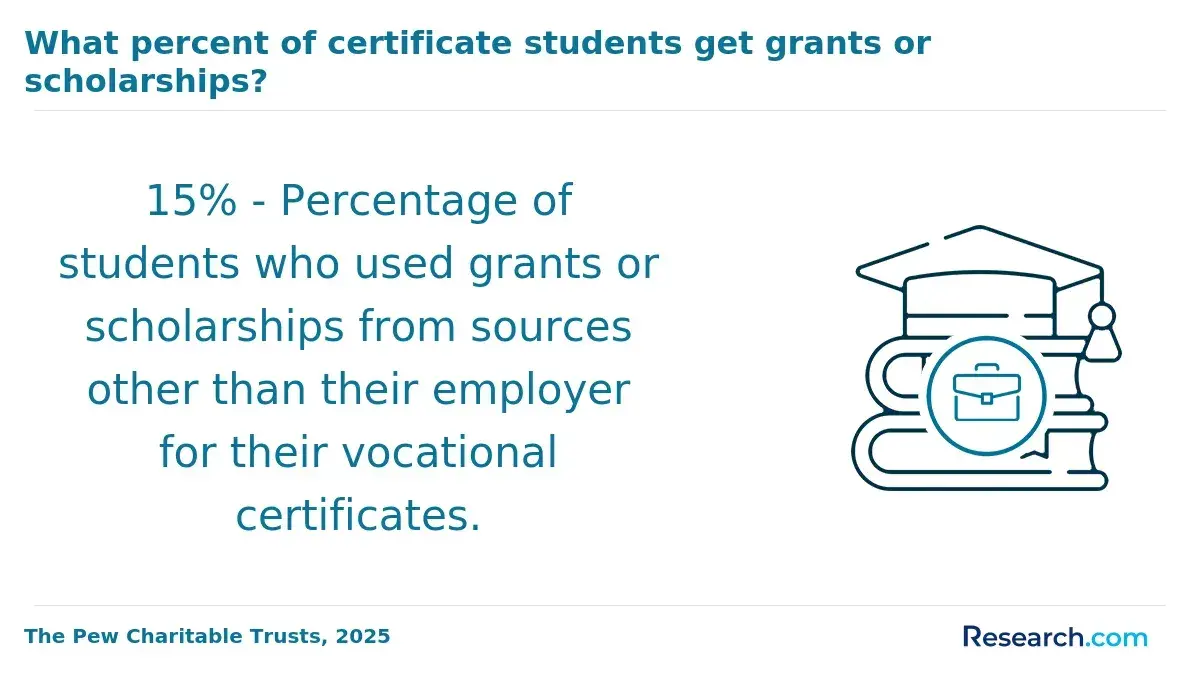
Federal aid can make an accredited online energy policy degree more affordable, but each aid type works differently. Grants reduce cost without repayment when eligibility requirements are met, while loans shift cost into the future and should be evaluated against expected income and repayment obligations.
The aid options below are the main federal tools undergraduate students commonly encounter after filing the FAFSA:
- Federal Pell Grant: Need-based grant aid with a maximum of $7,395 for the 2024-25 award year.
- Federal Supplemental Educational Opportunity Grant: Campus-based grant aid for students with exceptional financial need, available only at participating schools with limited funds.
- Direct Subsidized Loan: Need-based federal loan for eligible undergraduates where the government pays interest during qualifying in-school periods.
- Direct Unsubsidized Loan: Federal loan not based on financial need, with interest generally accruing from disbursement.
- Federal Work-Study: Part-time employment funding is available through participating schools, depending on eligibility and job availability.
Students should also ask about institutional scholarships, state grants, military or veteran benefits, tribal funding, employer tuition assistance, and professional association awards. A common mistake is accepting the full loan amount offered without comparing a lower-borrowing plan, part-time pacing, or transfer-credit savings.
How Do Transfer Credits Lower the Cost of an Online Energy Policy Degree?
Transfer credits can be the single biggest cost reducer for students seeking an affordable online energy policy degree. Because most bachelor's programs require about 120 semester credits, every accepted course can reduce tuition, fees, books, and time spent in school.
The highest savings usually come from community college general education courses, prior accredited college credits, military training evaluated for credit, standardized exams accepted by the school, and portfolio-based prior learning when available. Students researching the quickest online degrees should use the same caution here: speed is valuable only when the credits apply cleanly to the degree requirements.
Before choosing a school, complete these transfer-credit steps in order:
- Request an unofficial degree audit before committing, not just a general statement that transfer credits are accepted.
- Ask how many credits apply to general education, major requirements, electives, and upper-division requirements.
- Check whether the school has a residency requirement that forces you to complete a minimum number of credits there.
- Compare how each school treats the same transcript because one institution may apply more credits toward the major than another.
- Calculate savings using remaining credits required, not total credits accepted.
Do not assume that the school accepting the most credits is always cheapest. If accepted credits fill only free electives while major courses still remain, the cost reduction may be smaller than it first appears.
Which Students Benefit Most From a Low-Cost Online Energy Policy Degree With FAFSA?
A low-cost FAFSA-eligible online energy policy degree works best for students who need flexibility, want to limit borrowing, and are aiming for roles where a bachelor's credential plus policy-relevant skills can open doors. It is especially practical for working adults, community college transfer students, military-affiliated learners, and students who already know they want government, nonprofit, utility, sustainability, or environmental compliance work.
This path may be less ideal for students who need a highly technical engineering credential, a state-licensed profession, or a research-intensive graduate pipeline. Those students may need different prerequisites, labs, licensure pathways, or specialized graduate study.
| Student type | Why the low-cost online route may fit | What to watch carefully |
| Community college transfer student | Can reduce the remaining cost by applying prior credits toward a bachelor's degree | Major course equivalencies and upper-division requirements |
| Working adult | Can study part-time while keeping income and employer benefits | Course rotation, workload, and financial aid minimum enrollment rules |
| Military-affiliated student | May combine federal aid with military education benefits or evaluated training credits | Benefit coordination and institutional military tuition policies |
| Career changer | Can build policy, sustainability, and compliance knowledge without relocating | Whether the curriculum includes applied projects and career services |
| Graduate-school planner | Can complete an affordable bachelor's foundation before a policy, public administration, or environmental graduate degree | Research methods, statistics, writing preparation, and GPA expectations |
Working professionals comparing online degrees should also think beyond the bachelor's level. For example, affordability and aid rules can look very different in graduate programs such as EdD programs online, so students planning multiple credentials should estimate total education debt across all intended degrees.
How Does the Cost of an Online Energy Policy Degree Affect Career ROI?
Career ROI depends on the relationship between total cost, debt, completion time, and the roles you realistically plan to pursue. Energy policy graduates may seek work in environmental compliance, sustainability coordination, policy research, utility program administration, government agencies, consulting support, nonprofit advocacy, or graduate study in public policy or environmental management.
BLS May 2024 wage data reports a median annual wage of $80,060 for environmental scientists and specialists, a broad category that may overlap with environmental assessment, compliance, and policy-adjacent work. That figure is not a promise for energy policy graduates, but it helps students test whether projected borrowing is reasonable for related environmental career paths.
To estimate ROI before enrolling, compare the program's net cost with your likely career path rather than using the highest advertised salary you can find. The following checkpoints make that comparison more realistic:
- Estimate total debt at graduation, including interest-bearing loans you expect to use each year.
- Identify entry-level job titles connected to the curriculum, not only senior policy roles that require years of experience.
- Review whether the program teaches quantitative analysis, policy writing, environmental regulation, energy systems, and stakeholder communication.
- Ask career services for examples of internships, capstones, alumni employers, or public-sector pathways related to sustainability and energy.
- Compare the degree with adjacent fields if your goal requires licensure, clinical practice, engineering credentials, or specialized graduate training.
ROI also varies across mission-driven careers. A student comparing energy policy with human services, counseling, or creative health pathways may find that licensure and field placement requirements change the value equation, just as they do when researching the best art therapy programs.
How Should Students Choose the Cheapest FAFSA-Eligible Online Energy Policy Degree?
The best choice is the cheapest accredited FAFSA-eligible program that still supports your career goal, accepts the right credits, offers enough flexibility to finish, and keeps borrowing within a manageable range. Do not choose on tuition alone, and do not assume a better-known school is automatically worth a larger loan balance.
Use this decision sequence to compare programs in a practical way:
- Define your target role, such as sustainability analyst, environmental compliance assistant, policy aide, utility program coordinator, or graduate school applicant.
- Shortlist only accredited institutions that confirm the specific online degree is eligible for federal student aid.
- Request a full cost-of-attendance estimate and a preliminary transfer evaluation from each school.
- Compare net price after grants and scholarships rather than published tuition alone.
- Review the curriculum for energy policy, environmental economics, regulation, data analysis, writing, and applied projects.
- Ask how often required courses are offered online and whether delayed course rotation could extend your completion time.
- Estimate total borrowing under full-time and part-time enrollment plans.
- Choose the lowest-cost option that still has credible accreditation, strong transfer application, relevant coursework, and a realistic path to completion.
One final red flag is pressure to enroll before you receive written answers about cost, aid, and transfer credits. Students comparing online education options across fields, including specialized programs like an online doctorate, a policy degree, or another career-focused credential, should always verify the same fundamentals before committing.
Other Things You Should Know About Energy Policy
Yes. Many relevant online degrees are titled environmental studies, sustainability, environmental management, public policy, or public administration. What matters is whether the curriculum includes energy systems, regulation, economics, sustainability, and policy analysis.
Many are fully online, but requirements vary. Some programs may require proctored exams, internships, capstones, field experiences, or synchronous meetings. Always confirm residency and in-person requirements before enrolling.
An associate degree may help with transfer, administrative roles, or entry-level environmental technician pathways, but many policy, compliance, analyst, and sustainability roles prefer or require a bachelor's degree. Graduate education may be useful for advanced research or leadership roles.
Look for policy writing, environmental regulation, energy systems, sustainability planning, economics, data analysis, research methods, and stakeholder communication. A low-cost program has stronger value when it builds practical skills employers can recognize.
References
- Financial Aid For Online Colleges https://www.affordablecollegesonline.org/financial-aid/financial-aid-for-online-colleges/
- Undergraduate Online Financial Aid | Bushnell University https://www.bushnell.edu/financial-aid/undergraduate-online/
- EnergyDegrees.org: The Energy Education Website https://www.energydegrees.org/
- 2025 Most Affordable Online Master's Programs https://www.onlineu.com/most-affordable-colleges/masters-degrees
- Affordable Universities for International Students & Online Degrees 2026 https://northcypruseducation.com/blog/affordable-universities-for-international-students-a-guide-to-online-degrees/
- Can I get financial aid for an online degree? | edX https://www.edx.org/resources/can-i-get-financial-aid-for-an-online-degree
- Online Masters in Energy Studies https://www.euclid.int/online_master_energy/
- Educational Pathways for Climate Careers: Degrees and Certifications | EuroClimateJobs https://www.euroclimatejobs.com/article/764/educational-pathways-for-climate-careers-degrees-and-certifications
- Online Master in Renewable Energy https://www.iosd.org/online-master-renewable-energy/
- Top 5 Online Colleges That Accept FAFSA 2025 https://bold.org/blog/online-colleges-that-accept-fafsa/