2027 Cheapest Accredited Online Educational & Teacher Leadership Master's Programs With No Out-of-State Tuition Surcharge

Co-Founder and Chief Data Scientist
An online educational or teacher leadership master's can be financially practical for educators who need a credential for leadership, curriculum, instructional coaching, or administration roles but cannot relocate. The U.S. Bureau of Labor Statistics reports a $104,070 median annual wage for elementary, middle, and high school principals in 2024, although requirements and pay vary by district and state.
This guide explains how to identify residency-neutral tuition, verify accreditation and licensure fit, calculate the real cost, and compare programs beyond their advertised per-credit price.
Key Things You Should Know
- A true no-out-of-state-surcharge program charges online students the same published tuition regardless of where they live; it does not necessarily have the lowest total cost.
- Compare required credits, mandatory fees, practicum travel, and transfer-credit rules before judging affordability, because a lower per-credit rate can still produce a higher final bill.
- Accreditation and state licensure alignment matter as much as price: the $104,070 2024 median wage for K-12 principals does not mean every educational leadership graduate qualifies for principal certification.
What Does No Out-Of-State Tuition Surcharge Mean for an Online Educational & Teacher Leadership Master's Program?
A no-out-of-state tuition surcharge means an institution does not add a higher nonresident rate solely because an online student lives outside the state. Schools may describe this as "one online rate," "flat online tuition," "eRate," or "same tuition for all online students." It is not identical to in-state tuition: the flat online rate may be lower, equal to, or higher than the school's resident campus rate.
Students benefit most when they live outside the university's home state, plan to remain there, and need fully online study. A local public university with resident tuition can still be cheaper for an in-state student, especially if it waives online fees or offers district-connected scholarships.
| Tuition model | What it means | Best comparison use |
| Residency-neutral online rate | One published rate for eligible online students | Useful for nonresidents seeking predictable tuition |
| Resident and nonresident rates | Price changes by legal residency | Often strongest value for established in-state residents |
| Limited tuition waiver | Reduced nonresident price subject to eligibility rules | Requires written confirmation of renewal conditions |
Before applying, confirm that the policy applies to the specific master's program, degree track, start term, and delivery format. Some universities use a flat rate only for selected online programs and may charge separate fees for education courses, technology, or field supervision.
How Can Students Verify Accreditation for an Affordable Online Educational & Teacher Leadership Master's Program?
Institutional accreditation is the first check. It confirms that the university meets broad academic and administrative standards and is generally necessary for federal financial aid and for transferring graduate credit. Verify the institution through the accreditor named on the university website and confirm that the accreditor is recognized by the U.S. Department of Education or the Council for Higher Education Accreditation.
Educational leadership programs may also have specialized approval, such as educator-preparation approval from a state agency or professional alignment with standards used in school leadership. Specialized recognition can be important, but it does not replace institutional accreditation or automatically make a graduate eligible for licensure in every state.
Use the following verification sequence before paying an enrollment deposit.
- Check the university's institutional accreditation and its current status.
- Ask whether the exact online program is approved as an educator-preparation pathway.
- Request written confirmation of whether the curriculum meets requirements in the state where you intend to work.
- Review practicum, internship, mentor, assessment, and background-check requirements.
A common mistake is assuming that an "educational leadership" title alone leads to principal licensure. Some programs are designed for instructional leadership, higher education administration, curriculum work, or teacher leadership and do not include the supervised clinical components required for administrator certification.
How Much Does the Cheapest Online Educational & Teacher Leadership Master's Program Cost in Total?
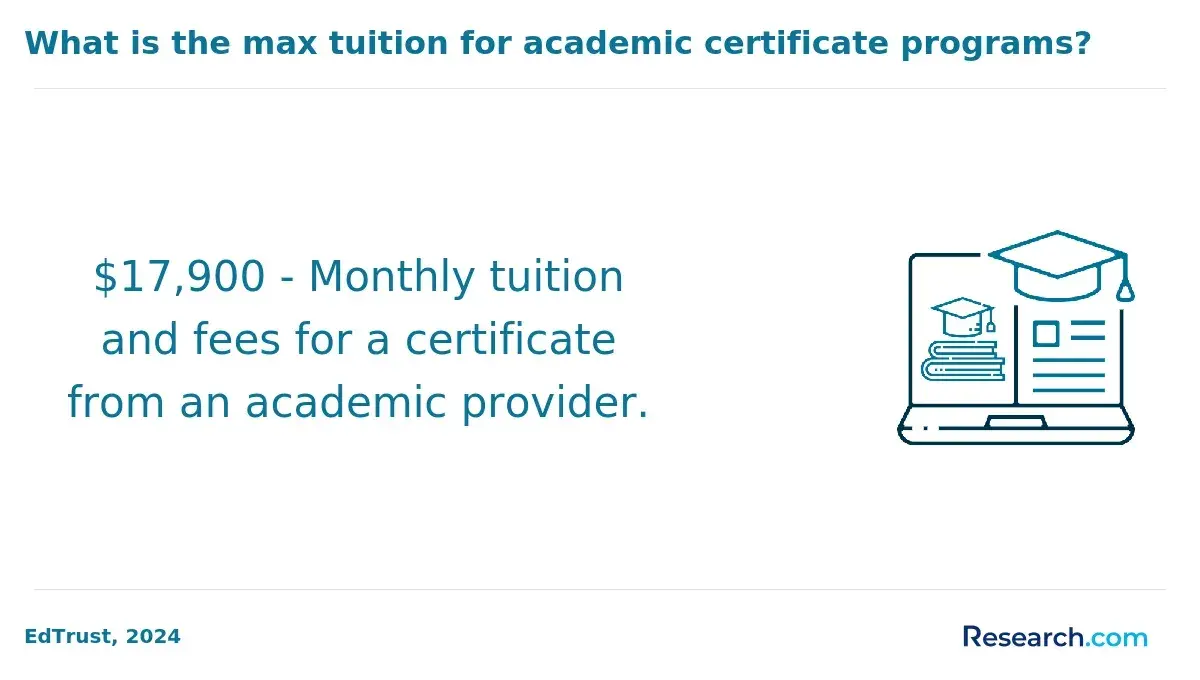
The cheapest program is the one with the lowest net total cost for your required pathway, not simply the lowest advertised tuition rate. Without a school-specific tuition schedule, no reliable universal total can be stated; credit requirements, fees, and fieldwork expectations differ substantially.
Calculate the published educational cost using this formula: required program credits multiplied by the applicable per-credit tuition, plus mandatory university, online-learning, course, graduation, and field-placement fees. Then add expenses that may be unavoidable for your situation, including background checks, fingerprinting, exams, travel to any residency, and technology.
| Cost item | How to verify it | Why it matters |
| Tuition | Program-specific tuition page | May differ from general graduate tuition |
| Required credits | Degree plan or catalog | Determines the tuition multiplier |
| Mandatory fees | Bursar fee schedule | Can apply each term or course |
| Fieldwork costs | Program handbook | May include travel, screening, or testing |
Request a written estimate for your intended term and enrollment pattern. Tuition can change annually, so treat a web-page price as a planning figure rather than a guaranteed final charge.
Do Online Educational & Teacher Leadership Master's Students Have to Establish Residency to Receive the Lowest Tuition Rate?
Students usually do not need to establish residency when a university offers a genuine residency-neutral online tuition rate. The school should charge the same qualifying online rate whether the student lives in the institution's state or elsewhere.
Read the exceptions carefully. Residency can still affect state grants, campus-based scholarships, student-teaching placement rules, and eligibility for an in-state rate if the online program does not use flat pricing. Military affiliation, alumni status, partner-district employment, or a regional reciprocity agreement may also create separate discounts with renewal conditions.
Ask admissions and the bursar's office to confirm four details in writing.
- Whether your exact program carries one online tuition rate for nonresidents.
- Whether the rate applies for the entire degree or only the first term.
- Whether moving to another state changes tuition or field-placement eligibility.
- Whether any scholarship or waiver requires residency, employment, or continuous enrollment.
Students exploring other flexible degree routes can also compare a cheapest accredited online college option when they need to complete an undergraduate credential before graduate admission.
How Do Public and Private Universities Compare on the Cost of an Online Educational & Teacher Leadership Master's Degree?
Public universities often use lower resident tuition because of state support, while private nonprofit universities commonly charge one tuition rate for all students. Neither structure automatically produces the better value. A public institution can be especially affordable for residents; a private nonprofit program can be competitive for nonresidents when it has flat tuition, fewer fees, and a shorter required credit load.
| Institution type | Potential cost advantage | Key caution |
| Public university | Potentially lower resident tuition | Nonresident online pricing may be substantially higher |
| Private nonprofit university | Often residency-neutral pricing and predictable terms | Published tuition may be higher before aid |
| For-profit university | May offer frequent starts or flexible pacing | Compare total price, accreditation, outcomes, and licensure fit closely |
Compare like with like: the same number of required credits, the same licensure pathway, and the same assumptions about fees and travel. Nonprofit status, public status, and low tuition are useful screening factors, not quality guarantees.
If your long-term interests cross disciplines, reviewing best value online interdisciplinary studies degrees may help clarify whether a broader academic program better matches your career plan than a leadership credential.
Can Financial Aid Reduce the Cost of a Cheap Online Educational & Teacher Leadership Master's Program?
Financial aid can reduce net cost, but students should not assume it will erase tuition. Eligible graduate students may use federal Direct Unsubsidized Loans and, when needed, Graduate PLUS Loans after filing the FAFSA; borrowing should be evaluated against expected repayment capacity and employer reimbursement rules.
For working educators, district tuition assistance, union benefits, state educator grants, university scholarships, and payment plans may matter more than a small difference in sticker price. Employer reimbursement can be particularly valuable when it applies to required courses and the degree directly supports a current role.
Build a net-cost estimate before accepting aid.
- Start with the full program tuition and mandatory fees.
- Subtract scholarships, grants, confirmed employer assistance, and savings.
- Separate loans from gift aid because loans must be repaid with interest.
- Include expenses not covered by aid, such as testing, travel, and lost work time.
Do not enroll based only on a financial-aid award letter. Confirm whether awards are renewable, whether part-time enrollment changes eligibility, and whether employer reimbursement is paid upfront or only after successful course completion.
How Do Program Format and Completion Time Affect the Cost of an Online Educational & Teacher Leadership Master's Degree?
Format affects both direct and indirect cost. Fully online asynchronous programs may reduce commuting and scheduling pressure, while synchronous sessions can provide scheduled interaction but may conflict with school-day responsibilities. Hybrid programs may cost less in tuition at some institutions but can become more expensive after travel, lodging, and time away from work are considered.
Accelerated programs can reduce the number of terms and allow earlier completion, but they are not automatically cheaper. The tuition total remains similar if the required credits are unchanged, and a heavier course load may limit overtime work or make employer reimbursement harder to manage.
| Format choice | Possible financial effect | Best fit |
| Fully online asynchronous | May reduce commuting and scheduling costs | Working educators needing flexible weekly access |
| Fully online synchronous | Travel savings but fixed meeting times | Students who value live instruction and can attend consistently |
| Hybrid or residency-based | Potential travel and lodging expenses | Students able to attend required on-campus sessions |
| Accelerated | May reduce time enrolled, not necessarily tuition | Students with sufficient time and support for intensive study |
Ask whether internships, practicums, capstones, or residencies are completed locally. Leadership programs aligned with principal licensure frequently require supervised field experiences, even when coursework is online.
Professionals considering technology-focused leadership work may also find an online computer science degree relevant when their goals center on educational technology rather than school administration.
How Much Can Transfer Credits Reduce the Cost of an Online Educational & Teacher Leadership Master's Degree?
Transfer credits can reduce tuition only when the university accepts them and applies them directly to required degree coursework. Many master's programs limit the number, age, grade, and source of transferable graduate credits. Licensure-oriented courses and practica are often less transferable because schools must verify alignment with their approved preparation pathway.
Do not assume a previous master's degree, professional development, or teaching experience will create automatic advanced standing. Request an official transfer evaluation before enrollment whenever possible.
To estimate potential savings, multiply the number of approved transfer credits by the program's applicable tuition rate, then check whether transferring credits changes scholarship eligibility, required residency credits, or time-to-completion. The best option may be a slightly higher-priced school that accepts more usable prior graduate coursework.
For professionals changing into another human-services field, a master's in social work online pathway has different field-education and licensure considerations, so credits should not be assumed to transfer between disciplines.
Is a Cheap Online Educational & Teacher Leadership Master's Degree Worth the Cost for Career Advancement?
A low-cost educational and teacher leadership master's can be worth the investment when it satisfies the credential requirements for a realistic next step: instructional coach, curriculum specialist, department chair, teacher leader, assistant principal, principal, or education administrator. The value depends on state licensure rules, district salary schedules, available openings, and whether the program gives you the specific preparation employers expect.
The Bureau of Labor Statistics reports that elementary, middle, and high school principals had a $104,070 median annual wage in 2024. That figure is national and describes an occupation, not a starting salary or a guaranteed outcome; principal roles usually require prior teaching experience, administrator licensure, and district-specific hiring qualifications.
Program fit is particularly important for three common degree paths: an MA may emphasize educational practice and leadership, an MS may emphasize research or data-informed improvement, and an MEd may be structured as a professional education degree. A teacher-leadership degree may support advancement without principal licensure, while an educational administration or principal-preparation degree may include the fieldwork needed for certification.
Paying more can make sense when the additional cost buys a state-approved licensure pathway, local district partnerships, stronger field-placement support, a relevant specialization, or a schedule that lets you keep working. It is usually not worthwhile to pay more merely for a broad reputation if the lower-cost accredited program meets the same career and certification requirements.
Those weighing education against office-based credential paths may compare the training demands of becoming a certified bookkeeper, which generally serves a different career market and does not substitute for educator preparation.
How Should Students Compare the Cheapest Accredited Online Educational & Teacher Leadership Master's Programs?
Compare programs using a consistent worksheet rather than relying on rankings or a single advertised rate. Start with eligibility: an affordable program is not a practical option if it does not meet your state's licensure rules, requires campus attendance you cannot manage, or lacks the specialization connected to your target role.
| Comparison factor | What to confirm | Decision implication |
| Accreditation and approval | Institutional accreditation and state pathway status | Protects aid, transfer, and credential utility |
| Total cost | Credits, tuition, fees, travel, and required assessments | Prevents misleading per-credit comparisons |
| Residency policy | Whether the online rate applies to your location and term | Prevents unexpected nonresident charges |
| Program design | Online delivery, pacing, practicum, capstone, or thesis | Shows whether study fits work and family obligations |
| Career alignment | Licensure, leadership focus, and specialization options | Connects the degree to a specific employment goal |
Contact each finalist program with a short set of questions: What will I pay for all required credits and fees? Does this track meet my state's requirements? Are there campus visits or local fieldwork obligations? How many credits can transfer? What support is provided to secure and supervise placements?
Choose the program that offers the lowest realistic net cost after accounting for accreditation, licensure alignment, transfer credit, schedule, and fieldwork. That approach is more reliable than choosing the lowest number displayed on a tuition page.
Other Things You Should Know About Educational & Teacher Leadership
Teacher leadership usually prepares experienced educators to lead instruction, mentoring, professional learning, or curriculum work while remaining classroom-based. Educational leadership is broader and may focus on school or district administration. Review the degree plan because titles are not standardized.
Many do, especially programs designed for principal certification or school administration. Requirements vary by university and state, so applicants should verify teaching-license, experience, GPA, and employment prerequisites before applying.
It may. Programs tied to administrator licensure commonly require supervised practicum or internship hours in a school setting. Confirm the number of hours, who arranges the placement, and whether it can be completed at your workplace.
A capstone is often better for working professionals who want to apply leadership concepts to a school-based problem. A thesis may be preferable for students considering doctoral study, research, policy, or academic careers. Neither option is automatically better for licensure; confirm the requirements of your intended pathway.
References
- 120 Scholarships for Graduate Students with February 2026 Deadlines https://bold.org/scholarships/by-year/graduate-students-scholarships/
- 11 tuition-free universities in the US for master's degrees https://studyinternational.com/news/tuition-free-universities-in-the-us/
- 2025 Most Affordable Online Master's Degrees in Educational Leadership https://www.onlineu.com/most-affordable-colleges/educational-leadership-masters-degrees
- How to Find Fully Funded Graduate Programs in Any Discipline | ProFellow https://www.profellow.com/tips/how-to-find-fully-funded-graduate-programs-in-any-discipline/
- Most Affordable Online Master's in Education for 2025 https://www.onlinemastersdegrees.org/most-affordable/education-programs/
- Teacher Leaders | NEA https://www.nea.org/resource-library/great-teaching-and-learning/recommendations/teacher-leader
- Average Cost of a Master's Degree: 2025 Analysis https://educationdata.org/average-cost-of-a-masters-degree
- Social Work Scholarships https://socialworklicensemap.com/social-work-resources/social-work-scholarships/
- Teacher Leadership (M.A.) https://catalog.rider.edu/graduate/colleges-schools/education/programs-certificates/teacher-leadership-ma/
- Education Master's Programs | ACE https://ace.edu/degree-programs/masters-degrees/masters-education/