2027 Cheapest Accredited Online Cybercrime Master's Programs With No Out-of-State Tuition Surcharge

Co-Founder and Chief Data Scientist
An online cybercrime master's can be a practical route into digital forensics, cyber investigations, fraud analysis, and security leadership, but advertised tuition can hide major residency and fee differences. The U.S. Bureau of Labor Statistics projects 33% growth for information security analyst jobs from 2023 to 2033, making relevant cyber skills increasingly valuable.
This guide helps working professionals and career changers identify accredited programs with residency-neutral pricing, calculate true total cost, verify quality, and decide whether a low-cost degree fits their career goals.
Key Things You Should Know
- A no-out-of-state-tuition-surcharge policy means eligible online students pay one published rate regardless of where they live. It does not automatically mean the program has the lowest total cost.
- Institutional accreditation is the essential baseline to verify, while cybersecurity-specific recognition, curriculum, faculty expertise, and digital-forensics training can matter more than a low per-credit price.
- The U.S. Bureau of Labor Statistics reported a $124,910 median annual wage for information security analysts in May 2024 and projects 33% job growth from 2023 to 2033. Use those broad labor-market indicators cautiously because cybercrime roles vary by employer and job title.
What Does No Out-Of-State Tuition Surcharge Mean for an Online Cybercrime Master's Program?
A no-out-of-state-tuition-surcharge policy means an online student who lives outside the university's home state is not charged the higher nonresident tuition rate. The school may call this a flat online rate, distance-learning rate, eRate, online learner rate, or tuition applicable to all students. It is a pricing policy, not a statement about program quality, financial aid eligibility, or residency status.
For a cybercrime master's student, this matters because public universities traditionally charge nonresidents more. A residency-neutral online rate can make a public institution accessible without moving or establishing domicile.
However, students should distinguish equal tuition from a temporary waiver: some schools limit a waiver to certain terms, programs, course loads, or geographic areas.
The comparison below shows the practical difference among common tuition structures.
| Tuition model | How it works | Who may benefit most | What to verify |
| Residency-neutral online tuition | One published tuition rate applies to qualifying online students nationwide. | Out-of-state working professionals seeking predictable pricing. | That the rate applies to the exact cybercrime degree and all required courses. |
| Traditional resident and nonresident tuition | Students pay different rates based on legal residency. | In-state residents, especially where resident tuition is low. | Residency deadlines, documentation rules, and whether online enrollment qualifies. |
| Nonresident waiver | A school reduces or removes the nonresident differential under stated conditions. | Students who meet location, employment, military, or enrollment requirements. | Whether the waiver is renewable and whether it covers fees. |
| Private university tuition | A private institution commonly charges one tuition rate regardless of residence. | Students comparing net price, scholarships, and flexible formats. | Required fees, institutional aid, and whether the program is fully online. |
A common mistake is treating "no out-of-state tuition" as equivalent to "in-state tuition." The outcomes may be similar for a nonresident's bill, but the school may use a separate online rate that is higher than its campus in-state rate. Compare the rate charged to you, the number of required credits, and mandatory fees rather than relying on labels.
How Can Students Verify Accreditation for an Affordable Online Cybercrime Master's Program?
Start with institutional accreditation. In the United States, this means the university has been reviewed by an accrediting agency recognized by the U.S. Department of Education or the Council for Higher Education Accreditation. Institutional accreditation is especially important for federal aid eligibility, credit transfer, employer confidence, and admission to future doctoral programs.
Cybercrime degrees may be offered as an MS in Cybersecurity, MS in Digital Forensics, MS in Criminal Justice with a cybercrime concentration, MA in Criminal Justice, or a related professional master's degree.
An MS often emphasizes technical analysis, networks, incident response, and digital evidence. An MA or criminal-justice-focused degree may place greater emphasis on policy, investigations, law, intelligence, and organizational leadership. Neither title alone proves that a program fits a student's intended job.
Use these steps before paying an application fee or enrolling:
- Find the university's institutional accreditor on the school's official accreditation page.
- Confirm the institution and accreditor in the U.S. Department of Education accreditation database or the accreditor's own directory.
- Check that the online cybercrime master's is awarded by that accredited institution, not merely hosted on its learning platform.
- Review the curriculum for digital forensics, cyber law, evidence handling, incident response, threat intelligence, investigations, or the technical subjects relevant to your target role.
- Ask whether the program has additional cybersecurity designations, external curriculum alignment, or specialized recognition, and what those credentials actually mean.
- Confirm whether the degree includes a capstone, thesis, practicum, internship, virtual lab, or campus requirement.
Programmatic accreditation is not universal for cybercrime master's degrees in the way it is for many clinical or engineering pathways. A school's institutional accreditation is the first requirement to verify; specialized recognition can be useful evidence of curriculum quality but should not replace review of faculty, coursework, student services, and career relevance.
Students who may later pursue technical analytics roles can also compare the curriculum with an online data science masters program. Data science may be a stronger fit for students focused on modeling, analytics, and data engineering, while cybercrime programs are usually better aligned with investigations, digital evidence, compliance, and security operations.
How Much Does the Cheapest Online Cybercrime Master's Program Cost in Total?
There is no single permanent "cheapest" accredited online cybercrime master's degree because universities change tuition, required credits, fees, and eligibility rules. The lowest advertised per-credit rate also may not produce the lowest final bill. The most useful number is the estimated total program cost for the credits and required activities you must complete.
Calculate the estimate using this formula: (required credits × applicable per-credit tuition) + mandatory program fees + required course materials + required travel or residency costs − grants, scholarships, and employer assistance. If tuition is charged by term rather than credit, substitute the number of terms required at your planned pace.
This table separates the costs students should request in writing from the admissions or financial-aid office.
| Cost category | What it can include | Why it changes the comparison |
| Tuition | Per-credit, per-course, or flat-term charges | Required credit totals vary substantially among master's programs. |
| Mandatory fees | Online learning, technology, student services, course, graduation, and distance-learning fees | Fees may be assessed each term, each course, or once per program. |
| Academic requirements | Software, lab access, textbooks, certification preparation, background checks, or digital-forensics tools | Cybercrime curricula can have technology-specific expenses not reflected in tuition. |
| Travel expenses | Campus residencies, intensives, internships, proctored exams, or capstone presentations | A hybrid requirement can erase savings from a low online tuition rate. |
| Financing costs | Interest and loan origination fees, when applicable | Borrowing can make a low sticker price more expensive over time. |
Ask for the tuition schedule for the academic year in which you expect to begin, the program's required credit count, and an itemized list of mandatory charges. Also ask whether tuition is locked for continuing students. A quoted rate is less useful if it can rise before a part-time student finishes.
Students who prioritize a faster timeline may also evaluate one year masters programs online. An accelerated format can reduce the number of terms subject to recurring fees, but it is only affordable if the course load is realistic alongside work and family obligations.
Do Online Cybercrime Master's Students Have to Establish Residency to Receive the Lowest Tuition Rate?
If the program expressly publishes one online tuition rate for all eligible students, then your home-state residency should not affect the tuition charge. You still may need to provide a current address for enrollment, authorization, financial aid, and state-specific disclosures.
Students may need to establish residency when a university uses the standard resident/nonresident tuition structure and does not extend its resident rate to online learners.
Legal residency is not normally created simply by taking online classes or moving shortly before enrollment. States and institutions can require evidence such as domicile, tax records, employment, voter registration, or a specified period of residence.
Before assuming you qualify for the lowest rate, ask admissions these direct questions:
- Is the published online tuition rate identical for residents and nonresidents in this specific cybercrime master's program?
- Does any tuition waiver require state residency, employment, military affiliation, reciprocal-state status, or a minimum enrollment level?
- Will a change in my address, course modality, or enrollment status affect the rate?
- Are all required electives, capstone courses, and summer terms billed under the same policy?
- Can the university provide the policy and estimated total charges in writing?
A residency-neutral option is usually best for students who expect to remain in another state. A traditional in-state program may still cost less for a resident, particularly when the resident tuition rate is below the school's online flat rate. Compare both paths using the same required-credit total before ruling either one out.
How Do Public and Private Universities Compare on the Cost of an Online Cybercrime Master's Degree?
Public and private nonprofit universities can both offer affordable online cybercrime master's programs, but their pricing logic differs. Public institutions may offer very low tuition to state residents and a separate nationwide online rate for distance learners. Private nonprofit institutions often publish one rate regardless of location, then use institutional scholarships to vary each student's net price.
For students outside a public university's state, a private nonprofit program can be competitively priced when its tuition is flat and its scholarships are dependable. For an in-state student, a public university may offer the strongest sticker-price advantage. Neither sector is automatically cheaper, more flexible, or better aligned with cybercrime careers.
The following comparison identifies the trade-offs to weigh before choosing based on institutional type.
| Factor | Public university | Private nonprofit university | Decision implication |
| Residency pricing | May have resident, nonresident, and online-specific rates. | Often uses one base rate regardless of residency. | Out-of-state students should compare the actual online rate, not campus tuition. |
| Institutional aid | May offer limited or program-specific awards. | May offer merit scholarships or tuition discounts. | Compare written net-price estimates after aid. |
| Program availability | May emphasize public-sector, criminal-justice, or technical pathways depending on the institution. | May offer cohort models, adult-focused support, or specialized concentrations. | Review the curriculum and scheduling, not the institution type alone. |
| Fees and pacing | Fees may differ by course modality and residency classification. | Fees may be bundled or charged by term. | Calculate costs over your intended completion schedule. |
Do not equate private status with for-profit status; many private universities are nonprofit institutions. Also avoid assuming that nonprofit status alone establishes value. The better choice is the accredited program with a transparent total price, applicable curriculum, manageable schedule, credible student support, and outcomes that match your intended work.
If you are still building the technical foundation for graduate study, compare admissions prerequisites with affordable online bachelor degree programs. A lower-cost bachelor's path in information technology, computer science, criminal justice, or a related area may be more appropriate than rushing into a master's program without the required preparation.
Can Financial Aid Reduce the Cost of a Cheap Online Cybercrime Master's Program?
Financial aid can reduce the amount paid from savings or borrowed, although graduate students should not assume that aid will eliminate tuition. Eligible students may use federal Direct Unsubsidized Loans and Graduate PLUS Loans after submitting the FAFSA, subject to federal rules and annual or aggregate limits. Loans must be repaid, so they should be evaluated as financing rather than as a discount.
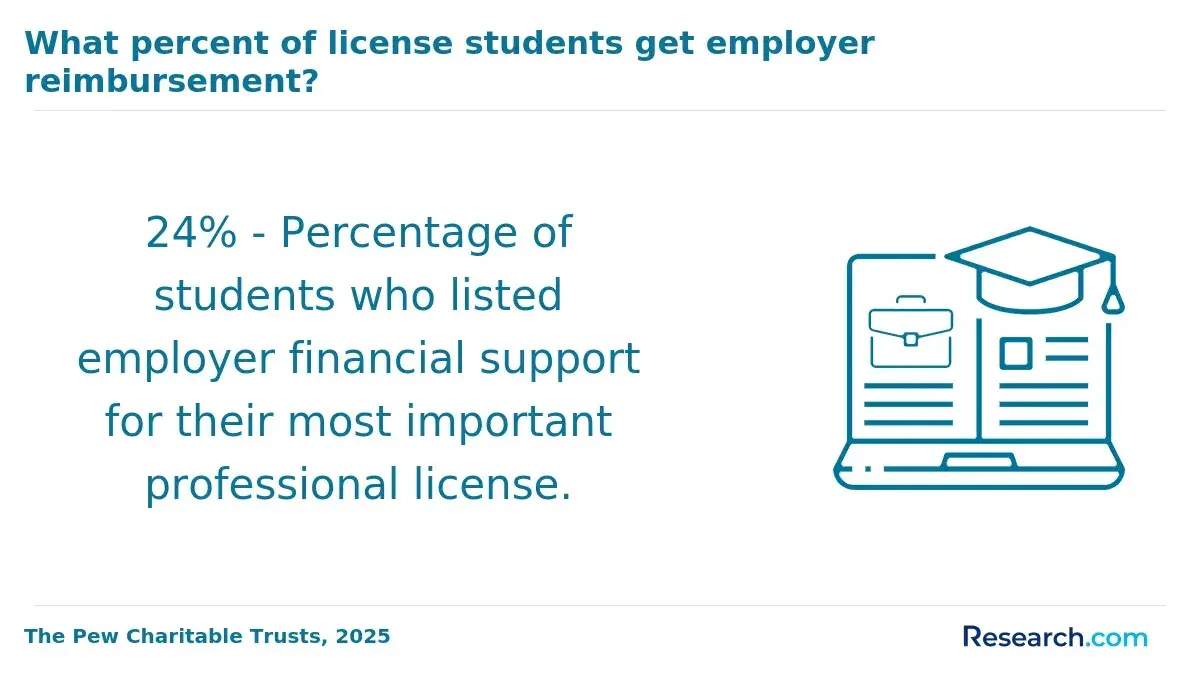
The strongest affordability comparison is based on net cost: published total charges minus grants, scholarships, employer tuition assistance, qualifying military or veterans' education benefits, and other aid that does not require repayment. Employer assistance can be especially relevant for professionals already working in IT, compliance, law enforcement, fraud prevention, or information security.
Use this order when building a funding plan because it prioritizes aid that may reduce borrowing:
- Submit the FAFSA early and confirm that the online program participates in federal student aid.
- Ask the department whether it offers cyber, criminal justice, digital forensics, public-service, or graduate scholarships for online students.
- Review employer tuition-assistance rules, including eligible schools, grade requirements, reimbursement timing, annual caps, and service commitments.
- Check military, veterans', and workforce benefits directly with the university's designated office if applicable.
- Compare the remaining balance with your expected cash flow before accepting loans.
One common error is comparing scholarship headlines rather than the amount actually available to an online student. Request a written award estimate and confirm whether a scholarship is renewable, whether it applies to all terms, and whether the university can reduce institutional aid after outside funding is received.
How Do Program Format and Completion Time Affect the Cost of an Online Cybercrime Master's Degree?
Program format affects both direct charges and the opportunity cost of enrollment. A fully online asynchronous program may let students keep working and avoid relocation or routine commuting.
A hybrid program can provide in-person lab access and networking but may require travel, lodging, and time away from work. Verify whether "online" includes any mandatory residency, practicum, internship, live class, or proctored-exam requirement.
Accelerated programs commonly compress courses into shorter terms and can shorten completion time for students who can manage an intensive schedule. Traditional part-time formats may spread costs over more years but can make coursework sustainable for full-time professionals.
Faster is not automatically cheaper if an accelerated format requires students to reduce work hours, repeat a course, or take on expensive short-term borrowing.
The table shows how format choices can influence a student's overall budget.
| Format or pace | Typical cost advantage | Potential cost risk | Best fit |
| Fully online, asynchronous | Can reduce commuting and allow flexible work scheduling. | May still charge technology or distance-learning fees. | Working adults who need scheduling flexibility. |
| Fully online, live sessions | May provide structured interaction without travel. | Fixed meeting times can conflict with work shifts and time zones. | Students who want real-time instruction and can attend consistently. |
| Hybrid or low-residency | May include hands-on learning and faculty access. | Travel and lodging may materially raise total cost. | Students who value in-person forensic labs or cohort networking. |
| Accelerated | May reduce the number of fee-bearing terms and shorten time to completion. | Heavy course loads can create work and cash-flow pressure. | Students with available time and strong academic preparation. |
| Part-time traditional pace | Spreads tuition payments across more terms. | More terms can mean more recurring fees and exposure to tuition increases. | Professionals balancing substantial work or caregiving duties. |
Thesis-based programs can suit students considering doctoral study or research-heavy work, while non-thesis programs commonly use an applied capstone that may better fit professional practice. Ask whether a capstone requires a client project, advanced software, travel, or a formal presentation. Those details affect both cost and schedule.
How Much Can Transfer Credits Reduce the Cost of an Online Cybercrime Master's Degree?
Transfer credits can reduce tuition only when a university accepts prior graduate-level coursework and applies it to the degree requirements. Policies vary widely. Many master's programs limit the number of transferable credits, require a minimum grade, set a time limit on prior coursework, and require that the content closely match the program curriculum.
Students with graduate courses in cybersecurity, criminal justice, computer science, information systems, digital forensics, or research methods may have the strongest case for transfer review. Industry certifications, professional training, and work experience can sometimes support admission or prerequisite waivers, but they do not automatically replace graduate credits.
Before choosing a program based on transfer potential, obtain answers to these questions in writing:
- What is the maximum number of graduate transfer credits the program will accept?
- Which courses are eligible, and what minimum grade and course age rules apply?
- Will transferred credits replace required courses or only count as electives?
- Does transfer approval occur before enrollment, and is it documented in an official degree plan?
- Will transferring credits affect financial-aid enrollment status, cohort sequencing, or time to completion?
Do not calculate savings until the registrar or graduate program confirms how credits apply. A program may accept credits in general but still require students to complete all core cybercrime, digital-forensics, or capstone courses at the institution. A lower-priced program with fewer accepted credits can cost more than a higher-priced program that accepts applicable coursework.
Is a Cheap Online Cybercrime Master's Degree Worth the Cost for Career Advancement?
A low-cost online cybercrime master's degree can be worthwhile when it builds skills or credentials needed for a realistic next step, such as cybercrime investigator, digital-forensics analyst, threat intelligence analyst, security analyst, fraud investigator, compliance specialist, cyber policy professional, or security manager.
The value depends on your existing education, technical background, employer requirements, target sector, and the program's ability to fill a specific gap.
The Bureau of Labor Statistics reported that information security analysts had a median annual wage of $124,910 in May 2024. That figure is useful labor-market context, but it does not represent every cybercrime job, require a master's degree for every role, or predict an individual graduate's salary. Many employers also prioritize demonstrated technical ability, relevant experience, background eligibility, and certifications.
A cybercrime master's is often most compelling for professionals who already have foundational experience and need advanced training in investigations, governance, evidence, intelligence, leadership, or a specialized technical area. Career changers without networking, operating-system, scripting, or security foundations may benefit from prerequisite courses, an entry-level technical role, or a targeted certificate before committing to graduate tuition.
The degree may be less essential when an employer values a specific certification, portfolio, clearance eligibility, or hands-on experience more than graduate credentials. For criminal-justice and legal-support professionals, it is also important to distinguish cybercrime investigation education from the credential requirements for legal roles.
Students exploring legal-support pathways can compare degrees for paralegals before selecting a cybercrime program for a role that may have different employer expectations.
To judge return on investment, identify two or three target job postings, note the required and preferred qualifications, and compare those requirements with the curriculum. Then estimate the amount you would personally pay after nonrepayable aid, not simply the published tuition.
A degree with a modest premium may be the better investment if it offers the exact specialization, networking access, technical labs, or advancement pathway you need.
How Should Students Compare the Cheapest Accredited Online Cybercrime Master's Programs?
Compare programs using a consistent worksheet rather than sorting schools by advertised tuition. The best affordable option is the accredited program that gives you the lowest reasonable total cost for the learning format, technical depth, and career outcome you actually need.
Start by collecting the same information from each school. The comparison categories below prevent a low headline price from obscuring a costly or poorly aligned requirement.
| Comparison category | What to collect | Why it matters |
| Accreditation | Institutional accreditor and any relevant specialized recognition | Supports confidence in degree legitimacy, aid eligibility, and future education options. |
| Tuition policy | Applicable online rate, residency rule, waiver terms, and tuition-lock policy | Confirms whether no out-of-state surcharge truly applies to you. |
| Total required cost | Required credits, tuition, mandatory fees, materials, and travel costs | Reveals the likely full price rather than only the per-credit rate. |
| Curriculum | Core courses, electives, concentrations, labs, capstone, thesis, and certification alignment | Shows whether the degree supports your target cybercrime role. |
| Delivery and pacing | Asynchronous or live classes, term length, start dates, part-time options, and campus visits | Determines whether you can finish without sacrificing work or family stability. |
| Admissions and transfer | Prerequisites, technical background expectations, test policies, and transfer-credit rules | Helps avoid a delayed start or unexpected prerequisite expenses. |
| Career support | Career advising, internship support, employer relationships, alumni access, and graduate outcomes when available | Helps evaluate value beyond the credential itself. |
After comparing the worksheet, contact the finalists and ask for an official estimate. A practical decision sequence is:
- Eliminate programs that cannot verify institutional accreditation or clearly explain their online tuition policy.
- Calculate the estimated total charge for the exact credit load and completion pace you plan to use.
- Subtract only aid you are likely to receive, not speculative scholarships or loans.
- Confirm that required courses cover the skills, investigative methods, legal issues, and technical tools relevant to your intended role.
- Check for hidden travel, residency, lab, internship, proctoring, or background-check requirements.
- Choose the program with the strongest balance of net cost, flexibility, curriculum, and credible career fit.
Applicants considering public-sector research, records, or information-management careers should also avoid assuming every graduate role requires the same credential.
For example, requirements discussed in do you need a masters to be a librarian differ from cybercrime and cybersecurity career paths. Match the degree to the occupation, not simply to the lowest available tuition.
Other Things You Should Know About Cybercrime Programs
Cybersecurity focuses on protecting systems, networks, applications, and data from threats. Cybercrime focuses on unlawful activity involving computers or digital systems, including investigations, digital evidence, online fraud, malware incidents, and legal or policy responses. Many jobs overlap, but cybercrime programs may place more emphasis on investigation and evidence than a general cybersecurity degree.
Useful skills can include digital forensics, incident documentation, network fundamentals, operating systems, cyber law, evidence handling, threat analysis, report writing, privacy, and communication. Technical roles may also require scripting, cloud-security knowledge, log analysis, and familiarity with forensic tools. The appropriate mix depends on whether you want an investigative, technical, compliance, intelligence, or leadership role.
Some government, defense, law-enforcement, financial-services, and investigative positions may require a background check, suitability review, professional license, or security clearance. Requirements are set by the employer and position, not by the degree title alone. Review job postings early if you are targeting a regulated or public-sector career path.
Yes, particularly in cyber investigations, fraud, policy, compliance, intelligence, victim support, and digital-evidence roles. Candidates may need to add technical foundations in networking, operating systems, cyber terminology, and digital forensics. A program that provides prerequisite support or introductory technical coursework can be a better fit than one designed only for experienced IT professionals.
References
- Online Master's Degree: Digital Forensics & Cyber Investigation https://www.umgc.edu/online-degrees/masters/digital-forensics-cyber-investigation
- 2025 Most Affordable Online Master's Degrees in Cybersecurity https://www.onlineu.com/most-affordable-colleges/cybersecurity-masters-degrees
- Accreditation as a Strategic Driver of Alignment Across Higher Education and Industry https://acbspjournal.org/2026/05/22/accreditation-as-a-strategic-driver-of-alignment-across-higher-education-and-industry/
- Professional development programmes at world-class universities - Humanities and Social Sciences Communications https://www.nature.com/articles/palcomms20152
- Best Master's in Computer Forensics Programs | CyberDegrees.org https://www.cyberdegrees.org/listings/best-computer-forensics-programs/
- Top affordable online cybersecurity master degree programs https://cybersecurityguide.org/rankings/most-affordable-online-masters/
- 1.0 Utah Scholarship and Aid Landing Page - Utah System of Higher Education https://ushe.edu/state-scholarships-aid/