2027 Can Your AS in Biology Transfer into an Online BS in Business Administration?
Audited and Verified:
Our Editorial and Data Verification Process
Research.com uses government datasets, official education statistics and primary institutional information to support its career and degree guides. Our review process checks factual accuracy, occupational definitions, source dates and the requirements associated with the credentials discussed.
How This Article Was Fact-Checked
Our editorial team verifies salary estimates, employment projections, education requirements and program information against original data providers and official organizations. Salary figures are checked against the relevant occupational definitions and reporting periods. Information about licensure, accreditation and required in-person training is reviewed separately.
Fact-checked and verified on:

Co-Founder and Chief Data Scientist
An AS in Biology can be a starting point for an online BS in Business Administration, but transferring the degree is not the same as satisfying the business major. Biology students may have already completed valuable writing, mathematics, and general education courses while still needing most of the business core.
This guide explains how to assess credit applicability, admissions requirements, time, cost, and online-program fit so you can request a useful degree audit before committing to a school.
Key Things You Should Know
- Yes - an AS in Biology can qualify you to apply to an online BS in Business Administration; the receiving school decides which courses transfer and which degree requirements they satisfy.
- A 60-credit associate degree does not necessarily remove 60 credits from your remaining business-degree requirements. General education, major prerequisites, upper-division rules, and residency requirements all matter.
- Compare schools using written, course-by-course evaluations and the resulting cost and graduation plan - not an advertised maximum transfer-credit allowance.
Can an AS in Biology transfer into an online BS in Business Administration?
Yes. An associate of science in Biology is a non-business credential, not an automatic barrier to a business administration bachelor's program. A college may admit you as a transfer student while separately evaluating your courses for general education, business prerequisites, electives, and the major.
The distinction is consequential: admission, acceptance of credits, application of credits to the degree, and eligibility to graduate are separate decisions. A biology course might transfer as an elective without replacing accounting or management. Likewise, completion of an AS does not necessarily waive the receiving school's general education requirements.
If your goal is broad business preparation, compare the remaining requirements for a BS in Business Administration at several schools. If you already have a specific function in mind, compare that route too; for example, cheapest online business administration degrees are useful starting points for a cost comparison, but their listed prices cannot tell you your personal completion cost before a transfer evaluation.
How many AS in Biology credits transfer to an online business degree?
There is no universal number. A school might accept many AS courses onto your transcript yet apply fewer to the requirements you still need. Its transfer limit, course equivalencies, minimum grades, general education rules, and required number of credits earned at that institution control the outcome.
Consider an illustrative 120-credit bachelor's degree and a 60-credit AS. Even if all 60 credits are accepted, graduation may still require specific business courses, upper-division credits, or institutional credits that the AS did not provide. Conversely, a strong match in writing, quantitative work, and general education could prevent substantial repetition. Only a degree audit can resolve the difference.
Ask each school for two figures: credits accepted and credits remaining in the proposed BS. Then check where each course lands in the audit. This is the basis for comparing completion costs; general advice on how to reduce tuition costs for a business degree cannot substitute for your course-by-course result.
What requirements must you meet to transfer into an online business program?
Requirements vary by institution and sometimes by business major. Schools may consider prior college accreditation, a minimum transfer GPA, official transcripts, and satisfactory completion of specified mathematics or communication courses. Some admit students to the university first and require a separate step before entry to the business major. Accounting or economics may be required before certain upper-level courses even when they are not admission prerequisites.
Prepare your AS transcript and catalog descriptions or syllabi for courses whose equivalencies are uncertain. Ask the admissions office about eligibility, the transfer office about course credit, and a business adviser about prerequisites and the degree audit. If you plan to use federal aid, confirm the institution's and program's eligibility and your own aid status rather than assuming online enrollment qualifies you automatically. A list of FAFSA-eligible online business administration colleges can help identify schools to investigate, not establish your personal award.
Your best matches are often courses outside the biology major. English composition and public speaking may satisfy communication requirements; college algebra, calculus, or statistics may meet quantitative requirements if the business school accepts their content and level. Biology and chemistry courses may satisfy laboratory-science or general education requirements. Additional science courses may count only as free electives.
The table shows common possibilities, not guaranteed equivalencies. Compare each prospective school's official audit with its current catalog.
| AS coursework | Possible BS application | Point to verify |
| Composition or communication | General education or communication requirement | Whether the specific course fulfills the required category |
| Algebra, calculus, or statistics | Quantitative requirement or business prerequisite | Course level, topics, minimum grade, and recency rules |
| Biology or chemistry with lab | Natural-science requirement or elective | Whether additional lab credits have room in the degree plan |
| Research or laboratory methods | Possible elective | Whether a formal equivalency or approved substitution exists |
Laboratory planning can demonstrate useful organizational skills, but it does not automatically replace a business project management course. If project work is your intended career direction, compare the actual remaining requirements of project management degrees with prior-credit pathways rather than assuming your biology courses will satisfy that major.
The degree requirements - not the delivery label - determine whether an online program makes good use of your AS credits. Online study may eliminate a commute, but classes can still have fixed deadlines, live meetings, group presentations, proctored exams, or required workplace projects. Campus study may offer easier access to in-person services and recruiting, while creating travel and scheduling constraints.
When reviewing online business school comparisons across the United States, look beyond format labels. Request a sample course schedule and ask whether required courses are offered when you need them, whether attendance is synchronous, and whether internships, exams, or capstones require travel. A program is flexible for you only if its obligations fit your work and other commitments.
Expect a business core that may include financial and managerial accounting, economics, marketing, finance, management, operations, business law, and quantitative decision-making. Exact courses and sequencing differ. Your biology statistics course might satisfy a quantitative prerequisite, for instance, without replacing a course focused on business analytics or accounting.
Some programs offer formal concentrations; others offer only electives. Match those options to a plausible next role rather than assuming a concentration is a separate credential. A student interested in healthcare staffing might examine HR coursework and HR degree requirements and job opportunities, while recognizing that prior science study alone does not satisfy HR-specific requirements or confer an HR certification.
Your timeline depends on requirements remaining, course order, enrollment pace, and course availability - not merely the number of credits on your AS transcript. Missing accounting or economics prerequisites can delay upper-level business courses. A school may also require a minimum number of its own credits, including upper-division work.
Request a term-by-term plan for both full-time and realistic part-time enrollment. Check whether courses run every term and whether accelerated terms allow you to take dependent courses sooner. Online degrees with accelerated terms can shorten the calendar for some students, but shorter terms do not remove coursework or guarantee a lower total cost.
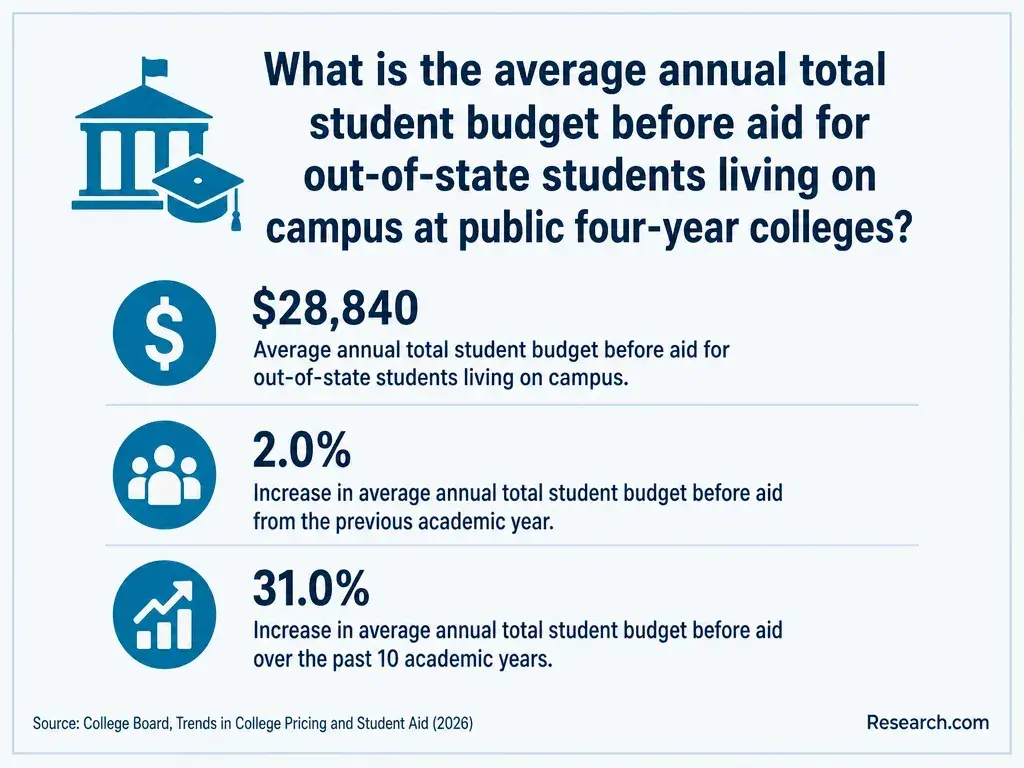
Calculate cost from the courses you must actually complete. Tuition may be charged per credit or term; also account for mandatory fees, books, software, exam arrangements, and any required travel. Compare schools using the same expected enrollment pace and ask how another term - or a course that transfers only as an elective - would change the estimate.
Grants, loans, scholarships, and employer assistance affect what you pay and when you pay it, but none should be assumed before eligibility is confirmed. If you are weighing a specialized alternative, an online project management undergraduate funding guide can help frame aid questions; obtain a separate written aid and completion estimate for each program you seriously consider.
Your biology background may be useful in healthcare, life-sciences, or other science-related organizations, while business coursework can support a move toward operations, purchasing, HR, marketing, or project coordination. Entry generally depends on relevant experience and demonstrated skills as well as the degree; graduation does not make someone an operations manager or qualify them for a regulated profession.
For salary context, the U.S. Bureau of Labor Statistics reports a $75,940 median annual wage for human resources specialists in May 2025 and projects 6% employment growth from 2025 to 2035. That occupation-wide median includes experienced workers and is not a starting salary or a forecast for BS graduates. If your target is specifically purchasing or logistics in a science-based organization, compare the business degree with a specialized pathway using supply chain program tuition time and earnings context; the better choice depends on the role's skill requirements and your remaining credits.
How can you choose an accredited online business administration program?
Start by confirming the institution's recognized accreditation and the exact degree it awards. If a school cites AACSB, ACBSP, or IACBE accreditation, check which business unit or programs that recognition covers; business accreditation is distinct from institutional accreditation and does not by itself establish that your credits will apply.
Next, compare written degree audits, remaining required credits, upper-division and residency rules, course schedules, total estimated charges, and access to advising and career services. Ask when the evaluation becomes official and how to appeal an equivalency. If a specialized project management degree remains on your shortlist, apply the same accreditation and transfer checks when reviewing project management schools with competitive tuition. Choose based on the credible path to your intended role, not the lowest advertised price.
Other Things You Should Know About Business Administration
Usually not. Ask the bachelor's program whether any missing business courses can be completed after admission and in what sequence.
The receiving institution sets its transcript policy. Ask whether it records the prior degree, individual transferred courses, credits, and grades, and how transfer grades affect its GPA.
Only if the institution offers an applicable prior-learning or credit-by-assessment policy and approves your evidence. Employment alone does not waive a required course.
Request the reason from the transfer office and ask about an appeal or substitution. A syllabus and the original course's learning outcomes may help faculty evaluate the match.
- School-Determined Requirements - FSA Partner Connect https://fsapartners.ed.gov/knowledge-center/fsa-handbook/2025-2026/vol1/ch1-school-determined-requirements
- Information for Transfer Students | Business Program | Brandeis University https://www.brandeis.edu/business/transfer-students.html
- Online Bachelor's Degree in Business Administration | Purdue Global https://www.purdueglobal.edu/degree-programs/business/bachelor-business-administration/
- Transfer Equivalencies - UK Admissions https://admission.uky.edu/transfer/equivalencies
- Transfer Credits You've Already Earned | Strayer University https://www.strayer.edu/admissions/transfer-credits/
- A-2: Transfer Student and Transfer Course Processes | psu.edu https://aappm.psu.edu/policy/a-2-transfer-student-and-transfer-course-processes
- Transferring Credit | Undergraduate Admissions | University of Houston https://www.uh.edu/undergraduate-admissions/apply/transfer/transferring-credit/
- College of Business Administration - Academic Catalog https://catalog.uic.edu/ucat/colleges-depts/business-administration/
- Transfer Toolkit - Tuition, Financial Aid, and Scholarships | NCCCS https://www.nccommunitycolleges.edu/transfer-advising-toolkit/draft-transfer-toolkit-tuition-financial-aid-and-scholarships/
- Transfer Credit | Catawba College Catalog https://undergrad.catalog.catawba.edu/policies/transfercredit