2027 Can a BS in Business Administration Prepare You for a Franchise Operations Manager Role? Skills and Entry Requirements
Audited and Verified:
Our Editorial and Data Verification Process
Research.com uses government datasets, official education statistics and primary institutional information to support its career and degree guides. Our review process checks factual accuracy, occupational definitions, source dates and the requirements associated with the credentials discussed.
How This Article Was Fact-Checked
Our editorial team verifies salary estimates, employment projections, education requirements and program information against original data providers and official organizations. Salary figures are checked against the relevant occupational definitions and reporting periods. Information about licensure, accreditation and required in-person training is reviewed separately.
Fact-checked and verified on:

Co-Founder and Chief Data Scientist
A BS in Business Administration can teach you to analyze costs, improve processes, and lead teams - but franchise operations managers must also help independently operated locations meet a brand's standards. If you are choosing a degree or planning a move from store-level work, that distinction matters.
This guide connects coursework to the job's responsibilities, identifies the experience employers may expect, and explains when a broader business degree or a more targeted path makes sense.
Key Things You Should Know
- A BS in Business Administration can build relevant financial, operational, and leadership skills, but a degree alone rarely demonstrates readiness to oversee multiple franchise locations.
- Store supervision, multi-unit support, or documented work improving franchise operations can be more decisive than the name of a business concentration.
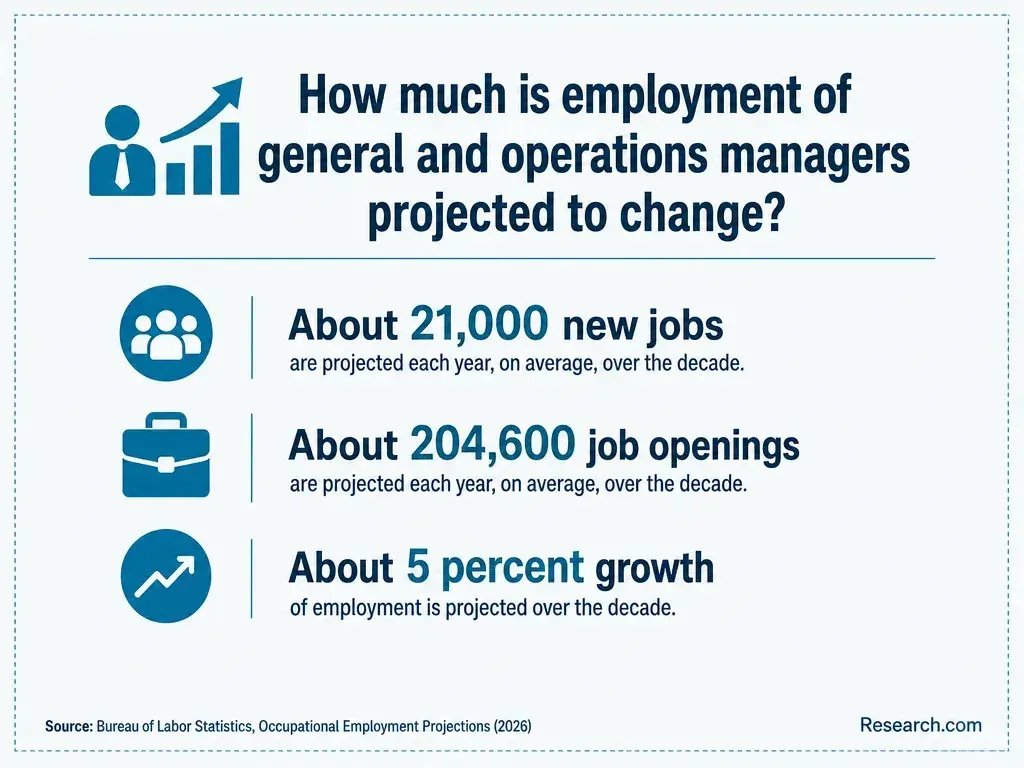
- The U.S. median for general and operations managers was $105,770 in May 2025, with 5% projected employment growth from 2025 to 2035; that broad occupation is not a starting-salary estimate for franchise roles.
What Does a Franchise Operations Manager Do?
A franchise operations manager helps locations operate consistently while meeting business goals. Depending on the employer, the manager may work for a franchisor supporting independently owned franchisees, a company that owns multiple franchised units, or a large franchisee. Those arrangements change who controls staffing, budgets, and day-to-day decisions.
Typical work includes reviewing sales and service measures, coaching operators, checking adherence to brand procedures, coordinating training, investigating recurring problems, and supporting new-location openings. A franchisor-side manager often influences franchisees through guidance and agreed standards rather than directly managing their employees. Knowing that limit of authority is as important as knowing how to read a performance report.
Supply replenishment is part of many locations' operations, but it is not the same job as a supply chain specialist. Readers more interested in purchasing and distribution than operator coaching can compare that direction with affordable supply chain programs and salary outlook.
Can a Business Administration Degree Prepare You for Franchise Operations?
Yes - as preparation, not as a job qualification by itself. A BS in Business Administration can connect accounting, marketing, management, and operations so you can understand why a location misses a target and evaluate a practical response. Its broad scope fits a role that crosses functions. It does not, however, substitute for experience earning an operator's trust, applying brand standards, or handling problems across locations.
The best path depends on what you already do. A unit supervisor may use the degree to strengthen budgeting and analysis while seeking multi-unit assignments. Someone entering business from another field may first need a role in store operations, training, or franchise support. If your goal is specifically inventory systems or distribution, a specialized degree may offer more depth; supply chain undergraduate programs with shorter terms provide a comparison point, though shorter terms do not necessarily mean less work or lower total cost.
What Skills Do Franchise Operations Managers Need?
The strongest candidates can show how they used business skills in an operating setting. This table pairs common responsibilities with evidence an employer can assess; coursework helps most when it produces a relevant work sample or supports supervised experience.
| Skill | Franchise application | Useful evidence |
| Financial and data literacy | Interpret unit sales, labor costs, and trends without confusing revenue with profit | A permitted, anonymized performance analysis |
| Operations improvement | Identify bottlenecks and assess whether a change is practical across locations | A process map with a baseline and stated limitations |
| Coaching and communication | Explain standards, listen to operators, and follow up on agreed actions | Supervised training or team-leadership experience |
| Judgment and compliance awareness | Escalate safety, employment, privacy, or brand concerns to the right authority | Examples of sound decisions within an assigned role |
Opening new units can also require scheduling and project coordination. If that work - not ongoing operator support - is your main interest, compare its skill requirements before paying for a specialized degree; grants versus loans for project management bachelor's study is one financial consideration in that alternative.
There is no single national educational requirement for this job title. Employers set their own qualifications, and expectations vary by brand, industry, and whether the position supports franchisees or directly oversees company-owned units. A bachelor's degree may be requested or preferred, but relevant operating results and multi-location experience often matter as well.
For an early-career applicant, a realistic sequence is to learn unit operations, take responsibility for a team or operating measure, and pursue district-level, training, opening-support, or franchise-support assignments. A career changer should identify which of those responsibilities they have already performed rather than relying on a previous management title alone. Review actual postings for your target brands to see which gaps recur.
A project management degree is a different investment if your intended work centers on openings and implementations. Compare its curriculum and full price with the broader business degree before committing; tuition budgeting for an accredited project management degree can help frame that alternative.
Look beyond course titles to assignments. Managerial accounting should help you interpret costs; operations management should address process capacity and quality; marketing should connect promotions with customer experience; and organizational behavior should develop coaching and conflict-management judgment. Statistics, spreadsheets, and information systems are useful when performance reports contain incomplete or inconsistent data.
An operations, management, or analytics concentration may add depth, but confirm whether it is formally awarded, which electives are available, and whether it adds credits. A useful capstone might evaluate a proposed training or service process using authorized data - or clearly labeled hypothetical data. It should not claim real franchise results without evidence and permission.
Course sequencing matters if you need accounting or statistics before advanced electives. When comparing American colleges offering fast-track business bachelor's, ask when the relevant courses run and whether an accelerated schedule still leaves time for applicable work experience.
There is no general U.S. occupational license for the title "franchise operations manager." A particular industry, location, or assignment may have separate rules - for example, food-safety training or requirements tied to a regulated service. Confirm those obligations with the employer and appropriate regulator rather than assuming a business degree satisfies them.
Employers may value voluntary training in process improvement, project management, or their own operating systems. Before paying for a credential, check its eligibility rules and whether the target employer recognizes it. A short course may fill one skill gap more efficiently than another degree; conversely, a guide to accelerated bachelor's study is relevant if a bachelor's credential itself is the missing requirement.
A full-time bachelor's pathway commonly takes about four academic years, but transfer credits, prerequisites, course availability, and part-time enrollment can change the calendar. If you have prior college work, request an official evaluation showing not just credits accepted but which general education, business-core, and elective requirements they satisfy.
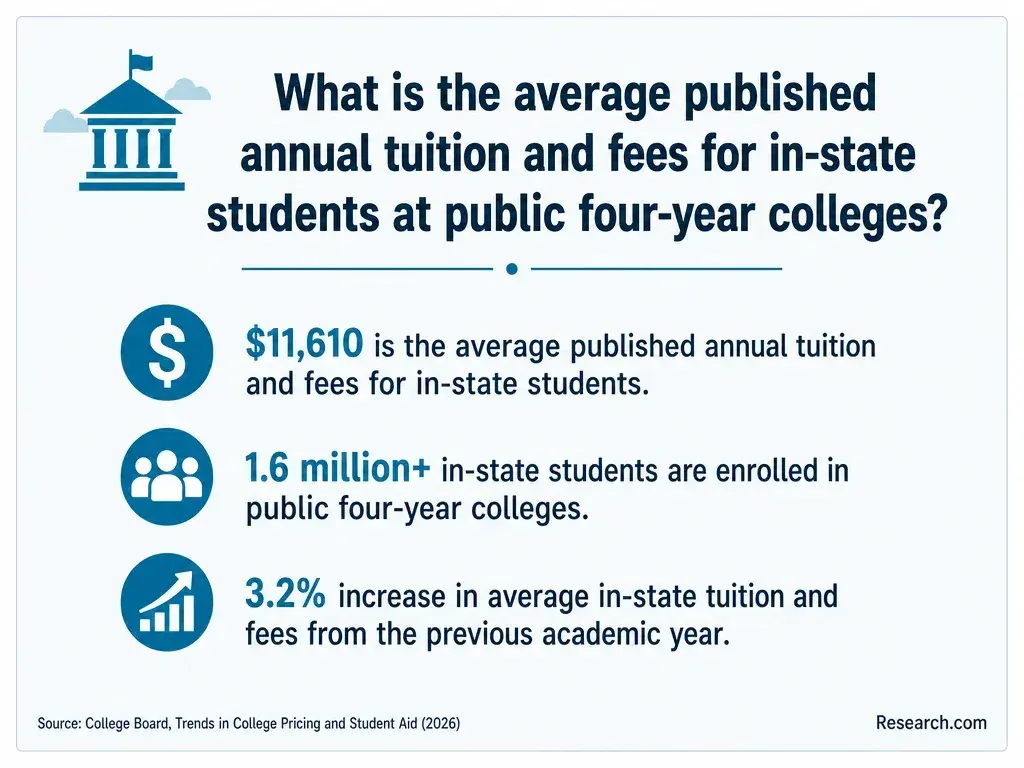
Compare the total cost to finish: remaining tuition, mandatory fees, books or software, possible travel, financing costs, and income affected by your study schedule. Per-credit prices alone can obscure extra required courses. To establish a starting comparison, review business administration online programs with competitive tuition, then obtain a personalized remaining-course plan and cost estimate from each school.
They can be, particularly if you work in a franchise location while studying. Online classes can teach analysis and management concepts, while your job supplies opportunities to observe operating constraints. Online delivery alone does not provide experience coaching operators or resolving issues in person.
Check live-session times, group assignments, exam rules, internships, and campus visits before enrolling. If you plan to use work for an academic project, obtain faculty approval and employer permission before using internal reports. Online business degree school rankings in America can help you build a shortlist, but your work schedule and access to relevant applied learning should govern the final choice.
Verify that the institution holds recognized institutional accreditation and that the exact bachelor's program is offered in the format you need. AACSB, ACBSP, and IACBE accredit business education within their stated scopes; do not assume an institution's accreditation means every business program has separate business accreditation.
For this career goal, compare required operations and accounting courses, available electives, applied projects, scheduling, career support, and the approved transfer-credit audit. Ask what recent students completed - not merely what the catalog permits. If federal aid is part of your plan, confirm the institution's participation and your own eligibility; business administration college affordability and FAFSA participation offers a starting point for that check.
What Salary and Job Outlook Can Franchise Operations Managers Expect?
The Bureau of Labor Statistics does not publish a single wage series for "franchise operations manager." Its broader general and operations managers category had a U.S. median annual wage of $105,770 in May 2025 and projected employment growth of 5% from 2025 to 2035. That category spans many industries and levels of responsibility; it cannot predict a new graduate's pay or the outlook for one franchise brand.
Compare actual postings by region, industry, travel expectations, number of locations, and whether compensation includes incentives. Then weigh likely opportunities against your remaining education cost. Comparing tuition for online business colleges is useful for that calculation, but do not count on the occupation-wide median as your personal return on a degree.
Other Things You Should Know About Business Administration
No. An operations manager works in an employment role; a franchise owner invests in and operates a business under a franchise agreement. The financial risks and decision rights differ.
Possibly. The school must approve the site, duties, supervision, and assessment under its internship rules. Working at a franchise does not automatically earn academic credit.
Only if you are authorized to share them. Otherwise, describe your responsibilities and methods without disclosing confidential figures, customer information, or proprietary reports.
Usually not. An MBA may deepen management knowledge, but employers can still require evidence that you can work effectively with operators and improve location-level performance.
- A Consumer's Guide to Buying a Franchise | Federal Trade Commission https://www.ftc.gov/business-guidance/resources/consumers-guide-buying-franchise
- What Does an Operations Manager Do? | snhu.edu https://www.snhu.edu/about-us/newsroom/business/what-does-an-operations-manager-do
- Areas of Business BBA Grads Can Work In | North Carolina Central University https://online.nccu.edu/blog/areas-of-business/
- Business School Internships: Gaining Practical Experience | Pepperdine Graziadio Business School https://bschool.pepperdine.edu/personal-growth/article/business-school-internships-gaining-practical-experience.htm
- Business Operations Manager Responsibilities | Edgewood College https://online.edgewood.edu/blog/business-operations-manager-responsibilities/
- What Can You Do With a Business Degree? | American Military University https://www.amu.apus.edu/area-of-study/business-administration-and-management/resources/what-can-you-do-with-a-business-degree/
- Operations Management Career Path | Roles, Skills & Salary | YSU https://online.ysu.edu/degrees/undergraduate/bsba/management/operations-manager-career-path/
- 6 Jobs For Business Administration Majors | ASU Online https://asuonline.asu.edu/newsroom/online-learning-tips/jobs-business-administration-degree/
- How to Become a Business Operations Manager | GMercyU https://www.gmercyu.edu/academics/learn/become-operations-manager
- How To Become an Operations Manager (With Salary and Job Outlook) | Indeed.com https://www.indeed.com/career-advice/finding-a-job/how-to-become-operations-manager