2027 BS in Business Administration Program Choice: A Project That Fits Your Intended Concentration as a Capstone Option
Audited and Verified:
Our Editorial and Data Verification Process
Research.com uses government datasets, official education statistics and primary institutional information to support its career and degree guides. Our review process checks factual accuracy, occupational definitions, source dates and the requirements associated with the credentials discussed.
How This Article Was Fact-Checked
Our editorial team verifies salary estimates, employment projections, education requirements and program information against original data providers and official organizations. Salary figures are checked against the relevant occupational definitions and reporting periods. Information about licensure, accreditation and required in-person training is reviewed separately.
Fact-checked and verified on:

Co-Founder and Chief Data Scientist
A capstone topic can sound impressive yet fail when the data is unavailable, the scope is too large, or the work does not demonstrate your intended concentration. For BS in Business Administration students choosing a program or approaching graduation, the better test is whether a project can answer a specific business question with evidence you are allowed to use. This guide explains how to match a capstone to your concentration, compare workable project formats, and check academic and workplace constraints before committing. The result should be a defensible academic deliverable - not a claim of business impact you cannot verify.
Key Things You Should Know
- Choose a capstone around a decision your intended concentration prepares you to analyze, not merely a company or industry you find interesting.
- Scope the work to one decision, an accessible evidence base, feasible alternatives, and a deliverable your faculty assessor can evaluate.
- Confirm the school's capstone rules and data permissions before using workplace material; a proposal, simulation, and implemented employer project are not interchangeable.
What is a BS in Business Administration capstone project?
A capstone is an assessed culminating assignment that asks you to integrate business coursework into an analysis or proposed solution. Depending on the program, it might be a case analysis, business plan, financial model, marketing research proposal, operations improvement plan, or presentation. Some schools prescribe the format; others allow an approved topic. A capstone does not automatically include an internship, employer sponsorship, or implementation.
The strongest projects identify a decision-maker and decision. For example, a small retailer might need to decide whether to change its inventory reorder process. A student could map the existing process, compare feasible alternatives, and recommend measures for a future pilot. Without authorized company records, the student could instead analyze a public case or clearly labeled hypothetical scenario. Neither version should claim measured savings.
If the main goal is specialized project-management study rather than an integrated business capstone, it may be worth asking whether you can finish project management studies with transferred college credits. That is a separate degree-planning decision: transfer acceptance and application to major requirements need an official evaluation.
How do you choose a capstone project for your business concentration?
Start with the skill you want the finished work to demonstrate. A finance concentration calls for more than a general company profile; an operations concentration calls for more than a marketing campaign. Then test each idea against the course rubric, your deadline, available methods, and permission to use the necessary evidence. A modest analysis with transparent limitations is stronger than an ambitious project built on inaccessible data.
Use this sequence to turn a topic into an approvable project brief:
- Name the decision: Specify who would use the analysis, what choice they face, and the time horizon.
- Match the concentration: Identify the relevant course concepts and the skill your deliverable will demonstrate.
- Inventory evidence: Separate public sources, information you own, and workplace data requiring explicit permission; identify gaps before promising an analysis.
- Set the comparison: Evaluate feasible alternatives against measures such as cost, capacity, customer response, risk, or implementation effort.
- Agree on the output: Confirm the required format, faculty checkpoints, assessment criteria, and what - if anything - an organization may review or use.
For instance, a project-management-oriented capstone could produce a proposed schedule, dependency map, risk register, and resource estimate for a hypothetical rollout. Those are academic planning outputs, not proof that a rollout occurred. If choosing a specialized study route would add expenses, review project management fees books and aid considerations separately from the capstone's own software or research costs.
Before collecting employee or customer information, ask the instructor and organization about consent, data-use approval, confidentiality, intellectual property, and any applicable academic review process. Anonymizing material does not by itself authorize its use.
What concentrations can you pursue in a business administration degree?
Concentration names and requirements vary by school. Some BS programs offer formally recorded concentrations; others provide elective clusters without a separate designation. The comparison below shows how common areas of study can lead to distinct capstone questions - not projects that every program necessarily permits.
| Intended concentration | Suitable decision and deliverable | Evidence or scope to check |
| Marketing | Choose between customer outreach approaches using a market analysis and measurement plan. | Use permitted research; do not invent survey responses or campaign results. |
| Finance or accounting | Compare equipment options using a documented budget or cash-flow model. | Label assumptions and distinguish projected cash flows from observed results. |
| Operations or supply chain | Evaluate a purchasing or workflow change with a process map and risk assessment. | Verify that process and cost information can be used. |
| Human resources | Assess onboarding alternatives through a policy review and implementation proposal. | Protect employee information and avoid unsupported claims about retention. |
| Business analytics | Build a dashboard specification that supports a defined management decision. | Explain data definitions, missing values, and what the measures cannot prove. |
A human resources project is a good fit when your coursework and target work concern people practices; it is not a substitute for specialized preparation where a role requires it. Compare human resources college study options if you need to decide between a broad business concentration and a more focused degree. Similarly, a student interested in supply chain should check whether the program actually offers enough relevant courses to support the proposed analysis.
Business administration programs commonly combine general education, a business core, electives or concentration courses, and sometimes a capstone. Accounting helps students interpret costs and financial statements; statistics and spreadsheets support comparisons; marketing and operations courses frame customer and process decisions; management, ethics, and communication help students assess stakeholder consequences and present recommendations. The exact mix and quantitative depth differ by institution.
Read the course sequence backward from your proposed project. A forecast needs appropriate finance or analytics preparation; a customer research proposal needs methods for gathering and interpreting evidence. Check whether concentration electives are offered before the capstone term and whether the capstone has prerequisites. A project topic alone does not make an informal group of electives an official concentration.
If supply chain is your primary goal but the business program offers limited relevant coursework, you can compare shorter online supply chain bachelor's pathways. Judge any advertised completion time against your transfer evaluation, course sequencing, and remaining requirements rather than the project idea alone.
Either format can support a rigorous capstone. Online delivery may make it easier to continue working while researching a project, but it does not guarantee self-paced work: live presentations, team meetings, fixed deadlines, or proctored assessments may still apply. Campus-based study may offer easier access to faculty meetings or local partners, but travel and scheduled class time can constrain a workplace project.
For a capstone, compare the formats by asking how students obtain topic approval, meet advisers, collaborate, present findings, and receive feedback. Also check whether a workplace sponsor is optional, whether remote students can use a public-data case, and whether any campus visit is required. If speed is important, compare fast-paced online business degrees against the actual time a capstone needs for evidence gathering and revision; a shorter term does not make permissions or group coordination instantaneous.
Admission rules depend on the institution and whether you enter as a first-year, transfer, or returning student. Schools may request prior transcripts and may have separate conditions for entering the business major. Mathematics, statistics, accounting, or economics courses may be prerequisites to later coursework rather than admission requirements. Review the specific school's rules before assuming your planned capstone concentration is available to you.
For a transfer student, the important distinction is between credits accepted and requirements satisfied. Ask for a degree audit showing which previous courses apply to the business core, concentration, capstone prerequisites, and any residency requirement. Guidance on qualifying for a business administration college program can help frame your questions, but the institution makes the binding admission and credit decisions.
Completion time depends on credits that apply to the degree, enrollment pace, prerequisite chains, and when required courses run. A capstone may have to be taken near the end of the program, so an unavailable prerequisite can delay graduation even when most credits are complete. Ask an adviser for a term-by-term plan that identifies the earliest eligible capstone term.
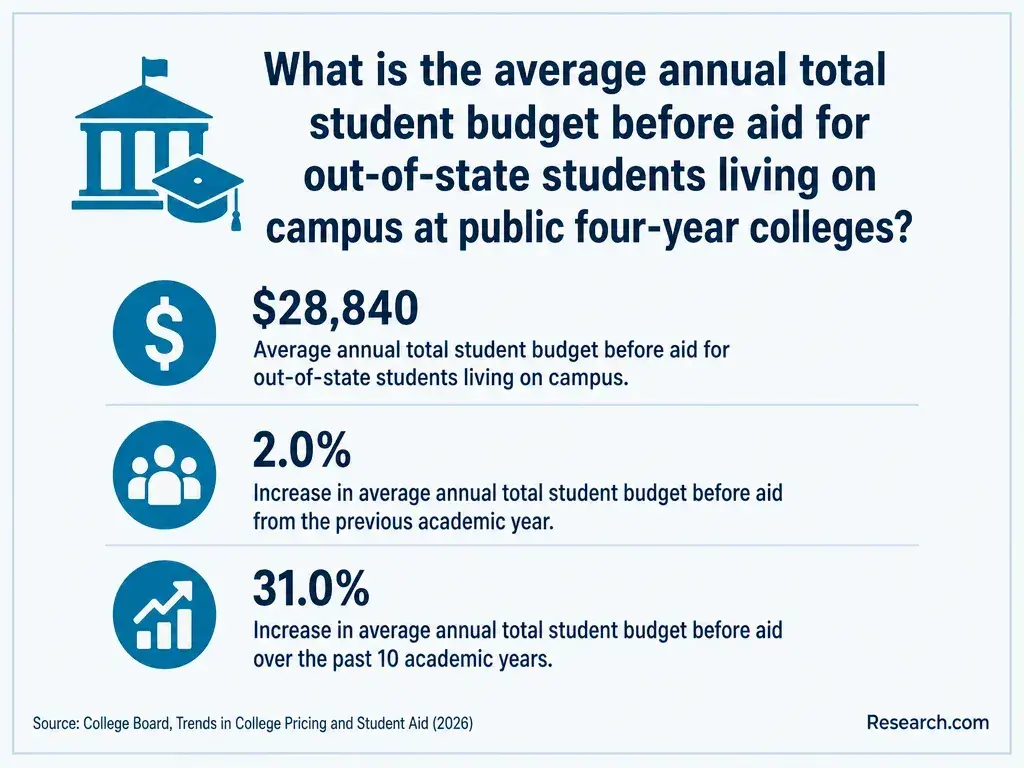
Compare costs using remaining required credits and total completion expenses, not tuition alone. Include mandatory fees, books, software, any project travel or research costs, and the financial effect of a delayed final term. When assessing business programs, you can compare inexpensive business administration degree options, then request an individualized estimate from each school.
Check the institution's recognized accreditation through the accreditor and the U.S. Department of Education's institutional records. If a school advertises AACSB, ACBSP, or IACBE recognition, check the accreditor's listing for its exact scope; institutional accreditation and business-school or programmatic accreditation are different claims.
For this decision, quality also means a capstone you can complete and have assessed fairly. Request the current catalog and capstone syllabus. Look for topic-approval rules, faculty feedback points, data-use policies, grading criteria, and examples of permitted deliverable formats. Ask whether the concentration is formally recorded and whether capstone access differs by delivery format. If federal aid matters, online business administration degrees accepting federal aid applications can be a starting point, but verify the school's current eligibility and your own aid status directly.
A concentration-aligned capstone can help an early-career applicant show how they define a problem, work with evidence, consider trade-offs, and explain a recommendation. That can support applications for roles such as marketing coordinator, operations coordinator, HR assistant, or project coordinator. The degree and project do not replace the experience or specialized skills a particular employer requires.
For context, the U.S. Bureau of Labor Statistics reports a May 2025 median annual wage of $78,760 for market research analysts, with employment projected to grow 7% from 2025 to 2035. These are occupation-wide figures, not expected starting pay for business graduates or a return promised by a marketing capstone. Use the duties in target job postings to decide whether your project demonstrates relevant methods, then seek internships or supervised work where hands-on experience is missing.
Education cost belongs in that career decision. You can compare lower-cost business degree options, but weigh each option against its relevant coursework, capstone support, and your actual remaining credits - not an assumed salary increase.
What certifications or licenses may business graduates need?
Most business administration capstones confer academic credit, not a professional credential. A finance model does not authorize regulated financial advice; an accounting project does not establish CPA eligibility; and a project schedule does not itself qualify someone for a project-management certification. Eligibility for a license or voluntary certification depends on the relevant board or certifying organization, which may require particular education, exams, or experience.
Choose the capstone for the evidence of skill it can honestly provide, then check credentials against your target role's requirements. If you are considering more education instead of, or alongside, a credential, project management degree tuition comparisons can help frame the cost question. A separate degree should be justified by its curriculum and your career goal, not by an assumption that the business capstone or degree grants certification. If a specialized project-management degree is also under consideration, use project management degree tuition comparisons as a separate pathway comparison - not as the cost of doing a business capstone.
Other Things You Should Know About Business Administration
Possibly, but ask your instructor first. A revised topic may need a new proposal, especially if it changes the methods, evidence, or learning objectives.
Follow your institution's course policy. Disclose permitted assistance, verify factual claims and calculations yourself, and never enter confidential workplace or personal information into a tool without authorization.
Yes, if the evidence supports it. Explain the alternatives, the costs and risks of change, your assumptions, and what additional evidence could alter the recommendation.
Show only material you have the right to share. A redacted summary or independently recreated example can demonstrate your methods without disclosing proprietary information; label it accurately as academic work.
- Models and methods for information systems project success evaluation - A review and directions for research - PMC https://pmc.ncbi.nlm.nih.gov/articles/PMC9720563/
- Principles and Best Practices for Protecting Participant Privacy | Grants & Funding https://grants.nih.gov/policy-and-compliance/policy-topics/sharing-policies/dms/privacy/best-practices
- What Is a Capstone Project? - Boston University Questrom https://www.bu.edu/questrom/blog/what-is-a-capstone-project/
- Public Service & Administration Capstone Projects | The Bush School of Government & Public Service https://bush.tamu.edu/research/capstone-projects/psa/
- Supply Chain and Logistics Management Graduate Major (MS) | oregonstate.edu https://catalog.oregonstate.edu/college-departments/business/school-management-entrepreneurship-supply-chain/supply-chain-logistics-management-ms/
- Curriculum - MTSU Online M.B.A. - Flex MBA https://mba.mtsu.edu/curriculum/
- Bachelor of Science in Business Administration | Purdue University Global Academic Catalog https://catalog.purdueglobal.edu/undergraduate/business-information-technology/business-administration-bs/
- Research Design Guidance | lehigh.edu https://research.lehigh.edu/policies-guidance-forms/research-design-guidance
- Faculty Advisor Role | ucsd.edu https://aip.ucsd.edu/faculty/faculty-advisor-role.html
- Capstone Requirement - Undergraduate Studies - Mizzou https://undergraduatestudies.missouri.edu/students/academics/capstone-requirement/