2027 BS in Business Administration: Estimating the Value of a Degree When Your Employer Requires Any Bachelor's
Audited and Verified:
Our Editorial and Data Verification Process
Research.com uses government datasets, official education statistics and primary institutional information to support its career and degree guides. Our review process checks factual accuracy, occupational definitions, source dates and the requirements associated with the credentials discussed.
How This Article Was Fact-Checked
Our editorial team verifies salary estimates, employment projections, education requirements and program information against original data providers and official organizations. Salary figures are checked against the relevant occupational definitions and reporting periods. Information about licensure, accreditation and required in-person training is reviewed separately.
Fact-checked and verified on:

Co-Founder and Chief Data Scientist
If your employer requires a bachelor's degree but does not specify a major, the best degree may be the one that satisfies the requirement with the least avoidable cost and delay. A BS in Business Administration can add useful financial, operational, and management knowledge, but that added value matters only if it serves your next role.
This guide is for employees weighing degree completion against other eligible majors. It shows how to estimate the degree's workplace value, compare realistic paths to graduation, and check the assumptions that could change your choice.
Key Things You Should Know
- If the employer truly accepts any bachelor's degree, compare the BS in Business Administration with your fastest affordable eligible completion path, not with having no degree.
- Count a business-specific payoff only when its courses, projects, or recruiting opportunities address a documented skill gap or target role; a degree alone does not secure a promotion.
- The Bureau of Labor Statistics reports a May 2025 median wage of $75,940 for human resources specialists, but that occupation-wide figure is not an expected salary for business administration graduates or a suitable default for your return-on-investment calculation.
What is a BS in Business Administration, and is it worth it when any bachelor's degree is required?
A BS in Business Administration is an undergraduate degree combining general education with business subjects such as accounting, management, marketing, operations, and quantitative analysis. Its exact curriculum varies by school. A BBA, BA in Business, or another accredited bachelor's may meet the same employer rule, even though its courses differ.
Start by separating credential value from business-learning value. If an internal posting requires any bachelor's, each qualifying degree may clear the same eligibility screen. The business BS earns its additional cost or time only if it also helps you perform the target job, demonstrate relevant skills, or pursue opportunities you would otherwise miss.
This comparison is especially important if you already have substantial college credit. An eligible degree that applies more of those credits may beat a business BS that requires you to repeat prerequisites. Conversely, if you handle budgets, processes, or teams and lack formal business preparation, relevant coursework may justify a longer route. If speed is decisive, compare the actual remaining requirements - not advertising claims, for flexible accelerated bachelor's degrees.
Ask HR to confirm in writing whether the requirement applies to the institution, degree level, completed credential, or field of study. An individual posting or promotion policy may be narrower than a general statement that "any bachelor's" qualifies.
What jobs can you get with a BS in Business Administration?
The degree can support applications for operations coordinator, administrative specialist, sales operations, procurement, or HR support roles. Those jobs involve different tasks: tracking workflows, preparing reports, coordinating purchases, maintaining records, or supporting employee processes. Employers also assess experience and function-specific skills, graduation does not automatically qualify someone to manage staff or budgets.
For an experienced employee, the more useful question is which next job the degree helps unlock. Compare its posting with your current responsibilities. If you already coordinate vendors and improve processes, a business degree may document broad preparation for an operations role. If your goal is HR, check whether the employer expects recruiting, employment-law, or HR systems experience in addition to a bachelor's. Employees with substantial prior credit can also compare whether they could finish an HR bachelor's using previous college credits without adding unnecessary semesters.
Where a job requires specialized experience, use a workplace project, supervised assignment, or relevant entry-level move to build evidence alongside the degree. Obtain permission before using employer information in coursework or a portfolio.
How much can you earn with a BS in Business Administration?
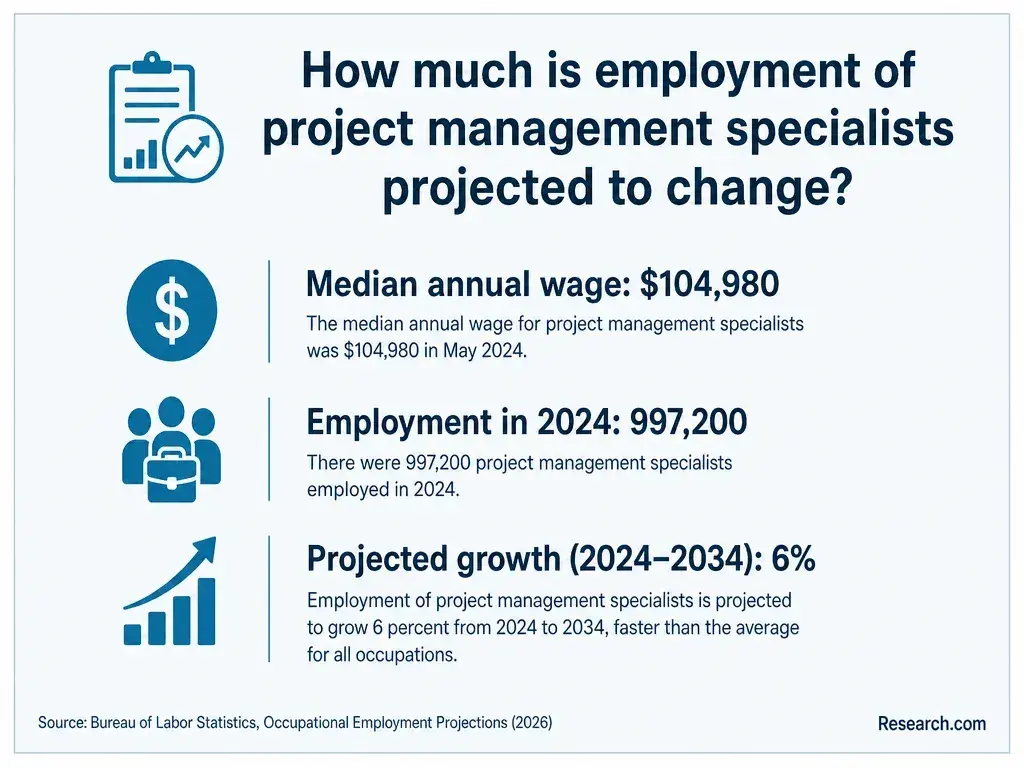
There is no reliable single salary for holders of this degree: pay follows the occupation, location, industry, responsibilities, and experience more closely than the degree title. The Bureau of Labor Statistics reports a May 2025 median annual wage of $75,940 for human resources specialists. That is the median across workers in the occupation, not a starting salary, a business-graduate average, or the amount your employer will pay after graduation.
For your decision, request the pay range for the specific internal role or grade you seek. If a promotion has a published range, compare its likely compensation with your current pay, but do not assume you will receive the promotion. A degree can make you eligible without making you the selected candidate.
Specialization changes the comparison. If your target is purchasing or logistics rather than broad administration, inspect the required skills and compare business coursework with options to explore lower-cost supply chain completion routes. The strongest salary case is tied to an attainable role and demonstrated skills, not to the highest-paid occupation loosely associated with business.
Typical programs introduce financial statements, budgeting, economics, marketing, organizational behavior, operations, statistics, and business communication. Some offer electives or formal concentrations, but coverage and quantitative depth differ. An elective cluster is not necessarily an officially awarded concentration.
Judge the curriculum against work you want to do. A course in managerial accounting may help you interpret department costs; operations coursework may help you map a process; a supervised project may give you a defensible work sample. None, by itself, proves specialist or managerial competence. If your only gap is scheduling and tracking projects, compare the relevant courses and total price with accredited project management programs with low tuition before paying for a broader curriculum.
Ask whether required projects can address an approved workplace problem. Faculty approval and employer permission are separate: access to company records does not automatically authorize their use in class.
A bachelor's commonly has a four-year full-time pathway, but a returning employee's timeline depends on credits applied to requirements, course sequencing, enrollment pace, and residency rules. Accepted transfer credits may count only as electives. Get a written degree audit before treating an estimated completion date as reliable.
Compare eligible programs using the same cost boundary. The table separates expenses from benefits that may arrive later, so a low advertised tuition rate does not obscure your cash-flow needs.
| Cost or benefit | What to verify |
| Required study | Remaining applicable credits, tuition basis, mandatory fees, books, software, and any campus visits |
| Time and work | Course availability, weekly study demands, scheduling conflicts, and possible lost earnings |
| Funding | Grants, loans, employer coverage, reimbursement timing, grade conditions, and repayment rules |
Estimate the incremental cost of the business BS by subtracting the total cost of your least expensive feasible eligible bachelor's path from the business program's total cost. Then weigh that difference against credible, role-specific benefits - not an assumed salary increase. For aid research, FAFSA planning for affordable business administration study is a starting point; confirm each school's aid eligibility and your own award before enrolling.
An online BS can satisfy an employer's degree rule if the credential meets that employer's policy; delivery mode alone does not determine its value. Check the institution's accreditation, the awarded degree, and whether the employer places any format restriction on its education benefit or promotion policy.
Online also does not mean self-paced. Live sessions, team presentations, proctored exams, and fixed deadlines can make a nominally flexible program difficult to combine with work. Compare actual course schedules and student support, especially if delayed classes would postpone eligibility for an internal opening. A national comparison of accelerated business bachelor's schools can help build a shortlist, but your transfer audit and available course sequence determine your personal finish date.
Requirements vary by institution and by whether you enter as a first-year or transfer student. Schools may request prior transcripts and evidence of secondary-school completion; admission to the university may be separate from admission to the business major. Some programs also set minimum grades or require mathematics, accounting, economics, or introductory business courses before upper-level study.
Before applying, gather transcripts and ask admissions which requirements you meet. Ask the transfer office which courses will apply to general education and the business core, and request a degree audit showing what remains. Prior experience may strengthen an application, but it does not automatically earn credit. For a closer look at possible course requirements, review academic preparation for business administration applicants, then verify the rules in your chosen school's catalog.
First, verify that the institution holds recognized institutional accreditation using the accreditor's or U.S. Department of Education's official records, and confirm the status applies to the campus or online institution awarding your degree. Ask HR whether its policy specifies a particular kind of accreditation.
Next, if a school advertises AACSB, ACBSP, or IACBE accreditation, check the accreditor's listing for its actual scope. Business-school or programmatic accreditation is distinct from institutional accreditation; do not assume every degree at the institution is covered. Apply the same test to alternatives, including transfer-friendly project management bachelor's degrees. Accreditation supports a credibility check, but it does not guarantee credit transfer, employer acceptance, or a job.
Many general administrative and operations roles do not require an occupational license simply because they involve business work. Particular activities and professions can have separate rules, however. A business BS does not itself confer CPA eligibility, a financial-services license, an HR certification, or a project-management credential. Check the relevant state regulator or credentialing organization if your target role names one.
If your employer requires only a bachelor's for advancement, do not pay for a specialization on the assumption that it supplies a professional designation. If the next role instead emphasizes supervising teams and organizational change, compare its stated qualifications with organizational leadership degrees with faster completion options. Choose based on the credential the employer recognizes and the responsibilities you still need to demonstrate.
How do you choose a reputable BS in Business Administration program?
Shortlist programs only after confirming your employer's degree policy and identifying your next plausible role. Then request a school-specific transfer evaluation and compare each option on remaining requirements, full cost, scheduling, and useful business learning. Published online business degree rankings for US college applicants can help you discover programs, but they cannot replace an individual degree audit.
Ask the school who advises working students, how often required courses run, whether a capstone or internship is mandatory, and what happens if you need to pause enrollment. Treat reported graduate outcomes cautiously unless the school explains which students were counted and how the information was collected.
Bottom line: choose the BS in Business Administration when its additional learning and opportunities justify its incremental cost and completion time. If another accepted bachelor's gets you to the employer's requirement sooner or more affordably - and business-specific skills are not needed for your target role - that alternative may offer better value.
Other Things You Should Know About Business Administration
Do not assume so. Ask HR whether the policy requires an awarded degree, whether there is a completion deadline, and what documentation it accepts while you study.
It may, if it meets the employer's stated policy. Get a written determination before pursuing a second bachelor's solely to clear the eligibility screen.
Follow your employer's instructions. An official transcript showing the degree was conferred may be needed; completing final classes is not the same as having the degree awarded.
Not necessarily. Eligibility, selection, and the effective date of any pay change are separate employer decisions. Confirm each step in the applicable promotion policy.
- Field of Study in College and Lifetime Earnings in the United States - PMC https://pmc.ncbi.nlm.nih.gov/articles/PMC5198720/
- Plan and Pay for Higher Education - State Controller's Office https://www.sco.ca.gov/eo_higher_education.html
- Cost of Attendance (Budget) | 2025-2026 Federal Student Aid Handbook https://fsapartners.ed.gov/knowledge-center/fsa-handbook/2025-2026/vol3/ch2-cost-attendance-budget
- Research Summary: Education and Lifetime Earnings | ssa.gov https://www.ssa.gov/policy/docs/research-summaries/education-earnings.html
- Annual Earnings by Educational Attainment - COE https://nces.ed.gov/programs/coe/indicator/cba/annual-earnings
- BS in Business Administration | Online Bachelor's Degree | Capella University https://www.capella.edu/online-business-degrees/bs-business-program/bachelors-business-administration/
- Employer Tuition Reimbursement: How It Works and How to Pay for College | Winston-Salem State University https://ramsonline.wssu.edu/blog/employer-education-benefits/
- 10 Key Subjects Taught in a Bachelor of Business Administration Program | Carson-Newman University https://www.cn.edu/cps-blog/10-key-subjects-taught-in-a-bachelor-of-business-administration-program/
- 11 Types of Business Degrees and Career Pathways | National University https://www.nu.edu/blog/types-of-business-degrees/
- Business Administration (B.S.) - Degree Completion | University of St. Francis https://stfrancis.edu/business-administration-online-degree-completion/