2027 Best Two-Year Degrees With the Best ROI

Co-Founder and Chief Data Scientist
A two-year degree can be a lower-cost route into a career, but the best return depends on what it costs to finish and whether it actually qualifies you for the work you want. The College Board reported average published tuition and fees of $4,050 for in-district students at public two-year colleges in 2024-25; books, living expenses, and program fees can raise the bill considerably. This guide compares degree fields - not colleges - using career access, occupational pay, and completion risks, so you can shortlist programs and check their real costs before enrolling.
Key Things You Should Know
- Career-focused healthcare degrees often offer the clearest route from an associate program to a defined occupation, but clinical placements, exams, and state licensing can affect both cost and time to employment.
- In May 2024, the U.S. Bureau of Labor Statistics reported occupational median pay of $94,260 for dental hygienists and $93,600 for registered nurses; those are wages for workers in the occupations, not promised salaries for new graduates.
- Compare the cost of finishing each program - not tuition alone - against local job access, required credentials, and whether the credits will count toward a future bachelor's degree.
Top 10 Best Two-Year Degrees With the Best ROI
Business Programs
An associate degree in accounting, business administration, or supply chain management can support entry-level bookkeeping, operations, or administrative work. Its ROI is strongest when the curriculum teaches job-ready tools - such as accounting software and spreadsheets - and includes employer connections. An Associate of Applied Science (AAS) may prioritize employment, while an Associate of Arts (AA) or Associate of Science (AS) may better support transfer. Check local job postings before paying for a broad business degree: management roles generally require experience, and some accounting careers require a bachelor's degree and further credentials.
Healthcare Programs
Dental hygiene, diagnostic medical sonography, and radiologic technology can offer strong potential ROI because their associate-level pathways connect to specific clinical occupations. The trade-off is often selective admission, prerequisite science courses, equipment or exam expenses, and scheduled in-person clinical hours. Confirm that the program meets the educational requirements for the credential and state where you plan to work. A short certificate may cost less for a different healthcare role, but it should not be treated as interchangeable with training for a regulated occupation.
Information Technology Programs
Associate programs in networking, cybersecurity, and software development can build practical skills without the clinical costs common in healthcare. Their payoff is less predictable: employers may weigh projects, internships, certifications, and experience alongside the degree. Look for hands-on labs and instruction that keeps pace with current tools, including AI-assisted workflows. An inexpensive program with outdated coursework may offer weaker value than a slightly costlier one with relevant equipment and internship access. Some software and security positions prefer a bachelor's degree or prior experience.
Nursing / Pre-Nursing Programs
An associate degree in nursing (ADN) can provide an educational route toward registered nurse licensure; graduation alone does not confer a license. Graduates must meet state board requirements and pass the NCLEX-RN. Nursing programs commonly have separate, competitive admission and required clinical shifts, so prerequisite wait times matter when estimating ROI. A pre-nursing AS is different: it prepares students to apply to nursing programs but generally does not qualify them for RN licensure. Ask about clinical placement, licensing eligibility, and employer expectations for an eventual bachelor's degree in nursing.
Criminal Justice Programs
A criminal justice associate degree may support applications for corrections, security, dispatch, or other public-safety roles. Its financial return depends heavily on local hiring standards: police agencies may require academy training, background screening, physical qualifications, and other steps beyond the degree. Some positions do not require an associate degree at all. Compare the program's cost with employer-sponsored training and check whether its credits transfer if your goal is a bachelor's degree or a role with higher educational requirements.
Psychology / Counseling Programs
A psychology associate degree is usually a transfer foundation rather than a direct route to practice as a counselor or psychologist. Counseling and psychologist roles typically require substantially more education and, often, licensure. The degree may still offer value if an affordable, documented transfer agreement moves you efficiently toward a bachelor's program. If you want to work sooner, compare specific entry-level human-services roles and their local requirements. Do not calculate this degree's ROI using a licensed clinician's salary unless your plan includes the additional education and costs.
What Are the Best Two-Year Degrees for Return on Investment?
The best two-year degrees for potential ROI are those that lead to an occupation you can realistically enter, at a total cost you can manage. Dental hygiene, ADN nursing, and diagnostic medical sonography are strong candidates for students who can complete selective, hands-on training and meet credentialing rules. IT and focused business programs can also pay off, particularly when they provide relevant experience. A transfer-oriented degree may have good long-term value, but its return depends partly on the cost of education after the associate degree.
This comparison groups fields by their main route to value. It is not a ranking of every program: local wages, admission delays, graduation rates, and individual circumstances can change the order.
| Degree field | Potential ROI advantage | Principal trade-off |
| Dental hygiene | Defined associate-level clinical career | Selective admission, clinical training, licensure |
| ADN nursing | Route toward a large licensed occupation | Prerequisites, clinical schedules, licensing exam |
| Diagnostic medical sonography | Specialized, patient-facing technical work | Clinical access and employer credential expectations |
| Information technology | Skills applicable to multiple entry-level roles | Competition and continuing skill development |
| Business or accounting | Broad employer demand for operational skills | Less direct access to a single high-paying role |
| Psychology or pre-nursing | Foundation for further study | Additional education needed for the intended career |
A graduate-school destination changes the calculation. For example, someone considering psychology should price the full pathway before comparing it with an associate-level healthcare occupation; a later easiest master degree search cannot substitute for checking the actual education and licensing rules for counseling.
Which Associate Degrees Lead to the Highest-Paying Careers?
Among occupations with established associate-degree pathways, dental hygienist and registered nurse stand out for occupational pay. The U.S. Bureau of Labor Statistics reported May 2024 median pay of $94,260 for dental hygienists and $93,600 for registered nurses. A median describes workers already in an occupation, including experienced workers; it is not a starting offer or evidence that the degree alone produces that income.
Other fields, including medical imaging and sonography, merit comparison, but confirm the exact occupation behind any salary figure. An ADN graduate must obtain RN licensure, while dental hygienists must meet state licensing requirements. High-paying technology roles may be accessible to some associate graduates, but a job title's median pay does not establish that a two-year degree is the typical entry route. Use local entry-level postings - not national medians alone - to test your likely first-job options.
How Much Do Two-Year Degrees Cost, and How Quickly Do They Pay Off?
Published tuition is only a starting point. The College Board's 2024-25 average of $4,050 in tuition and fees for in-district public two-year students does not represent a universal program price or include every expense. Out-of-district rates, prerequisites, books, equipment, background checks, commuting, clinical travel, and living costs can change what a student must pay or borrow.
ROI means the benefit of an education relative to its full cost. For a useful personal estimate, compare each program's total net cost after grants with your realistic earnings and employment prospects without that program. Include wages you may give up while studying, borrowing costs, and the possibility that admission or course sequencing delays completion. A simple "tuition divided by occupational median pay" calculation is misleading because median pay is not an earnings gain attributable to the degree.
Ask each college for an itemized cost covering prerequisites through graduation, its program-specific completion information, and the schedule of required courses. Complete the FAFSA to check federal aid eligibility, then compare grants, scholarships, employer tuition assistance, and borrowing. A cheaper program can have a worse payoff if required classes or clinical placements are difficult to obtain; a costlier one is not automatically better because its advertised salary figure is higher.
What Careers Can You Start With a Two-Year Degree?
A two-year degree can lead directly toward some occupations and serve as a first step toward others. Dental hygienists, registered nurses, and diagnostic medical sonographers have established associate-level educational pathways, subject to program, credential, and state requirements. Business graduates may seek bookkeeping or operations support positions; IT graduates may pursue help desk or junior technical roles. Criminal justice graduates should check agency-specific hiring rules before assuming the degree is required.
Match the curriculum to the first job you can apply for, not just the senior job you hope to hold later. A certificate or apprenticeship may be a lower-cost alternative when your target occupation does not require a degree. For technical roles, compare an associate program with relevant best certifications for jobs, then check whether local employers ask for either credential, both, or demonstrated experience.
Which Two-Year Degree Programs Have the Strongest Job Outlook?
Healthcare is a useful starting point for an outlook comparison, but growth alone does not determine ROI. U.S. Bureau of Labor Statistics projections for 2024-34 show that employment needs vary by occupation; openings can also arise when existing workers leave. Compare the outlook for the specific job your program targets rather than assuming every healthcare, business, or IT degree shares one forecast.
Local conditions matter just as much. A growing occupation may still offer few nearby openings or require a credential employers prefer but your program does not prepare you for. Check current local postings, clinical-site availability, and employer requirements alongside national projections. In IT, changing tools and AI-assisted work make continuing skills development important; neither a promising projection nor an associate degree protects a particular job from change.
Do Two-Year Careers Require Licenses or Professional Certifications?
Some of the strongest career-focused two-year paths require steps after graduation. Registered nurses must satisfy state board rules and pass the NCLEX-RN. Dental hygienists need state licensure. Imaging and sonography employers may expect professional certification, while requirements vary by role, employer, and state. Public-safety positions can impose academy, background, and physical requirements. In contrast, an IT certification may help demonstrate a skill without being a government license.
Before applying, identify the exact occupation and state where you intend to work. Then confirm that the program's graduates are eligible for the relevant exam or license, whether supervised hours or clinical placements are included, and what each required step costs. A degree that does not meet your intended state's requirements can have poor ROI even if its tuition is low.
Are Online or Campus-Based Two-Year Programs Better for ROI?
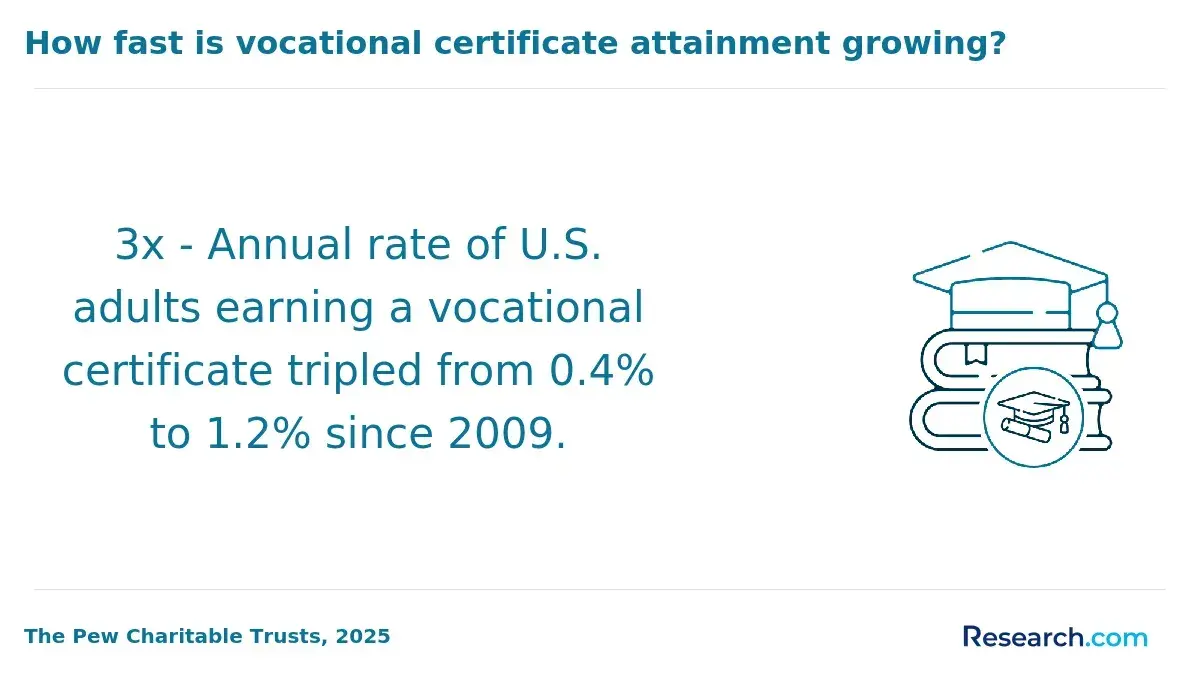
Neither online nor campus study has an automatic ROI advantage. Online courses may reduce commuting and make paid work easier to maintain, but they can still have scheduled meetings and fixed deadlines. Campus programs may provide easier access to equipment, labs, peers, and local employers. Healthcare programs generally require in-person clinical learning even when academic courses are online.
Compare total cost and your likelihood of finishing, not delivery labels. An easiest online degree may fit a student's schedule yet be a poor match for a licensed clinical goal. Verify required campus visits, local placement arrangements, course availability, and whether the format allows part-time enrollment before choosing it for convenience.
What Accreditation Should You Look for in a Two-Year Degree Program?
Start with the college's institutional accreditation, particularly because it can affect federal financial aid eligibility and how another college evaluates transfer credits. Then check any program-specific recognition tied to your intended occupation. For example, dental hygiene and nursing applicants should confirm that the particular program meets applicable accreditation, state approval, and exam-eligibility requirements. An accredited college does not, by itself, establish that every program meets every licensing board's rules.
If you intend to transfer, request a written course-by-course evaluation or check a formal articulation agreement with the destination institution. Credits can be accepted by a university without satisfying requirements for your chosen bachelor's major. That distinction is especially important when comparing a workforce-oriented AAS with a transfer-oriented AA or AS.
What Are the Admission Requirements for High-ROI Associate Degrees?
Many colleges admit students to the institution separately from admitting them to a selective major. High-ROI clinical programs may require prerequisite science courses, minimum grades, entrance assessments, immunizations, background checks, or documented clinical eligibility. IT and business programs may have fewer major-specific entry barriers, but placement rules and course prerequisites can still affect when you start.
Ask admissions staff whether you can enter the major now, when its next cohort begins, and how many prerequisite or general-education credits remain. Associate degrees commonly require roughly 60 credits, but program requirements and clinical sequencing vary; "two-year" completion usually assumes an appropriate full-time schedule. A part-time student or someone waiting for a selective-program seat may take longer. If application costs are a concern, online universities with no application fee offer a separate comparison, though a waived fee should not outweigh program fit or licensing eligibility.
Other Things You Should Know About
Dental hygiene and ADN nursing connect to occupations with high national median pay, but the better personal choice depends on admission, licensing, total cost, local opportunities, and whether you want the work.
It can, but there is no universal payback period. Compare your net program cost and lost work time with a realistic local entry-level offer and what you could earn without the credential.
An AAS often makes sense for a defined workforce goal; an AA may fit a planned bachelor's transfer. Verify both job eligibility and how individual credits apply before deciding.
Delivery format alone does not determine acceptance. Check the college's accreditation, relevant program requirements, hands-on training, and whether the credential meets the rules for your target job or license.
References
- Levels and Eligibility Requirements | North Carolina Social Work Certification and Licensure Board https://www.ncswboard.gov/levels-and-eligibility-requirements/
- Associate's degree: Career Outlook | bls.gov https://www.bls.gov/careeroutlook/subject/associates_degree.htm
- Fast Facts: Student debt (900) | ed.gov https://nces.ed.gov/fastfacts/display.asp
- The Major Payoff: Evaluating Earnings and Employment Outcomes Across Bachelor's Degrees - CEW Georgetown https://cew.georgetown.edu/cew-reports/major-payoff/
- Professional Licensure Disclosures - UMSL https://www.umsl.edu/oiec/regulations/professional-licensure-disclosures.html
- Measuring the Return on Investment of Higher Education | bipartisanpolicy.org https://bipartisanpolicy.org/explainer/measuring-the-return-on-investment-of-higher-education-breaking-down-the-complexity/
- Does College Pay Off? A Comprehensive Return On Investment Analysis - FREOPP https://freopp.org/whitepapers/does-college-pay-off-a-comprehensive-return-on-investment-analysis/
- Career earnings by college major - The Hamilton Project https://www.hamiltonproject.org/data/career-earnings-by-college-major/