
2027 Best Two-Year Degrees

Co-Founder and Chief Data Scientist
Choosing a two-year degree means deciding whether you want to enter a career soon, transfer to a bachelor's program, or keep both options open. The stakes are real: the U.S. Bureau of Labor Statistics (BLS) reports that dental hygienists earned a median wage of $94,260 in 2024, but the job requires more than simply earning an associate degree.
This guide compares business, healthcare, technology, nursing, criminal justice, and psychology pathways by career fit, cost, and requirements so you can identify programs worth investigating - and avoid paying for one that does not lead where you expect.
Key Things You Should Know
- For a direct career path, compare nursing and accredited allied-health programs first; for a future bachelor's degree, check how an AA or AS applies to your intended major.
- BLS reports a 2024 median wage of $93,600 for registered nurses. That is an occupational figure, not a promised salary for associate-degree graduates; nurses must also qualify for state licensure. The College Board reported average published tuition and fees of $4,050 for in-district students at public two-year colleges in 2024-25.
- Supplies, clinical costs, transportation, and living expenses can substantially change the total.
Top 10 Best Two-Year Degrees
Business Programs
Business administration and accounting associate degrees suit students seeking office, bookkeeping, or customer-operations work. An AA or AS may emphasize transferable general education; an AAS may put more time into spreadsheets, accounting software, and workplace projects. Business is a flexible starting point, but an associate degree alone usually does not qualify someone for management. Choose a transfer-focused program if a bachelor's degree is the goal, and confirm that its accounting and business courses will count toward that major.
Healthcare Programs
Healthcare options include dental hygiene, diagnostic medical sonography, radiologic technology, and medical assisting. They differ sharply: some prepare students for a specific regulated occupation, while medical assisting may also be entered through a certificate. Compare required prerequisites, selective admission, clinical placement, programmatic accreditation, and eligibility for any required exam or license. A program with laboratory and patient-care requirements is unlikely to be completed entirely from home. Check local clinical availability before treating an advertised two-year timeline as realistic.
Information Technology Programs
Information technology, networking, cybersecurity, and software-development associate programs can prepare students for entry-level support or technical work, or for transfer into computing. Look for hands-on labs, current tools, and opportunities to demonstrate skills through projects or internships. An AAS may favor immediate job preparation; an AS may align better with a bachelor's pathway. Employers' requirements vary, and a cybersecurity degree alone does not normally make someone an experienced security analyst. Compare the curriculum with actual entry-level job postings in your area.
Nursing / Pre-Nursing Programs
An associate degree in nursing (ADN) is a possible route toward registered-nurse licensure when the program meets state requirements. Admission is often selective and may require science prerequisites, entrance testing, and health screenings. Graduates must meet their state board's requirements and pass the NCLEX-RN; the degree itself is not a license. Pre-nursing is different: it usually covers prerequisites and does not itself qualify students to practice. If a later BSN matters, check for an established ADN-to-BSN transfer pathway.
Criminal Justice Programs
Criminal justice AA and AS degrees commonly study law, courts, policing, and corrections. They can support transfer or applications for certain public-safety roles, but agency hiring standards, background checks, academy training, and state requirements are separate. An AAS may emphasize workplace skills over transferable coursework. Before enrolling, check the qualifications for the specific agency or occupation you want; do not assume that completing the degree makes you eligible for a law-enforcement position.
Psychology / Counseling Programs
Psychology associate degrees are generally transfer-oriented introductions to research methods, development, and human behavior. They may also support applications for some entry-level human-services work, depending on the employer. They do not qualify graduates to practice independently as psychologists or licensed counselors; those careers require additional education and state-specific credentials. Choose this path if you have a realistic bachelor's or graduate-school plan, and verify that the courses meet your intended transfer institution's major requirements.
What Are the Best Two-Year Degrees for High-Paying Careers?
Healthcare offers some of the strongest pay potential among occupations accessible through an associate-degree pathway, but the best choice is one whose entry requirements, clinical work, and licensing process you can complete. Occupational wages include workers at different career stages; they are not estimates of what a new graduate will earn. Readers comparing pay against time in school can also explore quick degrees that pay well, while checking each occupation's actual entry requirements.
The following BLS median annual wages are for U.S. occupations in 2024. Use them to compare career directions, then check local openings and program eligibility rather than treating the figures as starting salaries.
| Occupation | 2024 median annual wage | Important qualification beyond earning the degree |
| Dental hygienist | $94,260 | State licensure and an approved educational pathway |
| Registered nurse | $93,600 | State licensure, including the NCLEX-RN |
| Diagnostic medical sonographer | $89,340 | Employers may seek professional certification; program and clinical requirements matter |
These fields are not interchangeable. Dental hygiene and sonography involve specialized training and patient-facing work; nursing offers a broader range of settings but also has selective admission and licensure hurdles. If those requirements are a poor fit, compare business or IT programs against local entry-level positions rather than choosing solely by a high occupational median.
Which Two-Year Degrees Have the Best Job Outlook?
Job growth is useful, but it is not the same as ease of entry. BLS projects employment of medical assistants to grow 12% from 2024 to 2034. That points to continuing demand for the occupation, yet a certificate can be sufficient for some medical-assisting jobs; an associate degree is most compelling if its broader coursework supports your longer-term plans.
Nursing and diagnostic medical sonography are also worth investigating if you want healthcare work, provided you can meet admission, clinical, and credential requirements. In IT, compare local support roles with the specific skills a program teaches: demand for advanced technology workers does not mean every entry-level cybersecurity applicant will find a job immediately. Ask programs for recent completion and employment information, including how those outcomes were measured.
How Much Do Two-Year Degree Programs Cost?
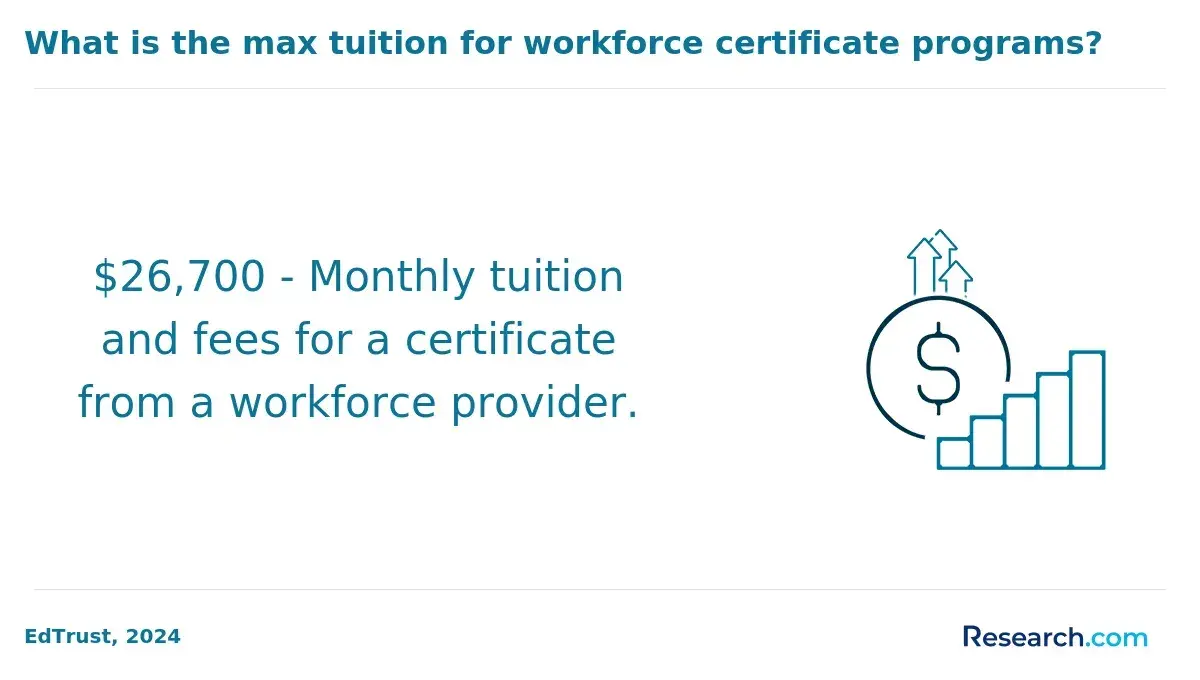
Published tuition is a starting point, not the price of finishing. The College Board's 2024-25 average of $4,050 in tuition and fees for in-district public two-year college students describes an annual sticker price; your bill will depend on residency, school, enrollment, and program-specific charges. Books, technology, transportation, childcare, and reduced working hours may matter just as much. Clinical programs can add uniforms, screenings, equipment, and travel.
Compare each school's estimated total cost through completion, not just its price per credit. Ask for a term-by-term course plan and required fees, then compare financial-aid offers after filing the FAFSA. Check eligibility for grants, scholarships, employer assistance, and payment plans. Aid eligibility depends on the student and program, and borrowing less for a low-priced program is not a bargain if missing courses delay graduation. Transfer students should also confirm that credits will satisfy degree requirements - not merely appear on a transcript.
What Careers Can You Start With a Two-Year Degree?
A two-year degree may support entry into office administration, bookkeeping, IT support, or certain healthcare occupations, depending on the curriculum and employer. Nursing, dental hygiene, and some allied-health roles have more defined education-to-credential routes, but require additional exams, licenses, or certifications. Criminal justice and psychology are often better understood as foundations for transfer or later career steps than as direct tickets to a named profession.
Start with the job you want, then work backward: compare several local postings, note their required credentials and experience, and ask a program which requirements its graduates meet. If your goal is entry-level work without a bachelor's degree, compare an associate program with a shorter certificate or apprenticeship as well. A guide to easy associate degrees that pay well can suggest alternatives, but "easy" should never outweigh job fit, credential eligibility, or total cost.
What Do You Learn in the Best Two-Year Degree Programs?
Associate degrees commonly combine general education with major courses. A typical program requires around 60 semester credits, but prerequisites, labs, clinical rotations, and course sequencing can change both the credit total and the time needed to finish. Full-time students may finish in roughly two years; part-time students and those waiting for selective admission often take longer.
The distinction below helps identify what a program is primarily built to do. Degree labels are a clue, not a substitute for reviewing the course plan and transfer agreement.
| Degree type | Common emphasis | Key trade-off |
| Associate of Arts (AA) | General education and humanities or social-science coursework | Often transfer-oriented; may offer limited occupation-specific training |
| Associate of Science (AS) | General education plus math, science, or technical foundations | May support transfer, but prerequisites must match the intended major |
| Associate of Applied Science (AAS) | Specialized technical or career coursework | Often workforce-oriented; some credits may not apply to a bachelor's major |
For example, an IT program may include networking labs, while nursing includes supervised clinical learning. A psychology AA may prioritize courses needed for a bachelor's degree. Read the actual catalog: schools can use the same degree label for programs with different outcomes.
Are Online Two-Year Degrees as Valuable as Campus Programs?
An online associate degree can be valuable if it meets the same academic and occupational requirements as an appropriate campus program. Online delivery is not automatically more flexible: courses may have live meetings, fixed deadlines, proctored exams, or required visits. Nursing and allied-health students should expect in-person clinical or lab work and should confirm where placements are available.
Check the institution's recognized accreditation, then verify any programmatic accreditation or state approval needed for your target occupation. A starting list of accredited online colleges is useful only after you confirm the specific degree's format and eligibility. For a transfer goal, ask the destination college how online courses will apply; for a career goal, compare hands-on practice, advising access, and total cost.
What Accreditation Should You Look for in a Two-Year Program?
Look first for institutional accreditation from an accreditor recognized by the U.S. Department of Education. It matters for federal financial-aid eligibility and can affect transfer, though accreditation never guarantees that another college will accept a course. Check the school and accreditor in the Department of Education's accreditation database rather than relying on a logo in an advertisement.
For regulated healthcare fields, institutional accreditation is not the whole check. Ask the program which specialized accreditation, state approval, or both are needed to qualify for the relevant licensing or certification process. Verify the answer with the licensing board or credentialing body for the state where you plan to work. A warning sign is a school that discusses its accreditation but will not clearly explain whether its graduates can pursue the required credential.
What Are the Admission Requirements for Two-Year Degrees?
Colleges commonly request a high school diploma or equivalent, an application, and prior transcripts. Placement measures or prerequisite courses may determine where students begin. Admission to the college does not necessarily mean admission to a selective major: nursing and allied-health programs may separately consider science grades, testing, screenings, or available clinical places.
If you have prior college credit, request an evaluation before committing. Ask which courses satisfy the major, whether grades or course age affect acceptance, and what must still be completed at the new school. Applicants concerned about how a record may affect admission can investigate online colleges that accept felons, but should separately check clinical-site policies and licensing rules for their intended occupation. School admission alone cannot resolve those later requirements.
Do Two-Year Careers Require Licensure or Professional Certification?
Some do, and the credential requirement belongs to the occupation - not to every associate degree in the field. Registered nurses must meet state requirements and pass the NCLEX-RN. Dental hygienists need state licensure. Sonography employers may seek professional certification. IT certifications can help demonstrate particular skills, but requirements depend on the role and employer. Business, criminal justice, and psychology degrees do not by themselves confer a professional license or qualify someone to practice counseling.
Before enrolling in a career-focused program, identify the exact job title and state where you intend to work. Confirm the licensing board's education and exam rules, whether the program meets them, and whether background or clinical-placement rules could affect your path. Get a clear answer about the credential graduates are eligible to pursue - not just a list of careers shown in a brochure.
Other Things You Should Know About
There is no universal winner. A qualifying nursing or allied-health program may fit someone seeking a defined clinical career; a transfer-focused AS or AA may be better for someone planning a bachelor's degree. Compare the goal, completion requirements, cost, and credential eligibility.
Sometimes, especially with applicable prior credits or a course schedule that supports heavier enrollment. Confirm the remaining credits, prerequisites, and course availability. Short classes alone do not make the full degree short.
It depends on the job. A certificate may be a more direct, lower-commitment route when employers accept it; an associate degree may provide broader education, a required clinical pathway, or a transfer opportunity. Check the target occupation before choosing.
Some AAS credits or degrees do, particularly through formal agreements, but acceptance is not guaranteed. Ask the intended bachelor's program which credits satisfy its major and general-education requirements.
References
- Fast Facts: Tuition costs of colleges and universities (76) | ed.gov https://nces.ed.gov/fastfacts/display.asp
- Associate's degree: Career Outlook | bls.gov https://www.bls.gov/careeroutlook/subject/associates_degree.htm
- What is 'reverse transfer' and a 'stackable credential'? - Utah System of Higher Education https://ushe.edu/what-is-reverse-transfer-and-a-stackable-credential/
- The Overlooked Value of Certificates and Associate's Degrees | georgetown.edu https://cew.georgetown.edu/resource/the-overlooked-value-of-certificates-and-associates-degrees-what-students-need-to-know-before-they-go-to-college/
- Does an AAS Degree Transfer to a Bachelor's? | Marshall University https://www.marshall.edu/blog/aas-to-bachelors-transfer/
- Time to Degree - Understanding College Affordability https://collegeaffordability.urban.org/covering-expenses/time-to-degree
- 29 High-Paying Associate Degree Jobs | Paying for College https://www.usnews.com/education/best-colleges/paying-for-college/slideshows/10-community-college-degree-jobs-that-pay-50k


