2027 Best Online Technology Management Doctorate Programs for Nonprofit, Policy, and Community Leadership Careers

Co-Founder and Chief Data Scientist
Choosing an online technology management doctorate is harder when your goal is mission-driven leadership rather than a traditional corporate IT role. The Bureau of Labor Statistics projects 8% growth for social and community service managers from 2023 to 2033, signaling continued need for leaders who can connect technology, data, operations, and public impact.
This guide is for nonprofit executives, policy professionals, civic technologists, and community leaders comparing doctoral options. You will learn how to judge program quality, specialization fit, cost, format, accreditation, and career alignment before investing.
Key Things You Should Know
- The best online technology management doctorate for nonprofit, policy, or community leadership is usually an accredited program with applied research, organizational change, data governance, cybersecurity, ethics, and public-impact technology coursework rather than a generic IT management curriculum.
- Cost and ROI vary widely, so compare total tuition, fees, residency travel, dissertation continuation costs, and employer funding; BLS 2024 wage data shows technology leadership roles can pay much more than community-service management roles, but mission-driven ROI also depends on promotion access, sector fit, and debt load.
- Applicants should verify regional accreditation, faculty expertise in civic technology or organizational leadership, online residency expectations, and whether the final project can address a real nonprofit, policy, or community problem.
Which Online Technology Management Doctorate Programs Are Best for Nonprofit, Policy, and Community Leadership?
The best online technology management doctorate is not the same for every mission-driven professional. A nonprofit chief operating officer, a state agency technology director, a community health coalition leader, and a policy analyst moving into executive leadership may all need different combinations of research training, systems thinking, public-sector knowledge, and technology governance.
A strong program should help you answer a practical leadership question: how can technology improve service delivery, equity, transparency, resilience, or organizational performance? The table below summarizes the main program profiles that tend to fit nonprofit, policy, and community leadership goals.
| Program profile | Best fit | What to look for | Potential drawback |
| Applied doctorate in technology management | Working executives who want to solve organizational technology problems | Applied dissertation or doctoral project, change leadership, enterprise systems, risk management | May be less useful for tenure-track academic goals |
| Research-focused PhD in technology management or information systems | Professionals interested in research, policy analysis, consulting, or academic roles | Advanced methods, theory, publication support, faculty research alignment | May be more theoretical and less flexible for full-time leaders |
| Doctorate with public administration, policy, or civic technology emphasis | Government, advocacy, and policy professionals | Technology policy, data ethics, public finance, digital government, evaluation | May offer less depth in enterprise technology management |
| Doctorate in organizational leadership with technology concentration | Nonprofit and community leaders focused on change management | Strategic planning, human systems, innovation adoption, stakeholder engagement | May not provide enough technical governance depth for senior IT roles |
Use rankings only as a starting point. A better "best program" test is whether the curriculum, faculty, capstone expectations, schedule, and professional network match the type of leadership problem you want to solve after graduation.
For example, a nonprofit leader responsible for donor systems, privacy, and program analytics should prioritize programs with data governance and cybersecurity content. A policy professional working on broadband access, digital services, or AI regulation should look for public-sector technology policy, evaluation, and ethics coursework.
Which Technology Management Doctorate Specializations Best Align With Nonprofit, Policy, and Community Leadership?
Specialization fit matters because technology management is broad. Some programs prepare leaders to oversee systems, vendors, and digital transformation, while others emphasize analytics, cybersecurity, innovation, operations, or organizational leadership. For nonprofit, policy, and community careers, the strongest specialization is the one that connects technology decisions to people, funding, accountability, and measurable public value.
The table below compares common specialization areas and how they align with mission-driven career goals.
| Specialization | Best aligned careers | Leadership value | Questions to ask |
| Digital transformation and innovation | Nonprofit executives, agency directors, civic technology leaders | Helps leaders modernize services, workflows, and constituent engagement | Does the program include change management and implementation strategy? |
| Data analytics and decision systems | Policy analysts, evaluation directors, program performance leaders | Builds capacity to use data for funding, outcomes, and policy decisions | Are research methods connected to real organizational data problems? |
| Cybersecurity and risk management | Public-sector technology managers, nonprofit operations leaders, compliance officers | Supports privacy, continuity, risk, and stakeholder trust | Does the curriculum address governance, compliance, and human risk? |
| Technology policy and governance | Policy directors, advocacy leaders, public administrators | Connects technology choices to regulation, ethics, procurement, and accountability | Are public policy, digital equity, and ethics included? |
| Organizational leadership and systems change | Community leadership, coalition management, nonprofit executive roles | Helps leaders implement technology across complex human systems | Are stakeholder engagement and conflict management part of the program? |
Professionals who need deeper security knowledge before doctoral study may benefit from reviewing a cybersecurity degree online as a preparatory or complementary pathway, especially if their leadership goals involve privacy, infrastructure protection, or risk governance.
A common mistake is choosing the most technical-sounding concentration without considering the sector. For mission-driven work, the best specialization is not necessarily the one with the most tools; it is the one that helps you lead technology adoption under budget limits, public scrutiny, community needs, and ethical constraints.
What Curriculum Should a Technology Management Doctorate Offer for Mission-Driven Leadership?
A mission-driven technology management doctorate should go beyond systems administration or generic leadership theory. It should teach you how to make high-stakes technology decisions in organizations where funding, equity, accountability, service quality, and stakeholder trust all matter.
The most useful curricula usually combine technology strategy with applied research and human-centered leadership. Look for coursework that helps you diagnose organizational problems, evaluate evidence, manage risk, and implement technology in ways that improve public or community outcomes.
Strong programs often include the following curriculum elements, each of which should connect to nonprofit, policy, or community leadership practice:
- Technology strategy and digital transformation, including how leaders assess readiness, manage vendors, and align systems with mission goals.
- Research methods and program evaluation, including quantitative, qualitative, or mixed-methods tools that support evidence-based decisions.
- Data governance and analytics, including privacy, data quality, dashboards, reporting, and responsible use of organizational data.
- Cybersecurity, continuity, and risk management, especially for organizations handling sensitive client, donor, health, education, or public-service data.
- Ethics, law, and technology policy, including AI governance, digital equity, accessibility, procurement, and accountability.
- Organizational change and stakeholder leadership, including coalition building, staff adoption, training, conflict resolution, and communication.
Data skills are especially important because funders, agencies, and boards increasingly expect leaders to demonstrate outcomes. If you need stronger analytics preparation before a doctorate, an online masters in data science can help build the statistical, programming, and data interpretation foundation that many doctoral projects require.
Ask admissions advisors for recent dissertation or doctoral project titles. If most projects focus only on corporate efficiency, the program may still be valuable, but it may not be the strongest fit for a leader focused on public impact, nonprofit performance, or community systems change.
The applied-versus-research decision is one of the most important choices for online doctoral students. Both pathways can support leadership careers, but they train you to produce and use knowledge in different ways.
The comparison below can help you decide which model better matches your career goal and learning style.
| Feature | Applied doctorate | Research-focused doctorate |
| Primary purpose | Solve a real organizational or professional problem | Generate original scholarly research |
| Typical final requirement | Applied doctoral project, practice-based dissertation, or capstone | Traditional dissertation with stronger theory and methods emphasis |
| Best for | Nonprofit executives, agency leaders, technology directors, consultants | Researchers, future faculty, policy scholars, senior analysts |
| Strength for mission-driven careers | Directly connects research to implementation and measurable improvement | Builds deeper analytical credibility for policy, research, and academic work |
| Main caution | May not be ideal for research-intensive academic hiring | May require more independent research time and theoretical work |
Choose an applied doctorate if you want to redesign a nonprofit data system, improve digital service delivery, evaluate technology adoption in a public agency, or lead a community-facing innovation initiative. The applied model is often a better fit for working professionals because it can turn workplace challenges into doctoral research.
Choose a research-focused doctorate if you want to study technology policy, organizational behavior, AI governance, digital equity, or information systems at a scholarly level. This path may also be better if you want to teach, publish, or compete for research-oriented roles.
A red flag is any program that describes itself as both highly applied and highly research-intensive without clearly explaining the final project, committee expectations, methodology requirements, and timeline. Before enrolling, ask for the dissertation handbook or doctoral project guide, not just a marketing summary.
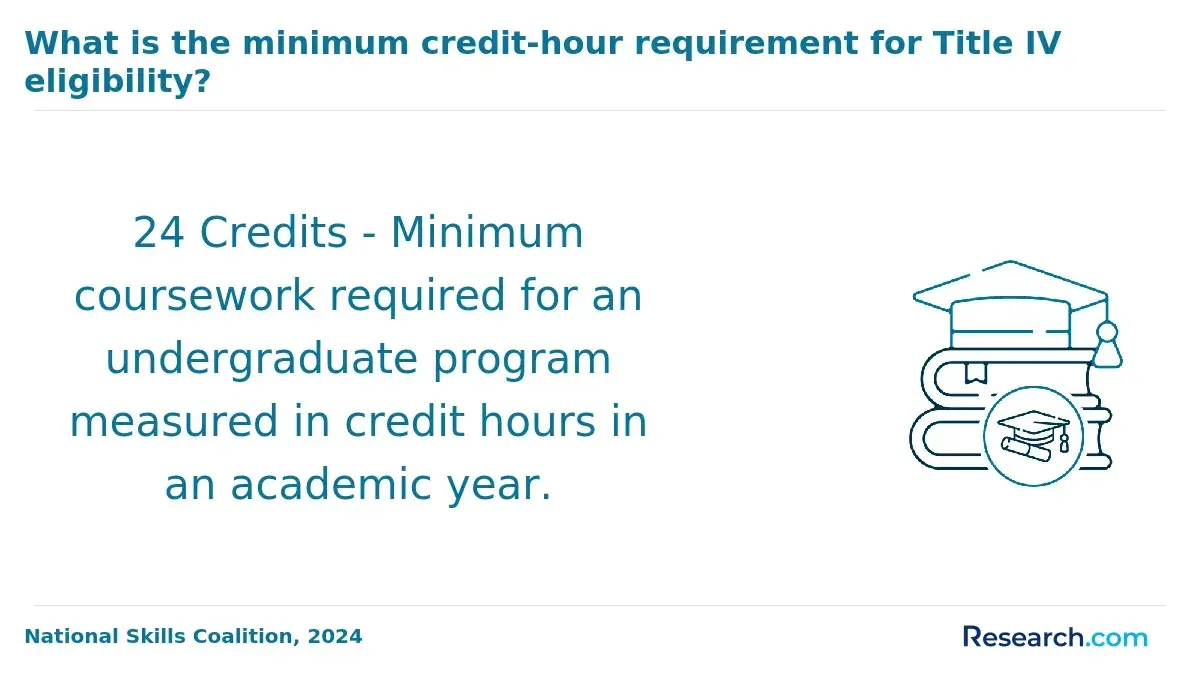
Accreditation is non-negotiable. For U.S. students, the baseline standard is institutional accreditation from an accreditor recognized by the U.S. Department of Education or the Council for Higher Education Accreditation. This matters for federal financial aid eligibility, transferability, employer recognition, and the credibility of the doctorate.
Programmatic accreditation is less common for technology management doctorates than it is for fields such as nursing, education, or counseling. Some business-oriented programs may hold business accreditation, but many legitimate technology management doctorates rely primarily on institutional accreditation. The key is to verify the institution first, then evaluate whether the program's structure and outcomes match your goals.
Use the following checks before applying, especially if the program is fully online or offered by an unfamiliar institution:
- Confirm institutional accreditation directly through the U.S. Department of Education or CHEA-recognized databases.
- Ask whether the doctorate is housed in a school of business, technology, engineering, education, public administration, or interdisciplinary studies, because the academic home often shapes the curriculum.
- Review whether credits, candidacy rules, residency requirements, and dissertation policies are published clearly.
- Check whether faculty have terminal degrees, current research, or professional experience related to technology leadership and mission-driven organizations.
- Verify that the degree title and transcript language match your career goals and will be understandable to employers.
Avoid programs that cannot clearly explain accreditation, total degree requirements, faculty qualifications, or dissertation expectations. Also be cautious if a school pressures you to enroll quickly before you have reviewed the catalog, tuition schedule, and academic policies.
Online technology management doctorates vary significantly in format. Some are fully online and asynchronous, while others require live evening classes, weekend intensives, campus residencies, international seminars, or in-person dissertation defenses. Format affects cost, time management, networking, and your ability to keep working.
The table below shows the most common online delivery models and what they mean for working leaders.
| Format feature | What it means | Best fit | What to verify |
| Asynchronous online courses | Students complete weekly work on their own schedule | Executives with irregular work hours or travel | How often faculty provide feedback and live support |
| Synchronous online sessions | Students attend scheduled virtual meetings | Students who want discussion and cohort interaction | Time zones, attendance rules, and recording access |
| Short residencies | Students attend limited in-person or virtual intensives | Professionals who value networking and faculty access | Travel costs, frequency, and whether attendance is mandatory |
| Embedded workplace project | Doctoral work is tied to a real organizational problem | Nonprofit, policy, and community leaders with employer support | Whether workplace data access and approvals are required |
| Cohort model | Students progress with the same peer group | Students who need accountability and peer learning | Whether delayed progress affects course availability |
Experiential learning is particularly valuable for mission-driven careers. A good program may let you evaluate a digital inclusion initiative, create a cybersecurity governance plan for a nonprofit, assess technology procurement in a public agency, or design a data dashboard for community outcomes.
If speed matters, compare doctorate timelines carefully with your work and family obligations. Students exploring earlier-stage technology pathways may also want to understand how an accelerated computer science degree online differs from doctoral study, since accelerated bachelor's pathways are usually designed for entry or advancement preparation rather than advanced leadership research.
The most common mistake is underestimating residencies and dissertation time. Even a mostly online doctorate can become expensive if it requires repeated travel, unpaid leave, or extra semesters after coursework ends.
Admissions requirements for online technology management doctorates vary by institution, but most programs are designed for experienced professionals rather than recent bachelor's graduates. Applicants usually need evidence that they can handle doctoral research and connect it to leadership practice.
Expect schools to review both academic readiness and professional fit. Typical requirements include the following:
- A master's degree from an accredited institution, often in technology, business, management, public administration, information systems, education, engineering, or a related field.
- Graduate transcripts showing strong academic performance, with some programs setting a minimum GPA requirement.
- A professional resume showing leadership, technology management, public-sector, nonprofit, consulting, or organizational change experience.
- A statement of purpose explaining research interests, career goals, and why the program's faculty and curriculum fit those goals.
- Letters of recommendation from academic, executive, or professional supervisors who can speak to leadership and research potential.
- A writing sample, interview, or research concept paper, especially for programs with dissertation-intensive requirements.
Some programs may accept applicants without a technical master's degree if they have significant management experience, but they may require bridge coursework in statistics, research methods, information systems, or management theory. Others may prefer applicants who already supervise technology projects, budgets, teams, data systems, or digital transformation initiatives.
Applicants from nonprofit, policy, or community backgrounds should not undersell their experience. Grant reporting systems, constituent databases, public dashboards, evaluation projects, technology vendor management, telehealth platforms, learning management systems, and coalition data-sharing work can all demonstrate technology leadership if you explain them clearly.
A strong application usually connects one leadership problem to one doctoral goal. Instead of saying you want to "study technology," describe the problem you want to investigate, such as improving data quality across community partners or reducing cybersecurity risk in small nonprofits.
Doctoral costs depend on tuition per credit, total credit requirements, fees, technology charges, books, residencies, travel, dissertation continuation credits, and time away from work. Public universities may offer lower in-state tuition, while private nonprofit institutions may provide more flexible schedules or cohort support. The lowest tuition is not always the lowest total cost.
The National Center for Education Statistics reported that the average graduate tuition and required fees for degree-granting postsecondary institutions were higher at private nonprofit institutions than at public institutions in the latest 2024-published data tables. For doctorate shoppers, this means institution type should be part of the cost screen, but it should not replace a full program-level cost calculation.
When comparing costs, ask each school for a total estimated program price using your expected enrollment pace. Include the following items in your calculation:
- Total required credits multiplied by the current tuition rate, plus any scheduled tuition increases if disclosed.
- Mandatory university, technology, library, graduation, dissertation, or doctoral support fees.
- Residency travel, lodging, meals, parking, and time away from work.
- Continuation credits or dissertation extension fees if you need more time after coursework.
- Employer tuition assistance, nonprofit professional development funds, military benefits, scholarships, assistantships, payment plans, and federal aid eligibility.
Technology leadership students sometimes compare doctoral costs with lower-cost technical credentials or earlier degrees. If you are still building foundational computing skills, reviewing the cheapest online computer science degree options may clarify whether you need another technical credential before committing to a doctorate.
Funding is often more limited for online doctoral students than for full-time campus PhD students. However, working professionals may have access to employer reimbursement, professional association scholarships, public-service benefits, or research support tied to workplace projects. Before enrolling, ask whether funding is renewable, whether it requires full-time status, and whether it applies to dissertation credits.
Faculty and network quality can make or break an online doctorate. For mission-driven careers, you need more than instructors who understand technology; you need mentors who understand how technology affects organizations, communities, policy decisions, equity, risk, and governance.
Strong programs usually show clear evidence of faculty engagement. Review faculty profiles for recent publications, consulting work, grants, public-sector experience, nonprofit board service, technology governance work, or applied research in areas such as data ethics, cybersecurity, digital transformation, AI policy, public administration, or organizational change.
Networking also matters because many leadership opportunities are not posted as traditional entry-level jobs. Look for programs that create structured interaction rather than leaving online students isolated. Useful network features include:
- Cohort-based learning that connects students across nonprofit, government, education, healthcare, consulting, and technology sectors.
- Faculty-led research groups, doctoral seminars, or publication opportunities for students interested in policy or academic work.
- Executive speakers, alumni panels, practitioner workshops, or partnerships with public agencies and mission-driven organizations.
- Opportunities to present applied projects to stakeholders, boards, agencies, or professional associations.
- Career services that support senior-level transitions, not only entry-level resume review.
Ask how online doctoral students interact with faculty after coursework begins. Weekly discussion boards are not the same as dissertation mentorship, research collaboration, or executive networking. Also ask how dissertation chairs are assigned and whether students can choose advisors based on topic alignment.
A useful test is to identify three faculty members whose expertise matches your interests before you apply. If you cannot find anyone connected to nonprofit technology, public-sector systems, policy evaluation, community data, cybersecurity governance, or digital equity, the program may still be credible but not ideal for your intended career path.
How Should You Evaluate Career Outcomes and ROI When Choosing an Online Technology Management Doctorate?
ROI for an online technology management doctorate should be measured in more than salary. For nonprofit, policy, and community leadership, return on investment may include promotion eligibility, credibility with boards or agencies, consulting opportunities, stronger research capacity, improved organizational outcomes, and access to executive networks.
Salary data can still help set expectations. The Bureau of Labor Statistics reported a 2024 median annual wage of $171,200 for computer and information systems managers, while social and community service managers had a lower 2024 median wage. This gap shows why career context matters: a technology doctorate may have different financial returns in a large health system, public agency, consulting firm, or small nonprofit.
Use a structured ROI review before choosing a program. The goal is not to predict an exact salary, but to decide whether the doctorate is likely to support your specific next step.
- Define the role you want after graduation, such as chief information officer, nonprofit executive director, digital transformation director, policy research leader, civic technology consultant, or community systems strategist.
- Review job postings for that role and identify whether employers ask for a doctorate, master's degree, technical certifications, policy experience, management experience, or published research.
- Calculate total program cost, including continuation fees and residency costs, then compare it with realistic promotion or consulting pathways.
- Ask programs for career outcome information specific to doctoral graduates, including sectors, job titles, alumni networks, and examples of applied projects.
- Compare opportunity cost, including time away from paid consulting, leadership responsibilities, family obligations, or other credentials.
- Assess nonfinancial value, such as research credibility, board influence, community impact, and ability to lead complex technology initiatives.
Common red flags include choosing a program only because it is fast, assuming a doctorate will automatically lead to an executive title, ignoring dissertation fit, or enrolling before confirming that your employer or target sector values the credential. A strong doctorate can open doors, but it works best when paired with leadership experience, a clear sector focus, and a doctoral project that demonstrates measurable value.
The best next step is to shortlist three to five accredited programs and request the catalog, dissertation guide, total cost estimate, faculty list, residency schedule, and recent project examples. Compare those documents side by side before speaking with admissions, so you can ask targeted questions rather than relying on general recruitment language.
Other Things You Should Know About Technology Management
Yes, if your work involves technology decisions, data systems, operations, digital services, evaluation, or organizational change. Nonprofit and policy applicants should explain how technology affects their leadership responsibilities, even if they are not software engineers or IT administrators.
It depends on your goal. A technology management doctorate is stronger when your work centers on digital transformation, data governance, cybersecurity, or technology strategy. A DPA may fit public administration and policy leadership better, while a DBA may fit executive management, operations, or consulting goals.
Often, yes. Applied doctorates commonly require access to an organization, dataset, stakeholder group, or real operational problem. This can be your employer, a partner nonprofit, a public agency, or a community organization, but approval rules vary by school.
It can help if the program builds research, evaluation, data, and strategic leadership skills that match your target work. The degree is most valuable when your dissertation or applied project becomes evidence of expertise in a specific problem, such as digital equity, technology governance, service delivery, or community data systems.
- Online PhD in Higher Education Administration, Technology and Leadership @EUCLID https://m.euclid.int/programs/online-phd-in-higher-education-administration-technology-leadership/
- Educational Funding https://phdproject.org/educational-funding/
- Earning an Online Ph.D. in Nonprofit Management https://www.gograd.org/online-phd-programs/best-nonprofit-management-degrees/
- The Role of Nonprofit Leadership https://online.tulane.edu/social-work/blog/nonprofit-leadership
- Minority Doctoral Students: Scholarships & Financing for Your PhD https://www.phds.me/financial-aid/scholarships-and-grants/minority-students/
- EU Ranked #3 Among Forbes’ Best Online Doctorates in Organizational Leadership https://www.eastern.edu/news/phd-management-forbes
- PhD Scholarships: Explore Your Online Education Aid Options https://www.oedb.org/phd-scholarship/
- From Theory to Practice: The Transformative Impact of Leadership PhDs https://www.theindustryleaders.org/post/from-theory-to-practice-the-transformative-impact-of-leadership-phds