
2027 Best Online Reading & Literacy Degree Programs at Nonprofit Universities

Co-Founder and Chief Data Scientist
Choosing an online reading and literacy degree requires more than finding a nonprofit university with a convenient schedule: the program must also fit your state's educator-licensure rules and career goals. The U.S. Bureau of Labor Statistics reports a $74,720 median annual wage for instructional coordinators in May 2024, a role that may value advanced literacy expertise.
This guide helps current and aspiring educators compare degree levels, total costs, online formats, accreditation, and career preparation so they can build a practical shortlist.
Key Things You Should Know
- A master's in reading, literacy, or reading education is usually the most direct option for licensed teachers seeking reading-specialist, intervention, coaching, or curriculum roles; confirm state-specific endorsement requirements before enrolling.
- Nonprofit status is not a quality guarantee: compare institutional accreditation, literacy curriculum, supervised fieldwork, total program price, faculty expertise, and student outcomes at each school.
- Instructional coordinators had a $74,720 median annual wage in May 2024, according to the U.S. Bureau of Labor Statistics, but individual eligibility, salary, and demand depend on role, district, state, experience, and licensure.
What Makes an Online Reading & Literacy Degree Program at a Nonprofit University Different?
An online reading and literacy degree develops expertise in literacy assessment, evidence-based instruction, intervention, children's and adolescent literature, language development, and data-informed teaching. Programs may lead to a bachelor's degree, master's degree, education specialist credential, or doctorate. Most reading-specialist pathways are graduate programs intended for already licensed teachers.
The table below shows how common degree levels align with different starting points and goals. State requirements can override these general patterns.
| Degree level | Typical fit | Common outcome | Important limitation |
| Associate degree | Students exploring education support roles | Transfer pathway or paraprofessional preparation | Usually does not qualify a graduate to teach or become a reading specialist |
| Bachelor's degree | Future elementary educators or literacy-focused education students | Foundation for teacher preparation or graduate study | Teacher licensure requires an approved preparation route and state requirements |
| Master's degree | Licensed teachers seeking advanced literacy practice | Reading intervention, coaching, curriculum, or possible endorsement pathway | Not every program leads to a state reading endorsement |
| Doctoral degree | Experienced educators pursuing research, leadership, or faculty work | Advanced scholarship and educational leadership preparation | Higher cost and longer timeline may not be necessary for school-based practice |
How Can Students Verify Accreditation for an Online Reading & Literacy Degree at a Nonprofit University?
Start with institutional accreditation. A legitimate U.S. college should be accredited by an agency recognized by the U.S. Department of Education or the Council for Higher Education Accreditation. Institutional accreditation supports federal aid eligibility and helps establish whether coursework may transfer, although each receiving institution makes its own transfer decisions.
Next, separate institutional accreditation from educator-preparation approval. A reading and literacy program may sit within a college of education that holds Council for the Accreditation of Educator Preparation recognition or state approval, but neither label automatically means the program meets every state's reading-endorsement rules. Ask for a written determination for your state and intended credential.
Use this verification sequence before applying. It reduces the risk of paying for a degree that does not serve your intended licensure pathway.
- Locate the institution in the federal accreditation database and confirm that its accreditor is recognized.
- Review the university's state authorization and educator-preparation disclosures for online students.
- Ask the program whether its curriculum and clinical requirements meet reading-specialist or literacy-endorsement requirements in your state.
- Contact your state education agency or licensing board for the final answer on eligibility.
- Save written responses about licensure, fieldwork, transfer credit, and graduation requirements before enrolling.
A common mistake is assuming that an accredited university offers an automatically licensure-qualifying online program. Accreditation establishes institutional quality oversight; state approval and your individual background determine whether a specific credential leads to an endorsement.
How Rigorous Are Online Reading & Literacy Degree Programs at Nonprofit Universities?
Well-designed online literacy programs are academically demanding because they require candidates to connect research with classroom evidence. Coursework often covers phonological and phonemic awareness, decoding, fluency, vocabulary, comprehension, writing, multilingual learners, dyslexia-informed practices, assessment interpretation, and intervention planning. Graduate programs commonly expect analytical writing, case studies, lesson design, and assessment-based decision-making.
Rigor is best judged through assignments and performance expectations, not the course delivery method. Look for syllabi that require candidates to administer assessments, analyze learner data, select evidence-based interventions, reflect on outcomes, and receive feedback from qualified faculty or supervisors. Programs designed for reading-specialist preparation may also require practicum hours with K-12 learners.
The comparison below identifies signals that distinguish substantive preparation from a program that may be too general for a specialized career goal:
| Feature to examine | Stronger evidence of rigor | Why it matters |
| Curriculum | Explicit coverage of assessment, intervention, language development, and literacy research | Builds skills needed to identify and address varied reading needs |
| Field experiences | Supervised work with learners, documented observations, and performance feedback | Connects online coursework to real instructional practice |
| Faculty | Faculty with literacy research, school leadership, or intervention experience | Supports applied, current instruction |
| Assessment | Data analysis, intervention plans, portfolios, and research-based projects | Shows whether students can apply knowledge beyond quizzes |
| Standards alignment | Clear alignment with state standards or literacy-professional standards where relevant | Helps students assess credential and career relevance |
How Much Does an Online Reading & Literacy Degree Cost at a Nonprofit University?
Cost depends on degree level, credit requirements, resident status at public universities, technology fees, practicum expenses, textbooks, and whether an online program charges a separate distance-learning fee. The advertised per-credit tuition rate is only a starting point. For a graduate literacy degree, compare the published rate against the exact number of credits required after transfer evaluation.
Use a total-cost worksheet rather than choosing solely on the lowest tuition. It should include tuition, mandatory fees, books and assessment materials, background checks, fingerprinting, travel for any residency, and the financial effect of reducing work hours for fieldwork.
This table highlights the cost trade-offs that commonly matter more than a single tuition figure:
| Cost factor | Public nonprofit university | Private nonprofit university | What to compare |
| Tuition structure | May offer lower in-state rates; online rates vary | May use one rate regardless of residence | Total tuition for required credits |
| Fees | May include campus, technology, or distance fees | May bundle or separately charge program fees | Mandatory fees per term and per program |
| Transfer credit | Policies differ by graduate school and department | Policies differ by graduate school and department | Maximum credits, age of courses, and approval process |
| Fieldwork expenses | Often paid by the student when required | Often paid by the student when required | Travel, clearances, testing, and placement costs |
Lower cost is not always better value. A higher-priced program may be worthwhile if it clearly satisfies your state's endorsement requirements, accepts more eligible transfer credit, supports local practicum placement, or prevents the need for additional coursework later. Conversely, do not pay a premium for a prestigious name if the program does not match your credential goal.
Students comparing professional graduate degrees across fields can also see how budget ceilings are framed in online MBA under 30k options, but education programs should be evaluated with licensure and practicum costs in mind rather than price alone.
What Financial Aid Is Available for an Online Reading & Literacy Degree at a Nonprofit University?
Online students at eligible nonprofit institutions may qualify for federal financial aid when enrolled in an approved degree program. Complete the Free Application for Federal Student Aid each academic year, then review the aid offer carefully to separate grants, scholarships, work-study eligibility, and loans. Graduate students should pay particular attention to borrowing terms because grant aid is often more limited than it is for undergraduates.
Teachers and school employees may have funding sources beyond standard university aid. The most useful options to investigate are below, because availability can change by employer, state, district, and enrollment status:
- Federal Direct Unsubsidized Loans and, for eligible graduate students, Direct PLUS Loans
- University merit scholarships, alumni awards, and college-of-education scholarships
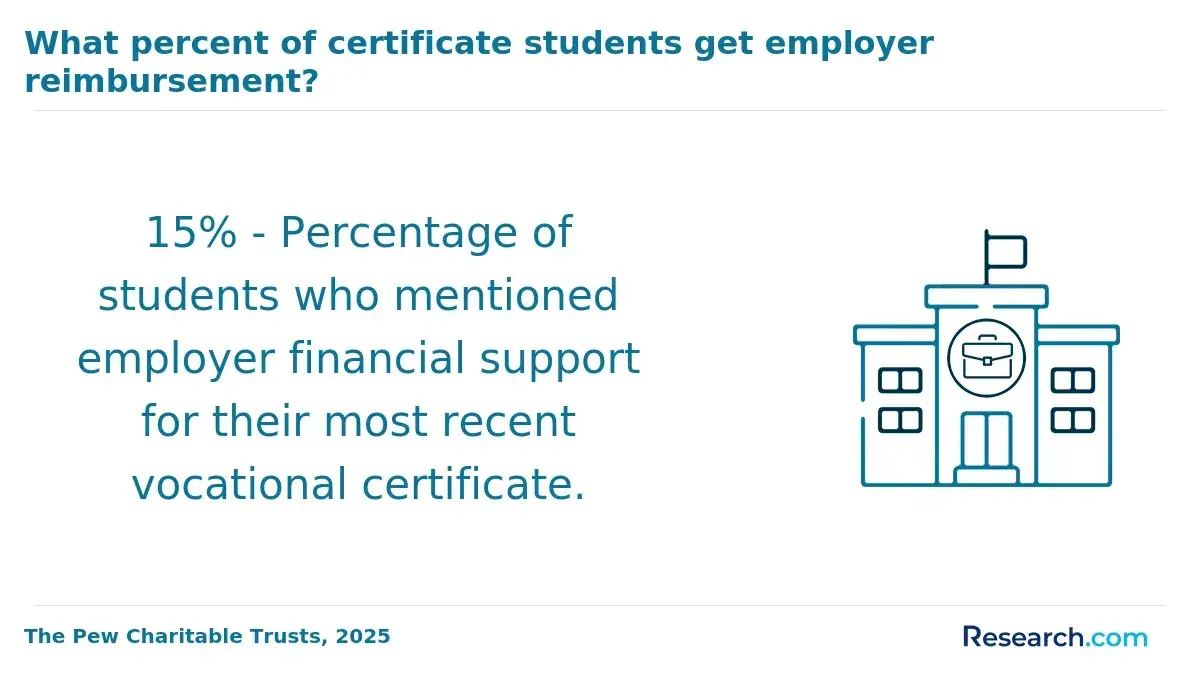
- School-district tuition reimbursement or professional-development funds
- State educator scholarships, workforce grants, or shortage-area incentives where available
- Employer education benefits and union or professional-association scholarships
- Veterans' education benefits for eligible service members, veterans, and dependents
Compare net cost after gift aid, not just the loan amount a school permits you to borrow. Before accepting loans, ask whether scholarships renew automatically, whether part-time enrollment changes eligibility, and whether required practicum terms affect your ability to work.
Students interested in education-adjacent helping professions may also compare pathways such as a human services degree online when their goal is family support or community programming rather than literacy instruction and teacher credentialing.
How Flexible Are Online Reading & Literacy Degree Programs at Nonprofit Universities?
Working teachers often benefit from a part-time cohort that follows the school calendar, while students seeking a faster completion path may prefer an accelerated format. Accelerated courses can reduce calendar time but increase weekly reading, writing, and practicum demands. A fully asynchronous program may help with shift work or caregiving, but it requires strong time management and does not remove placement deadlines.
Ask admissions staff for a sample term schedule and written answers to the following questions before treating a program as flexible:
- Are courses asynchronous, live online, hybrid, or a combination?
- What days and times are required live sessions held, and are they recorded?
- Can part-time students pause, change cohorts, or take a leave without restarting?
- How are practicum placements arranged, and can they occur in your current school or district?
- Are there campus residencies, proctored exams, or travel expectations?
- What is the expected weekly workload during coursework and field experiences?
Transfer-friendly undergraduate routes can create flexibility before a literacy specialization, including options sometimes associated with institutions such as Barbados community college; however, students planning to teach in the United States should verify U.S. institutional accreditation, transfer evaluation, and state teacher-preparation requirements before relying on any transfer pathway.
What Student Support Services Do Nonprofit Universities Provide for Online Reading & Literacy Degree Students?
Online literacy students need more than a learning-management system. Effective support can affect whether a working educator completes fieldwork on time, receives prompt academic feedback, and understands credential requirements. Services vary widely across institutions and sometimes by program, so applicants should ask what is included rather than assume campus services extend automatically to online learners.
The table below separates core supports from the questions that reveal whether they are usable for distance learners:
| Support service | How it can help literacy students | Question to ask |
| Academic advising | Maps course sequence, transfer credit, and graduation steps | Will I have a dedicated advisor familiar with online literacy requirements? |
| Field-placement support | Helps coordinate practicum or observation requirements | Who approves my site and supervisor, and what happens if placement is delayed? |
| Library and research help | Supports evidence-based intervention plans and graduate research | Can online students access databases, consultations, and interlibrary loans? |
| Writing and tutoring support | Assists with graduate papers, data reports, and portfolios | Are appointments available evenings or weekends? |
| Career and licensure guidance | Clarifies job search and credential documentation | Does the school provide state-specific licensure advising in writing? |
| Accessibility and technical support | Helps students use course platforms and accommodations | Is support available outside standard business hours? |
Red flags include unclear practicum placement responsibility, generic admissions-only advising, and no process for resolving technology or fieldwork issues quickly. Ask to speak with a current online student or program coordinator, if available, and request response-time expectations for instructors and advisors.
Do Online Reading & Literacy Degree Programs at Nonprofit Universities Prepare Graduates for In-Demand Careers?
They can, particularly when the degree matches a role's formal requirements and gives students supervised opportunities to use literacy assessment and intervention methods. Common career directions include reading specialist, literacy interventionist, instructional coach, curriculum specialist, elementary or secondary teacher with literacy expertise, and educational program coordinator. Titles and qualification rules differ across districts and states.
The U.S. Bureau of Labor Statistics projects 1% employment growth for instructional coordinators from 2023 to 2033. That relatively modest national projection means applicants should not assume that a literacy degree alone creates a broad pool of new jobs. Instead, review local district postings, endorsement requirements, and whether employers seek classroom experience, a master's degree, or a reading credential.
This comparison shows how career alignment should guide program selection:
| Career direction | Common preparation | Program feature to prioritize |
| Reading specialist | Teaching license, graduate literacy preparation, and state endorsement where required | State-aligned coursework and supervised practicum |
| Literacy interventionist | Teaching or intervention experience; requirements vary by employer | Assessment and evidence-based intervention training |
| Instructional coach | Teaching experience and often a graduate degree | Adult learning, coaching, data use, and leadership coursework |
| Curriculum or instructional coordinator | Master's degree and relevant classroom or leadership experience are commonly preferred | Curriculum design, evaluation, and instructional leadership |
| Literacy researcher or faculty member | Doctoral study is commonly expected | Research methods, statistics, and dissertation mentorship |
Skills with enduring value include interpreting literacy data, communicating with families and teachers, tailoring interventions, understanding language development, and evaluating the quality of instructional materials. The degree is most likely to support career mobility when it supplements relevant school experience and meets the employer or state requirements for the specific role.
Can an Online Reading & Literacy Degree From a Nonprofit University Prepare Students for Graduate School?
Yes, an accredited online bachelor's or master's degree can prepare students for further study when it includes rigorous coursework, strong grades, faculty relationships, and relevant research or field experience. Doctoral admissions committees generally focus on academic preparation, research fit, writing ability, recommendations, and professional goals rather than assuming online coursework is less valid.
A bachelor's degree is the usual entry point for a literacy-focused master's program. A master's degree may support applications to an education specialist or doctorate in literacy, curriculum and instruction, educational leadership, special education, or related fields.
Students considering speech-language pathology should understand that its clinical requirements and admissions prerequisites differ substantially from literacy education; compare those separately through online SLP masters programs.
Applicants planning ahead for graduate school should choose research-informed courses, retain major papers and intervention projects for a portfolio, and seek faculty mentorship early. Before enrolling, ask whether the program offers research-methods coursework, thesis or capstone options, and opportunities to work with faculty on literacy research. Also verify that any credits you hope to transfer are accepted by the future institution; graduate transfer decisions are individualized.
How Should Students Compare the Best Online Reading & Literacy Degree Programs at Nonprofit Universities?
There is no single best online reading and literacy program for every student. The best overall value is the program that meets your credential target, works in your state, fits your schedule, and has a manageable net cost. A low-cost public program can be an excellent choice for a resident student, while a private nonprofit program may be better for someone who needs a year-round schedule, a fixed online tuition rate, or more individualized support.
Create a shortlist of three to five eligible programs, then compare them using the same evidence. The table below is a practical decision matrix for evaluating each option consistently.
| Comparison category | What to collect | Strong-fit signal |
| Credential alignment | Written state licensure or endorsement disclosure | School confirms the program supports your intended credential in your state |
| Academic quality | Course sequence, syllabi, faculty profiles, fieldwork model | Clear training in assessment, intervention, and research-based literacy instruction |
| Total cost | Required credits, tuition, fees, books, and practicum expenses | Affordable net price with minimal surprise costs |
| Flexibility | Live-session schedule, course pacing, residency, and placement rules | Structure fits work, family, and school-calendar obligations |
| Student support | Advising, placement help, library access, technical support, and licensure guidance | Distance learners receive named contacts and clear service processes |
| Career relevance | Local job requirements and alumni career information where available | Coursework and experiences match target positions |
Use the following process after narrowing your list. It focuses attention on verifiable information rather than rankings or marketing language.
- Write down your target job, state, existing license status, budget ceiling, and preferred completion date.
- Eliminate programs that do not provide written confirmation of state eligibility or cannot support required field experiences.
- Calculate each program's full estimated cost after grants, scholarships, employer support, and realistic borrowing.
- Compare a sample syllabus and practicum handbook from each remaining program.
- Ask admissions or program staff the same questions, then keep written answers for your records.
- Choose the program with the strongest combined fit for credential alignment, total cost, schedule, and academic preparation.
Avoid common mistakes: selecting a school solely because it is nonprofit, assuming every online course is asynchronous, comparing only per-credit tuition, overlooking residency or practicum costs, and enrolling before checking state endorsement rules. Rankings can help identify options, but they cannot replace a program-specific review of licensure fit and total investment.
Other Things You Should Know About Reading & Literacy
No. A degree is an academic credential, while an endorsement is a state-issued authorization added to an educator license. Some master's programs are designed to support endorsement eligibility, but requirements vary by state and may include prior licensure, teaching experience, exams, and supervised practice.
Often, yes, particularly in general literacy, curriculum, or education programs. However, programs leading to reading-specialist credentials commonly require an active teaching license. Ask whether nonlicensed candidates are admitted and what roles the degree can realistically support.
Completion time depends on credit requirements, transfer credit, course pacing, and fieldwork. Full-time students may finish faster, while working educators often choose part-time enrollment. Review the published course sequence rather than relying on a general timeline.
Look for coursework in structured literacy, language development, assessment, and evidence-based intervention. Then verify your state's rules and local employer expectations, since a reading degree alone may not authorize every specialized role or replace training required by a district.
References
- Inside Online Master's Programs in Reading Literacy https://www.onlinemastersdegrees.org/best-programs/education/reading-literacy/
- Online Literacy Education Master's Program | Shenandoah University https://online.su.edu/degrees/teaching-education/ms-literacy-education/
- Can Online Colleges Offer Competitive Career Outcomes? https://www.onlineu.com/magazine/popular-online-schools-career-outcomes
- Careers https://www.roomtoread.org/about-us/careers/
- Reading (M.S.) - University of St. Francis https://stfrancis.edu/reading-ms/
- Colleges That Offer Complete Financial Aid https://www.collegeessayguy.com/blog/colleges-that-offer-complete-financial-aid
- Best Online Colleges with Job Placement Programs for Career Success https://lakewood.edu/best-online-colleges-with-job-placement-programs-for-career-success/
- The Latest Data on For-Profit Colleges and the Future of Workforce Readiness https://career.org/web/web/Multimedia/CER/Summer-2025/The-Latest-Data-on-For-Profit-Colleges-and-the-Future-of-Workforce-Readiness.aspx
- Reading and Literacy Program - Bank Street Graduate School of Education https://graduate.bankstreet.edu/academics/academic-programs/reading-and-literacy-program/


