2027 Best Online Nurse Leadership Doctorate Programs for Consulting Careers

Co-Founder and Chief Data Scientist
Healthcare consultants increasingly need evidence-based leadership credentials to advise hospitals, health systems, payers, and clinical teams. The U. S. Bureau of Labor Statistics projects 29% growth for medical and health services managers from 2023 to 2033, signaling strong demand for leaders who can improve care delivery and operations.
This guide is for nurses, consultants, and graduate students considering an online Nurse Leadership doctorate. You will learn how programs compare, when the credential matters, what to look for, and how to decide whether this path fits your consulting goals.
Key Things to Know About Nurse Leadership Doctorate Programs for Consulting Careers
- An online Nurse Leadership doctorate is usually a DNP with executive leadership, systems leadership, health systems, or nursing administration coursework; it is most useful for consultants advising healthcare organizations on strategy, quality, workforce, operations, and clinical transformation.
- The credential is not mandatory for most consulting roles, but it can strengthen credibility in senior healthcare consulting because BLS projects 29% job growth for medical and health services managers from 2023 to 2033, a market where advanced leadership expertise is valued.
- The best programs for consulting professionals are accredited, practice-focused, flexible, and tied to applied projects rather than purely academic research; many online DNP leadership tracks take about two to four years depending on prior degree, enrollment pace, and project requirements.
How will a doctorate impact consulting careers in Nurse Leadership?
A Nurse Leadership doctorate can change how a consultant is perceived and what kinds of assignments they can credibly pursue. In consulting, clients often pay for judgment, pattern recognition, and the ability to translate evidence into operational decisions. A doctorate does not replace consulting experience, but it can signal that you can evaluate systems, lead change, interpret research, and defend recommendations in front of executives.
For nurse consultants, the most relevant doctorate is often the Doctor of Nursing Practice, or DNP. Unlike a PhD in nursing, which is typically research-intensive and designed for knowledge generation, a DNP is practice-focused and usually emphasizes implementation, quality improvement, leadership, health policy, population health, informatics, and outcomes measurement.
The degree can be especially useful if your consulting work falls into one of these areas:
- Healthcare operations consulting, including throughput, staffing models, patient flow, and care redesign.
- Quality and safety consulting, including infection prevention, adverse-event reduction, performance dashboards, and regulatory readiness.
- Nursing workforce consulting, including retention, leadership development, shared governance, and burnout mitigation.
- Digital health and informatics consulting, including EHR optimization, clinical decision support, telehealth workflows, and AI-enabled care processes.
- Executive advisory work for hospitals, health systems, academic medical centers, insurers, and healthcare startups.
The consulting market also rewards professionals who can connect clinical knowledge with business decisions. BLS reported a median annual wage of $99,410 for management analysts in 2023, and projected 11% employment growth from 2023 to 2033. That broader consulting category includes many non-clinical analysts, so it should not be read as a DNP-specific salary outcome. Still, it shows that organizations continue to hire advisors who can improve efficiency and performance.
A doctorate may have the most career impact when it supports a clear consulting niche. For example, a DNP-prepared nurse leader who specializes in nurse staffing analytics may be more marketable than a generalist who earns the degree without a defined advisory focus.
Is a Nurse Leadership doctorate a requirement to pursue consulting careers in the field?
A Nurse Leadership doctorate is usually optional, not required, for consulting careers. Many healthcare consultants build strong careers with an MSN, MBA, MPH, MHA, clinical specialty certification, nurse executive certification, or extensive leadership experience. The doctorate becomes more valuable when clients expect senior-level authority, evidence-based recommendations, or executive-level change leadership.
The credential is most likely to matter when you want to consult at a strategic level rather than a purely operational or staff-development level. It may also help if you plan to publish, teach, speak at conferences, lead national initiatives, or compete for engagements with academic health systems and large consulting firms.
The table below summarizes when a doctorate is more likely to help and when another path may be more practical.
| Career goal | Is a doctorate usually necessary? | Best credential strategy |
| Internal nurse leadership consulting within a hospital | No | MSN, leadership experience, nurse executive certification, and project results may be enough. |
| Independent healthcare consulting practice | Sometimes | A DNP can improve credibility, but client results, testimonials, and a defined niche matter heavily. |
| Executive-level advisory work with health systems | Often helpful | A DNP, MBA, MHA, or senior executive experience can support boardroom-level consulting. |
| Academic consulting, policy work, or research-heavy advisory work | Often helpful | A DNP is useful for implementation work; a PhD may fit better for original research and theory development. |
| Advanced clinical consulting tied to practice authority | Depends on state and role | An NP route may be more relevant than a leadership doctorate if the work depends on diagnosis, prescribing, or specialty clinical practice. |
If your goal is advanced clinical practice rather than leadership consulting, compare Nurse Leadership doctorates with online nurse practitioner programs. A nurse practitioner pathway may be a better fit for consultants focused on clinical service models, specialty care delivery, or practice ownership.
The common mistake is assuming that the doctorate itself creates consulting demand. It does not. The strongest consultants use the degree to sharpen a marketable point of view, such as reducing nurse turnover, implementing value-based care workflows, improving patient safety systems, or preparing organizations for accreditation surveys.
What are the best online Nurse Leadership doctorate programs for consulting careers?
The best online Nurse Leadership doctorate programs for consulting careers are not simply the most famous programs. They are programs that combine accreditation, rigorous leadership coursework, online flexibility, applied projects, strong faculty expertise, and opportunities to build a consulting-relevant portfolio.
Most consulting-focused nurses should start by looking at online or hybrid DNP programs with concentrations such as executive leadership, health systems leadership, organizational leadership, nursing administration, or systems-level practice. The table below highlights program types and examples that often align well with consulting goals. Availability, curriculum, tuition, and admission policies can change, so confirm details directly with each school.
| Program or track type | Examples of schools with relevant online or hybrid options | Why it can fit consulting careers | Best for |
| DNP Executive Leadership | Johns Hopkins University, Vanderbilt University, Duke University, George Washington University | Emphasizes executive decision-making, systems change, outcomes, and healthcare leadership. | Consultants targeting health system strategy, nurse executive advisory work, or senior transformation projects. |
| DNP Health Systems or Systems Leadership | University of Pittsburgh, Ohio State University, Rush University, University of Minnesota | Connects evidence, population health, quality, and organizational performance. | Consultants focused on operations, care redesign, workforce strategy, or patient safety. |
| DNP Nursing Administration or Organizational Leadership | University of Alabama, University of South Alabama, University of Central Florida, Chamberlain University | Often includes leadership, finance, policy, and administration coursework relevant to healthcare organizations. | Working nurse managers, directors, and consultants who want practical leadership advancement. |
| PhD in Nursing with leadership-related research | Selected research universities with online or low-residency formats | Prioritizes original research, theory, and scholarly publication rather than practice implementation. | Consultants who want to advise on research, education, policy, or academic healthcare strategy. |
A DNP is usually the stronger match for applied consulting, while a PhD may be better if your consulting brand depends on research production, faculty roles, or funded studies. If you are comparing cost-sensitive research doctorates, review cheapest online nursing PhD programs alongside DNP leadership options so you do not choose the wrong doctorate type for your goals.
To build a practical shortlist, compare programs using a consulting lens rather than a general nursing-school lens:
- Confirm institutional accreditation and nursing program accreditation, such as CCNE or ACEN where applicable.
- Look for leadership, finance, quality improvement, informatics, health policy, and implementation science coursework.
- Ask whether the final project can be designed around a consulting-relevant organizational problem.
- Review faculty backgrounds for executive leadership, health systems, quality, workforce, informatics, or policy expertise.
- Check whether online students receive mentoring, writing support, library access, project-site guidance, and networking opportunities.
- Estimate total cost, not only per-credit tuition, including fees, travel for immersions, software, lost work time, and project expenses.
One red flag is a program that markets convenience but gives little detail about project expectations, accreditation, faculty qualifications, or student support. A consulting professional should be able to explain why a specific program advances a specific market position.
Is work experience needed to enroll in a Nurse Leadership doctorate program?
Work experience is commonly expected, even when a school does not state a strict minimum. Nurse Leadership doctorate programs are built around real organizational problems, so applicants with management, quality improvement, informatics, education, policy, or clinical leadership experience are usually better positioned to succeed.
Admissions requirements vary, but online DNP leadership programs commonly request some combination of an active RN license, a BSN or MSN, graduate GPA minimums, professional references, a resume, a statement of goals, and evidence of leadership potential. Some post-master's DNP programs are designed for nurses who already hold an MSN, while BSN-to-DNP leadership pathways take longer and may include graduate core coursework before doctoral-level study.
The table below shows how experience expectations differ by applicant profile.
| Applicant profile | Typical readiness for a leadership doctorate | What to strengthen before applying |
| Staff RN with limited leadership experience | May be early for a consulting-focused doctorate | Seek charge nurse work, committee leadership, quality projects, preceptor roles, or unit-based improvement experience. |
| Nurse manager or clinical leader | Often a strong fit | Document measurable outcomes such as turnover reduction, patient safety improvement, workflow redesign, or budget responsibility. |
| MSN-prepared nurse executive or director | Very strong fit | Clarify a consulting niche and choose a project that can become a portfolio asset. |
| Healthcare consultant with nursing background | Strong fit if clinical leadership experience is credible | Show client-facing work, analytics experience, implementation results, and executive communication skills. |
| New graduate considering consulting later | Usually better served by gaining experience first | Build clinical judgment, leadership exposure, and a record of solving organizational problems. |
AACN's recent nursing education reporting shows that practice doctorates remain a major route for advanced nursing preparation, especially compared with smaller research-doctorate pipelines. For applicants, that trend means schools are accustomed to serving working nurses, but admissions committees still look for readiness to apply doctoral learning in practice settings.
If you are earlier in your nursing pathway and still deciding between clinical practice and leadership consulting, comparing an easiest NP program with leadership-focused doctoral options can help you decide whether your immediate priority is practice entry, clinical specialization, or executive influence.
Do online Nurse Leadership doctorate programs require dissertations?
Most online DNP programs do not require a traditional dissertation. Instead, they usually require a DNP scholarly project, capstone, or practice-improvement project. This distinction matters for consultants because an applied project can become a case study, framework, presentation, or proof of expertise for future clients.
A dissertation is more common in PhD programs. It generally requires original research that contributes to nursing science. A DNP project typically focuses on applying evidence to improve practice, systems, policy, quality, or outcomes in a real organization.
The table below compares the two models from a consulting-career perspective.
| Feature | DNP project or capstone | PhD dissertation |
| Main purpose | Implement evidence-based change in practice or systems. | Generate original research and scholarly knowledge. |
| Best consulting use | Creates a practical portfolio example tied to operations, quality, leadership, or policy. | Supports research consulting, academic credibility, publication, or policy analysis. |
| Typical setting | Healthcare organization, department, community setting, or approved practice site. | Research environment using formal methodology and faculty supervision. |
| Output | Project report, presentation, implementation plan, evaluation, and measurable practice outcome. | Dissertation manuscript, defense, and potentially peer-reviewed publications. |
| Risk for working consultants | Project-site access and implementation timeline can be challenging. | Long research timelines can compete with client work and travel. |
Choose a DNP project model if you want to advise organizations on implementation, change management, or measurable improvement. Choose a dissertation-based route if your consulting identity depends on original research, faculty status, or methodological expertise.
Before enrolling, ask these project-specific questions:
- Can the final project be completed through my employer, client organization, or an approved external site?
- Does the school help students secure project-site approval if they are independent consultants?
- What data access, IRB review, or organizational permissions are required?
- How often do students need to meet with faculty, project mentors, or committee members?
- Can the project be shaped into a publishable article, conference presentation, or consulting case study?
A common mistake is choosing a non-dissertation program because it sounds easier. A strong DNP project still requires disciplined planning, stakeholder management, data analysis, and writing. For consultants, that rigor is often the point.
How flexible are online Nurse Leadership doctorate programs for consulting professionals?
Online Nurse Leadership doctorate programs can be highly flexible, but "online" does not always mean self-paced or low-commitment. Consulting professionals should evaluate schedule design as carefully as curriculum because client deadlines, travel, implementation work, and doctoral writing can collide.
Many programs use asynchronous courses, allowing students to complete weekly work at different times. Others include synchronous evening sessions, scheduled intensives, virtual residencies, or short campus immersions. Some programs are part-time by design, while others expect a cohort pace with limited ability to pause.
The table below explains common flexibility features and what they mean for consultants.
| Flexibility feature | What it means | Consulting-career advantage | Potential drawback |
| Asynchronous coursework | Weekly modules can be completed at varied times. | Helpful for consultants with client meetings, travel, or unpredictable schedules. | Requires strong self-management and writing discipline. |
| Synchronous online sessions | Students meet virtually at set times. | Builds cohort connection and faculty access. | Can conflict with client engagements or time zones. |
| Low-residency format | Mostly online with occasional campus or intensive sessions. | Provides networking and concentrated learning without relocating. | Adds travel cost and calendar constraints. |
| Part-time progression | Course load is spread over a longer timeline. | Better for consultants maintaining full client loads. | Delays completion and may increase total fees. |
| Cohort model | Students move through courses together. | Creates accountability and peer relationships. | Less flexible if you need to slow down or step out temporarily. |
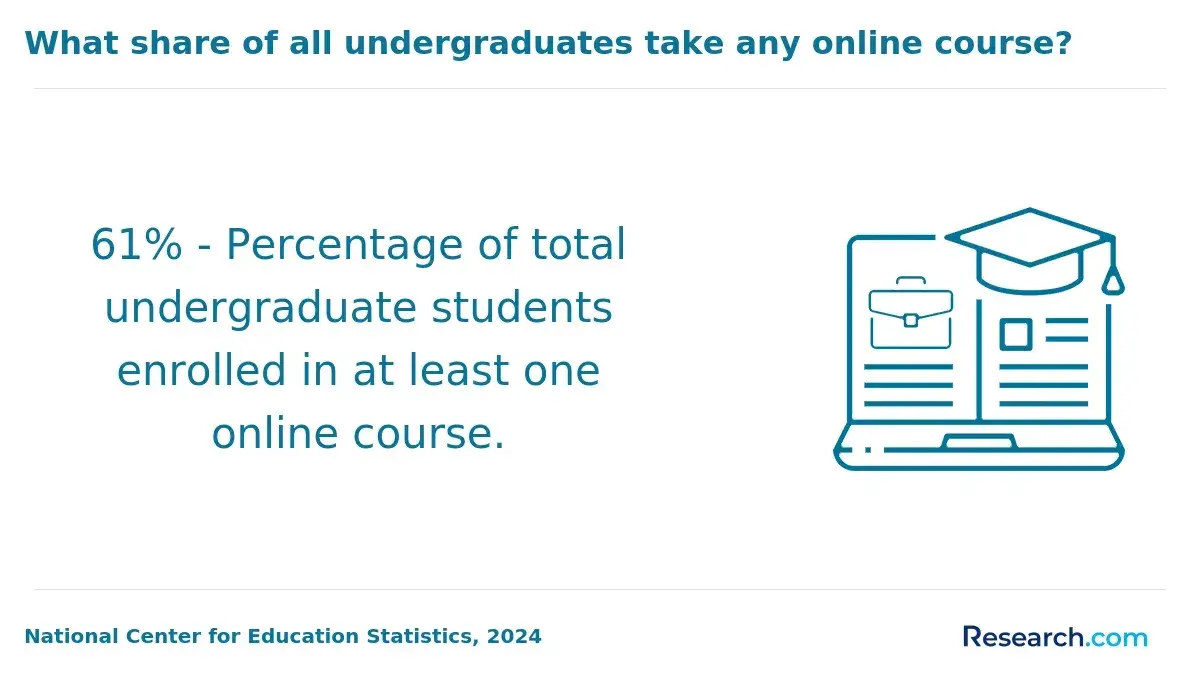
According to the National Center for Education Statistics, graduate distance education remains a mainstream option in U.S. higher education, with large numbers of graduate students taking at least some online coursework in recent reporting cycles. For nursing professionals, this supports the continued growth of executive-style doctoral formats designed around work, but it does not remove the need to plan weekly study time.
Consultants should pressure-test program flexibility before enrolling:
- Map weekly coursework, reading, discussion, writing, and project hours against your client calendar.
- Ask whether courses are offered every term or only once per year.
- Confirm whether you can reduce your course load during heavy consulting periods.
- Identify all required campus visits, virtual intensives, and project milestones before accepting admission.
- Ask current students how faculty handle working professionals with travel-heavy schedules.
If your consulting work is highly unpredictable, prioritize asynchronous delivery and part-time options. If you need structure to stay on track, a cohort model with set deadlines may be more effective.
What should you look for in Nurse Leadership doctorate programs for consulting careers?
Program quality matters because a doctorate is expensive, time-intensive, and visible on your professional profile. For consulting careers, you should evaluate whether the program helps you become a stronger advisor, not just whether it helps you add letters after your name.
The table below summarizes the main quality indicators and red flags to consider as you compare programs.
| What to evaluate | Quality indicator | Red flag |
| Accreditation | Institutional accreditation and appropriate nursing program accreditation are clearly stated. | Accreditation status is vague, missing, or difficult to verify. |
| Curriculum fit | Courses cover leadership, finance, policy, quality, informatics, systems thinking, and outcomes. | Curriculum is mostly generic and has little connection to healthcare consulting problems. |
| Faculty expertise | Faculty have executive, systems, policy, quality, informatics, or scholarly experience. | Faculty profiles are thin or unrelated to your consulting niche. |
| Applied project support | The school explains project expectations, site requirements, mentorship, and evaluation clearly. | Project details are unclear until after enrollment. |
| Flexibility | Schedule, residency, and course sequencing details are transparent. | The program is marketed as online but has hidden synchronous or travel requirements. |
| Cost transparency | Total estimated tuition and fees are easy to calculate. | Only per-credit prices are shown, with little detail on fees or required expenses. |
| Career alignment | Students can tailor projects, electives, or practicum work to leadership and consulting goals. | The program is designed mainly for internal promotion and not adaptable to consulting interests. |
After you identify promising programs, use a structured decision process rather than relying on rankings alone:
- Define your consulting niche in one sentence, such as workforce strategy, quality improvement, informatics, executive coaching, or care redesign.
- Match each program's curriculum to that niche and eliminate programs with weak alignment.
- Calculate total cost and time-to-completion under both part-time and full-time scenarios.
- Ask admissions advisors for examples of recent leadership DNP projects.
- Speak with alumni who used the degree in consulting, executive leadership, or advisory roles.
- Choose the program that best supports your target market, schedule, budget, and portfolio development.
Do not choose a program based only on tuition, prestige, or speed. The best program is the one that gives you credible expertise, a strong applied project, and a feasible path to completion without weakening your consulting practice.
What skills can consulting professionals gain from an online Nurse Leadership doctorate?
An online Nurse Leadership doctorate can deepen skills that are difficult to develop through experience alone, especially when coursework forces you to analyze evidence, defend decisions, evaluate outcomes, and lead change across complex systems. For consultants, the value is strongest when those skills translate into client-ready services.
The table below connects common doctorate-level competencies with consulting responsibilities.
| Doctoral skill | How it supports consulting work | Example consulting application |
| Systems thinking | Helps consultants see how staffing, workflow, technology, finance, and outcomes interact. | Redesigning a care model without creating new bottlenecks in documentation or staffing. |
| Evidence appraisal | Strengthens the ability to distinguish strong evidence from weak assumptions. | Advising a hospital on whether a proposed patient-safety intervention is supported by research. |
| Quality improvement | Supports structured measurement, implementation, and evaluation. | Building a plan to reduce falls, readmissions, medication errors, or infection rates. |
| Leadership and change management | Improves stakeholder engagement and adoption planning. | Helping nurse leaders implement new staffing models or governance structures. |
| Healthcare finance | Connects clinical recommendations with cost, productivity, and resource decisions. | Developing a business case for a nurse residency program or retention initiative. |
| Informatics and data interpretation | Supports dashboard design, workflow analysis, and digital transformation. | Advising on EHR optimization or AI-enabled clinical workflow changes. |
| Policy and ethics | Improves recommendations involving regulation, access, equity, and professional standards. | Guiding organizations through scope-of-practice, compliance, or population-health initiatives. |
AI is also changing healthcare consulting. Clients increasingly need advisors who can evaluate digital tools, protect patient safety, redesign workflows, and help clinicians trust new systems. A leadership doctorate does not make someone an AI engineer, but it can strengthen the governance, evidence, ethics, and implementation skills needed to advise responsibly on technology adoption.
To turn doctoral learning into consulting value, document your skill development as you go:
- Create brief project summaries that describe the problem, stakeholders, intervention, metrics, and results.
- Build reusable frameworks for assessment, implementation planning, leadership coaching, and outcomes evaluation.
- Translate academic papers into executive summaries that a chief nursing officer or operations leader would actually use.
- Use course assignments to refine service offerings, conference abstracts, white papers, or client education materials.
The mistake to avoid is treating coursework as separate from your consulting brand. Every major assignment should help you become clearer, more credible, and more useful to the clients you want to serve.
Can an online Nurse Leadership doctorate credential increase your income potential as a consultant?
An online Nurse Leadership doctorate can increase income potential, but it does not guarantee higher consulting revenue or a specific salary. Income depends on your niche, client base, pricing model, experience, reputation, geography, business development ability, and whether you work as an employee, independent consultant, fractional executive, contractor, or firm partner.
One useful benchmark is the healthcare leadership labor market. BLS reported a median annual wage of $110,680 for medical and health services managers in 2023. That figure is not specific to nurse consultants or doctorate holders, but it provides context for the level of responsibility associated with healthcare management and systems leadership.
The degree may support higher earning potential when it helps you move into higher-value consulting work, such as enterprise transformation, executive advisory services, expert testimony, regulatory preparation, workforce strategy, or complex quality initiatives. It is less likely to pay off if you continue doing the same work for the same buyers at the same rates.
Consider the income logic in practical terms:
- A doctorate can support premium positioning if clients see a direct connection between your expertise and a costly organizational problem.
- A DNP project can become proof that you know how to implement change, not just recommend it.
- Doctoral credentials may help with speaking, teaching, board service, expert panels, and executive search visibility.
- ROI weakens if tuition is high, completion takes longer than expected, or the program does not support your consulting niche.
Clinical specialization can change the income equation as well. For example, a consultant focused on behavioral health access, psychiatric care models, or integrated mental health services may want to compare leadership-doctorate ROI with role-specific compensation data such as psychiatric nurse practitioner salary information.
Before enrolling, estimate ROI conservatively. Identify the types of projects you want, the clients who buy them, the rates those clients can support, and how the doctorate will help you win work you could not credibly win before.
Is an online Nurse Leadership doctorate the right next step for your consulting career?
An online Nurse Leadership doctorate is the right next step if it connects clearly to your consulting strategy. It is not the right choice simply because you feel professionally stuck, want a prestige credential, or assume more education will automatically create better opportunities.
Use the self-assessment below to decide whether to apply now, wait, or choose a different path.
| Question | If your answer is yes | If your answer is no |
| Do you have a clear consulting niche? | You can use the doctorate to deepen marketable expertise. | Gain clarity before committing to a doctoral program. |
| Do you have leadership or consulting experience to build on? | You are more likely to apply coursework immediately. | Consider gaining project, management, or advisory experience first. |
| Can you manage doctoral work alongside client or employment demands? | An online or part-time format may be realistic. | Delay enrollment or choose a slower program structure. |
| Can you fund the degree without relying on guaranteed income growth? | You can evaluate ROI with less pressure. | Compare lower-cost programs, employer support, scholarships, or alternative credentials. |
| Will the final project strengthen your consulting portfolio? | The program can produce visible career assets. | Look for a program with stronger applied-project alignment. |
If you are ready to move forward, take these next steps:
- Write a one-page consulting goal statement that defines your target clients, problems, and services.
- Shortlist accredited online DNP leadership programs that match that goal.
- Ask each school about project-site expectations, residency requirements, faculty mentorship, and total cost.
- Compare full-time and part-time timelines against your consulting workload.
- Speak with alumni who work in consulting, healthcare leadership, or advisory roles.
- Apply only when you can explain how the program will improve your expertise, credibility, and client value.
The best decision is not always to enroll immediately. Some professionals should first gain leadership experience, build a consulting portfolio, earn a focused certification, or clarify their market. But if you already have a strong nursing foundation and want to advise healthcare organizations at a systems level, an online Nurse Leadership doctorate can be a powerful and practical next step.
Other Things You Should Know About Nurse Leadership
Yes, many students do, especially in part-time online DNP programs. However, full-time work plus consulting travel can make writing, group projects, and final project milestones difficult. Ask schools for expected weekly time commitments before enrolling.
They can be, especially when the school is properly accredited, the curriculum is rigorous, and the final project demonstrates measurable leadership or systems impact. Clients usually care more about credibility, results, and relevance than whether every course was online.
Either can be a strong choice. Public universities may offer lower tuition for some students, while private universities may offer specialized formats, faculty access, or executive-style cohorts. Compare total cost, accreditation, curriculum fit, flexibility, and project support rather than institution type alone.
Useful options depend on your niche, but common pairings include nurse executive certification, quality improvement credentials, project management certification, informatics credentials, Lean Six Sigma, or healthcare compliance training. Choose certifications that support the consulting problems you want to solve.
References
- How Much Can You Earn With a Doctor of Nursing Practice (DNP)? https://www.allnursingschools.com/dnp/salary/
- The DNP in nursing leadership: Is it worth the move? | Sermo https://www.sermo.com/resources/dnp-in-nursing-leadership/
- Best Doctor of Nursing Practice Programs (2024) https://everynurse.org/dnp-programs/
- Your Guide to Online PhD Nursing Programs: What They Are, What to Expect, and How to Choose the Right One – FRESHRN https://www.freshrn.com/online-phd-nursing-programs/
- Nursing School Accreditation https://nursinglicensemap.com/nursing-degrees/nursing-accreditation/
- Doctoral degrees: Which one is right for you? https://www.myamericannurse.com/doctoral-degrees-which-one-is-right-for-you/
- 2025 Best Online DNP Nursing Education Programs https://www.nurseeducator.com/degrees/dnp/
- Online D.N.P. Graduate Career Outlook - Benedictine University https://online.ben.edu/programs/nursing/dnp/careers/
- CCNE Accreditation https://www.aacnnursing.org/ccne-accreditation
- Advancing Your Nursing Career With a DNP https://www.saintmarys.edu/graduate-studies/nursing/nursing-practice/dnp-article