2027 Best Online Medical Billing & Coding Associate Degree Programs for Adults Returning to School

Co-Founder and Chief Data Scientist
Choosing an online medical billing and coding associate degree is often a scheduling and cost decision as much as an academic one. The U. S. Bureau of Labor Statistics reports that medical records specialist employment is projected to grow 9% from 2023 to 2033, making the field relevant for working adults, career changers, and students returning after time away. This guide explains flexible formats, transfer-credit policies, costs, accreditation, and support services so you can compare programs by quality, affordability, and fit.
Key Things You Should Know
- A strong online medical billing and coding associate degree for returning adults usually combines asynchronous coursework, part-time pacing, transfer-credit review, career certification preparation, and access to advising outside standard business hours.
- Most associate degrees require about 60 credits; full-time students often finish in about two years, while part-time adult learners may need three years or more depending on course load, transfer credits, and clinical or practicum requirements.
- Use total cost, not advertised tuition alone: College Board's 2024 pricing data places average public two-year in-district tuition and fees at about $4,050, but online fees, books, certification exam fees, and repeated courses can change the real price.
What Flexible Online Medical Billing & Coding Associate Degree Formats Are Available?
Online medical billing and coding associate degree programs prepare students to translate health care services into standardized codes, process reimbursement documentation, maintain patient records, and follow privacy and compliance rules. For adults returning to school, the best format depends on how predictable your work schedule is, whether you have prior college credit, and whether you want a career-focused credential or a degree that can transfer later.
Most programs award an Associate of Applied Science, Associate of Science, or similar two-year credential. Coursework commonly includes medical terminology, anatomy and physiology, ICD-10-CM, CPT, HCPCS, health information systems, reimbursement methods, insurance processing, ethics, and HIPAA compliance. Some programs also prepare students for industry certifications such as Certified Professional Coder, Certified Coding Associate, or Certified Billing and Coding Specialist, although exam eligibility and employer preferences vary.
The table below compares the major online formats adults are likely to encounter. Use it to narrow your search before speaking with admissions advisors, because the label "online" can mean very different things from one college to another.
| Program format | How it usually works | Best fit for returning adults | Trade-off to check |
| Fully asynchronous online | Students complete weekly assignments without required live class meetings. | Adults with variable work shifts, caregiving duties, or limited commute time. | Requires strong self-management and clear deadlines. |
| Synchronous online | Students attend live virtual classes at scheduled times. | Learners who want instructor interaction and a classroom routine. | Less flexible if work hours change frequently. |
| Part-time online | Students take fewer courses per term and progress more gradually. | Working adults who need a manageable weekly workload. | Longer completion time may increase total fees. |
| Accelerated online | Courses run in shorter sessions, often with condensed assignments. | Students with transfer credits, stable schedules, or prior health care experience. | Fast pacing can be difficult with full-time work. |
| Hybrid | Most work is online, but some testing, labs, orientations, or meetings may be in person. | Students near campus who want some face-to-face support. | Campus requirements can create travel or scheduling costs. |
| Competency-based | Students advance by demonstrating mastery of required skills. | Experienced adults who can move quickly through familiar material. | May not be available for all associate-level coding programs. |
Program quality is not determined by format alone. A lower-cost asynchronous program may be a smart choice if it has strong faculty access and certification preparation, while a more structured synchronous program may be better if you have been away from school for years and need regular accountability.
How Do Part-Time Online Medical Billing & Coding Associate Degree Programs Work?
Part-time online programs let students take a smaller course load each term, often one or two classes instead of four or five. This option is common among adults who cannot pause employment, who are caring for children or relatives, or who are easing back into college after a long break.
A part-time path may include general education courses in English, math, psychology, or communication alongside technical courses in coding and reimbursement. Many adults benefit from starting with one technical course and one lighter general education course, rather than stacking anatomy, coding, and statistics in the same term.
The table below shows how course load can affect pace and workload. Exact schedules vary by school, but the comparison helps you estimate whether a plan is realistic before enrolling.
| Enrollment pace | Typical course load | Likely weekly commitment | Who should consider it |
| Light part-time | 1 course per term | About 6 to 10 hours per week | Adults with unpredictable work, caregiving, or limited study time. |
| Standard part-time | 2 courses per term | About 12 to 20 hours per week | Students who want steady progress while working full time. |
| Full-time | 4 or more courses per term | Often 30 or more hours per week | Students with reduced work hours or strong support at home. |
| Accelerated full-time | Multiple condensed courses | Highly variable but intensive | Students with prior credit, strong study habits, and a stable schedule. |
Part-time study is often the better choice if your goal is persistence rather than speed. The main drawback is that financial aid rules, tuition discounts, course sequencing, and graduation timelines can change when you take fewer credits, so ask the school how part-time enrollment affects aid eligibility and program completion.
Before committing to a part-time plan, ask the program advisor these questions to avoid schedule surprises:
- Are all required medical billing and coding courses offered every term, or only once per year?
- Can part-time students complete coding courses in the correct sequence without delaying graduation?
- Does the school offer evening, weekend, or recorded tutoring for online students?
- Will financial aid, scholarships, or employer tuition benefits still apply if I take fewer than 12 credits?
- Is there a maximum time limit for completing the associate degree?
A common mistake is choosing part-time study without mapping the full sequence of courses. If a required coding course is offered only in the spring, missing it could delay completion by several months.

How Do Self-Paced and Competency-Based Medical Billing & Coding Associate Degree Programs Work?
Self-paced and competency-based programs are designed around demonstrated learning rather than a traditional weekly lecture schedule. In medical billing and coding, this can work well for adults who already know medical office procedures, insurance workflows, or health care terminology, but it requires discipline because coding accuracy develops through repeated practice.
In a self-paced course, you may still have a start and end date, but you control when you watch lectures, complete coding exercises, and submit assignments. In a competency-based model, you move forward after proving mastery through projects, exams, coding scenarios, or assessments aligned with course outcomes.
These formats can reduce wasted time for experienced learners, but they are not automatically easier. Medical coding involves detailed rule application, and many students need instructor feedback to understand why a code choice is wrong. If you are returning to school after years away, look for built-in academic support rather than assuming flexibility alone will be enough.
Self-paced or competency-based study may be a strong fit when several of the following are true:
- You have prior experience in a medical office, insurance department, revenue cycle team, or health care setting.
- You can study consistently without live class meetings or weekly reminders.
- You are comfortable learning from digital platforms, coding manuals, simulations, and recorded lessons.
- The program provides instructor feedback, tutoring, and clear assessment rubrics.
- The college explains how credits appear on a transcript if you later transfer to another institution.
If you plan to advance into health care administration, you might also explore an online masters healthcare management program as a longer-term option. While medical billing and coding training focuses on accurate documentation, coding rules, and reimbursement processes, a master's in healthcare management typically emphasizes organizational leadership, health care operations, financial management, and strategic planning. The two pathways serve different career goals, so choose based on whether you want to specialize in coding or move toward management.
This format may be a poor fit if you need frequent real-time explanations, have limited computer access, or are brand new to anatomy and medical terminology. Before enrolling, request a sample course shell or orientation module so you can see how lessons, deadlines, grading, and faculty contact actually work.
Yes, some online medical billing and coding associate degree programs offer evening classes, but the details matter. "Evening" may mean live virtual lectures after work, instructor office hours at night, assignment deadlines that accommodate working adults, or access to recorded lessons rather than a fixed daytime schedule.
Evening classes are especially useful for students who want direct interaction with instructors but cannot attend during the day. They can also help adults rebuild academic confidence because a predictable weekly class meeting creates structure. However, if your work shifts rotate, a fully asynchronous option may be safer than a live evening schedule.
When comparing evening-friendly programs, focus on support availability, not just class time. Adult learners often need help outside traditional hours, especially when learning coding systems, payer rules, and medical terminology after a long school break.
Look for these evening-friendly features before you apply:
- Live online classes offered after typical work hours in your time zone.
- Recorded lectures for students who occasionally miss a session due to work or caregiving.
- Evening tutoring, writing support, technology help, or virtual office hours.
- Clear attendance policies for synchronous online meetings.
- Exam windows that include nights or weekends instead of weekday-only testing.
If you plan to advance beyond billing and coding into broader health information or administrative roles, you may also want to explore a health information management degree online. These programs typically cover health records, data governance, privacy, health information systems, and related operational processes. Unlike a focused medical billing and coding program, a health information management degree may provide a wider foundation for careers in health data management and health care administration.
One red flag is a program advertised as flexible even though exams, advising, or required meetings happen only during business hours. If you work full time, ask for a sample weekly schedule and confirm whether required synchronous activities are truly compatible with your job.
Synchronous online programs require students to attend class at specific times, usually through live video. Asynchronous programs allow students to complete coursework on their own schedule within weekly or module-based deadlines. Both can be high quality, but they serve different adult-learner needs.
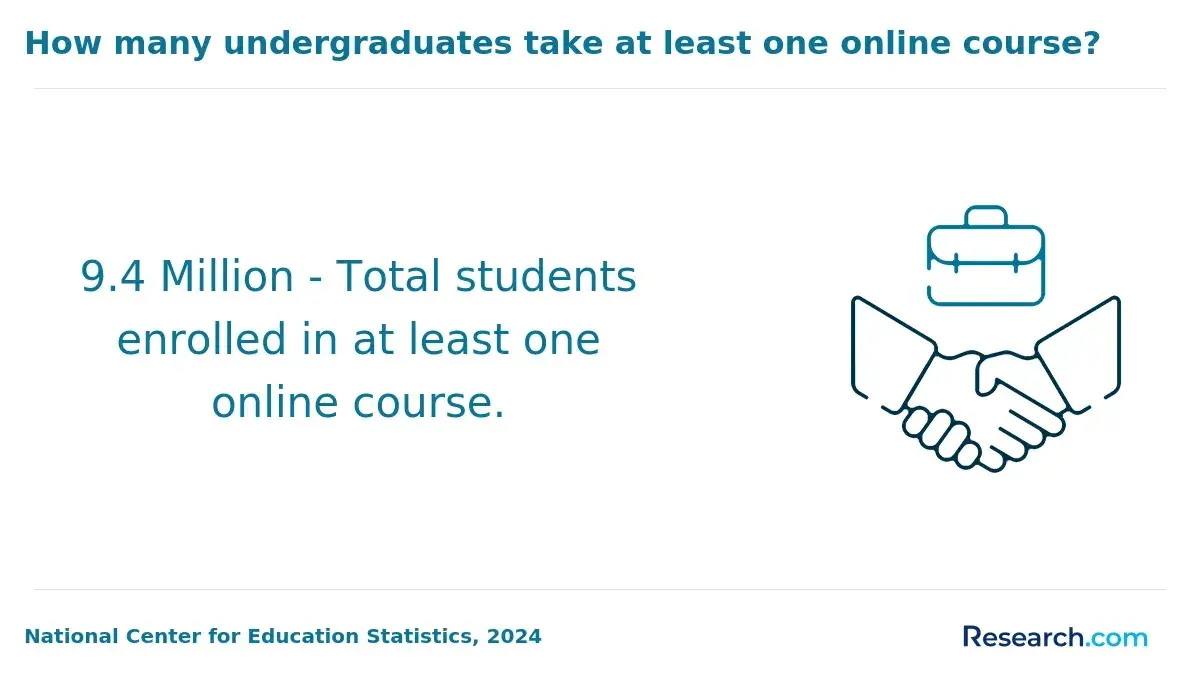
The National Center for Education Statistics reported in 2024 that distance education remains a major part of U.S. higher education enrollment, which helps explain why colleges now offer more online scheduling options than they did before. For returning adults, this wider availability is useful, but it also makes it more important to read course delivery details carefully.
The table below summarizes the practical differences. Use it to match the learning format to your work schedule and study habits.
| Feature | Synchronous online | Asynchronous online |
| Class meetings | Live virtual sessions at set times. | No required live meetings in many courses. |
| Best for | Students who want routine, discussion, and real-time questions. | Students with changing work hours or caregiving responsibilities. |
| Main risk | Missed sessions can affect learning or attendance. | Falling behind without weekly structure. |
| Instructor access | Often immediate during class. | Usually through email, discussion boards, office hours, or feedback tools. |
| Good question to ask | Are live sessions recorded? | How quickly do instructors respond to coding questions? |
For medical billing and coding, asynchronous learning can work well because students need repeated practice with coding cases. Synchronous learning can be helpful when courses cover difficult topics such as anatomy, reimbursement rules, or compliance. A blended online model, with asynchronous lessons plus optional live review sessions, is often a practical compromise for adults returning to school.
Students considering long-term advancement into health care leadership may also encounter a doctorate in healthcare administration when researching future educational options. This doctoral pathway focuses on advanced health care management, organizational strategy, policy, and leadership rather than the technical coding competencies taught in medical billing and coding programs. Choosing between these educational paths depends on your current qualifications and whether your goal is specialized billing work or senior-level health care administration.
Hybrid medical billing and coding programs combine online coursework with some in-person requirements. Because this field is less hands-on than many clinical health programs, campus visits are often limited, but they can still occur for orientation, proctored exams, advising, technology setup, or optional workshops.
Hybrid formats can be valuable if you live near a community college and want lower tuition plus access to campus services. They may also appeal to students who prefer meeting faculty or classmates occasionally. The downside is that even a small number of campus requirements can be difficult for adults with transportation barriers, rotating shifts, or caregiving responsibilities.
Before choosing a hybrid program, clarify exactly what "hybrid" means. Colleges use the term differently, and a program that sounds mostly online may still require daytime campus participation.
Ask the school to confirm these items in writing:
- How many campus visits are required each term?
- Are in-person meetings offered during evenings or weekends?
- Can exams be proctored remotely or at an approved local testing center?
- Are internships, practicums, or professional practice experiences required, and can they be completed near where I live?
- Will any required software, coding manuals, or lab tools require campus access?
A hybrid program is usually best for students within reasonable commuting distance who want some face-to-face structure. A fully online program may be better if you live far from campus, travel for work, or need the fewest possible fixed-location commitments.
Most online medical billing and coding associate degrees require about 60 semester credits. A full-time student can often finish in about two years, while a part-time student may need three to four years. Transfer credits, summer enrollment, developmental courses, and course availability can shorten or lengthen the timeline.
Returning adults should think in terms of sustainable weekly workload rather than the fastest advertised completion time. A compressed schedule can save time, but withdrawing from or repeating a difficult coding course can erase that advantage and increase costs.
The table below shows common timeline scenarios. It is not a promise of completion time, but it can help you compare program pacing options more realistically.
| Student situation | Possible timeline | What affects the timeline most |
| No prior college credit, full-time | About 2 years | Course sequencing, general education requirements, and term length. |
| No prior college credit, part-time | About 3 to 4 years | Number of courses taken each term and whether required courses run year-round. |
| Some transfer credit | Potentially less than 2 years full-time | How many credits apply to degree requirements, not just how many are accepted. |
| Working adult taking one course at a time | Often more than 4 years | Maximum completion limits and course rotation. |
| Accelerated or competency-based learner | Varies widely | Prior knowledge, assessment pace, and school policies. |
If you have been out of school for a long time, start by requesting an unofficial transfer-credit evaluation before you choose a pace. It is common for adults to have credits from several institutions, military training, workplace learning, or prior health care coursework, but schools differ in how those credits apply.
To build a realistic completion plan, follow this sequence:
- List every college, training program, certification, military transcript, or employer course you have completed.
- Ask each target school for a degree audit showing which requirements are already satisfied.
- Identify courses that must be taken in order, such as medical terminology before advanced coding.
- Choose a first-term schedule that leaves time for work, family, and adjustment to online learning.
- Revisit the plan after the first term and increase or reduce course load based on actual workload.
The best timeline is the one you can finish. For many returning adults, a slightly slower plan with consistent progress is a better investment than an accelerated plan that risks burnout.
Accreditation is one of the most important quality checks for any online associate degree. At minimum, the college should hold institutional accreditation from an accreditor recognized by the U.S. Department of Education or the Council for Higher Education Accreditation. This matters for federal financial aid, credit transfer, employer recognition, and future bachelor's degree options.
Medical billing and coding programs may also connect to health information management standards or certification preparation, but programmatic accreditation requirements vary by credential and employer. Do not assume that a program is transfer-friendly or certification-aligned because it uses health care language in its marketing.
The table below separates the quality checks adults should verify before applying. This is especially important if you plan to continue into health information management, health administration, or another bachelor's program later.
| Quality factor | What to verify | Why it matters |
| Institutional accreditation | The college is accredited by a recognized institutional accreditor. | Supports financial aid eligibility, credit recognition, and basic legitimacy. |
| Transfer agreements | The associate degree has articulation pathways to bachelor's programs. | Helps reduce credit loss if you continue your education. |
| Certification preparation | Coursework aligns with the certification exam you may want to take. | Supports career readiness but does not guarantee exam success. |
| Credit applicability | Accepted credits apply to degree requirements, not only elective totals. | Prevents paying for courses you may not need. |
| Student outcomes | The school provides retention, completion, job placement, or certification pass-rate information when available. | Helps you evaluate whether students like you are being supported. |
To verify accreditation and transfer fit, use a step-by-step process rather than relying on website claims:
- Search the institution in the U.S. Department of Education's accreditation database or a recognized accreditor's directory.
- Ask admissions for the exact degree name, credit total, and accrediting body.
- Request a written transfer-credit evaluation before enrolling, especially if you have old credits.
- Ask whether the associate degree is designed for direct employment, bachelor's transfer, or both.
- Contact a potential transfer university to confirm how the credits would apply.
A major red flag is a school that pressures you to enroll before reviewing transcripts or avoids clear answers about accreditation. Returning adults often have the most to gain from transfer credits, so do not skip this step.
Costs vary widely by institution type, residency status, online fees, transfer credits, books, coding manuals, and certification exam preparation. Public community colleges are often the most affordable option for in-district students, while private online colleges may offer more frequent start dates or condensed schedules at a higher price.
College Board's 2024 data lists average public two-year in-district tuition and fees at about $4,050. That figure is useful as a benchmark, but it does not include every online program fee, book, software platform, or certification-related expense, so adults should compare total program cost instead of tuition per credit alone.
Common cost items include the following:
- Tuition charged per credit or per term.
- Online learning, technology, registration, and graduation fees.
- Textbooks, medical dictionaries, coding manuals, and software access.
- Proctoring, background check, or professional practice fees if required.
- Certification exam preparation materials or exam fees.
- Repeated-course costs if a required class is not passed the first time.
Federal financial aid may be available if the institution and program are eligible and you complete the FAFSA. The maximum Federal Pell Grant for the 2024-25 award year is $7,395, but the amount a student receives depends on eligibility, enrollment intensity, cost of attendance, and other aid. Adult learners should also ask about state grants, workforce development funding, employer tuition assistance, military or veteran benefits, scholarships for returning students, and payment plans.
The table below can help you compare affordability in a way that reflects your real situation, not just a school's advertised price.
| Cost question | Why it matters for returning adults | What to request |
| What is the total estimated cost to finish? | Tuition alone can understate the real price. | A written cost breakdown for the full associate degree. |
| How many transfer credits will apply? | Accepted credits can reduce time and cost only if they meet requirements. | A degree audit before enrollment. |
| Does financial aid apply to part-time study? | Many adults cannot attend full time. | A financial aid estimate based on your planned credit load. |
| Are certification exam costs included? | Certification preparation may be separate from tuition. | A list of required and optional exam-related costs. |
| What happens if I pause enrollment? | Adults may need breaks for work or family reasons. | Policies on reentry, catalog year, and tuition changes. |
A common affordability mistake is choosing the cheapest per-credit tuition without checking whether courses transfer, whether support is strong enough, or whether the schedule is realistic. A program with a slightly higher tuition can be the better value if it accepts more prior credits, helps you finish, and aligns with your career or transfer goals.
How Should You Choose the Best Flexible Online Medical Billing & Coding Associate Degree Program for Your Schedule?
The best program is the one that matches your schedule, budget, prior education, learning style, and career goal. For some adults, that will be a low-cost community college with part-time asynchronous courses. For others, it may be a structured online program with live evening classes, intensive advising, and clear certification preparation.
Medical billing and coding is also changing. Employers increasingly expect comfort with electronic health records, revenue cycle software, data accuracy, compliance rules, and technology-assisted coding tools. AI and automation may reduce some repetitive tasks, but they also increase the value of workers who understand coding rules, documentation quality, payer requirements, and when automated suggestions need human review.
Use this decision process before applying. It will help you avoid the most common mistakes adult learners make when comparing online associate degree programs:
- Define your main goal: entry-level billing and coding work, advancement in a current health care job, certification preparation, or transfer to a bachelor's degree.
- Choose a realistic schedule first, then filter programs by asynchronous, evening, part-time, accelerated, or hybrid availability.
- Verify institutional accreditation before discussing tuition or enrollment.
- Request transcript reviews from more than one school if you have prior college credit.
- Compare total cost after transfer credits, fees, books, software, and exam-related expenses.
- Ask how the curriculum prepares students for coding accuracy, reimbursement workflows, compliance, and professional certification exams.
- Review support services for online adults, including advising, tutoring, technology help, career services, and reentry support after a stop-out.
- Check whether the program publishes outcomes such as completion, retention, job placement, or certification pass rates when available.
- Speak with an advisor about what happens if you need to reduce your course load or pause enrollment.
- Choose the program that gives you the strongest path to completion, not simply the fastest start date.
The table below summarizes which program type may fit different adult-learner situations. Use it as a practical comparison tool, then confirm details directly with each school.
| Your situation | Program features to prioritize | Option to be cautious about |
| You work rotating shifts | Asynchronous courses, flexible exam windows, recorded lessons. | Required live classes with strict attendance rules. |
| You have prior college credits | Generous transfer review, degree audits, articulation agreements. | Programs that evaluate credits only after enrollment. |
| You want the lowest cost | Public in-district tuition, aid eligibility, low fees, accepted credits. | Choosing solely by tuition without checking completion support. |
| You need structure | Live evening sessions, cohort model, proactive advising. | Self-paced programs with limited faculty interaction. |
| You may pursue a bachelor's later | Transfer-focused associate degree, general education alignment. | Career-only programs with credits that may not transfer broadly. |
| You want to enter the workforce quickly | Career-focused curriculum, certification preparation, career services. | Programs that lack coding practice or employer-aligned outcomes. |
An associate degree is worth considering if you want both job-focused training and a broader college credential. A shorter certificate may make more sense if you already have a degree, need only coding coursework, or want the fastest route to exam preparation. An associate degree is often stronger if you want financial aid eligibility, general education credits, transfer options, or a credential that may support future advancement.
Before you enroll, slow down if you see high-pressure admissions tactics, unclear accreditation, vague cost estimates, limited instructor access, or no written transfer-credit evaluation. Adults returning to school usually have less margin for wasted time and money, so the right program should make policies clear before you commit.
Other Things You Should Know About Medical Billing & Coding
You do not need advanced math, but you should be comfortable with accuracy, basic calculations, percentages, insurance terms, and detailed rule-following. Strong reading comprehension and attention to detail are often more important than high-level math.
Some roles are remote, especially after workers gain experience and demonstrate coding accuracy, compliance awareness, and productivity. Entry-level applicants may find that employers prefer on-site or hybrid training before allowing remote work.
Most students need a reliable computer, high-speed internet, webcam, microphone, updated browser, office software, and access to the school's learning platform. Some programs also require coding software, e-books, proctoring tools, or electronic health record simulations.
It can be, especially if you choose a program with orientation, tutoring, advising, and flexible pacing. Start with a manageable course load, refresh study skills early, and ask for help as soon as medical terminology or coding rules become difficult.
- Comparing Outcomes Across Credentials | HESA https://higheredstrategy.com/comparing-outcomes-across-credentials/
- The Real Cost of Medical Billing and Coding School — Advanced Coding Services https://www.advancedcodingservices.com/resources-and-knowledge/unlock-your-career-the-real-cost-of-medical-billing-and-coding-school
- Program Effectiveness Data - JRCERT https://www.jrcert.org/program-effectiveness-data/
- 6.01: Accredited Billing and Coding Schools - Medical Billing and Coding https://www.medicalbillingandcoding.org/accredited-schools/
- What to Expect When Learning Medical Billing and Coding Online | Miller-Motte College https://www.miller-motte.edu/blog/healthcare/what-to-expect-when-learning-medical-billing-and-coding-online/
- Online Medical Billing and Coding Associate Degree Program https://chartercollege.edu/programs/health-care/medical-billing-and-coding-aas/
- Learn More About Graduate Outcomes in USA | Fortray USA https://www.fortray.com/us/career-path/graduate-outcomes-job-guarantee-courses-online-learning-certification/
- How to Choose the Best Online Medical Billing & Coding Program https://www.midwesttech.edu/resources/careers/how-to-choose-the-best-online-medical-billing-and-coding-program/
- Financial Aid for Medical Billing and Coding Online Programs https://www.cambridgehealth.edu/medical-billing-and-coding/medical-biller-coder-program/financial-aid-for-medical-billing-and-coding-online-programs/
- 5 Best Online Associate in Medical Billing and Coding Programs https://www.onlinecolleges.net/rankings/best-online-associate-medical-billing-and-coding-degree-programs/