2027 Best Online Learning Design Doctorate Programs for Research Careers

Co-Founder and Chief Data Scientist
Choosing an online Learning Design doctorate is really a research-career decision, not just a format decision. The U.S. Bureau of Labor Statistics projects postsecondary teacher employment to grow 8% from 2023 to 2033, making advanced research preparation valuable but competitive. This guide is for instructional designers, educators, corporate learning professionals, and master's graduates comparing online doctoral options.
You will learn how PhD and EdD programs differ, which quality signals matter, how dissertation support works, and how faculty expertise, research methods training, and program structure can shape future academic, policy, or industry research opportunities.
Key Things You Should Know
- The best online Learning Design doctorate for a research career is usually one with institutional accreditation, a dissertation or publishable applied research pathway, faculty whose scholarship matches your topic, and clear methods training in learning sciences, instructional systems, educational technology, or human-centered design.
- Strong online options to compare include research-oriented PhD programs, dissertation-based EdD programs, and online/hybrid doctorates in instructional design, learning technologies, educational technology, and curriculum and instruction; the strongest fit depends more on faculty mentorship and research infrastructure than on online convenience alone.
- Cost and career fit matter: BLS May 2024 data lists median pay of $74,720 for instructional coordinators and $127,090 for training and development managers, but academic research careers often require publications, conference activity, teaching experience, and a dissertation closely aligned with faculty expertise.
What Are the Best Online Learning Design Doctorate Programs for Research Careers?
The best online Learning Design doctorate programs for research careers are not always the most famous or fastest programs. They are the programs that combine accredited doctoral study, strong research-methods preparation, active faculty scholarship, dissertation support, and a curriculum connected to learning design, instructional systems, learning technologies, educational technology, or learning sciences.
Because universities update doctoral formats, residency rules, and concentration names, use the table below as a decision-support shortlist rather than a fixed ranking.
The most important next step is to confirm current delivery mode, dissertation expectations, faculty availability, and funding options with each school:
| Program type or example to compare | Best research-career fit | What to verify before applying |
| Online or hybrid PhD in instructional design, instructional technology, or learning technologies | Students targeting tenure-track faculty roles, research centers, policy research, or theory-building scholarship | Whether the program includes advanced statistics, qualitative methods, publication mentoring, and close faculty supervision |
| Online EdD in educational technology or instructional systems technology | Practitioner-scholars who want to conduct applied research in schools, higher education, corporate learning, military training, or workforce development | Whether the dissertation is a traditional dissertation, dissertation-in-practice, or capstone-style applied study |
| Boise State University-style online EdD in educational technology | Working professionals interested in technology-supported learning, online learning, design-based research, and applied educational innovation | Residency expectations, faculty research areas, cohort structure, and whether students can join research projects remotely |
| Indiana University-style online EdD in instructional systems technology | Students seeking a strong instructional systems and learning design foundation with doctoral-level inquiry | Research-seminar depth, dissertation committee availability, and fit with faculty expertise in learning design or performance improvement |
| Old Dominion University-style online or hybrid PhD in education with instructional design and technology concentration | Students who want a PhD pathway but need distance access | On-campus or synchronous requirements, research apprenticeship opportunities, and expectations for scholarly productivity |
| Sam Houston State University-style online EdD in instructional systems design and technology | Professionals focused on applied research in instructional systems, training, and digital learning environments | Dissertation format, course sequencing, research-methods requirements, and faculty alignment |
| University of South Carolina-style online EdD in educational practice and innovation with learning design focus | Practitioners who want doctoral study connected to innovation, design, and improvement in educational settings | Whether the program's applied research model matches your desired academic or industry research path |
A research-career applicant should compare programs by evidence of research capacity rather than marketing language. A program that says "online" and "instructional design" may still be light on methods, while a less flashy program may offer stronger dissertation supervision and better alignment with your topic.
Use this short screening process before building your application list:
- Identify your research area first, such as AI-supported learning, accessibility, learning analytics, instructional systems, workforce learning, online course design, design-based research, or educational technology adoption.
- Find at least two faculty members at each school whose recent publications match that area.
- Confirm that the program requires a dissertation or rigorous applied research study rather than only a portfolio or administrative capstone.
- Ask whether online doctoral students can participate in research groups, conference proposals, grant-funded projects, or co-authored publications.
- Compare total cost, required residencies, transfer-credit rules, and expected time to candidacy.
If you are not yet ready for doctoral-level research, a research-oriented master's degree may be a better starting point. Comparing the best online instructional design master's programs can help you build design, evaluation, and research-literacy skills before committing to a doctorate.
Should You Choose a PhD or Professional Doctorate in Learning Design for a Research Career?
For a research career, the PhD is usually the more direct route if your goal is university faculty work, scholarly publishing, or theory-driven research.
A professional doctorate, usually an EdD, can still support a research career when it includes rigorous methods training, a dissertation, and faculty mentorship, especially for applied research roles in education systems, corporate learning, government, nonprofit evaluation, or higher education administration.
The key question is not whether one degree is universally better. The key question is what type of research you want to produce and where you want that research to be used:
| Decision factor | PhD in learning design or related field | EdD or professional doctorate in learning design |
| Primary purpose | Original scholarly research and theory development | Applied research, improvement science, and leadership in practice settings |
| Best fit | Future faculty, research scientists, learning-sciences researchers, policy researchers | Senior instructional designers, learning leaders, school or university innovators, training researchers |
| Dissertation style | Often traditional empirical dissertation with strong theoretical contribution | Traditional dissertation or dissertation-in-practice focused on a real educational or organizational problem |
| Typical mentorship need | Close match with faculty research agenda is critical | Faculty fit is still important, but workplace access and applied problem context may matter more |
| Academic hiring signal | Usually stronger for tenure-track research roles | Can support teaching or applied faculty roles, but may be less competitive for research-intensive faculty positions |
Choose a PhD if you want your main professional identity to be researcher, professor, or scholar. Choose an EdD if you want to remain rooted in practice while conducting rigorous research that improves learning environments, digital instruction, or workforce training.
Common mistake: choosing an EdD because it is more flexible, then later realizing that the program does not provide enough preparation for academic research. To avoid this, ask for recent dissertation titles, publication examples, and doctoral student conference participation before enrolling.
What Accreditation and Quality Indicators Should You Look for in an Online Learning Design Doctorate Program?
The first nonnegotiable quality indicator is institutional accreditation from an agency recognized by the U.S. Department of Education or the Council for Higher Education Accreditation.
Institutional accreditation affects federal financial aid eligibility, transferability, employer recognition, and whether the doctorate is likely to be accepted by universities or research employers.
Learning design and instructional technology doctorates typically do not have a single mandatory programmatic accreditor in the way some licensure fields do.
That makes institutional accreditation, faculty research strength, dissertation requirements, and doctoral resources especially important:
| Quality indicator | Why it matters for research careers | Red flag |
| Institutional accreditation | Supports degree legitimacy, aid eligibility, and employer recognition | The school avoids naming its accreditor or uses only unrecognized accreditation |
| Dissertation or rigorous applied research requirement | Creates the major evidence of doctoral research ability | The program replaces research with a vague project and gives little detail on methodology |
| Faculty publication record | Shows whether faculty can mentor current research in your topic | No recent publications, grants, conference activity, or doctoral advising record in your area |
| Research-methods sequence | Prepares students to design valid studies and analyze learning data | Only one basic research course before dissertation work |
| Online doctoral support | Helps remote students access library, software, IRB guidance, writing support, and committee meetings | Online students are treated mainly as course-takers rather than researchers-in-training |
Programmatic accreditation matters more in fields tied to licensure or regulated practice. For example, students comparing school psychology programs online accredited by NASP face a different accreditation question than learning design students, because school psychology has profession-specific credentialing pathways.
Before applying, confirm quality using these practical steps:
- Search the institution in the U.S. Department of Education accreditation database.
- Read the doctoral handbook, not just the admissions page.
- Review dissertation titles from the last three to five graduating cohorts.
- Look up faculty publications in your specific research area.
- Ask whether online students receive the same dissertation, library, software, and IRB support as campus students.
Admission requirements vary by university, but most online Learning Design doctorate programs expect applicants to show graduate-level academic readiness, professional experience in education or learning design, and a clear research interest.
Research-focused PhD programs tend to scrutinize faculty fit more heavily, while EdD programs may place more weight on leadership experience and an applied problem of practice.
Applicants usually need to prepare several materials that show both academic ability and research direction:
- Master's degree from an accredited institution, often in education, instructional design, educational technology, curriculum and instruction, psychology, training, human performance, or a related field.
- Graduate transcripts showing strong academic performance, especially in research, statistics, design, or education courses.
- Statement of purpose explaining research interests, career goals, and why the program's faculty and curriculum fit those goals.
- Professional resume or curriculum vitae showing teaching, instructional design, training, technology integration, evaluation, or leadership experience.
- Academic or professional writing sample, preferably one that shows research reasoning, literature review ability, or program-evaluation experience.
- Letters of recommendation from faculty, supervisors, or research mentors who can discuss your readiness for doctoral work.
- Interview or faculty conversation, especially when the program uses a cohort model or requires advisor matching before admission.
GRE requirements are less common than they once were, but some PhD programs may still request standardized test scores or use them optionally. Do not assume a test-optional program is easier to enter; research fit, writing quality, and doctoral readiness can matter more than test scores.
A strong application should name a research problem, not just a broad interest. "I want to study online learning" is too general. "I want to examine how generative AI feedback affects adult learners' revision behavior in asynchronous workforce training" gives faculty a clearer basis for judging fit.
A research-career-focused online Learning Design doctorate should train you to ask researchable questions, design credible studies, analyze evidence, and communicate findings to scholarly and professional audiences. The dissertation is often the central proof of that preparation, but the coursework before the dissertation determines whether you are ready to complete it well.
Look for a research sequence that includes more than a single introductory course. The strongest programs typically build research capacity across several stages:
- Foundational inquiry courses that introduce learning theory, instructional design research, literature review methods, and scholarly argumentation.
- Quantitative methods courses covering statistics, measurement, survey design, experimental or quasi-experimental designs, and learning analytics when relevant.
- Qualitative methods courses covering interviews, observations, case study, design-based research, coding, trustworthiness, and ethical interpretation.
- Mixed-methods or evaluation courses that help students study complex learning environments using multiple forms of evidence.
- Research seminars where students critique published studies, develop proposals, and receive feedback from faculty and peers.
- Dissertation milestones such as concept paper, proposal defense, institutional review board approval, data collection, analysis, final defense, and manuscript revision.
Dissertation expectations differ by degree type. A PhD dissertation usually needs to make an original contribution to scholarship. An EdD dissertation may focus on solving or improving a real learning-design problem, but it should still use a transparent methodology and evidence-based analysis.
Ask schools how they support online dissertation students. Strong answers include structured dissertation courses, virtual writing groups, research librarian access, statistical consulting, IRB guidance, regular committee meetings, and examples of completed dissertations by online students.
Weak answers usually sound vague, such as "students work independently with their chair" without explaining timelines, milestones, or accountability.
Research specialization is one of the most important factors in choosing an online Learning Design doctorate. A general program can be valuable, but a mismatch between your research goals and faculty expertise can slow dissertation progress and limit publication opportunities.
The table below summarizes common specialization areas and the kinds of research questions they support. Use it to identify the faculty expertise you should look for before applying:
| Specialization area | Research focus | Career alignment |
| Learning sciences | How people learn, collaborate, solve problems, and transfer knowledge across contexts | University research, learning labs, education research organizations |
| Instructional systems design | Design, implementation, and evaluation of instruction, training, and performance systems | Corporate learning research, military training, instructional design leadership |
| Educational technology | Technology integration, digital learning environments, online teaching, and tool adoption | Higher education, K-12 innovation, edtech research, faculty development |
| Learning analytics and assessment | Use of learner data, assessment evidence, dashboards, and predictive models to improve learning | Institutional research, edtech companies, assessment teams |
| Accessibility and inclusive design | Designing learning environments for learners with disabilities, multilingual learners, and diverse populations | Universal design, accessibility research, policy and compliance support |
| AI-supported learning | Use of generative AI, adaptive feedback, tutoring systems, and automation in learning design | Edtech research, product research, learning innovation labs |
Faculty mentorship should be evaluated before admission, not after enrollment. The best mentor is not simply the most senior professor; it is the faculty member who is active in your area, has time to advise, understands online doctoral students, and can help you turn dissertation work into presentations or publications.
Before committing to a program, ask these mentorship questions:
- Which faculty are currently accepting doctoral advisees in my topic area?
- How often do doctoral students meet with advisors during coursework, candidacy, and dissertation stages?
- Can online students join research teams, writing groups, conference proposals, or grant-related projects?
- How are dissertation chairs assigned, and can students change chairs if research interests shift?
- What recent dissertations, publications, or conference presentations have students completed with faculty support?
A major red flag is a program that admits students broadly but cannot identify potential faculty mentors. In doctoral education, fit is not a bonus feature; it is part of the program's research infrastructure.
Most online Learning Design doctorates take about three to six years, depending on degree type, transfer credits, course load, dissertation pace, and whether the student studies full time or part time. Some professional doctorates are designed for working adults and use cohort pacing, while PhD programs may require longer research development and closer faculty apprenticeship.
Fully online completion is possible in some programs, but "online" does not always mean "no campus requirements." Many programs include virtual synchronous meetings, summer residencies, orientation sessions, dissertation defenses, or optional research intensives.
Hybrid requirements may be worthwhile if they strengthen research relationships, but they can add travel costs and scheduling constraints.
| Format | Typical advantage | Typical trade-off |
| Fully online asynchronous | Maximum flexibility for working professionals and remote students | May require extra effort to build faculty relationships and research community |
| Online with synchronous meetings | More direct interaction with faculty and cohort peers | Less flexible across time zones or work schedules |
| Online with short residencies | Can strengthen research mentoring, proposal development, and cohort identity | Adds travel, lodging, and time-away costs |
| Hybrid doctoral model | Often better access to campus research culture and faculty networks | May be difficult for students far from campus |
Be cautious with very short timelines. Fast completion can be attractive, especially for professionals comparing 1 year EdD programs online, but a serious research doctorate usually requires enough time for proposal development, ethical review, data collection, analysis, and revision.
Full-time study makes sense if you have funding, a flexible job, or a strong goal of academic research. Part-time study makes sense if you are using your workplace as a research site or need to keep earning while studying. The risk of part-time study is dissertation drift, so choose a program with structured milestones if you cannot study full time.
The cost of an online Learning Design doctorate depends on tuition per credit, required credits, fees, residency travel, books, software, dissertation extension fees, and the opportunity cost of reducing work hours. Online programs can reduce relocation costs, but they are not automatically cheaper than campus programs.
Use total program cost rather than per-credit tuition as your comparison number. A lower tuition rate can become less affordable if the program requires more credits, charges high doctoral fees, or offers little dissertation support after coursework:
| Cost factor | Why it affects total price | Question to ask |
| Tuition per credit | Usually the largest direct cost | Is online tuition different for in-state and out-of-state students? |
| Required credits | Doctoral programs can vary widely in total credit load | How many credits are required after my master's degree? |
| Dissertation continuation fees | Costs can rise if dissertation work extends beyond the planned timeline | What do students pay after finishing coursework? |
| Residency or campus visits | Travel and lodging can add meaningful costs | Are residencies required, optional, or replaceable with virtual participation? |
| Research tools and software | Qualitative analysis, statistics, transcription, and survey tools may be needed | Which tools are included through the university? |
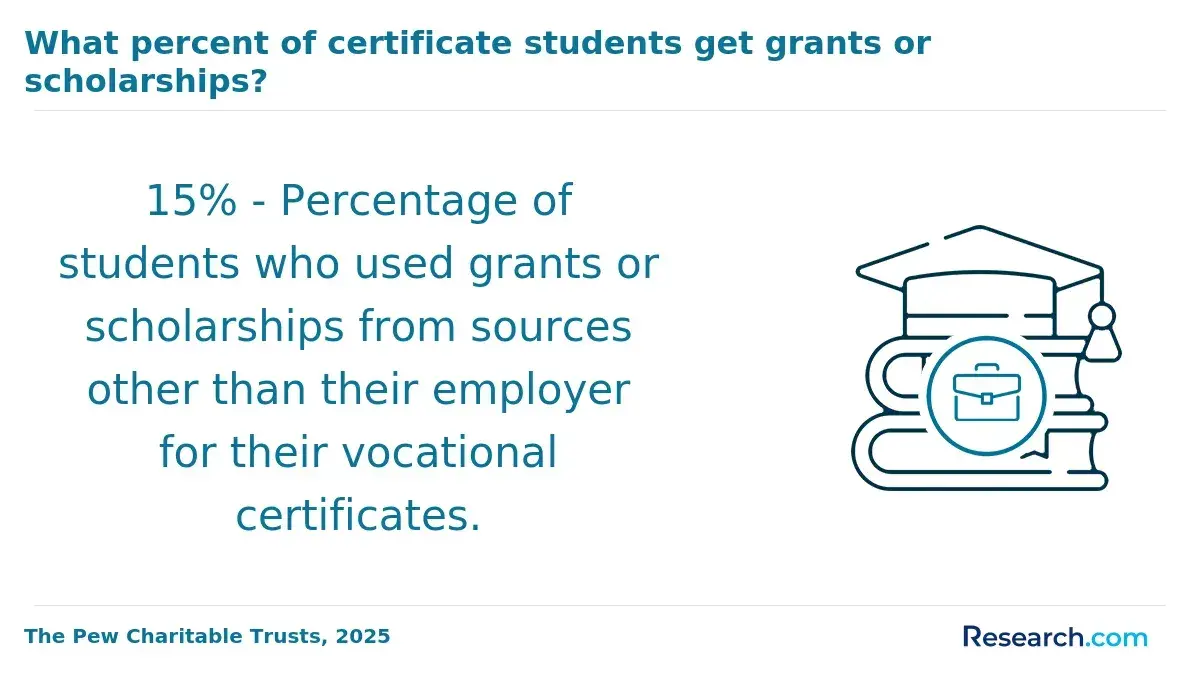
Federal graduate borrowing can cover part of the cost, but debt should be weighed carefully. The Federal Student Aid annual Direct Unsubsidized Loan limit for graduate and professional students is $20,500, which means students in higher-cost programs may need savings, employer support, payment plans, assistantships, scholarships, or Grad PLUS Loans.
Funding is often more limited for online doctoral students than for full-time campus PhD students, but options still exist. Compare these sources before enrolling:
- Employer tuition assistance for instructional designers, trainers, faculty developers, or education leaders.
- University scholarships or doctoral tuition discounts for online students.
- Graduate assistantships, research assistantships, or teaching support roles, if available to distance students.
- Professional association grants for dissertation research or conference travel.
- Military, veteran, public-sector, or institutional employee benefits.
- Payment plans that reduce short-term borrowing but do not lower total tuition.
If cost is your primary constraint, compare research fit against affordability rather than choosing the lowest price automatically. Lists of the cheapest online EdD programs can help you identify lower-cost options, but you should still verify accreditation, dissertation support, and faculty expertise before applying.
A doctorate in Learning Design can support several research-oriented paths, but it does not guarantee a specific job title or salary. Outcomes depend on degree type, dissertation topic, publications, teaching experience, research methods skills, professional network, and whether the doctorate is from a program respected by the target employer.
The salary table below uses U.S. labor-market categories that commonly overlap with learning design, education research, higher education, and organizational learning. These are not guaranteed outcomes; they are national wage reference points for related roles:
| Career path | Typical research-related responsibilities | U.S. salary context |
| Postsecondary teacher or faculty member | Teach courses, publish research, advise students, serve on committees, and pursue grants | BLS reported median pay of $83,980 for postsecondary teachers in 2024 |
| Instructional coordinator or curriculum research specialist | Evaluate curricula, analyze learning outcomes, support instructional improvement, and implement evidence-based practices | BLS reported median pay of $74,720 for instructional coordinators in 2024 |
| Training and development manager | Lead organizational learning strategy, evaluate training effectiveness, supervise learning teams, and use data to improve workforce development | BLS reported median pay of $127,090 for training and development managers in 2024 |
| Learning experience research lead | Study learner behavior, test digital learning products, evaluate interventions, and translate research into design decisions | Salary varies by employer and may align with education research, UX research, or learning and development leadership roles |
| Education policy or program evaluation researcher | Design studies, analyze program outcomes, write reports, and advise agencies, nonprofits, or districts | Compensation varies by sector, grant funding, and methodological specialization |
Academic research careers usually require more than the doctorate itself. Competitive candidates often have conference presentations, peer-reviewed publications, teaching experience, methodological depth, and a dissertation that contributes to an identifiable scholarly conversation.
Industry and applied research roles may value different evidence. Employers may look for the ability to run usability studies, analyze learner data, evaluate training ROI, translate research into product decisions, and communicate findings to nonacademic audiences.
AI-supported learning, learning analytics, accessibility, and evidence-based digital course design are especially relevant areas as organizations adopt new learning technologies.
Consider an on-campus or funded PhD instead of an online doctorate if your primary goal is a research-intensive faculty role at a major university and you need full-time immersion in a lab, grant-funded research group, or teaching assistantship. Consider an online doctorate if you need to keep working and can still access strong mentorship, research opportunities, and dissertation support.
How Should You Choose the Best Online Learning Design Doctorate Program for Your Research Goals?
The best program is the one that gives you the strongest path from your current experience to the research work you want to do. That means you should start with your research goal, then evaluate degree type, faculty fit, methods training, dissertation structure, online format, cost, and career support.
Use this decision process to compare programs systematically:
- Define your target research setting: university, community college, corporate learning, edtech, government, nonprofit evaluation, K-12 systems, healthcare education, military training, or higher education administration.
- Choose the degree type that fits that setting: PhD for theory-building and academic research, EdD for applied research and practice-based leadership.
- Identify your research topic in one or two sentences before contacting schools.
- Match your topic to faculty publications, not just program concentration names.
- Check institutional accreditation and confirm that the program leads to a dissertation or rigorous applied research study.
- Compare research-methods coursework, dissertation milestones, online student support, and access to research communities.
- Calculate total cost, including fees, travel, software, and dissertation continuation charges.
- Ask for recent dissertation examples and career outcomes, especially for online students.
- Evaluate whether the program's timeline is realistic for your work, family, and research responsibilities.
- Apply only where you can explain a clear fit among your goals, the faculty, the curriculum, and the dissertation model.
Several red flags should make you pause before enrolling:
- The program emphasizes speed but gives little detail about dissertation quality or research mentoring.
- No faculty member appears to publish in your topic area.
- The school cannot clearly explain online student access to IRB, library, research software, or dissertation support.
- The curriculum includes minimal quantitative, qualitative, or mixed-methods training.
- Admissions staff discuss career outcomes in guaranteed terms rather than realistic possibilities.
- The total cost is unclear, especially after coursework ends.
A strong online doctorate can be worth it when it lets you keep professional momentum while producing credible research. It is less likely to be worth it if the program is merely convenient, weakly mentored, poorly aligned with your topic, or unlikely to help you produce the scholarly evidence required for your desired research career.
Other Things You Should Know About Learning Design
Yes, but publication support varies widely. Ask whether faculty co-author with online students, whether doctoral seminars include manuscript development, and whether students receive feedback for conference proposals or journal submissions.
Many employers accept online doctorates from accredited universities, especially when the graduate can show strong research, design, and leadership skills. For academic hiring, the degree format usually matters less than institutional reputation, dissertation quality, publications, teaching experience, and faculty references.
Not always. Many programs teach research methods during the doctorate, but applicants interested in learning analytics, AI-supported learning, or experimental research benefit from prior coursework in statistics, data analysis, programming, or research design.
Yes, especially if your dissertation and portfolio show skills in learner research, usability testing, assessment, analytics, accessibility, or evidence-based product evaluation. Industry employers may also expect practical experience with research tools and cross-functional product teams.
- MA in Learning Design and Technology | The American College of Greece https://globalcampus.aug.edu/programs/graduate-programs/ma-learning-design-and-technology/
- Research lines: Doctoral Programme in Education & ICT https://www.uoc.edu/en/research/doctoral-school/lines/education-ict
- Educational Funding https://phdproject.org/educational-funding/
- Online PhD in Instructional Design and Open Learning | Intergovernmental https://m.euclid.int/phd-instructional-design-online-learning/
- How To Choose The Right Instructional Design PhD Program https://elearningindustry.com/choose-right-instructional-design-phd-program
- 25 Best Online EdD Programs of 2025 https://www.eddprograms.org/schools/best-online-doctor-of-education-programs/
- TEL doctoral training in Europe - EATEL https://ea-tel.eu/de-tel/tel-doctoral-training-in-europe
- Online Master’s Degrees in Instructional Design: Review Top Programs https://www.onlinemastersdegrees.org/best-programs/education/instructional-design/
- PhD Scholarships: Explore Your Online Education Aid Options https://www.oedb.org/phd-scholarship/
- ASHFoundation - Apply for Grants, Scholarships, and Awards https://www.ashfoundation.org/apply/