2027 Best Online Health Policy Doctorate Programs for Executive and Leadership Careers

Co-Founder and Chief Data Scientist
Choosing an online health policy doctorate is a high-stakes decision for leaders who want influence beyond day-to-day operations. The best programs help experienced professionals use evidence, law, finance, ethics, and systems thinking to shape health organizations and public policy. Demand is strong: the BLS reports medical and health services managers had median pay of $117,960 in May 2024, with much-faster-than-average growth projected.
This guide helps working professionals compare credible programs by accreditation, flexibility, cost, dissertation expectations, and fit for executive, consulting, policy, or academic goals.
Key Things You Should Know
- The strongest online health policy doctorates combine recognized institutional accreditation, policy-focused faculty, executive-friendly scheduling, and a clear dissertation, capstone, or applied research pathway tied to leadership problems.
- Working executives should compare total cost, not only tuition: NCES data published in 2024 shows average graduate tuition and required fees of $12,596 at public institutions and $29,931 at private nonprofit institutions.
- A DrPH or DHA usually fits applied executive leadership better than a traditional PhD, while a PhD is stronger for candidates targeting tenure-track research, advanced policy analysis, or scholarly publication.
What Are the Best Online Health Policy Doctorate Programs for Executive and Leadership Careers?
The best online health policy doctorate program is not the same for every executive. A hospital vice president, public health director, payer strategist, nonprofit CEO, and policy consultant may need different mixes of policy analysis, organizational leadership, research design, finance, and population health training.
The programs below are strong-fit options because they are offered by established institutions, serve experienced professionals, and include health policy, public health leadership, or healthcare administration content that can support executive advancement. Always verify the current catalog, tuition, residency rules, and concentration availability before applying.
| Institution | Doctoral pathway | Online or executive format | Best fit | Important decision note |
| Johns Hopkins University | DrPH with policy and management-related study options | Primarily online with required in-person institutes | Senior public health, policy, and systems leaders who want a highly research-informed executive doctorate | Strong brand and public health depth, but residency and workload expectations require careful planning |
| University of North Carolina at Chapel Hill | Executive DrPH in Health Leadership | Online cohort model with campus requirements | Experienced healthcare and public health leaders seeking applied leadership, strategy, and systems change training | Excellent executive fit, though it is broader than a narrowly defined health policy doctorate |
| Loma Linda University | DrPH in Health Policy and Leadership | Online or hybrid public health doctorate format | Professionals who want explicit health policy and leadership alignment in a public health setting | Applicants should review dissertation, practicum, and campus expectations in the current catalog |
| Medical University of South Carolina | Doctor of Health Administration | Online executive-oriented format | Healthcare executives focused on administration, strategy, quality, and organizational performance | Better for applied healthcare leadership than for academic health policy research |
| A.T. Still University | Doctor of Health Administration | Online format for working professionals | Healthcare administrators seeking flexible doctoral study with leadership and systems content | Policy content should be compared course by course against more policy-specific DrPH programs |
| Franklin University | Doctor of Healthcare Administration | Online, practice-focused format | Working healthcare managers who prioritize flexibility, applied research, and administrative leadership | Useful for leadership advancement, but candidates seeking public health policy scholarship may prefer a DrPH or PhD |
A good shortlist should include no more than five programs at first. Compare them by whether the curriculum directly supports your next role, whether you can complete residencies without disrupting work, and whether the final project will create value for your organization or policy area.
Common red flags include vague accreditation language, unclear dissertation expectations, faculty with little policy or executive leadership expertise, and programs that market "fast doctorate" completion without explaining research quality or workload.
Which Type of Health Policy Doctorate Is Best for Executive Leadership Careers?
The best doctorate type depends on whether your goal is to lead organizations, influence public policy, conduct research, teach, or consult. "Health policy doctorate" can refer to several degrees, and each sends a different signal to employers.
| Degree type | Primary orientation | Best for | Trade-off |
| DrPH | Applied public health leadership, policy, population health, and systems change | Public health executives, health department leaders, policy advocates, nonprofit leaders, and senior population health professionals | Often includes residencies and a dissertation or applied doctoral project |
| DHA | Healthcare administration, strategy, operations, finance, quality, and executive leadership | Hospital, payer, consulting, long-term care, and healthcare system leaders | May include less formal public policy research than a DrPH or PhD |
| PhD in Health Policy or Health Services | Original research, theory, methods, economics, statistics, and scholarly publication | Researchers, policy analysts, think tank professionals, faculty candidates, and evidence-generation roles | Usually less executive-friendly and more research-intensive than professional doctorates |
| DPA or public policy doctorate with health focus | Public administration, governance, regulation, budgeting, and policy implementation | Government executives, association leaders, and policy implementation professionals | May require building a health specialization through electives and dissertation topic selection |
For many healthcare leaders, the decision is between a DrPH and a DHA. Choose the DrPH if you want to shape population health strategy, public health policy, regulation, or cross-sector systems. Choose the DHA if your main goal is executive leadership inside healthcare delivery, payer, consulting, or administrative environments.
If you are not yet in a senior role, a doctorate may be premature. Many professionals get better short-term value from a masters in healthcare administration, an MPH, an MBA with healthcare concentration, or targeted executive education before committing to a doctoral dissertation.
What Accreditation Should an Online Health Policy Doctorate Program Have?
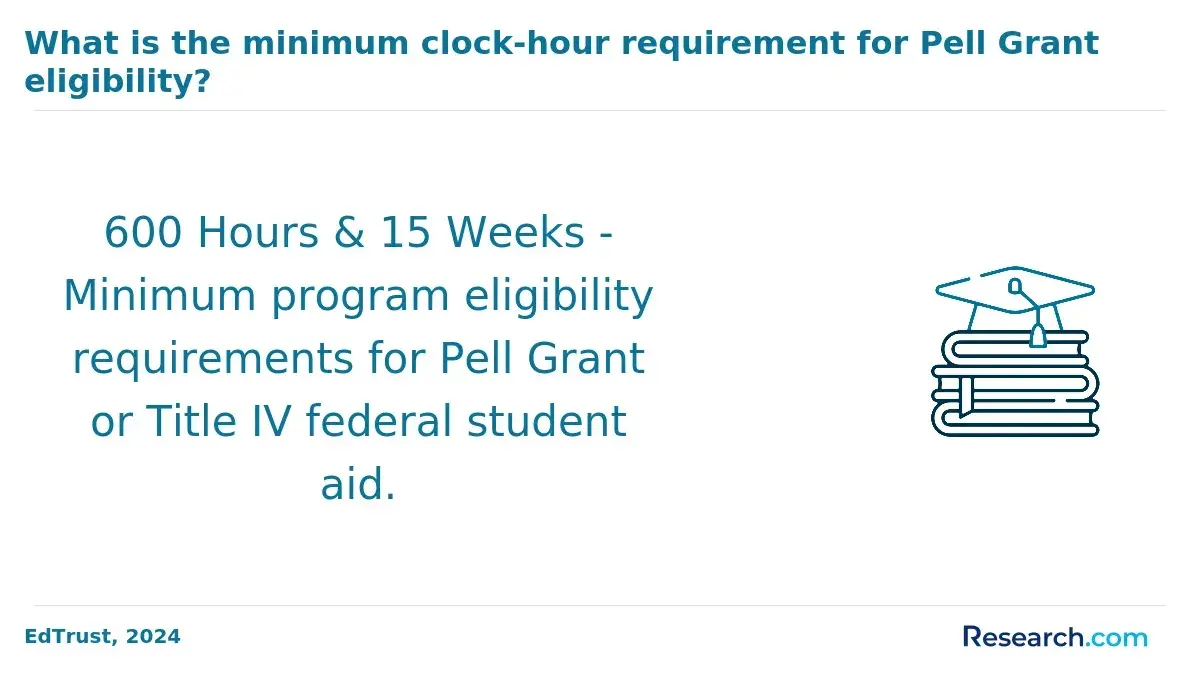
Accreditation is one of the most important quality checks for an online doctorate. It affects federal financial aid eligibility, employer acceptance, transferability, and credibility in academic or policy settings.
At minimum, the university should hold institutional accreditation from an agency recognized by the U.S. Department of Education or the Council for Higher Education Accreditation. For public health doctorates, look for CEPH accreditation when the program sits in a school or program of public health. For healthcare administration pathways, CAHME is more common at the master's level, so doctoral candidates should still verify institutional accreditation, faculty qualifications, doctoral governance, and research standards.
Before applying, use this checklist to avoid costly mistakes:
- Confirm institutional accreditation on the accreditor's official directory and the school's current accreditation page.
- For DrPH programs, verify whether the school or program of public health is CEPH-accredited.
- Ask whether online students receive the same transcripted degree as campus students.
- Review dissertation, capstone, comprehensive exam, and residency requirements in the official catalog.
- Check whether the program has faculty actively working in health policy, health economics, public health law, healthcare leadership, or systems reform.
Be cautious if a school relies on vague claims such as "internationally recognized," "licensed," or "approved" without naming a recognized accreditor. Those terms do not substitute for accreditation that employers, licensing boards, and other universities can verify.
What Do Students Learn in an Online Health Policy Doctorate Program?
Online health policy doctorate programs teach leaders how to evaluate evidence, make high-stakes decisions, and move complex organizations through change. The strongest executive-focused curricula connect policy analysis with finance, ethics, law, data, operations, and implementation.
The table below summarizes common doctoral learning areas and why they matter for senior leadership roles.
| Learning area | What students study | Executive value |
| Health policy analysis | Policy design, implementation, evaluation, stakeholder analysis, and regulatory impact | Helps leaders assess how laws, payment models, and public programs affect organizational strategy |
| Healthcare finance and economics | Cost, reimbursement, value-based care, insurance markets, and resource allocation | Supports budget decisions, payer negotiations, and sustainable program design |
| Leadership and organizational change | Governance, strategy, culture, team leadership, conflict, and transformation | Prepares students to lead across clinical, administrative, public, and community systems |
| Research methods and biostatistics | Quantitative methods, qualitative methods, program evaluation, and evidence appraisal | Helps executives use evidence responsibly rather than relying on anecdote or vendor claims |
| Population health and equity | Social determinants of health, disparities, prevention, community health, and outcomes measurement | Supports strategy in public health agencies, integrated delivery systems, Medicaid, and nonprofit sectors |
| Digital health, data, and AI governance | Analytics, informatics, privacy, algorithmic bias, and technology-enabled care | Helps leaders evaluate digital transformation without ignoring ethics, compliance, or patient impact |
AI and automation are making evidence appraisal more important, not less. Executives are increasingly expected to understand how predictive analytics, claims data, electronic health records, and policy modeling can improve decisions while also creating risks around bias, privacy, and accountability.
A strong program should let you connect coursework to your professional setting. For example, a senior Medicaid leader might study payment reform, while a hospital executive might focus on readmissions, workforce shortages, or value-based contracting.
Can You Complete an Online Health Policy Doctorate While Working Full Time?
Yes, many online health policy doctorates are designed for full-time professionals, but "online" does not automatically mean flexible. Executive-friendly programs usually combine asynchronous coursework with limited synchronous sessions, cohort meetings, weekend intensives, or short residencies.
Before enrolling, compare the program calendar against your actual work life, not your ideal schedule. The most important flexibility questions are practical:
- Are classes asynchronous, synchronous, or a mix of both?
- How often are live sessions required, and in which time zone?
- How many campus visits, institutes, or residencies are required each year?
- Can dissertation or capstone work be tied to your employer or current policy problem?
- Does the program allow part-time pacing without extra continuation fees or loss of financial aid eligibility?
- What happens if your executive workload spikes during budget season, accreditation review, legislative session, or crisis response?
The biggest mistake is assuming a doctorate can be treated like a short professional certificate. Even online programs require sustained reading, research, writing, faculty feedback, and independent project work. A realistic plan often includes protected weekly study blocks, supervisor support, family buy-in, and a clear decision about whether work travel will interfere with residencies.
For working executives, the best format is usually not the fastest one. It is the format you can complete without sacrificing job performance, health, or the quality of your doctoral research.
What Are the Admission Requirements for an Online Health Policy Doctorate?
Admissions requirements vary by school and degree type, but executive-focused health policy doctorates usually expect evidence of graduate-level preparation, professional maturity, and a focused leadership or policy agenda. Competitive applicants typically show that they can translate doctoral study into real organizational or public value.
Most programs ask for several of the following materials:
- A master's degree in public health, healthcare administration, public administration, nursing, medicine, business, social work, health informatics, or a related field.
- Official transcripts showing graduate-level readiness and, in some cases, prior statistics or research methods coursework.
- A resume or CV documenting leadership, management, policy, clinical, public health, consulting, or administrative experience.
- A statement of purpose explaining your executive goals, health policy interests, and potential dissertation or applied project direction.
- Letters of recommendation from supervisors, faculty, executives, or policy professionals who can assess your leadership and analytical ability.
- An interview, writing sample, or scholarly essay, especially for cohort-based executive doctorates.
GRE requirements have become less common in many professional doctoral programs, but applicants should not treat test-optional admissions as less rigorous. Schools may place more weight on writing quality, leadership record, quantitative readiness, and the fit between your goals and faculty expertise.
If your background is mostly clinical or operational, consider strengthening your application with coursework in statistics, health economics, public policy, or research methods before applying. If your experience is mostly policy-focused, make sure you can show leadership responsibility and not only subject-matter interest.
How Long Does It Take to Earn an Online Health Policy Doctorate?
Most online health policy doctorate programs take about three to seven years, depending on the credential, enrollment pace, transfer credit, residency schedule, dissertation progress, and whether the student enters with a relevant master's degree. Executive DrPH and DHA programs often target working professionals, while PhD pathways may take longer because of deeper research-methods training.
The table below gives a practical timeline comparison for planning purposes. Individual schools may be faster or slower, so use the official degree plan when estimating completion time.
| Program pathway | Typical completion pattern | Why timing varies | Best for |
| Executive DrPH | Often structured around three to five years | Cohort calendar, residencies, dissertation or applied doctoral project | Public health and policy leaders who want structured executive pacing |
| DHA | Often structured around three to five years | Applied research sequence, capstone or dissertation, part-time course load | Healthcare administrators who need flexibility and practice-focused study |
| PhD in Health Policy or Health Services | Often longer and more research-intensive | Advanced methods, comprehensive exams, original dissertation research, publication expectations | Future researchers, analysts, or faculty candidates |
| Part-time doctoral route | Can extend beyond standard plans | Workload, dissertation delays, leaves of absence, committee availability | Executives with demanding travel, crisis-response, or senior management responsibilities |
Faster is not always better. A compressed timeline may be attractive, but executives should ask whether the pace allows enough time for research design, stakeholder access, data collection, and meaningful faculty mentorship.
If your main goal is rapid career mobility rather than doctoral-level research or executive scholarship, compare shorter alternatives first. Some professionals may get a better near-term return from certificates, fellowships, or accelerated healthcare programs before committing to a multi-year doctorate.
Does an Online Health Policy Doctorate Require a Dissertation?
Many online health policy doctorates require either a dissertation, an applied doctoral project, or a capstone-style project. The requirement depends on the degree type and institution, and it has a major effect on how long the program takes.
Use the distinction below when comparing programs, because schools sometimes use similar terms in different ways:
- A traditional dissertation usually requires original research, a faculty committee, formal proposal approval, data collection or analysis, and a final defense.
- An applied dissertation focuses on a real practice or policy problem but still uses doctoral-level evidence, methods, and scholarly writing.
- A doctoral capstone often emphasizes implementation, evaluation, or strategic intervention in a professional setting.
- A portfolio model may compile publishable papers, leadership products, or applied projects, but students should verify whether it is accepted for their career goals.
For executive careers, an applied dissertation or capstone can be highly valuable when it solves a real problem: reducing avoidable utilization, improving access, evaluating a policy change, strengthening quality strategy, or designing a population health intervention. For academic or research careers, a traditional dissertation may carry more weight.
Avoid choosing a program simply because the final project sounds easier. Instead, ask whether the project will help you produce credible evidence, build executive visibility, and demonstrate the kind of expertise your target role requires.
How Much Does an Online Health Policy Doctorate Cost, and Is It Worth the Investment?
An online health policy doctorate can be worth the investment for professionals who already have relevant experience and a clear plan to use the degree for executive leadership, policy influence, consulting, teaching, or organizational transformation. It is less likely to pay off if the student expects the credential alone to create a promotion without a track record, network, or strategic career plan.
Cost varies widely by institution type, credit requirements, fees, and residency travel. These current cost benchmarks can help you frame the financial decision before requesting school-specific estimates:
- NCES data published in 2024 reports average graduate tuition and required fees of $12,596 at public institutions and $29,931 at private nonprofit institutions.
- Federal Direct Unsubsidized Loans for graduate and professional students are capped at $20,500 per academic year, while Graduate PLUS Loans may cover additional approved cost of attendance.
- Hybrid or executive residencies can add travel, lodging, meals, parking, and lost work time, so the cheapest tuition rate may not produce the lowest total cost.
When calculating ROI, include opportunity cost. A senior leader taking one fewer consulting contract, reducing travel, or delaying a promotion search during dissertation work may experience real financial trade-offs even if the program is online.
Use this decision sequence before enrolling:
- Request the full cost of attendance, including tuition, technology fees, dissertation continuation fees, graduation fees, and residency estimates.
- Ask your employer about tuition assistance, professional development funds, paid study time, and whether the doctorate aligns with succession planning.
- Compare the degree to lower-cost alternatives such as certificates, fellowships, an MPH, MBA, MHA, or targeted executive education.
- Map the program's curriculum to specific roles you want within three to seven years.
- Confirm that your final project can produce a portfolio, publication, policy brief, or organizational result that supports career advancement.
If affordability is the main barrier, compare healthcare administration and leadership pathways broadly, including the cheapest online healthcare administration degree options, before deciding whether a doctorate is necessary now.
What Executive Careers Can You Pursue With an Online Health Policy Doctorate?
An online health policy doctorate can support advancement into executive, policy, consulting, academic, and senior administrative roles. It does not guarantee a C-suite position, but it can strengthen credibility when paired with leadership experience, measurable results, and a strong professional network.
The BLS reported a 2024 median annual wage of $117,960 for medical and health services managers, which gives a useful salary reference point for senior healthcare leadership. Doctoral graduates may pursue roles above, below, or outside that median depending on employer type, geography, scope of responsibility, and prior experience.
The table below shows common career directions and how a doctorate may support each one.
| Career path | Typical responsibilities | How the doctorate may help | Best-fit doctorate type |
| Healthcare executive or service line leader | Strategy, operations, budgeting, quality, workforce planning, and performance improvement | Builds advanced decision-making, evidence evaluation, and systems leadership skills | DHA or DrPH |
| Public health or health department leader | Population health strategy, emergency preparedness, community partnerships, and program evaluation | Supports policy implementation, equity-focused leadership, and cross-sector governance | DrPH |
| Health policy director or advisor | Policy analysis, advocacy, regulatory interpretation, stakeholder engagement, and legislative strategy | Strengthens research literacy, policy design, and evidence-based recommendations | DrPH, PhD, or DPA |
| Healthcare consultant | Organizational assessment, payment strategy, transformation projects, and executive advising | Can improve credibility for complex policy, quality, population health, or governance engagements | DHA, DrPH, or PhD |
| Faculty member or researcher | Teaching, publishing, grant writing, dissertation supervision, and policy research | Provides research training and scholarly credentials, especially for academic environments | PhD or research-intensive DrPH |
| Digital health, analytics, or informatics leader | Data governance, technology strategy, compliance, performance measurement, and AI oversight | Helps connect health policy, ethics, analytics, and executive decision-making | DHA or DrPH with analytics or informatics electives |
Professionals interested in analytics-heavy leadership should also compare related career paths, including health information management salary and advancement options, because some roles reward informatics credentials more directly than a policy doctorate.
The strongest candidates use the doctorate as one part of a broader executive strategy: leading visible initiatives, publishing or presenting applied work, building policy networks, mentoring teams, and demonstrating measurable impact. The weakest ROI usually occurs when students choose a program based on prestige alone without connecting it to a defined career move.
Other Things You Should Know About Health Policy
Yes, if the university is properly accredited and the program has rigorous coursework, qualified faculty, and a credible dissertation or applied project. Employers usually care more about relevance, leadership results, and accreditation than whether every course was completed on campus.
A DrPH is often best for public health and policy leadership, a DHA is often best for healthcare administration and executive operations, and a PhD is best for research-intensive or academic goals. The right choice depends on the role you want next.
Many students do, but it requires disciplined scheduling and a realistic workload plan. Check synchronous class times, residency requirements, dissertation expectations, and whether the program allows part-time enrollment.
It can be worth it if you need doctoral-level credibility for executive leadership, policy influence, consulting, research, or teaching. If your goal is a near-term promotion, a certificate, fellowship, or second master's may be more practical and less expensive.
References
- How to Doctorate in Healthcare Management | Eduminds Learning https://www.edumindslearning.com/blog/How-to-Doctorate-in-Healthcare-Management-Complete-Guide
- Best Online Doctor of Healthcare Administration Programs https://www.phds.me/online-programs/doctorate-healthcare-administration-dha/
- Leadership at Scale: Exploring Doctoral Paths in Health Administration https://www.scuhs.edu/drwhl-article/leadership-at-scale-exploring-doctoral-paths-in-health-administration/
- Daniel E Dawes, JD , https://meharryglobal.org/course/phd-in-health-law-policy-and-management/
- Financial Support for the Pardee RAND Ph.D. in Public Policy Analysis https://www.rand.edu/programs/phd-policy-analysis/funding-your-phd.html
- 25 Best Doctor of Public Health Programs - MPH Online https://www.mphonline.org/top-public-health-phd-programs/
- Top 10 DHA Online Programs 2020 - Healthcare Administration Degree Programs https://www.healthcare-administration-degree.net/best/best-dha-online-programs/
- Online Doctorate in International Public Health https://www.euclid.int/online-doctorate-international-public-health/
- Best Online Doctorate in Health Administration | DHA & PhD 2026 – PublicAdministrationPolicy.org https://publicadministrationpolicy.org/degree/doctorate-in-health-administration/
- Best Online Doctorates in Healthcare Administration 2026 https://www.onlineu.com/degrees/doctoral-healthcare-administration