
2027 Best Online General Psychology Doctorate Programs for Senior-Level Roles: Careers, Salaries, and Advancement Paths

Co-Founder and Chief Data Scientist
A doctorate in general psychology can strengthen a leadership profile, but only if the program matches the role you want. The U. S. Bureau of Labor Statistics reported a May 2024 median annual wage of $94,310 for psychologists, with senior roles in health care, consulting, research, and organizational leadership often evaluated by experience, specialization, and evidence of impact.
This guide is for working professionals comparing online doctoral options, career outcomes, salary potential, and ROI. You will learn how to choose a program that supports promotion, executive transition, or advanced specialist work.
Key Things You Should Know
- The strongest online general psychology doctorate for senior-level roles is usually the one aligned with your target function: research leadership, organizational consulting, academic administration, health services management, or applied program evaluation.
- Salary outcomes vary widely by role: BLS May 2024 data shows median pay of $117,960 for medical and health services managers, $127,090 for training and development managers, and $82,140 for postsecondary psychology teachers.
- A doctorate can improve credibility for executive and expert roles, but it does not replace leadership experience, licensure where required, accreditation review, networking, and a clear advancement plan.
Which Online General Psychology Doctorate Programs Best Prepare Graduates for Senior-Level Leadership Roles?
The best online general psychology doctorate is not simply the most selective or best-known program. For senior-level career goals, the strongest program is the one that helps you build advanced psychological expertise, applied research ability, leadership credibility, and a portfolio that employers can connect to organizational results.
General psychology doctorates usually focus on human behavior, cognition, motivation, lifespan development, research methods, assessment, and evidence-based decision-making. Unlike a clinical psychology doctorate, a general psychology doctorate may not prepare graduates for psychologist licensure unless the program meets specific state and professional requirements. That distinction matters because many executive roles value the doctorate as a leadership and expertise credential, while clinical roles may require a separate licensure-eligible pathway.
The table below compares common online doctorate formats and how well they fit different senior-level ambitions. Use it to identify the degree structure that best supports your intended role rather than assuming all doctoral programs lead to the same outcome.
| Program type | Best fit for senior-level goals | Typical culminating project | Leadership value | Key limitation to check |
| PhD in General Psychology | Research leadership, academic roles, policy analysis, program evaluation, behavioral science strategy | Dissertation | Strong preparation for designing studies, interpreting evidence, and leading research-based decisions | May be less applied if your goal is corporate or operational leadership |
| PsyD with general or applied psychology focus | Senior practitioner, consulting, assessment-informed leadership, human services administration | Dissertation, doctoral project, or applied research project | Often emphasizes practice, assessment, and application of psychological theory | Licensure eligibility must be verified carefully; many online general tracks are not clinical licensure pathways |
| EdD with psychology, learning, or human development emphasis | Education leadership, workforce learning, student services, training administration | Applied dissertation or capstone | Useful for leaders focused on systems improvement, learning design, and institutional change | May not carry the same research identity as a PhD in psychology |
| Doctorate in organizational or business psychology | Executive coaching, talent strategy, organizational development, people analytics leadership | Applied dissertation or consulting project | Direct connection to workplace behavior, leadership development, and organizational performance | May be narrower than a broad general psychology doctorate |
For most senior-level roles, program quality depends on four factors: regional or institutional accreditation, faculty expertise that matches your goals, a rigorous research sequence, and applied leadership opportunities. A flexible online format is valuable, but flexibility should not come at the expense of mentoring, doctoral writing support, research supervision, or employer-recognized academic standards.
Before choosing a program, compare how each option supports the kind of authority you want to build. A future research director may need a traditional dissertation and quantitative methods depth, while a future chief learning officer may gain more value from an applied doctorate with organizational change projects.
Which Senior-Level Careers Can You Pursue With an Online General Psychology Doctorate?
An online general psychology doctorate can support advancement into senior-level careers that rely on behavioral expertise, research interpretation, leadership development, program design, or human services strategy. It is especially useful when paired with experience in health care, education, government, nonprofit leadership, consulting, human resources, or applied research.
The table below summarizes senior-level career directions where doctoral-level psychology training can be relevant. These roles differ in licensure expectations, management responsibility, and how directly they use psychological science.
| Senior-level career path | Common responsibilities | Where the doctorate adds value | Licensure or credential note |
| Behavioral health program director | Oversee programs, staff, quality metrics, community partnerships, and service improvement | Supports evidence-based program design and evaluation | Clinical supervision roles may require state licensure |
| Research director or behavioral scientist | Lead studies, manage research teams, interpret data, publish or present findings | Demonstrates advanced research training and methodological competence | Licensure is usually not required unless clinical services are provided |
| Organizational development executive | Lead change initiatives, talent strategy, leadership training, and employee engagement systems | Applies motivation, cognition, group behavior, and assessment principles | Optional credentials in coaching, HR, or analytics may help |
| Postsecondary psychology faculty or academic administrator | Teach, conduct research, assess curriculum, mentor students, lead departments | Doctoral credential is often expected for full-time faculty and senior academic roles | Institutional hiring standards vary by school and role |
| Human services executive | Direct nonprofit, public agency, or community service operations | Strengthens behavioral program strategy and outcomes assessment | Administrative experience is often as important as the doctorate |
| Forensic or public safety consultant | Consult on behavior, risk, assessment-informed policy, or training programs | Connects psychological theory to justice, correctional, or public safety systems | Clinical forensic practice can require licensure and specialized training |
Doctoral graduates who want justice-related leadership should distinguish forensic consulting, research, and administration from clinical forensic practice. If you are still comparing earlier-stage pathways, reviewing how much do forensic psychologists make can help you understand how education level, licensure, and work setting shape compensation.
The most competitive senior-level candidates usually combine the doctorate with a record of measurable leadership. Examples include managing budgets, supervising teams, launching evidence-based programs, improving retention, publishing applied research, or advising executives on behavioral risk and workforce performance.
How Much Can You Earn in Senior-Level Roles With an Online General Psychology Doctorate?
Salary depends more on role, industry, location, licensure, and leadership scope than on the online format alone. A doctorate may improve eligibility for senior roles, but employers typically evaluate the credential alongside years of experience, management record, and specialized expertise.
The table below uses U.S. Bureau of Labor Statistics May 2024 wage data for occupations that commonly overlap with senior psychology-related career paths. These figures are occupational medians, not guaranteed outcomes for doctoral graduates.
| Occupation | May 2024 median annual wage | How it connects to a general psychology doctorate | Best-fit career context |
| Psychologists | $94,310 | Broad benchmark for doctoral-level psychology occupations | Research, assessment, consulting, applied psychology, or licensed practice when eligible |
| Medical and health services managers | $117,960 | Relevant for behavioral health, mental health operations, and human services leadership | Hospitals, clinics, community agencies, integrated care organizations |
| Training and development managers | $127,090 | Relevant for leadership development, learning strategy, and workforce behavior | Corporate training, government, higher education, consulting |
| Postsecondary psychology teachers | $82,140 | Relevant for teaching, curriculum leadership, and academic advancement | Colleges, universities, online education providers |
| General and operations managers | $102,950 | Relevant when psychology expertise is paired with operational leadership | Health services, nonprofits, education companies, consulting firms |
The salary takeaway is straightforward: the doctorate has the strongest financial upside when it helps you move into a role with larger organizational responsibility. A doctoral credential may be valuable for credibility, but compensation growth usually comes from managing people, budgets, strategy, research portfolios, or revenue-generating consulting work.
Readers should also consider job outlook. BLS projections released for the 2023 to 2033 period show medical and health services managers growing much faster than average, driven by health system expansion and administrative complexity. For a psychology doctorate student, that trend may make health leadership, behavioral health operations, and population-focused program evaluation more financially resilient than narrow roles with limited openings.
Which Skills Help Online General Psychology Doctorate Graduates Qualify for Executive Positions?
Executive employers rarely hire senior leaders for subject knowledge alone. They look for people who can convert expertise into decisions, systems, influence, and measurable results. A strong online general psychology doctorate should therefore build both doctoral-level intellectual skills and practical leadership capacity.
The following skill areas are especially important because they help graduates translate psychological science into organizational value:
- Applied research and evidence evaluation: Senior leaders must judge whether programs, interventions, policies, or training initiatives are actually working.
- Data literacy: Executive roles increasingly require comfort with dashboards, outcomes metrics, survey data, workforce analytics, and responsible use of AI-supported tools.
- Strategic communication: Doctoral graduates need to explain complex behavior, risk, and research findings in language executives, boards, clients, and funders can act on.
- Change leadership: Psychology doctorates are most useful in leadership when graduates understand motivation, resistance, culture, group dynamics, and adoption behavior.
- Ethical judgment: Senior roles often involve sensitive data, vulnerable populations, assessment decisions, or high-stakes personnel issues.
- Program evaluation: Leaders who can define outcomes, measure impact, and improve services are more competitive for director and executive positions.
AI is also changing what employers expect. Psychology leaders are increasingly asked to evaluate digital mental health tools, employee monitoring systems, AI-supported assessment platforms, and automated learning technologies. Doctoral programs that include research ethics, psychometrics, human factors, or data interpretation can help graduates ask better questions about validity, bias, privacy, and real-world impact.
A common mistake is assuming that doctoral coursework alone proves executive readiness. To avoid that, use the program to create evidence of leadership: publish or present applied work, complete a dissertation tied to your industry, lead cross-functional projects, and document outcomes that show how your expertise changed decisions or improved performance.
Which Online General Psychology Doctorate Specializations Lead to the Best Leadership Opportunities?
Specialization matters because senior-level roles are usually attached to a domain of responsibility. A broad doctorate can establish advanced expertise, but a focused concentration helps employers understand where you can lead.
The table below compares specializations that commonly connect to leadership opportunities. The best choice depends on whether you want to lead people, programs, research, academic units, or specialized services.
| Specialization | Leadership opportunities | Best-fit professionals | Strategic advantage |
| Industrial-organizational or organizational psychology | Talent strategy, leadership development, workforce analytics, executive coaching | HR leaders, consultants, training managers, organizational development professionals | Direct connection to workplace performance and executive decision-making |
| Health psychology or behavioral health | Program administration, patient behavior strategy, integrated care leadership | Health administrators, behavioral health managers, public health professionals | Aligns psychology with growing demand for health system coordination |
| Educational psychology or learning sciences | Academic leadership, instructional strategy, student success, corporate learning | Educators, learning leaders, student services administrators | Useful for improving learning outcomes and institutional performance |
| Developmental or child and adolescent psychology | Youth program leadership, family services, education policy, nonprofit administration | School leaders, child services professionals, youth program directors | Supports leadership in systems serving children, adolescents, and families |
| Forensic psychology | Corrections leadership, risk-focused consulting, public safety training, justice program evaluation | Justice system professionals, public safety leaders, behavioral consultants | Combines behavioral expertise with legal, correctional, and public agency needs |
Professionals interested in justice-related leadership may also compare doctoral options with forensic psychology master's programs if they are not yet ready for a doctorate or need a lower-cost specialization step before committing to doctoral study.
One red flag is choosing a specialization because it sounds interesting but does not match your current experience or target market. A specialization works best when it strengthens a credible career story: what you have done, what you can now analyze at a doctoral level, and what senior problem you are prepared to solve.
How Does an Online General Psychology Doctorate Support Career Advancement Into Executive Leadership?
An online general psychology doctorate supports advancement when it helps a professional move from doing specialized work to shaping strategy. The degree can signal advanced expertise, but its real value comes from the research, writing, analysis, and systems thinking developed during doctoral study.
For experienced professionals, the strongest advancement pathway is usually deliberate rather than automatic. Use the doctorate to build evidence that you can lead at a higher level:
- Define the senior role you want before enrolling, such as director of behavioral health, research lead, academic chair, chief learning officer, or organizational consultant.
- Select coursework and electives that match that role, especially in research methods, leadership, assessment, ethics, statistics, or organizational behavior.
- Choose a dissertation or capstone topic that solves a real problem in your target industry.
- Use class projects to create portfolio assets, such as program evaluations, training models, policy briefs, or research proposals.
- Build relationships with faculty, alumni, supervisors, and professional associations that can support speaking, publishing, consulting, or promotion opportunities.
- Translate doctoral accomplishments into business language on your resume, focusing on outcomes, decisions, teams, budgets, and organizational impact.
The online format can be an advantage for midcareer professionals because it allows them to keep building leadership experience while studying. However, online doctoral work is still demanding. Students should expect sustained reading, research design, statistical analysis, writing revisions, and long-term dissertation planning.
A major mistake is waiting until graduation to think about advancement. The better approach is to treat the doctorate as a multi-year leadership platform: each course, research project, and professional connection should move you closer to the senior role you want.
How Do Employers Evaluate Online General Psychology Doctorate Degrees for Senior-Level Positions?
Employers usually evaluate an online general psychology doctorate based on legitimacy, relevance, and proof of leadership impact. The word "online" is rarely the central issue if the institution is properly accredited and the graduate can show advanced competence. Problems arise when the program lacks recognition, does not align with the role, or cannot support claims of doctoral-level expertise.
For senior-level hiring, employers commonly look at several signals together:
- Accreditation: Regional or institutional accreditation is essential for employer recognition, transferability, faculty roles, and eligibility for many forms of financial aid.
- Program relevance: Hiring committees assess whether the curriculum, dissertation, and specialization connect to the responsibilities of the position.
- Research quality: Senior research, policy, academic, and consulting roles often require evidence that you can design, interpret, and communicate rigorous work.
- Leadership history: Employers want proof that you have managed projects, people, budgets, partnerships, or strategic initiatives.
- Licensure fit: If the position involves clinical practice, assessment, diagnosis, or supervision, state licensure requirements may matter more than the degree title.
- Professional reputation: Faculty networks, alumni outcomes, publications, conference activity, and employer familiarity can influence how the credential is perceived.
Licensure deserves special attention. A general psychology doctorate is not automatically a pathway to becoming a licensed psychologist. Clinical, counseling, and school psychology licensure requirements vary by state and often involve specific coursework, supervised clinical training, internships, exams, and program standards. Students aiming for licensed practice should confirm requirements with the relevant state board before enrolling.
Employer acceptance is strongest when the degree answers a clear business or institutional need. For example, a health system may value a doctoral graduate who can lead behavioral health outcomes evaluation, while a corporation may value someone who can redesign leadership development using evidence-based assessment.
Which Professionals Benefit Most From an Online General Psychology Doctorate?
The professionals who benefit most are usually those who already have a foundation to build on: leadership experience, industry knowledge, a psychology-related graduate degree, or a clear plan to use doctoral training for higher-level influence. The degree is less likely to pay off for someone who is entering the field with no defined career target.
An online general psychology doctorate may be a strong fit for these groups:
- Midcareer managers in behavioral health or human services: The doctorate can support advancement into program director, executive director, or quality leadership roles.
- HR, learning, and organizational development professionals: Doctoral training can deepen expertise in motivation, behavior change, assessment, and workforce strategy.
- Educators and academic professionals: The credential may support teaching, curriculum leadership, student success strategy, or academic administration.
- Researchers and analysts: A doctorate can strengthen methodological credibility and open doors to senior research or evaluation roles.
- Consultants and coaches: Doctoral training can improve credibility with executive clients when paired with experience and measurable results.
- Licensed or license-track mental health professionals: Some may use a general psychology doctorate to move toward leadership, teaching, research, or administration, though clinical licensure requirements must be reviewed separately.
Professionals still building clinical foundations may want to compare doctorate plans with an online clinical psychology masters pathway, especially if they need supervised clinical preparation before deciding whether a doctorate is necessary.
The degree may not be the best choice for someone seeking a quick salary increase, an automatic promotion, or a guaranteed clinical license. It is also risky for students who have not compared total cost, dissertation support, employer recognition, and the time required to finish while working full time.
What Is the Return on Investment of an Online General Psychology Doctorate for Senior-Level Careers?
The ROI of an online general psychology doctorate depends on total cost, time to completion, opportunity cost, financing, and whether the degree helps you reach a role with higher responsibility. ROI should be measured in more than salary: credibility, promotion eligibility, consulting authority, teaching opportunities, and long-term career resilience can all matter.
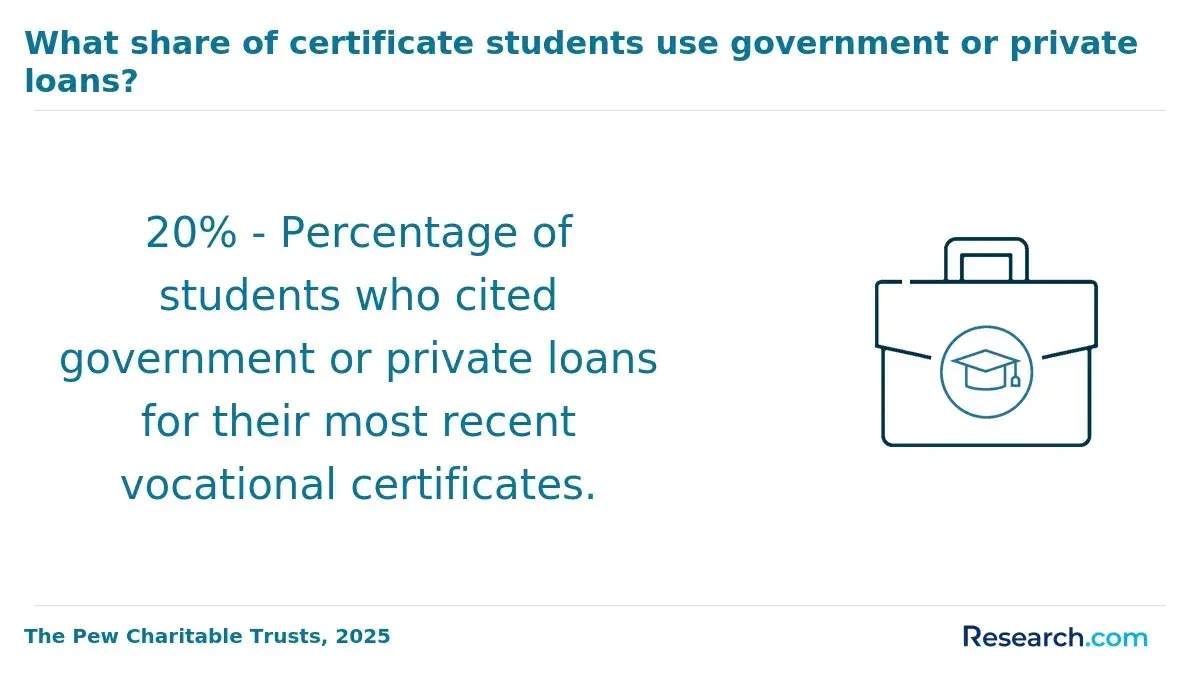
A useful starting point is the national cost context. The National Center for Education Statistics reported in 2024 that average graduate tuition and required fees vary substantially by institution type and control, which means students should compare actual total program cost rather than relying on a school's per-credit price alone. For online doctoral students, technology fees, dissertation continuation fees, residency travel, books, and delayed completion can change the real cost.
When estimating ROI, examine the financial and professional variables together:
- Total program cost: Include tuition, fees, residencies, dissertation credits, travel, books, software, and possible extension terms.
- Funding sources: Ask about employer tuition assistance, scholarships, assistantships, military benefits, payment plans, and federal aid eligibility.
- Time to completion: A lower tuition program may cost more overall if dissertation support is weak and completion takes longer.
- Career lift: Estimate whether the degree helps you qualify for a higher-level role, expand consulting revenue, teach at the college level, or enter research leadership.
- Opportunity cost: Consider the professional projects, overtime, family time, or income opportunities you may reduce while studying.
- Risk of mismatch: ROI falls sharply if the program does not align with your desired industry, licensure needs, or employer expectations.
The best ROI often comes from using the doctorate to move into an adjacent senior role where you already have credibility. For example, a training manager may use doctoral research in learning and motivation to compete for enterprise-level leadership, while a behavioral health administrator may use program evaluation expertise to lead quality, outcomes, or service expansion.
Avoid the mistake of calculating ROI only by comparing tuition against average psychologist pay. Many graduates use general psychology doctorates in roles that are not classified as psychologist positions, so the better question is whether the degree improves your access to the specific senior positions you are targeting.
How Should Students Choose the Best Online General Psychology Doctorate Program for Executive Career Goals?
Choosing the right program requires more than scanning rankings. For executive career goals, you need to test whether the program can help you build the knowledge, evidence, and network required for the next level of responsibility.
Use the following process to compare programs in a practical way:
- Start with your target role, not the degree title. Identify whether you want academic leadership, organizational consulting, health administration, research direction, or specialized program leadership.
- Verify accreditation and employer recognition. Confirm institutional accreditation and ask whether graduates have moved into roles similar to the one you want.
- Review the curriculum for leadership relevance. Look for advanced research, ethics, statistics, assessment, organizational behavior, program evaluation, or specialization courses tied to your goal.
- Compare dissertation or capstone support. Ask about faculty availability, milestone timelines, research approval processes, and completion support.
- Ask how online students build networks. Strong programs offer mentoring, research communities, residencies, alumni access, conference support, or professional collaboration.
- Calculate total cost and time. Include fees, residency expenses, dissertation continuation terms, and the financial effect of extending beyond the advertised timeline.
- Check licensure limitations. If you want clinical, school, or counseling psychology practice authority, confirm state requirements before enrolling.
- Assess flexibility honestly. Choose a schedule you can sustain while meeting work, family, and research obligations.
Students focused on youth services, education leadership, or developmental specialization may also compare doctoral plans with child psychology master's programs if they need a more targeted credential before committing to a broader doctoral path.
Ask admissions counselors direct outcome questions: How many online doctoral students complete the dissertation? What roles do graduates hold five years after completion? How are dissertation chairs assigned? Can working professionals use employer-based data for applied research? What support exists if a student changes dissertation topics?
The best program is the one that makes your next leadership step more credible, not simply the one with the most convenient schedule. A well-chosen doctorate should connect your past experience, current responsibilities, research interests, and future executive role into one coherent advancement strategy.
Other Things You Should Know About General Psychology
No. General psychology is a broad field focused on behavior, cognition, development, research, and psychological theory. Clinical psychology focuses on assessment, diagnosis, and treatment of mental health conditions. Clinical practice usually requires a licensure-eligible program and state approval.
It depends on state law and the nature of your work. Some states restrict the title "psychologist" to licensed professionals. If your role involves clinical services, testing, diagnosis, or supervision, check your state psychology board before using the title professionally.
Many online doctorates take about three to seven years, depending on transfer credits, enrollment pace, dissertation progress, and program structure. The dissertation or doctoral project is often the stage that most affects completion time.
Some do and some do not. Programs may include virtual coursework, short residencies, research intensives, dissertation seminars, or in-person professional development sessions. Always confirm residency requirements before comparing cost and schedule fit.
References
- Understanding the Differences Between Graduate Degrees in Clinical Psychology – IECA https://www.iecaonline.com/journal-article/understanding-the-differences-between-graduate-degrees-in-clinical-psychology/
- Top Online Psychology Doctorate Degree Programs https://www.bestmastersinpsychology.com/best/online-phd-psychology/
- Psychologist Salary and Career Outlook https://teach.com/online-ed/psychology-degrees/online-masters-in-psychology/career-outlook/
- 25 Psychology Ph.D. Programs Online | GradSchoolHub.com https://www.gradschoolhub.com/best/doctoral-programs-in-psychology/
- Top 5 Highest-Paying Psychology Careers - Rivier Academics https://www.rivier.edu/academics/online/resources/program-resources/top-5-highest-paying-psychology-careers-rivier-university/
- Online PsyD in Human & Organizational Psychology | TUW https://www.tuw.edu/academics/psychology/psyd-human-organizational-psychology/
- Best Online Doctorate In Psychology 2025 | Psychology.org https://www.psychology.org/rankings/best-online-doctorate-degree-programs/
- What Can You Do with a PhD in Clinical Psychology? https://paloaltou.edu/resources/blog/what-can-you-do-phd-clinical-psychology
- Exploring PhD Completion Rates: How Many Finish on Time? https://wallyboston.com/phd-completion-rates/
- 2025 Most Affordable Online Colleges for a PhD in Psychology https://www.onlineu.com/most-affordable-colleges/psychology-doctoral-degrees


