
2027 Best Online Computer Science Doctorate Programs for Private Sector and Corporate Careers

Co-Founder and Chief Data Scientist
A Computer Science doctorate can be valuable when your next move depends on research leadership, advanced AI systems, security architecture, or executive-level technical strategy. The U. S. Bureau of Labor Statistics projects 26% growth for computer and information research scientists from 2023 to 2033, far faster than average, which reflects rising demand for advanced computing expertise.
This guide is for working professionals comparing online doctorate programs for corporate roles. You will learn which program features matter, how applied and research doctorates differ, and how to choose a program that fits private sector goals.
Key Things to Know About Online Computer Science Doctorate Programs for Corporate Careers
- The strongest online Computer Science doctorate options for corporate careers usually combine accredited doctoral study, faculty research depth, flexible formats for working professionals, and dissertation or applied research topics tied to business problems.
- BLS data released in 2024 places the median annual wage for computer and information research scientists at $140,910, but salary outcomes vary by role, industry, location, prior experience, and whether the doctorate leads to higher-scope responsibilities.
- An applied doctorate is often better for product, engineering, cybersecurity, analytics, and technology leadership roles, while a research-focused PhD is stronger for corporate research labs, advanced AI research, patents, and technical fellow tracks.
Will Computer Science doctorate programs benefit corporate professionals?
A Computer Science doctorate can benefit corporate professionals when the credential is connected to a clear career objective, not when it is pursued only for prestige. In the private sector, the strongest use cases are roles where employers value original research, deep specialization, complex systems thinking, and the ability to lead technical uncertainty.
The degree is most useful for professionals who already have a strong technical foundation and want to move into higher-impact work. That may include senior software engineers moving toward architecture leadership, data scientists moving toward research science, cybersecurity professionals moving toward security research, or technology managers who need more credibility in advanced technical domains.
The value is more limited if your target role rewards execution speed more than research depth. For example, many software engineering management, product management, and cloud operations roles may value a master's degree, certifications, portfolio evidence, and leadership experience more directly than a doctorate. A doctorate is a long commitment, so the return depends on whether the program helps you build a defensible technical specialty.
Use the degree as a strategic investment when it supports one or more of these outcomes:
- Moving from implementation work into research, architecture, innovation, or advanced technical strategy.
- Building authority in a high-demand specialty such as AI, machine learning, cybersecurity, distributed systems, human-computer interaction, or data-intensive computing.
- Qualifying for corporate research scientist, principal engineer, distinguished engineer, chief scientist, or technical director roles.
- Producing publishable or patentable work that can strengthen your internal promotion case or external job market position.
The main caution is that a doctorate does not automatically produce a promotion or salary increase. Employers typically evaluate the credential alongside business impact, technical achievements, leadership record, and the relevance of your dissertation or doctoral project to the company's needs.
What makes online Computer Science doctorate programs ideal for private sector or corporate careers?
An online Computer Science doctorate is ideal for private sector professionals when it is designed around flexibility, research relevance, and measurable career utility. The best fit is not always the most famous university; it is the program that lets you complete rigorous doctoral work while staying employed and applying research to real corporate problems.
The following table summarizes the program qualities that matter most for corporate ROI. These criteria help separate programs that are merely online from programs that are genuinely useful for working technology professionals.
| Program quality | Why it matters for corporate careers | What to verify before applying |
| Regional accreditation | Employers, tuition-assistance programs, and doctoral admissions committees generally view accredited institutions as more credible. | Confirm institutional accreditation through the school and accreditor records. |
| Flexible online format | Working professionals need predictable course delivery, manageable residency requirements, and asynchronous or evening options. | Ask whether courses, exams, defenses, and research meetings can be completed remotely. |
| Faculty expertise in corporate-relevant fields | Your advisor's research area can shape your dissertation, network, and credibility in technical hiring conversations. | Review faculty publications, labs, grants, patents, and industry experience. |
| Applied research options | Corporate learners often benefit from research that solves business, product, infrastructure, or security problems. | Ask whether employer-based datasets, systems, or case studies can be used with proper approvals. |
| Strong quantitative and systems curriculum | Doctoral-level computing roles often require advanced algorithms, modeling, architecture, AI, security, or analytics depth. | Compare required courses and electives against your target role. |
| Transparent dissertation support | Doctoral attrition often happens during the dissertation stage, not the coursework stage. | Ask about advisor matching, milestone timelines, committee formation, and remote defense processes. |
Current corporate technology trends make these qualities more important. AI adoption, cloud modernization, cybersecurity risk, and data governance are pushing companies to seek leaders who can evaluate emerging technologies rather than simply implement vendor tools. A strong online doctorate should help you become that kind of evaluator and builder.
What are the best online Computer Science doctorate programs for private sector careers?
The best online Computer Science doctorate for a private sector career depends on your target role. A professional pursuing corporate AI research may need a different program than a cybersecurity architect, engineering executive, or applied computing researcher. The programs below are useful starting points because they offer online or distance-accessible doctoral study in Computer Science or closely related computing fields and can support corporate-oriented research when matched carefully with the right advisor.
This table is not a universal ranking. It is a decision-support comparison of programs that working professionals commonly evaluate for online doctoral study in advanced computing; always confirm delivery format, tuition, residency rules, faculty availability, and program status directly with the university before applying.
| University | Online doctorate option | Best corporate fit | Why it may work for private sector professionals |
| Colorado Technical University | Doctor of Computer Science | Applied computing leadership, enterprise systems, cybersecurity, data science, and technology strategy | The professional doctorate structure can be attractive to working professionals who want an applied research path tied to industry problems. |
| Capitol Technology University | PhD in Computer Science | Cybersecurity, AI, software engineering, analytics, and technical leadership | The program's online doctoral model and technology-focused mission may fit professionals who want to research practical computing problems while employed. |
| University of North Dakota | PhD in Computer Science, distance-accessible format | Research-oriented corporate roles, software systems, AI, and computational science | A public research university option can be useful for professionals who want a traditional PhD structure with distance access. |
| Mississippi State University | PhD in Computer Science, distance education options may be available | Advanced research, high-performance computing, AI, data-intensive computing, and systems research | Its research environment may appeal to professionals targeting corporate labs or research-heavy technical tracks. |
| Nova Southeastern University | PhD in Computer Science or related computing doctoral study, depending on current catalog offerings | Software systems, cybersecurity, data science, and computing education or leadership | The school has historically served working computing professionals through flexible graduate computing formats. |
| National University | Doctoral study in Computer Science or closely related technology fields, depending on current catalog offerings | Applied research, data science, software engineering, and technology management | Flexible online doctoral delivery may fit professionals who need a structured remote pathway and individualized research direction. |
When evaluating these options, do not rely only on the program name. A Doctor of Computer Science, PhD in Computer Science, PhD in Information Technology, or PhD in Data Science can all be relevant in corporate settings, but each signals a different kind of preparation. The best program is the one whose faculty, curriculum, research model, and dissertation expectations match the role you want after graduation.
A research-focused doctorate is usually better for corporate research labs, advanced algorithm development, AI research science, cryptography, and roles where publishing, patents, and original theory matter. An applied doctorate is often better for professionals who want to solve complex business problems, lead enterprise systems, improve product architecture, or move into technology strategy.
The distinction matters because corporate employers evaluate doctoral work through the lens of business relevance. A dissertation on a theoretical model can be powerful for a research scientist role, while a doctoral project that improves fraud detection, cloud reliability, or secure software delivery may be more persuasive for an enterprise technology leadership role.
The table below compares the two tracks from a private sector decision-making perspective. Use it to identify which doctorate type aligns with your career path rather than assuming one is automatically superior.
| Factor | Research-focused PhD | Applied Computer Science doctorate |
| Best for | Corporate research scientist, research engineer, AI scientist, cryptography researcher, technical fellow path | Principal architect, engineering leader, cybersecurity strategist, analytics leader, enterprise technology executive |
| Primary output | Original scholarly research that advances knowledge in a computing field | Original applied research that solves or improves a real technical or organizational problem |
| Typical employer signal | Deep research capability and ability to contribute to novel technical discovery | Advanced problem-solving capability and ability to translate research into business impact |
| Possible drawback | May feel too academic if your target role is operational or managerial | May be less ideal for roles that require a traditional research publication record |
| Best dissertation topic style | Algorithmic, theoretical, experimental, or systems research with generalizable findings | Enterprise AI adoption, security architecture, platform performance, data governance, or applied optimization |
If your goal is data-intensive corporate research, compare Computer Science doctorates with adjacent programs as well. A specialized data scientist degree may be more efficient if your target outcome is analytics leadership rather than broad Computer Science research.
A strong Computer Science doctorate develops more than technical depth. For corporate professionals, the most valuable skills are the ones that help translate ambiguous technical problems into defensible decisions, scalable systems, and measurable business outcomes.
The following table shows the kinds of corporate skills a doctoral program can build at different stages. It is useful because many applicants underestimate how much of doctoral training is about research judgment, communication, and leadership under uncertainty.
| Doctoral stage | Skills commonly developed | Corporate value |
| Advanced coursework | Algorithms, systems, AI, cybersecurity, data management, research methods, statistical reasoning | Improves ability to evaluate complex technical designs and select defensible solutions. |
| Research design | Problem framing, literature review, hypothesis development, experimental design, methodology selection | Helps professionals separate promising technology from hype and build evidence-based proposals. |
| Dissertation or doctoral project | Independent investigation, model building, validation, technical writing, data interpretation | Builds credibility for leading long-range innovation, platform redesign, or advanced analytics initiatives. |
| Defense and publication work | Executive communication, critique response, technical argumentation, peer review | Strengthens the ability to persuade senior leaders, boards, regulators, and technical committees. |
| Collaboration with faculty and peers | Research collaboration, mentoring, interdisciplinary communication, ethical reasoning | Supports leadership in cross-functional teams working on AI, security, infrastructure, and data governance. |
These skills are especially relevant as AI and automation reshape corporate technology work. Many companies no longer need leaders who simply understand tools; they need professionals who can evaluate model risk, data quality, scalability, governance, security, and long-term system consequences.
If your interests are more specialized in analytics, machine learning, or enterprise data strategy, an online PhD in data science may be worth comparing against a Computer Science doctorate before you commit.
A Computer Science doctorate can help unlock roles that require advanced technical authority, research capability, or leadership over complex computing systems. It is most powerful when paired with professional experience, a strong portfolio of technical achievements, and a dissertation topic aligned with employer needs.
The table below summarizes common private sector roles where a doctorate can be relevant. Salary figures are based on U.S. BLS wage categories released in 2024 where a direct or close occupational match exists; they should be treated as market context, not a prediction of individual earnings.
| Corporate role | Why a doctorate may help | Relevant BLS wage context |
| Computer and information research scientist | Many roles involve original research in AI, algorithms, robotics, systems, or advanced computing methods. | Median annual wage: $140,910 |
| Principal software engineer or software architect | Doctoral training can strengthen systems design, algorithmic reasoning, and technical authority for complex platforms. | Software developers median annual wage: $133,080 |
| Data science or machine learning research leader | The degree can support advanced modeling, experimentation, and research leadership in data-driven products. | Data scientists median annual wage: $112,590 |
| Cybersecurity research lead or security architect | Advanced research can support cryptography, secure systems, threat modeling, and security automation. | Information security analysts median annual wage: $124,910 |
| Director of AI, chief scientist, or technical executive | The credential can add credibility when leading high-risk technical strategy and evaluating emerging technologies. | Computer and information systems managers median annual wage: $171,200 |
The fastest-growing opportunities often connect to AI, data science, and security, but those areas also attract intense competition. Professionals considering an artificial intelligence major or AI-focused graduate pathway should compare whether they need broad doctoral Computer Science training or a narrower AI credential for their target role.
Computer Science doctorate programs with corporate partnerships can offer an advantage when the partnership creates real access to research problems, datasets, mentors, internships, sponsored projects, or employer-recognized credentials. The advantage is weaker when the partnership is mostly a marketing relationship with little impact on curriculum or career outcomes.
Corporate partnerships are becoming more relevant because companies are investing heavily in AI, cybersecurity, cloud, and workforce upskilling. For doctoral students, the best partnerships can make research more practical and expose them to business constraints that purely academic projects may not capture.
Before giving extra weight to a partnership, ask the school specific questions. These questions help you distinguish meaningful employer alignment from vague branding.
- Which companies have active relationships with the doctoral program, and what do students actually receive through those relationships?
- Are industry-sponsored research projects available to online doctoral students, or only to on-campus students?
- Can students use employer-approved workplace problems, systems, or de-identified datasets for dissertation research?
- Do corporate partners participate in advisory boards, guest lectures, research reviews, internships, or hiring pipelines?
- Are there examples of recent doctoral research projects that influenced a product, platform, security process, or business decision?
The trade-off is that corporate-aligned research can be constrained by confidentiality, intellectual property rules, and publication limits. If you want a corporate research lab role where publications matter, confirm that the program and your employer will allow you to publish enough of your work to build a visible research profile.
Corporate employers generally evaluate online Computer Science doctorate credentials by asking three practical questions: Is the institution accredited? Is the program rigorous? Can the candidate apply doctoral-level expertise to business problems? The word "online" is usually less important than credibility, selectivity, research quality, and demonstrated impact.
Employer perception has also shifted as remote work, online graduate education, and employer-sponsored upskilling have become more common. However, perception is not uniform. Research-heavy employers may scrutinize dissertation quality, advisor reputation, publications, and technical interviews more closely than companies hiring for technology leadership roles.
The following table summarizes how employers commonly interpret the credential. It can help you anticipate what to prove in interviews and promotion discussions.
| Employer concern | Positive signal | Red flag |
| Institution credibility | Regional accreditation, transparent catalog, qualified faculty, clear doctoral milestones | Unclear accreditation, vague degree requirements, or unrealistic completion promises |
| Academic rigor | Advanced coursework, comprehensive exams or equivalent milestones, formal dissertation process | Minimal research expectations or a curriculum that resembles a short professional certificate |
| Research relevance | Dissertation topic tied to AI, cybersecurity, systems, data, software engineering, or enterprise technology problems | Research topic unrelated to the candidate's target corporate role |
| Candidate capability | Publications, patents, technical talks, open-source work, internal innovation projects, measurable business impact | Relying on the credential alone without evidence of applied expertise |
| Online delivery | Evidence that the program uses rigorous faculty supervision, peer review, and synchronous research engagement when needed | A program that offers convenience but little interaction, feedback, or research community |
The practical takeaway is simple: an online doctorate can be respected when the program is credible and the graduate can demonstrate doctoral-level output. Applicants should choose a program that helps them produce evidence employers can evaluate, not just a credential they can list on a résumé.
Computer Science doctorate holders in the private sector can see strong earning potential, but salary depends heavily on role, industry, location, management scope, and prior experience. The degree may improve access to higher-level roles, yet it should not be treated as a guaranteed salary multiplier.
BLS wage data released in 2024 provides the best broad U.S. benchmark for several doctorate-relevant corporate roles. These figures represent occupational medians, so actual compensation can be higher or lower depending on stock compensation, bonuses, employer size, and market specialization.
| Role category | Why it is relevant to doctorate holders | Median annual wage |
| Computer and information research scientists | Closest broad match for corporate research roles in AI, algorithms, robotics, and advanced computing | $140,910 |
| Computer and information systems managers | Relevant for doctorate holders who move into technology leadership, director, or executive-track roles | $171,200 |
| Software developers | Relevant for principal engineering, architecture, and advanced software development paths | $133,080 |
| Information security analysts | Relevant for cybersecurity researchers, security architects, and technical security leaders | $124,910 |
| Data scientists | Relevant for machine learning, analytics research, and data-driven product leadership | $112,590 |
When estimating ROI, compare the total cost of attendance with the role change you realistically expect. A lower-cost program may produce better ROI than a more expensive program if both provide the advisor fit, research credibility, and flexibility you need. Also consider opportunity cost: doctoral work can reduce your capacity for consulting, overtime, job searching, or leadership projects while enrolled.
A useful ROI test is to ask whether the degree can help you reach a role you are unlikely to reach through experience, certifications, or a master's degree alone. If the answer is no, a shorter or cheaper credential may be the better investment.
How do you narrow down online Computer Science doctorate programs for corporate goals?
Narrowing down online Computer Science doctorate programs starts with your target corporate outcome. Instead of asking which program is "best" in general, ask which program is best for your next role, your research interests, your schedule, and your financial limits.
Use this sequence to compare programs in a way that protects your time and money:
- Define the corporate role you want within three to seven years, such as research scientist, principal architect, AI leader, cybersecurity strategist, or technology executive.
- Identify the technical specialty that supports that role, such as machine learning, distributed systems, software engineering, data science, cybersecurity, human-computer interaction, or high-performance computing.
- Shortlist programs with faculty who actively work in that specialty and are available to advise online doctoral students.
- Compare the degree type, including PhD, Doctor of Computer Science, PhD in Information Technology, or related doctoral options.
- Verify accreditation, online delivery rules, residency requirements, dissertation expectations, transfer policies, and time-to-completion limits.
- Estimate total cost, including tuition, fees, travel, technology, books, lost work flexibility, and possible employer tuition support.
- Ask for examples of recent dissertation topics and career outcomes from graduates in roles similar to your goal.
- Choose the program that gives you the best combination of research fit, credibility, affordability, and schedule sustainability.
Watch for common mistakes. Many applicants rely too much on rankings, overlook advisor fit, ignore dissertation support, or choose a program because it is fast rather than because it is rigorous. Others assume that any doctorate will help in corporate promotion discussions, even when the curriculum does not match the company's technical priorities.
If cost is the main constraint, compare doctoral options with lower-cost master's or bachelor's pathways before committing. Professionals still building foundational credentials may benefit from reviewing the cheapest online computer science degree options first, then returning to doctoral study when the career case is clearer.
Other Things You Should Know About Computer Science
Many online Computer Science doctorate programs take about three to seven years, depending on transfer credits, enrollment intensity, dissertation progress, and program structure. Working professionals should pay close attention to dissertation timelines, because that stage often determines total completion time.
Some are fully online, while others require residencies, orientations, exams, research meetings, or dissertation defenses on campus. Always confirm whether "online" applies to the entire program or only to coursework.
Many programs prefer or require a master's degree in Computer Science or a related field, but some admit highly qualified bachelor's graduates into longer doctoral pathways. Applicants without a computing graduate degree may need prerequisite coursework.
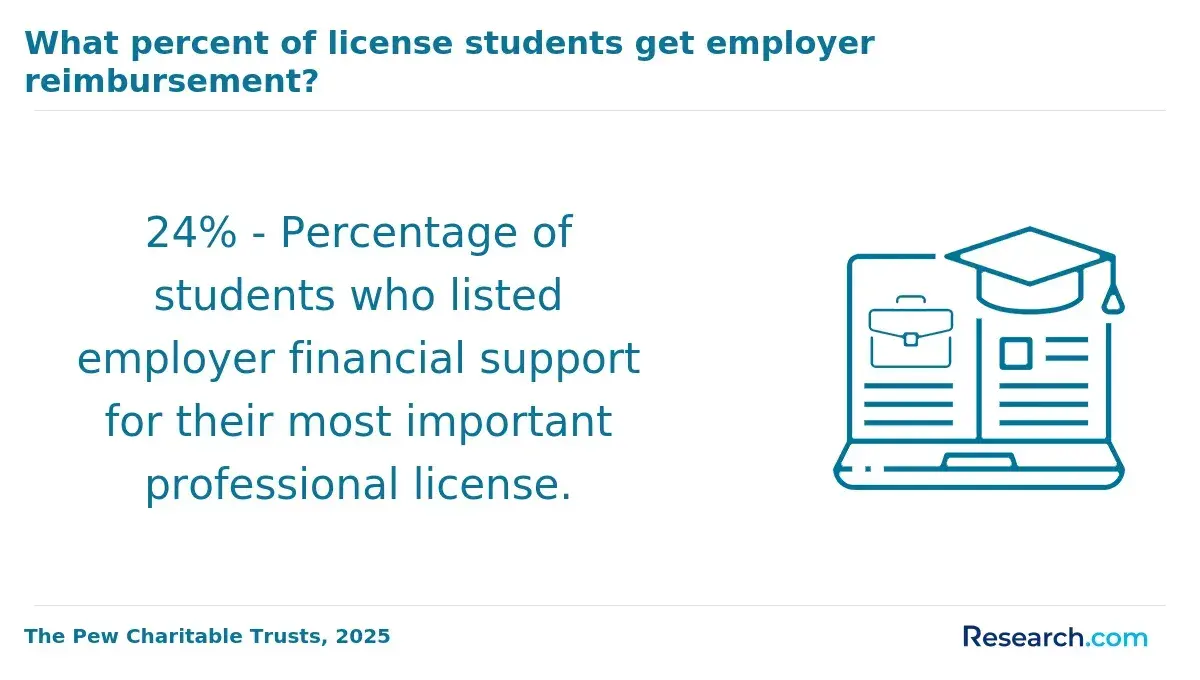
It may, but policies vary widely. Before enrolling, ask your employer about annual reimbursement caps, approved institutions, grade requirements, service commitments, tax treatment, and whether dissertation fees or residencies are covered.
- How a Doctorate in Computer Science Leads to AI Leadership Careers https://www.euroamerican.eu/how-a-doctorate-in-computer-science-helps-move-into-ai-leadership-roles
- Master’s vs. Ph.D. in IT: Which Degree Should You Pursue? https://www.ucumberlands.edu/blog/masters-vs-phd-it-which-degree-to-pursue
- The Transformative List of PhD Courses for Aspiring Scholars https://snu.edu.in/blogs/beyond-the-thesis-the-transformative-list-of-ph.d-courses-for-tomorrows-thinkers/
- Best PhD Programs in Singapore: 10 High-Demand Courses for 2026 https://bradfordia.org/phd-programs-in-singapore/
- Ph.D. Programs in Computer Science | ComputerScience.org https://www.computerscience.org/degrees/phd/
- Collaborative DoCtoral eDuCation https://eua-cde.org/component/attachments/attachments.html
- Career https://cispa.de/en/career
- Top 25 Cybersecurity PhD Programs In 2026 - Programs.com https://programs.com/programs/cybersecurity-phd-programs/
- Flexible Online PhD Programs in Computer Science for Working Professionals https://research.vut.ac.za/flexible-online-phd-programs-in-computer-science-for-working-professionals/
- Industrial PhD Programs in Sweden: A Model for University-Industry Collaboration https://www.abg.asso.fr/en/article/2732/eng-the-programmes-doctorat-industrial-sweden-a-model-of-collaboration-university-industry-2732


