
2027 Best Associate Degrees With No Application Fee

Co-Founder and Chief Data Scientist
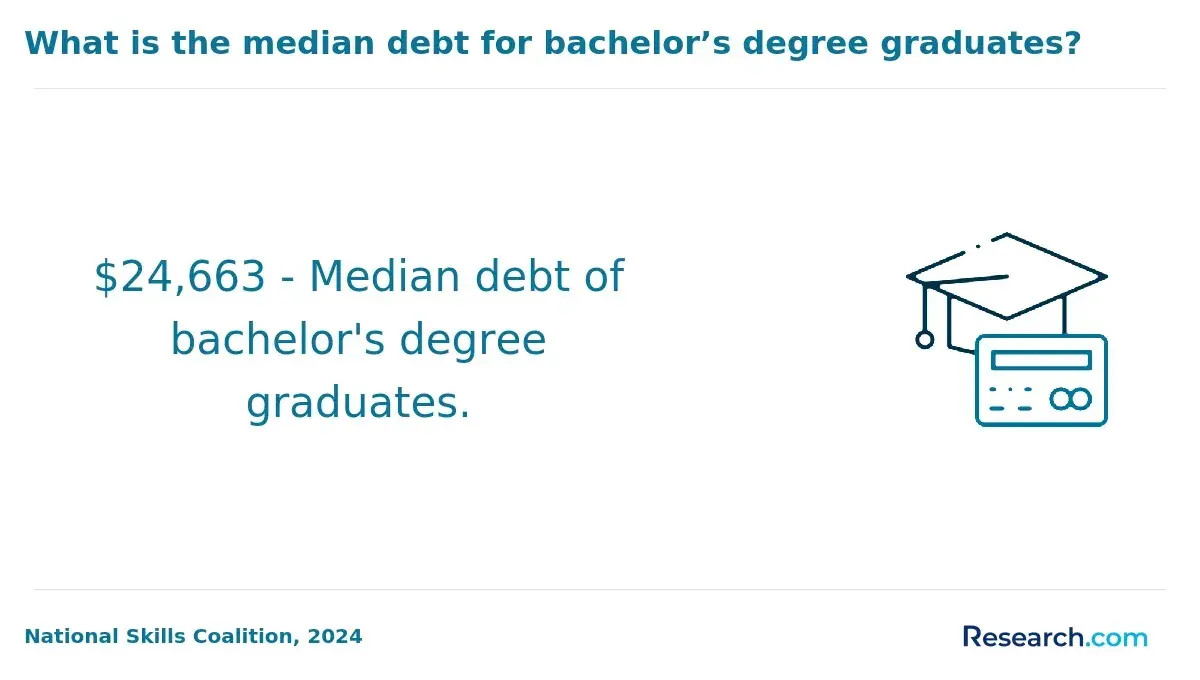
A $0 application fee makes it easier to explore associate degrees, but it does not tell you which program is worth attending. The College Board reported average published tuition and fees of $4,050 for in-district students at public two-year colleges in 2024-25 - before books, transportation, and other expenses.
For students comparing business, healthcare, technology, nursing, criminal justice, or psychology, the important questions are what the degree leads to and what it costs to finish. This guide compares those paths and shows what to verify before applying.
Key Things You Should Know
- No application fee is a college admissions policy, not a feature of a major; confirm the current $0 fee and check for separate program applications or charges.
- Choose an AA or AS with a documented transfer path if a bachelor's degree is the goal; compare career-focused AAS programs against the qualifications employers actually require.
- Most associate degrees require roughly 60 credits, but nursing and allied-health prerequisites, clinical placements, and selective admission can extend the timeline.
Top 10 Best Associate Degrees With No Application Fee
Business Programs
A business AA or AS often suits students planning to transfer into accounting, marketing, or management; a business AAS may emphasize immediate office or operations skills. Compare accounting, spreadsheet, and internship courses with local entry-level job descriptions. A no-fee application is useful if you are comparing transfer agreements, but do not assume every business course will satisfy your intended bachelor's major. Management roles generally require experience beyond an associate degree.
Healthcare Programs
Healthcare offers distinct paths: a medical assisting AAS may prepare students for clinic support, while dental hygiene, radiography, and diagnostic sonography programs have specialized clinical and credentialing requirements. Compare programs by the occupation they prepare you for, not by the broad "healthcare" label. Check programmatic accreditation, clinical placement availability, eligibility for required exams, and state rules before applying - even when the college charges no application fee.
Information Technology Programs
An IT AAS may emphasize technical support, networking, or cybersecurity; an AS may put more weight on transferable mathematics and computing courses. Look for hands-on labs, current software and hardware, and opportunities to build a portfolio. Entry-level support work can be a more realistic first step than a cybersecurity analyst title, which commonly calls for additional experience. Confirm whether online labs require scheduled attendance or specific equipment.
Nursing / Pre-Nursing Programs
An associate degree in nursing can be a route toward registered nurse licensure, but graduation alone does not grant a license: graduates must meet state board requirements and pass the NCLEX-RN. Pre-nursing is different; it typically covers prerequisites and does not itself qualify a student for RN licensure. Even at a college with a $0 general application, nursing admission may be selective and carry separate testing, background-check, or clinical expenses. Verify approval and placements before choosing a program.
Criminal Justice Programs
A criminal justice AA or AS can support transfer into a bachelor's program; an AAS may focus on corrections, public safety, or administrative practice. The degree does not replace an employer's academy, background investigation, physical standards, or other hiring requirements. Ask which local agencies recruit associate-degree holders and whether the curriculum fits your intended role. A free application is less valuable if required credits will not transfer or the program does not meet your career goal.
Psychology / Counseling Programs
A psychology AA or AS is usually a transfer starting point, not a qualification to practice as a counselor or psychologist; those occupations generally require advanced education and licensure. Students seeking earlier workforce entry can compare human services AAS programs and their supervised fieldwork requirements. Before using a no-fee application, check the receiving university's major prerequisites or, for an AAS, the qualifications for specific support roles in your area.
Which associate degrees have the strongest job prospects?
The strongest prospects depend on whether you want to work after graduation or transfer first. Nursing and certain allied-health degrees have clearer links to specific occupations, but their selective admission and clinical requirements make them harder to enter and complete. IT offers several entry points, though employers may weigh practical experience heavily. Business, criminal justice, and psychology provide broader foundations whose value depends more on the intended job or bachelor's pathway.
This comparison shows the main career advantage and constraint of each field. It is a starting point for checking local openings, not a prediction of employment.
| Field | Potential advantage | Key constraint |
| Nursing and allied health | Programs can align with a defined clinical occupation | Licensure or certification eligibility, selective admission, and placements |
| Information technology | Several entry-level support paths | Demonstrable skills and experience may matter as much as the degree |
| Business | Broad office and transfer options | Some target roles require a bachelor's degree or experience |
| Criminal justice | Relevant foundation for public-safety interests | Agency-specific hiring and training requirements |
| Psychology and human services | Transfer or support-work pathways | Independent counseling requires further education and licensure |
Which no-application-fee programs offer the best salary potential?
Licensed clinical occupations may offer the highest salary potential among these paths, but they also have the strictest entry requirements. The U.S. Bureau of Labor Statistics reported a 2024 median annual wage of $93,600 for registered nurses. That is an occupational median across workers - not an expected salary for a new associate-degree graduate. An RN candidate must also qualify for licensure, and pay varies by location, employer, and experience.
When comparing no-fee options, weigh potential pay against the full cost and likelihood of completing the required pathway. Tuition, mandatory fees, supplies, clinical travel, and any waiting period for a selective program can matter far more than the application charge.
How do online and campus associate degrees compare?
Online study can reduce commuting, but it does not necessarily mean self-paced study. Scheduled meetings, fixed deadlines, proctored exams, and local clinical placements may still apply. For nonclinical fields, compare online colleges by the delivery rules of the specific associate program, not just the college's general online offerings.
The formats below differ most in where required work takes place. Ask for a term schedule before assuming one will fit your job or caregiving commitments.
| Format | Typical advantage | Requirement to check |
| Online | Less routine travel | Live sessions, labs, exams, or placements |
| Hybrid | Online coursework with some in-person instruction | Frequency and location of campus visits |
| Campus | Direct access to facilities and in-person practice | Commute and course scheduling |
What accreditation should these associate degree programs have?
Start with institutional accreditation recognized by the U.S. Department of Education. Then check whether the specific program needs programmatic accreditation or state approval for its intended outcome. This is particularly important for nursing and allied health: a college can be institutionally accredited while a particular program does not meet the requirements for a credential or license you want.
If you plan to transfer, ask the destination university how each course applies to your intended major. Acceptance of credits is not the same as applying those credits toward graduation. Compare the resulting bachelor's plan and total cost, including the cheapest bachelor degree online option only if it accepts the credits you expect to earn.
What admission requirements do no-fee associate degree programs have?
A college may charge no application fee while still requiring a high school diploma or equivalent, transcripts, placement information, or proof of residency for a particular tuition rate. A missing GPA or test score requirement on a general admissions page should not be taken as proof that none applies to your major.
Selective nursing and allied-health programs may require prerequisite grades, entrance testing, immunizations, background checks, and a separate application. Ask whether "no application fee" covers both college and program admission, when eligibility is assessed, and whether admission to the college guarantees a place in the major. Usually, it does not.
How long does each associate degree usually take?
At a full-time pace, an associate degree of roughly 60 credits often takes about two academic years. Part-time enrollment, unavailable courses, prerequisite sequences, and clinical schedules can lengthen that timeline; accepted transfer credits may shorten it. Ask for a term-by-term plan based on your starting credits rather than relying on an advertised completion time.
Short courses are not the same as a short degree. If speed matters, compare the full sequence with other quick degree programs and check whether a certificate would meet your immediate job goal instead.
What classes are included in these associate degree programs?
Most programs combine general education - such as writing, mathematics, and communication - with courses in the major. Business students may take accounting and economics; IT students, networking and programming; criminal justice students, law and public-safety courses. Psychology and pre-nursing students should pay particular attention to the prerequisites specified by their intended next program.
Career-focused healthcare and nursing curricula can also include science labs and supervised clinical work. Review the catalog for course sequences and grades required to progress. A course listed in the catalog may not be offered every term, which can affect both your schedule and cost.
What jobs can you get with each associate degree?
An associate degree can support applications for office administration, IT support, certain human-services support jobs, or clinical roles tied to an approved program. It does not establish eligibility for every job with a similar title. For example, RN work requires licensure; independent counseling generally requires a graduate-level pathway; and police hiring follows agency rules.
Use current job postings to compare required credentials with a program's published outcomes. If most positions you want specify a bachelor's degree, favor a documented transfer pathway over an AAS chosen solely for its short-term appeal. If they ask for a specific license or hands-on skill, verify that the program helps you meet that requirement.
How do you choose a reputable no-application-fee college?
Choose the no-fee college that provides the strongest complete path to your goal, not simply the easiest application. Compare the same intended major and enrollment pattern at each institution. A military-connected student can also compare military friendly universities online, while confirming how that specific school evaluates military training for the intended associate degree.
Before enrolling, request answers to these questions in writing; they expose costs and barriers that a $0 application can hide.
- Is the college application free for my term and student status, and does my major require a separate application or fee?
- What will my tuition, mandatory fees, books, equipment, and travel cost after any applicable aid?
- Which of my existing credits will apply to this degree, and how many credits must I complete here?
- Does the program meet the accreditation, transfer, clinical, or licensing requirements for my goal?
- Can I obtain a term-by-term schedule showing when every required course or placement is available?
For eligible students, complete the Free Application for Federal Student Aid and compare actual aid offers, not advertised tuition alone. Treat vague answers about accreditation, unexpected required charges, or promises of guaranteed jobs or salaries as red flags.
Other Things You Should Know About
No. It removes an admissions charge; tuition, mandatory fees, materials, and other expenses can still apply. Check eligibility for financial aid and request a full cost estimate.
Possibly, but a college's free general application may not cover a separate nursing application, test, or screening. Confirm each charge and admission requirement with the program.
Choose based on the curriculum and destination. AA and AS degrees often emphasize transfer, while an AAS often emphasizes workforce preparation, but exceptions exist. Verify credits against your intended job or bachelor's program.
Some programs may allow it, especially in nonclinical fields. Confirm the specific program's requirements for live classes, exams, labs, campus visits, and local placements before applying.
References
- An Overview of Accreditation of Higher Education in the United States | Congress.gov | Library of Congress https://www.congress.gov/crs-product/R43826
- Colorado Free Application Days Instructions https://cdhe.colorado.gov/colorado-free-application-day-instructions
- Transfers for F-1 Students | ICE https://www.ice.gov/sevis/f1-transfers
- Ohio Guaranteed Transfer Pathways Tool https://transfercredit.ohio.gov/initiatives-upd/ohio-guaranteed-transfer-pathways/ogtp-tool
- Research Your Options: U.S. Online Learning | EducationUSA https://educationusa.state.gov/your-5-steps-us-study/research-your-options/online-learning
- DAPIP | Homepage - Office of Postsecondary Education (OPE) https://ope.ed.gov/dapip/
- Final Rule: Establishing a Fixed Time Period of Admission and an Extension of Stay Procedure FAQ | Study in the States https://studyinthestates.dhs.gov/final-rule-establishing-a-fixed-time-period-of-admission-and-an-extension-of-stay-procedure-faq
- Tuition and College Costs | WSAC https://wsac.wa.gov/tuition-and-college-costs
- Chapter 4 - School Transfer https://www.uscis.gov/policy-manual/volume-2-part-f-chapter-4
- Transfer Pathways & Agreements - Community College of Vermont https://ccv.edu/academics/transfer-from-ccv/transfer-pathways-agreements/


