
2027 Best Associate Degree Programs With 8-Week Courses

Co-Founder and Chief Data Scientist
An 8-week class can make college fit your schedule, but it does not make an entire associate degree eight weeks long. That distinction matters if you are choosing between a faster course format and a faster path to graduation.
The College Board reported average published tuition and fees of $4,050 for in-district students at public two-year colleges in 2024-25 - before books, transportation, and other costs. This guide compares six degree fields, explains where short courses help or create scheduling bottlenecks, and shows what to verify before enrolling.
Key Things You Should Know
- Best fit depends on your goal: Business, IT, and criminal justice can suit broad transfer or entry-level plans; nursing and some healthcare paths require closer scrutiny of clinical schedules and credentials.
- Eight weeks describes a course, not a degree: An associate program commonly requires around 60 semester credits, and prerequisites or limited course availability can extend completion time.
- Compare the full pathway: At public two-year colleges, average in-district published tuition and fees were $4,050 in 2024-25; your actual cost, transfer outcome, and eligibility for a career depend on the specific program.
Top 10 Best Associate Degree Programs With 8-Week Courses
Business Programs
Business administration is a flexible choice if you want transferable coursework in accounting, management, and communication. An AA or AS may be designed for a bachelor's degree, while an AAS may emphasize immediate workplace skills. Eight-week general education and business courses can make scheduling easier, but confirm that required classes run in consecutive terms. Choose this field for a broad foundation, not as a shortcut to a management job; supervisory roles commonly require experience.
Healthcare Programs
Healthcare administration and health information programs may pair well with 8-week online coursework. Clinical occupations are different: laboratories, placements, and certification eligibility can limit acceleration. Compare the exact curriculum against the role you want rather than assuming every "healthcare" degree leads to patient-care work. If your goal is a regulated occupation, ask whether the program meets applicable educational requirements in your state and whether admission to the major is selective.
Information Technology Programs
IT and computer support associate programs can suit students who want practical troubleshooting, networking, or cybersecurity foundations. Eight-week classes may let you focus on fewer subjects at once, but a compressed technical lab can demand substantial weekly practice. Compare hands-on access, course sequencing, and whether the credential is intended for transfer or entry-level work. Employer requirements vary; the degree alone does not establish professional certification or guarantee a cybersecurity role.
Nursing / Pre-Nursing Programs
Pre-nursing AS coursework may include 8-week general education classes, but an associate degree in nursing typically also requires sequenced science courses, supervised clinical training, and selective admission. Pre-nursing is not the same credential as a nursing degree. If registered nursing is your goal, check the nursing program's approval and accreditation status, clinical schedule, and eligibility for the NCLEX-RN and state licensure. Do not plan a graduation date using only the length of prerequisite courses.
Criminal Justice Programs
Criminal justice AA, AS, and AAS programs may offer 8-week courses in law, corrections, and public safety. A transfer-oriented program makes sense if a bachelor's degree is your next step; a career-oriented program may emphasize workplace applications. Neither format automatically qualifies you for policing or another public-safety position. Agencies can impose separate academy, background, physical, and hiring requirements, so compare those requirements before choosing your courses.
Psychology / Counseling Programs
A psychology AA or AS can provide transferable foundations in human behavior, research, and statistics. Some programs offer these subjects in 8-week blocks, but check whether the courses satisfy your intended bachelor's major. An associate degree does not qualify you to practice independently as a licensed counselor or psychologist; those careers require substantially more education and state-specific credentials. Choose this route if you have a realistic transfer plan or are exploring related support roles with different entry requirements.
What Are Associate Degree Programs With 8-Week Courses?
Associate degree programs with 8-week courses divide some classes into shorter terms than a conventional semester. A college may schedule two 8-week sessions within one longer term, allowing students to take subjects sequentially. The same course content is compressed into fewer weeks, so weekly deadlines can be demanding.
An associate degree commonly requires around 60 semester credits, though requirements vary. Finishing sooner depends on how many courses you can take, when required courses run, whether previous credits are accepted, and whether labs or clinical placements follow a fixed sequence. An 8-week format is a scheduling feature - not proof of a particular graduation date. For a broader comparison of accelerated formats, see these fast track programs.
Which Associate Degrees Can You Complete Through 8-Week Courses?
Business, healthcare administration, IT, nursing or pre-nursing, criminal justice, and psychology are fields in which you may find 8-week coursework. Availability is school- and course-specific: a college might offer short general education classes while retaining full-length major courses or fixed clinical terms.
The comparison below shows where an 8-week schedule is most likely to help - and which requirement to check before treating a field as an accelerated option.
| Field | Potential scheduling advantage | Main completion constraint |
| Business or criminal justice | Sequential online courses may simplify planning | Required major courses may not run every session |
| IT | Focused blocks can support concentrated practice | Labs and prerequisite sequences |
| Healthcare or nursing | Some prerequisites may have short sections | Selective admission, labs, and clinical placements |
| Psychology | General education may fit short terms | Transfer requirements for the intended bachelor's major |
If transfer is your priority, choose the receiving bachelor's program before finalizing an AA or AS course plan. You can use a review of top degrees for the future to explore longer-term fields, but confirm how each associate course would apply at your intended university.
Are 8-Week Associate Degree Courses Accredited and Transferable?
Course length does not determine accreditation or transferability. Check the college's institutional accreditation and, for a regulated field, any program approval or specialized accreditation relevant to your intended license. A college can accept a course as transfer credit without applying it to your bachelor's major.
Before enrolling, ask the destination university to evaluate the exact courses - not just the associate degree name - and request a written degree plan where available. If you are considering nursing, verify licensure eligibility with the program and the applicable state nursing board. Treat a promise that "all credits transfer" as incomplete unless it identifies where those credits count.
How Do Online and Campus-Based 8-Week Programs Compare?
Online courses may reduce travel, but they are not necessarily self-paced. Campus classes can provide scheduled lab access; hybrid programs may combine online lectures with required in-person work. All three formats can use 8-week terms.
This comparison focuses on the scheduling details that affect whether you can complete courses consistently, rather than on the delivery label alone.
| Format | Useful when | Verify before enrolling |
| Online | You need to study away from campus | Live meetings, proctored work, deadlines, and any in-person requirements |
| Hybrid | You can attend occasional labs or classes | Required campus dates and placement locations |
| Campus-based | You benefit from scheduled instruction or equipment access | Commute, class times, and availability of consecutive short terms |
For any format, ask how many courses students are expected to take at once. Two compressed classes with overlapping deadlines may be less manageable than one conventional-length class.
What Do You Study in an Accelerated Associate Degree Program?
An accelerated associate program generally covers the same categories as a conventional one: general education, major courses, and any required electives. Business students might study accounting; IT students might complete networking labs; nursing students must also meet science and clinical requirements. The shorter term changes the pace, not the credential's academic requirements.
Review a sample weekly schedule, especially for writing-intensive courses, labs, and prerequisite subjects. Ask whether a failed or unavailable required course must wait for another session; that delay can outweigh the time saved by a shorter class.
What Are the Admission Requirements for 8-Week Courses?
Colleges commonly ask applicants for a high school diploma or equivalent and previous college transcripts, if applicable. Placement measures, prerequisite coursework, and documentation requirements vary. Admission to the college does not necessarily mean admission to a selective nursing or allied-health program.
If you have prior college credit, request an evaluation before committing to a timeline. Ask which credits satisfy general education or major requirements, which merely count as electives, and how many credits you must earn at the new college. Accepted credit can reduce remaining coursework, but work experience alone does not automatically earn credit; prior-learning policies require a separate evaluation.
How Much Do Accelerated Associate Degree Programs Cost?
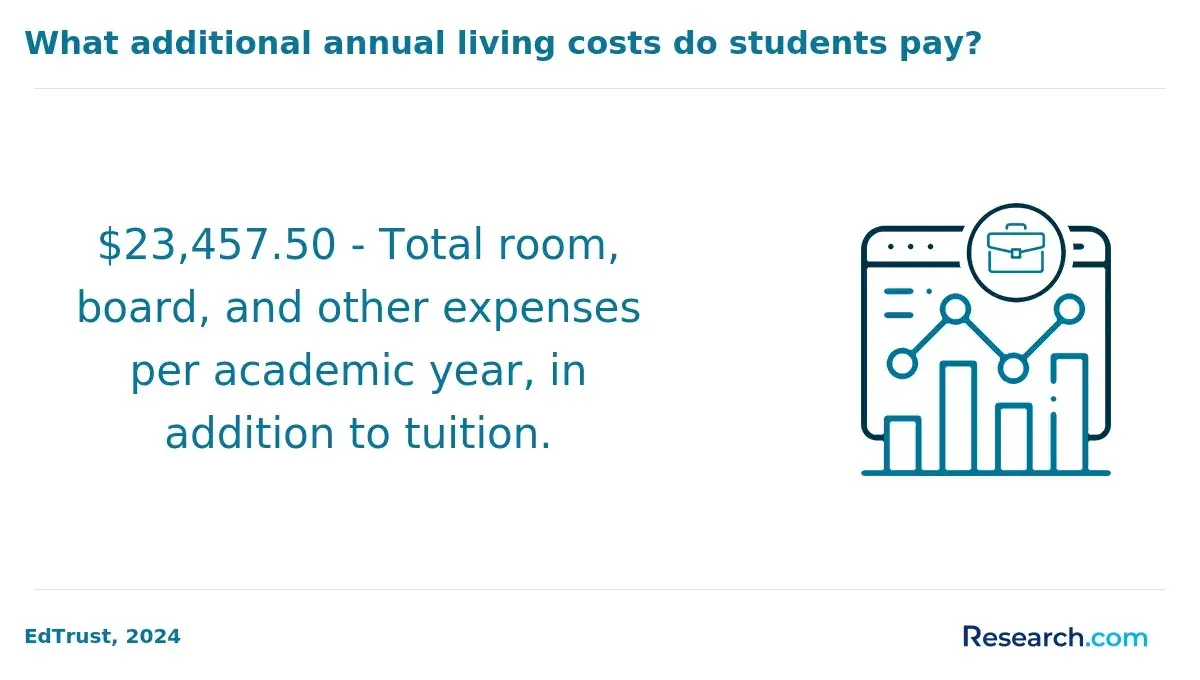
Shorter courses do not necessarily lower tuition. Compare the cost of completing all remaining requirements, including mandatory fees, books, technology, labs, clinical compliance, and travel. The following benchmark gives useful context, but it is not a quote for a particular accelerated program.
Published tuition is not the same as your net price after grants, or your total cost through graduation. Request a term-by-term estimate using your residency status and accepted credits. Ask the financial aid office how your proposed course load affects eligibility; scholarships, employer assistance, and payment plans may also change what you pay.
What Jobs and Salaries Can Associate Degree Graduates Expect?
Career outcomes depend on the specific credential and job, not the 8-week format. Business and criminal justice degrees can support applications for entry-level roles or further study; IT roles may also call for demonstrated technical skills or certifications. Counseling and psychology careers generally require education beyond an associate degree.
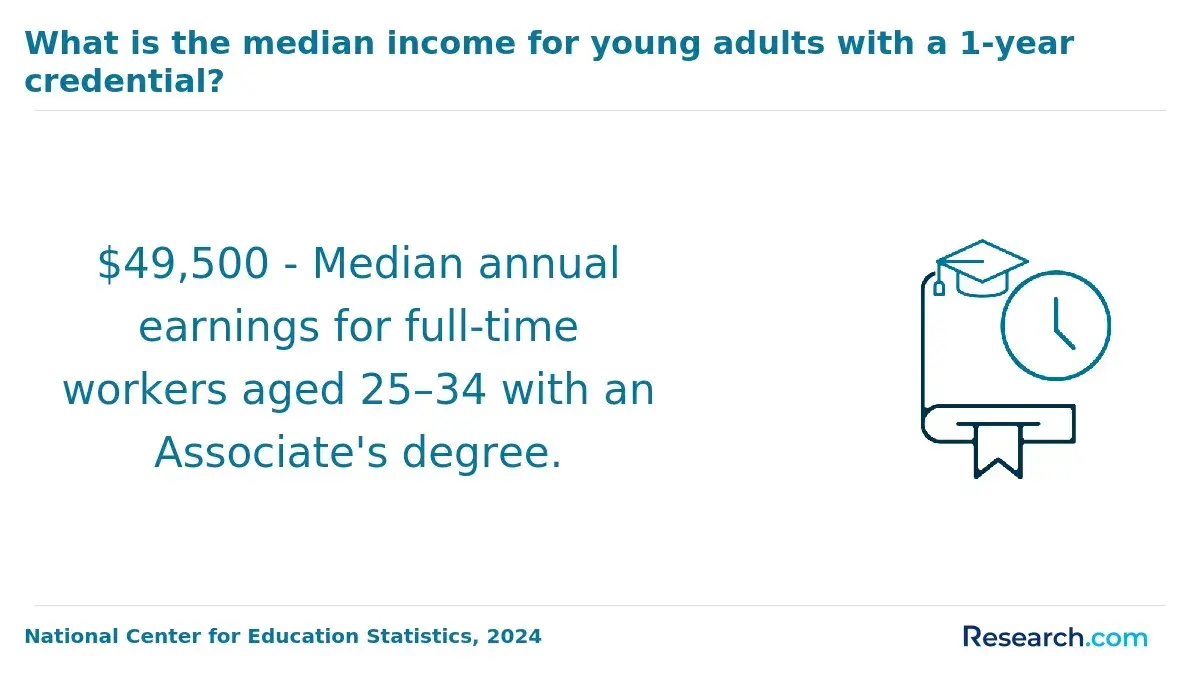
For salary context, the U.S. Bureau of Labor Statistics reports a 2024 median annual wage of $93,600 for registered nurses. That is the occupation's median wage, not the expected starting pay of an associate degree graduate; becoming an RN also requires an eligible nursing education pathway, the licensing examination, and state licensure.
BLS projects registered nurse employment to grow 5% from 2024 to 2034. That outlook describes national occupational demand, not a job-placement rate for a particular school. If future earnings are central to your decision, compare realistic entry requirements with longer educational pathways, including those associated with a highest paying degree.
How Do You Choose a Reputable Accelerated Associate Degree Program?
The strongest choice is the program whose entire course sequence fits your schedule, budget, transfer plan, and career requirements - not simply the one advertising the shortest class. Use these checks when comparing colleges:
- Request a degree map showing every required course, its length, start dates, prerequisites, and earliest realistic graduation date for your planned course load.
- Confirm institutional accreditation, applicable program approval, and whether the credential meets requirements for your intended occupation or transfer destination.
- Get a written review of previous credits and a total-cost estimate that includes fees and required in-person activities.
- Ask what happens if a required 8-week class fills, is canceled, or is offered only once a year.
Be wary of claims that an 8-week term means an 8-week degree, that online means no scheduled attendance, or that transfer credit automatically fulfills a major. If your long-term plan extends through a bachelor's degree and perhaps competency based masters, verify the associate-to-bachelor's transfer pathway first; a graduate study plan cannot repair credits that do not apply to your next degree.
Other Things You Should Know About
Generally, no. Eight weeks describes the length of an individual course. A degree requires multiple courses, and the completion date depends on remaining credits, course availability, and any prerequisites or clinical work.
They cover coursework over fewer weeks, so assignments and exams may come more frequently. Whether that is manageable depends on your course load, work schedule, and familiarity with the subject.
Some programs may allow it, but an online course schedule does not prove that every degree requirement is remote. Check for labs, clinical placements, proctored activities, and required campus visits.
Usually, the best choice is an AA or AS with a documented pathway into your intended bachelor's major. Have the receiving school confirm how individual courses apply before enrolling.
References
- Academic Years, Academic Calendars, Payment Periods, and Disbursements | 2025-2026 Federal Student Aid Handbook https://fsapartners.ed.gov/knowledge-center/fsa-handbook/2025-2026/vol3/ch1-academic-years-academic-calendars-payment-periods-and-disbursements
- DAPIP | Homepage - Office of Postsecondary Education (OPE) https://ope.ed.gov/dapip/
- WAC 250-61-100: - WA.gov https://app.leg.wa.gov/wac/default.aspx
- Degree Requirements | Pace University New York https://catalog.pace.edu/undergraduate/academic/academic-policies-general-regulations/degree-requirements/
- Earn Your AA Degree - eLearning - Seattle Colleges https://resources.seattlecolleges.edu/elearning/earnaadegree.aspx
- Policy on Programmatic Accreditation - The University of Kansas https://services.ku.edu/TDClient/818/Portal/KB/ArticleDet
- Transferring Credits - Cuyahoga Community College Catalog - Tri-C https://catalog.tri-c.edu/transfer-information/transferring-credits/
- Transfer Credit for Military Experience - Charter Oak State College https://www.charteroak.edu/catalog/current/academic_policies_regulations/transfer_credit_military_exp.php
- Credit for Prior Learning (CPL) - Hunter College Catalog - CUNY https://hunter-undergraduate.catalog.cuny.edu/admissions/prior-learning
- How 8-Week Terms Work | Ivy Tech Community College https://www.ivytech.edu/classes/how-8-week-terms-work/


