
2027 Best Associate Degree Programs for Military Spouses

Co-Founder and Chief Data Scientist
A military move can interrupt a degree just as easily as a job. For spouses choosing an associate program, the best option is one they can finish across moves and use in the places they may live. Cost matters, too: the College Board reported average published in-district tuition and fees of $4,050 at public two-year colleges for 2024-25.
That figure excludes other expenses and may not apply after a relocation. This guide compares six fields, explains their career and transfer trade-offs, and shows what to verify before enrolling.
Key Things You Should Know
- Business and IT are often easier to study across moves; nursing and some healthcare programs offer clearer licensed career paths but usually require in-person training.
- Eligible spouses may receive up to $4,000 through My Career Advancement Account (MyCAA); confirm current eligibility, approved programs, and what the benefit will cover.
- Many associate degrees require roughly 60 semester credits, but prerequisites, clinical placements, course availability, and transfer-credit decisions can extend completion time.
Top 10 Best Associate Degree Programs for Military Spouses
Business Programs
An associate degree in business administration or accounting can suit spouses seeking office, customer operations, or bookkeeping work in different locations. An AA or AS may emphasize transferable general education; an AAS may emphasize workplace software and applied courses. Compare each curriculum with local job postings and any intended bachelor's program. An associate degree is an entry point, not a direct route to management: supervisory roles generally require experience. Ask whether required internships can be completed near a future duty station.
Healthcare Programs
Allied-health options include medical assisting, health information technology, and diagnostic medical sonography. They differ substantially: health information coursework may be more portable online, while sonography requires hands-on scanning and clinical placements. Some occupations require or favor certification, and employers may have additional requirements. Ask where clinical sites are located, whether placements can be arranged after a move, and whether the program meets the relevant credential's eligibility rules. A general healthcare degree does not substitute for occupation-specific training.
Information Technology Programs
IT associate programs may cover networking, cybersecurity fundamentals, programming, or technical support. Online coursework can travel with a spouse, though labs, proctored exams, and scheduled group work may still limit flexibility. An AAS can support technical entry-level applications; an AS may be better aligned with a computer science bachelor's pathway. Compare hands-on projects and employer-relevant skills rather than assuming "cybersecurity" in a program name leads directly to a security job. Some employers also expect certifications or experience.
Nursing / Pre-Nursing Programs
An associate degree in nursing (ADN) can prepare students to seek registered nurse licensure after meeting state requirements and passing the NCLEX-RN. Pre-nursing is different: it typically covers prerequisites and does not itself qualify someone for RN licensure. Nursing admission may be selective even at an open-admission college. Clinical rotations and lab sequences make relocation midprogram especially difficult. Before applying, check the program's approval and accreditation status, clinical schedule, graduation requirements, and how the state where you expect to practice handles licensure.
Criminal Justice Programs
Criminal justice associate programs introduce law, courts, corrections, and public safety. An AA or AS may be useful for transfer; an AAS may focus on applied coursework. Neither automatically qualifies someone to become a police officer: agencies set their own hiring, academy, background-check, and physical requirements. For a spouse who moves frequently, compare those jurisdiction-specific requirements before choosing a career target. The degree may be a better fit for someone planning further study than for someone expecting an immediately portable licensed role.
Psychology / Counseling Programs
An AA or AS in psychology is primarily a foundation for transfer, not a counselor credential. It may suit a spouse interested in human services, but independent counseling practice generally requires graduate education and state licensure. Check that research methods, statistics, and general education courses apply to the intended bachelor's degree. If immediate employment is the priority, compare this transfer path with a more occupation-specific associate program. Avoid enrolling on the assumption that an associate degree alone permits clinical practice.
What Are the Best Associate Degree Programs for Military Spouses?
The best field depends on whether you need portable coursework, a direct occupation, or a reliable transfer route. The comparison below treats "best" as a fit decision, not a ranking of colleges or a promise of employment.
| Field | Strongest fit | Relocation trade-off |
| Business | Broad office skills or bachelor's transfer | Flexible coursework, but internships may be location-dependent |
| Healthcare | Occupation-specific training | Clinical sites and credential rules vary |
| IT | Technical skills and project-based learning | Online access helps; experience still matters |
| Nursing | A defined path toward RN licensure | Selective admission and fixed clinical sequences |
| Criminal justice | Public-safety study or transfer | Agency hiring rules differ by location |
| Psychology | Transfer toward further education | Not a stand-alone counseling qualification |
For a spouse likely to move during enrollment, business or IT may be the safer starting point if the school offers dependable remote access. For someone able to remain near clinical sites through graduation, nursing or a specific allied-health program may provide a more defined occupational pathway.
Which Associate Degrees Offer Military Spouses the Strongest Career Opportunities?
Nursing and occupation-specific allied health generally provide the clearest connection between associate coursework and a defined job. That advantage comes with clinical schedules, credential rules, and potential difficulty changing schools midprogram. IT and business can support applications across industries, but applicants may need projects, certifications, or work experience to stand out.
Psychology is a different investment: it makes most sense when a bachelor's degree is part of the plan. Counseling usually requires graduate study and licensure, so a spouse considering that long pathway should budget beyond the associate degree; a comparison of the cheapest online masters is relevant later, not a substitute for checking licensure eligibility now.
How Can Military Spouses Find Affordable Accredited Associate Degree Programs?
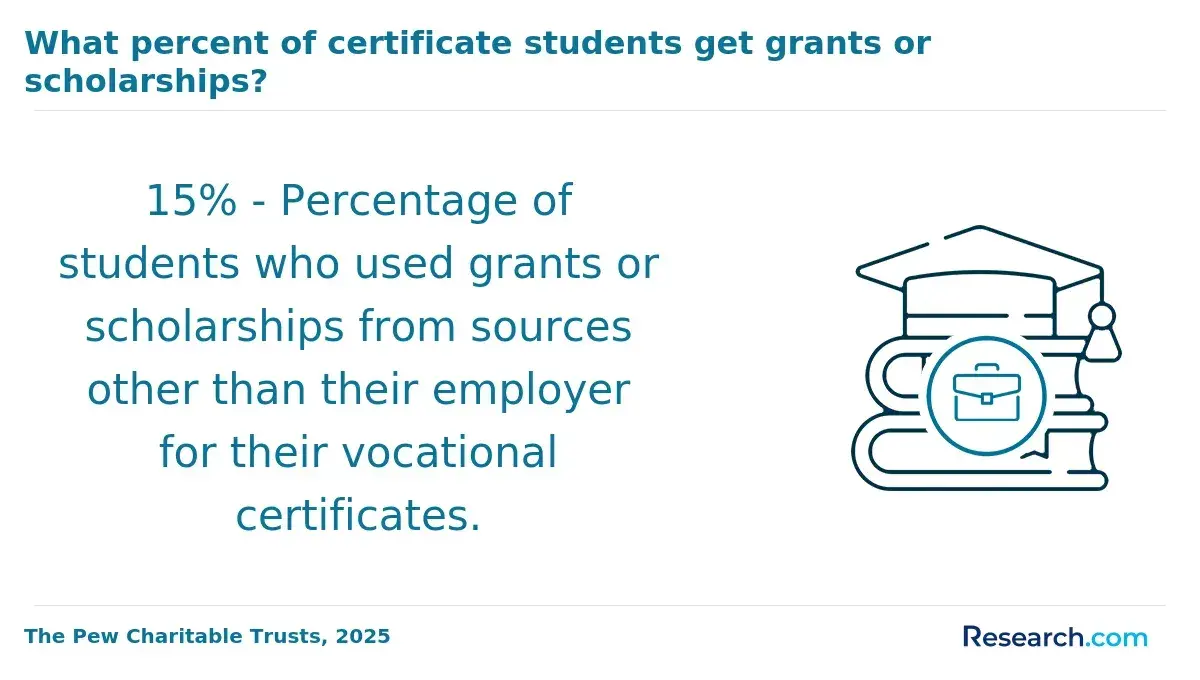
Start with a public community college or an institution offering a clear military-spouse tuition policy, then compare the cost to finish rather than the price of one course. Request a written estimate covering tuition, mandatory fees, books, technology, travel, uniforms, exams, and any clinical costs. After a move, confirm which residency rate applies.
Verify institutional accreditation through the accreditor or U.S. Department of Education database, and check programmatic accreditation or approval when a credential requires it. Ask for a transfer evaluation before committing: accepted credits are most valuable when they satisfy requirements in your chosen degree. Complete the FAFSA and compare grants with loans; these online colleges that accept FAFSA can provide a starting point, but aid eligibility belongs to the institution and student, not to a search result. Check current MyCAA terms and other spouse benefits separately.
Are Online Associate Degree Programs Flexible for Military Spouse Students?
Online study can reduce disruption after a permanent change of station, but online does not necessarily mean self-paced. Courses may require live meetings, fixed weekly deadlines, proctored exams, or local internships. Nursing and many allied-health degrees also require in-person labs or clinical placements even when lectures are online.
Ask the program to identify every required in-person component and whether it can arrange placements outside its home region. Compare asynchronous schedules with your caregiving and work commitments. If unpredictable hours are the main obstacle, explore accredited self-paced online courses, then verify that any course you choose will count toward the specific associate degree.
What Do Military Spouse Associate Degree Programs Typically Cost and Require?
Associate programs commonly require general education and major courses; career programs may add labs, practicums, or clinical work. Applicants typically need a high school diploma or equivalent, but a particular nursing or allied-health major may also require prerequisites, minimum grades, screening, or separate admission. Institution-wide admission is not the same as admission to a selective major.
Published tuition is only a starting price. Use each school's current tuition schedule and a degree audit to calculate remaining credits and mandatory expenses, then subtract confirmed grants or benefits to estimate what you must pay. If previous grades are a concern, an online college with no GPA requirements may be worth investigating - but verify its actual admission policy and any separate major requirements before applying.
How Long Does It Take Military Spouses to Complete an Associate Degree?
A student taking a full course load in a roughly 60-credit program may finish in about two academic years. Part-time enrollment, missing prerequisites, limited course offerings, or a move between clinical terms can make that timeline longer. Accelerated course terms do not, by themselves, shorten the number of credits required.
Ask an advisor for a term-by-term plan at your intended enrollment pace. If you have previous college coursework, request an official evaluation showing which credits fulfill general education and major requirements, which count only as electives, and how many credits must be completed at the new school. A transfer-friendly admission decision is less useful if those credits do not advance graduation.
Which Associate Degree Careers Provide Competitive Salaries and Job Growth?
The U.S. Bureau of Labor Statistics reports a May 2024 median annual wage of $93,600 for registered nurses and projects RN employment growth of 5% from 2024 to 2034. These are occupation-wide figures, not expected earnings or job-placement rates for ADN graduates. RN applicants must meet licensing requirements, and pay and openings vary by location, setting, and experience.
Use occupational data to test a career goal, then check job postings near likely duty stations. Compare required credentials and schedules as well as wages: a higher-paying clinical role may require shifts or placements that do not fit your household, while a broader business or IT path may offer more ways to change employers after a move.
What Certifications or Licenses Do Military Spouses Need After Graduation?
Credential requirements depend on the occupation, not just the degree title. ADN graduates must meet a state nursing board's requirements and pass the NCLEX-RN to obtain RN licensure. Some allied-health roles require state licenses, national certification, or graduation from a qualifying accredited program. IT certifications may help demonstrate specific skills but are not universal legal requirements. Criminal justice agency training and hiring standards vary by employer and jurisdiction.
Before enrolling, identify the exact job and state where you hope to work. Check the relevant board, certifying body, or employer requirements, including whether a move would require another application. Do not assume that a program advertised as online satisfies every state's professional requirements.
How Should Military Spouses Choose the Right Associate Degree Program?
Choose the program that you can realistically complete and use after relocation. A low tuition rate is a poor bargain if credits will not transfer, required courses are unavailable when you need them, or clinical placements cannot follow a move.
Use this sequence to narrow your options and get answers you can compare:
- Choose a target occupation or bachelor's pathway, and identify any required license or further degree.
- Compare AA or AS transfer plans with AAS workforce plans; get written confirmation of how courses apply to your goal.
- Confirm accreditation, major admission rules, online attendance expectations, and every in-person requirement.
- Request a credit evaluation, term-by-term completion plan, and total-cost estimate based on your circumstances.
- Ask what happens if you move midprogram, including placement options, leaves of absence, and transfer-out policies.
If a school cannot clearly explain clinical placement, credential eligibility, or how your existing credits count, resolve that uncertainty before paying a deposit. A shorter certificate or a later bachelor's pathway may be the better choice if the associate degree does not match your immediate goal.
Other Things You Should Know About
Eligible spouses may be able to use MyCAA for an approved program. Check current eligibility, the program's approval, the benefit limit, and which expenses are covered before enrolling.
Not automatically. The receiving college decides what it accepts and whether each credit meets a requirement in your new major. Request a written evaluation and keep course syllabi.
No typical ADN pathway eliminates hands-on clinical training. Online lectures may be available, but confirm where labs and clinical rotations occur and whether placements are possible near your duty station.
A business or IT program with accessible online coursework may be easier to continue through a move. Check course schedules and transfer policies; choose a clinical program only after you understand how relocation would affect its required placements.
References
- Program Eligibility, Written Arrangements, and Distance Education | ed.gov https://fsapartners.ed.gov/knowledge-center/fsa-handbook/2024-2025/vol2/ch2-program-eligibility-written-arrangements-and-distance-education
- Education Opportunities for Military Spouses | Military OneSource https://www.militaryonesource.mil/education-employment/for-spouses/going-back-to-school-as-a-military-spouse/
- DAPIP | Homepage - Office of Postsecondary Education (OPE) https://ope.ed.gov/dapip/
- Military Spouse Eligibility for SpouseWorks Scholarship Program | militaryonesource.mil https://mycaa.militaryonesource.mil/mycaa/get-started
- Award of Academic Credit by Evaluation | CPL - SUNY System https://system.suny.edu/academic-affairs/academic-policies/award-of-academic-credit-by-evaluation--cpl/
- About Learning Evaluations - American Council on Education https://www.acenet.edu/Programs-Services/Pages/Credit-Transcripts/About-Learning-Evaluation.aspx
- MyCAA Military Spouse Scholarship Program | northshore.edu https://www.northshore.edu/veterans/mycaa.html
- Professional Licensure Disclosure | Online & Distance Learning | Lane Community College https://www.lanecc.edu/programs-academics/online-distance-learning/professional-licensure-disclosure
- Completion Rates and Time to Degree Completion | Academic Affairs https://academicaffairs.uams.edu/irpa/office-of-institutional-studies/student-outcomes/completion-rates/
- Ready or Not, Here It Comes! New Regulations When Offering Programs Leading to a License Effective July 1! | WCET https://wcet.wiche.edu/frontiers/2024/05/16/ready-or-not-here-it-comes-new-regulations-when-offering-programs-leading-to-a-license-effective-july-1/


