2027 Admission Requirements for Online Nurse Midwifery Doctorate Programs: GPA, Prerequisites, Experience, and Eligibility

Co-Founder and Chief Data Scientist
Figuring out whether you qualify for an online nurse midwifery doctorate can be confusing because GPA rules, prerequisites, RN licensure, clinical experience, and prior-degree requirements vary by school. The timing matters: the U.S. Bureau of Labor Statistics projects employment for nurse anesthetists, nurse midwives, and nurse practitioners to grow 40% through 2033, far faster than average.
This guide helps prospective doctoral students compare admission pathways, identify gaps, and prepare a stronger application.
Key Things You Should Know
- Most online nurse midwifery doctorate programs require an active RN license, a nursing degree pathway such as BSN-to-DNP or MSN-to-DNP, graduate-level readiness, and eligibility for supervised clinical placements in the student's state.
- A 3.0 GPA is the most common minimum threshold, but competitive applicants often show stronger recent nursing coursework, advanced practice preparation, or evidence that a lower GPA does not reflect current doctoral readiness.
- Prerequisites usually include statistics, health assessment, pathophysiology, pharmacology, research or evidence-based practice, and maternal-newborn or women's health preparation; professional experience is commonly expected, while formal research experience is more important for PhD-focused routes.
What Are the Basic Admission Requirements for an Online Nurse Midwifery Doctorate Program?
The basic admission requirements for an online nurse midwifery doctorate depend on whether the program is a clinical Doctor of Nursing Practice, a research-focused nursing doctorate, or a post-master's completion pathway for certified nurse-midwives. In most cases, applicants must show that they are licensed nurses, academically prepared for doctoral coursework, and able to complete required clinical experiences.
For students comparing broader doctoral nursing options, cheapest online nursing PhD programs can be useful when the goal is research, teaching, or health systems scholarship rather than direct nurse-midwifery certification.
The table below summarizes the most common eligibility expectations. Use it as a screening tool before contacting admissions offices, because individual schools may set stricter rules for GPA, clinical placement, state authorization, or prior certification.
| Requirement area | What programs commonly expect | Why it matters |
| Prior degree | BSN, MSN, or graduate nursing degree, depending on pathway | Determines whether you apply to BSN-to-DNP, MSN-to-DNP, or post-master's DNP options |
| Licensure | Active, unencumbered RN license; APRN or CNM certification may be required for post-master's tracks | Clinical doctoral programs require legal authority to practice nursing and complete supervised experiences |
| GPA | Often 3.0 minimum on a 4.0 scale, with some programs reviewing last-degree or last-60-credit GPA | Signals academic readiness but is usually evaluated alongside experience and application materials |
| Prerequisites | Statistics, research, health assessment, pharmacology, pathophysiology, and women's health-related coursework | Shows preparation for advanced clinical decision-making, evidence-based practice, and doctoral projects |
| Clinical eligibility | Ability to complete approved clinical hours, sometimes with campus immersions or skills intensives | Online coursework does not eliminate in-person clinical training requirements |
| Accreditation alignment | Programs leading to nurse-midwifery certification should meet appropriate professional accreditation standards | Accreditation can affect certification eligibility, licensure, employment, and transferability |
A key mistake is assuming that "online" means fully remote. Nurse midwifery is a clinical field, so even online doctorate programs typically require in-person clinical placements, simulation experiences, skills assessments, or campus visits.
Do You Need a Master's Degree to Apply for an Online Nurse Midwifery Doctorate?
You do not always need a master's degree to apply for an online nurse midwifery doctorate. Many schools offer BSN-to-DNP pathways for registered nurses who hold a Bachelor of Science in Nursing, while other programs require an MSN, graduate nursing degree, APRN certification, or current CNM credential.
If you are still comparing advanced practice routes, reviewing online nurse practitioner programs can help you understand how nurse-midwifery admissions overlap with other APRN pathways, especially around RN licensure, clinical hours, and graduate-level science preparation.
The table below shows how prior education usually affects eligibility. It is especially important for applicants who are deciding whether to apply now or complete another credential first.
| Applicant background | Likely pathway | Typical admission issue to verify |
| RN with BSN | BSN-to-DNP nurse midwifery or nurse midwifery/women's health route | Whether the program leads to certification eligibility and accepts applicants without an MSN |
| RN with non-nursing bachelor's plus nursing entry credential | Varies by school; may require BSN completion, bridge coursework, or an entry-level MSN | Whether the school recognizes the applicant's nursing preparation as equivalent to a BSN |
| MSN-prepared RN without APRN certification | MSN-to-DNP or specialty-entry route, if offered | Whether additional nurse-midwifery specialty coursework and clinical hours are required |
| Certified nurse-midwife with MSN | Post-master's DNP | Whether current CNM certification, APRN licensure, and practice hours are required |
| Applicant interested in research, faculty, or policy roles | PhD in nursing or related doctoral program | Whether the program requires a research agenda, writing sample, or faculty mentor match |
The practical takeaway is that "doctorate" does not describe one single admissions model. A BSN-to-DNP applicant is usually being assessed for both graduate clinical training and doctoral readiness, while a post-master's DNP applicant is often evaluated on advanced practice preparation, certification status, leadership potential, and prior graduate performance.
What GPA Do You Need for an Online Nurse Midwifery Doctorate Program?
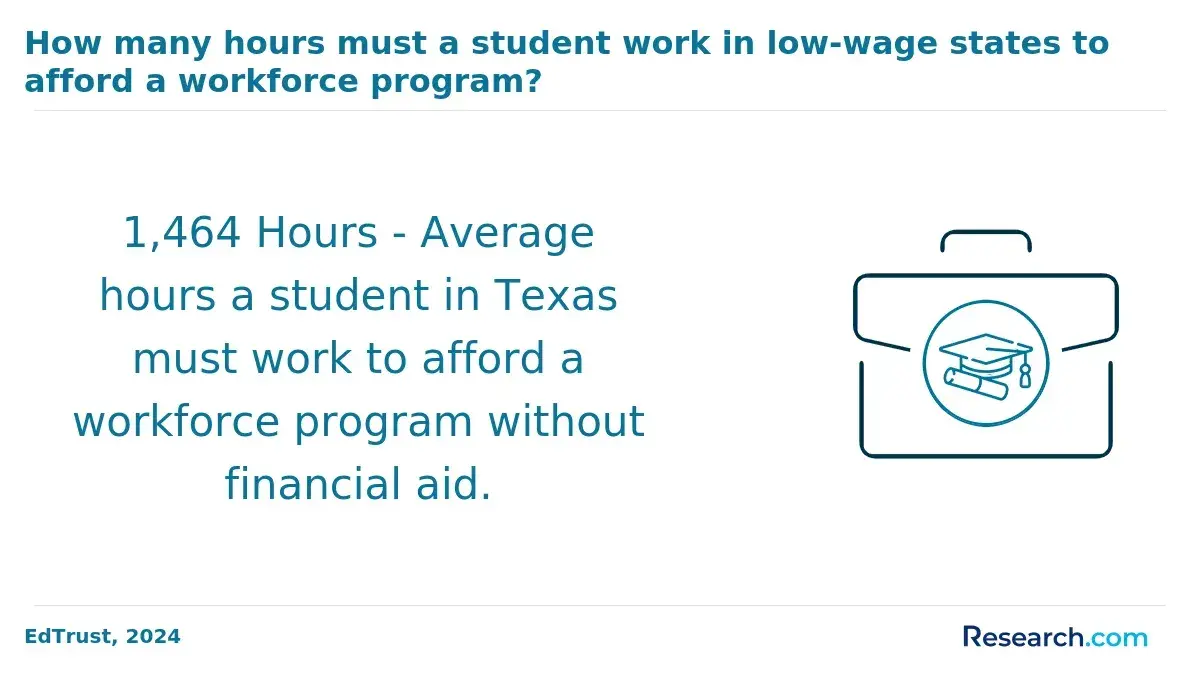
A 3.0 cumulative GPA on a 4.0 scale is the most common minimum for online nurse midwifery doctorate admission, but it is not the same as being competitive. Some schools calculate GPA from the most recent degree, the last 60 credits, nursing major coursework, or graduate coursework if the applicant already has an MSN.
GPA matters because doctoral nursing programs are academically intensive. Students must handle advanced physiology, pharmacology, diagnostic reasoning, population health, leadership, evidence-based practice, and a major scholarly or quality-improvement project. Programs may also use GPA to determine whether an applicant can manage online learning without the structure of daily campus attendance.
The table below clarifies how admissions committees often interpret GPA ranges. These are common patterns, not universal rules, so applicants should always confirm the exact calculation method with each school.
| GPA range | Typical admissions interpretation | What applicants should prepare |
| 3.5 or higher | Generally strong academic signal, especially with solid science and graduate nursing grades | Use the application to show fit, leadership, clinical maturity, and commitment to midwifery care |
| 3.0 to 3.49 | Often meets the stated minimum but may need supporting evidence of readiness | Highlight recent coursework, clinical achievements, strong recommendations, and focused goals |
| 2.75 to 2.99 | May be considered only by programs with holistic, provisional, or exception-based review | Provide an academic explanation, updated grades, and proof of improved performance |
| Below 2.75 | Usually a significant barrier for direct doctoral admission | Consider graduate certificates, prerequisite retakes, BSN completion, or another stepping-stone pathway |
A common mistake is applying to programs where the posted minimum is 3.0 while ignoring whether the applicant pool is stronger. If your GPA is near the cutoff, your statement of purpose, recent grades, recommender credibility, and clinical record carry more weight.
Can You Get Into an Online Nurse Midwifery Doctorate Program With a GPA Below 3.0?
Yes, some applicants can get into an online nurse midwifery doctorate program with a GPA below 3.0, but it is not automatic and it is not available everywhere. Schools that allow exceptions usually use holistic review, conditional admission, probationary admission, or graduate-level prerequisite completion to determine whether the applicant can succeed.
Applicants with a lower GPA should focus on evidence that is more current and more predictive than older undergraduate grades. The strongest low-GPA applications usually explain what changed and prove it through recent academic or professional performance.
- Ask whether the program has a firm GPA cutoff or whether it reviews last-60-credit, nursing-course, or graduate-course GPA separately.
- Retake key science, statistics, or research courses if weak grades occurred in subjects directly tied to doctoral nursing success.
- Complete a graduate nursing course, health policy course, statistics course, or evidence-based practice course with a strong grade before applying, if the school permits nondegree enrollment.
- Use the personal statement to briefly explain the GPA issue without blaming others, then shift to concrete evidence of improvement.
- Choose recommenders who can speak directly about clinical judgment, academic discipline, leadership, and ability to handle doctoral-level work.
- Apply to a balanced list of programs instead of relying on one highly selective school with no stated GPA flexibility.
Conditional admission may require earning a minimum grade in the first set of doctoral courses. Applicants should read those terms carefully because failing to meet them can end enrollment or delay progression into clinical specialty courses.
What Prerequisite Courses Are Required for an Online Nurse Midwifery Doctorate Program?
Prerequisite courses for online nurse midwifery doctorate programs usually focus on advanced nursing science, research literacy, and the clinical foundations needed for pregnancy, birth, postpartum, reproductive, and primary care. Requirements vary depending on whether the program admits BSN-prepared nurses, MSN-prepared nurses, or already certified nurse-midwives.
The table below outlines common prerequisite areas and why admissions offices care about them. It can help you spot gaps before paying application fees.
| Prerequisite area | Common expectation | Why it supports nurse midwifery doctorate readiness |
| Statistics | Undergraduate or graduate statistics, often completed within a school-defined time frame | Supports evidence appraisal, quality improvement, outcomes measurement, and doctoral projects |
| Research or evidence-based practice | Coursework in nursing research, evidence-based practice, or scholarly inquiry | Prepares students to evaluate clinical evidence and translate findings into practice |
| Health assessment | Undergraduate assessment for BSN applicants; advanced assessment may be required for MSN applicants | Builds the foundation for diagnostic reasoning and patient evaluation |
| Pathophysiology | Human or advanced pathophysiology, depending on pathway | Supports understanding of normal and complicated pregnancy, chronic illness, and reproductive health conditions |
| Pharmacology | General or advanced pharmacology, especially for APRN-level pathways | Prepares students for prescribing-related content where permitted by state scope of practice |
| Women's health, maternal-newborn, or OB experience coursework | May be required or strongly preferred | Shows exposure to the population and clinical context of midwifery practice |
If you are missing a prerequisite, do not assume you are ineligible. Many programs allow prerequisites to be completed before matriculation, during the first term, or through approved nondegree coursework, but some require completion before the application deadline.
Before applying, follow a simple verification process so you do not lose time on avoidable eligibility issues.
- Download the program's admission checklist and note every required course, minimum grade, and recency rule.
- Compare the checklist against your transcripts using official course titles and credit hours, not memory or informal course descriptions.
- Email admissions or the program coordinator with syllabi for any course that may need equivalency review.
- Ask whether online, community college, nondegree, or graduate certificate courses are accepted for missing prerequisites.
- Confirm whether prerequisite grades affect GPA screening or only determine completion status.
Can You Apply for an Online Nurse Midwifery Doctorate With a Degree in Another Field?
You can sometimes apply with a degree in another field, but you still need a nursing pathway that satisfies RN licensure and graduate nursing admission requirements. Nurse midwifery is not a generic doctorate open to any major because clinical practice depends on nursing licensure, supervised clinical training, and eligibility for certification or advanced practice recognition.
Students who are changing direction may also compare accelerated nurse practitioner programs to understand how bridge, direct-entry, and fast-track nursing pathways differ from nurse-midwifery doctorate routes.
The main question is not whether your first degree was in another field; it is whether you have completed the nursing education required for the specific doctoral pathway. The table below shows how different backgrounds are typically handled.
| Prior academic background | Can it lead to an online nurse midwifery doctorate? | Likely next step |
| Non-nursing bachelor's with no RN license | Usually not directly | Complete an accredited nursing entry pathway and become eligible for RN licensure first |
| Associate degree in nursing plus non-nursing bachelor's | Possibly, but school-dependent | Look for RN-to-BSN, RN-to-MSN, or bridge options accepted by doctorate programs |
| BSN earned after a first degree in another field | Often yes | Apply as a BSN-prepared RN if GPA, prerequisites, and experience meet the program's standards |
| Entry-level MSN with RN licensure | Possibly | Ask whether the program considers the degree equivalent to BSN or MSN preparation for the selected pathway |
| Master's in public health, social work, biology, or another field | Usually not enough by itself | Determine whether additional nursing degree completion is required before doctoral clinical admission |
A major red flag is assuming that a health-related master's degree substitutes for nursing preparation. It may strengthen your public health, research, or community-care profile, but it usually does not replace RN licensure, nursing clinical education, or midwifery-specific clinical training.
How Much Professional or Research Experience Do Online Nurse Midwifery Doctorate Programs Require?
Online nurse midwifery doctorate programs often expect professional nursing experience, but the amount varies widely. Some BSN-to-DNP programs consider strong new graduates, while others prefer or require experience in labor and delivery, postpartum care, reproductive health, community health, primary care, or women's health settings.
Applicants comparing APRN careers sometimes review related compensation data, such as psychiatric nurse practitioner salary, but nurse-midwifery applicants should focus first on clinical fit, certification eligibility, and scope-of-practice goals rather than salary alone.
The U.S. Bureau of Labor Statistics reported a May 2024 median annual wage of $129,210 for nurse midwives. This figure is not an admissions outcome, but it shows why programs may screen carefully for applicants who can handle high-responsibility clinical preparation.
The table below separates professional experience from research experience because they matter differently across doctorate types. This distinction helps applicants choose between clinical DNP and research-focused doctoral routes.
| Experience type | Clinical DNP nurse midwifery relevance | Research-focused doctorate relevance |
| Labor and delivery nursing | Strongly relevant and often preferred | Helpful if linked to research interests in birth outcomes or maternal health |
| Postpartum, newborn, or lactation care | Relevant to continuity of maternity care | Helpful for population health, quality, or outcomes research topics |
| Women's health, reproductive health, or primary care | Highly relevant to the midwifery scope beyond birth | Useful if connected to disparities, access, prevention, or care models |
| Community health or public health nursing | Valuable for programs emphasizing underserved populations | Strong fit for policy, systems, or population-level research |
| Formal research assistant work, publications, or posters | Helpful but usually not required for DNP admission | Often important, especially when faculty mentorship or a research agenda is required |
| Leadership, precepting, quality improvement, or committee work | Strong evidence of doctoral practice potential | Useful if tied to systems improvement or implementation science |
If your experience is outside maternity care, show how it transfers. Admissions committees may value emergency, ICU, family practice, pediatrics, rural health, or public health nursing if you can connect the experience to safety, assessment, patient education, equity, and continuity of care.
Are the GRE, GMAT, or English-Proficiency Tests Required for an Online Nurse Midwifery Doctorate?
The GRE and GMAT are not commonly required for online nurse midwifery doctorate programs, especially clinical DNP pathways. Many nursing schools have moved toward test-optional or no-test admissions because GPA, licensure, clinical experience, recommendations, interviews, and writing samples are usually more relevant to doctoral nursing readiness.
That said, testing rules are program-specific. A school may require standardized scores for applicants below a GPA threshold, applicants seeking certain scholarships, international applicants with limited U.S. academic history, or research-focused doctoral applicants whose quantitative preparation is unclear.
English-proficiency tests are different from the GRE or GMAT. International applicants or applicants educated in a language other than English may need TOEFL, IELTS, Duolingo English Test, or another school-approved exam unless they qualify for a waiver based on prior U.S. education or English-language instruction.
Before assuming a test is waived, verify these details directly with each program.
- Whether the GRE or GMAT is required, optional, waived, or not reviewed at all
- Whether low-GPA applicants must submit scores as supplemental evidence
- Whether English-proficiency testing is required for your academic background
- Whether minimum section scores are required for speaking, writing, or clinical communication readiness
- Whether test scores must be received before the deadline or only before enrollment
A common mistake is spending months preparing for a test that the program does not consider. For many applicants, that time is better spent strengthening prerequisites, securing better recommendations, improving the statement of purpose, or gaining relevant clinical exposure.
What Application Documents Do Online Nurse Midwifery Doctorate Programs Require?
Online nurse midwifery doctorate applications usually require more than transcripts and a form. Programs are trying to determine whether you can succeed in doctoral coursework, practice safely in clinical settings, communicate professionally, and stay committed to the demands of midwifery education.
The table below summarizes common application documents and what each one is meant to prove. Use it to prioritize quality rather than submitting generic materials.
| Application document | What it demonstrates | Common mistake to avoid |
| Official transcripts | Degree completion, GPA, prerequisite history, and academic trend | Uploading unofficial copies when official transcripts are required by the deadline |
| RN license verification | Current legal nursing practice eligibility | Failing to disclose restrictions, compact-state issues, or state-specific clinical limitations |
| Resume or curriculum vitae | Clinical background, leadership, certifications, projects, and professional development | Listing job duties without showing outcomes, responsibility, or relevance to midwifery |
| Personal statement or goal statement | Fit with nurse midwifery, doctoral goals, population interests, and readiness | Submitting a generic essay that could apply to any nursing program |
| Letters of recommendation | External evidence of clinical judgment, academic ability, ethics, and leadership | Choosing recommenders with impressive titles who do not know your work well |
| Interview | Communication, maturity, understanding of the role, and ability to reflect on practice | Treating the interview as a formality instead of a major admissions component |
| Writing sample or scholarly project description | Writing ability, evidence-based thinking, and doctoral project potential | Submitting work with weak citations, unclear analysis, or no connection to nursing practice |
| Clinical placement documentation | Ability to complete required experiences in an approved setting | Assuming the school will find every preceptor or site without applicant involvement |
A strong application connects the pieces. Your resume, essay, recommendations, and interview should tell a consistent story about why nurse midwifery, why doctoral education, why online learning, and why now.
Before submitting, take these practical steps to reduce avoidable errors.
- Create a document checklist for each program because deadlines, forms, and recommendation rules can differ.
- Request transcripts early, especially if you attended multiple schools or completed prerequisite courses separately.
- Ask recommenders at least several weeks in advance and give them your resume, goals, and program details.
- Revise your statement of purpose for each school so it reflects the program's mission, clinical model, and population focus.
- Confirm state authorization and clinical placement rules before applying to an online program outside your state.
What Do Admissions Committees Look for in Online Nurse Midwifery Doctorate Applicants?
Admissions committees look for more than minimum eligibility. They want evidence that the applicant can handle doctoral-level academics, develop advanced clinical judgment, complete supervised practice requirements, and contribute to safe, equitable maternal and reproductive health care.
The strongest applicants usually show alignment across academic readiness, clinical experience, communication, professional maturity, and program fit. A minimum GPA may get an application reviewed, but the full file determines whether the applicant looks prepared for the demands of doctoral nurse-midwifery education.
The table below explains how committees commonly interpret major applicant qualities. It can help you strengthen weak areas before submitting applications.
| Admissions factor | What a strong applicant shows | How to strengthen it |
| Academic readiness | Solid GPA, strong science grades, recent success in rigorous coursework | Retake weak prerequisites or complete graduate-level coursework with strong performance |
| Clinical maturity | Clear understanding of patient safety, teamwork, communication, and scope of practice | Use examples from nursing experience that show judgment, accountability, and reflection |
| Commitment to midwifery | Specific interest in pregnancy, birth, reproductive health, primary care, and patient-centered care | Shadow when appropriate, pursue relevant continuing education, or gain related clinical exposure |
| Equity and community awareness | Understanding of disparities, access barriers, and respectful care | Discuss real experiences with diverse populations without exaggerating expertise |
| Doctoral purpose | Clear reason for choosing DNP, PhD, or another doctorate pathway | Connect your goals to practice improvement, leadership, research, teaching, or systems change |
| Online learning readiness | Time management, self-direction, technology comfort, and support systems | Explain how you will balance work, clinical hours, coursework, and personal responsibilities |
Applicants should also evaluate schools carefully. Ask whether the program is properly accredited for your goals, whether graduates are eligible for the certification or licensure steps you need, how clinical placements work, whether campus intensives are required, and whether your state is approved for distance education enrollment.
The biggest red flags are preventable: applying without checking accreditation, assuming minimum GPA guarantees admission, overlooking clinical placement rules, using a generic essay, choosing weak recommenders, or failing to explain prerequisite and GPA gaps. A competitive application is specific, evidence-based, and honest about both strengths and areas of growth.
Other Things You Should Know About Nurse Midwifery
Sometimes. Post-master's DNP programs may accept prior graduate credits, especially advanced pathophysiology, pharmacology, health assessment, statistics, or leadership courses. However, specialty clinical courses and required practicum hours are often limited by accreditation, certification, and school residency rules.
It depends on the program. Some schools coordinate placements, while others expect students to help identify qualified preceptors and sites. Applicants should ask about placement support before enrolling because clinical availability can affect timeline and progression.
The delivery format alone is not the deciding factor. Certification eligibility depends on whether the program meets the required educational, clinical, and accreditation standards for the credential you plan to pursue. Always verify this with the school and the relevant certifying body before applying.
Many students work during part of the program, but clinical semesters can be demanding. Applicants should ask about weekly time expectations, on-call requirements, campus intensives, and whether the program recommends reducing work hours during specialty clinical rotations.
References
- Online Nurse Practitioner (NP) Programs No GRE Required (GRE Waivers) https://www.onlineeducation.com/nursing/faqs/gre-requirements-online-nurse-practitioner-programs
- Licensure | FCNM https://www.floridaacnm.com/rules-regulations-in-fl
- How to Fulfill Graduate School Prerequisites: Your Complete Guide to Missing Coursework - Prereqcourses https://www.prereqcourses.com/graduate-school/
- How to Become a Midwife - Canadian Association of Midwives https://canadianmidwives.org/becoming-a-midwife/
- New York State Prerequisite Credit Requirement Information https://relaygse.happyfox.com/kb/article/381-new-york-state-prerequisite-credit-requirement-information/
- Nurse-Midwifery https://www.kumc.edu/school-of-nursing/academics/doctor-of-nursing-practice/nurse-midwifery.html
- Licensure and Certification | Colorado Midwives https://www.nursemidwivesofcolorado.org/for-midwives/licensure-and-certification
- Demystifying Prerequisites: What Students Need to Know https://online.champlain.edu/blog/demystifying-prerequisites
- Certified Nurse-Midwife (CNM) https://nursinglicensemap.com/advanced-practice-nursing/certified-nurse-midwife-cnm/
- Top Online Nurse-Midwifery Programs | 2026 CNM Rankings https://www.npschools.com/rankings/all-online-nurse-midwifery-programs