2027 Accredited Online Sports Management Degree Programs With No GRE or GMAT Requirements

Co-Founder and Chief Data Scientist
If you want a sports management degree but do not want to spend months preparing for the GRE or GMAT, you have more legitimate options than ever. The U.S. Bureau of Labor Statistics reports that entertainment and sports occupations had a median annual wage of $58,150 in May 2024, making program choice important for career ROI.
This guide is for working adults, recent graduates, athletes, coaches, and career changers comparing accredited online programs. You will learn which options skip standardized tests, what admissions teams review instead, and how to judge cost, quality, and career fit.
Key Things You Should Know
- Many accredited online sports management master's programs are test-free or test-optional, but "no GRE or GMAT" does not mean open admission; GPA, résumé quality, references, and goal fit usually carry more weight.
- Skipping the GRE or GMAT can reduce application time and testing costs, but applicants should use that advantage to strengthen essays, work samples, recommendations, and evidence of leadership in sport, events, business, or athletics.
- Career value depends more on accreditation, curriculum, internships, alumni networks, and total program cost than on whether a school asks for standardized test scores.
Which Accredited Online Sports Management Degree Programs Do Not Require the GRE or GMAT?
Accredited online sports management programs without GRE or GMAT requirements are most common at the master's level, although bachelor's completion programs generally do not require graduate admissions tests either. The key distinction is whether the program is test-free, meaning scores are not used at all, or test-optional, meaning you may submit scores if they strengthen your application.
The table below highlights examples of institutionally accredited online programs that publicly position standardized testing as not required or generally not part of admission. Policies can change by term, so confirm the current requirement with the graduate admissions office before applying.
| School | Online sports management-related degree | Standardized test policy to verify | Accreditation context | Best fit |
| University of Florida | Online M.S. in Sport Management | GRE generally not required for admission | Institutionally accredited by SACSCOC | Students seeking a research university brand and broad sport industry curriculum |
| Southern New Hampshire University | Online M.S. in Sport Management | GRE/GMAT not required | Institutionally accredited by NECHE | Working adults who want flexible start dates and applied coursework |
| Liberty University | Online M.S. in Sport Management | GRE/GMAT generally not required | Institutionally accredited by SACSCOC | Students seeking multiple sport-related concentration or elective options |
| Southeastern Oklahoma State University | Online M.S. in Sports Administration | GRE typically not required | Institutionally accredited by HLC | Applicants looking for a relatively streamlined admissions path |
| Arkansas State University | Online M.S. in Sport Administration | GRE often not required | Institutionally accredited by HLC | Students interested in coaching, administration, and athletic program leadership |
| Concordia University Chicago | Online M.A. in Sports Leadership or a related sport administration pathway | GRE generally not required | Institutionally accredited by HLC | Professionals focused on leadership, coaching, and organization-level roles |
| Tiffin University | Online MBA with sports management concentration or related pathway | GMAT may be waived or not required depending on pathway | Institutionally accredited by HLC | Applicants who want a business-heavy sports management route |
A sports management degree may appear under several names, including sport administration, sport leadership, athletic administration, recreation management, or an MBA concentration in sport business. When comparing programs, look beyond the title and examine whether the curriculum includes finance, marketing, law, analytics, event operations, facilities, sponsorships, and internship or capstone options.
Why Have Accredited Online Sports Management Degree Programs Eliminated GRE and GMAT Requirements?
Many online sports management programs removed GRE or GMAT requirements because standardized tests are less central to evaluating the applicants these programs often serve: working professionals, coaches, athletic department staff, veterans, former student-athletes, and business career changers. These applicants may show readiness through job performance, leadership, communication skills, and undergraduate coursework rather than a recent test score.
Cost and access also matter. Current GRE and GMAT registration fees can add hundreds of dollars before preparation materials, score reports, or retakes are considered. For an applicant choosing among several online programs, eliminating that step can make graduate study more practical, especially when the program can assess readiness through transcripts and professional materials.
The shift also reflects broader online education trends. Graduate programs increasingly compete for adult learners who expect fast admissions decisions, asynchronous coursework, and clear career alignment.
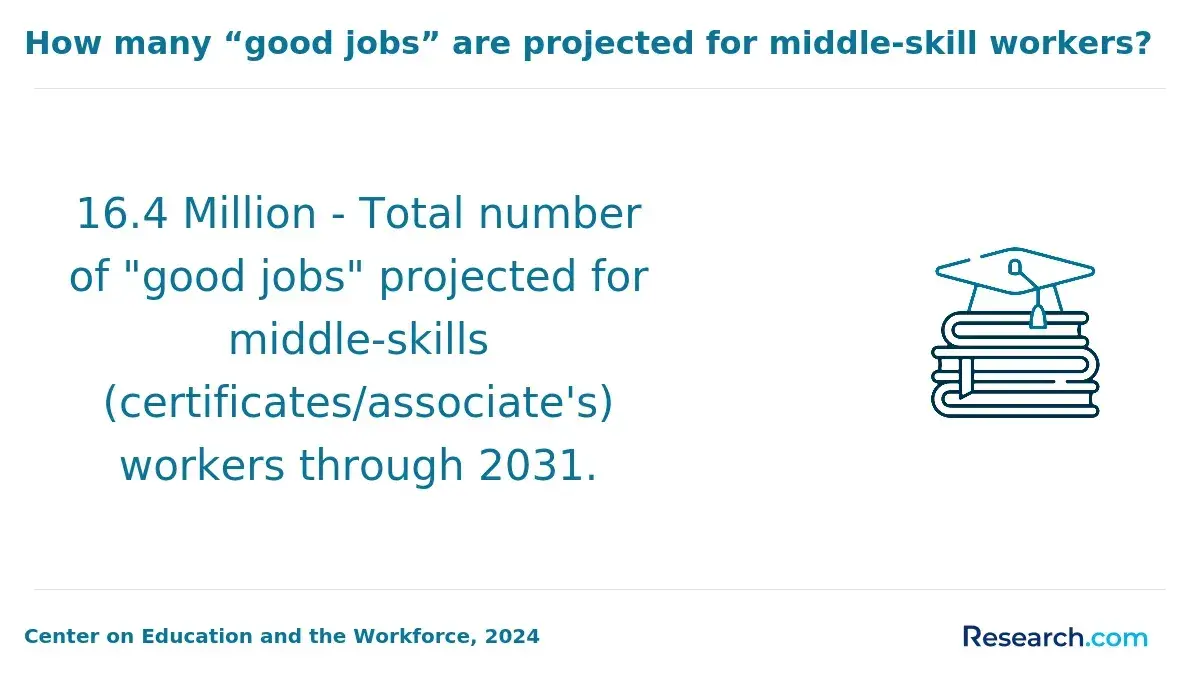
Removing a test requirement can reduce friction, but reputable programs still preserve academic standards through GPA thresholds, prerequisite review, writing samples, interviews, and faculty evaluation.
What Admissions Criteria Matter Most Without GRE or GMAT Scores?
When GRE or GMAT scores are not required, admissions committees usually look for evidence that you can complete graduate-level work and contribute meaningfully to a sport business learning environment. Your application should tell a coherent story about academic readiness, professional direction, and fit with the program.
The table below shows how common admissions materials function when standardized tests are removed from the review process.
| Admissions factor | What it signals | How to strengthen it |
| Undergraduate GPA | Academic consistency and readiness for graduate coursework | Explain upward grade trends, difficult semesters, or relevant recent coursework if your GPA is borderline |
| Résumé | Leadership, operations experience, coaching exposure, athletics background, or business skills | Quantify responsibilities such as budgets, events, teams, sponsorships, ticketing, or community programs where possible |
| Statement of purpose | Career direction and program fit | Connect specific courses, faculty strengths, internships, or sport industry goals to your background |
| Recommendations | External validation of work habits, judgment, communication, and leadership potential | Choose supervisors, professors, coaches, or athletic administrators who can give concrete examples |
| Prerequisite or business coursework | Preparation for finance, analytics, marketing, or management classes | Complete an introductory business, statistics, or economics course if the program recommends it |
| Interview or writing sample | Professional maturity and communication ability | Prepare examples that show problem-solving in sport, events, education, athletics, or customer-facing settings |
Applicants who are also considering broader business pathways can compare sports-specific curricula with an online business administration degree, especially if they are not yet sure whether they want to work in athletics, corporate operations, marketing, or entrepreneurship.
To build a stronger no-test application, focus on evidence rather than claims. Admissions readers respond better to specific examples of leadership, persistence, writing ability, and career clarity than to general statements about loving sports.
- Review the program's admission page and identify every required and optional material before requesting transcripts.
- Map your résumé to the program's core themes, such as sport marketing, compliance, event operations, analytics, or athletic administration.
- Ask recommenders to address your readiness for graduate-level work, not just your character.
- Use the personal statement to explain why this specific program fits your career goal.
- If your GPA is below the preferred level, ask whether provisional admission, prerequisite coursework, or a graduate certificate pathway is available.
No-GRE and no-GMAT programs may be easier to apply to, but they are not automatically easier to get into. The absence of a standardized test removes one barrier, yet selective programs can still deny applicants with weak academic records, vague goals, poor writing, limited preparation, or incomplete materials.
Understanding the admissions label helps you judge how much the testing policy actually affects competitiveness.
| Admissions policy | What it means | Best strategy |
| Test-free | The program does not consider GRE or GMAT scores | Invest your effort in transcripts, statements, résumés, and recommendations |
| Test-optional | You may submit scores, but they are not required | Submit scores only if they clearly strengthen a weak or uneven academic profile |
| Test waiver | The test may be waived if you meet conditions such as a minimum GPA, prior graduate work, or professional experience | Confirm waiver rules in writing before assuming you qualify |
| Test-required for some applicants | The school may require scores from applicants below a GPA threshold or from certain academic backgrounds | Ask admissions how your specific transcript will be reviewed |
Applying without scores makes the rest of the file more important. A high-GPA applicant with a focused statement and relevant work experience may be competitive without testing, while an applicant with a low GPA and generic materials may still struggle. If scores are optional, submit them only when they add clear value, such as demonstrating quantitative readiness for a business-heavy MBA concentration.
Skipping the GRE or GMAT does not, by itself, reduce academic quality or accreditation. Accreditation evaluates the institution or program according to standards related to governance, faculty qualifications, student support, learning outcomes, resources, and continuous improvement. Standardized test policy is only one admissions choice, not a measure of whether a degree is legitimate.
For sports management students, the most important baseline is institutional accreditation from an accreditor recognized by the U.S. Department of Education or the Council for Higher Education Accreditation. Some programs may also hold specialized accreditation or recognition connected to business, sport management, or related professional standards, but requirements vary by school and degree type.
Employers typically care more about whether the school is legitimate, whether the curriculum matches the role, and whether you can demonstrate relevant experience. A no-test policy is unlikely to appear on your diploma or transcript, and most employers will not know whether the program required the GRE or GMAT unless you tell them.
Use accreditation as a first filter, then evaluate learning quality. Strong online sports management programs often provide case-based coursework, industry projects, internship options, faculty with sport business experience, alumni connections, and career services tailored to athletics, events, recreation, or sport marketing.
No-GRE or no-GMAT online sports management degrees are especially useful for applicants whose experience is stronger than their standardized testing profile. They can also help students who need to apply quickly because of career timing, employer reimbursement deadlines, military benefits, coaching seasons, or relocation constraints.
The students who benefit most usually fall into a few clear groups. These profiles can help you decide whether a no-test route fits your situation or whether a different degree path may serve you better.
- Working sport industry professionals who already have experience in ticketing, facilities, coaching, compliance, recreation, event operations, or athletic administration.
- Former student-athletes who can translate team leadership, discipline, and competitive experience into management potential.
- Career changers from education, business, hospitality, marketing, recreation, or military service who want to enter sport-related organizations.
- Applicants with strong undergraduate performance who do not need a test score to prove academic readiness.
- Students balancing work and family responsibilities who would rather spend preparation time on applications, prerequisite refreshers, or professional networking.
Students should consider alternatives if their interest is only loosely connected to sports. For example, someone drawn to helping students, athletes, or patients through communication and rehabilitation may want to compare sport business programs with healthcare or education career routes, including guides on how to become a speech pathologist.
A no-test sports management program may not be the best fit if you dislike business coursework, want a guaranteed front-office job immediately after graduation, or need a degree that leads to a regulated professional license. Sports management is career-oriented, but hiring still depends heavily on networking, internships, location, transferable skills, and prior experience.
No-GRE programs are not automatically cheaper or more expensive than test-required programs. Tuition is usually driven by institution type, residency rules, credit count, technology fees, course format, and whether the program is housed in a business school, education college, or kinesiology department.
Graduate students should compare total program cost rather than per-credit tuition alone. Federal Student Aid currently allows eligible graduate students to borrow up to $20,500 per academic year in Direct Unsubsidized Loans, which makes it important to estimate borrowing before enrollment rather than after the first bill arrives.
When you compare costs, include the expenses that can change your real out-of-pocket price. The following items often explain why two programs with similar tuition rates produce very different totals:
- Total credits required for graduation, including capstone, internship, or practicum credits.
- Per-credit tuition and whether online students pay in-state, out-of-state, or flat online rates.
- Mandatory technology, distance learning, student services, graduation, or course-specific fees.
- Books, software, analytics tools, exam proctoring, travel for optional residencies, or internship-related expenses.
- Employer tuition assistance, military benefits, scholarships, assistantships, payment plans, and federal loan eligibility.
Some students searching for low-debt graduate options compare funding strategies across fields. While sports management programs are less likely to be fully funded than some research or clinical pathways, reviewing how aid works in areas such as fully funded SLP programs online can help applicants ask better questions about assistantships, scholarships, and tuition support.
The best value is not always the lowest tuition. A more expensive program may be worth considering if it provides stronger internship access, sport industry partnerships, alumni reach, or curriculum alignment with your target role. A lower-cost program may be the better choice if you already work in sports and mainly need the credential to advance.
A no-GRE sports management degree can support careers in athletic administration, sport marketing, event management, recreation leadership, facility operations, ticketing, sales, sponsorships, compliance support, coaching administration, and sport analytics. The degree does not guarantee a specific job, but it can help applicants signal business knowledge and commitment to the field.
The table below connects common sports management career directions with salary and labor-market context from U.S. occupational categories. These figures are not program-specific outcomes, but they help applicants understand how different sport-related roles vary in pay structure and competition:
| Career direction | Related role examples | U.S. labor-market context | What employers often value |
| Coaching and athletic program support | Coach, scout, athletic operations coordinator | BLS reported a May 2024 median annual wage of $45,910 for coaches and scouts | Sport knowledge, recruiting awareness, communication, scheduling, and athlete development |
| Events and facilities | Event coordinator, venue operations assistant, facility manager | Demand often follows live events, tourism, campus athletics, and recreation programming | Logistics, budgeting, vendor coordination, risk management, and customer experience |
| Sport business and revenue | Ticket sales, sponsorship coordinator, marketing associate, fan engagement specialist | Entry roles may be competitive and commission-influenced depending on employer | Sales discipline, CRM tools, marketing analytics, relationship-building, and persistence |
| Athletic administration | Compliance assistant, operations manager, recreation director, athletic department staff | Opportunities vary by school, league, region, and funding model | Policy knowledge, leadership, budgeting, communication, and ethical judgment |
Career outcomes improve when students use the program strategically. Online learners should look for internships, applied projects, alumni mentoring, faculty connections, and opportunities to build a portfolio of work such as event plans, sponsorship proposals, marketing campaigns, or data dashboards.
Students aiming for senior leadership roles may eventually compare a master's in sports management with broader executive education or an online doctorate organizational leadership program, particularly if their long-term goal is athletic department leadership, nonprofit administration, higher education management, or consulting.
The biggest mistake is assuming that no GRE or GMAT means the application is low stakes. In a holistic review, weak materials become more visible because there is no test score to offset them.
Applicants can avoid the most common problems by treating each application as a professional proposal. These mistakes frequently reduce admission chances or lead students to choose a program that is not a good fit:
- Choosing a school only because it does not require the GRE or GMAT, while ignoring accreditation, curriculum, cost, and student support.
- Submitting a generic personal statement that says "I love sports" without explaining a realistic career goal.
- Failing to verify whether the policy is test-free, test-optional, or waiver-based for your GPA and degree background.
- Overlooking prerequisite coursework in business, statistics, economics, management, or communication.
- Using recommenders who know you personally but cannot evaluate your academic or professional readiness.
- Leaving gaps in the résumé instead of explaining relevant athletics, volunteer, coaching, event, or leadership experience.
- Ignoring total program cost and focusing only on application speed.
- Assuming online programs do not offer networking, internships, or career services, then failing to ask what support exists.
A strong application is specific, honest, and aligned with the program. If your background is unconventional, use the statement and résumé to show how your experience connects to sport organizations, leadership, service, operations, or revenue generation.
How Should Students Compare Accredited Online Sports Management Degree Programs Without GRE or GMAT Requirements?
Start with accreditation and admissions fit, but do not stop there. The right program should match your career goal, schedule, budget, learning style, and access to sport industry experience.
Use a structured comparison process before applying. This sequence helps you separate genuine program quality from marketing claims:
- Confirm institutional accreditation through the school and recognized accreditor, then check whether any specialized sport, business, or professional accreditation applies.
- Identify the exact degree type, such as M.S., M.A., MBA concentration, bachelor's completion degree, certificate stack, or dual pathway.
- Verify the current GRE or GMAT policy for your applicant category and ask whether optional scores are ever recommended.
- Compare curriculum depth in sport law, finance, marketing, analytics, event management, facilities, governance, ethics, and leadership.
- Calculate total tuition and fees based on required credits, not just the advertised per-credit rate.
- Ask how online students access internships, alumni, career coaching, faculty, and industry projects.
- Review transfer credit, prior graduate credit, military credit, and graduate certificate stacking policies.
- Compare format details, including asynchronous classes, live sessions, term length, assignment pacing, and whether internships can be completed locally.
- Evaluate outcomes carefully by asking about roles graduates pursue, not just broad claims about sport industry opportunity.
If speed is a major factor, compare accelerated terms carefully. Compressed online formats can be convenient, but they require disciplined weekly study time; the same caution applies when students compare other fast graduate options such as accelerated online MFT programs.
Before enrolling, ask admissions or the program director direct questions: How many hours should students study each week? Are internships required or optional? Can working professionals use current employment for applied projects? What software or analytics tools are used? What sport organizations have students worked with recently? The answers will tell you more about fit than the no-test policy alone.
Other Things You Should Know About Sports Management
Yes, many online sports management programs are designed for working adults. Before enrolling, ask whether courses are asynchronous, how many hours students typically study each week, and whether internships or projects can be completed near your location.
Usually, diplomas do not specify online delivery, but policies vary by school. Your transcript may list the same degree as the campus program or may identify the online program format, so verify this with the registrar if it matters to you.
Specialized accreditation can be a positive signal, but institutional accreditation is the essential baseline for legitimacy, federal aid eligibility, and transfer recognition. Some strong programs operate without specialized sports management accreditation, so evaluate curriculum, faculty, outcomes, and employer connections too.
Yes. Graduates may work in college athletics, recreation departments, fitness organizations, event companies, youth sports, venue operations, tourism, nonprofit programs, corporate sponsorships, and marketing. Professional teams are only one part of the sports industry.
- Want to Pick a Sport Management Program? Here's What to Look For https://www.sportsdestinations.com/management/education/want-pick-sport-management-program-heres-what-look-16287
- Sports Management Courses in USA: A Complete Guide on Sports Management in USA https://yocket.com/blog/sports-management-courses-in-usa
- Sports Management Degree Requirements | University of Bridgeport https://www.bridgeport.edu/news/sports-management-degree-requirements/
- What Actual Jobs are Out There for Sports Management Graduates in Australia? https://www.torrens.edu.au/stories/blog/business/jobs-for-sports-management-graduates-in-australia
- Online Master’s Degrees in Sports Management: Find the Right School https://www.onlinemastersdegrees.org/best-programs/business/sports-management/
- 2025 Most Affordable Online Master's Degrees in Sports Management https://www.onlineu.com/most-affordable-colleges/sports-management-masters-degrees
- Types of Sports Management Degrees https://www.allbusinessschools.com/sports-management/degrees/
- Top 50 Most Affordable Online Master's in Sport Management Programs https://www.bestcollegesonline.org/most-affordable/online-masters-sport-management/
- An Examination of Sport Management Master’s Programs in the United States – The Sport Journal https://thesportjournal.org/article/an-examination-of-sport-management-masters-programs-in-the-united-states/
- Online Master’s in Sports Management Degree Programs - OnlineEducation.com https://www.onlineeducation.com/business/masters-in-sports-management-programs