2027 Accredited Online Military Science & Studies Degree Programs for Working Adults: Flexible, Part-Time, and Self-Paced Options

Co-Founder and Chief Data Scientist
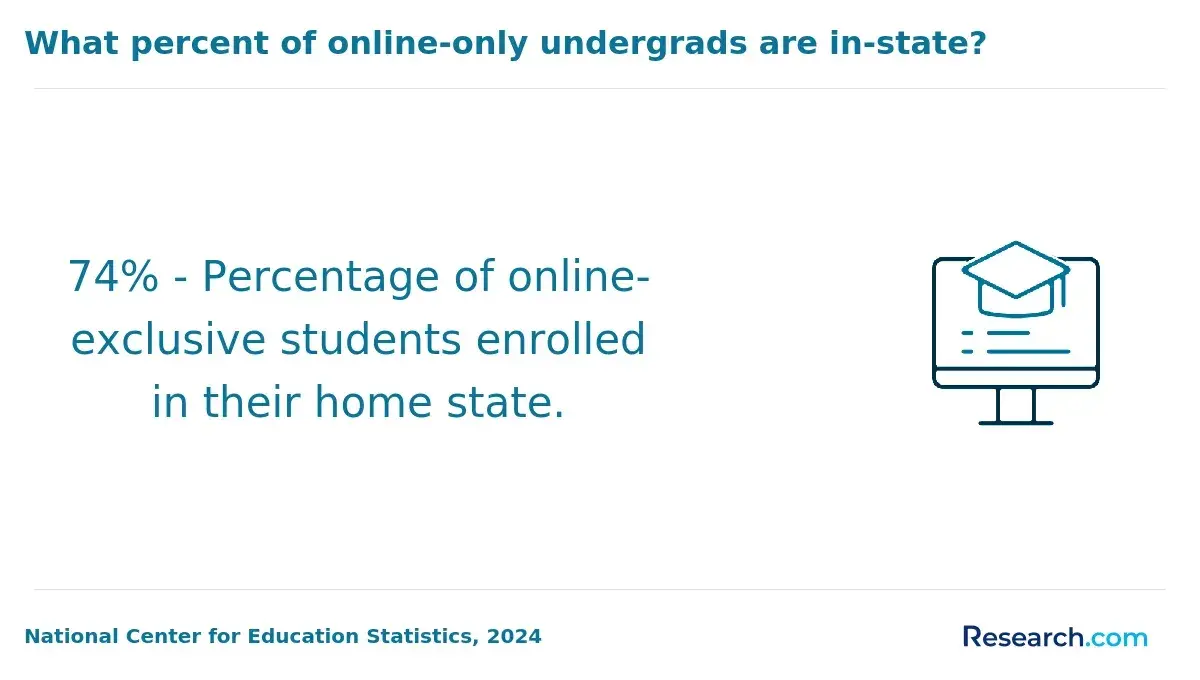
Choosing an online Military Science & Studies degree is really a scheduling, accreditation, and career-value decision. The National Center for Education Statistics reported in 2024 that millions of U. S. undergraduates take at least one distance education course, reflecting how normal online study has become for adult learners. This guide is for working adults, service members, veterans, and career changers who need flexible, part-time, or self-paced options. You'll learn how to compare accreditation, course formats, cost, transfer credit, workload, and career outcomes before committing time and money.
Key Things You Should Know
- For working adults, the best-fit online Military Science & Studies program is usually institutionally accredited, asynchronous or mostly asynchronous, and realistic about workload: many online courses still require about 2 to 3 study hours per credit each week.
- Cost varies widely by school type; College Board's 2024 tuition data lists average published tuition and fees at $11,610 for in-state public four-year colleges and $43,350 for private nonprofit four-year colleges, so transfer credits and employer or military benefits can materially change the total cost.
- A bachelor's degree commonly requires about 120 credits; adult-friendly programs may accept 60 to 90 transfer credits, which can shorten completion from about four years full time to one to three years depending on prior credits and course load.
What Is an Accredited Online Military Science & Studies Degree Program and Why Does Accreditation Matter?
An accredited online Military Science & Studies degree is a college program offered through distance learning by a school recognized by an institutional accreditor approved by the U.S. Department of Education or the Council for Higher Education Accreditation. The field may cover military history, leadership, national security, defense policy, strategic studies, intelligence analysis, logistics, ethics, homeland security, and civil-military relations.
For working adults, accreditation matters because it affects credit transfer, federal financial aid eligibility, graduate school admission, employer recognition, and, in some cases, tuition assistance reimbursement. A flexible program that is not properly accredited may still be expensive, but it may not carry the academic value you expect.
Military Science & Studies is not one single standardized major across all colleges. Some schools place it under security studies, strategic studies, leadership, homeland security, intelligence studies, military history, or interdisciplinary studies. This makes accreditation checks especially important because the degree title alone does not tell you whether the school is legitimate or whether credits will transfer.
The table below summarizes common degree levels and how they usually fit adult learners. Use it to identify which credential aligns with your career stage before comparing individual schools.
| Degree level | Typical focus | Best fit for working adults | Important limitation |
| Associate degree | General education, leadership foundations, public safety, military history basics | Adults seeking a lower-cost entry point or transfer pathway | May not qualify for roles requiring a bachelor's degree |
| Bachelor's degree | Strategic studies, defense policy, leadership, national security, military operations context | Service members, veterans, public-sector employees, and career changers seeking broader advancement options | Usually requires significant general education and elective credits |
| Master's degree | Advanced strategy, defense analysis, security policy, intelligence, organizational leadership | Professionals targeting leadership, policy, analysis, or graduate-level specialization | Admission may require a completed bachelor's degree and stronger writing expectations |
| Graduate certificate | Narrow specialization such as homeland security, intelligence, or military leadership | Adults who already hold a degree and want a focused credential | May not substitute for a full degree in hiring or promotion decisions |
Before applying, verify accreditation directly with the school and through recognized accreditation databases. Do not rely only on phrases like "nationally recognized," "military friendly," or "career-focused," because those terms do not replace formal accreditation.
Which Flexible Military Science & Studies Degree Formats Are Best for Working Adults: Part-Time, Full-Time, or Self-Paced?
The best format depends on how predictable your work schedule is, how quickly you want to finish, and how much weekly study time you can protect. "Online" does not automatically mean self-paced; many online programs still have weekly deadlines, group discussions, exams, and instructor-led course calendars.
Working adults usually compare three main formats: full-time online, part-time online, and self-paced or competency-based learning. The table below shows the practical trade-offs that matter most when you are balancing employment, family, military duty, or shift work.
| Format | Typical pace | Best for | Potential drawback |
| Full-time online | Often 12 or more credits per term | Adults with stable schedules, strong support at home, or a need to finish quickly | Can feel like a second full-time job during writing-heavy or research-heavy terms |
| Part-time online | Often 3 to 9 credits per term | Adults working full time, parents, reservists, and students using employer tuition assistance caps | Slower completion can increase the risk of stopping out if motivation or finances change |
| Asynchronous online | Scheduled weekly modules without required live attendance | Adults with irregular work hours who can meet deadlines independently | Still requires consistent weekly participation and discussion posts |
| Synchronous online | Live virtual class meetings at set times | Students who want real-time discussion, instructor interaction, and structured accountability | Less flexible for night shifts, deployments, caregiving, or travel-heavy jobs |
| Self-paced or competency-based | Progress based on mastery or flexible completion windows | Experienced adults who are organized and can move quickly through familiar material | May have term limits, subscription billing, proctored exams, or fewer live interactions |
A part-time schedule is often the safest choice if you work full time and cannot predict overtime, travel, or family obligations. Self-paced study can be faster, but only when you have the discipline, prior knowledge, and uninterrupted time to complete assignments without weekly class pressure.
When comparing formats, ask schools for specifics rather than accepting broad marketing language. These questions help reveal whether the program is actually flexible enough for your life:
- Are courses fully asynchronous, or are there required live sessions?
- How many discussion posts, papers, exams, or projects are due each week?
- Can students pause enrollment for military orders, medical needs, or work disruptions?
- Are courses offered every term, or only once or twice per year?
- Does the school charge by credit, by term, or by subscription period?
- Are there maximum time limits for self-paced courses?
The biggest mistake is assuming that "flexible" means "no deadlines." A well-designed online program should give you schedule control, but it should also provide enough structure to keep you progressing toward graduation.
What Are the Admission Requirements for Accredited Online Military Science & Studies Degree Programs?
Admission requirements depend on degree level, school selectivity, and whether the program is designed for first-time students, transfer students, military-affiliated learners, or graduate students. Most online Military Science & Studies programs do not require current military service, although military experience can strengthen an application or qualify for transfer, training, or prior learning credit.
At the undergraduate level, schools typically review academic readiness and prior college work. At the graduate level, they usually look for evidence that you can complete advanced reading, research, and policy-oriented writing.
The table below outlines common requirements by program level so you can prepare documents before speaking with admissions.
| Program level | Common admission requirements | Adult learner consideration |
| Associate | High school diploma or GED, application, placement information, prior transcripts if applicable | Good starting point if you have limited college credit or want a transfer pathway |
| Bachelor's | High school diploma or GED, official transcripts, minimum GPA for transfer admission, possible personal statement | Transfer students should ask for a preliminary credit evaluation before enrolling |
| Master's | Accredited bachelor's degree, official transcripts, statement of purpose, resume, possible writing sample | Professional, military, public safety, or government experience may help demonstrate fit |
| Certificate | Varies by school; may require bachelor's degree for graduate certificates | Useful for specialization but should be compared against full degree requirements |
Service members and veterans should also request an evaluation of Joint Services Transcript credits, Community College of the Air Force credits, Defense Activity for Non-Traditional Education Support exam credit, CLEP exams, and prior professional training. Policies differ by institution, so the same military training may receive different credit awards at different schools.
Before applying, collect the documents schools commonly need. This can prevent delays after you submit an application:
- Official high school, GED, and college transcripts from every institution attended.
- Military transcripts or training records if you served in the armed forces.
- A current resume showing leadership, operations, logistics, security, public service, or management experience.
- A short statement explaining why Military Science & Studies fits your academic and career goals.
- Financial aid documents, employer tuition assistance forms, or military education benefit information.
A common red flag is pressure to enroll before your transcripts are fully reviewed. For working adults, transfer credit can change cost, timeline, and course load, so do not make a deposit until you understand how prior learning will apply to the degree plan.
How Much Does an Online Military Science & Studies Degree Cost, and What Financial Aid Options Are Available?
The cost of an online Military Science & Studies degree depends on tuition rate, school type, transfer credits, fees, books, technology requirements, residency status, and whether you use military, employer, or federal financial aid. College Board's 2024 data shows average published tuition and fees of $11,610 for in-state public four-year colleges and $43,350 for private nonprofit four-year colleges, which means the same degree level can have very different price points depending on the institution.
Online students should compare total program cost, not just tuition per credit. A school with lower tuition may still charge online course fees, graduation fees, proctoring fees, transcript fees, or technology fees.
Common cost categories include the following:
- Tuition per credit or flat-rate term tuition
- Online learning, technology, or course delivery fees
- Textbooks, digital materials, databases, and software
- Proctoring, exam, portfolio, or assessment fees
- Transfer-credit evaluation, graduation, and transcript fees
- Travel costs if the program has any short residency, orientation, or field requirement
Financial aid may include federal grants, federal student loans, scholarships, employer tuition assistance, military tuition assistance, veterans education benefits, institutional aid, and payment plans. Federal Student Aid's 2024-2025 undergraduate Direct Loan interest rate is 6.53%, so borrowing should be tied to a realistic completion plan and career goal rather than treated as automatic funding.
If affordability is your top priority, compare public universities, transfer-friendly bachelor's completion programs, and low-fee online options. Students considering graduate study after a bachelor's program may also want to review broader affordability strategies used in the most affordable masters degrees online, especially if their long-term goal is defense policy, intelligence analysis, emergency management, or public administration leadership.
To estimate your true cost before enrolling, ask the school for a written degree audit and financial plan. The estimate should show remaining credits, tuition rate, required fees, expected aid, out-of-pocket balance, and whether tuition changes if you switch from part-time to full-time enrollment.
How Long Does It Take to Complete an Online Military Science & Studies Degree, and Can Transfer Credits Help You Graduate Faster?
Completion time depends on degree level, credits required, course availability, term length, transfer credits, and how many courses you take at once. A traditional bachelor's degree is commonly structured around about 120 credits, but adult learners often enter with prior college, military training, professional certifications, or exam credit that may shorten the path.
For working adults, the most important question is not simply "How fast can I finish?" It is "What pace can I sustain without failing, withdrawing, or burning out?" The table below compares common enrollment patterns and the schedule realities behind them.
| Enrollment pattern | Typical course load | Likely fit | Timeline implication |
| Full-time bachelor's student | About 12 to 15 credits per term | Adults with flexible work, strong support, or urgency to finish | Fastest standard route, but weekly workload is high |
| Part-time bachelor's student | About 3 to 9 credits per term | Adults working full time or managing caregiving responsibilities | Slower route, but often more sustainable |
| Transfer bachelor's completion student | Varies based on accepted credits | Adults with associate degrees, military credits, or prior college coursework | Can reduce remaining time substantially if credits apply to requirements |
| Self-paced student | Variable | Disciplined students with strong writing skills and predictable study blocks | Can be faster or slower depending on motivation, assessment rules, and term limits |
| Master's student | Often 1 to 2 courses per term while working | Professionals seeking specialization while employed | Part-time completion is common and may take longer than accelerated formats |
Transfer credit can be one of the biggest advantages for adult learners, but only if credits apply to your actual degree requirements. Elective credit is helpful, but major requirements, residency requirements, and upper-division credit rules may still require you to complete a certain number of courses at the new school.
Use these steps to evaluate whether transfer credit will actually save time and money:
- Request an unofficial preliminary transfer review before enrolling.
- Ask how many credits apply to general education, major requirements, electives, and upper-division requirements.
- Confirm the school's residency requirement, which is the minimum number of credits you must complete there.
- Ask whether military training, CLEP, DSST, professional certifications, or prior learning portfolios are accepted.
- Compare the remaining courses against the school's course rotation to see whether required classes are available when you need them.
Adults looking for faster bachelor's completion models can also compare Military Science & Studies pathways with broader 2 year bachelor degree programs, especially if they already have an associate degree or substantial transfer credit. The right accelerated option should reduce unnecessary credits, not simply overload your schedule.
What Should You Look for When Comparing Accredited Online Military Science & Studies Degree Programs?
When comparing programs, look beyond the major name and focus on accreditation, curriculum fit, schedule design, transfer policy, faculty experience, student support, total cost, and career alignment. A strong program should make its requirements transparent before you apply.
The table below gives a decision-focused way to compare schools. It is designed for working adults who need to avoid hidden schedule conflicts, unexpected costs, and weak academic fit.
| Comparison factor | What to check | Why it matters |
| Accreditation | Institutional accreditation from a recognized accreditor | Supports federal aid, transfer credit, graduate school recognition, and employer credibility |
| Curriculum | Courses in strategy, leadership, military history, security policy, intelligence, logistics, ethics, or homeland security | Ensures the degree matches your career direction rather than just sounding relevant |
| Format | Asynchronous, synchronous, hybrid, self-paced, or cohort-based structure | Determines whether the program fits your work schedule |
| Transfer policy | Maximum accepted credits, military credit rules, prior learning assessment, residency requirement | Can change both timeline and total cost |
| Faculty | Academic credentials, military, defense, government, or policy experience | Can improve course relevance and mentoring value |
| Career services | Resume support, federal job guidance, internship help, alumni networks | Important if you are using the degree to change sectors |
| Student support | Online advising, tutoring, library access, writing support, veteran services | Helps prevent isolation and stop-outs |
| Total cost | Tuition, fees, books, aid, employer benefits, military benefits, and loan repayment impact | Shows whether the program is financially realistic |
Red flags deserve special attention because online adult learners often have less time to recover from a poor enrollment choice. Watch for programs that are vague about accreditation, refuse to provide a written transfer evaluation, advertise unrealistic completion times, or describe themselves as self-paced without explaining deadlines and billing periods.
Military Science & Studies is also broad enough that some students may be better served by adjacent majors. If your target is administrative coordination, records management, or civilian office operations in a public-sector setting, an office administration degree online may be a more direct and affordable path than a defense-focused program.
The best choice is the program that connects your current experience to a specific next step. For one learner, that may mean a bachelor's completion program with generous transfer credit; for another, it may mean a slower master's program with strong policy research and federal career advising.
What Career Opportunities and Salary Potential Can You Expect With a Military Science & Studies Degree?
A Military Science & Studies degree can support careers in public service, defense contracting, emergency management, intelligence support, homeland security, law enforcement administration, logistics, training, operations, military education, policy analysis, and leadership roles. It is not usually a direct-license degree, so outcomes depend heavily on experience, security clearance eligibility, location, employer requirements, military background, and any additional credentials.
The U.S. Bureau of Labor Statistics reported a May 2024 median annual wage of $86,130 for emergency management directors, a role that can overlap with security, planning, response coordination, and interagency operations. This figure should be treated as labor-market context, not a promise of earnings for Military Science & Studies graduates.
The table below connects common career directions with the type of degree preparation that may be useful. It can help you decide whether Military Science & Studies is the right major or whether another field would better match your target role.
| Career direction | Typical responsibilities | How the degree may help | Additional factors |
| Emergency management | Planning, risk assessment, response coordination, continuity operations | Builds understanding of leadership, crisis response, and interagency coordination | Experience, certifications, and local government background may matter |
| Defense contractor support | Program support, logistics, analysis, training, operations documentation | Provides military context and terminology useful in defense environments | Security clearance eligibility and technical skills can be important |
| Intelligence or security analysis support | Research, briefing, threat context, reporting, data interpretation | Supports strategic thinking, writing, and security-policy awareness | Employers may prefer language, data, cyber, or regional expertise |
| Military education or training | Curriculum support, leadership instruction, professional development | Strengthens leadership theory, military history, and instructional context | Teaching roles may require separate credentials or advanced degrees |
| Public-sector leadership | Operations oversight, personnel coordination, policy implementation | Builds communication, ethics, organizational leadership, and planning skills | Promotion rules vary by agency and employer |
Current trends are changing what employers value. Defense and public-sector roles increasingly expect strong writing, data literacy, cyber awareness, AI-informed decision-making, and the ability to interpret complex information quickly. A Military Science & Studies degree is strongest when paired with practical skills such as Excel, geographic information systems, project management, intelligence writing, emergency planning, or data analysis.
Some adults discover that their long-term goal is not defense or security work but a helping profession connected to military families, veterans, or behavioral support. In that case, comparing the career path with a BCBA degree online can clarify whether a behavioral analysis route is more aligned with their interests than a military studies curriculum.
The degree is most likely to be worth considering if it builds on your prior military, public safety, government, logistics, operations, or leadership experience. It may be less suitable if you need a license-specific pathway, a technical cyber credential, or a clinical profession with strict accreditation rules.
How Can Working Adults Balance a Military Science & Studies Degree With Full-Time Work and Family Responsibilities?
Balancing the degree with full-time work requires a realistic weekly schedule, not just motivation. Military Science & Studies courses often involve reading, discussion boards, research papers, case analysis, and writing-intensive assignments, so time management matters as much as subject interest.
A practical way to plan is to estimate study time before choosing your course load. Many colleges advise about 2 to 3 hours of study per credit each week, so one 3-credit course may require roughly 6 to 9 hours weekly outside any live class meetings. That is manageable for many working adults; two or three courses can become difficult during busy work seasons.
Use the following approach before your first term begins. It helps reduce the risk of overloading yourself and withdrawing after the refund deadline:
- Map your fixed commitments first, including work hours, commuting, caregiving, drill weekends, medical appointments, and sleep.
- Choose one or two protected study blocks on weekdays and one longer block on the weekend.
- Start with a lighter first term if you have been out of school for several years.
- Tell your advisor about shift work, deployment risk, seasonal overtime, or family obligations before registering.
- Use assignment calendars to work ahead on papers before high-pressure work weeks.
- Reassess course load after grades are posted, not during the most optimistic part of the semester.
Common mistakes include taking too many accelerated courses at once, ignoring discussion deadlines, waiting until Sunday night to write research posts, and enrolling in live classes that conflict with unpredictable work hours. If your schedule changes frequently, asynchronous or part-time formats are usually safer than synchronous cohort programs.
Family support also matters. Adult learners often do better when they explain the weekly workload to spouses, children, relatives, or roommates and set expectations around study time. The goal is not to disappear from family life; it is to make coursework predictable enough that it does not become a constant emergency.
What Student Support Services and Online Learning Resources Should You Expect From a Military Science & Studies Degree Program?
Strong online programs support adult learners before problems become crises. At minimum, you should expect academic advising, online library access, writing support, technical support, disability services, tutoring options, career services, and clear communication from instructors.
Military-affiliated learners should also look for veteran services, military benefit advising, deployment or activation policies, Joint Services Transcript evaluation, and staff who understand tuition assistance deadlines. These services can make a major difference when your academic calendar intersects with service obligations.
Ask each school whether the following resources are available fully online and outside standard business hours when possible:
- Dedicated academic advising for online and adult learners
- Writing center support for research papers, citations, and policy briefs
- Online library databases with military history, security studies, government, and policy sources
- Career coaching for federal resumes, defense-sector applications, and interview preparation
- Veterans or military-affiliated student services
- Technical support for the learning management system, proctoring tools, and online exams
- Disability accommodations and accessibility support
- Mental health, wellness, or referral services for online students
Support services are especially important in writing-heavy majors because success depends on research quality, argument structure, and citation accuracy. If your goal involves a licensed or highly regulated profession outside military studies, compare how support expectations differ in fields such as ASHA approved online speech pathology programs, where accreditation standards, clinical placements, and licensure preparation are more prescriptive.
A good test of online support is response time. Before enrolling, email admissions, advising, financial aid, and technical support with specific questions. Slow, vague, or inconsistent answers before you are a student may signal worse service after enrollment.
Do Online Military Science & Studies Degree Programs Include Internships, Practicums, or Other Hands-On Learning Requirements?
Some online Military Science & Studies programs include internships, capstone projects, simulations, research seminars, practicums, or applied field experiences, but many do not require traditional in-person internships. Requirements vary by school, degree level, and concentration.
Hands-on learning can be valuable because the field is applied. Employers may want evidence that you can write briefings, analyze complex scenarios, understand chain-of-command environments, support planning processes, or communicate clearly in high-stakes settings. A capstone project, policy memo, emergency planning exercise, military history research paper, or intelligence-style briefing can help demonstrate those skills.
The table below explains common applied learning options and what adult learners should check before enrolling.
| Applied learning option | What it may involve | What working adults should verify |
| Capstone project | Research paper, strategic analysis, policy proposal, or applied leadership project | Whether it can be completed remotely and whether it requires a specific course sequence |
| Internship | Placement with a public agency, nonprofit, military-related organization, or contractor | Whether evening, remote, local, or workplace-based placements are allowed |
| Simulation or scenario exercise | Crisis response, planning, decision-making, or tabletop exercise | Whether participation requires live attendance at specific times |
| Research seminar | Advanced analysis, source evaluation, writing, and presentation | Whether the workload is compatible with full-time employment |
| Portfolio assessment | Collection of papers, briefings, reflections, and applied assignments | Whether it supports career goals and can be shown to employers when appropriate |
If an internship is required, ask whether your current workplace can qualify, whether security restrictions limit available placements, and whether the school helps locate opportunities. Do not assume an online program has no in-person obligations until you review the catalog and speak with the department.
For adults with demanding schedules, a remote capstone or workplace-based applied project may be more realistic than a traditional internship. However, students trying to change careers may benefit from an internship because it can provide experience, references, and clearer exposure to the field.
Other Things You Should Know About Military Science & Studies
Not by itself. Commissioning usually requires a specific pathway such as ROTC, Officer Candidate School, a service academy, or a direct commission program, depending on the branch and eligibility rules. An online degree may satisfy an education requirement, but it does not replace military selection, training, medical, age, fitness, or service-specific requirements.
No. Many programs accept civilians, veterans, active-duty service members, reservists, and public-sector professionals. Prior military experience may help you understand the material and may qualify for transfer credit, but it is not always required for admission.
No degree automatically qualifies someone for a security clearance. Clearance decisions are made through federal processes that consider role requirements, background checks, citizenship rules, financial history, personal conduct, and other factors. A relevant degree may support your qualifications for certain jobs, but clearance eligibility is separate.
No. The fields can overlap, but they are not identical. Military Science & Studies usually emphasizes military institutions, leadership, strategy, conflict, and defense context. Criminal justice focuses more on courts, policing, corrections, and law enforcement systems, while homeland security often centers on terrorism, emergency preparedness, infrastructure protection, and domestic security policy.
References
- Affordable College Options for Veterans: The Best Ways to Maximize Education Benefits and Save Money on Your Degree https://www.straighterline.com/blog/affordable-college-options-for-veterans-how-to-maximize-your-education-benefits-and-save-money-on-your-degree
- Military Studies Degree- Best Schools, Major & Programs https://www.onlinedegree.com/bachelors/military-studies/
- Computing and IT https://www.questonline.co.uk/careers/career/computing-and-it
- Using Your VA Benefits for Your Education https://www.snu.edu/degrees/using-your-va-benefits-for-your-education
- Align your programs with military students’ unique needs | EAB https://eab.com/resources/research-report/align-your-programs-with-military-students-unique-needs/
- 2025 Best Military-Friendly Online Colleges https://www.onlineu.com/online-schools/military-friendly
- Military-friendly Online Master’s Programs for Service Members https://www.onlinemastersdegrees.org/features/military-friendly-programs/
- Why stay? Factors That Encourage Active-Duty Military and Veterans to Complete Their Online degrees - OJDLA https://ojdla.com/articles/why-stay-factors-that-encourage-active-duty-military-and-veterans-to-complete-their-online-degrees
- Targeted Training Helps Military Spouses Find Sustainable Employment https://www.hiringourheroes.org/stories/targeted-training-helps-military-spouses-find-sustainable-employment/
- 4 Reasons to Consider a Military Studies Degree https://www.military.com/education/4-reasons-consider-military-studies-degree.html